

classical ballet classes
 |
Description
Book Introduction
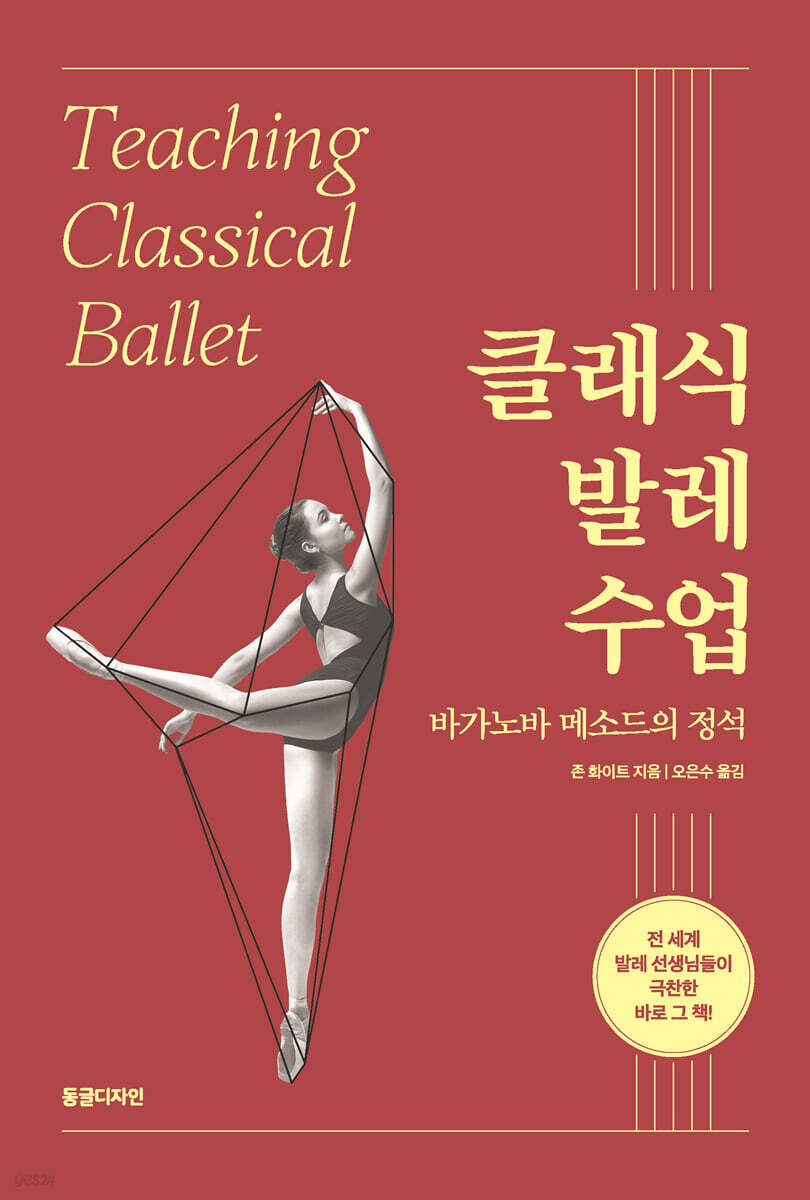
Learn classical ballet teaching methods from America's best ballet teachers!
The most practical and systematic guide to the Vaganova method
If you want to teach ballet properly for a long time, what kind of classes should you plan?
What are the differences in teaching methods for children and adults?
This book will answer all your questions for the most complete ballet class.
This book introduces how to educate and teach those who want to learn classical ballet, which teachers to learn from, understanding and teaching methods of classical ballet, and how to run a ballet studio.
Above all, this book will serve as an excellent guide for teachers, focusing on effective Vaganova-based ballet teaching methods.
It features a vivid and realistic overview of the essentials for a solid ballet class, from the basic terminology of classical ballet to images introducing precise movements and postures, the key interior and teaching environment that a ballet studio should have, and an introduction to teaching methods that form the foundation of a teacher's skills and knowledge.
The excellence that students achieve in any field depends on the ability and dedication of their teachers.
This book will certainly be of great help to teachers who wish to teach the art of ballet more effectively.
The most practical and systematic guide to the Vaganova method
If you want to teach ballet properly for a long time, what kind of classes should you plan?
What are the differences in teaching methods for children and adults?
This book will answer all your questions for the most complete ballet class.
This book introduces how to educate and teach those who want to learn classical ballet, which teachers to learn from, understanding and teaching methods of classical ballet, and how to run a ballet studio.
Above all, this book will serve as an excellent guide for teachers, focusing on effective Vaganova-based ballet teaching methods.
It features a vivid and realistic overview of the essentials for a solid ballet class, from the basic terminology of classical ballet to images introducing precise movements and postures, the key interior and teaching environment that a ballet studio should have, and an introduction to teaching methods that form the foundation of a teacher's skills and knowledge.
The excellence that students achieve in any field depends on the ability and dedication of their teachers.
This book will certainly be of great help to teachers who wish to teach the art of ballet more effectively.
index
introduction
introduction
List of illustrations
Part 1: The Technology of Education
Chapter 1: Head Teacher
Chapter 2: Inspiration and Motivation
Chapter 3: Discovering Talent
Chapter 4 The Performer's Mission
Chapter 5: The Pursuit of Excellence
Part 2: The Science of Education
Chapter 6 Ballet School
Chapter 7 Map
Chapter 8 Lesson
Chapter 9 Various Forms of Dance
Chapter 10 Recital
Chapter 11: Warm-up and Stretching
Chapter 12 Affiliation and Contribution
Appendix A: Epollination and Direction Diagrams from Vaganova's Syllabus
Appendix B Advanced Level Lesson Overview
Appendix C Key Guidelines
Appendix D: Former Soviet Ballet Schools
introduction
List of illustrations
Part 1: The Technology of Education
Chapter 1: Head Teacher
Chapter 2: Inspiration and Motivation
Chapter 3: Discovering Talent
Chapter 4 The Performer's Mission
Chapter 5: The Pursuit of Excellence
Part 2: The Science of Education
Chapter 6 Ballet School
Chapter 7 Map
Chapter 8 Lesson
Chapter 9 Various Forms of Dance
Chapter 10 Recital
Chapter 11: Warm-up and Stretching
Chapter 12 Affiliation and Contribution
Appendix A: Epollination and Direction Diagrams from Vaganova's Syllabus
Appendix B Advanced Level Lesson Overview
Appendix C Key Guidelines
Appendix D: Former Soviet Ballet Schools
Detailed image
.jpg)
Into the book
What is talent? How can we recognize the mysterious phenomenon called genius? How should we distinguish between talent and genius? Even those who try to define talent and genius agree that both are innate creative or artistic qualities.
So, can we cultivate talent through learning and become geniuses? We'll explore the answer to this question later.
But first, let's define what talent and genius are.
---From "Chapter 3_Discovering Talent"
Outstanding talent always allows one to rise to the highest position.
Teachers have a responsibility to provide the best education possible to their students.
We must guide students gently but firmly so that they can overcome their limitations and grow further.
Teachers have a responsibility to help students reach their full potential as quickly and safely as possible.
---From "Chapter 3_Talent and Achievement"
The words excellence and perfection are often used to indicate unattainable goals or states.
I've come to understand that excellence and perfection, especially in the artistic process, mean constantly striving to improve accuracy, expand boundaries, and reduce flaws.
---From "Chapter 5_The Pursuit of Excellence"
In the professional world, simply investing time doesn't automatically lead to performance opportunities.
Just as not all skilled professionals become great artists, not all students grow into skilled professionals.
The head teacher must teach students that performing is a privilege that can be earned through talent, effort, and practice.
---From "Chapter 10_Recital"
“Dance is communication.
“Therefore, the most difficult thing is to speak accurately and beautifully with a sense of necessity.” These are the words of Martha Graham, a 20th-century dancer who contributed greatly to the development of modern dance.
We chose ballet, an art form that carries with it a great responsibility to pass on knowledge and tradition to the next generation.
As Martha Graham said, it is the teacher's role to help our students "speak" "with a sense of necessity."
The head teacher must be dedicated to this purpose.
The fate of art depends on this.
So, can we cultivate talent through learning and become geniuses? We'll explore the answer to this question later.
But first, let's define what talent and genius are.
---From "Chapter 3_Discovering Talent"
Outstanding talent always allows one to rise to the highest position.
Teachers have a responsibility to provide the best education possible to their students.
We must guide students gently but firmly so that they can overcome their limitations and grow further.
Teachers have a responsibility to help students reach their full potential as quickly and safely as possible.
---From "Chapter 3_Talent and Achievement"
The words excellence and perfection are often used to indicate unattainable goals or states.
I've come to understand that excellence and perfection, especially in the artistic process, mean constantly striving to improve accuracy, expand boundaries, and reduce flaws.
---From "Chapter 5_The Pursuit of Excellence"
In the professional world, simply investing time doesn't automatically lead to performance opportunities.
Just as not all skilled professionals become great artists, not all students grow into skilled professionals.
The head teacher must teach students that performing is a privilege that can be earned through talent, effort, and practice.
---From "Chapter 10_Recital"
“Dance is communication.
“Therefore, the most difficult thing is to speak accurately and beautifully with a sense of necessity.” These are the words of Martha Graham, a 20th-century dancer who contributed greatly to the development of modern dance.
We chose ballet, an art form that carries with it a great responsibility to pass on knowledge and tradition to the next generation.
As Martha Graham said, it is the teacher's role to help our students "speak" "with a sense of necessity."
The head teacher must be dedicated to this purpose.
The fate of art depends on this.
---From "Chapter 12_Affiliation and Contribution"
Publisher's Review
The eternal bible of American ballet teachers, finally published in Korea!
A must-read if you want to become a better ballet teacher!
Classical ballet is an art form that involves endless practice and rigor, and ballet teachers spend many years with their students until they become a complete ballerina.
This book is for teachers who teach classical ballet.
It is structured to provide insight, covering everything from basic teaching methods to content that can be applied to various classroom settings regardless of the educational stage or environment.
Above all, it covers advanced educational concepts and will be of great help to teachers who are always concerned about their growing students.
It is notable that the program focuses on a wide range of students, from children who are just beginning ballet to adults and professional dancers.
It includes the basic mindset of a teacher as well as details of classes that can raise the level of education along with specialized knowledge.
In addition, you can gain know-how in ballet education for gifted students by covering methods for discovering children's talents and effectively developing those talents.
Also, it is recommended to anyone who wants to become a true 'teacher' as it suggests a direction for 'proper education' that allows dancers to blossom into the essence of art, not just teaching techniques, such as the role of a ballet school, the eye for recognizing students' talent, and the ability to help dancers overcome their limits and leap to a higher level!
Covering everything from the basics to the application of classical ballet training!
The correct way to teach ballet, as taught by a world-renowned authority on the Vaganova method.
The Vaganova training system, known as the most effective for training classical dancers, has been passed down for over 100 years.
Future dancers from leading ballet companies around the world, including the Mariinsky Ballet, are trained according to the Vaganova Method.
The author is a master who teaches the Vaganova training system and has been active in the ballet field for 40 years.
Based on this long experience, this book summarizes all methods for teaching the art and technique of classical ballet.
It provides a step-by-step teaching method based on the Vaganova Method, equipping ballet teachers with the creativity and practicality needed to teach as true masters.
It covers everything you need to know about ballet teaching, from warm-up exercises, when to start wearing pointe shoes, the positive aspects of pain, choosing the right music, and even the elements of a basic class.
Additionally, this book's unique strengths include providing guidance on how to identify and develop talent, as well as guidelines for creating a well-run studio.
It incorporates the teaching methods of the ballet masters of the Mariinsky Ballet and the Bolshoi Ballet and the Vaganova Choreographic School in St. Petersburg.
A must-read if you want to become a better ballet teacher!
Classical ballet is an art form that involves endless practice and rigor, and ballet teachers spend many years with their students until they become a complete ballerina.
This book is for teachers who teach classical ballet.
It is structured to provide insight, covering everything from basic teaching methods to content that can be applied to various classroom settings regardless of the educational stage or environment.
Above all, it covers advanced educational concepts and will be of great help to teachers who are always concerned about their growing students.
It is notable that the program focuses on a wide range of students, from children who are just beginning ballet to adults and professional dancers.
It includes the basic mindset of a teacher as well as details of classes that can raise the level of education along with specialized knowledge.
In addition, you can gain know-how in ballet education for gifted students by covering methods for discovering children's talents and effectively developing those talents.
Also, it is recommended to anyone who wants to become a true 'teacher' as it suggests a direction for 'proper education' that allows dancers to blossom into the essence of art, not just teaching techniques, such as the role of a ballet school, the eye for recognizing students' talent, and the ability to help dancers overcome their limits and leap to a higher level!
Covering everything from the basics to the application of classical ballet training!
The correct way to teach ballet, as taught by a world-renowned authority on the Vaganova method.
The Vaganova training system, known as the most effective for training classical dancers, has been passed down for over 100 years.
Future dancers from leading ballet companies around the world, including the Mariinsky Ballet, are trained according to the Vaganova Method.
The author is a master who teaches the Vaganova training system and has been active in the ballet field for 40 years.
Based on this long experience, this book summarizes all methods for teaching the art and technique of classical ballet.
It provides a step-by-step teaching method based on the Vaganova Method, equipping ballet teachers with the creativity and practicality needed to teach as true masters.
It covers everything you need to know about ballet teaching, from warm-up exercises, when to start wearing pointe shoes, the positive aspects of pain, choosing the right music, and even the elements of a basic class.
Additionally, this book's unique strengths include providing guidance on how to identify and develop talent, as well as guidelines for creating a well-run studio.
It incorporates the teaching methods of the ballet masters of the Mariinsky Ballet and the Bolshoi Ballet and the Vaganova Choreographic School in St. Petersburg.
GOODS SPECIFICS
- Date of issue: February 7, 2025
- Page count, weight, size: 252 pages | 152*225*20mm
- ISBN13: 9791191925258
- ISBN10: 1191925250
You may also like
카테고리
korean


korean

![GQ KOREA Mark (Monthly): December [2025]](http://librairie.coreenne.fr/cdn/shop/files/8ef265dbbfbf186523ed75ba7319009d.jpg?v=1765340328&width=3840)


