

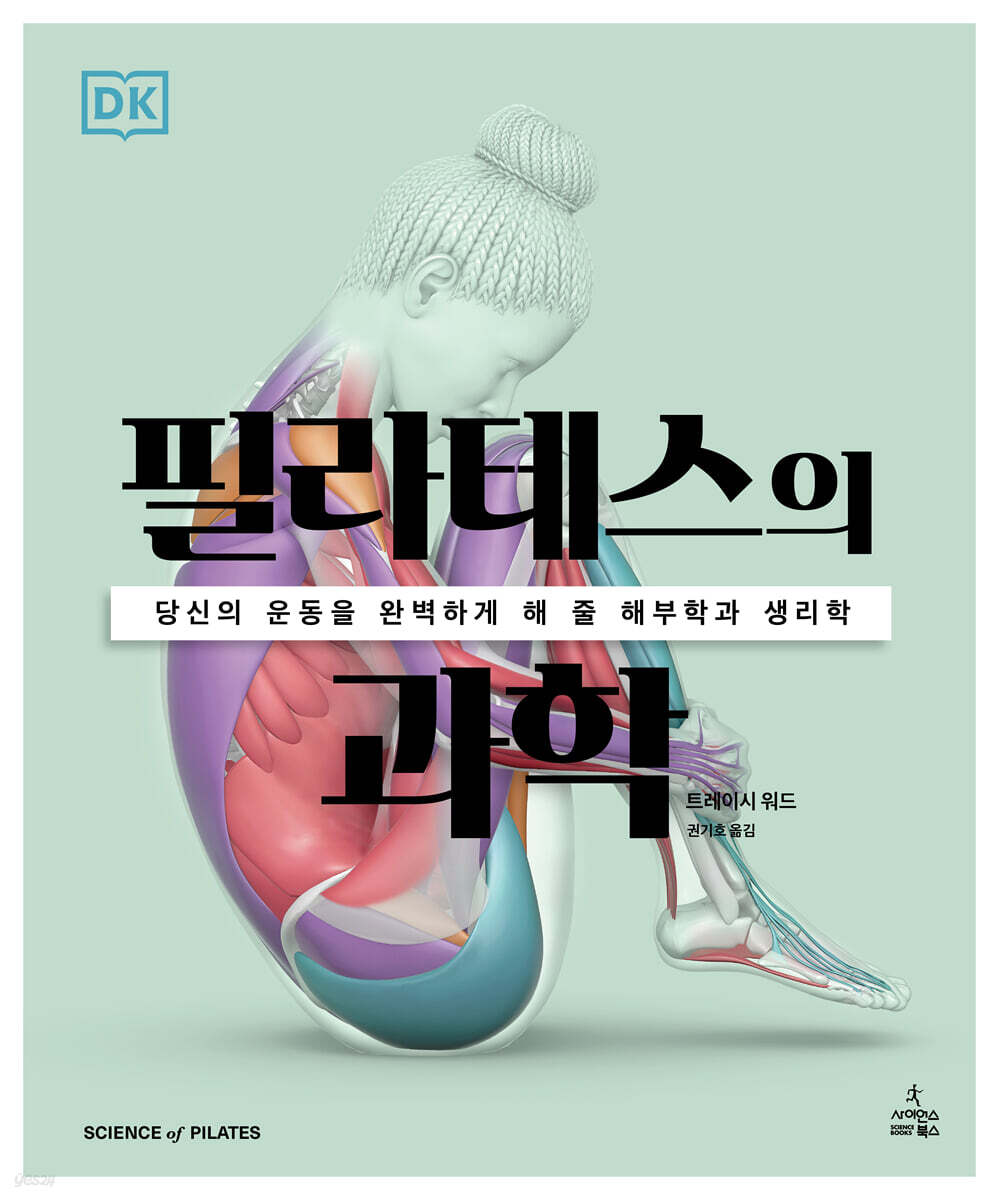
The Science of Pilates
 |
Description
Book Introduction
A full-body strength workout starting with scientific Pilates
Pilates textbook published in 11 countries with 120,000 copies
Controlology corrects posture, restores physical vitality, and energizes the mind, thereby developing the body.
—Joseph Pilates
Joseph Pilates, who worked as a nurse in a British prisoner-of-war camp during World War I, developed an exercise method to help patients recover.
In a prisoner of war camp with limited space and no proper exercise equipment, a new exercise method was born using bed bars and springs as equipment.
Pilates, a bodybuilder and athlete, named his exercise method, which embodies the philosophy of controlling the body according to one's will, Contrology.
This exercise method was effective in treating and rehabilitating injuries, and first gained popularity and widespread recognition in the dance world.
However, it became famous not by the name the creator came up with, but by the name of the creator.
Pilates, which has gained worldwide popularity since the late 20th century, has emerged as a leading player in the personal exercise market alongside yoga. According to research by Polaris Market Research, its global market size is expected to reach $160 billion by 2024 and is growing by 2-5% annually.
Demand for Pilates has also skyrocketed in our country.
However, with the over-issuance of private qualifications and the proliferation of private academies that are being established and then closed down, there are many cases of students having difficulty receiving systematic education.
In this situation, Tracy Ward's 『Science of Pilates: Anatomy and Physiology to Perfect Your Exercises』, published by Science Books, will be a guide that will help readers fall in love with Pilates without wasting time or worry by scientifically analyzing and explaining the core philosophy and principles of Pilates and presenting a methodology for individuals to develop an exercise routine that suits their body type.
The Science of Pilates, a new book in the "Science of Exercise" series published by Science Books in collaboration with Dorling Kindersley (DK), a renowned British publisher known for its systematic and powerful anatomy infographic books, including "Complete Human Body" and "Principles of the Human Body," will help you revitalize and reorganize your body when your body and mind are easily exhausted.
Pilates textbook published in 11 countries with 120,000 copies
Controlology corrects posture, restores physical vitality, and energizes the mind, thereby developing the body.
—Joseph Pilates
Joseph Pilates, who worked as a nurse in a British prisoner-of-war camp during World War I, developed an exercise method to help patients recover.
In a prisoner of war camp with limited space and no proper exercise equipment, a new exercise method was born using bed bars and springs as equipment.
Pilates, a bodybuilder and athlete, named his exercise method, which embodies the philosophy of controlling the body according to one's will, Contrology.
This exercise method was effective in treating and rehabilitating injuries, and first gained popularity and widespread recognition in the dance world.
However, it became famous not by the name the creator came up with, but by the name of the creator.
Pilates, which has gained worldwide popularity since the late 20th century, has emerged as a leading player in the personal exercise market alongside yoga. According to research by Polaris Market Research, its global market size is expected to reach $160 billion by 2024 and is growing by 2-5% annually.
Demand for Pilates has also skyrocketed in our country.
However, with the over-issuance of private qualifications and the proliferation of private academies that are being established and then closed down, there are many cases of students having difficulty receiving systematic education.
In this situation, Tracy Ward's 『Science of Pilates: Anatomy and Physiology to Perfect Your Exercises』, published by Science Books, will be a guide that will help readers fall in love with Pilates without wasting time or worry by scientifically analyzing and explaining the core philosophy and principles of Pilates and presenting a methodology for individuals to develop an exercise routine that suits their body type.
The Science of Pilates, a new book in the "Science of Exercise" series published by Science Books in collaboration with Dorling Kindersley (DK), a renowned British publisher known for its systematic and powerful anatomy infographic books, including "Complete Human Body" and "Principles of the Human Body," will help you revitalize and reorganize your body when your body and mind are easily exhausted.
index
Preface 6
The Physiology of Pilates 12
Muscle Anatomy 14 / Understanding Small and Large Muscles 16 / Understanding Muscle Slings 18 / How Muscles Work 20 / The Skeletal System 22 / Bones and Joints 24 / Core Muscles 26 / Anatomy of the Neutral Spine 28 / Understanding Posture 30 / Characteristics of Mechanical Pain 32 / Pilates and Pain Relief 34 / Breathing Techniques 36 / Gut Health 38 / Pilates and Mindfulness for Stress and Anxiety Relief 40
Pilates Movement 42
About Pilates 44 / Simple Posture Exercises 46 / Abdominal Curl 48 / Oblique Curl 49
Stability Movement 50 / Hundred 52 / Adapted Movement 54 / Rolling Back 56 / Adapted Movement 58 / One-Leg Stretch 60 / Adapted Movement 62 / Double-Leg Stretch 64 / Adapted Movement 66 / Rocker with Open Legs 68 / Swan Dive 70 / Adapted Movement 72 / One-Leg Kick 74 / Double-Leg Kick 76 / Scissors 78 / Adapted Movement 80 / Bicycle 82 / Shoulder Bridge 84 / Adapted Movement 86 / Swimming 88 / Adapted Movement 90 / Seal 92
Rotation 94 / One-Leg Circle 96 / Application 98 / Side Kick 100 / Application 102 / Hip Twist 104 / Application 106 / Side Kick in Kneeling 108 / Side Bend 110 / Application 112 / Side Twist 114 / Clam 116 / Leg Lift and Row 117 / Double Leg Lift 118 / One-Leg Lifted 119
Strength Movements 120 / Roll Ups 122 / Application Movements 124 / Roll Overs 126 / Corkscrews 128 / Neck Pulls 132 / Jack Knife 134 / Teasers 136 / Application Movements 138 / Leg Pull Front 140 / Application Movements 142 / Leg Pull Back 144 / Application Movements 146 / Boomerangs 148 / Locking 152 / Breast Stroke 154 / Criss Cross 155 / Control Balance 156 / Push Ups 158 / Application Movements 160
Mobility Movement 162 / Spine Stretch 164 / Cow 166 / Spine Twist 168 / Cobra 170 / Arm Opening 172 / Thread the Needle 174 / Mermaid 176
Pilates Program 178 / Universal Fitness 180 / Beginner Workout Plan 182 / Intermediate Workout Plan 184 / Advanced Workout Plan 186 / Pilates for Running 188 / Pilates for Swimming 190 / Pilates for Strength Training 192 / Pilates for Office Workers 194 / Pilates for Women's Health 198 / Pilates for Back Pain 202 / Pilates for Neck Pain and Headaches 204 / Pilates for Scoliosis 206 / Pilates for Hypermobility 208 / Pilates for Osteoarthritis 210 / Pilates for Arthritis 212
Index 214 / References 220 / About the Author 223 / Acknowledgments 223
The Physiology of Pilates 12
Muscle Anatomy 14 / Understanding Small and Large Muscles 16 / Understanding Muscle Slings 18 / How Muscles Work 20 / The Skeletal System 22 / Bones and Joints 24 / Core Muscles 26 / Anatomy of the Neutral Spine 28 / Understanding Posture 30 / Characteristics of Mechanical Pain 32 / Pilates and Pain Relief 34 / Breathing Techniques 36 / Gut Health 38 / Pilates and Mindfulness for Stress and Anxiety Relief 40
Pilates Movement 42
About Pilates 44 / Simple Posture Exercises 46 / Abdominal Curl 48 / Oblique Curl 49
Stability Movement 50 / Hundred 52 / Adapted Movement 54 / Rolling Back 56 / Adapted Movement 58 / One-Leg Stretch 60 / Adapted Movement 62 / Double-Leg Stretch 64 / Adapted Movement 66 / Rocker with Open Legs 68 / Swan Dive 70 / Adapted Movement 72 / One-Leg Kick 74 / Double-Leg Kick 76 / Scissors 78 / Adapted Movement 80 / Bicycle 82 / Shoulder Bridge 84 / Adapted Movement 86 / Swimming 88 / Adapted Movement 90 / Seal 92
Rotation 94 / One-Leg Circle 96 / Application 98 / Side Kick 100 / Application 102 / Hip Twist 104 / Application 106 / Side Kick in Kneeling 108 / Side Bend 110 / Application 112 / Side Twist 114 / Clam 116 / Leg Lift and Row 117 / Double Leg Lift 118 / One-Leg Lifted 119
Strength Movements 120 / Roll Ups 122 / Application Movements 124 / Roll Overs 126 / Corkscrews 128 / Neck Pulls 132 / Jack Knife 134 / Teasers 136 / Application Movements 138 / Leg Pull Front 140 / Application Movements 142 / Leg Pull Back 144 / Application Movements 146 / Boomerangs 148 / Locking 152 / Breast Stroke 154 / Criss Cross 155 / Control Balance 156 / Push Ups 158 / Application Movements 160
Mobility Movement 162 / Spine Stretch 164 / Cow 166 / Spine Twist 168 / Cobra 170 / Arm Opening 172 / Thread the Needle 174 / Mermaid 176
Pilates Program 178 / Universal Fitness 180 / Beginner Workout Plan 182 / Intermediate Workout Plan 184 / Advanced Workout Plan 186 / Pilates for Running 188 / Pilates for Swimming 190 / Pilates for Strength Training 192 / Pilates for Office Workers 194 / Pilates for Women's Health 198 / Pilates for Back Pain 202 / Pilates for Neck Pain and Headaches 204 / Pilates for Scoliosis 206 / Pilates for Hypermobility 208 / Pilates for Osteoarthritis 210 / Pilates for Arthritis 212
Index 214 / References 220 / About the Author 223 / Acknowledgments 223
Detailed image

Publisher's Review
For correcting stiff posture and strengthening core muscles
Anatomy and Physiology Guide
The author of this book, Tracy Ward, says that the core of Pilates lies in the process of experiencing the connection between body and mind.
The author holds a Master's degree in Physical Therapy, is a board certified orthopedic surgeon, and has completed graduate studies in clinical and therapeutic medicine at the McKinsey Institute. He is an APPI certified Pilates educator and Pilates health professional.
Through this book, those who are trying Pilates for the first time can gain basic knowledge, those who have been practicing regularly can learn new routines, and those who teach Pilates can gain more specialized knowledge.
"The Science of Pilates" is comprised of not only knowledge of anatomy and physiology, but also content such as pain science and mindfulness to help you experience the organic connection between body and mind.
Additionally, to introduce accurate Pilates movements, 104 3D infographics of human muscles were placed so that you can easily distinguish which muscles are stretched or contracted when performing each movement step by step using colors.
Tips and precautions to keep in mind for each movement are also organized, so you can easily understand the movements you need.
By closely linking Pilates knowledge with actual movements, you can maximize the level of Pilates you can experience.
From classic Pilates to modern Pilates
104 Pilates Exercises Essential for Strength, Stamina, and Flexibility
Pilates focuses on improving core muscle stability, strength, stamina, and flexibility, and also has a positive effect on the mental health of practitioners.
- In the text
It is often thought that if you have back pain or arthritis, you cannot exercise at all.
However, Pilates is an exercise that everyone can do regardless of restrictions, and it allows you to experience better physical activity.
Of course, understanding the correct method and the body must come first, so when learning Pilates, understanding not only the movements but also our body is essential.
To this end, 『The Science of Pilates』 is composed of three parts: “Physiology of Pilates,” “Pilates Movements,” and “Pilates Programs.”
Part 1, "Physiology of Pilates," covers muscle anatomy, the skeletal system, the spine and posture, pain, and intestinal health, scientifically organizing our body's responses to Pilates.
While covering anatomical and physiological terms, it also includes various visual aids and additional explanations so that even beginners who are experiencing Pilates for the first time can easily understand the specialized terminology.
Part 2, "Pilates Movements," introduces Pilates by dividing it into four main movements: stability movements (13 basic movements), rotation movements (10 basic movements), strength movements (14 basic movements), and mobility movements (7 basic movements).
The stability movement that is the foundation of Pilates training begins with the classic movement called the Hundred (page 52), which is like lying down and tapping your arms a hundred times.
Rotational movements, such as side kicks (page 100) that involve lying on your back and kicking your feet, increase joint stability and strengthen specific muscle groups, improving joint function.
Strength exercises based on stability movements use the muscles of the entire body to build a strong foundation for daily activities and athletic ability, such as roll-ups (page 122) and roll-overs (page 126).
Mobility exercises that can complement strength exercises include spine stretches (page 164), which increase spinal mobility.
No matter which page you open, it contains color infographics and step-by-step explanations of 104 movements to make it easy to understand Pilates.
By attaching application movements to each movement, readers can find new stimulation and adjust the difficulty level.
You can experience various categories of Pilates, from classic Pilates to modern Pilates.
Pilates is an exercise program that can be performed at different levels of skill, with a wide gap between programs.
To this end, Part 3, “Pilates Program,” divides each individual’s level into beginner, intermediate, and advanced, and provides an exercise plan tailored to each.
In the case of the mat Pilates exercise plan on pages 196-197 of 『The Science of Pilates』, it is recommended that beginners perform each of the eight movements for 30 seconds, intermediate for 45 seconds, and advanced for 60 seconds, and that the rest and recovery time be adjusted according to the level.
You can focus on specific parts of your body, such as the spine, shoulder joints, and hip joints, and train your entire body at once with a full-body program.
We provide customized Pilates programs tailored to various exercise, lifestyle, and individual characteristics, including programs that help improve performance in other sports such as running and swimming, as well as programs for office workers, women's health, and hypermobility.
A proper Pilates routine will help you activate your muscles, build strength and endurance, improve your posture, and minimize discomfort.
If you work while sitting for long periods of time, you should ensure that your spine is supported and elongated from the moment you sit down at your desk, supporting the natural curvature of your spine.
The recommended routine on page 195 of this book goes through pelvic tilts (page 47), roll-ups (page 124), scissors (page 80), arm openings (page 173), shoulder bridges (page 86), mermaids (page 176), and dumb waiters (page 46), with 6 to 8 reps per movement.
You can also design a new Pilates routine by combining the 44 basic movements and 60 applied movements.
By creating a Pilates routine that's right for you with "The Science of Pilates," you'll gain confidence in your body as well as physical health.
Features of this book
★ The easiest-to-understand Pilates textbook, from muscle anatomy and the skeletal system to gut health and mindfulness.
★ A collection of 104 Pilates movements, including 44 basic movements and 60 applied movements.
★ 3D human body infographic with muscle names and function patterns
★ A Pilates routine suitable for beginners, office workers, pregnant women, and people with arthritis.
This book's primary audience
★ People who want to understand the anatomy and physiology of Pilates
★ People who want to learn Pilates on their own
★ People who want to create their own Pilates program
The Science of Exercise series, which summarizes the latest sports science from anatomy and physiology perspectives.
★ The Science of Yoga by Ann Swanson | Translated by Kwon Ki-ho
★ The Science of Running by Chris Napier | Translated by Kim Ho-jeong
★ The Science of Strength Training by Austin Current | Translated by Kwon Ki-ho
★ The Science of HIIT, by Ingrid Clay | Translated by Lee Min-ah
★ The Science of Pilates by Tracy Ward | Translated by Kwon Ki-ho
★ The Science of Stretching by Lida Malek | Translated by Kwon Ki-ho
Anatomy and Physiology Guide
The author of this book, Tracy Ward, says that the core of Pilates lies in the process of experiencing the connection between body and mind.
The author holds a Master's degree in Physical Therapy, is a board certified orthopedic surgeon, and has completed graduate studies in clinical and therapeutic medicine at the McKinsey Institute. He is an APPI certified Pilates educator and Pilates health professional.
Through this book, those who are trying Pilates for the first time can gain basic knowledge, those who have been practicing regularly can learn new routines, and those who teach Pilates can gain more specialized knowledge.
"The Science of Pilates" is comprised of not only knowledge of anatomy and physiology, but also content such as pain science and mindfulness to help you experience the organic connection between body and mind.
Additionally, to introduce accurate Pilates movements, 104 3D infographics of human muscles were placed so that you can easily distinguish which muscles are stretched or contracted when performing each movement step by step using colors.
Tips and precautions to keep in mind for each movement are also organized, so you can easily understand the movements you need.
By closely linking Pilates knowledge with actual movements, you can maximize the level of Pilates you can experience.
From classic Pilates to modern Pilates
104 Pilates Exercises Essential for Strength, Stamina, and Flexibility
Pilates focuses on improving core muscle stability, strength, stamina, and flexibility, and also has a positive effect on the mental health of practitioners.
- In the text
It is often thought that if you have back pain or arthritis, you cannot exercise at all.
However, Pilates is an exercise that everyone can do regardless of restrictions, and it allows you to experience better physical activity.
Of course, understanding the correct method and the body must come first, so when learning Pilates, understanding not only the movements but also our body is essential.
To this end, 『The Science of Pilates』 is composed of three parts: “Physiology of Pilates,” “Pilates Movements,” and “Pilates Programs.”
Part 1, "Physiology of Pilates," covers muscle anatomy, the skeletal system, the spine and posture, pain, and intestinal health, scientifically organizing our body's responses to Pilates.
While covering anatomical and physiological terms, it also includes various visual aids and additional explanations so that even beginners who are experiencing Pilates for the first time can easily understand the specialized terminology.
Part 2, "Pilates Movements," introduces Pilates by dividing it into four main movements: stability movements (13 basic movements), rotation movements (10 basic movements), strength movements (14 basic movements), and mobility movements (7 basic movements).
The stability movement that is the foundation of Pilates training begins with the classic movement called the Hundred (page 52), which is like lying down and tapping your arms a hundred times.
Rotational movements, such as side kicks (page 100) that involve lying on your back and kicking your feet, increase joint stability and strengthen specific muscle groups, improving joint function.
Strength exercises based on stability movements use the muscles of the entire body to build a strong foundation for daily activities and athletic ability, such as roll-ups (page 122) and roll-overs (page 126).
Mobility exercises that can complement strength exercises include spine stretches (page 164), which increase spinal mobility.
No matter which page you open, it contains color infographics and step-by-step explanations of 104 movements to make it easy to understand Pilates.
By attaching application movements to each movement, readers can find new stimulation and adjust the difficulty level.
You can experience various categories of Pilates, from classic Pilates to modern Pilates.
Pilates is an exercise program that can be performed at different levels of skill, with a wide gap between programs.
To this end, Part 3, “Pilates Program,” divides each individual’s level into beginner, intermediate, and advanced, and provides an exercise plan tailored to each.
In the case of the mat Pilates exercise plan on pages 196-197 of 『The Science of Pilates』, it is recommended that beginners perform each of the eight movements for 30 seconds, intermediate for 45 seconds, and advanced for 60 seconds, and that the rest and recovery time be adjusted according to the level.
You can focus on specific parts of your body, such as the spine, shoulder joints, and hip joints, and train your entire body at once with a full-body program.
We provide customized Pilates programs tailored to various exercise, lifestyle, and individual characteristics, including programs that help improve performance in other sports such as running and swimming, as well as programs for office workers, women's health, and hypermobility.
A proper Pilates routine will help you activate your muscles, build strength and endurance, improve your posture, and minimize discomfort.
If you work while sitting for long periods of time, you should ensure that your spine is supported and elongated from the moment you sit down at your desk, supporting the natural curvature of your spine.
The recommended routine on page 195 of this book goes through pelvic tilts (page 47), roll-ups (page 124), scissors (page 80), arm openings (page 173), shoulder bridges (page 86), mermaids (page 176), and dumb waiters (page 46), with 6 to 8 reps per movement.
You can also design a new Pilates routine by combining the 44 basic movements and 60 applied movements.
By creating a Pilates routine that's right for you with "The Science of Pilates," you'll gain confidence in your body as well as physical health.
Features of this book
★ The easiest-to-understand Pilates textbook, from muscle anatomy and the skeletal system to gut health and mindfulness.
★ A collection of 104 Pilates movements, including 44 basic movements and 60 applied movements.
★ 3D human body infographic with muscle names and function patterns
★ A Pilates routine suitable for beginners, office workers, pregnant women, and people with arthritis.
This book's primary audience
★ People who want to understand the anatomy and physiology of Pilates
★ People who want to learn Pilates on their own
★ People who want to create their own Pilates program
The Science of Exercise series, which summarizes the latest sports science from anatomy and physiology perspectives.
★ The Science of Yoga by Ann Swanson | Translated by Kwon Ki-ho
★ The Science of Running by Chris Napier | Translated by Kim Ho-jeong
★ The Science of Strength Training by Austin Current | Translated by Kwon Ki-ho
★ The Science of HIIT, by Ingrid Clay | Translated by Lee Min-ah
★ The Science of Pilates by Tracy Ward | Translated by Kwon Ki-ho
★ The Science of Stretching by Lida Malek | Translated by Kwon Ki-ho
GOODS SPECIFICS
- Date of issue: December 31, 2024
- Format: Paperback book binding method guide
- Page count, weight, size: 224 pages | 674g | 195*230*20mm
- ISBN13: 9791194087007
- ISBN10: 1194087000
You may also like
카테고리
korean


korean

![GQ KOREA Mark (Monthly): December [2025]](http://librairie.coreenne.fr/cdn/shop/files/8ef265dbbfbf186523ed75ba7319009d.jpg?v=1765340328&width=3840)


