

Two-armed machine
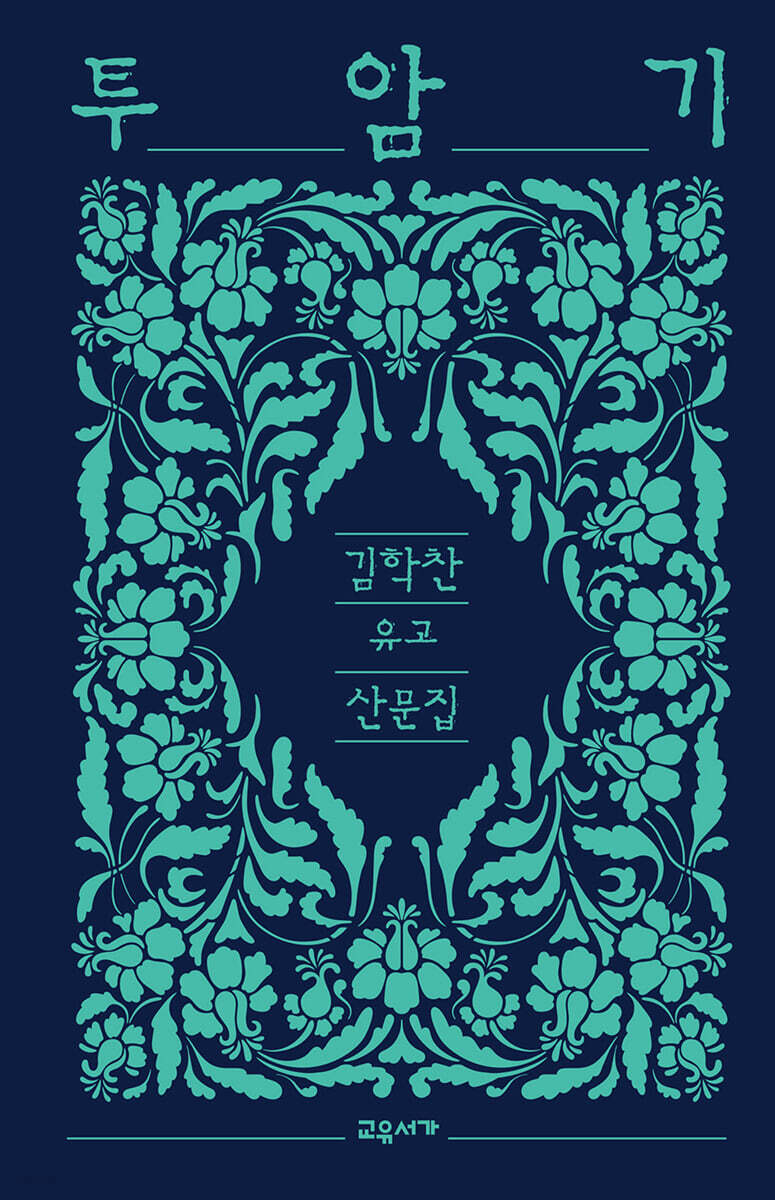 |
Description
Book Introduction
“You have to be righteous
but
“I was crying”
I have to write today's 『Two-Am-Ki』.
You have to work slowly, word by word, line by line.
Now that we can't drink the water, it's time to leave.
I need to close the folder and open the door.
Readers who love the author,
A small consolation to all who remember him.
“I just wanted to sit still and write novels.”
I hope I won't be remembered only as a writer who left too early.
To be remembered as an eternal writer… …
On a slow afternoon on Saturday, February 8, 2025, I received a call from an unknown number.
“I am the wife of author Kim Hak-chan, and my husband passed away a little while ago.
When my husband left, he left a message to the publisher saying that he had to return the money (deposit).
“I will hold the funeral and keep my promise.” He hung up the phone in a confused, tearful voice, and the publisher left a text message for his wife.
“The teacher wanted to publish a collection of essays.
In our conversation a month ago, you said you wanted to publish a collection of short stories.
Now that your wife has a choice, please take your time and decide.
“I would like to publish a book by collecting all my writings, but if not, I will consider it a condolence payment and will not accept a refund of the deposit.”
Kim Hak-chan.
A writer who left us at a very young age.
Aged 42.
The posthumous collection of short stories and prose by author Kim Hak-chan, who passed away in February 2025, was published simultaneously by Kyoyu Bookstore to coincide with his birthday.
When author Kim Hak-chan wrote a manuscript, his wife Choi Su-kyung, a literary friend who was always the first to read and share opinions, collected her husband's works and published them with the help of fellow authors such as Lee Eun-seon and Seo Yu-mi.
This project was planned as a small consolation to the readers who loved the author and all those who remember him, and with the hope that the name Kim Hak-chan will remain with us for a long time. Author Kim Hak-chan's wish to remain as a 'writer who writes to the end' until the end of his life has now come to be with us in the form of two books.
Among the two volumes of Kim Hak-chan's posthumous works published this time, the short story collection "Clouds" contains unpublished works, works written in his youth but not published as books, and recent works written after "Minor Tastes" published in 2023. The prose collection "Two Cancers" is a collection of prose written after he was diagnosed with stage 4 lung cancer after visiting the hospital with a cough that he had not considered serious.
(If you just open the table of contents of the prose collection 『Tuamgi』, you can see that the first and second parts are separated as if they were parting ways.
As the illness rapidly worsened, the writing finally stopped, and the remaining sentences remained before us as unfinished breaths.)
Author Kim Hak-chan was born in Goryeong, Gyeongsangbuk-do in 1983, and made a splash in the literary world in 2012 when he won the 6th Changbi Novel Award for his novel, “What’s Wrong with Grass Bread?”
Since then, he has been loved by readers for works that capture the subtle textures of reality, such as 『Not Refreshing』 (Munhakdongne), 『Good Evening, Penguin』 (Dasan Books), and the short story collection 『Minor Tastes』 (Kyoyuseoga).
He won major literary awards, including the Jeon Tae-il Literary Award and the Choi Myeong-hee Youth Literary Award, and portrayed contemporary stories with sincerity.
His sudden passing brought great sadness to the literary world and readers, but the sentences he left behind still live on.
The collection of short stories and essays published this time contains the everyday scenes, love, family, and the meaning of 'being alive' that author Kim Hak-chan clung to until the very end.
His writing sometimes quietly, sometimes firmly, strikes the reader's heart.
“The true probability of any event is always 50/50.
(…) Just like the sentence in his novel “Everyone is meant to eat to live” (「End」), there is a gaze that does not give up hope even in the uncertainty of life.
The posthumous collection of Kim Hak-chan's works proves that his writings continue to live on despite his absence.
The last writings of the author who passed away on earth make us feel the finiteness and preciousness of a single moment even more keenly.
Through this book, readers will experience a renewed sense of separation from the author, yet find comfort in the knowledge that their connection with him has not been completely severed.
This will be a meaningful undertaking that goes beyond simply publishing a book, celebrating the author's life and literature, and rekindling his presence.
but
“I was crying”
I have to write today's 『Two-Am-Ki』.
You have to work slowly, word by word, line by line.
Now that we can't drink the water, it's time to leave.
I need to close the folder and open the door.
Readers who love the author,
A small consolation to all who remember him.
“I just wanted to sit still and write novels.”
I hope I won't be remembered only as a writer who left too early.
To be remembered as an eternal writer… …
On a slow afternoon on Saturday, February 8, 2025, I received a call from an unknown number.
“I am the wife of author Kim Hak-chan, and my husband passed away a little while ago.
When my husband left, he left a message to the publisher saying that he had to return the money (deposit).
“I will hold the funeral and keep my promise.” He hung up the phone in a confused, tearful voice, and the publisher left a text message for his wife.
“The teacher wanted to publish a collection of essays.
In our conversation a month ago, you said you wanted to publish a collection of short stories.
Now that your wife has a choice, please take your time and decide.
“I would like to publish a book by collecting all my writings, but if not, I will consider it a condolence payment and will not accept a refund of the deposit.”
Kim Hak-chan.
A writer who left us at a very young age.
Aged 42.
The posthumous collection of short stories and prose by author Kim Hak-chan, who passed away in February 2025, was published simultaneously by Kyoyu Bookstore to coincide with his birthday.
When author Kim Hak-chan wrote a manuscript, his wife Choi Su-kyung, a literary friend who was always the first to read and share opinions, collected her husband's works and published them with the help of fellow authors such as Lee Eun-seon and Seo Yu-mi.
This project was planned as a small consolation to the readers who loved the author and all those who remember him, and with the hope that the name Kim Hak-chan will remain with us for a long time. Author Kim Hak-chan's wish to remain as a 'writer who writes to the end' until the end of his life has now come to be with us in the form of two books.
Among the two volumes of Kim Hak-chan's posthumous works published this time, the short story collection "Clouds" contains unpublished works, works written in his youth but not published as books, and recent works written after "Minor Tastes" published in 2023. The prose collection "Two Cancers" is a collection of prose written after he was diagnosed with stage 4 lung cancer after visiting the hospital with a cough that he had not considered serious.
(If you just open the table of contents of the prose collection 『Tuamgi』, you can see that the first and second parts are separated as if they were parting ways.
As the illness rapidly worsened, the writing finally stopped, and the remaining sentences remained before us as unfinished breaths.)
Author Kim Hak-chan was born in Goryeong, Gyeongsangbuk-do in 1983, and made a splash in the literary world in 2012 when he won the 6th Changbi Novel Award for his novel, “What’s Wrong with Grass Bread?”
Since then, he has been loved by readers for works that capture the subtle textures of reality, such as 『Not Refreshing』 (Munhakdongne), 『Good Evening, Penguin』 (Dasan Books), and the short story collection 『Minor Tastes』 (Kyoyuseoga).
He won major literary awards, including the Jeon Tae-il Literary Award and the Choi Myeong-hee Youth Literary Award, and portrayed contemporary stories with sincerity.
His sudden passing brought great sadness to the literary world and readers, but the sentences he left behind still live on.
The collection of short stories and essays published this time contains the everyday scenes, love, family, and the meaning of 'being alive' that author Kim Hak-chan clung to until the very end.
His writing sometimes quietly, sometimes firmly, strikes the reader's heart.
“The true probability of any event is always 50/50.
(…) Just like the sentence in his novel “Everyone is meant to eat to live” (「End」), there is a gaze that does not give up hope even in the uncertainty of life.
The posthumous collection of Kim Hak-chan's works proves that his writings continue to live on despite his absence.
The last writings of the author who passed away on earth make us feel the finiteness and preciousness of a single moment even more keenly.
Through this book, readers will experience a renewed sense of separation from the author, yet find comfort in the knowledge that their connection with him has not been completely severed.
This will be a meaningful undertaking that goes beyond simply publishing a book, celebrating the author's life and literature, and rekindling his presence.
index
Part 1: You have to be patient.
But I was crying.
1.
Birth / 2.
Convinced / 3.
Dosage / 4.
Discovery / 5.
The Secret of Birth, Aging, Illness, and Death / 6.
Book / 7.
Side effects / 8.
Advertisement / 9.
Nobel Prize / 10.
Outpatient / 11.
Commemoration / 12.
Business / 13.
Misunderstanding / 14.
Walking / 15.
Birthday / 16.
Travel / 17.
Reading / 18.
New Clothes / 19. CT and MRI / 20.
Result / 21.
Ignorance / 22.
Expression / 23.
Chatter / 24.
Morning / 25.
Prohibition / 26.
Toilet / 27.
Reading / 28.
Midterm Exam / 29.
Nails / 30.
Driving / 31.
Shower / 32.
Pain / 33.
Laundry / 34.
Diary / 35.
Travel / 36.
Untitled / 37.
Consciousness / 38.
Movie / 39.
Task / 40.
Suddenly / 41.
Cooking 42.
Typo / 43.
1 day / 44.
2 days / 45.
Literature / 46.
Mountain / 47.
Contact / 48.
Cold / 49.
Weight / 50.
Dream / 51.
Inspection / 52.
Baseball / 53.
Cold / 54.
checkup
Part 2: I wasn't born a writer, but I became one, so I'll write a little more and then leave.
I should have been calm, but I was crying. _Choi Su-kyung (Kim Hak-chan's wife, Korean language teacher)
Hello, Our Bun! _Lee Eun-seon (novelist)
But I was crying.
1.
Birth / 2.
Convinced / 3.
Dosage / 4.
Discovery / 5.
The Secret of Birth, Aging, Illness, and Death / 6.
Book / 7.
Side effects / 8.
Advertisement / 9.
Nobel Prize / 10.
Outpatient / 11.
Commemoration / 12.
Business / 13.
Misunderstanding / 14.
Walking / 15.
Birthday / 16.
Travel / 17.
Reading / 18.
New Clothes / 19. CT and MRI / 20.
Result / 21.
Ignorance / 22.
Expression / 23.
Chatter / 24.
Morning / 25.
Prohibition / 26.
Toilet / 27.
Reading / 28.
Midterm Exam / 29.
Nails / 30.
Driving / 31.
Shower / 32.
Pain / 33.
Laundry / 34.
Diary / 35.
Travel / 36.
Untitled / 37.
Consciousness / 38.
Movie / 39.
Task / 40.
Suddenly / 41.
Cooking 42.
Typo / 43.
1 day / 44.
2 days / 45.
Literature / 46.
Mountain / 47.
Contact / 48.
Cold / 49.
Weight / 50.
Dream / 51.
Inspection / 52.
Baseball / 53.
Cold / 54.
checkup
Part 2: I wasn't born a writer, but I became one, so I'll write a little more and then leave.
I should have been calm, but I was crying. _Choi Su-kyung (Kim Hak-chan's wife, Korean language teacher)
Hello, Our Bun! _Lee Eun-seon (novelist)
Into the book
I've already been sentenced, and I know in my head how precious and valuable a moment of freedom is.
But the thought that I might be arrested suddenly at any moment makes me think about the time I have left.
--- p.42
I couldn't hear anything else.
I didn't mind being told I could teach classes or talk about my travels.
That we have time to live, that we have years left, that we don't have a time limit of months.
The doctor said that it was not a disease that could be cured easily.
Saying that you can do anything sounded like saying that no matter what you do, there is nothing you can do.
Then I have to do my job.
I don't know what that is.
--- p.55
I decided not to care if any misunderstandings occurred.
Misunderstanding is also a burden that Rekrajaman has to bear.
As the doctor said, it is impossible to live the same way as before.
You have no choice but to learn and adapt to a different path.
--- p.65
I also fell into the trap of meaninglessness, wondering what was the point of reading books anymore.
What's the point of eating expensive food, meeting someone you know, or drinking alcohol?
According to this devil, everything is meaningless.
The reason the trap of meaninglessness is scary is because “what is one thing” is true.
It is difficult to deny “what one thing”.
For Lekrajaman, it is a question he will have to fight for his entire life.
It's a question that comes to mind several times a day, and one that I find difficult to shake off even at this very moment.
We must move beyond “something” while being undeniable.
--- p.125
When I go to the car wash, the first thing I do is look for my favorite radio.
The rest is done roughly.
The enthusiasm that overflows at the start always dries up after about twenty minutes, so I know that I will finish the rest of the work in a timely manner.
In fact, it wasn't just car washing, it was everything.
It doesn't work well to exert the same amount of strength from beginning to end, or to exert greater energy at the end.
When you first start out, you have explosive energy, but maintaining that momentum is always difficult.
Always start strong, middle moderate, and end haphazardly.
--- p.173
All side effects just come and go.
The reason is simple.
That's how it was originally.
Any question is invalid before the word “originally.”
Rather than continuing to ask fundamental questions, we have no choice but to nod and find ways to deal with the side effects.
--- p.183
If I don't drink coffee in the morning, I lose one of the joys of life. If it were effective, I could boldly give up the pleasure of coffee, but that's not always the case, so it's annoying.
It would be difficult to say that it is just coffee.
Reducing one of the joys is the biggest challenge for Lekrajaman.
If you reduce your pleasures little by little with the mindset that you can't help it since you can survive, then there's nothing left but survival.
As you eliminate them one by one, your reasons for living become poorer.
It is difficult to escape depression unless you replenish the total amount of joy, or half of the total amount.
It's not for nothing that I recommend small things.
--- p.187
I really hope my wife doesn't remember me anymore.
Even being sad for a year or two is a long time.
I hope that you can continue to live without being overly sad, as you are a person with a healthy mind.
That is the least I can do for my wife.
I hardly talk about my wife in 『Two-Am-Gi』.
When I think of my wife, I can't write "Tuamgi."
--- p.219
I only confide my troubles to my older sister.
I'm sorry, but I can only tell one or two people.
I really can't stand it without talking to anyone.
--- p.222
Tangerines are cheap in the winter, so I wonder if they will help with canker sores.
Actually, I've already eaten a box of tangerines.
I quickly bought some wild tangerines because they were cheap.
Fortunately, the tangerines were okay.
The sad thing about buying a box of tangerines and finding them tasteless is that you will be sad until you eat them all.
--- p.226
It is meaningless to just receive treatment and leave without doing anything you like.
You have to do what you want to do even if it means suffering.
Isn't it the same even if you're not a patient?
There is always a price to pay for what you want to do.
There are times when it is painful, times when you have to endure, and times when you have to sacrifice something.
--- p.243
It's hard to keep your mind calm on the day you go to the hospital.
Pick three or four words and walk around the room.
『Two-Am-Gi』 is a piece of writing that cannot be warm.
I had no intention of writing about how I had cancer, but the world was still beautiful and I could overcome it bravely and without any problems.
However, I wanted to add laughter, even if it was black humor.
--- pp.248-249
A day has passed.
I felt a little better for a day.
The grief over losing my father lasted for years, but it wasn't always sad.
The sadness of losing myself is the same.
I feel better for a few hours a day.
It doesn't give me motivation or hope (I never liked words like motivation in the first place), but I'm tired of just being silent.
Early in the morning, I went to a bakery in Seongbuk-dong with my wife.
I had a meal with bread I've never had before (next time I'll have to buy the bread I used to eat).
But the thought that I might be arrested suddenly at any moment makes me think about the time I have left.
--- p.42
I couldn't hear anything else.
I didn't mind being told I could teach classes or talk about my travels.
That we have time to live, that we have years left, that we don't have a time limit of months.
The doctor said that it was not a disease that could be cured easily.
Saying that you can do anything sounded like saying that no matter what you do, there is nothing you can do.
Then I have to do my job.
I don't know what that is.
--- p.55
I decided not to care if any misunderstandings occurred.
Misunderstanding is also a burden that Rekrajaman has to bear.
As the doctor said, it is impossible to live the same way as before.
You have no choice but to learn and adapt to a different path.
--- p.65
I also fell into the trap of meaninglessness, wondering what was the point of reading books anymore.
What's the point of eating expensive food, meeting someone you know, or drinking alcohol?
According to this devil, everything is meaningless.
The reason the trap of meaninglessness is scary is because “what is one thing” is true.
It is difficult to deny “what one thing”.
For Lekrajaman, it is a question he will have to fight for his entire life.
It's a question that comes to mind several times a day, and one that I find difficult to shake off even at this very moment.
We must move beyond “something” while being undeniable.
--- p.125
When I go to the car wash, the first thing I do is look for my favorite radio.
The rest is done roughly.
The enthusiasm that overflows at the start always dries up after about twenty minutes, so I know that I will finish the rest of the work in a timely manner.
In fact, it wasn't just car washing, it was everything.
It doesn't work well to exert the same amount of strength from beginning to end, or to exert greater energy at the end.
When you first start out, you have explosive energy, but maintaining that momentum is always difficult.
Always start strong, middle moderate, and end haphazardly.
--- p.173
All side effects just come and go.
The reason is simple.
That's how it was originally.
Any question is invalid before the word “originally.”
Rather than continuing to ask fundamental questions, we have no choice but to nod and find ways to deal with the side effects.
--- p.183
If I don't drink coffee in the morning, I lose one of the joys of life. If it were effective, I could boldly give up the pleasure of coffee, but that's not always the case, so it's annoying.
It would be difficult to say that it is just coffee.
Reducing one of the joys is the biggest challenge for Lekrajaman.
If you reduce your pleasures little by little with the mindset that you can't help it since you can survive, then there's nothing left but survival.
As you eliminate them one by one, your reasons for living become poorer.
It is difficult to escape depression unless you replenish the total amount of joy, or half of the total amount.
It's not for nothing that I recommend small things.
--- p.187
I really hope my wife doesn't remember me anymore.
Even being sad for a year or two is a long time.
I hope that you can continue to live without being overly sad, as you are a person with a healthy mind.
That is the least I can do for my wife.
I hardly talk about my wife in 『Two-Am-Gi』.
When I think of my wife, I can't write "Tuamgi."
--- p.219
I only confide my troubles to my older sister.
I'm sorry, but I can only tell one or two people.
I really can't stand it without talking to anyone.
--- p.222
Tangerines are cheap in the winter, so I wonder if they will help with canker sores.
Actually, I've already eaten a box of tangerines.
I quickly bought some wild tangerines because they were cheap.
Fortunately, the tangerines were okay.
The sad thing about buying a box of tangerines and finding them tasteless is that you will be sad until you eat them all.
--- p.226
It is meaningless to just receive treatment and leave without doing anything you like.
You have to do what you want to do even if it means suffering.
Isn't it the same even if you're not a patient?
There is always a price to pay for what you want to do.
There are times when it is painful, times when you have to endure, and times when you have to sacrifice something.
--- p.243
It's hard to keep your mind calm on the day you go to the hospital.
Pick three or four words and walk around the room.
『Two-Am-Gi』 is a piece of writing that cannot be warm.
I had no intention of writing about how I had cancer, but the world was still beautiful and I could overcome it bravely and without any problems.
However, I wanted to add laughter, even if it was black humor.
--- pp.248-249
A day has passed.
I felt a little better for a day.
The grief over losing my father lasted for years, but it wasn't always sad.
The sadness of losing myself is the same.
I feel better for a few hours a day.
It doesn't give me motivation or hope (I never liked words like motivation in the first place), but I'm tired of just being silent.
Early in the morning, I went to a bakery in Seongbuk-dong with my wife.
I had a meal with bread I've never had before (next time I'll have to buy the bread I used to eat).
--- pp.267-268
Publisher's Review
What I mean is that you can do anything
It sounded like he was saying that no matter what he did, there was nothing he could do.
Then I have to do my job.
The late author Kim Hak-chan's prose collection, "Two-Am-Gi," is a collection of essays he wrote after being diagnosed with stage 4 lung cancer after visiting the hospital with a cough he had previously ignored.
From the day he became a 'Reclaza Man' while participating in the clinical trial of the third-generation targeted therapy for lung cancer, until the last winter when he passed away, the days are recorded like a diary.
This book is a collection of prose pieces that he wrote in his spare time, pre-determined under the title 'Two-Am-Gi', perhaps because he thought he did not have much time left in life.
However, as his condition rapidly worsened, he was unable to progress further and the work was left as an unfinished collection of prose.
This is also why there is a difference in format between Part 1 and Part 2.
“A calm positivity that is neither optimistic nor pessimistic about one’s situation” (Changbi Novel Award judges’ comments) is also prominent in this posthumous prose collection, quietly depicting the small scenes of everyday life, love, family, and the meaning of ‘being alive’ that the author clung to until the very end.
In order not to leave without doing anything, in order to escape the trap of meaninglessness, the author carefully selects a half can of beer, chooses the time to drink a cup of coffee, and chooses words, reminding us once again that “the approach of fate means that everyday things like cooking, laundry, washing the car, driving, and traveling all take on special meaning, and we must constantly remind ourselves of the good fortune that our body and mind continue” (Namgung In).
“Being sentenced to death would mean choosing how to endure the remaining time.
Author Kim Hak-chan chose to record in that way” (Han Ji-hye), and the enduring writing, the living language, and the warm black humor left behind before disappearing will now breathe for a long time with readers in place of the author.
It is meaningless to just receive treatment and leave without doing anything you like.
You have to do what you want to do even if it means suffering.
Isn't it the same even if you're not a patient?
There is always a price to pay for what you want to do.
There are times when it is painful, times when you have to endure, and times when you have to sacrifice something.
_(Two-Am-Ki, p. 243)
It sounded like he was saying that no matter what he did, there was nothing he could do.
Then I have to do my job.
The late author Kim Hak-chan's prose collection, "Two-Am-Gi," is a collection of essays he wrote after being diagnosed with stage 4 lung cancer after visiting the hospital with a cough he had previously ignored.
From the day he became a 'Reclaza Man' while participating in the clinical trial of the third-generation targeted therapy for lung cancer, until the last winter when he passed away, the days are recorded like a diary.
This book is a collection of prose pieces that he wrote in his spare time, pre-determined under the title 'Two-Am-Gi', perhaps because he thought he did not have much time left in life.
However, as his condition rapidly worsened, he was unable to progress further and the work was left as an unfinished collection of prose.
This is also why there is a difference in format between Part 1 and Part 2.
“A calm positivity that is neither optimistic nor pessimistic about one’s situation” (Changbi Novel Award judges’ comments) is also prominent in this posthumous prose collection, quietly depicting the small scenes of everyday life, love, family, and the meaning of ‘being alive’ that the author clung to until the very end.
In order not to leave without doing anything, in order to escape the trap of meaninglessness, the author carefully selects a half can of beer, chooses the time to drink a cup of coffee, and chooses words, reminding us once again that “the approach of fate means that everyday things like cooking, laundry, washing the car, driving, and traveling all take on special meaning, and we must constantly remind ourselves of the good fortune that our body and mind continue” (Namgung In).
“Being sentenced to death would mean choosing how to endure the remaining time.
Author Kim Hak-chan chose to record in that way” (Han Ji-hye), and the enduring writing, the living language, and the warm black humor left behind before disappearing will now breathe for a long time with readers in place of the author.
It is meaningless to just receive treatment and leave without doing anything you like.
You have to do what you want to do even if it means suffering.
Isn't it the same even if you're not a patient?
There is always a price to pay for what you want to do.
There are times when it is painful, times when you have to endure, and times when you have to sacrifice something.
_(Two-Am-Ki, p. 243)
GOODS SPECIFICS
- Date of issue: August 10, 2025
- Format: Hardcover book binding method guide
- Page count, weight, size: 312 pages | 504g | 130*200*23mm
- ISBN13: 9791194523574
- ISBN10: 1194523579
You may also like
카테고리
korean


korean

![GQ KOREA Mark (Monthly): December [2025]](http://librairie.coreenne.fr/cdn/shop/files/8ef265dbbfbf186523ed75ba7319009d.jpg?v=1765340328&width=3840)


