

Pegan diet
 |
Description
Book Introduction
Vegetarian? Meat-eater? Let's mix, not fight.
But in a way that saves me and the Earth!
A Complete Nutritional Diet Guide That Blends the Benefits of Meat with Vegetarian Food
“A book that explains in detail the basics needed for good health!”
Highly recommended by Wholesome Moment, author of the best-selling book "In Praise of Wholesome's Home Cooking."
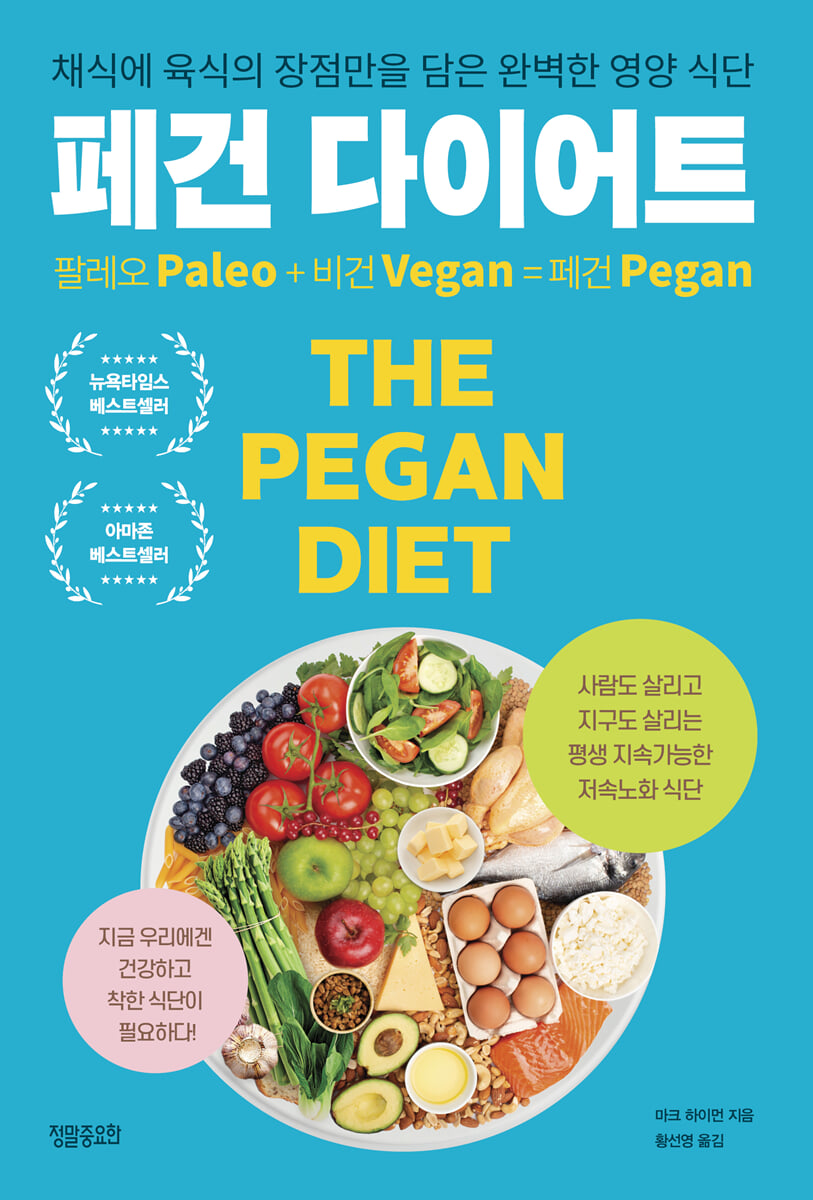
The Pegan diet is a combination of the words Paleo (Stone Age diet) and Vegan (vegetarian).
In fact, the Paleolithic diet and the vegetarian diet are almost the same, with only the source of protein being different.
Now, we need to focus not on whether to eat meat or vegetarian, but on moving away from diets that are obesity-causing, disease-promoting, and nutritionally deficient, and toward a diet rich in natural foods that promote weight loss, health, and well-being.
This is the goal of the Pegan diet, which uses food as medicine.
So why is it more important than ever to change your diet? The industrialized diet is currently the leading cause of death on Earth.
Our modern diet, rich in processed foods made from wheat, corn, and soy, but lacking in healthy, whole foods, kills more than 11 million people each year, 75% of whom die from chronic diseases such as heart disease, diabetes, cancer, and dementia.
The biggest cause of this tragedy is poor diet.
In a world where our daily diets are causing the most illness and death, the Pegan diet has the power to restore the bodies and minds of modern people exposed to chronic diseases.
The Pegan Diet is a balanced diet guide for victims of the diet wars living in an age of nutritional confusion.
If you're curious about a lifelong, sustainable, slow-aging diet that's both nutritious and environmentally friendly, read this book now!
But in a way that saves me and the Earth!
A Complete Nutritional Diet Guide That Blends the Benefits of Meat with Vegetarian Food
“A book that explains in detail the basics needed for good health!”
Highly recommended by Wholesome Moment, author of the best-selling book "In Praise of Wholesome's Home Cooking."
The Pegan diet is a combination of the words Paleo (Stone Age diet) and Vegan (vegetarian).
In fact, the Paleolithic diet and the vegetarian diet are almost the same, with only the source of protein being different.
Now, we need to focus not on whether to eat meat or vegetarian, but on moving away from diets that are obesity-causing, disease-promoting, and nutritionally deficient, and toward a diet rich in natural foods that promote weight loss, health, and well-being.
This is the goal of the Pegan diet, which uses food as medicine.
So why is it more important than ever to change your diet? The industrialized diet is currently the leading cause of death on Earth.
Our modern diet, rich in processed foods made from wheat, corn, and soy, but lacking in healthy, whole foods, kills more than 11 million people each year, 75% of whom die from chronic diseases such as heart disease, diabetes, cancer, and dementia.
The biggest cause of this tragedy is poor diet.
In a world where our daily diets are causing the most illness and death, the Pegan diet has the power to restore the bodies and minds of modern people exposed to chronic diseases.
The Pegan Diet is a balanced diet guide for victims of the diet wars living in an age of nutritional confusion.
If you're curious about a lifelong, sustainable, slow-aging diet that's both nutritious and environmentally friendly, read this book now!
- You can preview some of the book's contents.
Preview
index
introduction
Part 1: 21 Principles for the Pegan Diet
Rule 1: Use food as medicine.
Rule 2: Eat the Rainbow
Rule 3: Follow the 75 Percent Rule
Rule 4: Eat the right beans, whole grains, nuts, and seeds.
Rule 5: Eat meat as medicine.
Rule 6: Be picky about chicken, eggs, and fish.
Rule 7: Eat fat at every meal.
Rule 8: Avoid (most) dairy products.
Rule 9: Eat Like a Regenerist
Rule 10: Treat sugar like a mood-altering drug.
Rule 11: Don't rely on coffee and alcohol.
Principle 12: Invest in personalized nutrition.
Rule 13: Empty, Detox, and Reset Wisely
Rule 14: Weigh the risks and benefits of a vegan diet.
Rule 15: Eat with Gut Health in Mind
Rule 16: Eat for Longevity
Rule 17: Eat to feel better
Rule 18: Eat healthy and save money.
Rule 19: Feed your children what you eat.
Rule 20: Establish Healthy Habits
Rule 21: Start the Pegan Diet Today
Part 2: Pegan Diet Recipes
Cooking in the Pegan style
breakfast
Soup and salad
Main dish
Side dishes
snack
dessert
Acknowledgements
Additional information
References
Part 1: 21 Principles for the Pegan Diet
Rule 1: Use food as medicine.
Rule 2: Eat the Rainbow
Rule 3: Follow the 75 Percent Rule
Rule 4: Eat the right beans, whole grains, nuts, and seeds.
Rule 5: Eat meat as medicine.
Rule 6: Be picky about chicken, eggs, and fish.
Rule 7: Eat fat at every meal.
Rule 8: Avoid (most) dairy products.
Rule 9: Eat Like a Regenerist
Rule 10: Treat sugar like a mood-altering drug.
Rule 11: Don't rely on coffee and alcohol.
Principle 12: Invest in personalized nutrition.
Rule 13: Empty, Detox, and Reset Wisely
Rule 14: Weigh the risks and benefits of a vegan diet.
Rule 15: Eat with Gut Health in Mind
Rule 16: Eat for Longevity
Rule 17: Eat to feel better
Rule 18: Eat healthy and save money.
Rule 19: Feed your children what you eat.
Rule 20: Establish Healthy Habits
Rule 21: Start the Pegan Diet Today
Part 2: Pegan Diet Recipes
Cooking in the Pegan style
breakfast
Soup and salad
Main dish
Side dishes
snack
dessert
Acknowledgements
Additional information
References
Detailed image

Into the book
All the cells in our body are replaced with new cells every seven years.
Some cells change daily, some change weekly, and some change over longer periods of time.
Have you ever wondered how we create new cells, organs, tissues, skin, muscles, bones, and brain cells? We don't create something from nothing.
Raw materials come from the food we eat.
Would you rather have a body made of cookies? Or a body made of grass-fed beef? A body made of Coca-Cola? Or a body made of wild blueberries? Our body's structure determines its functions.
Elements that make up the human body, such as proteins, fats, and minerals, must be obtained through food.
Surprisingly, we are not made of carbohydrates.
So carbohydrates are not considered essential nutrients.
A healthy, slim woman's body is made up of 55 percent water, 16 percent protein, 23 percent fat, 6 percent minerals, less than 1 percent carbohydrates, and trace amounts of vitamins.
The problem is that carbohydrates make up 50 to 60 percent of our diet, which is full of processed foods.
--- From "Rule 1: Use food as medicine"
Think of the colorful plants you see in the supermarket and the hundreds of plants that humans can eat.
Our ancestors, who hunted and gathered, ate over 800 species of plants.
But today, 90 percent of our food comes from just 15 different crops, and globally, just three crops (wheat, corn, and rice) account for two-thirds of the calories we eat.
--- From "Rule 2: Eat Rainbow Colors"
Just because the name is the same doesn't mean they're all the same food.
Try a flavorless tomato that tastes like thick, papery stuff from a greenhouse.
Then, on a warm day in late August, try a ripe, juicy, old-fashioned organic tomato picked from your garden.
Although both are tomatoes, they differ greatly in taste, nutrient density, and plant nutrient content.
Now imagine wild elk or regeneratively farmed cattle eating plants rich in phytonutrients and omega-3 fatty acids.
What if we compared those cows with those fed an unhealthy diet in a livestock farm and heavily dosed with growth hormones and antibiotics? If food is information, how could the two be the same? Yet, research rarely distinguishes between these two situations.
(syncopation)
A new study reveals the surprising fact that grass-fed beef is rich in phytonutrients.
Is it hard to believe that meat contains medicinal plant compounds that prevent disease and promote health? How can that be? Because it's not "you are what you eat," it's "you are what you eat."
--- From "Rule 5: Eat meat as medicine"
There are no notoriously bad saturated fats, except for trans fats, which were recently banned.
Trans fats are vegetable oils that have been chemically altered to form a solid.
It's easy to understand when you think of shortening! Different types of saturated fat have different effects on our bodies.
When you eat saturated fat, what foods you eat with it matters.
The butter in cookies may be harmful to your health.
But butter on vegetables can be good for your health.
Avoid eating saturated fats with starch or sugar (unfortunately, people almost always eat them in this combination).
If you do this, you are more likely to suffer from inflammation, weight gain, diabetes, dementia, and heart disease.
--- From "Rule 7: Eat Fat at Every Meal"
Our agricultural system is destructive to the planet and to human health.
The way we produce food is destroying soils and rainforests, depleting freshwater resources, and causing a massive loss of biodiversity (we have lost 75 percent of pollinator species, 90 percent of edible plant species, 50 percent of all livestock species, and millions of other plant and animal species).
Humans were also directly affected.
Food produced through industrial farming systems kills at least 11 million people each year and contributes to obesity epidemics worldwide.
Therefore, it is urgent to build a regenerative system.
We need a system that can restore both the health of the planet and that of humans.
The good news is that it's possible now more than ever.
--- From "Rule 9: Eat Like a Regenerist"
Sugar is sold cheaply on every street corner.
Sugar addiction is a biological disorder caused by hormones and neurotransmitters.
Sugar triggers food cravings and stimulates the brain's pleasure centers, much like heroin or cocaine.
No one has ever had the experience of gorging on a bag full of avocados.
But once you start eating cookies, they disappear in the blink of an eye.
--- From "Rule 10: Treat Sugar Like a Mood-Elevating Drug"
Many people eat a vegan diet and still remain healthy.
However, there are many challenges and a vegan diet cannot satisfy all human biological needs.
A vegan diet is one that lacks several essential nutrients.
It is a deficiency of nutrients such as omega-3 fatty acids (DHA and EPA), vitamin B₁₂, vitamin D, iodine, iron, and zinc.
The protein in plants is lower in concentration and quality than in animal foods.
Plant-based proteins may also not be as effective at protecting and rebuilding muscle as we age.
--- From "Rule 14: Weigh the Risks and Benefits of a Vegan Diet"
Feeding your child healthy starts early.
It starts earlier than people think.
Epigenetics is the study of how our genes are programmed by the environment.
Whether a child will be genetically healthy or sick is already determined in the mother's womb.
If a mother eats a lot of sugar and junk food, her child's genes are programmed to develop obesity, heart disease, diabetes, and cancer.
Therefore, in order to form a good physiological function of the child and the eating habits that the child will prefer as he or she grows up, preparations must begin early.
Children's food and children's meals are a creation of the food industry.
'Happy Meals' never bring happiness to children!
Some cells change daily, some change weekly, and some change over longer periods of time.
Have you ever wondered how we create new cells, organs, tissues, skin, muscles, bones, and brain cells? We don't create something from nothing.
Raw materials come from the food we eat.
Would you rather have a body made of cookies? Or a body made of grass-fed beef? A body made of Coca-Cola? Or a body made of wild blueberries? Our body's structure determines its functions.
Elements that make up the human body, such as proteins, fats, and minerals, must be obtained through food.
Surprisingly, we are not made of carbohydrates.
So carbohydrates are not considered essential nutrients.
A healthy, slim woman's body is made up of 55 percent water, 16 percent protein, 23 percent fat, 6 percent minerals, less than 1 percent carbohydrates, and trace amounts of vitamins.
The problem is that carbohydrates make up 50 to 60 percent of our diet, which is full of processed foods.
--- From "Rule 1: Use food as medicine"
Think of the colorful plants you see in the supermarket and the hundreds of plants that humans can eat.
Our ancestors, who hunted and gathered, ate over 800 species of plants.
But today, 90 percent of our food comes from just 15 different crops, and globally, just three crops (wheat, corn, and rice) account for two-thirds of the calories we eat.
--- From "Rule 2: Eat Rainbow Colors"
Just because the name is the same doesn't mean they're all the same food.
Try a flavorless tomato that tastes like thick, papery stuff from a greenhouse.
Then, on a warm day in late August, try a ripe, juicy, old-fashioned organic tomato picked from your garden.
Although both are tomatoes, they differ greatly in taste, nutrient density, and plant nutrient content.
Now imagine wild elk or regeneratively farmed cattle eating plants rich in phytonutrients and omega-3 fatty acids.
What if we compared those cows with those fed an unhealthy diet in a livestock farm and heavily dosed with growth hormones and antibiotics? If food is information, how could the two be the same? Yet, research rarely distinguishes between these two situations.
(syncopation)
A new study reveals the surprising fact that grass-fed beef is rich in phytonutrients.
Is it hard to believe that meat contains medicinal plant compounds that prevent disease and promote health? How can that be? Because it's not "you are what you eat," it's "you are what you eat."
--- From "Rule 5: Eat meat as medicine"
There are no notoriously bad saturated fats, except for trans fats, which were recently banned.
Trans fats are vegetable oils that have been chemically altered to form a solid.
It's easy to understand when you think of shortening! Different types of saturated fat have different effects on our bodies.
When you eat saturated fat, what foods you eat with it matters.
The butter in cookies may be harmful to your health.
But butter on vegetables can be good for your health.
Avoid eating saturated fats with starch or sugar (unfortunately, people almost always eat them in this combination).
If you do this, you are more likely to suffer from inflammation, weight gain, diabetes, dementia, and heart disease.
--- From "Rule 7: Eat Fat at Every Meal"
Our agricultural system is destructive to the planet and to human health.
The way we produce food is destroying soils and rainforests, depleting freshwater resources, and causing a massive loss of biodiversity (we have lost 75 percent of pollinator species, 90 percent of edible plant species, 50 percent of all livestock species, and millions of other plant and animal species).
Humans were also directly affected.
Food produced through industrial farming systems kills at least 11 million people each year and contributes to obesity epidemics worldwide.
Therefore, it is urgent to build a regenerative system.
We need a system that can restore both the health of the planet and that of humans.
The good news is that it's possible now more than ever.
--- From "Rule 9: Eat Like a Regenerist"
Sugar is sold cheaply on every street corner.
Sugar addiction is a biological disorder caused by hormones and neurotransmitters.
Sugar triggers food cravings and stimulates the brain's pleasure centers, much like heroin or cocaine.
No one has ever had the experience of gorging on a bag full of avocados.
But once you start eating cookies, they disappear in the blink of an eye.
--- From "Rule 10: Treat Sugar Like a Mood-Elevating Drug"
Many people eat a vegan diet and still remain healthy.
However, there are many challenges and a vegan diet cannot satisfy all human biological needs.
A vegan diet is one that lacks several essential nutrients.
It is a deficiency of nutrients such as omega-3 fatty acids (DHA and EPA), vitamin B₁₂, vitamin D, iodine, iron, and zinc.
The protein in plants is lower in concentration and quality than in animal foods.
Plant-based proteins may also not be as effective at protecting and rebuilding muscle as we age.
--- From "Rule 14: Weigh the Risks and Benefits of a Vegan Diet"
Feeding your child healthy starts early.
It starts earlier than people think.
Epigenetics is the study of how our genes are programmed by the environment.
Whether a child will be genetically healthy or sick is already determined in the mother's womb.
If a mother eats a lot of sugar and junk food, her child's genes are programmed to develop obesity, heart disease, diabetes, and cancer.
Therefore, in order to form a good physiological function of the child and the eating habits that the child will prefer as he or she grows up, preparations must begin early.
Children's food and children's meals are a creation of the food industry.
'Happy Meals' never bring happiness to children!
--- From "Rule 19: Feed Your Children What You Eat"
Publisher's Review
Living in an age of nutritional confusion
A Balanced Diet Guide for Victims of the Diet Wars
The battle over diet has been going on for decades.
For example, there was a major conflict between the paleo diet, which pursues low-carb, high-fat diets, and the vegan diet, which eats almost exclusively plants.
With so many other diets added to the mix, many people are confused.
For those watching the diet wars from a distance, it's virtually impossible to know which diet is best.
Because both extreme diets have pros and cons.
But should we eat bacon and butter three times a day or just kale salad? How can we reverse disease and optimize our health? What diets promote longevity and improve physical performance? Is there a diet that can reverse climate change? Fortunately, there is a better way to eat.
This is the Pegan diet, which uses food as medicine.
If you want to lose weight, feel better, and stay healthy,
What should we eat and how should we eat it?
The Pegan diet began when two friends, a Paleo-friendly doctor and a vegetarian cardiologist, were arguing and cracking jokes to ease the tension.
“If you’re a paleo person and you’re a vegetarian, then I can be a pegan.”
As Dr. Hyman, the author of this book, began to reflect on his own joke, he realized that most dietary philosophies, including paleo and vegetarianism, have much more in common than people realize.
The pegan diet is a combination of the paleo and vegan diets, focusing on plant-based foods but also including high-quality animal proteins and healthy fats.
The paleo diet excludes processed foods and refined grains and emphasizes eating meat, fish, vegetables, fruits, nuts, and seeds, while the vegan diet excludes all animal products and focuses on eating vegetables, fruits, grains, nuts, and seeds.
The Pegan diet combines the best of both worlds, aiming to optimize health through a balanced nutrient intake.
The important thing is not to debate which diet is best, but to teach people how to eat healthier in the real world.
A comprehensive and sustainable food philosophy that demonstrates the power of food.
21 Principles for a Healthy Diet Anyone Can Practice for a Lifetime
Food is the biggest factor that causes imbalances in our biological networks.
However, it is also the most important factor in bringing about positive changes in the body quickly, reversing disease, and improving health.
Unfortunately, most doctors have never truly seen the power of food.
Because they never learned how to use food as medicine.
But Dr. Hyman has been witnessing miracles for decades, and so have thousands of other doctors who practice functional medicine.
Dr. Hyman says the most important tool he uses to treat patients is food.
Food works faster, better, and cheaper than regular drugs.
Using food as medicine is the basis of functional medicine.
But you can practice using food as medicine without having to see a functional medicine doctor.
The Pegan diet was created to help anyone, anywhere.
Anyone can understand the power of nutrition and start becoming healthier today.
Food affects every vital system or network in the body.
The Pegan Diet combines the latest science on using food as medicine with strategies for optimizing your body's systems.
It is a practical diet that anyone can practice throughout their life.
Food is both the cause and the cure of disease.
A slow-aging diet that saves people and the planet with healthy food!
The author has tried almost every diet in the world and has recommended a variety of diets to his patients.
I've tried everything: vegan, paleo, high-fat, low-fat, raw, etc.
What the author realized was that there was no need to conform one's body to a diet.
Instead, we need to listen to what our bodies are telling us.
The Pegan diet consists of a few simple, reasonable principles that can serve as a guide.
If you are a meat eater, you can follow this diet as is, but if you do not eat meat, just refer to the principles of the Pegan diet.
If you're just starting your journey to health, the Pegan diet is a great place to start.
If you've tried a variety of diets and are unsatisfied, confused by their principles, or feeling unwell, the Pegan diet may be a good fit.
Eating is one of the most important activities we do every day.
The act of eating connects us not only to nature, ecological cycles, and biological functions, but also to other people.
We are part of a great web called nature.
Nature provides us with the raw materials we need to live vibrant and healthy lives.
Now, let's apply the 21 practical principles introduced in this book to our lives.
By using these principles, you can find your own way to eat food that benefits yourself, your family, your community, and the planet.
Above all, you will be able to enjoy a delicious, nutritious and enjoyable meal.
The Pegan diet is one of the regenerative diets.
Because it regenerates both human health and the health of the planet.
Whatever diet we choose, we must choose from a regenerative diet.
I believe everyone will agree on this point.
We need a diet that heals us, heals the planet, and reverses the effects of climate change.
Choosing a regenerative diet may save humanity and the world.
A Balanced Diet Guide for Victims of the Diet Wars
The battle over diet has been going on for decades.
For example, there was a major conflict between the paleo diet, which pursues low-carb, high-fat diets, and the vegan diet, which eats almost exclusively plants.
With so many other diets added to the mix, many people are confused.
For those watching the diet wars from a distance, it's virtually impossible to know which diet is best.
Because both extreme diets have pros and cons.
But should we eat bacon and butter three times a day or just kale salad? How can we reverse disease and optimize our health? What diets promote longevity and improve physical performance? Is there a diet that can reverse climate change? Fortunately, there is a better way to eat.
This is the Pegan diet, which uses food as medicine.
If you want to lose weight, feel better, and stay healthy,
What should we eat and how should we eat it?
The Pegan diet began when two friends, a Paleo-friendly doctor and a vegetarian cardiologist, were arguing and cracking jokes to ease the tension.
“If you’re a paleo person and you’re a vegetarian, then I can be a pegan.”
As Dr. Hyman, the author of this book, began to reflect on his own joke, he realized that most dietary philosophies, including paleo and vegetarianism, have much more in common than people realize.
The pegan diet is a combination of the paleo and vegan diets, focusing on plant-based foods but also including high-quality animal proteins and healthy fats.
The paleo diet excludes processed foods and refined grains and emphasizes eating meat, fish, vegetables, fruits, nuts, and seeds, while the vegan diet excludes all animal products and focuses on eating vegetables, fruits, grains, nuts, and seeds.
The Pegan diet combines the best of both worlds, aiming to optimize health through a balanced nutrient intake.
The important thing is not to debate which diet is best, but to teach people how to eat healthier in the real world.
A comprehensive and sustainable food philosophy that demonstrates the power of food.
21 Principles for a Healthy Diet Anyone Can Practice for a Lifetime
Food is the biggest factor that causes imbalances in our biological networks.
However, it is also the most important factor in bringing about positive changes in the body quickly, reversing disease, and improving health.
Unfortunately, most doctors have never truly seen the power of food.
Because they never learned how to use food as medicine.
But Dr. Hyman has been witnessing miracles for decades, and so have thousands of other doctors who practice functional medicine.
Dr. Hyman says the most important tool he uses to treat patients is food.
Food works faster, better, and cheaper than regular drugs.
Using food as medicine is the basis of functional medicine.
But you can practice using food as medicine without having to see a functional medicine doctor.
The Pegan diet was created to help anyone, anywhere.
Anyone can understand the power of nutrition and start becoming healthier today.
Food affects every vital system or network in the body.
The Pegan Diet combines the latest science on using food as medicine with strategies for optimizing your body's systems.
It is a practical diet that anyone can practice throughout their life.
Food is both the cause and the cure of disease.
A slow-aging diet that saves people and the planet with healthy food!
The author has tried almost every diet in the world and has recommended a variety of diets to his patients.
I've tried everything: vegan, paleo, high-fat, low-fat, raw, etc.
What the author realized was that there was no need to conform one's body to a diet.
Instead, we need to listen to what our bodies are telling us.
The Pegan diet consists of a few simple, reasonable principles that can serve as a guide.
If you are a meat eater, you can follow this diet as is, but if you do not eat meat, just refer to the principles of the Pegan diet.
If you're just starting your journey to health, the Pegan diet is a great place to start.
If you've tried a variety of diets and are unsatisfied, confused by their principles, or feeling unwell, the Pegan diet may be a good fit.
Eating is one of the most important activities we do every day.
The act of eating connects us not only to nature, ecological cycles, and biological functions, but also to other people.
We are part of a great web called nature.
Nature provides us with the raw materials we need to live vibrant and healthy lives.
Now, let's apply the 21 practical principles introduced in this book to our lives.
By using these principles, you can find your own way to eat food that benefits yourself, your family, your community, and the planet.
Above all, you will be able to enjoy a delicious, nutritious and enjoyable meal.
The Pegan diet is one of the regenerative diets.
Because it regenerates both human health and the health of the planet.
Whatever diet we choose, we must choose from a regenerative diet.
I believe everyone will agree on this point.
We need a diet that heals us, heals the planet, and reverses the effects of climate change.
Choosing a regenerative diet may save humanity and the world.
GOODS SPECIFICS
- Date of issue: June 30, 2024
- Page count, weight, size: 348 pages | 524g | 152*225*21mm
- ISBN13: 9791186745687
- ISBN10: 1186745681
You may also like
카테고리
korean


korean

![GQ KOREA Mark (Monthly): December [2025]](http://librairie.coreenne.fr/cdn/shop/files/8ef265dbbfbf186523ed75ba7319009d.jpg?v=1765340328&width=3840)


