

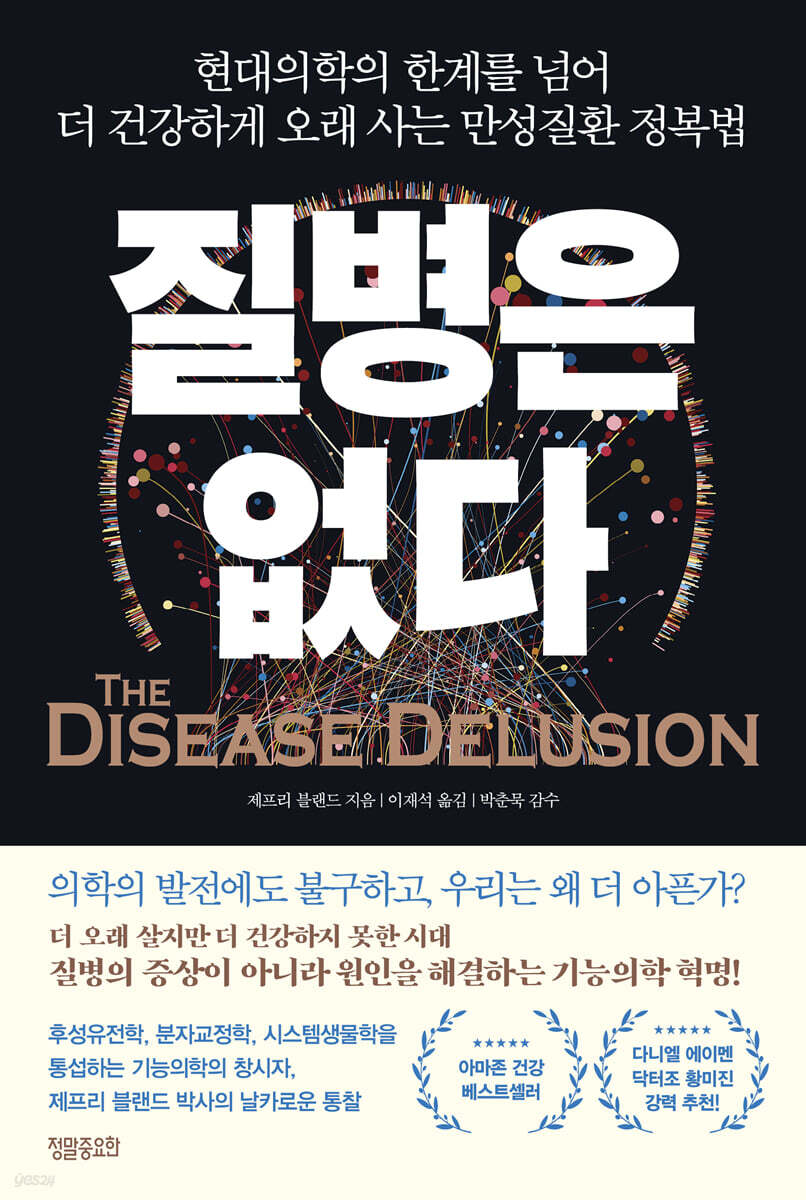
There is no disease
 |
Description
Book Introduction
- A word from MD
-
Find the root of the diseaseDespite advances in medicine, the rate of chronic diseases among modern people is increasing.
Author Dr. Jeffrey Bland offers treatments that go beyond the symptoms of disease and address the root causes of individual health issues.
A book that presents a new approach to health management that overcomes chronic illness by identifying the root causes of disease.
February 29, 2024. Health and Hobbies PD Lee Joo-eun
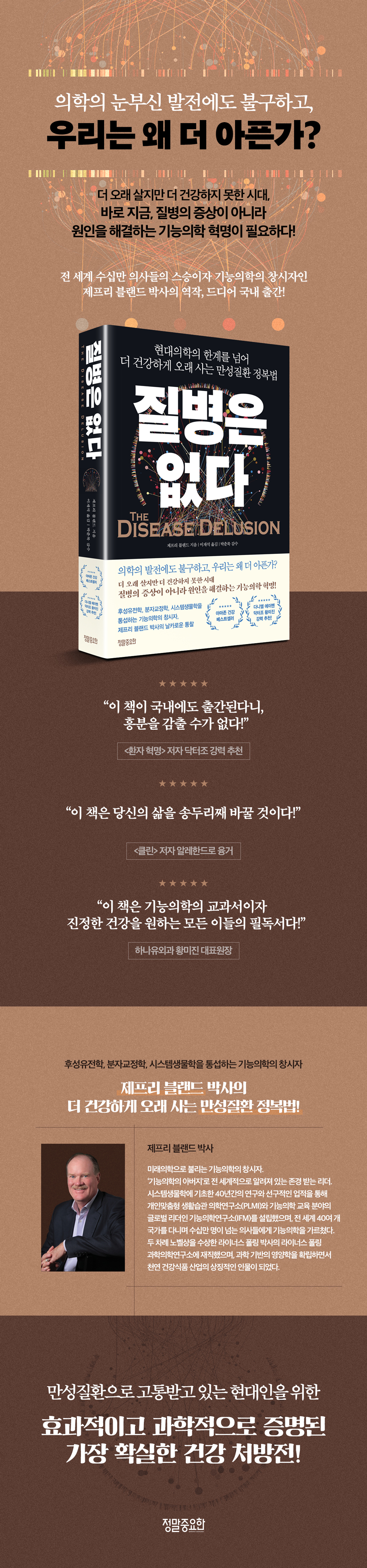
Despite the remarkable advancements in medicine,
Why are we more sick?
Imagine sitting in a large, crowded lobby of a university hospital, filled with cutting-edge medical equipment.
Are there more trauma patients covered in bandages, or more seemingly healthy patients? Perhaps you picture a hospital lobby filled with seemingly healthy people, without bandages.
And most of them may appear to be fine on the outside, but inside they are probably living with all kinds of pain and discomfort, from indigestion to insomnia.
This is because they visited the hospital due to a 'chronic disease' that affects one in two modern people and accounts for 80% of all medical costs.
Despite numerous advances in new drugs and treatments, the incidence of chronic diseases continues to increase worldwide.
Chronic diseases are expected to cost the global economy $47 trillion over the next 20 years.
However, what we get while spending more and more money is the opposite.
We will have to spend more and more time and money on doctors and drugs.
Why are we more sick?
Imagine sitting in a large, crowded lobby of a university hospital, filled with cutting-edge medical equipment.
Are there more trauma patients covered in bandages, or more seemingly healthy patients? Perhaps you picture a hospital lobby filled with seemingly healthy people, without bandages.
And most of them may appear to be fine on the outside, but inside they are probably living with all kinds of pain and discomfort, from indigestion to insomnia.
This is because they visited the hospital due to a 'chronic disease' that affects one in two modern people and accounts for 80% of all medical costs.
Despite numerous advances in new drugs and treatments, the incidence of chronic diseases continues to increase worldwide.
Chronic diseases are expected to cost the global economy $47 trillion over the next 20 years.
However, what we get while spending more and more money is the opposite.
We will have to spend more and more time and money on doctors and drugs.
- You can preview some of the book's contents.
Preview
index
Preface to the Korean edition
Introduction: Disease is an illusion
Entering_Chronic Anxiety
Part 1: Context on Health and Disease
Chapter 1: The Illusion of Disease and the Difficulty of Chronic Illness
Chapter 2: Groundbreaking Biology Discoveries That Are Changing Everything
Chapter 3: The Functional Medicine Revolution: Winning the War on Chronic Disease
Part 2: Seven Cores: The Seven Core Physiological Processes
Chapter 4 Absorption and Excretion
Chapter 5 Decoding
Chapter 6 Defense
Chapter 7 Cell Communication
Chapter 8 Cell Transport
Chapter 9 Energy
Chapter 10 Body Structure
Part 3: Creating a Health Care Plan That's Right for You
Chapter 11 A New Approach to Your Health
Chapter 12: Setting Up Your Basic Program
Chapter 13: Creating a Personalized Health Management Program
Chapter 14: Your Healthcare Revolution
7-Day Meal Plan Based on Appendix A
Appendix B Glossary of Terms
Appendix C: References on Functional Medicine
Acknowledgements
Reviewer's note
main
Search
Introduction: Disease is an illusion
Entering_Chronic Anxiety
Part 1: Context on Health and Disease
Chapter 1: The Illusion of Disease and the Difficulty of Chronic Illness
Chapter 2: Groundbreaking Biology Discoveries That Are Changing Everything
Chapter 3: The Functional Medicine Revolution: Winning the War on Chronic Disease
Part 2: Seven Cores: The Seven Core Physiological Processes
Chapter 4 Absorption and Excretion
Chapter 5 Decoding
Chapter 6 Defense
Chapter 7 Cell Communication
Chapter 8 Cell Transport
Chapter 9 Energy
Chapter 10 Body Structure
Part 3: Creating a Health Care Plan That's Right for You
Chapter 11 A New Approach to Your Health
Chapter 12: Setting Up Your Basic Program
Chapter 13: Creating a Personalized Health Management Program
Chapter 14: Your Healthcare Revolution
7-Day Meal Plan Based on Appendix A
Appendix B Glossary of Terms
Appendix C: References on Functional Medicine
Acknowledgements
Reviewer's note
main
Search
Detailed image
Into the book
This means, above all, that chronic diseases are not diseases that we 'catch' in the way we usually say we 'get' sick.
You don't 'catch' a chronic disease the way a fielder catches a line drive in baseball.
'Disease' does not actually exist in the pure sense of the word.
This is why I say 'disease is an illusion'.
Rather, each individual's unique genetic makeup reacts over time to perceived threats, altering the function of specific body tissues. This "injury" burns slowly, like a pile of fuel, causing persistent, low-intensity damage.
We call this 'disease'.
And when this disease persists for a certain period of time, it is called a ‘chronic disease.’
But it is our genes that actually respond to the messages we receive from our diet, environment, and lifestyle.
Biomarkers change their levels in the body to show how our genes respond to specific threats in our environment.
--- From "The Illusion of Disease and the Difficulty of Chronic Illness"
By the late 20th century, the idea that we inherit exactly half our genes from each parent was being seriously questioned.
This question was further amplified by the discovery of mitochondrial DNA, an additional genetic material inherited only from the mother.
Mitochondria are the energy factories of the cell, where food molecules are converted into cellular energy.
In males, mitochondria are located in the tail of the sperm, but once the egg is fertilized by the sperm, the sperm tail falls off and the sperm's mitochondria are not passed on to the fetus at all.
Simply put, only the mother's mitochondria are inherited by her children.
That is, the genetics of the cellular energy centers are closely related to the maternal side, while the paternal side has no contribution to the cellular energy centers whatsoever.
So even though 50 percent of your genes come from your father, you inherit more than 50 percent from your mother.
And this little over 50 percent affects a very important function.
--- From "The Groundbreaking Discoveries in Biology That Are Changing Everything"
The gut immune system does this by monitoring metabolites produced by gut microbes.
When the gastrointestinal immune system detects a harmful metabolite, it responds by increasing the number of warning cells.
When this happens, you feel it as symptoms such as pain, bloating, diarrhea, and stomach inflammation.
But when these warning cells spread out through the bloodstream, they can be felt in parts of the body far from the gastrointestinal tract.
Symptoms that seem unrelated to the gastrointestinal tract, such as headaches, joint pain, bad breath, muscle pain, skin problems, vision problems, and even mood swings, can be caused by the gut immune system.
--- From "Absorption and Excretion"
Pharmacogenomics is the study of how people metabolize specific drugs, recognizing that no single drug is right for everyone.
(Omitted) Drug hypersensitivity reactions are becoming an increasingly common and frightening medical phenomenon.
It's a frightening phenomenon, with 6.7 percent of hospital admissions being due to hypersensitivity reactions to medications prescribed by trained medical professionals.73 In fact, the most common drug hypersensitivity reactions are to nonsteroidal anti-inflammatory drugs (NSAIDs) and pain relievers, particularly acetaminophen.
It's a drug that about 36 million Americans use every day without a doctor's help.
Because each individual's unique genetic predisposition greatly influences their detoxification process, it is difficult to know exactly how a 'simple' drug we buy at the pharmacy will affect them.
--- From "Detoxification"
The takeaway from this about autoimmune diseases is that, except in very rare cases, autoimmune diseases are not inherently coded in our genes, and that just because someone has a gene that predisposes them to an autoimmune disease doesn't mean they will develop it.
In addition to genes, there are important triggers in the surrounding environment, diet, and lifestyle.
These triggers cause the immune system to malfunction, causing the body to overreact and damage itself.
However, if we can influence the expression of genes that regulate immune system function by changing our environment, diet, and lifestyle, we can stop, reverse, or avoid the damage our bodies inflict on themselves.
--- From "Defense"
The reason food processing is harmful to our health is because one of the key purposes of food processing is to remove phytonutrients from food.
So why remove phytonutrients from foods? Phytonutrients often taste bitter because they "sting" as they fight off plant stress.
For the food industry, removing plant nutrients has the advantage of improving flavor.
If you look at the phytonutrient index, which indicates the amount of phytonutrients actually included in the diet, it is clear that the more processed foods you consume, the lower the phytonutrient index.
In contrast, populations with rare chronic diseases generally have high phytonutrient indices.
--- From "Cellular Communication"
However, this is good news for people who carry the ApoE4 genetic marker.
Because having this gene doesn't mean a person is destined to develop Alzheimer's or heart disease, but rather serves as a signal to personalize their lifestyle, environment, and diet to mitigate their vulnerability to both diseases.
People with the ApoE4 genetic marker should first minimize their intake of saturated fat and maximize their intake of protective antioxidants and phytonutrients.
Continued research confirms this conclusion.
That is, it was revealed that patients with two conditions that are similarly affected by diet, insulin resistance and type 2 diabetes, were at greater risk of neurodegenerative diseases.
Remember Dr. Susan Kraft's research on type 3 diabetes, or diabetes of the brain? Dr. Kraft "discovered" this based on conclusive evidence that type 2 diabetes patients are at increased risk of dementia as they age.
The link between diet and disease is too strong to ignore.
--- From "Energy"
Dr. Blassara's research has convincingly revealed a fact.
As people consume more and more heat-treated and processed foods, their intake of sugar toxins has also increased, and this increased intake of sugar toxins is increasing the incidence of chronic diseases such as type 2 diabetes, kidney disease, and dementia.
In animal experiments, when experimental animals consumed sugar toxins and their inflammatory response increased, the above diseases progressed more.
In humans, those with these conditions have been shown to have higher blood sugar toxin levels.187,188 The lesson here is to reduce consumption of charred meats and lower cooking temperatures overall.
Lowering cooking temperatures reduces sugar toxin production.
The key is that changes in the structure of a protein, whether produced in the body or consumed through food, also change the protein's physiological effects, or how it functions.
--- From "Body Structure"
The answer to this question given by Hippocrates, the legendary physician of ancient Greece and the father of medicine, has been passed down to us today.
It is called 'vis medicatrix naturae' in Latin, which is the idea that living things can heal themselves if provided with the right environment, diet, and lifestyle.
Today, Hippocrates's ideas are being reexamined through the lens of the genomic revolution.
The genetic revolution has enabled us to transform how our environment influences our genetic expression and how that influence determines our individual health and disease patterns.
The insights we've discussed in the previous chapters of this book—the discoveries of the genomic revolution and the wisdom we've gained about chronic disease from a systems biology perspective—are all intended to put those perspectives into practice.
And the practical application of that idea is the functional medicine model, which can be called the 'medical revolution of our time.'
The patient-centered functional medicine model requires each individual to be fully involved in their own health care.
The functional medicine perspective is simple.
The idea is that by making changes to our diet, lifestyle, and environment through personalized health management programs, we can directly influence how our genes are expressed and our health patterns.
You don't 'catch' a chronic disease the way a fielder catches a line drive in baseball.
'Disease' does not actually exist in the pure sense of the word.
This is why I say 'disease is an illusion'.
Rather, each individual's unique genetic makeup reacts over time to perceived threats, altering the function of specific body tissues. This "injury" burns slowly, like a pile of fuel, causing persistent, low-intensity damage.
We call this 'disease'.
And when this disease persists for a certain period of time, it is called a ‘chronic disease.’
But it is our genes that actually respond to the messages we receive from our diet, environment, and lifestyle.
Biomarkers change their levels in the body to show how our genes respond to specific threats in our environment.
--- From "The Illusion of Disease and the Difficulty of Chronic Illness"
By the late 20th century, the idea that we inherit exactly half our genes from each parent was being seriously questioned.
This question was further amplified by the discovery of mitochondrial DNA, an additional genetic material inherited only from the mother.
Mitochondria are the energy factories of the cell, where food molecules are converted into cellular energy.
In males, mitochondria are located in the tail of the sperm, but once the egg is fertilized by the sperm, the sperm tail falls off and the sperm's mitochondria are not passed on to the fetus at all.
Simply put, only the mother's mitochondria are inherited by her children.
That is, the genetics of the cellular energy centers are closely related to the maternal side, while the paternal side has no contribution to the cellular energy centers whatsoever.
So even though 50 percent of your genes come from your father, you inherit more than 50 percent from your mother.
And this little over 50 percent affects a very important function.
--- From "The Groundbreaking Discoveries in Biology That Are Changing Everything"
The gut immune system does this by monitoring metabolites produced by gut microbes.
When the gastrointestinal immune system detects a harmful metabolite, it responds by increasing the number of warning cells.
When this happens, you feel it as symptoms such as pain, bloating, diarrhea, and stomach inflammation.
But when these warning cells spread out through the bloodstream, they can be felt in parts of the body far from the gastrointestinal tract.
Symptoms that seem unrelated to the gastrointestinal tract, such as headaches, joint pain, bad breath, muscle pain, skin problems, vision problems, and even mood swings, can be caused by the gut immune system.
--- From "Absorption and Excretion"
Pharmacogenomics is the study of how people metabolize specific drugs, recognizing that no single drug is right for everyone.
(Omitted) Drug hypersensitivity reactions are becoming an increasingly common and frightening medical phenomenon.
It's a frightening phenomenon, with 6.7 percent of hospital admissions being due to hypersensitivity reactions to medications prescribed by trained medical professionals.73 In fact, the most common drug hypersensitivity reactions are to nonsteroidal anti-inflammatory drugs (NSAIDs) and pain relievers, particularly acetaminophen.
It's a drug that about 36 million Americans use every day without a doctor's help.
Because each individual's unique genetic predisposition greatly influences their detoxification process, it is difficult to know exactly how a 'simple' drug we buy at the pharmacy will affect them.
--- From "Detoxification"
The takeaway from this about autoimmune diseases is that, except in very rare cases, autoimmune diseases are not inherently coded in our genes, and that just because someone has a gene that predisposes them to an autoimmune disease doesn't mean they will develop it.
In addition to genes, there are important triggers in the surrounding environment, diet, and lifestyle.
These triggers cause the immune system to malfunction, causing the body to overreact and damage itself.
However, if we can influence the expression of genes that regulate immune system function by changing our environment, diet, and lifestyle, we can stop, reverse, or avoid the damage our bodies inflict on themselves.
--- From "Defense"
The reason food processing is harmful to our health is because one of the key purposes of food processing is to remove phytonutrients from food.
So why remove phytonutrients from foods? Phytonutrients often taste bitter because they "sting" as they fight off plant stress.
For the food industry, removing plant nutrients has the advantage of improving flavor.
If you look at the phytonutrient index, which indicates the amount of phytonutrients actually included in the diet, it is clear that the more processed foods you consume, the lower the phytonutrient index.
In contrast, populations with rare chronic diseases generally have high phytonutrient indices.
--- From "Cellular Communication"
However, this is good news for people who carry the ApoE4 genetic marker.
Because having this gene doesn't mean a person is destined to develop Alzheimer's or heart disease, but rather serves as a signal to personalize their lifestyle, environment, and diet to mitigate their vulnerability to both diseases.
People with the ApoE4 genetic marker should first minimize their intake of saturated fat and maximize their intake of protective antioxidants and phytonutrients.
Continued research confirms this conclusion.
That is, it was revealed that patients with two conditions that are similarly affected by diet, insulin resistance and type 2 diabetes, were at greater risk of neurodegenerative diseases.
Remember Dr. Susan Kraft's research on type 3 diabetes, or diabetes of the brain? Dr. Kraft "discovered" this based on conclusive evidence that type 2 diabetes patients are at increased risk of dementia as they age.
The link between diet and disease is too strong to ignore.
--- From "Energy"
Dr. Blassara's research has convincingly revealed a fact.
As people consume more and more heat-treated and processed foods, their intake of sugar toxins has also increased, and this increased intake of sugar toxins is increasing the incidence of chronic diseases such as type 2 diabetes, kidney disease, and dementia.
In animal experiments, when experimental animals consumed sugar toxins and their inflammatory response increased, the above diseases progressed more.
In humans, those with these conditions have been shown to have higher blood sugar toxin levels.187,188 The lesson here is to reduce consumption of charred meats and lower cooking temperatures overall.
Lowering cooking temperatures reduces sugar toxin production.
The key is that changes in the structure of a protein, whether produced in the body or consumed through food, also change the protein's physiological effects, or how it functions.
--- From "Body Structure"
The answer to this question given by Hippocrates, the legendary physician of ancient Greece and the father of medicine, has been passed down to us today.
It is called 'vis medicatrix naturae' in Latin, which is the idea that living things can heal themselves if provided with the right environment, diet, and lifestyle.
Today, Hippocrates's ideas are being reexamined through the lens of the genomic revolution.
The genetic revolution has enabled us to transform how our environment influences our genetic expression and how that influence determines our individual health and disease patterns.
The insights we've discussed in the previous chapters of this book—the discoveries of the genomic revolution and the wisdom we've gained about chronic disease from a systems biology perspective—are all intended to put those perspectives into practice.
And the practical application of that idea is the functional medicine model, which can be called the 'medical revolution of our time.'
The patient-centered functional medicine model requires each individual to be fully involved in their own health care.
The functional medicine perspective is simple.
The idea is that by making changes to our diet, lifestyle, and environment through personalized health management programs, we can directly influence how our genes are expressed and our health patterns.
--- From "A New Approach to Your Health"
Publisher's Review
An era in which people live longer but are less healthy
A functional medicine revolution that addresses the cause of disease, not its symptoms!
Disease is an illusion.
It is convenient to group common signs and symptoms of patients together and classify them as a 'disease'.
Because I can prescribe medicine.
But disease doesn't exist the way we think it does.
Knowing the name of a disease does not lead to the real cause of the pain, nor does it lead to the correct treatment.
This book, "There Is No Disease," denounces the failure of modern medicine to resolve our current health crisis and presents a new map called "functional medicine" for understanding and treating disease.
Functional medicine utilizes cutting-edge biomedical discoveries to address the root causes of an individual's health problems, addressing the cause rather than the symptoms.
Functional medicine is a proven science that addresses the chronic conditions that burden our lives and lead us to premature death, and it is the approach to health care we must embrace in the future.
Dr. Jeffrey Bland, the founder of functional medicine, has compiled in this book the path to true health based on 40 years of research and experience based on epigenetics, molecular orthomolecular science, and systems biology.
This book, "There is no disease," is a textbook on functional medicine and a must-read for anyone seeking health.
We are not sick because we have a disease!
Let's say we have a patient who is showing symptoms of sadness and helplessness.
Telling a patient who is having trouble sleeping and has lost interest in daily activities, food, and sex that he or she is depressed is not helpful.
Depression is not the 'cause' of his misery, but rather a 'name' we give to a group of symptoms.
We try to treat this symptom with antidepressants, but this only works slightly better than chance.
The actual causes of depression vary greatly from patient to patient.
It may be due to a leaky gut caused by gluten, which stimulates the immune system to make antibodies against the thyroid gland, leading to hypothyroidism and depression.
It could also be due to vitamin B12 deficiency caused by long-term use of acid suppressants to prevent gastroesophageal reflux disease, or it could be due to folate (vitamin B9) deficiency caused by a gene called MTFHR.
Or it could be due to vitamin D deficiency caused by lack of sunlight.
It could be due to mercury poisoning from a diet high in tuna, or omega-3 deficiency from a diet low in fish fat.
It may be due to pre-diabetes caused by a diet high in sugar.
Depression can be caused by changes in brain chemistry due to life trauma or stress, or by changes in gut microbiota due to antibiotic use.
Each of these factors—diet, environment, lifestyle—cause different types of imbalances, but they all contribute to depression.
Knowing the name of a disease tells us nothing about its real cause.
Moreover, it does not lead to proper treatment.
This is the illusion that this is the disease we have.
“Most prescription drugs don’t work for most people.”
From this perspective, it is not surprising that Dr. Allen Roses, former vice president of the global pharmaceutical company GlaxoSmithKline, said this:
“Most prescription drugs don’t work for most people.
“90 percent of drugs work for only 30 to 50 percent of patients.”
In other words, when you take the medication your doctor prescribes, you are placing your faith in a treatment that has worked for many people but not for 'many others.'
You should put a charm on your finger or carry a good luck charm with you and pray that the remedy will work for you.
And this is why doctors continue to use a trial-and-error approach, prescribing one drug if it doesn't work and then another.
The problem becomes more complicated in polypharmacy, which uses several drugs together to treat different symptoms with different causes.
The problem here lies in how different drugs interact within one person.
That is, there can be 'confusion' between drugs, with one drug having an adverse effect on another.
People who take multiple drugs simultaneously are unknowingly participating in an uncontrolled experiment.
Seven Core Physiological Processes
There are seven core physiological processes that affect every organ system in the body.
And imbalances can occur in any organ system.
These imbalances are what cause most chronic diseases.
When we are sick, at the heart of it is an imbalance in the body's organ systems.
So how does imbalance occur in the body's organ systems?
Your environment and behavior send messages to your body in many ways: what you eat, your surroundings (air, where you live, the scenery around you), the exercise you do or don't do, stress, trauma, and more.
And this input information is processed through your unique genetic predisposition.
Somewhere in the midst of these interactions, something malfunctions.
Your genes are always responding to messages they receive from interactions with their surroundings, translating those messages into instructions for your cells.
Given this, it's entirely possible that specific inputs from our environment could trigger specific responses that disrupt the balance of one or more key physiological processes.
That is, there is no way that there can be no mismatch between your outside and inside, between your outer world and your inner, unique genes.
This imbalance causes unhealthy symptoms.
This is why functional medicine focuses on all the outwardly visible dysfunctions of a patient.
Is there another way to identify a patient's imbalance? Is there another way to restore balance between the patient's physiological processes and the input from the surrounding environment? The seven core physiological processes are as follows.
1.
Absorption and excretion
The physiological teamwork between the two processes of digestion-absorption and elimination-excretion is essential to maintaining overall health.
Even a small imbalance at any stage of this process can cause serious problems.
2.
decoding
The detoxification process takes place primarily in the liver, where most of the detoxification machinery resides.
Through this process, toxic substances are converted into non-toxic byproducts and excreted through the kidneys and intestines.
The kidneys and intestines also have some additional detoxifying abilities.
Deficits in detoxification abilities typically result in chronic illnesses that continue to worsen.
3.
defense
'Defense' refers to the various processes that monitor us to protect us from infection and cell damage.
Uninvited guests who want to live inside our bodies can cause infections and all sorts of chronic diseases.
4.
Cell communication
Our cells constantly sense their surroundings and send physiological messages from one part of the body to another.
This is the cell communication process.
Any malfunction in this communication mechanism can lead to dysfunction in the body's physiology, resulting in the signs and symptoms associated with numerous chronic diseases.
5.
Cell transport
Substances must move from one part of the body to another.
The nutrients absorbed by the digestive system must be transported outside the cells. How is this possible? This is the role of transport processes.
If something goes wrong with this transport function, all sorts of problems can arise.
Problems with the circulatory system can lead to cardiovascular disease, which is still the most common and feared chronic disease worldwide.
6.
energy
This process, also called bioenergy, is the process of converting food into energy so that the energy can be utilized within cell organelles called mitochondria.
Mitochondrial dysfunction can lead to a variety of chronic health problems, including pain and fatigue.
7.
Body structure
Our skeleton is remodeled every 5 to 7 years.
Additionally, bones and connective tissue constantly influence our bodily functions.
Since proper physiological functions are possible only when there is a proper body structure, body structure becomes a factor that determines our health and disease.
Loss of bone health not only increases the risk of fractures, but also increases the risk of various chronic diseases.
Treat your body's imbalances with an integrative approach to functional medicine.
The symptoms and pain you have been suffering from all your life will disappear completely!
For decades, Dr. Jeffrey Bland has been at the forefront of functional medicine, which seeks to accurately identify and prevent the causes of disease rather than simply treating its symptoms.
Modern medicine's "management" (rather than cure) of chronic diseases means we are merely masking them with drugs and temporary fixes rather than addressing the underlying causes of these illnesses.
What's worse, treating only the symptoms leads us down the path to a bigger illness.
While advances in modern medicine have nearly doubled life expectancy in just four generations, our quality of life is rapidly declining in the opposite direction.
So then, what should we do?
Functional medicine uses a systems approach.
We examine the patient's entire physiological network to identify imbalances where environmental factors alter gene expression.
The imbalance at this time may be an imbalance within the various elements that make up the physiological system, or an imbalance that appears between each system.
This imbalance exists in the actual mechanisms of health, the way in which the inputs your body receives from the environment are processed through your unique genetic predisposition.
Functional medicine theory holds that chronic unhealthy conditions can be effectively treated by identifying and addressing the physiological processes that are out of balance.
This is how you can make the symptoms you are experiencing disappear.
Furthermore, the ultimate goal of the systems approach taken in functional medicine is to find the optimal combination between your genetic uniqueness and your environment, lifestyle, and behaviors.
In this way, you will fully realize the positive vitality potential of your genes and fill and overflow the reserve capacity (functional reserve) of your body organs.
Functional medicine seeks to extend not only your physical lifespan but also your healthspan (the length of time you live in good health) as much as possible.
To do this, you need two things:
First, you need to determine if there are any imbalances within your individual body physiology.
Second, we need to design a personalized program that will eliminate health problems from your body and allow you to realize your unique genetic potential.
Disease Management VS.
Health Care: Which One Would You Choose?
Contrary to conventional wisdom, chronic diseases are not genetically predetermined, but rather arise from mismatches between genes, environment, and lifestyle.
What we call disease is the result of an imbalance in one or more of the seven core physiological processes mentioned above.
Drawing on extensive research, experience, and cutting-edge science and technology, Dr. Jeffrey Bland presents a roadmap to health that will help you live a lifetime free of chronic disease.
As Dr. Bland discusses in this book, no two forms of illness are the same, so with the right personalized program, we can safely and effectively manage and ultimately cure what ails us.
In this book, we will learn how to fundamentally change our perception of disease and approach its treatment.
Dr. Bland has had a profound influence on many of today's medical giants, including Mehmet Oz, Joel Perlman, Alejandro Junger, and Christine Northrup, but current medicine has yet to grasp the larger picture of understanding chronic disease or promoting lifelong health.
Now, thanks to dramatic scientific discoveries, we have the power to avoid aging and disease.
It is truly a revolution.
A functional medicine revolution that addresses the cause of disease, not its symptoms!
Disease is an illusion.
It is convenient to group common signs and symptoms of patients together and classify them as a 'disease'.
Because I can prescribe medicine.
But disease doesn't exist the way we think it does.
Knowing the name of a disease does not lead to the real cause of the pain, nor does it lead to the correct treatment.
This book, "There Is No Disease," denounces the failure of modern medicine to resolve our current health crisis and presents a new map called "functional medicine" for understanding and treating disease.
Functional medicine utilizes cutting-edge biomedical discoveries to address the root causes of an individual's health problems, addressing the cause rather than the symptoms.
Functional medicine is a proven science that addresses the chronic conditions that burden our lives and lead us to premature death, and it is the approach to health care we must embrace in the future.
Dr. Jeffrey Bland, the founder of functional medicine, has compiled in this book the path to true health based on 40 years of research and experience based on epigenetics, molecular orthomolecular science, and systems biology.
This book, "There is no disease," is a textbook on functional medicine and a must-read for anyone seeking health.
We are not sick because we have a disease!
Let's say we have a patient who is showing symptoms of sadness and helplessness.
Telling a patient who is having trouble sleeping and has lost interest in daily activities, food, and sex that he or she is depressed is not helpful.
Depression is not the 'cause' of his misery, but rather a 'name' we give to a group of symptoms.
We try to treat this symptom with antidepressants, but this only works slightly better than chance.
The actual causes of depression vary greatly from patient to patient.
It may be due to a leaky gut caused by gluten, which stimulates the immune system to make antibodies against the thyroid gland, leading to hypothyroidism and depression.
It could also be due to vitamin B12 deficiency caused by long-term use of acid suppressants to prevent gastroesophageal reflux disease, or it could be due to folate (vitamin B9) deficiency caused by a gene called MTFHR.
Or it could be due to vitamin D deficiency caused by lack of sunlight.
It could be due to mercury poisoning from a diet high in tuna, or omega-3 deficiency from a diet low in fish fat.
It may be due to pre-diabetes caused by a diet high in sugar.
Depression can be caused by changes in brain chemistry due to life trauma or stress, or by changes in gut microbiota due to antibiotic use.
Each of these factors—diet, environment, lifestyle—cause different types of imbalances, but they all contribute to depression.
Knowing the name of a disease tells us nothing about its real cause.
Moreover, it does not lead to proper treatment.
This is the illusion that this is the disease we have.
“Most prescription drugs don’t work for most people.”
From this perspective, it is not surprising that Dr. Allen Roses, former vice president of the global pharmaceutical company GlaxoSmithKline, said this:
“Most prescription drugs don’t work for most people.
“90 percent of drugs work for only 30 to 50 percent of patients.”
In other words, when you take the medication your doctor prescribes, you are placing your faith in a treatment that has worked for many people but not for 'many others.'
You should put a charm on your finger or carry a good luck charm with you and pray that the remedy will work for you.
And this is why doctors continue to use a trial-and-error approach, prescribing one drug if it doesn't work and then another.
The problem becomes more complicated in polypharmacy, which uses several drugs together to treat different symptoms with different causes.
The problem here lies in how different drugs interact within one person.
That is, there can be 'confusion' between drugs, with one drug having an adverse effect on another.
People who take multiple drugs simultaneously are unknowingly participating in an uncontrolled experiment.
Seven Core Physiological Processes
There are seven core physiological processes that affect every organ system in the body.
And imbalances can occur in any organ system.
These imbalances are what cause most chronic diseases.
When we are sick, at the heart of it is an imbalance in the body's organ systems.
So how does imbalance occur in the body's organ systems?
Your environment and behavior send messages to your body in many ways: what you eat, your surroundings (air, where you live, the scenery around you), the exercise you do or don't do, stress, trauma, and more.
And this input information is processed through your unique genetic predisposition.
Somewhere in the midst of these interactions, something malfunctions.
Your genes are always responding to messages they receive from interactions with their surroundings, translating those messages into instructions for your cells.
Given this, it's entirely possible that specific inputs from our environment could trigger specific responses that disrupt the balance of one or more key physiological processes.
That is, there is no way that there can be no mismatch between your outside and inside, between your outer world and your inner, unique genes.
This imbalance causes unhealthy symptoms.
This is why functional medicine focuses on all the outwardly visible dysfunctions of a patient.
Is there another way to identify a patient's imbalance? Is there another way to restore balance between the patient's physiological processes and the input from the surrounding environment? The seven core physiological processes are as follows.
1.
Absorption and excretion
The physiological teamwork between the two processes of digestion-absorption and elimination-excretion is essential to maintaining overall health.
Even a small imbalance at any stage of this process can cause serious problems.
2.
decoding
The detoxification process takes place primarily in the liver, where most of the detoxification machinery resides.
Through this process, toxic substances are converted into non-toxic byproducts and excreted through the kidneys and intestines.
The kidneys and intestines also have some additional detoxifying abilities.
Deficits in detoxification abilities typically result in chronic illnesses that continue to worsen.
3.
defense
'Defense' refers to the various processes that monitor us to protect us from infection and cell damage.
Uninvited guests who want to live inside our bodies can cause infections and all sorts of chronic diseases.
4.
Cell communication
Our cells constantly sense their surroundings and send physiological messages from one part of the body to another.
This is the cell communication process.
Any malfunction in this communication mechanism can lead to dysfunction in the body's physiology, resulting in the signs and symptoms associated with numerous chronic diseases.
5.
Cell transport
Substances must move from one part of the body to another.
The nutrients absorbed by the digestive system must be transported outside the cells. How is this possible? This is the role of transport processes.
If something goes wrong with this transport function, all sorts of problems can arise.
Problems with the circulatory system can lead to cardiovascular disease, which is still the most common and feared chronic disease worldwide.
6.
energy
This process, also called bioenergy, is the process of converting food into energy so that the energy can be utilized within cell organelles called mitochondria.
Mitochondrial dysfunction can lead to a variety of chronic health problems, including pain and fatigue.
7.
Body structure
Our skeleton is remodeled every 5 to 7 years.
Additionally, bones and connective tissue constantly influence our bodily functions.
Since proper physiological functions are possible only when there is a proper body structure, body structure becomes a factor that determines our health and disease.
Loss of bone health not only increases the risk of fractures, but also increases the risk of various chronic diseases.
Treat your body's imbalances with an integrative approach to functional medicine.
The symptoms and pain you have been suffering from all your life will disappear completely!
For decades, Dr. Jeffrey Bland has been at the forefront of functional medicine, which seeks to accurately identify and prevent the causes of disease rather than simply treating its symptoms.
Modern medicine's "management" (rather than cure) of chronic diseases means we are merely masking them with drugs and temporary fixes rather than addressing the underlying causes of these illnesses.
What's worse, treating only the symptoms leads us down the path to a bigger illness.
While advances in modern medicine have nearly doubled life expectancy in just four generations, our quality of life is rapidly declining in the opposite direction.
So then, what should we do?
Functional medicine uses a systems approach.
We examine the patient's entire physiological network to identify imbalances where environmental factors alter gene expression.
The imbalance at this time may be an imbalance within the various elements that make up the physiological system, or an imbalance that appears between each system.
This imbalance exists in the actual mechanisms of health, the way in which the inputs your body receives from the environment are processed through your unique genetic predisposition.
Functional medicine theory holds that chronic unhealthy conditions can be effectively treated by identifying and addressing the physiological processes that are out of balance.
This is how you can make the symptoms you are experiencing disappear.
Furthermore, the ultimate goal of the systems approach taken in functional medicine is to find the optimal combination between your genetic uniqueness and your environment, lifestyle, and behaviors.
In this way, you will fully realize the positive vitality potential of your genes and fill and overflow the reserve capacity (functional reserve) of your body organs.
Functional medicine seeks to extend not only your physical lifespan but also your healthspan (the length of time you live in good health) as much as possible.
To do this, you need two things:
First, you need to determine if there are any imbalances within your individual body physiology.
Second, we need to design a personalized program that will eliminate health problems from your body and allow you to realize your unique genetic potential.
Disease Management VS.
Health Care: Which One Would You Choose?
Contrary to conventional wisdom, chronic diseases are not genetically predetermined, but rather arise from mismatches between genes, environment, and lifestyle.
What we call disease is the result of an imbalance in one or more of the seven core physiological processes mentioned above.
Drawing on extensive research, experience, and cutting-edge science and technology, Dr. Jeffrey Bland presents a roadmap to health that will help you live a lifetime free of chronic disease.
As Dr. Bland discusses in this book, no two forms of illness are the same, so with the right personalized program, we can safely and effectively manage and ultimately cure what ails us.
In this book, we will learn how to fundamentally change our perception of disease and approach its treatment.
Dr. Bland has had a profound influence on many of today's medical giants, including Mehmet Oz, Joel Perlman, Alejandro Junger, and Christine Northrup, but current medicine has yet to grasp the larger picture of understanding chronic disease or promoting lifelong health.
Now, thanks to dramatic scientific discoveries, we have the power to avoid aging and disease.
It is truly a revolution.
GOODS SPECIFICS
- Date of issue: February 28, 2024
- Page count, weight, size: 544 pages | 780g | 152*225*26mm
- ISBN13: 9791186745649
You may also like
카테고리
korean


korean

![GQ KOREA Mark (Monthly): December [2025]](http://librairie.coreenne.fr/cdn/shop/files/8ef265dbbfbf186523ed75ba7319009d.jpg?v=1765340328&width=3840)


