

Dharma-wise living
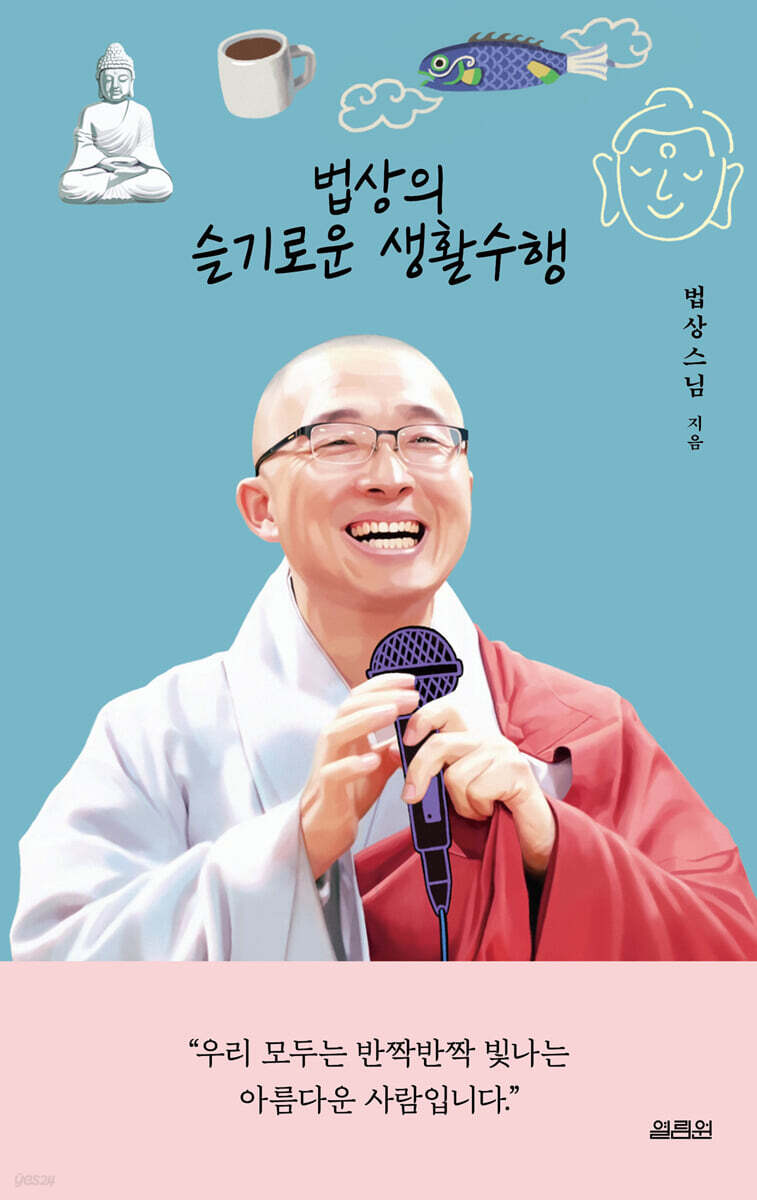 |
Description
Book Introduction
『The Sound of Monk Beopsang's Moktak』
A life practice transcending religion with 160,000 subscribers
If a rabbit wants to become like a lion,
If you want to be rich but poor,
The moment a rabbit becomes a lion
The moment when a tree stuck in the ground wants to walk
If you cling and insist, you create hell.
The tree is green and beautiful in its own way.
Rabbits can eat as much grass as they want.
Life is perfect as it is
"Monk, how can you live without the thought that you have to do more? Only when you realize that you are so poor now can you work harder to become rich.
"Wouldn't it be difficult to live diligently without attachment? If we weren't attached, wouldn't we lose the driving force in life?" Many disciples come to Venerable Beopsang's Dharma talks and ask these questions.
“No,” replied the Venerable Beopsang firmly.
This obsession forces us to discern, preventing us from seeing ourselves as we really are, and forces us to endlessly paint over our lives, which not only prevents us from easily achieving our desired goals, but also causes us to choose the foolishness of inviting pain and suffering.
Venerable Beopsang pays particular attention to the fact that Buddha was an existential being who suffered much more than we do today.
For us today, when loss has become a habit, from giving up on love, giving up on employment, giving up on raising children, and giving up on old age, the sound of the moktak of Venerable Beopsang resonates quietly.
For modern people who are stuck in a cycle of contradiction, drawing a line between the world and themselves by their own standards and distinguishing between them, and thus inviting giving up rather than achieving, this book is a beautiful story of life practice that contains the sound of the moktak of the Venerable Beopsang, urging them to boldly let go of the tangled strings of obsession.
A life practice transcending religion with 160,000 subscribers
If a rabbit wants to become like a lion,
If you want to be rich but poor,
The moment a rabbit becomes a lion
The moment when a tree stuck in the ground wants to walk
If you cling and insist, you create hell.
The tree is green and beautiful in its own way.
Rabbits can eat as much grass as they want.
Life is perfect as it is
"Monk, how can you live without the thought that you have to do more? Only when you realize that you are so poor now can you work harder to become rich.
"Wouldn't it be difficult to live diligently without attachment? If we weren't attached, wouldn't we lose the driving force in life?" Many disciples come to Venerable Beopsang's Dharma talks and ask these questions.
“No,” replied the Venerable Beopsang firmly.
This obsession forces us to discern, preventing us from seeing ourselves as we really are, and forces us to endlessly paint over our lives, which not only prevents us from easily achieving our desired goals, but also causes us to choose the foolishness of inviting pain and suffering.
Venerable Beopsang pays particular attention to the fact that Buddha was an existential being who suffered much more than we do today.
For us today, when loss has become a habit, from giving up on love, giving up on employment, giving up on raising children, and giving up on old age, the sound of the moktak of Venerable Beopsang resonates quietly.
For modern people who are stuck in a cycle of contradiction, drawing a line between the world and themselves by their own standards and distinguishing between them, and thus inviting giving up rather than achieving, this book is a beautiful story of life practice that contains the sound of the moktak of the Venerable Beopsang, urging them to boldly let go of the tangled strings of obsession.
- You can preview some of the book's contents.
Preview
index
Prologue 7
- Part 1 Suffering comes from thoughts
Life Problems 19
Illusions Created by the Mind 26
Obsession narrows your perspective 33
The Delusion of Thought and Discernment 51
Is what you see real? 59
- Part 2: The Middle Way, Coming and Going Following Fate
The law of karma is nothingness 81
The 88 Laws of Life: Following Fate
Results of practice 93
Let Go of Obsession 103
106 Things to Know About Your True Self
- Part 3: Eightfold Path of Life, Eightfold Path
Establishing a View - Right View 117
Thinking, Speaking - Right Thinking and Right Speech 131
Taking Action - Right Action 136
Working, Effort, Awareness, Concentration 144
-Jeongmyeong (正命) Jeongjeongjin (正精進) Jeongnyeom (正念) Jeongjeong (正定)
- Part 4 The truth is already before your eyes
Allow it to be as it is 157
Watching My Life 165
What I see, hear, and feel is myself 169
Depression and fear aren't real 180
- Part 5 Life as a Play
It's okay, I'm 191 now
Only Now 199
Do your best, but leave the results to others. 207
But without 217
The whole universe is me 224
- Part 6: In Search of Happiness
Life is perfect as it is 243
The Original Face Beyond Comparison and Discrimination 252
Everything happens 'for you', not 'to you' 259
Beyond Good and Evil 265
Don't Hold On 274
Epilogue 282
- Part 1 Suffering comes from thoughts
Life Problems 19
Illusions Created by the Mind 26
Obsession narrows your perspective 33
The Delusion of Thought and Discernment 51
Is what you see real? 59
- Part 2: The Middle Way, Coming and Going Following Fate
The law of karma is nothingness 81
The 88 Laws of Life: Following Fate
Results of practice 93
Let Go of Obsession 103
106 Things to Know About Your True Self
- Part 3: Eightfold Path of Life, Eightfold Path
Establishing a View - Right View 117
Thinking, Speaking - Right Thinking and Right Speech 131
Taking Action - Right Action 136
Working, Effort, Awareness, Concentration 144
-Jeongmyeong (正命) Jeongjeongjin (正精進) Jeongnyeom (正念) Jeongjeong (正定)
- Part 4 The truth is already before your eyes
Allow it to be as it is 157
Watching My Life 165
What I see, hear, and feel is myself 169
Depression and fear aren't real 180
- Part 5 Life as a Play
It's okay, I'm 191 now
Only Now 199
Do your best, but leave the results to others. 207
But without 217
The whole universe is me 224
- Part 6: In Search of Happiness
Life is perfect as it is 243
The Original Face Beyond Comparison and Discrimination 252
Everything happens 'for you', not 'to you' 259
Beyond Good and Evil 265
Don't Hold On 274
Epilogue 282
Detailed image
.jpg)
Into the book
It is said that the reason suffering occurs in reality is because some karma needs to be resolved.
We also use the expression, ‘It happens to eliminate karma.’
When bad things happen, it means they will be resolved.
Bad things happen to get resolved.
For example, I lost a million won.
It may be painful for a moment, but if you accept it now, you can shake it off.
If it is not resolved now and postponed, who knows whether it will be worth a thousand or a hundred million in ten years?
So, it might be better to just end it now by blowing a million won.
--- p.159
Just as the eyes cannot see the eyes, so the Buddha cannot see or know the Buddha.
You can only experience yourself if you are divided into two.
So, by creating the illusion that we are divided into two, we cause our beings to experience the illusion of suffering.
Because that's the purpose.
Why does suffering exist? It's meant to be experienced.
If suffering has come now, it is not for you to reject it, but to fully absorb and accept it.
Everything is accepted because our original nature allows it.
If a hospital tells you, “You will die in six months,” everyone accepts it.
It's not just Buddhists who accept it.
Everyone accepts it.
Because it is our nature to be able to accept any suffering.
There is nothing wrong with this world as it is.
There is nothing good or bad, and there is no real substance.
But, the ability to discern is to divide things into two groups like 'I like this and I don't like that' and try to keep what I like and throw away what I don't like.
Not making that distinction is the middle way.
It is our nature and the middle way to just accept what is given.
And this middle way is not something that only Buddhists do.
--- pp.162~163
Life should be easy.
Very easy, it couldn't be easier, but just as easy as I can.
Whatever it is, do it to the best of your ability, and then, to put it another way, let it go.
Letting go, leaving it to the Buddha.
The Buddha's teachings do not enable us to experience paradise or the realm of enlightened nirvana.
It just gives you relief from your suffering.
There is no separate paradise, only a paradise that frees us from discrimination.
Buddha's reality was exactly like ours.
It was a lot of hard work, we couldn't eat, and there were no more evil people than us.
Especially since there were many times when I couldn't eat.
We barely go hungry.
--- p.205
The hot topic among large corporations these days is win-win management.
In the past, we thought that as long as our company did well, we could survive even if we had to harass our subcontractors. But now, the idea has changed to that large companies can only thrive if their subcontractors do well.
And subcontractors also know that they have to provide good products to consumers so that they can later earn more profits by receiving recognition from consumers that "that company is truly trustworthy."
We look at the acting and connectivity on a larger scale.
Because they see the correlation between the two, companies are now realizing that saving others is the way to survive.
The professional spirit of living together and supporting each other is becoming a major motto and topic of discussion around the world.
It's like the spirit of enlightenment in Buddhism.
We also use the expression, ‘It happens to eliminate karma.’
When bad things happen, it means they will be resolved.
Bad things happen to get resolved.
For example, I lost a million won.
It may be painful for a moment, but if you accept it now, you can shake it off.
If it is not resolved now and postponed, who knows whether it will be worth a thousand or a hundred million in ten years?
So, it might be better to just end it now by blowing a million won.
--- p.159
Just as the eyes cannot see the eyes, so the Buddha cannot see or know the Buddha.
You can only experience yourself if you are divided into two.
So, by creating the illusion that we are divided into two, we cause our beings to experience the illusion of suffering.
Because that's the purpose.
Why does suffering exist? It's meant to be experienced.
If suffering has come now, it is not for you to reject it, but to fully absorb and accept it.
Everything is accepted because our original nature allows it.
If a hospital tells you, “You will die in six months,” everyone accepts it.
It's not just Buddhists who accept it.
Everyone accepts it.
Because it is our nature to be able to accept any suffering.
There is nothing wrong with this world as it is.
There is nothing good or bad, and there is no real substance.
But, the ability to discern is to divide things into two groups like 'I like this and I don't like that' and try to keep what I like and throw away what I don't like.
Not making that distinction is the middle way.
It is our nature and the middle way to just accept what is given.
And this middle way is not something that only Buddhists do.
--- pp.162~163
Life should be easy.
Very easy, it couldn't be easier, but just as easy as I can.
Whatever it is, do it to the best of your ability, and then, to put it another way, let it go.
Letting go, leaving it to the Buddha.
The Buddha's teachings do not enable us to experience paradise or the realm of enlightened nirvana.
It just gives you relief from your suffering.
There is no separate paradise, only a paradise that frees us from discrimination.
Buddha's reality was exactly like ours.
It was a lot of hard work, we couldn't eat, and there were no more evil people than us.
Especially since there were many times when I couldn't eat.
We barely go hungry.
--- p.205
The hot topic among large corporations these days is win-win management.
In the past, we thought that as long as our company did well, we could survive even if we had to harass our subcontractors. But now, the idea has changed to that large companies can only thrive if their subcontractors do well.
And subcontractors also know that they have to provide good products to consumers so that they can later earn more profits by receiving recognition from consumers that "that company is truly trustworthy."
We look at the acting and connectivity on a larger scale.
Because they see the correlation between the two, companies are now realizing that saving others is the way to survive.
The professional spirit of living together and supporting each other is becoming a major motto and topic of discussion around the world.
It's like the spirit of enlightenment in Buddhism.
--- pp.146~147
Publisher's Review
Studying to realize oneself
“When you love what you have now,
This world is your own face reflected in the mirror.
You will know for sure.”
Venerable Beopsang calls us Doban, which means ‘friends who practice the Way together.’
This book contains the core of [But Without Doing], which has been communicated for a long time with over 160,000 subscribers across religions through the monk's YouTube channel, 'Monk Beopsang's Moktak Sound'.
The weekly live Saturday Buddhist Dharma service of Monk Beopsang and the Sunday Buddhist Dharma service of Daewonjeongsa Temple are places for mind study, with over 1,000 practitioners participating in the online and offline Dharma services each week.
The monk's sermons are detailed yet groundbreaking, easy yet powerful.
Warm, but sometimes cold.
The monk does not tell us what to do or give us rules.
Yet, just by listening to the monk's lectures, people feel that their suffering is naturally relieved and their lives are transformed.
Instead of making us rely on Buddha, Venerable Beopsang gives us a mirror to look at ourselves.
This book is an essay that contains the words of Venerable Beopsang through the sound of the moktak like a gift.
If loneliness and suffering should not occur, then
AI robot is Buddha.
If you set up a system to prevent robots from having delusions, the robots will just sit still.
If not a single thought arises, isn't that Buddha?
“But you can’t become an AI robot.”
The monk points out that it is futile to spend several days on a grand journey to achieve enlightenment.
It's hard to concentrate.
Rather, when you study with passion on a desperate and tiring bus or subway commute that takes three or four hours, when you concentrate for even a few minutes, when you look at your spouse and despair overflows, thinking, "This life is ruined," it is precisely at those moments when truly accepting reality becomes a much easier and more effective mental practice.
So, the sound of Monk Beopsang's moktak is crowded with 'learners' who want to practice the mind study of daily life in reality.
This is also the reason why the monks call this place where we stay a ‘holy place’ rather than a pilgrimage site.
“The hot topic among large corporations these days is win-win management.
Symbiotic fusion and integration
Why are these relational concepts so widely used in business?
The professional spirit of living together and saving each other
It has become a major motto and topic of discussion worldwide.
This is the spirit of righteousness in which we live.”
We see the world through our own representations and filters in our own way.
What would the world look like without those filtering glasses, without those filters? It's hard to imagine, but of course, we'd simply see things as they are, as they are.
Venerable Beopsang emphasizes that this is the true way to study the mind.
The process of removing one by one the non-essential and unreal things is called mind study.
Is there a separate way to see reality? Is there a separate nirvana? Venerable Beopsang preaches that there is no such thing.
Since the suffering people are sentient beings, these are concepts created as expedient means for sentient beings, so please do not delude yourself into thinking, "I am suffering." Through the practical experience of "A friend and I were cutting grass with sickles, and even though blood spurted out, neither my friend nor I knew we were in pain until we recognized where the wound was," Venerable Beopsang gives us the comforting message that pain can only be felt when the mind is drawn to it.
"The Wise Practice of Living in the Dharma" is a book on mind study that contains the secrets of a beautiful journey to a higher spiritual world by truly accepting the reality of life and focusing on oneself through the philosophy of life practice that goes beyond the world of religion.
“If I don’t paint life with my thoughts,
Life is revealed as it is, in its entirety.
Life revealed in this way is, as the cliché goes, 'dazzlingly beautiful.'
It's beyond expression.
It is a gift that never disappears.”
Why do we believe we must travel far away, meditate, and rely on the Buddha to attain enlightenment? Venerable Beopsang honestly examines the loneliness of even the Buddha, an existential human being, and emphasizes that the most important thing is not the Buddha, but ourselves, to save ourselves from the ravages of nirvana.
It tells me plainly that no one else can discipline me for me, and that even Buddha cannot do that.
The mind that clings to the power of the Buddha and seeks enlightenment ends up dividing me and the Buddha in two.
This awakens us to the truth that ‘I myself am Buddha.’
The Buddha outside of me cannot enlighten me, and the Buddha outside of me is a Buddha of form.
So where, then, is the true Buddha? Who is the true Buddha? Venerable Beopsang clearly answers: "Your own mind."
On the surface, it may seem like the monks have a good environment for studying, but it turns out that we can accept the study of the mind more quickly.
Since we cannot attain enlightenment if we seek it outside our minds, true life practice becomes when we focus on ourselves in our daily lives.
■ Prologue
It is the season when the autumn breeze is clear.
The blue sky lasted for several days for the first time in a long while.
It is an amazing gift given to all of us.
But if we fail to fully enjoy and savor even this weather, given to us at this very moment, aren't we missing out on the amazing gift we've all been given? Is it a gift simply because the sky is blue? From now on, I want to tell you, rainy days and cloudy days alike, that if we don't live in our own thoughts, beautiful things beyond our own imaginations unfold before us.
In other words, we think too much, live in our thoughts, and miss the real life right in front of us.
It would be truly regrettable and sad if we were unable to fully live the vibrant life we live in this very moment, but instead were trapped in a virtual reality, a fake life created by our thoughts.
The stories that unfold in our minds, the dramas of our thoughts, are not our real lives.
It's just a fake drama that I've drawn up, implemented in my own thoughts.
Can we truly accept this truth? That right and wrong, good and bad, success and failure, good and bad—all of this is non-existent.
If I don't paint over life with my thoughts, life will be revealed as it is, in its entirety.
Life, revealed in this way, is beyond the cliché of "dazzlingly beautiful."
It's like being given a gift, a gift that never goes away.
This gift is inherently given to us.
But unfortunately, it is completely invisible to those who are trapped in their own thoughts and believe that the world interpreted through their thoughts is real.
My interpretation of the situation is just my thoughts, and happiness has nothing to do with the situation itself.
When you see things as they are and love them as they are, you will clearly see that this world is your own face reflected in a mirror.
This is one thing the Buddha emphasized: seeing what is unfolding before me as it is.
It is not necessarily a religious enlightenment that must be achieved with difficulty.
If we realize that suffering is not a problem in itself; we only make it a problem with our thoughts, and stop living in the drama of our thoughts, we will enjoy the freedom that is the gift of our original nature.
This book is about the study of the mind toward such a journey of enlightenment, that is, practice in everyday life.
How can we ever be free from our thoughts at every moment?
“When you love what you have now,
This world is your own face reflected in the mirror.
You will know for sure.”
Venerable Beopsang calls us Doban, which means ‘friends who practice the Way together.’
This book contains the core of [But Without Doing], which has been communicated for a long time with over 160,000 subscribers across religions through the monk's YouTube channel, 'Monk Beopsang's Moktak Sound'.
The weekly live Saturday Buddhist Dharma service of Monk Beopsang and the Sunday Buddhist Dharma service of Daewonjeongsa Temple are places for mind study, with over 1,000 practitioners participating in the online and offline Dharma services each week.
The monk's sermons are detailed yet groundbreaking, easy yet powerful.
Warm, but sometimes cold.
The monk does not tell us what to do or give us rules.
Yet, just by listening to the monk's lectures, people feel that their suffering is naturally relieved and their lives are transformed.
Instead of making us rely on Buddha, Venerable Beopsang gives us a mirror to look at ourselves.
This book is an essay that contains the words of Venerable Beopsang through the sound of the moktak like a gift.
If loneliness and suffering should not occur, then
AI robot is Buddha.
If you set up a system to prevent robots from having delusions, the robots will just sit still.
If not a single thought arises, isn't that Buddha?
“But you can’t become an AI robot.”
The monk points out that it is futile to spend several days on a grand journey to achieve enlightenment.
It's hard to concentrate.
Rather, when you study with passion on a desperate and tiring bus or subway commute that takes three or four hours, when you concentrate for even a few minutes, when you look at your spouse and despair overflows, thinking, "This life is ruined," it is precisely at those moments when truly accepting reality becomes a much easier and more effective mental practice.
So, the sound of Monk Beopsang's moktak is crowded with 'learners' who want to practice the mind study of daily life in reality.
This is also the reason why the monks call this place where we stay a ‘holy place’ rather than a pilgrimage site.
“The hot topic among large corporations these days is win-win management.
Symbiotic fusion and integration
Why are these relational concepts so widely used in business?
The professional spirit of living together and saving each other
It has become a major motto and topic of discussion worldwide.
This is the spirit of righteousness in which we live.”
We see the world through our own representations and filters in our own way.
What would the world look like without those filtering glasses, without those filters? It's hard to imagine, but of course, we'd simply see things as they are, as they are.
Venerable Beopsang emphasizes that this is the true way to study the mind.
The process of removing one by one the non-essential and unreal things is called mind study.
Is there a separate way to see reality? Is there a separate nirvana? Venerable Beopsang preaches that there is no such thing.
Since the suffering people are sentient beings, these are concepts created as expedient means for sentient beings, so please do not delude yourself into thinking, "I am suffering." Through the practical experience of "A friend and I were cutting grass with sickles, and even though blood spurted out, neither my friend nor I knew we were in pain until we recognized where the wound was," Venerable Beopsang gives us the comforting message that pain can only be felt when the mind is drawn to it.
"The Wise Practice of Living in the Dharma" is a book on mind study that contains the secrets of a beautiful journey to a higher spiritual world by truly accepting the reality of life and focusing on oneself through the philosophy of life practice that goes beyond the world of religion.
“If I don’t paint life with my thoughts,
Life is revealed as it is, in its entirety.
Life revealed in this way is, as the cliché goes, 'dazzlingly beautiful.'
It's beyond expression.
It is a gift that never disappears.”
Why do we believe we must travel far away, meditate, and rely on the Buddha to attain enlightenment? Venerable Beopsang honestly examines the loneliness of even the Buddha, an existential human being, and emphasizes that the most important thing is not the Buddha, but ourselves, to save ourselves from the ravages of nirvana.
It tells me plainly that no one else can discipline me for me, and that even Buddha cannot do that.
The mind that clings to the power of the Buddha and seeks enlightenment ends up dividing me and the Buddha in two.
This awakens us to the truth that ‘I myself am Buddha.’
The Buddha outside of me cannot enlighten me, and the Buddha outside of me is a Buddha of form.
So where, then, is the true Buddha? Who is the true Buddha? Venerable Beopsang clearly answers: "Your own mind."
On the surface, it may seem like the monks have a good environment for studying, but it turns out that we can accept the study of the mind more quickly.
Since we cannot attain enlightenment if we seek it outside our minds, true life practice becomes when we focus on ourselves in our daily lives.
■ Prologue
It is the season when the autumn breeze is clear.
The blue sky lasted for several days for the first time in a long while.
It is an amazing gift given to all of us.
But if we fail to fully enjoy and savor even this weather, given to us at this very moment, aren't we missing out on the amazing gift we've all been given? Is it a gift simply because the sky is blue? From now on, I want to tell you, rainy days and cloudy days alike, that if we don't live in our own thoughts, beautiful things beyond our own imaginations unfold before us.
In other words, we think too much, live in our thoughts, and miss the real life right in front of us.
It would be truly regrettable and sad if we were unable to fully live the vibrant life we live in this very moment, but instead were trapped in a virtual reality, a fake life created by our thoughts.
The stories that unfold in our minds, the dramas of our thoughts, are not our real lives.
It's just a fake drama that I've drawn up, implemented in my own thoughts.
Can we truly accept this truth? That right and wrong, good and bad, success and failure, good and bad—all of this is non-existent.
If I don't paint over life with my thoughts, life will be revealed as it is, in its entirety.
Life, revealed in this way, is beyond the cliché of "dazzlingly beautiful."
It's like being given a gift, a gift that never goes away.
This gift is inherently given to us.
But unfortunately, it is completely invisible to those who are trapped in their own thoughts and believe that the world interpreted through their thoughts is real.
My interpretation of the situation is just my thoughts, and happiness has nothing to do with the situation itself.
When you see things as they are and love them as they are, you will clearly see that this world is your own face reflected in a mirror.
This is one thing the Buddha emphasized: seeing what is unfolding before me as it is.
It is not necessarily a religious enlightenment that must be achieved with difficulty.
If we realize that suffering is not a problem in itself; we only make it a problem with our thoughts, and stop living in the drama of our thoughts, we will enjoy the freedom that is the gift of our original nature.
This book is about the study of the mind toward such a journey of enlightenment, that is, practice in everyday life.
How can we ever be free from our thoughts at every moment?
GOODS SPECIFICS
- Date of issue: October 31, 2024
- Page count, weight, size: 284 pages | 366g | 120*190*22mm
- ISBN13: 9791170402909
- ISBN10: 1170402909
You may also like
카테고리
korean


korean

![GQ KOREA Mark (Monthly): December [2025]](http://librairie.coreenne.fr/cdn/shop/files/8ef265dbbfbf186523ed75ba7319009d.jpg?v=1765340328&width=3840)


