

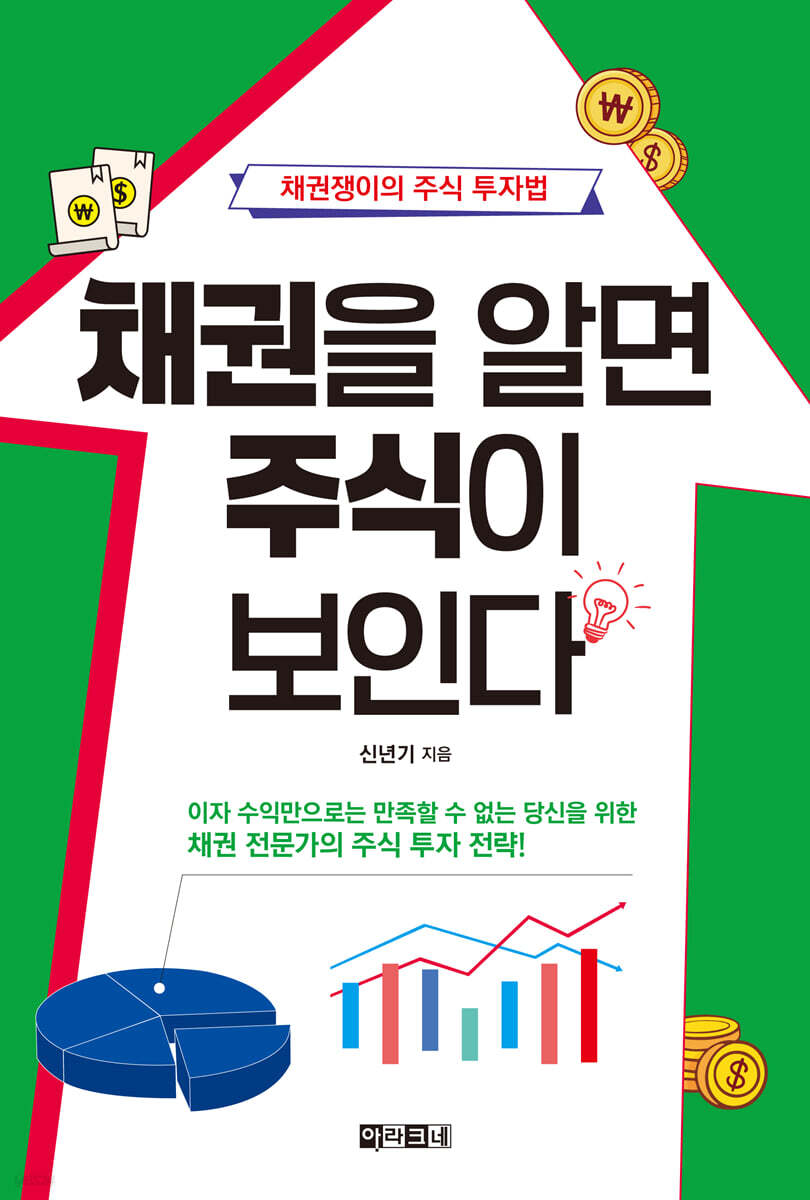
If you know bonds, you can see stocks.
 |
Description
Book Introduction
Understanding bonds reveals the stock market's trends.
A book that presents standards, principles, and directions appropriate for the era of stock investment.
KOSPI 4000, an unprecedented era of stock indices has begun.
The KOSPI, which began to gain momentum as the new government announced and implemented various stock price support policies, is continuing its steep rise, coupled with favorable news for key industries such as artificial intelligence, semiconductors, shipbuilding, defense, and electricity.
In a reality where labor income cannot keep pace with rising prices and interest rates, even if we continue to consume as we did in the past, we will inevitably become poorer.
It's not for nothing that people say that investing is essential.
But real estate is too expensive to even think about, and it seems like people just keep their money in savings or deposits because of the low interest rates.
There are digital assets like cryptocurrencies and tokens, but many people are reluctant to use them because they don't feel stable.
Then, you may want to try a side job or start your own business, but without a brilliant idea, you are likely to fail.
But what about stocks? As the undervalued stock market normalizes and confidence returns, the outlook for stocks will only brighten.
Amendments to the Commercial Act are being pursued to strengthen shareholder rights, including mandating the cancellation of treasury stock. Furthermore, separate taxation of dividend income is being discussed to encourage companies to increase dividends.
While strengthening sanctions against unfair trade practices such as stock price manipulation, tax reform and relaxation of major shareholder standards are also underway.
There is an active government-level movement to change the structure of household assets to focus on stocks rather than real estate.
If stock price support policies actually work and corporate performance backs them up, an era of more active stock investment will begin.
Beyond keeping up with this new trend, staying ahead requires clear investment criteria and principles.
This book, "If You Know Bonds, You Can See Stocks," applies the concept of bonds to the characteristics of stocks, making it very easy to understand the principles of stock movement and helping investors establish a direction for stock selection based on their tendencies.
A book that presents standards, principles, and directions appropriate for the era of stock investment.
KOSPI 4000, an unprecedented era of stock indices has begun.
The KOSPI, which began to gain momentum as the new government announced and implemented various stock price support policies, is continuing its steep rise, coupled with favorable news for key industries such as artificial intelligence, semiconductors, shipbuilding, defense, and electricity.
In a reality where labor income cannot keep pace with rising prices and interest rates, even if we continue to consume as we did in the past, we will inevitably become poorer.
It's not for nothing that people say that investing is essential.
But real estate is too expensive to even think about, and it seems like people just keep their money in savings or deposits because of the low interest rates.
There are digital assets like cryptocurrencies and tokens, but many people are reluctant to use them because they don't feel stable.
Then, you may want to try a side job or start your own business, but without a brilliant idea, you are likely to fail.
But what about stocks? As the undervalued stock market normalizes and confidence returns, the outlook for stocks will only brighten.
Amendments to the Commercial Act are being pursued to strengthen shareholder rights, including mandating the cancellation of treasury stock. Furthermore, separate taxation of dividend income is being discussed to encourage companies to increase dividends.
While strengthening sanctions against unfair trade practices such as stock price manipulation, tax reform and relaxation of major shareholder standards are also underway.
There is an active government-level movement to change the structure of household assets to focus on stocks rather than real estate.
If stock price support policies actually work and corporate performance backs them up, an era of more active stock investment will begin.
Beyond keeping up with this new trend, staying ahead requires clear investment criteria and principles.
This book, "If You Know Bonds, You Can See Stocks," applies the concept of bonds to the characteristics of stocks, making it very easy to understand the principles of stock movement and helping investors establish a direction for stock selection based on their tendencies.
- You can preview some of the book's contents.
Preview
index
Prologue: Looking at Stock Investment Through the Eyes of a Bond Trader
Recommended Article: Interpreting Stocks Through the Language of Bonds
Insights that cross stocks and bonds
Chapter 1: Understanding Bonds Reveals the Flow of the Investment Market
The difference between coupon interest and market interest rates
Two Ways to Raise Money | The Etymology of Bonds: Bond Prices and Interest Rates | Fixed-Rate Coupons and Floating-Rate Coupons
The meaning of bond life and principal guarantee
Bonds are securities with a lifespan | Interest rate differences and term premiums based on maturity | Call and put options | Meaning of principal protection
Duration is the real maturity and interest rate sensitivity.
Effective maturity, which is the amount of interest paid back in the amount of principal lent. The value of money varies depending on the timing. The longer the effective maturity, the higher the interest rate sensitivity. Price fluctuation trends of long-duration and short-duration bonds.
The Impact of Inflation on Bonds
The Meaning of Rising Prices | The Correlation Between Prices and Interest Rates | Central Bank Measures to Stabilize Prices | Inversion of Long-Term and Short-Term Interest Rates: A Signal of Recession
Credit ratings and credit spreads
What is a Credit Rating? | Who Evaluates Credit Ratings? | How Are Credit Ratings Classified? | Investment Grade and High-Yield Ratings | Michael Milken: Finding a Pearl in the Trash | Company-Specific Risk: Credit Spreads
Chapter 2: Key Psychological Indicators in Financial Markets You Should Know
Why are US economic indicators important?
The world's largest economy | The US dollar is the world's reserve currency | US economic indicators are the independent variable, while Korean economic indicators are the dependent variable
Financial Market Vigilantes: Interest Rates and Exchange Rates
The Law of Mean Reversion | Investing is a Psychological Game | Rising Interest Rates and Exchange Rates Signal a Crisis
Omniscient Consumer Viewpoint Psychological Index
University of Michigan Consumer Sentiment Index | Bank of Korea Consumer Sentiment Index
Omniscient Coiner's perspective site, Polymarket
The Crystal of Collective Intelligence | How to Forecast the Market with Polymarket
Omniscient Supplier Viewpoint Psychological Index
The Institute for Supplier Management's Purchasing Managers' Index (PMI) | Domestic Business Sentiment Index and Economic Sentiment Index
Omniscient Investor's Perspective Sentiment Indicator
Chicago Board Options Exchange Volatility Index | CNN Fear and Greed Index | Bank of America Global Manager Survey
Chapter 3: Applying the Principles of Bonds to Invest in Stocks
Companies that pursue shareholder return policies (feat.
Coupon interest)
Reasons for investing in stocks | Minimum compensation for stock price maintenance, stock repurchase | Periodic interest and dividend payments from stocks
Appendix: Ranking of domestic treasury stock holdings
US-listed treasury stock and dividend-related ETFs
Top 10 Dividend Yield Companies in Korea and the US
Protect your principal and then aim for additional profits (feat.
Maturity and principal guaranteed)
Convertible Bonds: Bonds That Can Be Converted into Stocks | A Buffer Strategy That Protects Principal and Earns Additional Returns
Appendix: Overseas Convertible Bonds and Buffer ETFs
Growth stocks betting on future potential (feat.
Duration)
Focus on stocks with a beta exceeding 1 | High-beta stocks with future business foundations | Tesla, a leading growth stock
Appendix KOSPI High Beta Companies Status
S&P 500 High-Beta Companies
Top 10 US Growth Stock ETFs
Companies that make money even during inflation
ExxonMobil, a leading energy company | Nongshim, a consumer goods manufacturer
Appendix: Key Stocks in the Consumer Staples and Energy Sectors
How to Invest in Undervalued Stocks (feat.
High yield bonds)
Stock returns are the inverse of the price-to-book ratio (PER). Focus on stocks with low price-to-book ratios (PBR). Fallen angels and rising stars.
Appendix: S&P 500 and KOSPI PER, PBR Bottom 20 Companies
Value Stock ETF
Investments that eliminate unsystematic risk of individual stocks (feat.
credit spread)
Systematic and Unsystematic Risk | Stock Indices Utilizing the Portfolio Effect | Financial Products Tracking Indices, ETFs
Epilogue: Dreaming of the Synergy of Bonds and Stocks
Recommended Article: Interpreting Stocks Through the Language of Bonds
Insights that cross stocks and bonds
Chapter 1: Understanding Bonds Reveals the Flow of the Investment Market
The difference between coupon interest and market interest rates
Two Ways to Raise Money | The Etymology of Bonds: Bond Prices and Interest Rates | Fixed-Rate Coupons and Floating-Rate Coupons
The meaning of bond life and principal guarantee
Bonds are securities with a lifespan | Interest rate differences and term premiums based on maturity | Call and put options | Meaning of principal protection
Duration is the real maturity and interest rate sensitivity.
Effective maturity, which is the amount of interest paid back in the amount of principal lent. The value of money varies depending on the timing. The longer the effective maturity, the higher the interest rate sensitivity. Price fluctuation trends of long-duration and short-duration bonds.
The Impact of Inflation on Bonds
The Meaning of Rising Prices | The Correlation Between Prices and Interest Rates | Central Bank Measures to Stabilize Prices | Inversion of Long-Term and Short-Term Interest Rates: A Signal of Recession
Credit ratings and credit spreads
What is a Credit Rating? | Who Evaluates Credit Ratings? | How Are Credit Ratings Classified? | Investment Grade and High-Yield Ratings | Michael Milken: Finding a Pearl in the Trash | Company-Specific Risk: Credit Spreads
Chapter 2: Key Psychological Indicators in Financial Markets You Should Know
Why are US economic indicators important?
The world's largest economy | The US dollar is the world's reserve currency | US economic indicators are the independent variable, while Korean economic indicators are the dependent variable
Financial Market Vigilantes: Interest Rates and Exchange Rates
The Law of Mean Reversion | Investing is a Psychological Game | Rising Interest Rates and Exchange Rates Signal a Crisis
Omniscient Consumer Viewpoint Psychological Index
University of Michigan Consumer Sentiment Index | Bank of Korea Consumer Sentiment Index
Omniscient Coiner's perspective site, Polymarket
The Crystal of Collective Intelligence | How to Forecast the Market with Polymarket
Omniscient Supplier Viewpoint Psychological Index
The Institute for Supplier Management's Purchasing Managers' Index (PMI) | Domestic Business Sentiment Index and Economic Sentiment Index
Omniscient Investor's Perspective Sentiment Indicator
Chicago Board Options Exchange Volatility Index | CNN Fear and Greed Index | Bank of America Global Manager Survey
Chapter 3: Applying the Principles of Bonds to Invest in Stocks
Companies that pursue shareholder return policies (feat.
Coupon interest)
Reasons for investing in stocks | Minimum compensation for stock price maintenance, stock repurchase | Periodic interest and dividend payments from stocks
Appendix: Ranking of domestic treasury stock holdings
US-listed treasury stock and dividend-related ETFs
Top 10 Dividend Yield Companies in Korea and the US
Protect your principal and then aim for additional profits (feat.
Maturity and principal guaranteed)
Convertible Bonds: Bonds That Can Be Converted into Stocks | A Buffer Strategy That Protects Principal and Earns Additional Returns
Appendix: Overseas Convertible Bonds and Buffer ETFs
Growth stocks betting on future potential (feat.
Duration)
Focus on stocks with a beta exceeding 1 | High-beta stocks with future business foundations | Tesla, a leading growth stock
Appendix KOSPI High Beta Companies Status
S&P 500 High-Beta Companies
Top 10 US Growth Stock ETFs
Companies that make money even during inflation
ExxonMobil, a leading energy company | Nongshim, a consumer goods manufacturer
Appendix: Key Stocks in the Consumer Staples and Energy Sectors
How to Invest in Undervalued Stocks (feat.
High yield bonds)
Stock returns are the inverse of the price-to-book ratio (PER). Focus on stocks with low price-to-book ratios (PBR). Fallen angels and rising stars.
Appendix: S&P 500 and KOSPI PER, PBR Bottom 20 Companies
Value Stock ETF
Investments that eliminate unsystematic risk of individual stocks (feat.
credit spread)
Systematic and Unsystematic Risk | Stock Indices Utilizing the Portfolio Effect | Financial Products Tracking Indices, ETFs
Epilogue: Dreaming of the Synergy of Bonds and Stocks
Detailed image

Into the book
Jeonghyeok: You said that creditors can receive interest periodically, rain or shine, and even if the company goes bankrupt, they can get the money from the sale of assets first, but they can't receive more than the principal they lent.
So, if a company tells a creditor, “We will definitely repay the principal at maturity,” can they receive the principal no matter what?
Dad: Right.
A bond is a certificate that promises to repay the borrowed money even if the sky splits in two.
If the company goes bankrupt, Jeong-hyeok will have to sell the assets to pay off the creditors, just like you said.
--- p.41
Jeonghyeok: The U.S. economy still accounts for more than a quarter of the world's total, it buys a lot of goods from other countries, and American money is a reserve currency that can be used anywhere, so every word President Trump says is important, right?
Dad: It's a fact that we have no choice but to admit.
While our country's economic indicators are important, U.S. indicators have a huge ripple effect on the global economy and financial markets.
So the US economy is an independent variable for the world.
Jeonghyeok: Then what about our country?
Dad: The dependent variable of the US economy?
--- p.94~95
Jeonghyeok: Dad, looking at our country's consumer sentiment index, it seems to have a different baseline than the University of Michigan's consumer sentiment index.
Dad: Based on 100, if it's higher than that, it's expected that the economy will improve in the future, and if it's lower, it's expected that it will get worse.
Jeonghyeok: Why has our country's consumer sentiment index suddenly risen recently?
Father: That's because the unimaginable declaration of martial law in December 2024 filled the nation with despair, but the atmosphere improved as democracy in our country rapidly recovered and a new government was inaugurated on June 4, 2025.
Consumer sentiment is recovering quickly as people expect the government to do a good job.
--- p.114
Dad: The Fed's position, as seen by the market, is that they'll say, "We think prices will go up because of the tariffs, and the economy seems to be doing well, so we'll hold interest rates."
So, since interest rates don't fall, stock and bond prices can fall.
Jeonghyeok: So, rising interest rates are causing stocks and bonds to fall? Is this still a difficult environment to invest in stocks?
Dad: That's what 'collective intelligence' says.
--- p.126
Jeonghyeok: Dad, you said investing in low PER and low PBR stocks is like investing in high-quality high-yield bonds.
But what else could it mean beyond a high expected return? I'll discuss it in the club discussion tomorrow.
Dad: High-quality high-yield bonds mean that the company's performance is good, but its credit rating remains high.
But what if the company's value is recognized and its rating is upgraded from high-yield to investment grade? The number of investors would increase dramatically, because now they can invest with confidence.
So, if a company tells a creditor, “We will definitely repay the principal at maturity,” can they receive the principal no matter what?
Dad: Right.
A bond is a certificate that promises to repay the borrowed money even if the sky splits in two.
If the company goes bankrupt, Jeong-hyeok will have to sell the assets to pay off the creditors, just like you said.
--- p.41
Jeonghyeok: The U.S. economy still accounts for more than a quarter of the world's total, it buys a lot of goods from other countries, and American money is a reserve currency that can be used anywhere, so every word President Trump says is important, right?
Dad: It's a fact that we have no choice but to admit.
While our country's economic indicators are important, U.S. indicators have a huge ripple effect on the global economy and financial markets.
So the US economy is an independent variable for the world.
Jeonghyeok: Then what about our country?
Dad: The dependent variable of the US economy?
--- p.94~95
Jeonghyeok: Dad, looking at our country's consumer sentiment index, it seems to have a different baseline than the University of Michigan's consumer sentiment index.
Dad: Based on 100, if it's higher than that, it's expected that the economy will improve in the future, and if it's lower, it's expected that it will get worse.
Jeonghyeok: Why has our country's consumer sentiment index suddenly risen recently?
Father: That's because the unimaginable declaration of martial law in December 2024 filled the nation with despair, but the atmosphere improved as democracy in our country rapidly recovered and a new government was inaugurated on June 4, 2025.
Consumer sentiment is recovering quickly as people expect the government to do a good job.
--- p.114
Dad: The Fed's position, as seen by the market, is that they'll say, "We think prices will go up because of the tariffs, and the economy seems to be doing well, so we'll hold interest rates."
So, since interest rates don't fall, stock and bond prices can fall.
Jeonghyeok: So, rising interest rates are causing stocks and bonds to fall? Is this still a difficult environment to invest in stocks?
Dad: That's what 'collective intelligence' says.
--- p.126
Jeonghyeok: Dad, you said investing in low PER and low PBR stocks is like investing in high-quality high-yield bonds.
But what else could it mean beyond a high expected return? I'll discuss it in the club discussion tomorrow.
Dad: High-quality high-yield bonds mean that the company's performance is good, but its credit rating remains high.
But what if the company's value is recognized and its rating is upgraded from high-yield to investment grade? The number of investors would increase dramatically, because now they can invest with confidence.
--- p.240
Publisher's Review
"Unraveling the structure and principles of bonds, offering a new perspective on stock investment."
A fun and easy guide to stock investment based on the basic principles and structure of bonds.
This book consists of conversations between a fictional son and his father.
The program is designed to help students easily learn the concept of bonds through conversations between 'Jeong-hyeok', a high school student preparing for the college entrance exam who dreams of becoming an investment expert, and 'Dad', a bond expert and financial institution executive with experience managing both bonds and stocks, and then to look at useful psychological indicators and identify stocks that correspond to the concept of bonds.
Chapter 1 explains the basic principles of bonds.
These include coupons and interest rates, maturity and principal guarantees, duration, the impact of inflation, credit ratings, and credit spreads.
By comparing the differences between bonds, which provide stable interest income and a guaranteed principal but cannot benefit from the increase in corporate value, and stocks, which cannot guarantee a guaranteed principal but have the potential to generate income exceeding the principal when the corporate value increases, you can understand concepts such as interest rates, inflation, credit ratings, and risk that are essential for investment.
Chapter 2 introduces key psychological indicators.
When analyzing the financial market, you need to understand not only the domestic market but also the U.S. market.
This is because movements in the U.S. market, which accounts for one-quarter of the global economy, have a significant impact on the domestic market.
Accordingly, major psychological indicators in the United States and Korea are introduced by classifying them into the perspectives of consumers, suppliers, and investors, respectively.
In addition, it provides an easy-to-understand explanation of how interest rates and exchange rates work in the market, making it very useful for analyzing financial markets and determining the right time to invest.
Chapter 3 presents a stock investment method that applies the principles of bonds.
Companies that implement shareholder return policies, such as repurchasing and burning treasury stocks and paying dividends, similar to the coupon interest paid periodically in addition to the principal, are stocks that investors seeking stable stock investments can consider.
Convertible bonds and buffer products, which have similar features to bonds in terms of maturity and principal guarantee, are also worth looking into.
Growth stocks, which invest in future possibilities, are similar to long-duration bonds.
Next, we will examine the characteristics of companies that generate consistent profits even during inflationary periods, and learn about low-PER and low-PBR stocks that are undervalued but still have investment value, like high-yield bonds.
Finally, it suggests a method of investing while eliminating the unsystematic risk of individual stocks, such as credit spreads, which indicate the company-specific risk in bonds.
And, it is full of content that provides practical help in portfolio composition, including investment items and rankings of items that fit each characteristic as an appendix.
"A stock guide from a bond expert that will open the door to a new world of investing."
A guide to help you establish investment principles that will remain unshaken by market volatility.
If you search for "stock investing" on the Internet, you'll find a plethora of investment principles and advice.
If you put all of that into practice, it seems like anyone can succeed in investing.
However, few people can successfully implement all of these principles 100 percent of the time.
Even Warren Buffett, known as the investment genius, has suffered losses in stock investments.
Even the most brilliant investors cannot be perfect.
Therefore, you must have your own standards and principles for how you invest.
The stock market is always caught up in a certain atmosphere.
There are times when we are optimistic about the future, times when we are pessimistic due to anxiety and fear, and times when we are in a wait-and-see mood, watching the direction of the market.
To successfully invest without being swayed by this constantly changing market environment, you must be able to analyze trends based on objective indicators and make cool-headed investment decisions.
This book suggests ways to find opportunities in stock investment based on the characteristics of bonds.
It also teaches you how to analyze and forecast financial markets using various domestic and international psychological indicators.
The author, who has studied financial market trends across stocks and bonds for a long time, provides unique insights linking bonds and stocks, helping investors establish investment principles that remain unshaken by market sentiment and volatility.
This allows novice investors who find everything difficult and overwhelming to learn how to establish their own investment principles, while experienced investors gain a new perspective on the stock market.
A fun and easy guide to stock investment based on the basic principles and structure of bonds.
This book consists of conversations between a fictional son and his father.
The program is designed to help students easily learn the concept of bonds through conversations between 'Jeong-hyeok', a high school student preparing for the college entrance exam who dreams of becoming an investment expert, and 'Dad', a bond expert and financial institution executive with experience managing both bonds and stocks, and then to look at useful psychological indicators and identify stocks that correspond to the concept of bonds.
Chapter 1 explains the basic principles of bonds.
These include coupons and interest rates, maturity and principal guarantees, duration, the impact of inflation, credit ratings, and credit spreads.
By comparing the differences between bonds, which provide stable interest income and a guaranteed principal but cannot benefit from the increase in corporate value, and stocks, which cannot guarantee a guaranteed principal but have the potential to generate income exceeding the principal when the corporate value increases, you can understand concepts such as interest rates, inflation, credit ratings, and risk that are essential for investment.
Chapter 2 introduces key psychological indicators.
When analyzing the financial market, you need to understand not only the domestic market but also the U.S. market.
This is because movements in the U.S. market, which accounts for one-quarter of the global economy, have a significant impact on the domestic market.
Accordingly, major psychological indicators in the United States and Korea are introduced by classifying them into the perspectives of consumers, suppliers, and investors, respectively.
In addition, it provides an easy-to-understand explanation of how interest rates and exchange rates work in the market, making it very useful for analyzing financial markets and determining the right time to invest.
Chapter 3 presents a stock investment method that applies the principles of bonds.
Companies that implement shareholder return policies, such as repurchasing and burning treasury stocks and paying dividends, similar to the coupon interest paid periodically in addition to the principal, are stocks that investors seeking stable stock investments can consider.
Convertible bonds and buffer products, which have similar features to bonds in terms of maturity and principal guarantee, are also worth looking into.
Growth stocks, which invest in future possibilities, are similar to long-duration bonds.
Next, we will examine the characteristics of companies that generate consistent profits even during inflationary periods, and learn about low-PER and low-PBR stocks that are undervalued but still have investment value, like high-yield bonds.
Finally, it suggests a method of investing while eliminating the unsystematic risk of individual stocks, such as credit spreads, which indicate the company-specific risk in bonds.
And, it is full of content that provides practical help in portfolio composition, including investment items and rankings of items that fit each characteristic as an appendix.
"A stock guide from a bond expert that will open the door to a new world of investing."
A guide to help you establish investment principles that will remain unshaken by market volatility.
If you search for "stock investing" on the Internet, you'll find a plethora of investment principles and advice.
If you put all of that into practice, it seems like anyone can succeed in investing.
However, few people can successfully implement all of these principles 100 percent of the time.
Even Warren Buffett, known as the investment genius, has suffered losses in stock investments.
Even the most brilliant investors cannot be perfect.
Therefore, you must have your own standards and principles for how you invest.
The stock market is always caught up in a certain atmosphere.
There are times when we are optimistic about the future, times when we are pessimistic due to anxiety and fear, and times when we are in a wait-and-see mood, watching the direction of the market.
To successfully invest without being swayed by this constantly changing market environment, you must be able to analyze trends based on objective indicators and make cool-headed investment decisions.
This book suggests ways to find opportunities in stock investment based on the characteristics of bonds.
It also teaches you how to analyze and forecast financial markets using various domestic and international psychological indicators.
The author, who has studied financial market trends across stocks and bonds for a long time, provides unique insights linking bonds and stocks, helping investors establish investment principles that remain unshaken by market sentiment and volatility.
This allows novice investors who find everything difficult and overwhelming to learn how to establish their own investment principles, while experienced investors gain a new perspective on the stock market.
GOODS SPECIFICS
- Date of issue: November 17, 2025
- Page count, weight, size: 264 pages | 498g | 152*225*17mm
- ISBN13: 9791157747856
- ISBN10: 115774785X
You may also like
카테고리
korean


korean

![GQ KOREA Mark (Monthly): December [2025]](http://librairie.coreenne.fr/cdn/shop/files/8ef265dbbfbf186523ed75ba7319009d.jpg?v=1765340328&width=3840)


