

Years 1994-2014
 |
Description
Book Introduction
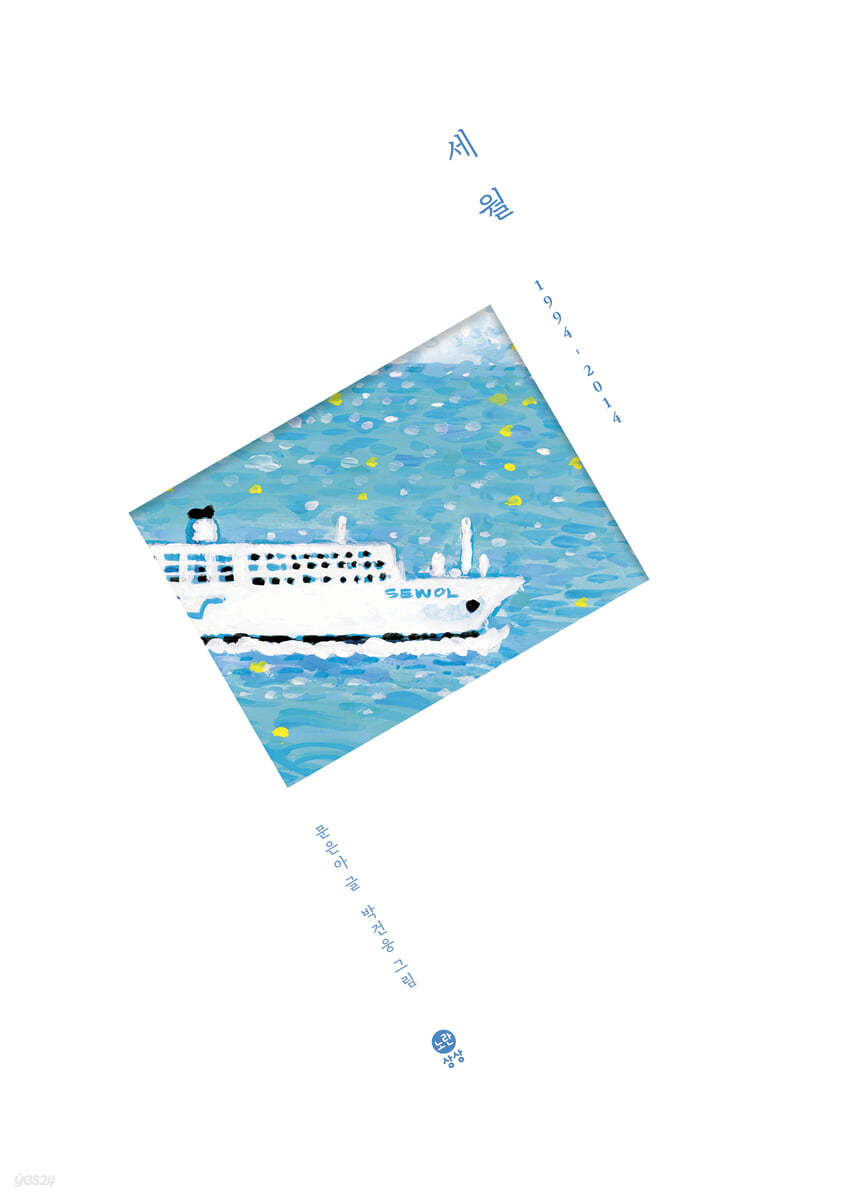
A documentary picture book that looks back on the causes, process, and consequences of the Sewol disaster from the perspective of the Sewol ferry, which was born in Japan in 1994 and sailed for over 18 years, until it sank in 2014, just over a year after being put into Korean waters, taking with it 304 precious lives.
- You can preview some of the book's contents.
Preview
Detailed image

Publisher's Review
A Timeline of the Disaster from the Perspective of the Sewol Ferry Disaster
2024, the 10th anniversary of the Sewol Ferry Disaster.
Has the origins of this disaster, which lost 304 precious lives and left deep scars on all of our hearts, ever been fully revealed? Has anyone been properly identified and punished for their actions? This picture book, told from the first-person perspective of the Sewol ferry, traces the timeline of the disaster and unravels the causes and processes of the sinking.
The Sewol was a ship built in Japan and had been in service for over 18 years, nearing the end of its lifespan.
At that time, the age limit for passenger ships in Korea was increased from 20 to 30 years, and Cheonghaejin Marine Co. calculated that repairing old ships and operating them for 10 years would yield significant profits.
The imported ship had undergone excessive expansion and modification to carry more passengers and cargo, which resulted in poor stability (the ship's ability to return to its original position when tilted), but safety inspections were not conducted thoroughly.
On April 15, 2014, the Sewol ferry, which had been delayed for an unforeseen period on a foggy night, was carrying overloaded cargo that had not been properly secured, and one of its old rigging lights, which was usually turned off, was left on because the delayed departure disrupted the duty routine.
On the morning of April 16th, as we passed through the narrow and fast-flowing Manggol Channel, the third officer in command was in command.
The Sewol turned sharply and listed at high speed due to a malfunction in its steering mechanism, and seawater began to pour into the cargo hold.
If the watertight doors throughout the ship had been closed, it would not have sunk so quickly and completely.
What if the captain and crew had not evacuated first, but had guided the passengers waiting on board to come out onto the deck as instructed and had actively used the lifeboats?
What if the Coast Guard had not only focused on reporting to their superiors, but had acted in an organized and systematic manner to swiftly rescue the passengers on board?
What if the President and the Blue House had properly fulfilled their role as a disaster control tower?
If that had been the case, a disaster of this magnitude might not have occurred.
Why We Need to Talk About the Sewol Ferry Disaster Again
So many things that 'shouldn't have happened' piled up and piled up to create a terrible disaster.
Some people ask why we keep repeating the story of the Sewol ferry disaster, which was 'just a traffic accident', for 10 years.
Why was the story of that day made into a picture book?
There are countless bereaved families and survivors who live with indelible scars, their families and friends buried in their hearts.
Comfort and solidarity for them, no matter how long it lasts, will never be excessive.
Many people even remember the air that morning when the false report of a 'power outage' was reported.
It is questionable whether those responsible were appropriately punished despite the horrific incident that traumatized the entire nation.
You have to ask and ask again, and check each and every one of them again.
Before memories fade further, we must clearly share the causes and processes of the disaster and constantly reflect on them to prevent something like this from happening again.
This is why we must continue to talk about the Sewol Ferry Disaster, even 10 years from now, and even 100 years from now, and why we are publishing the picture book “Sewol 1994-2014.”
|Author's Note|
Since that day in April 2014, I have been living with a whale.
Suddenly I felt burdened and sometimes sad.
Every time, I thought of those who were left behind.
Ten years have passed.
I haven't completely changed it yet.
I couldn't commemorate him enough.
After October 29, 2022, another whale came to me.
I plan to live together again.
The truth does not sink.
-Moon Eun-ah
Some people console themselves by saying that time heals all wounds.
But time is not a medicine.
It is not a medicine that does not heal, does not remember, becomes dull, and forgets.
Ten years may take up space and make everything unfamiliar, but a person's place does not disappear.
I envision a day of peace for all those who miss their loved ones.
-Park Geon-woong
2024, the 10th anniversary of the Sewol Ferry Disaster.
Has the origins of this disaster, which lost 304 precious lives and left deep scars on all of our hearts, ever been fully revealed? Has anyone been properly identified and punished for their actions? This picture book, told from the first-person perspective of the Sewol ferry, traces the timeline of the disaster and unravels the causes and processes of the sinking.
The Sewol was a ship built in Japan and had been in service for over 18 years, nearing the end of its lifespan.
At that time, the age limit for passenger ships in Korea was increased from 20 to 30 years, and Cheonghaejin Marine Co. calculated that repairing old ships and operating them for 10 years would yield significant profits.
The imported ship had undergone excessive expansion and modification to carry more passengers and cargo, which resulted in poor stability (the ship's ability to return to its original position when tilted), but safety inspections were not conducted thoroughly.
On April 15, 2014, the Sewol ferry, which had been delayed for an unforeseen period on a foggy night, was carrying overloaded cargo that had not been properly secured, and one of its old rigging lights, which was usually turned off, was left on because the delayed departure disrupted the duty routine.
On the morning of April 16th, as we passed through the narrow and fast-flowing Manggol Channel, the third officer in command was in command.
The Sewol turned sharply and listed at high speed due to a malfunction in its steering mechanism, and seawater began to pour into the cargo hold.
If the watertight doors throughout the ship had been closed, it would not have sunk so quickly and completely.
What if the captain and crew had not evacuated first, but had guided the passengers waiting on board to come out onto the deck as instructed and had actively used the lifeboats?
What if the Coast Guard had not only focused on reporting to their superiors, but had acted in an organized and systematic manner to swiftly rescue the passengers on board?
What if the President and the Blue House had properly fulfilled their role as a disaster control tower?
If that had been the case, a disaster of this magnitude might not have occurred.
Why We Need to Talk About the Sewol Ferry Disaster Again
So many things that 'shouldn't have happened' piled up and piled up to create a terrible disaster.
Some people ask why we keep repeating the story of the Sewol ferry disaster, which was 'just a traffic accident', for 10 years.
Why was the story of that day made into a picture book?
There are countless bereaved families and survivors who live with indelible scars, their families and friends buried in their hearts.
Comfort and solidarity for them, no matter how long it lasts, will never be excessive.
Many people even remember the air that morning when the false report of a 'power outage' was reported.
It is questionable whether those responsible were appropriately punished despite the horrific incident that traumatized the entire nation.
You have to ask and ask again, and check each and every one of them again.
Before memories fade further, we must clearly share the causes and processes of the disaster and constantly reflect on them to prevent something like this from happening again.
This is why we must continue to talk about the Sewol Ferry Disaster, even 10 years from now, and even 100 years from now, and why we are publishing the picture book “Sewol 1994-2014.”
|Author's Note|
Since that day in April 2014, I have been living with a whale.
Suddenly I felt burdened and sometimes sad.
Every time, I thought of those who were left behind.
Ten years have passed.
I haven't completely changed it yet.
I couldn't commemorate him enough.
After October 29, 2022, another whale came to me.
I plan to live together again.
The truth does not sink.
-Moon Eun-ah
Some people console themselves by saying that time heals all wounds.
But time is not a medicine.
It is not a medicine that does not heal, does not remember, becomes dull, and forgets.
Ten years may take up space and make everything unfamiliar, but a person's place does not disappear.
I envision a day of peace for all those who miss their loved ones.
-Park Geon-woong
GOODS SPECIFICS
- Date of issue: March 25, 2024
- Page count, weight, size: 80 pages | 550g | 200*384*13mm
- ISBN13: 9791193074305
- ISBN10: 1193074304
- KC Certification: Certification Type: Conformity Confirmation
You may also like
카테고리
korean


korean

![GQ KOREA Mark (Monthly): December [2025]](http://librairie.coreenne.fr/cdn/shop/files/8ef265dbbfbf186523ed75ba7319009d.jpg?v=1765340328&width=3840)


