

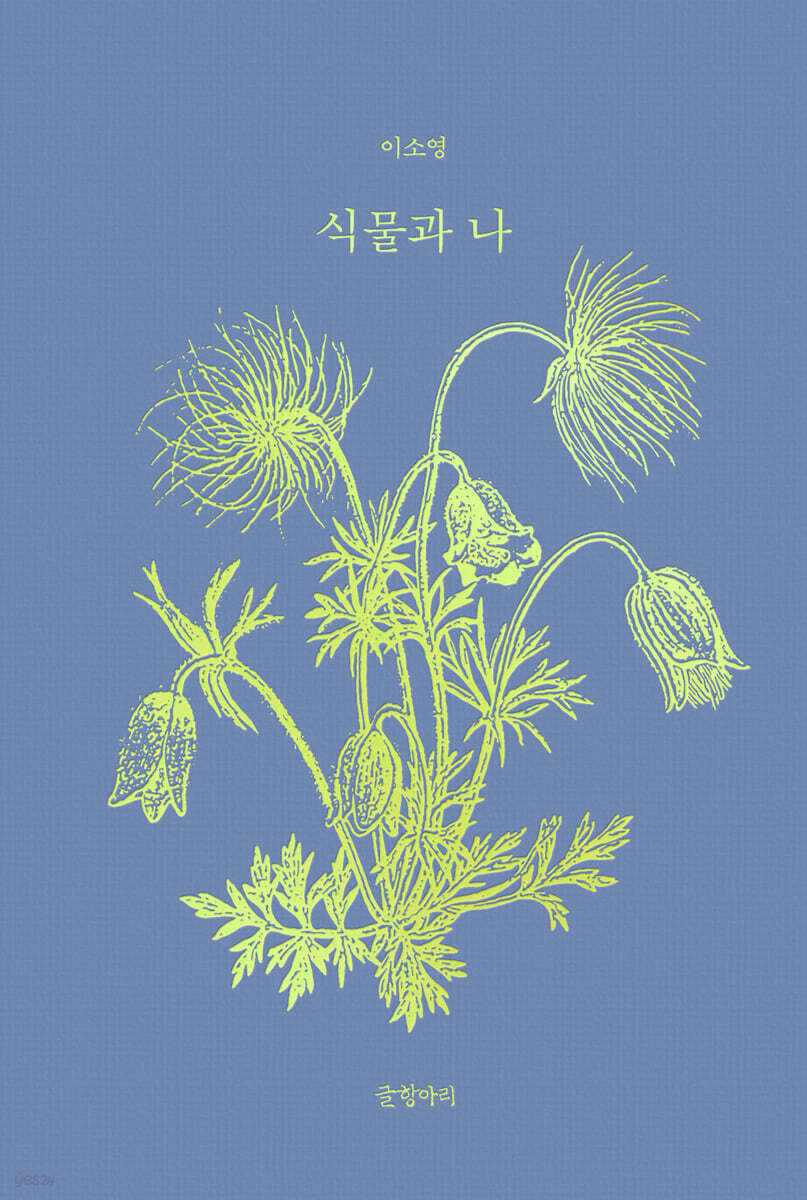
Plants and Me
 |
Description
Book Introduction
- A word from MD
-
Botanical artist Lee So-young's life with plantsBotanical artist Lee So-young tells stories about plants and her relationship with plants.
Plants that have been with us through every precious moment of our lives: spring, summer, fall, and winter.
We observe a wider world within plants, which may be small and inconspicuous, but live their entire lives faithfully and tenaciously.
The story of me and us as revealed by plants.
July 30, 2021. Essay PD Kim Tae-hee
Lee So-young's new works, "Plant Walk" and "The Book of Plants"
Life with Plants: What Plants Taught Us About Me and Us
If you like someone, you become like them.
So-Young Lee, a botanical artist who says she especially likes all plants and all organs, and who makes the word special pale in comparison, has returned this time with the story of two people who have become so similar: 'plants' and 'me'.
As the title suggests, ‘Plants and Me’ is a story about ‘me’ with plants.
I am who I am today because I was with plants, I am who I am today because I am with plants, and I will be who I am tomorrow because I will always be with plants.
The author, who has talked about plants, plant places, and drawing plants in his previous works, brings out the growth of 'me' and the four seasons of 'me'.
It is inevitably human, but because it belongs to a person who has spent half his life with plants, it also resembles the way plants live.
The sincerity of a wildflower that lives its entire life to the fullest in the place where life began, even if it is small and inconspicuous; the truth that even a life that seems splendid and a life that seems bizarre each has its own trials and joys, reasons and values; the hope that if you endure the harsh winter, spring will surely come… … .
For the author, who learned to live with plants, plants are not only beings that remember precious moments in life, but also beings that accompany life itself.
But if you've ever spent even a moment with a plant, you'll quickly realize that you don't have to turn many pages to understand it.
The fact that the 'I' in this book is also all of us.
Life with Plants: What Plants Taught Us About Me and Us
If you like someone, you become like them.
So-Young Lee, a botanical artist who says she especially likes all plants and all organs, and who makes the word special pale in comparison, has returned this time with the story of two people who have become so similar: 'plants' and 'me'.
As the title suggests, ‘Plants and Me’ is a story about ‘me’ with plants.
I am who I am today because I was with plants, I am who I am today because I am with plants, and I will be who I am tomorrow because I will always be with plants.
The author, who has talked about plants, plant places, and drawing plants in his previous works, brings out the growth of 'me' and the four seasons of 'me'.
It is inevitably human, but because it belongs to a person who has spent half his life with plants, it also resembles the way plants live.
The sincerity of a wildflower that lives its entire life to the fullest in the place where life began, even if it is small and inconspicuous; the truth that even a life that seems splendid and a life that seems bizarre each has its own trials and joys, reasons and values; the hope that if you endure the harsh winter, spring will surely come… … .
For the author, who learned to live with plants, plants are not only beings that remember precious moments in life, but also beings that accompany life itself.
But if you've ever spent even a moment with a plant, you'll quickly realize that you don't have to turn many pages to understand it.
The fact that the 'I' in this book is also all of us.
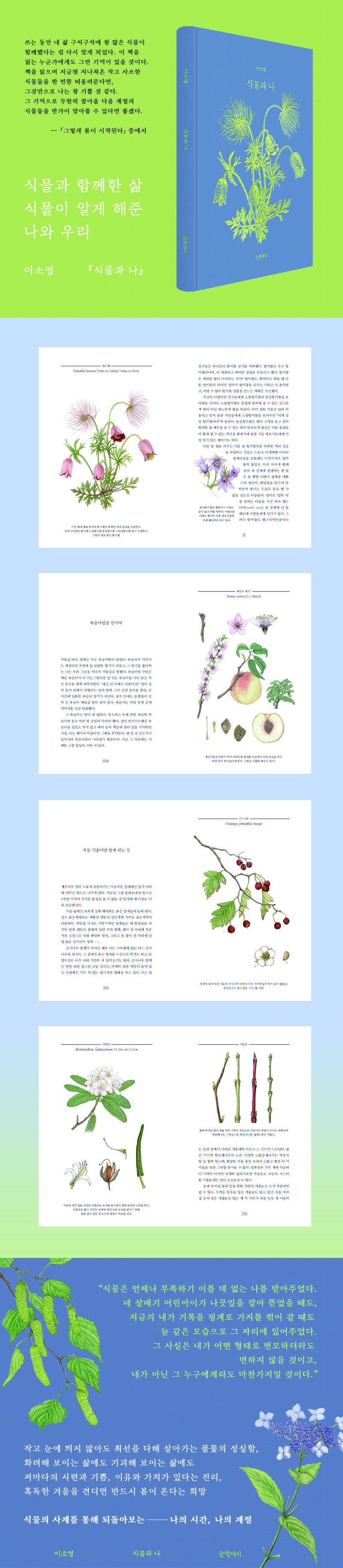
- You can preview some of the book's contents.
Preview
index
That's how spring begins
spring
The end of the season
Studying plants
Small but mighty bulb
Seeing the halmi flower again
Fading paint
Have you seen the calyx of a clematis?
The Joy of Home Gardening
White swan and plum blossom
The illusion that there will be mulberry trees tomorrow too
acacia tree on the mountain behind
The scent of spring
Eating a side dish of spring vegetables
Senior and Peony
If you look closely
The day flowers bloom
A shelter called 'Deng'
How to love plants
summer
Making a bouquet
Positive and neutral
Touching the peach fuzz
dead leaves
Into the fir forest
To be an animal without presence
A relationship with evening primrose
There is no perfect record
Behind the rice vines
Thorns to protect me
Friends of Vietnam
Tropical fruits found in Korea
Insect-eating plants and female gardeners
A plant that grows stronger the more it is stepped on
autumn
Sometimes it's okay not to know the names of plants.
My precious roots
What newspapers do
Plants and People
Remembering Eucalyptus
Everyone has the right to encounter plants.
The diversity of life shown by leaves
What you'll know if you listen
Shall I show you some precious flowers?
winter
Holly and My Garden
People who like snowdrops
Eating ginger this winter
The color of tangerines, oranges, and lemons
At the berry shop
The ginger tree will soon bloom.
The real thing is in winter
Important plants, unimportant plants
Wintering of plants
Sprouts under the accumulated snow
Search
spring
The end of the season
Studying plants
Small but mighty bulb
Seeing the halmi flower again
Fading paint
Have you seen the calyx of a clematis?
The Joy of Home Gardening
White swan and plum blossom
The illusion that there will be mulberry trees tomorrow too
acacia tree on the mountain behind
The scent of spring
Eating a side dish of spring vegetables
Senior and Peony
If you look closely
The day flowers bloom
A shelter called 'Deng'
How to love plants
summer
Making a bouquet
Positive and neutral
Touching the peach fuzz
dead leaves
Into the fir forest
To be an animal without presence
A relationship with evening primrose
There is no perfect record
Behind the rice vines
Thorns to protect me
Friends of Vietnam
Tropical fruits found in Korea
Insect-eating plants and female gardeners
A plant that grows stronger the more it is stepped on
autumn
Sometimes it's okay not to know the names of plants.
My precious roots
What newspapers do
Plants and People
Remembering Eucalyptus
Everyone has the right to encounter plants.
The diversity of life shown by leaves
What you'll know if you listen
Shall I show you some precious flowers?
winter
Holly and My Garden
People who like snowdrops
Eating ginger this winter
The color of tangerines, oranges, and lemons
At the berry shop
The ginger tree will soon bloom.
The real thing is in winter
Important plants, unimportant plants
Wintering of plants
Sprouts under the accumulated snow
Search
Detailed image
Into the book
“Agave blooms and dies,” a horticulturist told me as I took a picture next to an agave.
He spoke of death while looking at a flower stalk that had not yet bloomed.
Although not all species are like this, some species of Agave use up all their carbohydrate reserves to bloom and then die after the flowers fall.
For the brief moment of blooming, the plant expends all its energy and kills all these leaves.
The moment of blooming in life lasts less than a year, but for years, decades, without a single day of rest, we produce so many dead leaves, just for that moment.
I realized that this is the life of a plant.
--- From "Dead Leaves"
The accident made me realize that I was weaker than I thought.
I, too, could die suddenly at any moment, like a blade of grass by the roadside.
Thinking about it like that made my life and work up until now feel futile.
I, who cannot see even an inch ahead, have been diligently searching for and recording plants for an unseen future.
(…) Three weeks passed and I returned to my daily routine, and I found the mosquito I had been observing before.
I was worried that it might have been stepped on or damaged by someone since it was in the middle of an alley, but the plant was exactly the same as it was a month ago.
'You're living so tenaciously, and even though I don't know what's ahead of me, I have to live my life doing my job tenaciously. What else can I do?' That's how I finished the picture of the moss.
--- From "The Plant That Gets Stronger the More It's Stepped On"
Even if we make mistakes in life when faced with unexpected circumstances, even if it feels like our lives are flowing differently from others and we are falling behind, forsythia that blooms in winter and ginger trees that bloom in early spring when other plants are sprouting leaves tell us that such a life is not wrong.
If there is anyone who is struggling to spend the long, cold nights alone, I recommend that you go see the early spring flowers.
After this winter passes, the ginger trees on that mountain will also bloom.
We endure this cold while waiting for the spring flowers to bloom after the cold winter.
He spoke of death while looking at a flower stalk that had not yet bloomed.
Although not all species are like this, some species of Agave use up all their carbohydrate reserves to bloom and then die after the flowers fall.
For the brief moment of blooming, the plant expends all its energy and kills all these leaves.
The moment of blooming in life lasts less than a year, but for years, decades, without a single day of rest, we produce so many dead leaves, just for that moment.
I realized that this is the life of a plant.
--- From "Dead Leaves"
The accident made me realize that I was weaker than I thought.
I, too, could die suddenly at any moment, like a blade of grass by the roadside.
Thinking about it like that made my life and work up until now feel futile.
I, who cannot see even an inch ahead, have been diligently searching for and recording plants for an unseen future.
(…) Three weeks passed and I returned to my daily routine, and I found the mosquito I had been observing before.
I was worried that it might have been stepped on or damaged by someone since it was in the middle of an alley, but the plant was exactly the same as it was a month ago.
'You're living so tenaciously, and even though I don't know what's ahead of me, I have to live my life doing my job tenaciously. What else can I do?' That's how I finished the picture of the moss.
--- From "The Plant That Gets Stronger the More It's Stepped On"
Even if we make mistakes in life when faced with unexpected circumstances, even if it feels like our lives are flowing differently from others and we are falling behind, forsythia that blooms in winter and ginger trees that bloom in early spring when other plants are sprouting leaves tell us that such a life is not wrong.
If there is anyone who is struggling to spend the long, cold nights alone, I recommend that you go see the early spring flowers.
After this winter passes, the ginger trees on that mountain will also bloom.
We endure this cold while waiting for the spring flowers to bloom after the cold winter.
--- From "The Ginger Tree Will Bloom Soon"
Publisher's Review
This book is divided into four chapters: spring, summer, fall, and winter.
From spring, when buds sprout above the ground that has just begun to thaw after enduring a long winter, to summer, when colorful flowers and luscious fruits bloom, to autumn, when colorful leaves fall and prepare for winter, to winter, when bare branches are revealed and silently gather strength.
If we look closely at the way plants move through the four seasons, we see a life scene that is far more intense and surprising than the buds of spring, the green leaves of summer, the fallen leaves of autumn, and the desolation of winter.
Spring is not all warmth and joy, nor is winter all trials and waiting.
There is no moment in any season that is not easy, but when the next season comes and the season after that, each moment finds meaning.
The life cycle of sprouting, blooming, bearing fruit, and sowing seeds is connected to the meanings found in this way.
In the long run, this connection is also an evolutionary process that allowed them to survive by blooming at night rather than during the day, moving to barren places, and changing the shape of their leaves and the color of their petals.
Plants are given the destiny to live because they have life, and even at this very moment, they are living out the time given to them in the name of life, each with their own sincerity and strength.
So-Young Lee, a botanical artist who says that her job and life is to closely examine the forms of plants, which can be said to be the result of such time, observes a world within plants that is wider than the plants themselves.
This book is about the plant kingdom and plant species, but it also contains the author's thoughts on the environment in which humans have become deeply involved in life, and the cultures that humans have created to utilize or live with plants.
"Plants and Me" is a story about plants and about me, but more precisely, it is a story about what happens to plants and to me when we are together.
How plants' lives and history have changed through their interactions with humans, and how plants have changed human lives and the history of humanity—this grand story is told through the plants that accompany us even in our most personal, everyday lives, even in our most solitary moments.
The author has been consistently talking about the lives of plants, especially those influenced by variables like humans.
There are moments in this book that stop him in his tracks.
When I see a roadside flower that I've just picked for the record only to be trampled and damaged by a stranger's foot in an instant; when I see a furry peach that a neighboring farm gave me because it couldn't be sold; when I see a forest that has been completely destroyed by a wildfire and has lost all its plants.
What he wants to say by introducing these scenes is that we should go beyond the one-sided feeling of liking and reconsider what it means to be together and how it is possible.
The book features the family who first introduced him to the benefits of plants, his dog Baekgu who has been with him for a long time, his colleagues who live their lives looking only at plants, the kind people who visit him at his studio in the suburbs, and various scenes he encounters in places where there are plants.
There are also times when we felt anxious because we couldn't see even an inch ahead, and times when we had no choice but to become indifferent or tough.
At those times, plants were always by his side.
The feelings and events of each day, which no one remembers and no one knows about, are remembered and given meaning to him through plants.
However, what the author truly wants to emphasize through the story of 'I' in this book is the truth that plants are the same for everyone, and that "this fact will not change no matter what form I take, and it will be the same for anyone other than me" (207).
From spring, when buds sprout above the ground that has just begun to thaw after enduring a long winter, to summer, when colorful flowers and luscious fruits bloom, to autumn, when colorful leaves fall and prepare for winter, to winter, when bare branches are revealed and silently gather strength.
If we look closely at the way plants move through the four seasons, we see a life scene that is far more intense and surprising than the buds of spring, the green leaves of summer, the fallen leaves of autumn, and the desolation of winter.
Spring is not all warmth and joy, nor is winter all trials and waiting.
There is no moment in any season that is not easy, but when the next season comes and the season after that, each moment finds meaning.
The life cycle of sprouting, blooming, bearing fruit, and sowing seeds is connected to the meanings found in this way.
In the long run, this connection is also an evolutionary process that allowed them to survive by blooming at night rather than during the day, moving to barren places, and changing the shape of their leaves and the color of their petals.
Plants are given the destiny to live because they have life, and even at this very moment, they are living out the time given to them in the name of life, each with their own sincerity and strength.
So-Young Lee, a botanical artist who says that her job and life is to closely examine the forms of plants, which can be said to be the result of such time, observes a world within plants that is wider than the plants themselves.
This book is about the plant kingdom and plant species, but it also contains the author's thoughts on the environment in which humans have become deeply involved in life, and the cultures that humans have created to utilize or live with plants.
"Plants and Me" is a story about plants and about me, but more precisely, it is a story about what happens to plants and to me when we are together.
How plants' lives and history have changed through their interactions with humans, and how plants have changed human lives and the history of humanity—this grand story is told through the plants that accompany us even in our most personal, everyday lives, even in our most solitary moments.
The author has been consistently talking about the lives of plants, especially those influenced by variables like humans.
There are moments in this book that stop him in his tracks.
When I see a roadside flower that I've just picked for the record only to be trampled and damaged by a stranger's foot in an instant; when I see a furry peach that a neighboring farm gave me because it couldn't be sold; when I see a forest that has been completely destroyed by a wildfire and has lost all its plants.
What he wants to say by introducing these scenes is that we should go beyond the one-sided feeling of liking and reconsider what it means to be together and how it is possible.
The book features the family who first introduced him to the benefits of plants, his dog Baekgu who has been with him for a long time, his colleagues who live their lives looking only at plants, the kind people who visit him at his studio in the suburbs, and various scenes he encounters in places where there are plants.
There are also times when we felt anxious because we couldn't see even an inch ahead, and times when we had no choice but to become indifferent or tough.
At those times, plants were always by his side.
The feelings and events of each day, which no one remembers and no one knows about, are remembered and given meaning to him through plants.
However, what the author truly wants to emphasize through the story of 'I' in this book is the truth that plants are the same for everyone, and that "this fact will not change no matter what form I take, and it will be the same for anyone other than me" (207).
GOODS SPECIFICS
- Date of issue: July 21, 2021
- Format: Hardcover book binding method guide
- Page count, weight, size: 288 pages | 566g | 148*216*20mm
- ISBN13: 9788967359300
- ISBN10: 8967359306
You may also like
카테고리
korean


korean

![GQ KOREA Mark (Monthly): December [2025]](http://librairie.coreenne.fr/cdn/shop/files/8ef265dbbfbf186523ed75ba7319009d.jpg?v=1765340328&width=3840)


