

Mujin Gihaeng
 |
Description
Book Introduction
Kim Seung-ok, the first Hangul generation novelist who opened up new possibilities for Korean literature, is evaluated to have brought about a 'revolution of sensibility' in literature in the 1960s by sensitively expressing the daily life and transcendence of modern people.
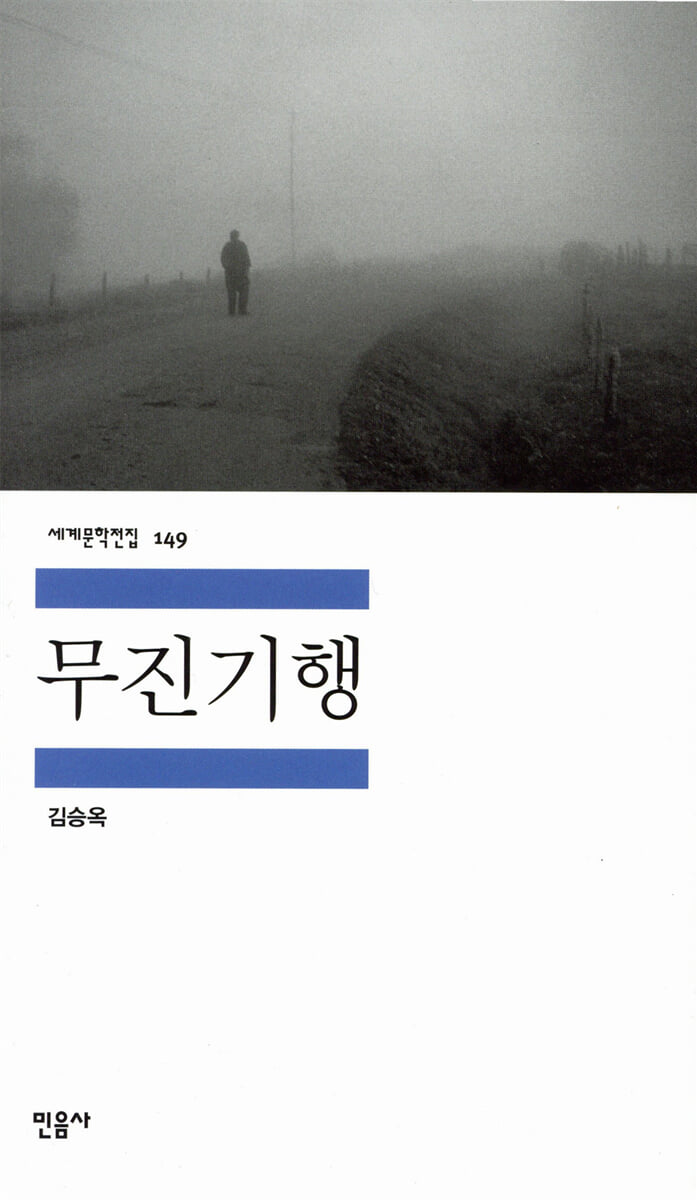
Ten of his representative short stories were collected and published as "Mujin Gihaeng" (Travels to Mujin) as the 149th volume of Minumsa's World Literature Collection. In addition to "Mujin Gihaeng," which is considered one of the greatest short stories in Korean literary history for its delicate portrayal of the protagonist's inner conflict between the two spaces of "Seoul" and "Mujin" and between reality and ideals, the collection also includes nine other short stories.
Ten of his representative short stories were collected and published as "Mujin Gihaeng" (Travels to Mujin) as the 149th volume of Minumsa's World Literature Collection. In addition to "Mujin Gihaeng," which is considered one of the greatest short stories in Korean literary history for its delicate portrayal of the protagonist's inner conflict between the two spaces of "Seoul" and "Mujin" and between reality and ideals, the collection also includes nine other short stories.
index
Mujin Gihaeng
Mujin Gihaeng
Seoul, winter 1964
Life practice
case
history
A cup of tea
fertility
Goats are strong
Night walk
Moonlight in Seoul Chapter 0
Seoul's Depression: A Study of Kim Seung-ok
Author's chronology
Mujin Gihaeng
Seoul, winter 1964
Life practice
case
history
A cup of tea
fertility
Goats are strong
Night walk
Moonlight in Seoul Chapter 0
Seoul's Depression: A Study of Kim Seung-ok
Author's chronology
Publisher's Review
Mujin Gihaeng
Kim Seung-ok's short story collection, "Mujin Gihaeng," was published as the 149th volume in Minumsa's World Literature Collection.
Meanwhile, Minumsa's World Literature Collection has presented a selection of literary works through new translations. Unlike other publishers' world literature collections, it has also made efforts to include not only works by contemporary authors but also works of Korean literature in particular.
The fifth Korean literary work selected for the World Literature Collection, which began with Ovid's Metamorphoses in 1998 and is now nearing its 150th edition, following "Nine Cloud Dreams" (Kim Man-jung), "Chunhyangjeon," "For the Emperor" (Lee Mun-yeol), and "Pig Dream" (Hwang Sok-yong), is "Mujin Gihaeng," a collection of short stories by Kim Seung-ok, a novelist who opened up new possibilities for Korean literature by bringing about a "revolution of sensibility" in the 1960s.
This collection of short stories includes "Mujin Gihaeng", which is considered the best short story in Korean literary history for its delicate expression of the protagonist's inner conflict between the spaces of "Seoul" and "Mujin" and between reality and ideals, as well as Kim Seung-ok's debut work "Life Practice", the Dong-in Literary Award-winning "Seoul 1964 Winter", and the Yi Sang Literary Award-winning "Seoul's Moonlight, Chapter 0". Although it was only for a short period of time, it brings together in one place the major novels that made Kim Seung-ok a "living legend" in the Korean literary world.
■ The daily life and escape from the daily life of modern people living in the 1960s
Kim Seung-ok's novels sharply question the modernity of 1960s Seoul from his own unique perspective.
The most prominent problem in Korean society, which entered rapid industrialization in the 1960s, was the spread of materialism and the resulting social conflict.
Kim Seung-ok reacted sensitively to these changes, paying particular attention to the image of the petit bourgeoisie wandering, unable to properly adapt to reality, in a society marked by materialism and careerism that emerged during the process of industrialization, and to the image of individuals struggling while tied down by daily life.
Thus, his novels not only earned him praise as a "pillar of 1960s literature" for demonstrating a "revolution in sensibility" and novelizing the "sad urban idiom" with "intellectual restraint" better than anyone else, but also served as a clear milestone in discussions about the modernity of Korean literature.
Kim Seung-ok is an intellectual writer who seeks to develop the self through the destruction of the self, and is a three-dimensional writer who focuses on the duality of the self from a dual perspective rather than a dichotomous one.
Because as a true modern person who feels both the temptation and fear of modernity, he is willing to pay a harsh price.
(Kim Mi-hyeon | From the commentary on "Seoul's Melancholy")
■ A myth of Korean literature: the literary significance of Kim Seung-ok's novels
This collection of short stories contains works published by Kim Seung-ok over a period of less than 20 years, from his debut work, “Life Practice,” in 1962, to “Moonlight in Seoul, Chapter 0,” which won the first Yi Sang Literary Award in 1977.
Although it was a short period of time, these are the major works that instantly elevated Kim Seung-ok to the status of a 'legend in Korean literature.'
Kim Seung-ok's unique novelty, created through his sensuous and delicate gaze and the linguistic techniques he employed in his works, not only earned him some of the most splendid praise in Korean literary history, such as "a miracle of postwar literature," "a revolution of sensibility," and "a model of short stories," but also changed the trend of Korean literature to the point that Korean novels can be divided into "before Kim Seung-ok" and "after Kim Seung-ok."
Kim Seung-ok's novels harmoniously capture reality and fantasy through a free and sensuous perspective and ingenious and delicate descriptions, free from the shackles of conventional moral imagination and ethical worldviews.
In particular, by moving beyond the framework of 'society' and focusing on the individual, the novel meticulously depicts the reality captured by the individual's emotions and senses, thereby incorporating a unique quality into the novel that previous generations of novels did not possess.
Kim Seung-ok was also a member of the so-called first Hangul generation who did not receive education during the colonial era.
Therefore, it can be said that Kim Seung-ok's linguistic techniques were first achieved through pure Korean.
This became an opportunity to breathe new life into Korean novels and served as a guideline for the direction in which Korean literature should advance.
■ Kim Seung-ok is no longer a '60s writer'
Kim Seung-ok had been actively writing since his debut, but he lost his motivation to write due to the Gwangju Democratization Movement in 1980 and stopped writing.
Afterwards, he gradually became more and more distant from writing due to his work as a film director and dramatic religious experiences, and in 2003, he suffered a stroke, leaving readers heartbroken.
He has always been introduced as a 'writer of the 1960s' because he left behind novels that can be said to be the best in the history of Korean literature in a short period of about 20 years, and then went on a writing hiatus for about 20 years, but his works are not only consistently loved by modern readers, but also receive constant attention, such as the publication of the complete works of Kim Seung-ok in 1995 and the translation and introduction of his works into foreign languages at the Frankfurt Book Fair in Germany, where Korea participated as the guest of honor in 2005.
Kim Seung-ok, who resumed his literary activities little by little by publishing the prose collection “The God I Met” in 2004 after a battle with illness, not only showed interest and actively provided opinions during the publication process of “Mujin Gihaeng” despite his poor health, but also showed his will to write essays, fairy tales, and other creative works in the future.
In 1980, Kim Seung-ok, who said that all he could do was "to shed the light of meaning on this meaningless life," will once again shed the light of meaning on this meaningless modern life and create new works that will convey fresh emotion and thrills to readers living today.
A novel is a record of a personal experience,
A diagram of possible human relationships,
Compassion for the unsaved,
Sensitive to contradictions,
The very picture of a chaotic life.
I will neither judge nor be angry.
That is God's work.
All I can do is live this meaningless life
It's just a matter of shining a light on meaning.
(Kim Seung-ok | Full text of 'Author's Note', 1980)
Kim Seung-ok's short story collection, "Mujin Gihaeng," was published as the 149th volume in Minumsa's World Literature Collection.
Meanwhile, Minumsa's World Literature Collection has presented a selection of literary works through new translations. Unlike other publishers' world literature collections, it has also made efforts to include not only works by contemporary authors but also works of Korean literature in particular.
The fifth Korean literary work selected for the World Literature Collection, which began with Ovid's Metamorphoses in 1998 and is now nearing its 150th edition, following "Nine Cloud Dreams" (Kim Man-jung), "Chunhyangjeon," "For the Emperor" (Lee Mun-yeol), and "Pig Dream" (Hwang Sok-yong), is "Mujin Gihaeng," a collection of short stories by Kim Seung-ok, a novelist who opened up new possibilities for Korean literature by bringing about a "revolution of sensibility" in the 1960s.
This collection of short stories includes "Mujin Gihaeng", which is considered the best short story in Korean literary history for its delicate expression of the protagonist's inner conflict between the spaces of "Seoul" and "Mujin" and between reality and ideals, as well as Kim Seung-ok's debut work "Life Practice", the Dong-in Literary Award-winning "Seoul 1964 Winter", and the Yi Sang Literary Award-winning "Seoul's Moonlight, Chapter 0". Although it was only for a short period of time, it brings together in one place the major novels that made Kim Seung-ok a "living legend" in the Korean literary world.
■ The daily life and escape from the daily life of modern people living in the 1960s
Kim Seung-ok's novels sharply question the modernity of 1960s Seoul from his own unique perspective.
The most prominent problem in Korean society, which entered rapid industrialization in the 1960s, was the spread of materialism and the resulting social conflict.
Kim Seung-ok reacted sensitively to these changes, paying particular attention to the image of the petit bourgeoisie wandering, unable to properly adapt to reality, in a society marked by materialism and careerism that emerged during the process of industrialization, and to the image of individuals struggling while tied down by daily life.
Thus, his novels not only earned him praise as a "pillar of 1960s literature" for demonstrating a "revolution in sensibility" and novelizing the "sad urban idiom" with "intellectual restraint" better than anyone else, but also served as a clear milestone in discussions about the modernity of Korean literature.
Kim Seung-ok is an intellectual writer who seeks to develop the self through the destruction of the self, and is a three-dimensional writer who focuses on the duality of the self from a dual perspective rather than a dichotomous one.
Because as a true modern person who feels both the temptation and fear of modernity, he is willing to pay a harsh price.
(Kim Mi-hyeon | From the commentary on "Seoul's Melancholy")
■ A myth of Korean literature: the literary significance of Kim Seung-ok's novels
This collection of short stories contains works published by Kim Seung-ok over a period of less than 20 years, from his debut work, “Life Practice,” in 1962, to “Moonlight in Seoul, Chapter 0,” which won the first Yi Sang Literary Award in 1977.
Although it was a short period of time, these are the major works that instantly elevated Kim Seung-ok to the status of a 'legend in Korean literature.'
Kim Seung-ok's unique novelty, created through his sensuous and delicate gaze and the linguistic techniques he employed in his works, not only earned him some of the most splendid praise in Korean literary history, such as "a miracle of postwar literature," "a revolution of sensibility," and "a model of short stories," but also changed the trend of Korean literature to the point that Korean novels can be divided into "before Kim Seung-ok" and "after Kim Seung-ok."
Kim Seung-ok's novels harmoniously capture reality and fantasy through a free and sensuous perspective and ingenious and delicate descriptions, free from the shackles of conventional moral imagination and ethical worldviews.
In particular, by moving beyond the framework of 'society' and focusing on the individual, the novel meticulously depicts the reality captured by the individual's emotions and senses, thereby incorporating a unique quality into the novel that previous generations of novels did not possess.
Kim Seung-ok was also a member of the so-called first Hangul generation who did not receive education during the colonial era.
Therefore, it can be said that Kim Seung-ok's linguistic techniques were first achieved through pure Korean.
This became an opportunity to breathe new life into Korean novels and served as a guideline for the direction in which Korean literature should advance.
■ Kim Seung-ok is no longer a '60s writer'
Kim Seung-ok had been actively writing since his debut, but he lost his motivation to write due to the Gwangju Democratization Movement in 1980 and stopped writing.
Afterwards, he gradually became more and more distant from writing due to his work as a film director and dramatic religious experiences, and in 2003, he suffered a stroke, leaving readers heartbroken.
He has always been introduced as a 'writer of the 1960s' because he left behind novels that can be said to be the best in the history of Korean literature in a short period of about 20 years, and then went on a writing hiatus for about 20 years, but his works are not only consistently loved by modern readers, but also receive constant attention, such as the publication of the complete works of Kim Seung-ok in 1995 and the translation and introduction of his works into foreign languages at the Frankfurt Book Fair in Germany, where Korea participated as the guest of honor in 2005.
Kim Seung-ok, who resumed his literary activities little by little by publishing the prose collection “The God I Met” in 2004 after a battle with illness, not only showed interest and actively provided opinions during the publication process of “Mujin Gihaeng” despite his poor health, but also showed his will to write essays, fairy tales, and other creative works in the future.
In 1980, Kim Seung-ok, who said that all he could do was "to shed the light of meaning on this meaningless life," will once again shed the light of meaning on this meaningless modern life and create new works that will convey fresh emotion and thrills to readers living today.
A novel is a record of a personal experience,
A diagram of possible human relationships,
Compassion for the unsaved,
Sensitive to contradictions,
The very picture of a chaotic life.
I will neither judge nor be angry.
That is God's work.
All I can do is live this meaningless life
It's just a matter of shining a light on meaning.
(Kim Seung-ok | Full text of 'Author's Note', 1980)
GOODS SPECIFICS
- Date of issue: August 3, 2007
- Page count, weight, size: 405 pages | 551g | 132*224*30mm
- ISBN13: 9788937461491
- ISBN10: 8937461498
You may also like
카테고리
korean


korean

![ELLE 엘르 스페셜 에디션 A형 : 12월 [2025]](http://librairie.coreenne.fr/cdn/shop/files/b8e27a3de6c9538896439686c6b0e8fb.jpg?v=1766436872&width=3840)


