

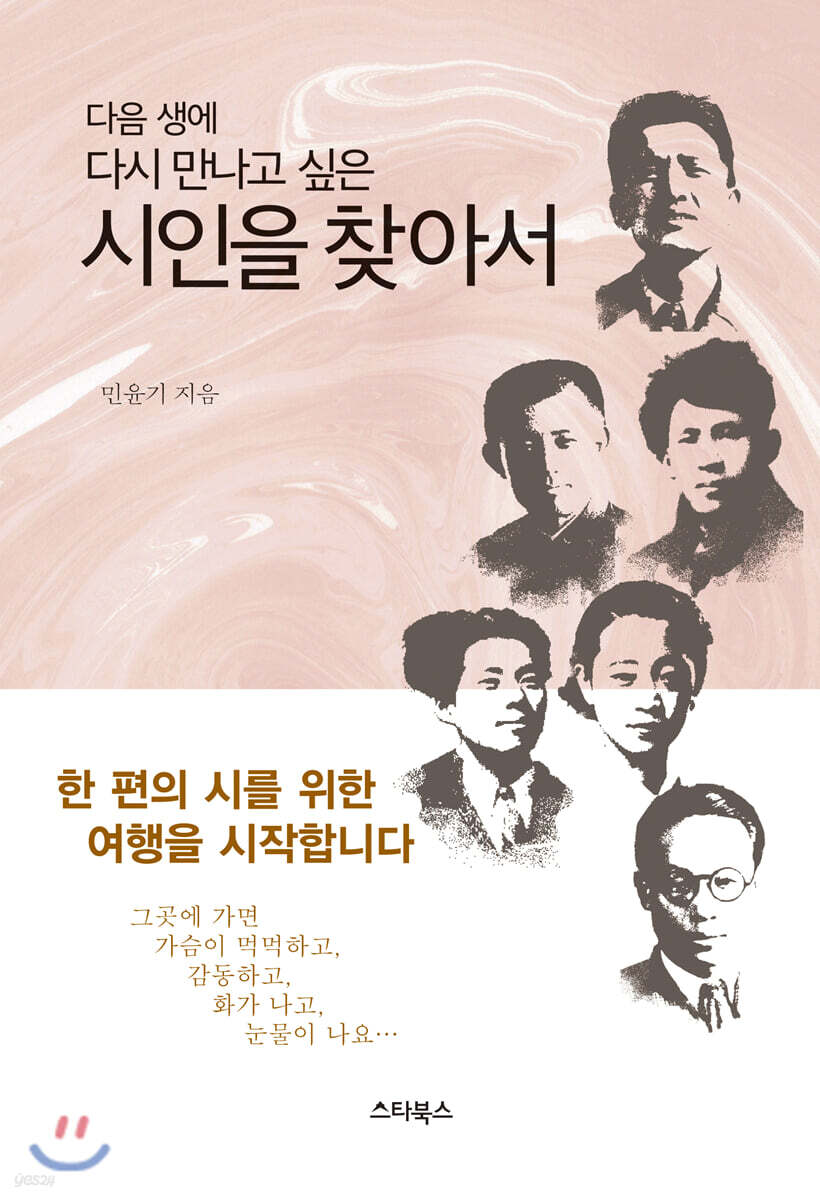
In search of a poet
 |
Description
Book Introduction
The author was curious about these things
Where is the crematorium where poet Yun Dong-ju's remains were cremated?
Why did poet Lee Sang want to eat melon right before he died?
What happened on the day poet Kim Su-yeong died in a traffic accident?
Who was the woman that the poet Gihyeongdo, who died young, loved while he was alive?
Why did poet Kim Jong-sam lament that he lived a shabby life?
As I traveled to the sites of poets' lives to cover poetry magazines, I discovered that many poets' lives were misrepresented, and that even the books already published under the title "In Search of Poets" contained many errors.
So, from a different perspective, I began to explore the birthplaces, graves, and traces of the lives of ‘dead poets’, and I began to focus on introducing poets who were so good that I would want to meet them again in the next life.
Charming poetry is the life of a poet with many twists and turns.
This book contains the results of research on the lives of 21 poets, ranging from star poets who are especially loved by readers, such as Baek Seok, Yun Dong-ju, Lee Sang, Kim Su-yeong, Jeong Ji-yong, and Ki Hyeong-do, to poets who are in the modernist lineage or have unique poetic worlds that have formed a group of enthusiasts, such as Kim Ki-rim, Park In-hwan, Kim Jong-sam, Kim Gyeong-rin, and Jang Man-yeong, to poets who had many twists and turns in their lives but for whom there is not much biographical information, such as No Cheon-myeong, Han Ha-un, Oh Sang-soon, and Jeong Gong-chae, to Park Mok-wol, who could be called a model student of modern Korean poetry with many disciples, the young poet Lee Sang-hwa, poet Lee Yuk-sa who is respected more as an independence fighter than a poet, poet Park Yong-rae of tears, and poet Cheon Sang-byeong who is full of wildness.
Where is the crematorium where poet Yun Dong-ju's remains were cremated?
Why did poet Lee Sang want to eat melon right before he died?
What happened on the day poet Kim Su-yeong died in a traffic accident?
Who was the woman that the poet Gihyeongdo, who died young, loved while he was alive?
Why did poet Kim Jong-sam lament that he lived a shabby life?
As I traveled to the sites of poets' lives to cover poetry magazines, I discovered that many poets' lives were misrepresented, and that even the books already published under the title "In Search of Poets" contained many errors.
So, from a different perspective, I began to explore the birthplaces, graves, and traces of the lives of ‘dead poets’, and I began to focus on introducing poets who were so good that I would want to meet them again in the next life.
Charming poetry is the life of a poet with many twists and turns.
This book contains the results of research on the lives of 21 poets, ranging from star poets who are especially loved by readers, such as Baek Seok, Yun Dong-ju, Lee Sang, Kim Su-yeong, Jeong Ji-yong, and Ki Hyeong-do, to poets who are in the modernist lineage or have unique poetic worlds that have formed a group of enthusiasts, such as Kim Ki-rim, Park In-hwan, Kim Jong-sam, Kim Gyeong-rin, and Jang Man-yeong, to poets who had many twists and turns in their lives but for whom there is not much biographical information, such as No Cheon-myeong, Han Ha-un, Oh Sang-soon, and Jeong Gong-chae, to Park Mok-wol, who could be called a model student of modern Korean poetry with many disciples, the young poet Lee Sang-hwa, poet Lee Yuk-sa who is respected more as an independence fighter than a poet, poet Park Yong-rae of tears, and poet Cheon Sang-byeong who is full of wildness.
- You can preview some of the book's contents.
Preview
index
Before we begin - we'll meet the poet we want to meet again in our next life.
Course 1
Baek Seok 1 - The wind blew like waves at Shimoda Port on the Izu Peninsula.
Baek Seok 2 - My 100 billion won in assets is not as good as Baek Seok's poetry.
Baek Seok 3 - Where has that young, handsome poet gone, and who is this old man, weary of life?
Course 2
Yun Dong-ju 1 - Let's go to another beautiful hometown.
Yun Dong-ju 2 - Crossing the Genkai Strait on a government ferry instead of a government ferry
Yun Dong-ju 3 - Missing the Me Left Behind on the Old Street Like Love and Hope
Yun Dong-ju 4 - When I threw a flower into the blue waters of the Uji River, the mallards greeted me.
Course 3
Yun Dong-ju 5 - All three brothers were poets.
Noriko Ibaragi - The keyword that made her love Korean and Korea was "Yun Dong-ju."
Lee Sang 1 - A special place in the life of Lee Sang, a representative figure of modern Korean poetry
Lee Sang 2 - Dongrim, I want to eat melon
Kim Ki-rim - Was it a butterfly that fell into the sea, or was it the sea that shed the butterfly?
Course 4
Park In-hwan - Is life as mundane as the covers of popular magazines?
Jang Man-young - Sun-ah, let's live together, what if no one comes to find us?
Kim Kyung-rin - The sun sets at a right angle
Kim Soo-young - "There's no shame." That's proof of my poetry's existence.
Course 5
Jeong Ji-yong - Born in Okcheon, Jeong Ji-yong lived in Seoul for 30 years.
Park Yong-rae - He lived in this world only as a poet and left.
No Cheon-myeong - Desecrated and Abandoned by the Times, Ideology, and Men
Park Mok-wol - Many disciples still live under that large zelkova tree.
Course 6
Kim Jong-sam - "I've lived too long, like a beauty without substance."
Han Ha-un - Tracing the Sad Life of the "Leprosy Poet"
Oh Sang-soon - Freedom is binding me
Cheon Sang-byeong - I'm so happy that I still have bus fare left after my hangover.
Jeong Gong-chae - He held the nationalist flag high and wrote poetry without hesitation.
Kihyungdo - A lonely youth who was not loved in his short life
Course 7
Lee Sang-hwa - A young poet who came briefly like a spring flower and left with great enlightenment.
Lee Yuk-sa - Even in the spicy season, there is a blade like frost
Course 1
Baek Seok 1 - The wind blew like waves at Shimoda Port on the Izu Peninsula.
Baek Seok 2 - My 100 billion won in assets is not as good as Baek Seok's poetry.
Baek Seok 3 - Where has that young, handsome poet gone, and who is this old man, weary of life?
Course 2
Yun Dong-ju 1 - Let's go to another beautiful hometown.
Yun Dong-ju 2 - Crossing the Genkai Strait on a government ferry instead of a government ferry
Yun Dong-ju 3 - Missing the Me Left Behind on the Old Street Like Love and Hope
Yun Dong-ju 4 - When I threw a flower into the blue waters of the Uji River, the mallards greeted me.
Course 3
Yun Dong-ju 5 - All three brothers were poets.
Noriko Ibaragi - The keyword that made her love Korean and Korea was "Yun Dong-ju."
Lee Sang 1 - A special place in the life of Lee Sang, a representative figure of modern Korean poetry
Lee Sang 2 - Dongrim, I want to eat melon
Kim Ki-rim - Was it a butterfly that fell into the sea, or was it the sea that shed the butterfly?
Course 4
Park In-hwan - Is life as mundane as the covers of popular magazines?
Jang Man-young - Sun-ah, let's live together, what if no one comes to find us?
Kim Kyung-rin - The sun sets at a right angle
Kim Soo-young - "There's no shame." That's proof of my poetry's existence.
Course 5
Jeong Ji-yong - Born in Okcheon, Jeong Ji-yong lived in Seoul for 30 years.
Park Yong-rae - He lived in this world only as a poet and left.
No Cheon-myeong - Desecrated and Abandoned by the Times, Ideology, and Men
Park Mok-wol - Many disciples still live under that large zelkova tree.
Course 6
Kim Jong-sam - "I've lived too long, like a beauty without substance."
Han Ha-un - Tracing the Sad Life of the "Leprosy Poet"
Oh Sang-soon - Freedom is binding me
Cheon Sang-byeong - I'm so happy that I still have bus fare left after my hangover.
Jeong Gong-chae - He held the nationalist flag high and wrote poetry without hesitation.
Kihyungdo - A lonely youth who was not loved in his short life
Course 7
Lee Sang-hwa - A young poet who came briefly like a spring flower and left with great enlightenment.
Lee Yuk-sa - Even in the spicy season, there is a blade like frost
Publisher's Review
“When I go there, my heart aches,
“I’m moved, angry, and in tears...”
Find unpublished works and share them with your life
The poems introduced in this book are known as the so-called "representative poems" of poets whom we would like to meet again in the next life. Rather than poems that we know to the point of being sick of, they are poems that are unfamiliar but deeply related to the poet's life, poems that we have discovered for the first time, for example, unpublished poems such as "Nokbeon-ri" and "Myeongsu-dae" by Okcheon-born poet Jeong Ji-yong. This book also attempts to examine the emotions of Seoul citizens who lived more than 70% of their lives.
The pain of meeting a poet with a completely different appearance
Although there are some exaggerated expressions such as that his appearance swayed the hearts of women in Seoul at the time, he said that his heart ached the whole time he was reviewing the family photo of poet Baek Seok, who was called one of the three most handsome poets of Joseon at the time, as an old and shabby collective farmer, and the several poems he wrote in North Korea to “survive,” and that he was angry all day when he found the hospital and Senpikiya fruit shop where Lee Sang, whom Kim Gi-rim counted as one of the two greatest geniuses in the world along with Rimbaud, had wanted to eat melons sold at Senpikiya right before his death in the hospital room, and that he thought that even a glass of soju was a luxury while recording the testimony of his wife that poet Kim Su-yeong, who had been hit by a bus on the way home drunk and died right on the sidewalk near his house, had 70,000 won left in his pocket.
Just as the poet No Cheon-myeong of Deer had to live his life being ostracized as a pro-Japanese collaborator, a traitor, and a failure in love, this book contains many 'secret stories' hidden in the shadows of the poet's life.
That's why I wrote in the introduction that I was "moved, angry, and moved to tears."
Newly discovered facts
We discovered the boarding house where poet Yun Dong-ju wrote “A Poem Written Easily” while studying in Japan, discovered poems published by Yun Dong-ju’s three brothers, especially the youngest brother Yun Gwang-ju, under the Chinese Communist Party, and revealed why poet Kim Su-yeong criticized poet Park In-hwan as “frivolous and a gangster.”
It covers the real circumstances of poet No Cheon-myeong's pro-Japanese activities and his self-inflicted collaborating with the communist forces during the Korean War. It also demonstrates the exceptional leadership of poet Han Ha-un, known only as the "leprosy poet," as a businessman, publisher, and educator, as well as his role in running a leprosy colony.
We also traced the woman loved by the poet Gihyeongdo, who died young at the age of 28, and why she fell in love with him.
“I’m moved, angry, and in tears...”
Find unpublished works and share them with your life
The poems introduced in this book are known as the so-called "representative poems" of poets whom we would like to meet again in the next life. Rather than poems that we know to the point of being sick of, they are poems that are unfamiliar but deeply related to the poet's life, poems that we have discovered for the first time, for example, unpublished poems such as "Nokbeon-ri" and "Myeongsu-dae" by Okcheon-born poet Jeong Ji-yong. This book also attempts to examine the emotions of Seoul citizens who lived more than 70% of their lives.
The pain of meeting a poet with a completely different appearance
Although there are some exaggerated expressions such as that his appearance swayed the hearts of women in Seoul at the time, he said that his heart ached the whole time he was reviewing the family photo of poet Baek Seok, who was called one of the three most handsome poets of Joseon at the time, as an old and shabby collective farmer, and the several poems he wrote in North Korea to “survive,” and that he was angry all day when he found the hospital and Senpikiya fruit shop where Lee Sang, whom Kim Gi-rim counted as one of the two greatest geniuses in the world along with Rimbaud, had wanted to eat melons sold at Senpikiya right before his death in the hospital room, and that he thought that even a glass of soju was a luxury while recording the testimony of his wife that poet Kim Su-yeong, who had been hit by a bus on the way home drunk and died right on the sidewalk near his house, had 70,000 won left in his pocket.
Just as the poet No Cheon-myeong of Deer had to live his life being ostracized as a pro-Japanese collaborator, a traitor, and a failure in love, this book contains many 'secret stories' hidden in the shadows of the poet's life.
That's why I wrote in the introduction that I was "moved, angry, and moved to tears."
Newly discovered facts
We discovered the boarding house where poet Yun Dong-ju wrote “A Poem Written Easily” while studying in Japan, discovered poems published by Yun Dong-ju’s three brothers, especially the youngest brother Yun Gwang-ju, under the Chinese Communist Party, and revealed why poet Kim Su-yeong criticized poet Park In-hwan as “frivolous and a gangster.”
It covers the real circumstances of poet No Cheon-myeong's pro-Japanese activities and his self-inflicted collaborating with the communist forces during the Korean War. It also demonstrates the exceptional leadership of poet Han Ha-un, known only as the "leprosy poet," as a businessman, publisher, and educator, as well as his role in running a leprosy colony.
We also traced the woman loved by the poet Gihyeongdo, who died young at the age of 28, and why she fell in love with him.
GOODS SPECIFICS
- Date of publication: October 15, 2019
- Page count, weight, size: 360 pages | 484g | 143*208*19mm
- ISBN13: 9791157954780
- ISBN10: 1157954782
You may also like
카테고리
korean


korean

![GQ KOREA Mark (Monthly): December [2025]](http://librairie.coreenne.fr/cdn/shop/files/8ef265dbbfbf186523ed75ba7319009d.jpg?v=1765340328&width=3840)


