

I'm curious about my body, not the baby's.
 |
Description
Book Introduction
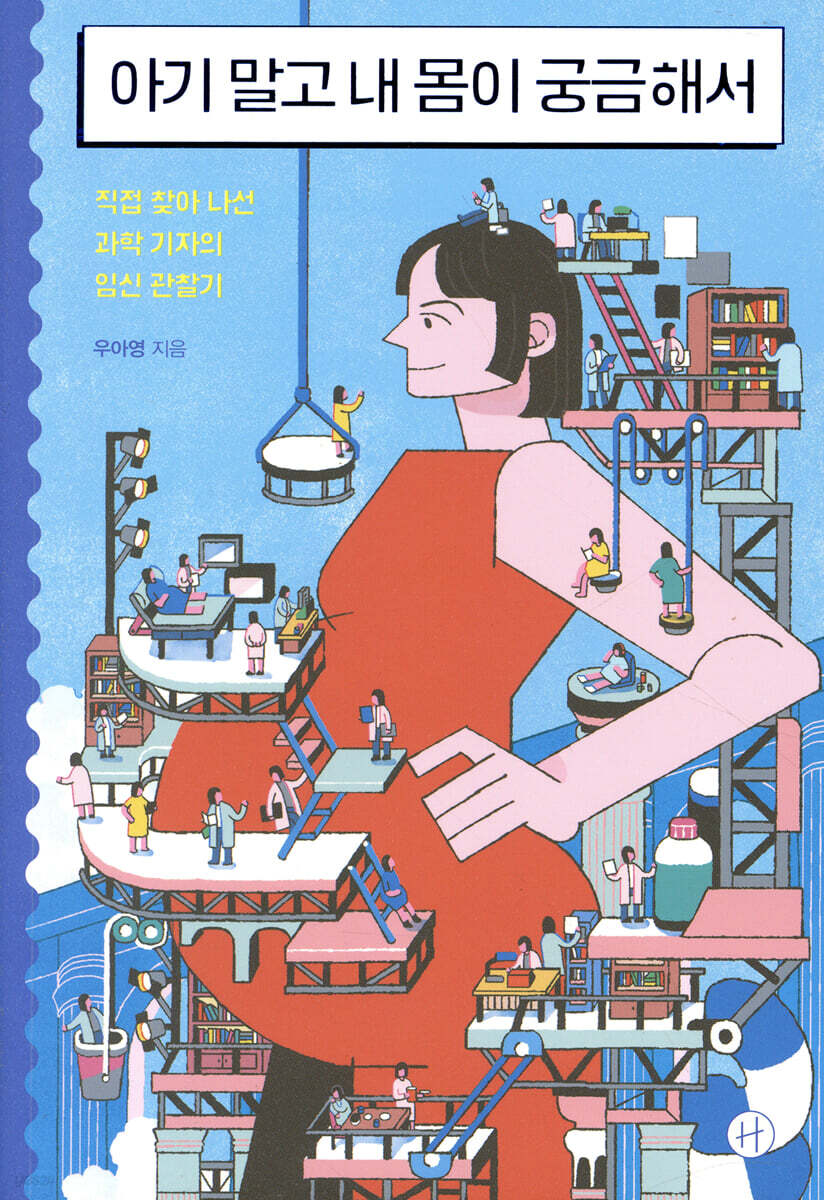
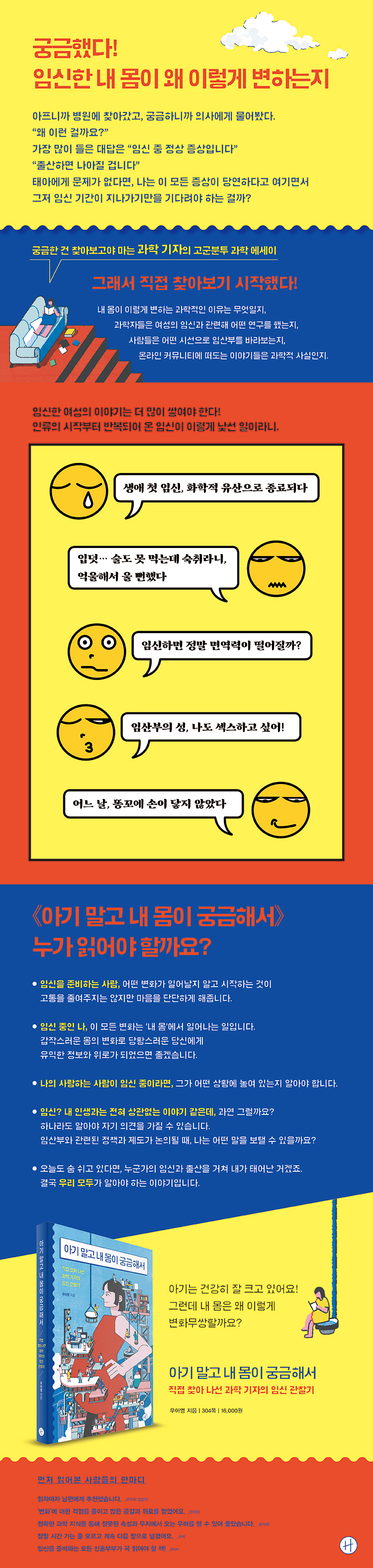
Unexpected body changes during pregnancy I wanted to know why, not just the obvious answer of "because I'm pregnant." My first pregnancy ended in a chemical miscarriage, and despite the doctor's advice that it would be nothing to worry about and that most people would just ignore it, I began to have doubts as I suffered from severe pain. “Why doesn’t anyone talk in detail about the physical and mental changes that pregnant women go through?” Many women cite the physical changes they experienced during pregnancy as their most embarrassing memory. Whenever I had my first pain after pregnancy or had a problem with my changing body, the most common things I heard at the hospital were, “It’s a normal symptom of pregnancy” and “It’ll get better after you give birth.” Most pregnant women stop asking questions to their doctors after experiencing similar things over and over again. If there are no problems with the fetus, is it okay to consider the physical and mental changes of the pregnant woman as a natural secondary experience during pregnancy? "I'm curious about my body, not the baby's" is a scientific essay that talks about the changes in the body of a pregnant woman, not the fetus, and the side effects of pregnancy. This is a record of the author, who worked as a science journalist, struggling to find answers to questions about his own body, such as why his body, which was considered "normal" in the hospital, was so sick, what research scientists had conducted on women's pregnancies, and whether the stories floating around in the community were scientific facts. The author has developed 24 topics on the symptoms and problems she encountered during pregnancy. |
- You can preview some of the book's contents.
Preview
index
Prologue: Pregnancy isn't just about morning sickness and a bulging belly.
My first pregnancy ended in a chemical miscarriage.
Husband's semen test infertility
Come on, breasts!
“I had sex 4 weeks ago, so why are you 6 weeks pregnant?”
I can't even drink alcohol, but I'm hungover. I almost cried because it was so unfair.
Tailbone, please calm down! Relaxin
Does pregnancy really lower your immunity?
Can you conceive of your desired gender through 'Baetegi'? Fetal gender
Experience the worst headache ever
I want to have sex! Pregnant women's sex
Why is it so hot? Body temperature
Please, I want to sleep. Sleep.
I was a water balloon weight
How to treat a pregnant woman rudely
A seam has formed in the middle of the stomach. Stretch marks and stretch marks
Am I a bad mother because my baby's movements are annoying?
One day, I couldn't reach my butt joint.
What if my child gets stool pressure? Anemia, constipation, hemorrhoids
That day, I ate two bags of chocolate. Gestational diabetes
PUPPP? Pregnancy-related pruritus
Gasp, I'm not going to die like this. Other pregnancy side effects
I wanted to disappear. Prenatal and postpartum depression.
There is no such thing as painless childbirth
Many women still die during childbirth, including maternal deaths and high-risk pregnancies.
Epilogue: Birth Isn't "And They Lived Happily Ever After"
Appendix: A Personal Explanation of Pregnancy and Childbirth Terms from Experience
Note
My first pregnancy ended in a chemical miscarriage.
Husband's semen test infertility
Come on, breasts!
“I had sex 4 weeks ago, so why are you 6 weeks pregnant?”
I can't even drink alcohol, but I'm hungover. I almost cried because it was so unfair.
Tailbone, please calm down! Relaxin
Does pregnancy really lower your immunity?
Can you conceive of your desired gender through 'Baetegi'? Fetal gender
Experience the worst headache ever
I want to have sex! Pregnant women's sex
Why is it so hot? Body temperature
Please, I want to sleep. Sleep.
I was a water balloon weight
How to treat a pregnant woman rudely
A seam has formed in the middle of the stomach. Stretch marks and stretch marks
Am I a bad mother because my baby's movements are annoying?
One day, I couldn't reach my butt joint.
What if my child gets stool pressure? Anemia, constipation, hemorrhoids
That day, I ate two bags of chocolate. Gestational diabetes
PUPPP? Pregnancy-related pruritus
Gasp, I'm not going to die like this. Other pregnancy side effects
I wanted to disappear. Prenatal and postpartum depression.
There is no such thing as painless childbirth
Many women still die during childbirth, including maternal deaths and high-risk pregnancies.
Epilogue: Birth Isn't "And They Lived Happily Ever After"
Appendix: A Personal Explanation of Pregnancy and Childbirth Terms from Experience
Note
Detailed image
Publisher's Review
1.
A seam in the middle of my stomach, morning sickness like a hangover, tailbone pain…
Why are these baffling body changes happening?
My breasts start to hurt and I get morning sickness like a hangover.
I suffer from tailbone pain and a stretch mark in the middle of my stomach that looks like a doll's belly button.
Even the slightest movement leaves me gasping for breath.
In the early stages of pregnancy, I struggled with constant drowsiness, but in the later stages, even falling asleep became a struggle.
As the weeks of pregnancy increase, you face new symptoms every day.
In front of a pregnant woman sitting in an examination room chair complaining of pain, the doctor only repeats, “That could be the case,” and does not provide a detailed explanation as to why.
The pain that we have to endure without knowing the reason comes as another form of pain and anxiety that is comparable to physical pain.
Why do I feel hot when I'm pregnant? Why do I gain more weight than expected? Why do my breasts grow? Why does my sex drive change? Why do I get headaches?
The author consults reliable researchers and papers to find his own answer.
One day, he panics in the bathroom because he can't reach his anus.
I expected that it would be difficult to put on shoes or bend over because of my bloated belly, but I didn't expect to be in this situation.
After narrowly avoiding a crisis, I wonder where to begin looking into this problem.
Studies on the biomechanics of pregnant women were difficult to find.
We discover relevant information on the range of motion of joints in obese people.
In these funny(?) situations, she honestly and cheerfully tells her story while seeking scientific evidence to understand 'my pregnant body'.
The author added explanations of pregnancy and childbirth terms based on her own experience, along with illustrations drawn by herself.
Even changes in body temperature are due to hormones.
I felt like I could now say that the physical and mental changes that occur after pregnancy are due to 'rapidly changing hormones.'
I became curious about the fundamental principles.
How on earth does progesterone raise the body temperature of pregnant women? (……) The experimental results showed that when the hormone progesterone was injected, the activity of neurons in the prechiasmatic nucleus decreased or increased depending on the type of neuron.
The research team said, “It seems that changes in the activity of these neurons raise the ‘baseline temperature.’
They concluded that “progesterone appears to increase basal body temperature by directly or indirectly affecting temperature-sensitive neurons in the prechiasmatic nucleus.”
_Pages 119-120, from “Why is it so hot? - Body temperature”
Unless you're going to be lying down until you give birth, you'll have to do something this difficult(?), and the burden falls on your joints.
A study that calculated the forces on the knee joints when rising from a chair found that the forces on the knee joints were over 30% greater during pregnancy than after giving birth.
It's not for nothing that they say that your knees go out after pregnancy and childbirth.
Do pregnant women instinctively know this? As their bellies grow, they tend to walk with a figure-eight gait, which is actually said to reduce the strain on their knee joints.
According to the study, the 'knee adduction moment' was smaller when walking with a figure-eight gait than when walking with a normal gait or an inside gait.
_Pages 192-193, from “One Day I Couldn’t Touch My Butt - Joints”
2.
'Unproduced Knowledge' About Women's Bodies
I wanted to find out more stories
The author focused on ‘unproduced knowledge’ in the relationship between science and society.
For example, less knowledge is produced about women's bodies than about other bodies.
As I wrote an article examining the safety of feminine products during the carcinogenic sanitary pad scandal, my suspicions turned into certainty.
And as I searched for answers about the various physical changes I experienced during pregnancy, I realized this once again.
There was insufficient information about pregnant women accessible to the general public.
Most books on pregnancy focus on the growth of the fetus in the womb, and pain experienced by pregnant women that is not directly related to the safety of the fetus is simply treated as a management issue.
Although pregnant women can become patients during the 280-day pregnancy period, general medical departments other than obstetrics and gynecology avoid treating pregnant women.
The author suffered greatly from pregnancy-induced pruritus.
The area where the itching occurred gradually expanded, and because of breastfeeding, I was unable to actively use medication for treatment.
Among skin diseases, there has been very little research on skin diseases in pregnant women.
I was sobbing and scratching my whole body, trembling with fear that the symptoms I had developed because of pregnancy would become chronic.
It also took a long time to find a diagnosis rather than a symptom called pruritus.
The disease name PUPPP, first announced in 1979, is a common disease that occurs in many pregnant women, but the exact cause has not been identified.
The reality is that basic research is inadequate and that even information sufficient for those suffering from the disease to understand is not provided.
Ironically, while research on women has been active, there are areas where research on men has progressed more slowly.
It is infertility.
Research on female infertility is well-established from the ground up, making it easy to identify the cause in women. However, this is not the case for male infertility, and thus, male infertility is statistically underreported.
Research resources are being focused on assisted reproductive technologies such as in vitro fertilization rather than on male infertility research that can lead to successful pregnancy.
In an age where technology has advanced to the point where it is possible to achieve pregnancy by fertilizing a woman outside the body using sperm that cannot swim, the reality is that knowledge about the female body, which must actually endure pregnancy and childbirth with its entire body, is woefully inadequate.
So, I tried to find more stories by using the skills I'd developed as a science journalist, such as finding reliable researchers and research papers, and sometimes asking questions to people close to me.
The ultimate goal of obstetrics and gynecology seemed to be safe childbirth.
Everything else seemed to be considered secondary.
For example, severe morning sickness can lead to a low birth weight baby, so doctors recommend relatively safe morning sickness medication (long live modern medicine!).
However, there is no specific treatment or medication for joint pain and back pain that pregnant women commonly experience because they do not have any significant effect on the fetus (what about modern medicine?).
For many 'pregnancy side effects', it's difficult to even find relevant research.
_From the prologue, “Pregnancy is not just about morning sickness and a protruding belly.”
3.
Pregnancy, is this something only pregnant women should know?
More stories of pregnant women need to be told.
Does the "body changes" of a pregnant woman feel like a deeply personal story? It's clear why we should listen to these stories.
If you are breathing as a human being, it means you were born into the world through the pregnancy and childbirth process of a woman.
Pregnancy and childbirth are not distant stories from me, but are the starting point of my existence as a human being.
If you are pregnant or have been pregnant, this book is full of information about the body that will help you release the frustration you have been feeling, along with stories from the author's refreshing perspective.
If you are preparing for pregnancy, it will help you to be strong and prepared for the changes that lie ahead.
The people who a pregnant woman wishes would deeply empathize with the difficulties she is going through are those close to her.
We need to know this story to understand the circumstances of pregnant women around us, and to speak out as co-residents when policies and systems related to pregnant women are discussed in society.
The experience of pregnancy cannot be stereotyped.
Everyone experiences different symptoms, and some experiences should not be passed off as the 'real' experience.
Morning sickness isn't all there is to it, except for the nausea caused by smelling food, which we've only glimpsed through the media.
Some people don't experience it at all, but for others, it can be so painful that they want to give up on the pregnancy.
The physical and mental changes of pregnant women are all different.
This is why we need to hear more stories from pregnant women.
A seam in the middle of my stomach, morning sickness like a hangover, tailbone pain…
Why are these baffling body changes happening?
My breasts start to hurt and I get morning sickness like a hangover.
I suffer from tailbone pain and a stretch mark in the middle of my stomach that looks like a doll's belly button.
Even the slightest movement leaves me gasping for breath.
In the early stages of pregnancy, I struggled with constant drowsiness, but in the later stages, even falling asleep became a struggle.
As the weeks of pregnancy increase, you face new symptoms every day.
In front of a pregnant woman sitting in an examination room chair complaining of pain, the doctor only repeats, “That could be the case,” and does not provide a detailed explanation as to why.
The pain that we have to endure without knowing the reason comes as another form of pain and anxiety that is comparable to physical pain.
Why do I feel hot when I'm pregnant? Why do I gain more weight than expected? Why do my breasts grow? Why does my sex drive change? Why do I get headaches?
The author consults reliable researchers and papers to find his own answer.
One day, he panics in the bathroom because he can't reach his anus.
I expected that it would be difficult to put on shoes or bend over because of my bloated belly, but I didn't expect to be in this situation.
After narrowly avoiding a crisis, I wonder where to begin looking into this problem.
Studies on the biomechanics of pregnant women were difficult to find.
We discover relevant information on the range of motion of joints in obese people.
In these funny(?) situations, she honestly and cheerfully tells her story while seeking scientific evidence to understand 'my pregnant body'.
The author added explanations of pregnancy and childbirth terms based on her own experience, along with illustrations drawn by herself.
Even changes in body temperature are due to hormones.
I felt like I could now say that the physical and mental changes that occur after pregnancy are due to 'rapidly changing hormones.'
I became curious about the fundamental principles.
How on earth does progesterone raise the body temperature of pregnant women? (……) The experimental results showed that when the hormone progesterone was injected, the activity of neurons in the prechiasmatic nucleus decreased or increased depending on the type of neuron.
The research team said, “It seems that changes in the activity of these neurons raise the ‘baseline temperature.’
They concluded that “progesterone appears to increase basal body temperature by directly or indirectly affecting temperature-sensitive neurons in the prechiasmatic nucleus.”
_Pages 119-120, from “Why is it so hot? - Body temperature”
Unless you're going to be lying down until you give birth, you'll have to do something this difficult(?), and the burden falls on your joints.
A study that calculated the forces on the knee joints when rising from a chair found that the forces on the knee joints were over 30% greater during pregnancy than after giving birth.
It's not for nothing that they say that your knees go out after pregnancy and childbirth.
Do pregnant women instinctively know this? As their bellies grow, they tend to walk with a figure-eight gait, which is actually said to reduce the strain on their knee joints.
According to the study, the 'knee adduction moment' was smaller when walking with a figure-eight gait than when walking with a normal gait or an inside gait.
_Pages 192-193, from “One Day I Couldn’t Touch My Butt - Joints”
2.
'Unproduced Knowledge' About Women's Bodies
I wanted to find out more stories
The author focused on ‘unproduced knowledge’ in the relationship between science and society.
For example, less knowledge is produced about women's bodies than about other bodies.
As I wrote an article examining the safety of feminine products during the carcinogenic sanitary pad scandal, my suspicions turned into certainty.
And as I searched for answers about the various physical changes I experienced during pregnancy, I realized this once again.
There was insufficient information about pregnant women accessible to the general public.
Most books on pregnancy focus on the growth of the fetus in the womb, and pain experienced by pregnant women that is not directly related to the safety of the fetus is simply treated as a management issue.
Although pregnant women can become patients during the 280-day pregnancy period, general medical departments other than obstetrics and gynecology avoid treating pregnant women.
The author suffered greatly from pregnancy-induced pruritus.
The area where the itching occurred gradually expanded, and because of breastfeeding, I was unable to actively use medication for treatment.
Among skin diseases, there has been very little research on skin diseases in pregnant women.
I was sobbing and scratching my whole body, trembling with fear that the symptoms I had developed because of pregnancy would become chronic.
It also took a long time to find a diagnosis rather than a symptom called pruritus.
The disease name PUPPP, first announced in 1979, is a common disease that occurs in many pregnant women, but the exact cause has not been identified.
The reality is that basic research is inadequate and that even information sufficient for those suffering from the disease to understand is not provided.
Ironically, while research on women has been active, there are areas where research on men has progressed more slowly.
It is infertility.
Research on female infertility is well-established from the ground up, making it easy to identify the cause in women. However, this is not the case for male infertility, and thus, male infertility is statistically underreported.
Research resources are being focused on assisted reproductive technologies such as in vitro fertilization rather than on male infertility research that can lead to successful pregnancy.
In an age where technology has advanced to the point where it is possible to achieve pregnancy by fertilizing a woman outside the body using sperm that cannot swim, the reality is that knowledge about the female body, which must actually endure pregnancy and childbirth with its entire body, is woefully inadequate.
So, I tried to find more stories by using the skills I'd developed as a science journalist, such as finding reliable researchers and research papers, and sometimes asking questions to people close to me.
The ultimate goal of obstetrics and gynecology seemed to be safe childbirth.
Everything else seemed to be considered secondary.
For example, severe morning sickness can lead to a low birth weight baby, so doctors recommend relatively safe morning sickness medication (long live modern medicine!).
However, there is no specific treatment or medication for joint pain and back pain that pregnant women commonly experience because they do not have any significant effect on the fetus (what about modern medicine?).
For many 'pregnancy side effects', it's difficult to even find relevant research.
_From the prologue, “Pregnancy is not just about morning sickness and a protruding belly.”
3.
Pregnancy, is this something only pregnant women should know?
More stories of pregnant women need to be told.
Does the "body changes" of a pregnant woman feel like a deeply personal story? It's clear why we should listen to these stories.
If you are breathing as a human being, it means you were born into the world through the pregnancy and childbirth process of a woman.
Pregnancy and childbirth are not distant stories from me, but are the starting point of my existence as a human being.
If you are pregnant or have been pregnant, this book is full of information about the body that will help you release the frustration you have been feeling, along with stories from the author's refreshing perspective.
If you are preparing for pregnancy, it will help you to be strong and prepared for the changes that lie ahead.
The people who a pregnant woman wishes would deeply empathize with the difficulties she is going through are those close to her.
We need to know this story to understand the circumstances of pregnant women around us, and to speak out as co-residents when policies and systems related to pregnant women are discussed in society.
The experience of pregnancy cannot be stereotyped.
Everyone experiences different symptoms, and some experiences should not be passed off as the 'real' experience.
Morning sickness isn't all there is to it, except for the nausea caused by smelling food, which we've only glimpsed through the media.
Some people don't experience it at all, but for others, it can be so painful that they want to give up on the pregnancy.
The physical and mental changes of pregnant women are all different.
This is why we need to hear more stories from pregnant women.
GOODS SPECIFICS
- Date of publication: August 26, 2019
- Page count, weight, size: 304 pages | 400g | 135*200*17mm
- ISBN13: 9791160802931
- ISBN10: 1160802939
You may also like
카테고리
korean


korean

![GQ KOREA Mark (Monthly): December [2025]](http://librairie.coreenne.fr/cdn/shop/files/8ef265dbbfbf186523ed75ba7319009d.jpg?v=1765340328&width=3840)


