

Sorrow to joy
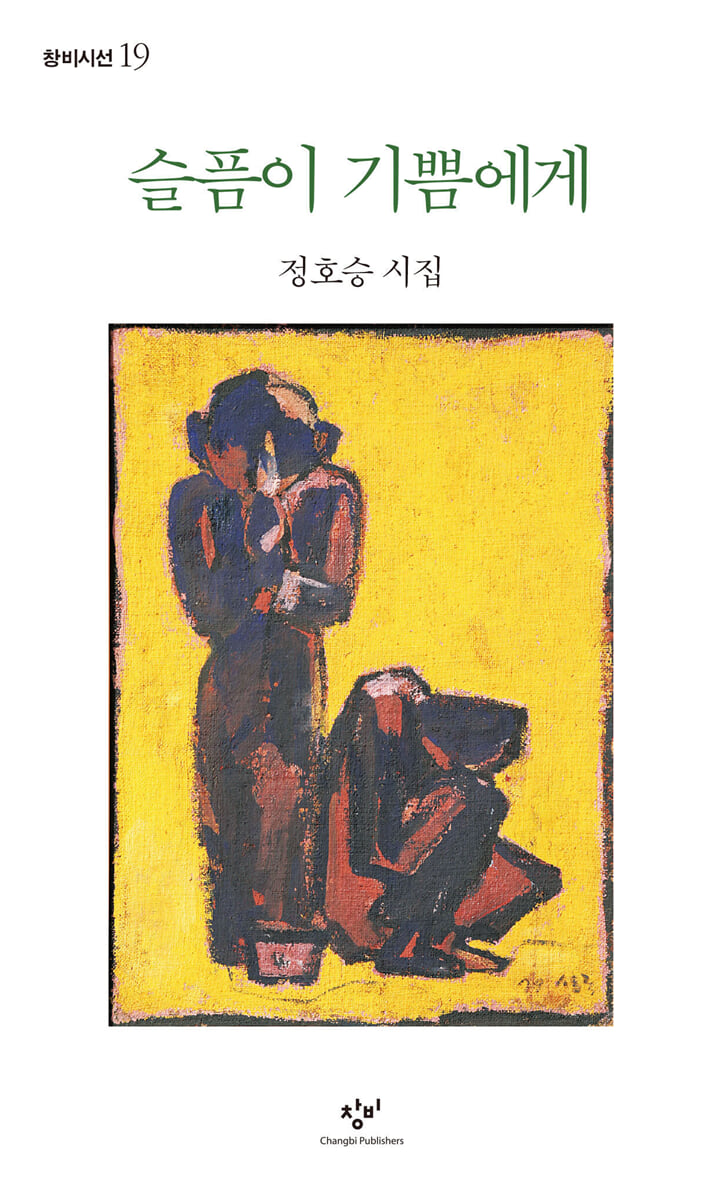 |
Description
Book Introduction
The True Face of Lyric Poetry, Precious Footsteps of Korean Poetry
A fresh look at poet Jeong Ho-seung's first poetry collection.
The revised edition of the first poetry collection, 『Sorrow to Joy』, by poet Jeong Ho-seung, who is enthusiastically loved by readers as the ‘best emotional poet of our time’ who has unfolded the pure world of traditional lyric poetry with clear and soft language, has been published.
This is the second revised edition following the first revised edition in 1993.
In this revised edition, the titles of the poems have been changed, the series of poems ("Poems for Street Recitation," "Yu Gwan-sun," "Letters from Prison") have been dismantled, and each work has been given a new title. Four early poems ("The Blood of a Baekjeong," "Life and Glasses," "The Mountain to a Woman," and "Pestalozzi") have been added.
Even though 35 years have passed since the first edition was published in 1979, the pure poems, which shine like jewels with a sober understanding of reality, sincerity that springs from the depths of life, and “beauty accompanied by sorrow” (Park Hae-seok, Preface), still evoke a touching emotion that touches the heart and leaves a quiet resonance.
A fresh look at poet Jeong Ho-seung's first poetry collection.
The revised edition of the first poetry collection, 『Sorrow to Joy』, by poet Jeong Ho-seung, who is enthusiastically loved by readers as the ‘best emotional poet of our time’ who has unfolded the pure world of traditional lyric poetry with clear and soft language, has been published.
This is the second revised edition following the first revised edition in 1993.
In this revised edition, the titles of the poems have been changed, the series of poems ("Poems for Street Recitation," "Yu Gwan-sun," "Letters from Prison") have been dismantled, and each work has been given a new title. Four early poems ("The Blood of a Baekjeong," "Life and Glasses," "The Mountain to a Woman," and "Pestalozzi") have been added.
Even though 35 years have passed since the first edition was published in 1979, the pure poems, which shine like jewels with a sober understanding of reality, sincerity that springs from the depths of life, and “beauty accompanied by sorrow” (Park Hae-seok, Preface), still evoke a touching emotion that touches the heart and leaves a quiet resonance.
- You can preview some of the book's contents.
Preview
Publisher's Review
The True Face of Lyric Poetry, Precious Footsteps of Korean Poetry
A fresh look at poet Jeong Ho-seung's first poetry collection.
The revised edition of the first poetry collection, 『Sorrow to Joy』, by poet Jeong Ho-seung, who is enthusiastically loved by readers as the ‘best emotional poet of our time’ who has unfolded the pure world of traditional lyric poetry with clear and soft language, has been published.
This is the second revised edition following the first revised edition in 1993.
In this revised edition, the titles of the poems have been changed, the series of poems ("Poems for Street Recitation," "Yu Gwan-sun," "Letters from Prison") have been dismantled, and each work has been given a new title. Four early poems ("The Blood of a Baekjeong," "Life and Glasses," "The Mountain to a Woman," and "Pestalozzi") have been added.
Even though 35 years have passed since the first edition was published in 1979, the pure poems, which shine like jewels with a sober understanding of reality, sincerity that springs from the depths of life, and “beauty accompanied by sorrow” (Park Hae-seok, Preface), still evoke a touching emotion that touches the heart and leaves a quiet resonance.
Let us go to the privet forest/to meet sadness./To throw away this divided autumn/where the sadness of our lives is natural/Let us come close to each other/Rubbing ourselves in the dogtooth grass/Let us go to the privet forest where we weep./(…)/Let us go to mingle our bodies with the sadness of our lives/that walk on our knees./Hiding and lying down where the traces of the grave used to be/Tearing down the petticoat of sadness/Let us go to erase our names/The names of the bones that were scattered in the war./On a rainy autumn day/When I look at the crowd collapsing/There is anger in sadness/There is no courage in anger/But for the misfortune of this divided autumn/Let us go./Rubbing our whole bodies in the dogtooth grass/Let us go to the privet forest/where sadness finally has a human face. (Excerpt from “Who is Sadness”)
The main emotion that encompasses the poetry collection is the poet's perception of the times, that is, 'sadness', as he looks at the tragic reality of his time.
However, his ‘sadness’ does not come from the world of traditional emotion, Han (恨).
Rather than being immersed in sorrowful sentiments, the poet embraces with a warm heart “this sad world” (“This Sad World Too”), where “sadness is forgotten through sadness”, in a calm and contemplative manner.
The poet meekly accepts 'sadness' as a universal condition of human existence, not as a state of deficiency, and sings of "the power of sadness more precious than love" ("Sadness to Joy") with a heartfelt heart that "can mourn earnestly anywhere/and comfort sadness anywhere" ("To the Poor in Heart").
For sorrow/Do not speak of sorrow./Rather, speak of the dawn of sorrow./Pray for the woman who stillborn her first child/And pray for the lover of the young man who knocked on the lightless window and returned./The dawn of those who live while waiting for sorrow is always full of stars./This dawn, as I walked alone on the road to sorrow/And prayed for equality and reconciliation/I learned that sorrow is not tears but a sword./Now, until that morning star sets/Do not touch the wounds of sorrow./Until we love sorrow/Until sorrow completes us/Walk on the dawn road to sorrow and pray./Meet the Mother of Sorrow and pray. (Full text from “For Sorrow”)
From the beginning of his literary career, the poet has been with the common people who live a life of suffering, such as a blind couple of singers, a mixed-race child, a shoe shiner, a rag picker, a beggar boy, refugees, prostitutes, servants, and hunchbacks. In the harsh reality where “the poor become poor again” (“For Parting”), he focuses on the pain of “people who struggle to reach humanity just once” (“Wave Surfing”), “wash the sword of tears” and “weep alone by the river at dawn” (“On the Street”).
The poet looks with warm eyes at the sorrowful lives of these marginalized classes, who reveal the pain of our society, and speaks of the pain of “the hope of those who died with hope” (“Winter Night”) and “tears heavier than stones” (“At the Sea”) with a voice of compassion and comfort.
It's snowing and dark, so I've lost my way/The road is long and I've lost my way/On this winter night without a snowman/No one comes to visit me, so I sing/Only people wandering the world outside in the snow/Soothing the crying of the baby on my back/The road is long, but the sleet is falling/To love the unlovable/To forgive the unforgivable/I sing a song while waiting for a snowman/Singing a song of all the waiting in the world/Those who shiver as they walk in the darkness, but the snow is falling/The song becomes a path and passes ahead/Ahead of the snowy road with no return/Until beauty saves this world/Until joy comes from despair/The sleet is falling, but the road is long/Singing a song that loves indifference/Singing a song that waits for a snowman/I have become a snowman on this winter night/I have become a snowman that won't melt even when spring comes. (Full text from "Blind Couple Singers")
The poet presents a gentle world of works that, while based on a cool-headed perception of reality that looks into the dark side of Korean society in the 1970s, does not lose its refined lyricism.
Through a profound look at reality, the poet, who has insight into the contradictions of our society where “even if I want to die, I cannot” (“Climbing Naksan”), shows the wounds behind our twisted modern history, such as death and ruin caused by war, division and dictatorship, poverty and alienation, in various ways.
The poet's gaze, which follows the lives of the people oppressed in the "anemic world" ("Taking the Night Train"), is imbued with, above all, a passionate love and a profound humanity for "all the indifference of the world" ("Winter Night") and the "poorest people" crushed by sorrow ("Morning Star").
Your hometown, baby/is not America./It is the sorghum field where your father fiercely aimed his gun/and knocked down your mother./It is the rice paddy path where only the torn sleeves of your clothes remained and you sobbed./It is the sandy field where landmines hid quietly/It is in the mud pit of the day the tank passed.//(…)//The war is gone/Where did the old boatman go/who carried refugees on the ferry/Like the falling leaves that followed the student soldiers/My baby, our baby, who is about to leave/Your homeland is not Africa./It is in the bosom of the soaring calf/Beyond the barbed wire where the ribbon of the jeogori (Korean traditional jeogori) swayed. (Excerpt from “To a Mixed-Blooded Child”)
The poet, who reminds us of the preciousness of living together, sings of a painful life, but rather than expressing feelings of despair or resignation, he speaks of the hope that comes after sadness by soothing the “scent of tears” (“Tears”) even in the midst of a harsh reality.
The poet, who realizes that “sorrow is not tears but a knife” (“For Sorrow”), now shows a strong will to overcome sorrow and escape the pain of life.
In the fervent dream of a world where all the world's sorrows shine with beauty, the poet, waiting for "a snowman who melts his whole body with his tears/and creates human hope" ("Snowman"), stands "on the evening path leading to sorrow" ("The Road to Sorrow") and lights a flame of hope that illuminates the dark times "until all people's tears end" ("Snow Road").
As a person who truly loves sadness/I stood on the evening field road that leads to sadness./A strange bird disappeared at the end of the road/The wild flowers blooming on the roadside sway in the wind/As a person who truly caresses sadness/I walked on the field road that leads to sadness, looking at the setting sun./A person waiting for someone who never comes no matter how long I wait/Passes in front of me with sadness/Somewhere, a leaf of a reed tree falls/Leaves sadness behind and follows me./As a person who truly walks the road that leads to sadness/When I look back after walking endlessly/People who have put their lives down are buried in the sunset/To meet the most beautiful person in the world/I stood on the evening field road that leads to sadness again. (Full text from “The Road to Sadness”)
"Sorrow to Joy" is the starting point of Jeong Ho-seung's poetry, establishing him as a representative poet of Korean lyric poetry, and vividly shows the aspects of his early poetry.
This precious collection of poetry, which is an outstanding representative of the 1970s and an indispensable part of the history of Korean poetry, has greatly contributed to the expansion of the literary base with its strong appeal.
In particular, the title piece, “Sorrow to Joy,” is so widely sung that it is included in literature textbooks.
Time passes, but poetry remains.
Doesn't every good poem touch our hearts with emotion, no matter when we read it?
I will now give you sadness. / I will give you a sadness more precious than love. / On a winter night, on the street, leaving behind a few tangerines / To the grandmother shivering from the cold she has lived through / For you who rejoiced while haggling over the price of tangerines / I will show you the equal face of sadness. / When I call you in the darkness / Never smiled equally / When the frozen lion covered in a sack freezes to death again / Not even a single sack covered / For your indifferent love / For your tears that do not know how to shed / I will now give you waiting. / I will stop the sleet that falls on this world. / Taking the spring snow that falls on the barley fields / To the sadness of those shivering in the cold / I will walk with you on the snowy road where the snow has stopped. / Talking about the power of sadness / I will walk to the sadness of waiting. (Full text from “Sadness to Joy”)
A fresh look at poet Jeong Ho-seung's first poetry collection.
The revised edition of the first poetry collection, 『Sorrow to Joy』, by poet Jeong Ho-seung, who is enthusiastically loved by readers as the ‘best emotional poet of our time’ who has unfolded the pure world of traditional lyric poetry with clear and soft language, has been published.
This is the second revised edition following the first revised edition in 1993.
In this revised edition, the titles of the poems have been changed, the series of poems ("Poems for Street Recitation," "Yu Gwan-sun," "Letters from Prison") have been dismantled, and each work has been given a new title. Four early poems ("The Blood of a Baekjeong," "Life and Glasses," "The Mountain to a Woman," and "Pestalozzi") have been added.
Even though 35 years have passed since the first edition was published in 1979, the pure poems, which shine like jewels with a sober understanding of reality, sincerity that springs from the depths of life, and “beauty accompanied by sorrow” (Park Hae-seok, Preface), still evoke a touching emotion that touches the heart and leaves a quiet resonance.
Let us go to the privet forest/to meet sadness./To throw away this divided autumn/where the sadness of our lives is natural/Let us come close to each other/Rubbing ourselves in the dogtooth grass/Let us go to the privet forest where we weep./(…)/Let us go to mingle our bodies with the sadness of our lives/that walk on our knees./Hiding and lying down where the traces of the grave used to be/Tearing down the petticoat of sadness/Let us go to erase our names/The names of the bones that were scattered in the war./On a rainy autumn day/When I look at the crowd collapsing/There is anger in sadness/There is no courage in anger/But for the misfortune of this divided autumn/Let us go./Rubbing our whole bodies in the dogtooth grass/Let us go to the privet forest/where sadness finally has a human face. (Excerpt from “Who is Sadness”)
The main emotion that encompasses the poetry collection is the poet's perception of the times, that is, 'sadness', as he looks at the tragic reality of his time.
However, his ‘sadness’ does not come from the world of traditional emotion, Han (恨).
Rather than being immersed in sorrowful sentiments, the poet embraces with a warm heart “this sad world” (“This Sad World Too”), where “sadness is forgotten through sadness”, in a calm and contemplative manner.
The poet meekly accepts 'sadness' as a universal condition of human existence, not as a state of deficiency, and sings of "the power of sadness more precious than love" ("Sadness to Joy") with a heartfelt heart that "can mourn earnestly anywhere/and comfort sadness anywhere" ("To the Poor in Heart").
For sorrow/Do not speak of sorrow./Rather, speak of the dawn of sorrow./Pray for the woman who stillborn her first child/And pray for the lover of the young man who knocked on the lightless window and returned./The dawn of those who live while waiting for sorrow is always full of stars./This dawn, as I walked alone on the road to sorrow/And prayed for equality and reconciliation/I learned that sorrow is not tears but a sword./Now, until that morning star sets/Do not touch the wounds of sorrow./Until we love sorrow/Until sorrow completes us/Walk on the dawn road to sorrow and pray./Meet the Mother of Sorrow and pray. (Full text from “For Sorrow”)
From the beginning of his literary career, the poet has been with the common people who live a life of suffering, such as a blind couple of singers, a mixed-race child, a shoe shiner, a rag picker, a beggar boy, refugees, prostitutes, servants, and hunchbacks. In the harsh reality where “the poor become poor again” (“For Parting”), he focuses on the pain of “people who struggle to reach humanity just once” (“Wave Surfing”), “wash the sword of tears” and “weep alone by the river at dawn” (“On the Street”).
The poet looks with warm eyes at the sorrowful lives of these marginalized classes, who reveal the pain of our society, and speaks of the pain of “the hope of those who died with hope” (“Winter Night”) and “tears heavier than stones” (“At the Sea”) with a voice of compassion and comfort.
It's snowing and dark, so I've lost my way/The road is long and I've lost my way/On this winter night without a snowman/No one comes to visit me, so I sing/Only people wandering the world outside in the snow/Soothing the crying of the baby on my back/The road is long, but the sleet is falling/To love the unlovable/To forgive the unforgivable/I sing a song while waiting for a snowman/Singing a song of all the waiting in the world/Those who shiver as they walk in the darkness, but the snow is falling/The song becomes a path and passes ahead/Ahead of the snowy road with no return/Until beauty saves this world/Until joy comes from despair/The sleet is falling, but the road is long/Singing a song that loves indifference/Singing a song that waits for a snowman/I have become a snowman on this winter night/I have become a snowman that won't melt even when spring comes. (Full text from "Blind Couple Singers")
The poet presents a gentle world of works that, while based on a cool-headed perception of reality that looks into the dark side of Korean society in the 1970s, does not lose its refined lyricism.
Through a profound look at reality, the poet, who has insight into the contradictions of our society where “even if I want to die, I cannot” (“Climbing Naksan”), shows the wounds behind our twisted modern history, such as death and ruin caused by war, division and dictatorship, poverty and alienation, in various ways.
The poet's gaze, which follows the lives of the people oppressed in the "anemic world" ("Taking the Night Train"), is imbued with, above all, a passionate love and a profound humanity for "all the indifference of the world" ("Winter Night") and the "poorest people" crushed by sorrow ("Morning Star").
Your hometown, baby/is not America./It is the sorghum field where your father fiercely aimed his gun/and knocked down your mother./It is the rice paddy path where only the torn sleeves of your clothes remained and you sobbed./It is the sandy field where landmines hid quietly/It is in the mud pit of the day the tank passed.//(…)//The war is gone/Where did the old boatman go/who carried refugees on the ferry/Like the falling leaves that followed the student soldiers/My baby, our baby, who is about to leave/Your homeland is not Africa./It is in the bosom of the soaring calf/Beyond the barbed wire where the ribbon of the jeogori (Korean traditional jeogori) swayed. (Excerpt from “To a Mixed-Blooded Child”)
The poet, who reminds us of the preciousness of living together, sings of a painful life, but rather than expressing feelings of despair or resignation, he speaks of the hope that comes after sadness by soothing the “scent of tears” (“Tears”) even in the midst of a harsh reality.
The poet, who realizes that “sorrow is not tears but a knife” (“For Sorrow”), now shows a strong will to overcome sorrow and escape the pain of life.
In the fervent dream of a world where all the world's sorrows shine with beauty, the poet, waiting for "a snowman who melts his whole body with his tears/and creates human hope" ("Snowman"), stands "on the evening path leading to sorrow" ("The Road to Sorrow") and lights a flame of hope that illuminates the dark times "until all people's tears end" ("Snow Road").
As a person who truly loves sadness/I stood on the evening field road that leads to sadness./A strange bird disappeared at the end of the road/The wild flowers blooming on the roadside sway in the wind/As a person who truly caresses sadness/I walked on the field road that leads to sadness, looking at the setting sun./A person waiting for someone who never comes no matter how long I wait/Passes in front of me with sadness/Somewhere, a leaf of a reed tree falls/Leaves sadness behind and follows me./As a person who truly walks the road that leads to sadness/When I look back after walking endlessly/People who have put their lives down are buried in the sunset/To meet the most beautiful person in the world/I stood on the evening field road that leads to sadness again. (Full text from “The Road to Sadness”)
"Sorrow to Joy" is the starting point of Jeong Ho-seung's poetry, establishing him as a representative poet of Korean lyric poetry, and vividly shows the aspects of his early poetry.
This precious collection of poetry, which is an outstanding representative of the 1970s and an indispensable part of the history of Korean poetry, has greatly contributed to the expansion of the literary base with its strong appeal.
In particular, the title piece, “Sorrow to Joy,” is so widely sung that it is included in literature textbooks.
Time passes, but poetry remains.
Doesn't every good poem touch our hearts with emotion, no matter when we read it?
I will now give you sadness. / I will give you a sadness more precious than love. / On a winter night, on the street, leaving behind a few tangerines / To the grandmother shivering from the cold she has lived through / For you who rejoiced while haggling over the price of tangerines / I will show you the equal face of sadness. / When I call you in the darkness / Never smiled equally / When the frozen lion covered in a sack freezes to death again / Not even a single sack covered / For your indifferent love / For your tears that do not know how to shed / I will now give you waiting. / I will stop the sleet that falls on this world. / Taking the spring snow that falls on the barley fields / To the sadness of those shivering in the cold / I will walk with you on the snowy road where the snow has stopped. / Talking about the power of sadness / I will walk to the sadness of waiting. (Full text from “Sadness to Joy”)
GOODS SPECIFICS
- Date of issue: December 1, 2014
- Page count, weight, size: 144 pages | 125*200*20mm
- ISBN13: 9788936427245
- ISBN10: 8936427245
You may also like
카테고리
korean


korean

![GQ KOREA Mark (Monthly): December [2025]](http://librairie.coreenne.fr/cdn/shop/files/8ef265dbbfbf186523ed75ba7319009d.jpg?v=1765340328&width=3840)


