

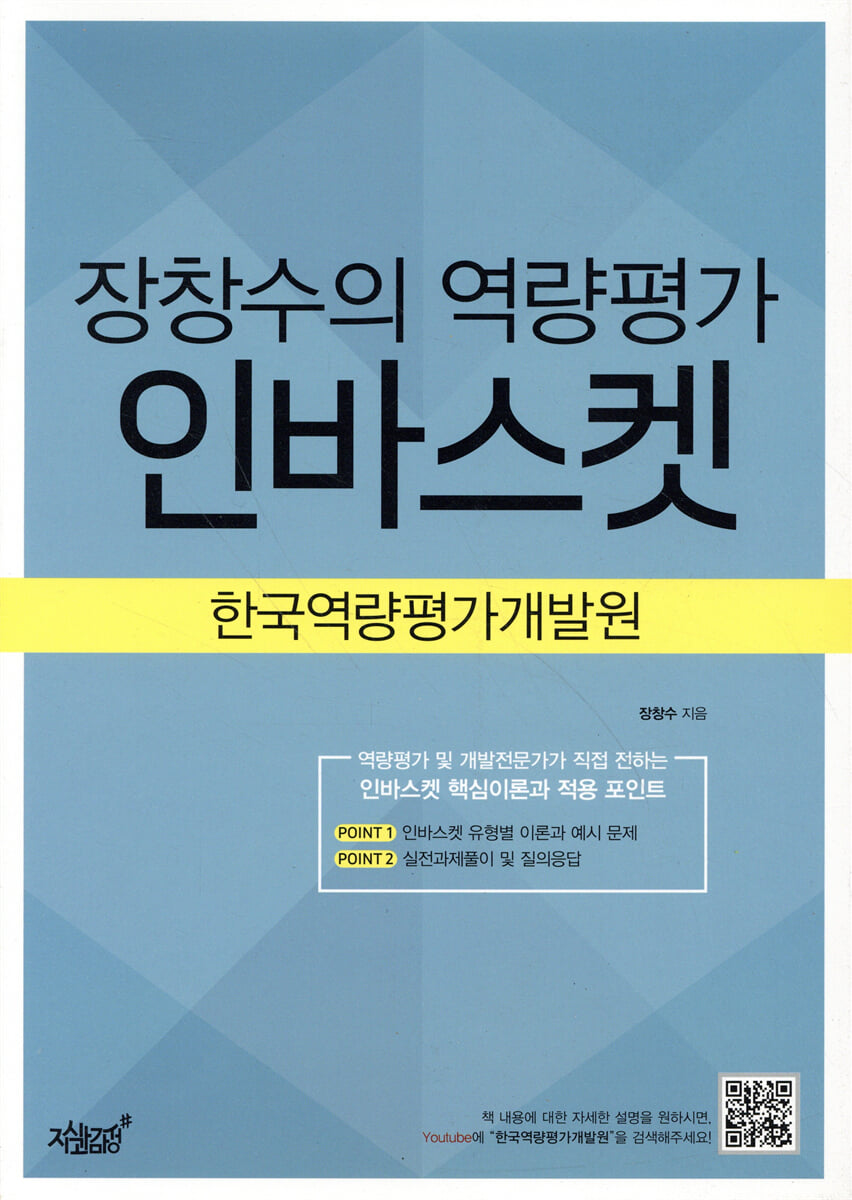
Jang Chang-soo's competency assessment inbasket
 |
Description
Book Introduction
This is author Jang Chang-su's new work, following 『Jang Chang-su's Competency Assessment』 and 『Jang Chang-su's Policy Planning and Presentation Lectures』.
People who usually have the most difficulty preparing for competency assessments often struggle with the in-basket part, so we've published a book for those people.
Because we are traditionally accustomed to learning by memorizing rather than understanding and thinking, new assessment and development methodologies like InBasket can be disconcerting.
Separate learning is required to effectively respond to inbaskets.
This book contains all the necessary theories and evaluation application points of Inbasket.
It will be a great help to your studies.
People who usually have the most difficulty preparing for competency assessments often struggle with the in-basket part, so we've published a book for those people.
Because we are traditionally accustomed to learning by memorizing rather than understanding and thinking, new assessment and development methodologies like InBasket can be disconcerting.
Separate learning is required to effectively respond to inbaskets.
This book contains all the necessary theories and evaluation application points of Inbasket.
It will be a great help to your studies.
Publisher's Review
There has been a major change in the way talent is evaluated in Korea recently.
Promotion evaluations have shifted from focusing on performance evaluations and multi-faceted assessments to focusing on competency evaluations, and in the evaluation of new employees, competency evaluations such as NCS have taken their place, moving away from focusing on theory evaluations and personality/aptitude tests.
Scientific competency assessment, which involves in-basket (IB), analysis and presentation (OP), role-playing (RP), and group discussion (GD), is very different from the existing talent assessment method. If the existing assessment method is a knowledge and theory-centered assessment method, the competency assessment method is based on the analysis of phenomena and the ability to respond.
Among them, InBasket is the most demanding evaluation method, presenting various field situations and evaluating a number of capabilities, including planning ability and motivation, in the process.
This type of evaluation can basically be said to be a variety of 'problem solving' that occurs inside and outside the organization.
In order to effectively respond to problems, one must possess theories and knowledge related to the ability to analyze and structure phenomena, and 'Jang Chang-soo's Inbasket' contains both of these.
It was written to focus on in-basket competency assessment by providing and solving various tasks frequently presented in evaluation settings, while also providing a variety of theories required in the field.
Author Chang-soo Jang is a top expert in competency assessment and competency development, having worked as a senior researcher at the McClelland Center, founded by Professor McClelland of the Harvard University Department of Psychology, who is said to be the father of competency, and has a wide range of field experience. His previously published book, "Jang Chang-soo's Competency Assessment Lecture," has been so well-received that it has been reprinted three times.
Promotion evaluations have shifted from focusing on performance evaluations and multi-faceted assessments to focusing on competency evaluations, and in the evaluation of new employees, competency evaluations such as NCS have taken their place, moving away from focusing on theory evaluations and personality/aptitude tests.
Scientific competency assessment, which involves in-basket (IB), analysis and presentation (OP), role-playing (RP), and group discussion (GD), is very different from the existing talent assessment method. If the existing assessment method is a knowledge and theory-centered assessment method, the competency assessment method is based on the analysis of phenomena and the ability to respond.
Among them, InBasket is the most demanding evaluation method, presenting various field situations and evaluating a number of capabilities, including planning ability and motivation, in the process.
This type of evaluation can basically be said to be a variety of 'problem solving' that occurs inside and outside the organization.
In order to effectively respond to problems, one must possess theories and knowledge related to the ability to analyze and structure phenomena, and 'Jang Chang-soo's Inbasket' contains both of these.
It was written to focus on in-basket competency assessment by providing and solving various tasks frequently presented in evaluation settings, while also providing a variety of theories required in the field.
Author Chang-soo Jang is a top expert in competency assessment and competency development, having worked as a senior researcher at the McClelland Center, founded by Professor McClelland of the Harvard University Department of Psychology, who is said to be the father of competency, and has a wide range of field experience. His previously published book, "Jang Chang-soo's Competency Assessment Lecture," has been so well-received that it has been reprinted three times.
preface
Lesson 1: Understanding Inbasket
1.
What is Inbasket?
2.
Inbasket structure
3.
Inbasket type
(1) Classification according to task progress method
(2) Classification according to task content
4.
Inbasket flow
(1) Task review/action
(2) Write/submit the answer sheet
(3) Interview/Evaluation
5.
Inbasket characteristics and structure
(1) Characteristics and structure of the inbasket
Lecture 2: Core Theory of Inbasket Evaluation
1.
inductive thinking
2.
deductive thinking
Lecture 3: Theory and Action Plans by Task Type
1.
Strategic thinking (decision making)
(1) Strategic thinking
(2) Inbasket strategic thinking task
2.
Planning skills (problem solving)
(1) Planning ability
(2) Inbasket planning task
3.
Performance management (goal management)
(1) Performance management
(2) Inbasket performance management task
4.
Conflict management (coordination of interests)
(1) Conflict management
(2) Inbasket conflict management task
5.
Motivating subordinates (leadership)
(1) Motivation
(2) In-basket motivation task
6.
Customer satisfaction (customer orientation)
(1) Customer satisfaction
(2) Inbasket customer satisfaction task
7.
Change Management (Change Orientation, Change Innovation)
(1) Change management
(2) Inbasket change management task
8.
Organizational Culture (Organizational Development)
(1) Organizational culture
(2) Inbasket organizational culture task
9.
Organizational Management (Resource Efficiency)
(1) Organizational management
(2) Inbasket organizational management task
10.
Interpersonal relationships and communication (logical persuasion, emotional communication)
(1) Interpersonal relationships and communication
Lesson 4: Inbasket Evaluation Method
1.
Evaluation criterion 'competency'
2.
'Techniques' for evaluation
3.
Specific evaluation 'method'
(1) Behavioral Standard Scale
(2) Behavioral Observation Scale
4.
'Evaluator' in charge of evaluation
Appendix Inbasket Practice Test and Commentary I
Handling current issues in the Youth Protection Division of the Youth Policy Office of the Ministry of Family Welfare and Family Welfare, Jeong Han-su
Strategic thinking/ 2.
Organizational Management, Customer Satisfaction / 3.
Change Management, Communication / 4.
Planning skills, performance management
Appendix Inbasket Practice Test and Commentary II
Current Affairs Task Force Team Leader Na Hyeon-seok of the Tourism Policy and Tourism Development Team of the Sarang City Culture and Tourism Bureau
Conflict Management / 2.
Organizational Management, Customer Satisfaction / 3.
Planning, performance management / 4.
Motivation, Performance Management /
5.
Planning Ability, Customer Satisfaction Introduction
Lesson 1: Understanding Inbasket
1.
What is Inbasket?
2.
Inbasket structure
3.
Inbasket type
(1) Classification according to task progress method
(2) Classification according to task content
4.
Inbasket flow
(1) Task review/action
(2) Write/submit the answer sheet
(3) Interview/Evaluation
5.
Inbasket characteristics and structure
(1) Characteristics and structure of the inbasket
Lecture 2: Core Theory of Inbasket Evaluation
1.
inductive thinking
2.
deductive thinking
Lecture 3: Theory and Action Plans by Task Type
1.
Strategic thinking (decision making)
(1) Strategic thinking
(2) Inbasket strategic thinking task
2.
Planning skills (problem solving)
(1) Planning ability
(2) Inbasket planning task
3.
Performance management (goal management)
(1) Performance management
(2) Inbasket performance management task
4.
Conflict management (coordination of interests)
(1) Conflict management
(2) Inbasket conflict management task
5.
Motivating subordinates (leadership)
(1) Motivation
(2) In-basket motivation task
6.
Customer satisfaction (customer orientation)
(1) Customer satisfaction
(2) Inbasket customer satisfaction task
7.
Change Management (Change Orientation, Change Innovation)
(1) Change management
(2) Inbasket change management task
8.
Organizational Culture (Organizational Development)
(1) Organizational culture
(2) Inbasket organizational culture task
9.
Organizational Management (Resource Efficiency)
(1) Organizational management
(2) Inbasket organizational management task
10.
Interpersonal relationships and communication (logical persuasion, emotional communication)
(1) Interpersonal relationships and communication
Lesson 4: Inbasket Evaluation Method
1.
Evaluation criterion 'competency'
2.
'Techniques' for evaluation
3.
Specific evaluation 'method'
(1) Behavioral Standard Scale
(2) Behavioral Observation Scale
4.
'Evaluator' in charge of evaluation
Appendix Inbasket Practice Test and Commentary I
Handling current issues in the Youth Protection Division of the Youth Policy Office of the Ministry of Family Welfare and Family Welfare, Jeong Han-su
Strategic thinking/ 2.
Organizational Management, Customer Satisfaction / 3.
Change Management, Communication / 4.
Planning skills, performance management
Appendix Inbasket Practice Test and Commentary II
Current Affairs Task Force Team Leader Na Hyeon-seok of the Tourism Policy and Tourism Development Team of the Sarang City Culture and Tourism Bureau
Conflict Management / 2.
Organizational Management, Customer Satisfaction / 3.
Planning, performance management / 4.
Motivation, Performance Management /
5.
Planning ability, customer satisfaction
Lesson 1: Understanding Inbasket
1.
What is Inbasket?
2.
Inbasket structure
3.
Inbasket type
(1) Classification according to task progress method
(2) Classification according to task content
4.
Inbasket flow
(1) Task review/action
(2) Write/submit the answer sheet
(3) Interview/Evaluation
5.
Inbasket characteristics and structure
(1) Characteristics and structure of the inbasket
Lecture 2: Core Theory of Inbasket Evaluation
1.
inductive thinking
2.
deductive thinking
Lecture 3: Theory and Action Plans by Task Type
1.
Strategic thinking (decision making)
(1) Strategic thinking
(2) Inbasket strategic thinking task
2.
Planning skills (problem solving)
(1) Planning ability
(2) Inbasket planning task
3.
Performance management (goal management)
(1) Performance management
(2) Inbasket performance management task
4.
Conflict management (coordination of interests)
(1) Conflict management
(2) Inbasket conflict management task
5.
Motivating subordinates (leadership)
(1) Motivation
(2) In-basket motivation task
6.
Customer satisfaction (customer orientation)
(1) Customer satisfaction
(2) Inbasket customer satisfaction task
7.
Change Management (Change Orientation, Change Innovation)
(1) Change management
(2) Inbasket change management task
8.
Organizational Culture (Organizational Development)
(1) Organizational culture
(2) Inbasket organizational culture task
9.
Organizational Management (Resource Efficiency)
(1) Organizational management
(2) Inbasket organizational management task
10.
Interpersonal relationships and communication (logical persuasion, emotional communication)
(1) Interpersonal relationships and communication
Lesson 4: Inbasket Evaluation Method
1.
Evaluation criterion 'competency'
2.
'Techniques' for evaluation
3.
Specific evaluation 'method'
(1) Behavioral Standard Scale
(2) Behavioral Observation Scale
4.
'Evaluator' in charge of evaluation
Appendix Inbasket Practice Test and Commentary I
Handling current issues in the Youth Protection Division of the Youth Policy Office of the Ministry of Family Welfare and Family Welfare, Jeong Han-su
Strategic thinking/ 2.
Organizational Management, Customer Satisfaction / 3.
Change Management, Communication / 4.
Planning skills, performance management
Appendix Inbasket Practice Test and Commentary II
Current Affairs Task Force Team Leader Na Hyeon-seok of the Tourism Policy and Tourism Development Team of the Sarang City Culture and Tourism Bureau
Conflict Management / 2.
Organizational Management, Customer Satisfaction / 3.
Planning, performance management / 4.
Motivation, Performance Management /
5.
Planning Ability, Customer Satisfaction Introduction
Lesson 1: Understanding Inbasket
1.
What is Inbasket?
2.
Inbasket structure
3.
Inbasket type
(1) Classification according to task progress method
(2) Classification according to task content
4.
Inbasket flow
(1) Task review/action
(2) Write/submit the answer sheet
(3) Interview/Evaluation
5.
Inbasket characteristics and structure
(1) Characteristics and structure of the inbasket
Lecture 2: Core Theory of Inbasket Evaluation
1.
inductive thinking
2.
deductive thinking
Lecture 3: Theory and Action Plans by Task Type
1.
Strategic thinking (decision making)
(1) Strategic thinking
(2) Inbasket strategic thinking task
2.
Planning skills (problem solving)
(1) Planning ability
(2) Inbasket planning task
3.
Performance management (goal management)
(1) Performance management
(2) Inbasket performance management task
4.
Conflict management (coordination of interests)
(1) Conflict management
(2) Inbasket conflict management task
5.
Motivating subordinates (leadership)
(1) Motivation
(2) In-basket motivation task
6.
Customer satisfaction (customer orientation)
(1) Customer satisfaction
(2) Inbasket customer satisfaction task
7.
Change Management (Change Orientation, Change Innovation)
(1) Change management
(2) Inbasket change management task
8.
Organizational Culture (Organizational Development)
(1) Organizational culture
(2) Inbasket organizational culture task
9.
Organizational Management (Resource Efficiency)
(1) Organizational management
(2) Inbasket organizational management task
10.
Interpersonal relationships and communication (logical persuasion, emotional communication)
(1) Interpersonal relationships and communication
Lesson 4: Inbasket Evaluation Method
1.
Evaluation criterion 'competency'
2.
'Techniques' for evaluation
3.
Specific evaluation 'method'
(1) Behavioral Standard Scale
(2) Behavioral Observation Scale
4.
'Evaluator' in charge of evaluation
Appendix Inbasket Practice Test and Commentary I
Handling current issues in the Youth Protection Division of the Youth Policy Office of the Ministry of Family Welfare and Family Welfare, Jeong Han-su
Strategic thinking/ 2.
Organizational Management, Customer Satisfaction / 3.
Change Management, Communication / 4.
Planning skills, performance management
Appendix Inbasket Practice Test and Commentary II
Current Affairs Task Force Team Leader Na Hyeon-seok of the Tourism Policy and Tourism Development Team of the Sarang City Culture and Tourism Bureau
Conflict Management / 2.
Organizational Management, Customer Satisfaction / 3.
Planning, performance management / 4.
Motivation, Performance Management /
5.
Planning ability, customer satisfaction
GOODS SPECIFICS
- Date of issue: February 10, 2020
- Page count, weight, size: 290 pages | 210*297*20mm
- ISBN13: 9791165520007
- ISBN10: 1165520001
You may also like
카테고리
korean


korean

![ELLE 엘르 스페셜 에디션 A형 : 12월 [2025]](http://librairie.coreenne.fr/cdn/shop/files/b8e27a3de6c9538896439686c6b0e8fb.jpg?v=1766436872&width=3840)


