

First edition deer
 |
Description
Book Introduction
A representative poet of modernism and imagism,
Let's meet Baek Seok's work!
Baek Seok is a representative modernist poet of Korea who utilized indigenous poetic language with restrained sensibility. He published only one collection of poetry, “Deer,” in 1936, 100 copies directly through Seongwang Company.
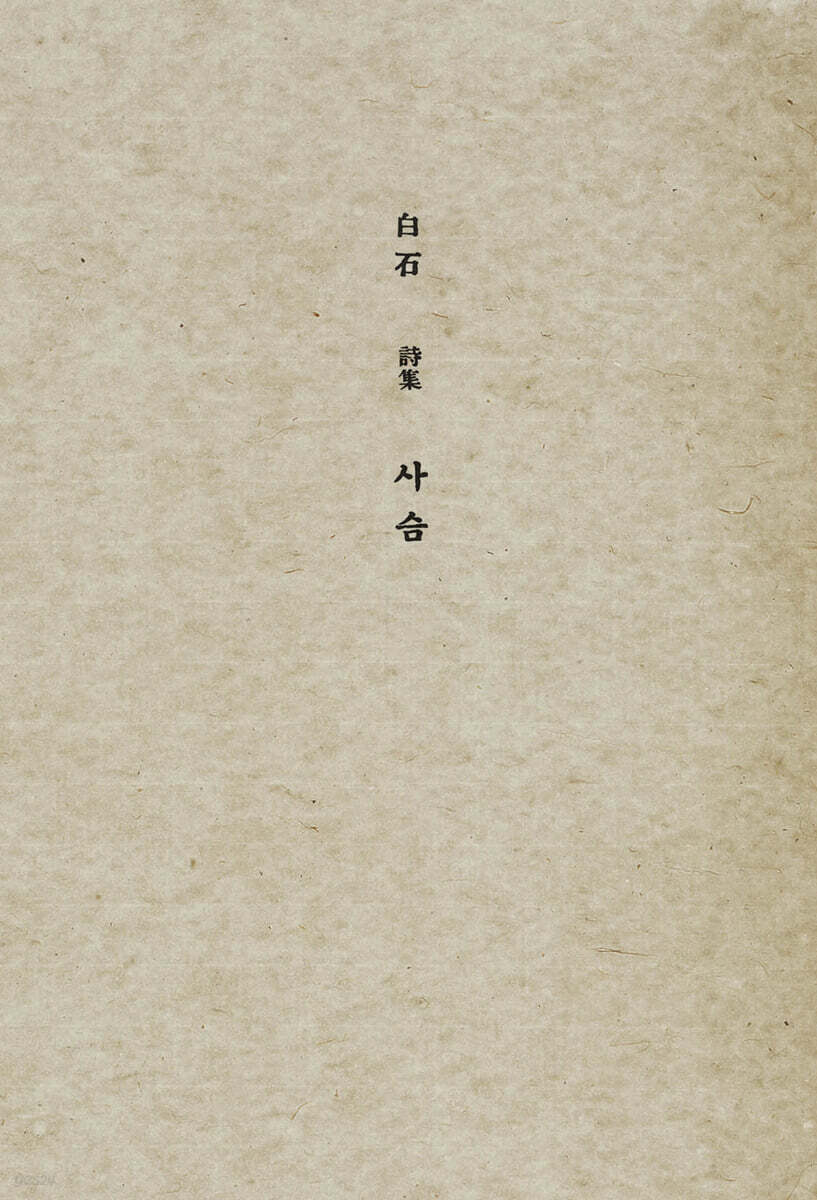
The first edition of “Deer” published by The Story this time was produced by borrowing the cover design of the 1936 edition as is.
In addition to the poems included in “Deer” from 1936, the book also includes Baek Seok’s representative works published later, such as “Me, Natasha, and the White Donkey” and “There is a White Wind Wall,” allowing readers to see most of Baek Seok’s works.
The text has been edited to conform to Korean spelling rules for readers' convenience, but the original text has been preserved as much as possible so that the meaning of the poem is not damaged.
Occasionally, footnotes are provided to help readers understand words that are no longer in use or difficult Chinese characters.
Published in 1936, “Deer” contains 33 poems divided into four parts, including Baek Seok’s early work “Nun”, “Chodongil”, and “Fox Nangoljok (族)”.
In this collection of poems, Baek Seok sang regional colors and folk materials based on modernism and an objective attitude.
In particular, by utilizing place names, dialects, and archaic words from Pyeongan Province, we realistically portrayed our daily lives based on a sense of displacement.
This can be seen as a demonstration of Baek Seok's will to protect our language even during the Japanese colonial period.
Poet Baek Seok, who was undervalued after being abducted, returned to us only after the ban was lifted.
Baek Seok's poetry, which strives to preserve the beauty of our language, is loved by many people.
Let's meet Baek Seok's work!
Baek Seok is a representative modernist poet of Korea who utilized indigenous poetic language with restrained sensibility. He published only one collection of poetry, “Deer,” in 1936, 100 copies directly through Seongwang Company.
The first edition of “Deer” published by The Story this time was produced by borrowing the cover design of the 1936 edition as is.
In addition to the poems included in “Deer” from 1936, the book also includes Baek Seok’s representative works published later, such as “Me, Natasha, and the White Donkey” and “There is a White Wind Wall,” allowing readers to see most of Baek Seok’s works.
The text has been edited to conform to Korean spelling rules for readers' convenience, but the original text has been preserved as much as possible so that the meaning of the poem is not damaged.
Occasionally, footnotes are provided to help readers understand words that are no longer in use or difficult Chinese characters.
Published in 1936, “Deer” contains 33 poems divided into four parts, including Baek Seok’s early work “Nun”, “Chodongil”, and “Fox Nangoljok (族)”.
In this collection of poems, Baek Seok sang regional colors and folk materials based on modernism and an objective attitude.
In particular, by utilizing place names, dialects, and archaic words from Pyeongan Province, we realistically portrayed our daily lives based on a sense of displacement.
This can be seen as a demonstration of Baek Seok's will to protect our language even during the Japanese colonial period.
Poet Baek Seok, who was undervalued after being abducted, returned to us only after the ban was lifted.
Baek Seok's poetry, which strives to preserve the beauty of our language, is loved by many people.
index
The spirit of a spotted calf
Gazurangjip / Sanji (mountain area) / Me and Jirangi / Fox Nangol Tribe (tribe) / Storehouse (storehouse) / Bonfire / Old Night / Duck, Calf, Rabbit
The water of Doldeulgu
Early winter day / Summer field / Inn / Silence / The world of the unlit / Outside the castle / Autumn morning / Plains / White night
roe deer
Cheongsi (淸枾) / mountain rain / lonely road / ? 榴 (榴) / cornelian chestnut / nun / sura / rain / deer
Beyond the noodles
The Story of the Cow in the Temple / Tongyeong / A Place Called Ogeumdeong / The Sea of Sigaki / Jeongju Castle / Outside of Changui Gate / Jeongmun Village / Yeounan Valley / Sambang
Me, Natasha, and the White Donkey
Tongyeong (統營) / Ori / Yeonjagan (黃日) / Tangyak (豆國湊街道) / Changwon-do (昌原道) ─ Namhaengsicho 1 / Tongyeong (統營) ─ Namhaengsicho 2 / Goseong-gado (固城街道) ─ Namhaengsicho 3 / Samcheonpo ─ Namhaengsicho 4 / Bukgwan (北關) ─ Hamjusicho 1 / Deer ─ Hamjusicho 2 / Old temple ─ Hamjusicho 3 / Seonwoosa (膳友辭) ─ Hamjusicho 4 / Sangok (山谷) ─ Hamjusicho 5 / Sea / Chuya Ilgyeong (愛馬) / Sansuk (山宿) ─ Sanjungeum (山馬吟) 1 / Hyangak (饗樂) ─Song in the Mountains 2 / Midnight ─Song in the Mountains 3 / White Birch ─Song in the Mountains 4 / Me, Natasha, and the White Donkey / Sunset / Hometown / Despair / Dog / Grandma's House / What I think about / I turn away like this / Samho ─ The Sound of the Coot 1 / Mulgyeri ─ The Sound of the Coot 2 / Daesandong ─ The Sound of the Coot 3 / Namhyang ─ The Sound of the Coot 4 / Yausohoe ─ The Sound of the Coot 5 / Kkoldugi ─ The Sound of the Coot 6 / The Joy of the Garmuraegi / The Sound of a Wild Bird / The Evening When the Paekkakshi Comes / A Big Man Like a Tiger in a House of Nomeon / Dongnyo (童尿賦) Andong (安東) / Hamnam-do An (咸南道安) / Gujang-ro (球場路) ─ Westward movement 1 / Buksin (北新) ─ Westward movement 2 / Palwon (八院) ─ Westward movement 3 / Wollim (月林) Market ─ Westward movement 4 / Mokgu (木具)
Namshinuiju Yoodong Park Si-bongbang
Watermelon seeds, pumpkin seeds / From the North - To Jeong Hyeon-ung / Heo Jun / Preface to "Pumpkin Lantern" / Returning to the Farm / Noodles / There is a white wind wall / A child from the countryside / In Jodang / Like Du Fu or Li Bai / Mountains / Silent rivers and mountains / The village has become a bare sky and nine gods / Baekjung in July / Namsin Uiju Yoodong Park Si-bongbang
About the author
Author's chronology
Gazurangjip / Sanji (mountain area) / Me and Jirangi / Fox Nangol Tribe (tribe) / Storehouse (storehouse) / Bonfire / Old Night / Duck, Calf, Rabbit
The water of Doldeulgu
Early winter day / Summer field / Inn / Silence / The world of the unlit / Outside the castle / Autumn morning / Plains / White night
roe deer
Cheongsi (淸枾) / mountain rain / lonely road / ? 榴 (榴) / cornelian chestnut / nun / sura / rain / deer
Beyond the noodles
The Story of the Cow in the Temple / Tongyeong / A Place Called Ogeumdeong / The Sea of Sigaki / Jeongju Castle / Outside of Changui Gate / Jeongmun Village / Yeounan Valley / Sambang
Me, Natasha, and the White Donkey
Tongyeong (統營) / Ori / Yeonjagan (黃日) / Tangyak (豆國湊街道) / Changwon-do (昌原道) ─ Namhaengsicho 1 / Tongyeong (統營) ─ Namhaengsicho 2 / Goseong-gado (固城街道) ─ Namhaengsicho 3 / Samcheonpo ─ Namhaengsicho 4 / Bukgwan (北關) ─ Hamjusicho 1 / Deer ─ Hamjusicho 2 / Old temple ─ Hamjusicho 3 / Seonwoosa (膳友辭) ─ Hamjusicho 4 / Sangok (山谷) ─ Hamjusicho 5 / Sea / Chuya Ilgyeong (愛馬) / Sansuk (山宿) ─ Sanjungeum (山馬吟) 1 / Hyangak (饗樂) ─Song in the Mountains 2 / Midnight ─Song in the Mountains 3 / White Birch ─Song in the Mountains 4 / Me, Natasha, and the White Donkey / Sunset / Hometown / Despair / Dog / Grandma's House / What I think about / I turn away like this / Samho ─ The Sound of the Coot 1 / Mulgyeri ─ The Sound of the Coot 2 / Daesandong ─ The Sound of the Coot 3 / Namhyang ─ The Sound of the Coot 4 / Yausohoe ─ The Sound of the Coot 5 / Kkoldugi ─ The Sound of the Coot 6 / The Joy of the Garmuraegi / The Sound of a Wild Bird / The Evening When the Paekkakshi Comes / A Big Man Like a Tiger in a House of Nomeon / Dongnyo (童尿賦) Andong (安東) / Hamnam-do An (咸南道安) / Gujang-ro (球場路) ─ Westward movement 1 / Buksin (北新) ─ Westward movement 2 / Palwon (八院) ─ Westward movement 3 / Wollim (月林) Market ─ Westward movement 4 / Mokgu (木具)
Namshinuiju Yoodong Park Si-bongbang
Watermelon seeds, pumpkin seeds / From the North - To Jeong Hyeon-ung / Heo Jun / Preface to "Pumpkin Lantern" / Returning to the Farm / Noodles / There is a white wind wall / A child from the countryside / In Jodang / Like Du Fu or Li Bai / Mountains / Silent rivers and mountains / The village has become a bare sky and nine gods / Baekjung in July / Namsin Uiju Yoodong Park Si-bongbang
About the author
Author's chronology
Into the book
Poor me
Because I love the beautiful Natasha
It's going to snow heavily tonight.
I love Natasha
The snow is falling heavily
I sit alone and drink soju.
Thinking while drinking soju
Natasha and I
Riding a white donkey on a snowy night
Let's go to the mountains, to the deep mountains where the groaning comes from, and live in Magari.
The snow is falling heavily
I think of Natasha
There's no way Natasha wouldn't come
When did you come and talk to me so quietly?
Going to the mountains is not losing to the world.
The world is a dirty place
The snow is falling heavily
Beautiful Natasha loves me
Somewhere, a white donkey will bray tonight because it's so good.
Because I love the beautiful Natasha
It's going to snow heavily tonight.
I love Natasha
The snow is falling heavily
I sit alone and drink soju.
Thinking while drinking soju
Natasha and I
Riding a white donkey on a snowy night
Let's go to the mountains, to the deep mountains where the groaning comes from, and live in Magari.
The snow is falling heavily
I think of Natasha
There's no way Natasha wouldn't come
When did you come and talk to me so quietly?
Going to the mountains is not losing to the world.
The world is a dirty place
The snow is falling heavily
Beautiful Natasha loves me
Somewhere, a white donkey will bray tonight because it's so good.
--- From "Me, Natasha, and the White Donkey"
GOODS SPECIFICS
- Date of issue: March 28, 2025
- Page count, weight, size: 192 pages | 128*188*20mm
- ISBN13: 9791194591375
- ISBN10: 119459137X
You may also like
카테고리
korean


korean

![ELLE 엘르 스페셜 에디션 A형 : 12월 [2025]](http://librairie.coreenne.fr/cdn/shop/files/b8e27a3de6c9538896439686c6b0e8fb.jpg?v=1766436872&width=3840)


