

People landscape
 |
Description
Book Introduction
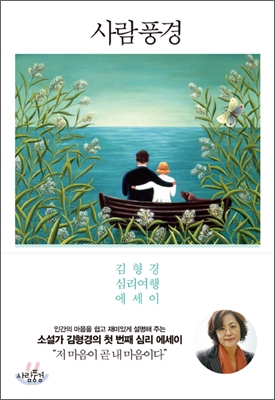
『Human Character』 is novelist Kim Hyung-kyung's first psychological essay.
The author, who had been reading books on psychoanalysis and psychology since his mid-20s, hoped for a book that "explains the human mind in an easy and fun way, while also being understandable at a glance," and so he wrote such a book himself.
By presenting travel stories on the surface, readers can easily approach them, and the profound insights are complemented by a literary flavor, making them easy to understand and enlightening.
This book offers inner reflection through small and diverse experiences at travel destinations.
Looking at the catacombs of Rome, I think about the vastness of the 'unconscious' in their darkness and vastness, and contemplate the causes of depression under the dark Parisian sky.
The stories he tells, told with literary imagination and analytical skills developed through psychoanalysis, are as diverse and interesting as the countries he visited.
This book, which unlocks the secrets of the mind, can be read without much burden even by those new to psychoanalysis or psychological essays.
The author, who had been reading books on psychoanalysis and psychology since his mid-20s, hoped for a book that "explains the human mind in an easy and fun way, while also being understandable at a glance," and so he wrote such a book himself.
By presenting travel stories on the surface, readers can easily approach them, and the profound insights are complemented by a literary flavor, making them easy to understand and enlightening.
This book offers inner reflection through small and diverse experiences at travel destinations.
Looking at the catacombs of Rome, I think about the vastness of the 'unconscious' in their darkness and vastness, and contemplate the causes of depression under the dark Parisian sky.
The stories he tells, told with literary imagination and analytical skills developed through psychoanalysis, are as diverse and interesting as the countries he visited.
This book, which unlocks the secrets of the mind, can be read without much burden even by those new to psychoanalysis or psychological essays.
- You can preview some of the book's contents.
Preview
index
Chapter 1 Basic Emotions
The unconscious, the secret storehouse of our lives
Love is the cause and solution to all psychological problems.
Target selection: The process of considering others as important beings
Feelings of loss, or unreturned love, as a source of anger
The fallacy of depression, or the magic of the mind
Anxiety: the fear of losing a loved one
Fear and anger are masked and transferred to another target.
Chapter 2: Unconscious Survival
Objects used to obtain psychological stability
A state of severe and extreme addiction
Jealousy Lack of confidence as a loved one
Envy, the desire to destroy what others have
An attitude that reduces a divided world in half
Projecting the negative aspects of one's inner self onto others
Avoidance: escaping from oneself and life
Chapter 3 Positive Choices
Identification: Accepting others and making them a part of myself
Complex: The source of diverse and rich personality
A two-way street between narcissistic regression and growth
Self-respect, the feeling that one is worthy of happiness
Body Love: The body is the mind, and the body is identity.
Eros is the energy of life and the direction of art.
Reading the world without shameless childish fantasies
Chapter 4 The Virtues of Growth
The left hand watches what the right hand does
The amazing power of recognition and support that makes even whales dance
Empathy is the best way to reach others.
Courage The ability to move forward even in despair
Changing the way we see the world and change the way we live
Self-actualization: becoming your true self
The unconscious, the secret storehouse of our lives
Love is the cause and solution to all psychological problems.
Target selection: The process of considering others as important beings
Feelings of loss, or unreturned love, as a source of anger
The fallacy of depression, or the magic of the mind
Anxiety: the fear of losing a loved one
Fear and anger are masked and transferred to another target.
Chapter 2: Unconscious Survival
Objects used to obtain psychological stability
A state of severe and extreme addiction
Jealousy Lack of confidence as a loved one
Envy, the desire to destroy what others have
An attitude that reduces a divided world in half
Projecting the negative aspects of one's inner self onto others
Avoidance: escaping from oneself and life
Chapter 3 Positive Choices
Identification: Accepting others and making them a part of myself
Complex: The source of diverse and rich personality
A two-way street between narcissistic regression and growth
Self-respect, the feeling that one is worthy of happiness
Body Love: The body is the mind, and the body is identity.
Eros is the energy of life and the direction of art.
Reading the world without shameless childish fantasies
Chapter 4 The Virtues of Growth
The left hand watches what the right hand does
The amazing power of recognition and support that makes even whales dance
Empathy is the best way to reach others.
Courage The ability to move forward even in despair
Changing the way we see the world and change the way we live
Self-actualization: becoming your true self
Into the book
While traveling, I stayed in Auckland, New Zealand for two months.
A close senior of mine lives there, so I wanted to stay with him and rest, and if possible, I also wanted to write a piece.
Still, to manage my time regularly, I enrolled in a language school and went to learn English in the morning.
… … It would have been a time to learn about the past tense of the conditional.
When giving examples, I used a joke we often use, such as, “If I hadn’t failed in my first love, I would have a daughter just like you.”
Some of the foreign students, not knowing that it was a Korean joke, started calling me Mom or Mami after that.
--- pp.28-29
… … After reading that article, I suddenly felt like talking about ‘how to travel by train in Italy’ in Echo’s tone.
“Italian trains have no timetable.
It is common for trains to be delayed by about 30 minutes, and if times are tight, they may skip some stations.
Sometimes, passengers are dropped off at the wrong station because some system at the station is broken, and there are even cases where ghost trains are running but cannot be seen on the train schedule.
What about the train station?
There is no place to rest comfortably.
It's complicated, messy, and confusing.
“There are a lot of young men who look like gypsies, beggars, and villains, and if you look away for a moment, your handbag will disappear.” The above examples are all my direct and indirect experiences.
--- p.166
Fox Glacier was a rural New Zealand town with nothing but a glacier valley to see, but when the weather was cloudy and the helicopter to the glacier was grounded, there was nothing to do.
In that rural village, with no special cultural facilities or attractions, the only thing to do was to walk along an unfamiliar country road all morning and then walk back all afternoon.
… … As I walked like that and felt the sensations in my body, my clothes naturally changed.
In the past, I thought it would be a big deal to expose my knees and back, but I also wore clothes that showed off my body's curves.
I also wore sheer lace dresses and loud floral outfits that I had never chosen before.
Only when I dressed faithfully to my body's senses and desires did I feel a psychological liberation follow from that act.
--- p.246
As the paradigm of viewing humans and the world changed, so did our attitude toward life.
It was as if I had finally come out of my inner world, which was filled with childish fantasies, and was finally able to recognize external reality as an objective entity.
… … I came to believe that other people’s words and actions are entirely within themselves, and that, above all, humans are innate beings with dignity that cannot be damaged by the words and actions of others.
It was truly a blessing to be able to experience and accept all the layers of emotions and feelings that humans can experience while still maintaining a healthy self-centeredness.
A close senior of mine lives there, so I wanted to stay with him and rest, and if possible, I also wanted to write a piece.
Still, to manage my time regularly, I enrolled in a language school and went to learn English in the morning.
… … It would have been a time to learn about the past tense of the conditional.
When giving examples, I used a joke we often use, such as, “If I hadn’t failed in my first love, I would have a daughter just like you.”
Some of the foreign students, not knowing that it was a Korean joke, started calling me Mom or Mami after that.
--- pp.28-29
… … After reading that article, I suddenly felt like talking about ‘how to travel by train in Italy’ in Echo’s tone.
“Italian trains have no timetable.
It is common for trains to be delayed by about 30 minutes, and if times are tight, they may skip some stations.
Sometimes, passengers are dropped off at the wrong station because some system at the station is broken, and there are even cases where ghost trains are running but cannot be seen on the train schedule.
What about the train station?
There is no place to rest comfortably.
It's complicated, messy, and confusing.
“There are a lot of young men who look like gypsies, beggars, and villains, and if you look away for a moment, your handbag will disappear.” The above examples are all my direct and indirect experiences.
--- p.166
Fox Glacier was a rural New Zealand town with nothing but a glacier valley to see, but when the weather was cloudy and the helicopter to the glacier was grounded, there was nothing to do.
In that rural village, with no special cultural facilities or attractions, the only thing to do was to walk along an unfamiliar country road all morning and then walk back all afternoon.
… … As I walked like that and felt the sensations in my body, my clothes naturally changed.
In the past, I thought it would be a big deal to expose my knees and back, but I also wore clothes that showed off my body's curves.
I also wore sheer lace dresses and loud floral outfits that I had never chosen before.
Only when I dressed faithfully to my body's senses and desires did I feel a psychological liberation follow from that act.
--- p.246
As the paradigm of viewing humans and the world changed, so did our attitude toward life.
It was as if I had finally come out of my inner world, which was filled with childish fantasies, and was finally able to recognize external reality as an objective entity.
… … I came to believe that other people’s words and actions are entirely within themselves, and that, above all, humans are innate beings with dignity that cannot be damaged by the words and actions of others.
It was truly a blessing to be able to experience and accept all the layers of emotions and feelings that humans can experience while still maintaining a healthy self-centeredness.
--- pp.339-340
Publisher's Review
Novelist Kim Hyung-kyung's first psychological essay
A healing journey to recognize inner issues and transform your life.
Author Kim Hyung-kyung said that she wrote this piece while recalling a dream she had about twenty years ago: "Is there a book that describes the human mind in an easy and fun way, but also in a way that can be understood at a glance like an anatomy chart?"
Kim Hyung-kyung's psychological essays are deeply insightful and literary, making them easy to understand and enlightening.
Readers who have ever asked themselves, "Why is my heart like this?" will deeply empathize with the small and diverse experiences he shares while traveling and the inner reflections embedded within them.
"Human Landscape," which opens the secrets of the mind, is a book that even those new to psychoanalysis or psychological essays can read without much difficulty.
Kim Hyung-kyung's psychological essays are both cool and warm.
Is this delicate, affectionate, yet sharp approach to the human psyche only possible because it comes from someone who has encountered the true nature of the inner self, which is tightly hidden?
The stories he tells are sometimes painful and point-blank, and at other times they seem to soothe wounds.
In 『Human Landscape』, he looks at the catacombs of Rome, the underground tombs, and thinks about the vastness of the ‘unconscious’ in their darkness and vastness, and contemplates the cause of depression under the dark Parisian sky.
At the Monastery of St. Francis, we learn about the meaning of empathy, the 'best way to reach others.'
The monk's ability to empathize with even a blade of grass also brings to mind stories of heroes who, after enduring hardship, gained the ability to empathize with others.
Embracing complexes and encountering the wonders of life
At first glance, ‘people’ and ‘landscape’ seem to be incompatible.
Perhaps it's because the word "landscape" often conjures up images of the environment "excluding people." However, as I read each page of the author's work, which explores his journey of inner self-discovery and healing, I find myself nodding along.
Yes, not only the landscape of the world where people live intertwined, but also the landscape in my heart is a ‘human landscape.’
The inner reflections that are quietly embedded in the author's travel stories are in touch with the feeling of 'turning back for a moment and taking a path not taken before' that comes from the special situation of 'travel.'
The stories he tells, told with literary imagination and analytical skills developed through psychoanalysis, are as diverse and interesting as the countries he visited.
"……All the negative emotions mentioned in this book and the corners of the mind where they manifest are complexes.
The more positive emotional elements that will be mentioned later will also have complexes as their basis for expression.
They will create a chemical reaction within you, creating a specific personality, diverse emotions, and abundant energy." -211p
One of the words that appears frequently in everyday life is 'complex'.
Cinderella complex, good girl complex, appearance complex, complex, complex… … .
Countless complexes yet to be discovered.
In fact, complexes are a great force in living life.
Wouldn't this be the case for someone who, because of regrets about not having learned something, enters the world of learning at a late age?
However, as light always comes with a shadow, there are cases where this complex restricts one's thoughts and actions.
This is the case with dichotomous thinking, either this way or that way, or the behavior of distorting small phenomena with one's own twisted perspective.
I sometimes mutter to myself as I struggle to accept that this world is patchy and bumpy, to accept that the suffering I experience may not even have meaning.
"I am the second... I will strangle you as if life were yours, but I will never give up my life..." -211p
However, complexes are said to be a natural phenomenon, a part of oneself.
The more you try to hide it, the stickier and darker it becomes. Letting it get some sunlight, acknowledging it and saying, "Yes, you were there," embracing it and loving it is the way to live with a complex.
As the paradigm of viewing humans and the world changed, so did our attitude toward life.
It was as if I had finally come out of my inner world, which was filled with childish fantasies, and was finally able to recognize external reality as an objective entity.
-340p
When a small stone keeps rustling in your heart, when a shadow seems about to swallow your entire heart, I recommend you take a quick look at this book.
If you want a richer life, if you wonder what amazing things will happen if you acknowledge and love your complexes,
Author's Note
I started reading books on psychology and psychoanalysis in my mid-20s.
At the time, whenever I encountered a technical concept that was difficult for the general reader to understand, I dreamed, 'Is there a book that explains the human mind in an easy and fun way, yet understandable at a glance?'
Twenty years later, while writing 『People's Landscape』, did you recall the book you had dreamed of back then?
The reason I placed the travel story on the surface was to make it easy and fun for readers to approach.
A healing journey to recognize inner issues and transform your life.
Author Kim Hyung-kyung said that she wrote this piece while recalling a dream she had about twenty years ago: "Is there a book that describes the human mind in an easy and fun way, but also in a way that can be understood at a glance like an anatomy chart?"
Kim Hyung-kyung's psychological essays are deeply insightful and literary, making them easy to understand and enlightening.
Readers who have ever asked themselves, "Why is my heart like this?" will deeply empathize with the small and diverse experiences he shares while traveling and the inner reflections embedded within them.
"Human Landscape," which opens the secrets of the mind, is a book that even those new to psychoanalysis or psychological essays can read without much difficulty.
Kim Hyung-kyung's psychological essays are both cool and warm.
Is this delicate, affectionate, yet sharp approach to the human psyche only possible because it comes from someone who has encountered the true nature of the inner self, which is tightly hidden?
The stories he tells are sometimes painful and point-blank, and at other times they seem to soothe wounds.
In 『Human Landscape』, he looks at the catacombs of Rome, the underground tombs, and thinks about the vastness of the ‘unconscious’ in their darkness and vastness, and contemplates the cause of depression under the dark Parisian sky.
At the Monastery of St. Francis, we learn about the meaning of empathy, the 'best way to reach others.'
The monk's ability to empathize with even a blade of grass also brings to mind stories of heroes who, after enduring hardship, gained the ability to empathize with others.
Embracing complexes and encountering the wonders of life
At first glance, ‘people’ and ‘landscape’ seem to be incompatible.
Perhaps it's because the word "landscape" often conjures up images of the environment "excluding people." However, as I read each page of the author's work, which explores his journey of inner self-discovery and healing, I find myself nodding along.
Yes, not only the landscape of the world where people live intertwined, but also the landscape in my heart is a ‘human landscape.’
The inner reflections that are quietly embedded in the author's travel stories are in touch with the feeling of 'turning back for a moment and taking a path not taken before' that comes from the special situation of 'travel.'
The stories he tells, told with literary imagination and analytical skills developed through psychoanalysis, are as diverse and interesting as the countries he visited.
"……All the negative emotions mentioned in this book and the corners of the mind where they manifest are complexes.
The more positive emotional elements that will be mentioned later will also have complexes as their basis for expression.
They will create a chemical reaction within you, creating a specific personality, diverse emotions, and abundant energy." -211p
One of the words that appears frequently in everyday life is 'complex'.
Cinderella complex, good girl complex, appearance complex, complex, complex… … .
Countless complexes yet to be discovered.
In fact, complexes are a great force in living life.
Wouldn't this be the case for someone who, because of regrets about not having learned something, enters the world of learning at a late age?
However, as light always comes with a shadow, there are cases where this complex restricts one's thoughts and actions.
This is the case with dichotomous thinking, either this way or that way, or the behavior of distorting small phenomena with one's own twisted perspective.
I sometimes mutter to myself as I struggle to accept that this world is patchy and bumpy, to accept that the suffering I experience may not even have meaning.
"I am the second... I will strangle you as if life were yours, but I will never give up my life..." -211p
However, complexes are said to be a natural phenomenon, a part of oneself.
The more you try to hide it, the stickier and darker it becomes. Letting it get some sunlight, acknowledging it and saying, "Yes, you were there," embracing it and loving it is the way to live with a complex.
As the paradigm of viewing humans and the world changed, so did our attitude toward life.
It was as if I had finally come out of my inner world, which was filled with childish fantasies, and was finally able to recognize external reality as an objective entity.
-340p
When a small stone keeps rustling in your heart, when a shadow seems about to swallow your entire heart, I recommend you take a quick look at this book.
If you want a richer life, if you wonder what amazing things will happen if you acknowledge and love your complexes,
Author's Note
I started reading books on psychology and psychoanalysis in my mid-20s.
At the time, whenever I encountered a technical concept that was difficult for the general reader to understand, I dreamed, 'Is there a book that explains the human mind in an easy and fun way, yet understandable at a glance?'
Twenty years later, while writing 『People's Landscape』, did you recall the book you had dreamed of back then?
The reason I placed the travel story on the surface was to make it easy and fun for readers to approach.
GOODS SPECIFICS
- Date of issue: March 10, 2012
- Page count, weight, size: 352 pages | 522g | 153*224*30mm
- ISBN13: 9788996773207
- ISBN10: 8996773204
You may also like
카테고리
korean


korean

![GQ KOREA Mark (Monthly): December [2025]](http://librairie.coreenne.fr/cdn/shop/files/8ef265dbbfbf186523ed75ba7319009d.jpg?v=1765340328&width=3840)


