

Thinking of him in the post office garden
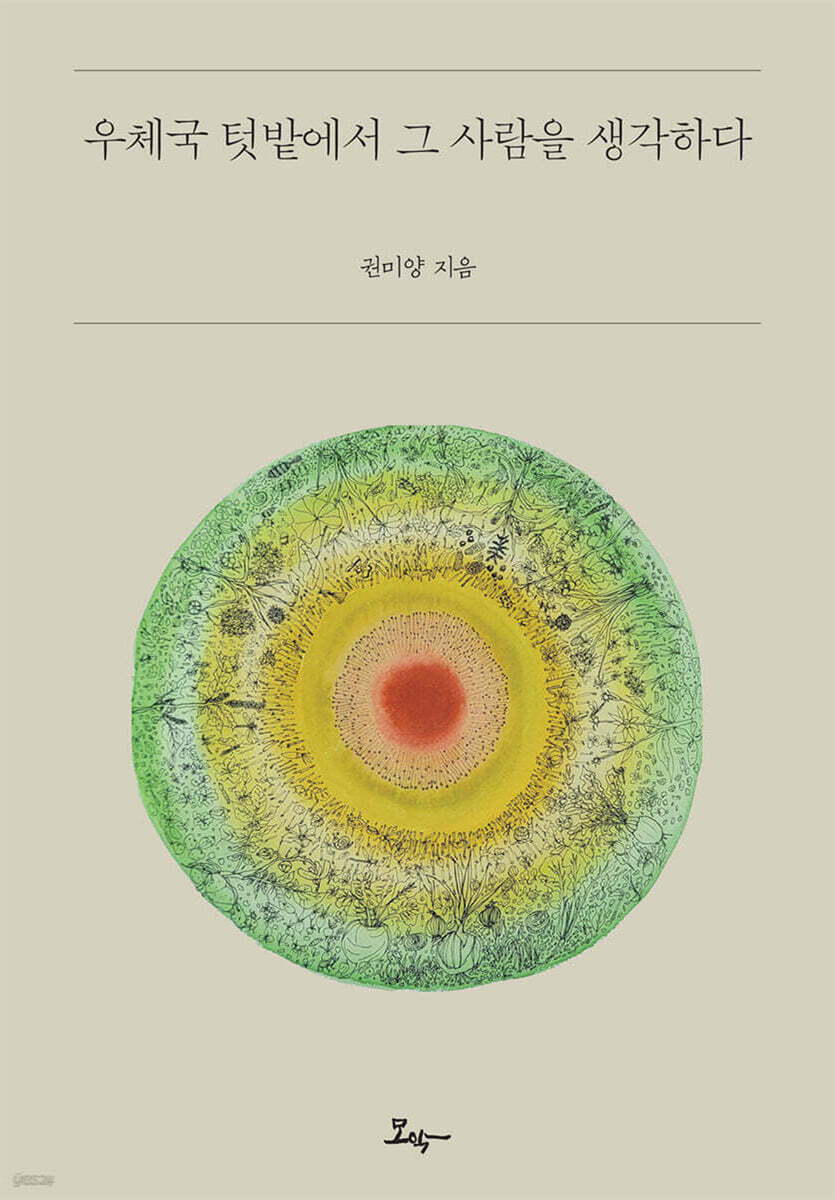 |
Description
Book Introduction
“A collection of essays filled with life wisdom and lessons from crops!”
“A sentence of love and respect for life born from vivid experience!”
The crops and people I loved
"Thinking of Him in the Post Office Garden" is the first collection of essays by Kwon Mi-yang, a children's literature writer and postmaster.
Author Kwon Mi-yang meticulously portrays the beautiful moments she spent with local residents while growing crops in the post office garden.
"Thinking of Him in the Post Office Garden" is a book that makes us reflect on our lives through detailed records of 28 crops grown by the author himself.
A fascinating story unfolds about crops essential to humans and people essential to writers.
Part 1, “Emptying the Head,” features the post office garden crops and the people of Moksa-dong who warmly welcomed the author when he moved to Gokseong, Jeollanam-do. Part 2, “Building Hands,” features the joys and sorrows of full-scale gardening and the people of Daehwanggang who joined together in the village community. Part 3, “Growing the Heart,” features the story of growing crops that saved poverty and the women in the life of author Kwon Mi-yang. Part 4, “Harvesting Pears,” features the author’s family’s favorite crops and the tiki-taka that blossoms within them. Part 5, “Dreaming Bridges,” features crops used as ingredients for kimchi and the people of Seomjin River sharing food.
“A sentence of love and respect for life born from vivid experience!”
The crops and people I loved
"Thinking of Him in the Post Office Garden" is the first collection of essays by Kwon Mi-yang, a children's literature writer and postmaster.
Author Kwon Mi-yang meticulously portrays the beautiful moments she spent with local residents while growing crops in the post office garden.
"Thinking of Him in the Post Office Garden" is a book that makes us reflect on our lives through detailed records of 28 crops grown by the author himself.
A fascinating story unfolds about crops essential to humans and people essential to writers.
Part 1, “Emptying the Head,” features the post office garden crops and the people of Moksa-dong who warmly welcomed the author when he moved to Gokseong, Jeollanam-do. Part 2, “Building Hands,” features the joys and sorrows of full-scale gardening and the people of Daehwanggang who joined together in the village community. Part 3, “Growing the Heart,” features the story of growing crops that saved poverty and the women in the life of author Kwon Mi-yang. Part 4, “Harvesting Pears,” features the author’s family’s favorite crops and the tiki-taka that blossoms within them. Part 5, “Dreaming Bridges,” features crops used as ingredients for kimchi and the people of Seomjin River sharing food.
index
Part 1 Head, Empty
There was a garden there / Donggulre, the bell rings / Ttungtanji, sunflowers! / Cassia tora, you instead of weeds / Toran, resembles a monk
Part 2 Hands, Building
People of the Daehwang River / Lettuce and Mugwort, Eating the Five Senses / Cucumbers and Eggplants, Purple Dreams / Marigolds and Peppers, Connecting People and Nature / Aralia, Queen of Wild Vegetables / Fate
Part 3: Chest, Cultivation
Women in My Life / Azucari, Neat Love / Perilla, Mother's Smell / Sweet Potato, Life Going Sideways / Turnip, Eat the Leaves, Eat the Roots / Corn, Just Look at Me / It's by Your Side
Part 4, harvest
Men in My Life / Mu, I am Zhuge Wuhou / Green Onions and Chives, Now at War / Peanuts, I Love You / Potatoes, Lucky Baguettes / Cherry Tomatoes, So Pretty / Family Fills Me Up
Part 5 Bridge, Dreaming
People of Seomjin River / Native chives, always there / The three cabbage brothers, a new foreign thing / Cabbage, ascending to the pawn shop / Garlic and onion, reborn / Love continues
There was a garden there / Donggulre, the bell rings / Ttungtanji, sunflowers! / Cassia tora, you instead of weeds / Toran, resembles a monk
Part 2 Hands, Building
People of the Daehwang River / Lettuce and Mugwort, Eating the Five Senses / Cucumbers and Eggplants, Purple Dreams / Marigolds and Peppers, Connecting People and Nature / Aralia, Queen of Wild Vegetables / Fate
Part 3: Chest, Cultivation
Women in My Life / Azucari, Neat Love / Perilla, Mother's Smell / Sweet Potato, Life Going Sideways / Turnip, Eat the Leaves, Eat the Roots / Corn, Just Look at Me / It's by Your Side
Part 4, harvest
Men in My Life / Mu, I am Zhuge Wuhou / Green Onions and Chives, Now at War / Peanuts, I Love You / Potatoes, Lucky Baguettes / Cherry Tomatoes, So Pretty / Family Fills Me Up
Part 5 Bridge, Dreaming
People of Seomjin River / Native chives, always there / The three cabbage brothers, a new foreign thing / Cabbage, ascending to the pawn shop / Garlic and onion, reborn / Love continues
Publisher's Review
Life wisdom learned in the garden
In "Thinking of Him in the Post Office Garden," the author kindly explains the characteristics of crops that he discovered through long-term observation.
Based on that characteristic, we reinterpret our lives.
The azuki bean continues to grow leaves no matter how much you pick it, and the countless sesame seeds it contains give us a fragrant aroma.
Even if you plant mugwort plants densely in a small space, they don't complain of pain and quietly bloom with a smile.
Corn, beans, and pumpkins grow well together when planted together.
Kohlrabi, which was harvested late due to greed to grow more, has hard cores and is inedible.
The tomatoes that were watered every day because they were pretty became infected with soft rot and became food for bugs.
A garden thrives when crops with different characteristics grow together.
The same goes for people.
I can't live alone.
We can live well only when we live together with our family and neighbors, emptying ourselves of greed and giving and receiving appropriate attention and love.
The author says that a garden is like a mother who embraces everything and gives generously.
Crops growing in their mother's arms gather sunlight and grow endlessly underground in search of water.
The garden doesn't scold you if you do something wrong, it waits for you.
The wisdom and lessons of life learned while tending the garden are permeated throughout this book.
A garden filled with love and care
They say you can tell the energy of a house by looking at the plants it grows.
It is said that crops grow by listening to the sound of their owner's footsteps.
If you have a deep interest and affection for plants, they will grow well.
The garden, which was initially about ten pyeong, grew to twenty pyeong the following year, and thirty pyeong the year after that.
The number of crops increased from three to four to over thirty.
The reason the garden was able to develop in this way was solely due to the author's love and sincerity.
Author Kwon Mi-yang respects each and every crop she encounters in her garden as a living organism.
The author's profound heart is clearly revealed in the scene where he conveys the clumsiness and regret of a novice farmer through a letter and shares peanuts with a magpie that came to steal them.
In "Thinking of Him in the Post Office Garden," the author introduces the origins and benefits of crops learned while tending the garden in an easy-to-understand manner.
It is full of various information that can be used immediately in daily life, such as making tea with burdock, dyeing with marigold flowers, making kimchi with turnips, and cutting various types of onions.
The artist's detailed drawings help us better understand the characteristics of the 28 crops.
Kwon Mi-yang's "Thinking of Him in the Post Office Garden" is not a simple essay on life, but a very special book that makes us reflect on the meaning of life by providing various information about the characteristics of crops and how to use them.
Author's Note
“Just as the post office garden accepted and nurtured me, my path follows the Daehwang River.
Now we have entered the Seomjin River.
My future garden is located in a place overlooking the Seomjin River.
Plum trees, persimmon trees, chestnut trees, and hydrangeas are already growing here.
In spring, we will see plum blossoms and in fall, we will make dried persimmons.
Water flows constantly beneath the garden.
The streams that start from Tapseon Village gather and flow into the Seomjin River.
It will serve as a foundation for going out into the wider world.
“Just as the post office garden gave me incredible strength, I will unfold my dreams in the garden of the future.”
In "Thinking of Him in the Post Office Garden," the author kindly explains the characteristics of crops that he discovered through long-term observation.
Based on that characteristic, we reinterpret our lives.
The azuki bean continues to grow leaves no matter how much you pick it, and the countless sesame seeds it contains give us a fragrant aroma.
Even if you plant mugwort plants densely in a small space, they don't complain of pain and quietly bloom with a smile.
Corn, beans, and pumpkins grow well together when planted together.
Kohlrabi, which was harvested late due to greed to grow more, has hard cores and is inedible.
The tomatoes that were watered every day because they were pretty became infected with soft rot and became food for bugs.
A garden thrives when crops with different characteristics grow together.
The same goes for people.
I can't live alone.
We can live well only when we live together with our family and neighbors, emptying ourselves of greed and giving and receiving appropriate attention and love.
The author says that a garden is like a mother who embraces everything and gives generously.
Crops growing in their mother's arms gather sunlight and grow endlessly underground in search of water.
The garden doesn't scold you if you do something wrong, it waits for you.
The wisdom and lessons of life learned while tending the garden are permeated throughout this book.
A garden filled with love and care
They say you can tell the energy of a house by looking at the plants it grows.
It is said that crops grow by listening to the sound of their owner's footsteps.
If you have a deep interest and affection for plants, they will grow well.
The garden, which was initially about ten pyeong, grew to twenty pyeong the following year, and thirty pyeong the year after that.
The number of crops increased from three to four to over thirty.
The reason the garden was able to develop in this way was solely due to the author's love and sincerity.
Author Kwon Mi-yang respects each and every crop she encounters in her garden as a living organism.
The author's profound heart is clearly revealed in the scene where he conveys the clumsiness and regret of a novice farmer through a letter and shares peanuts with a magpie that came to steal them.
In "Thinking of Him in the Post Office Garden," the author introduces the origins and benefits of crops learned while tending the garden in an easy-to-understand manner.
It is full of various information that can be used immediately in daily life, such as making tea with burdock, dyeing with marigold flowers, making kimchi with turnips, and cutting various types of onions.
The artist's detailed drawings help us better understand the characteristics of the 28 crops.
Kwon Mi-yang's "Thinking of Him in the Post Office Garden" is not a simple essay on life, but a very special book that makes us reflect on the meaning of life by providing various information about the characteristics of crops and how to use them.
Author's Note
“Just as the post office garden accepted and nurtured me, my path follows the Daehwang River.
Now we have entered the Seomjin River.
My future garden is located in a place overlooking the Seomjin River.
Plum trees, persimmon trees, chestnut trees, and hydrangeas are already growing here.
In spring, we will see plum blossoms and in fall, we will make dried persimmons.
Water flows constantly beneath the garden.
The streams that start from Tapseon Village gather and flow into the Seomjin River.
It will serve as a foundation for going out into the wider world.
“Just as the post office garden gave me incredible strength, I will unfold my dreams in the garden of the future.”
GOODS SPECIFICS
- Date of issue: November 28, 2025
- Page count, weight, size: 240 pages | 140*200*20mm
- ISBN13: 9791188071814
- ISBN10: 1188071815
You may also like
카테고리
korean


korean

![GQ KOREA Mark (Monthly): December [2025]](http://librairie.coreenne.fr/cdn/shop/files/8ef265dbbfbf186523ed75ba7319009d.jpg?v=1765340328&width=3840)


