

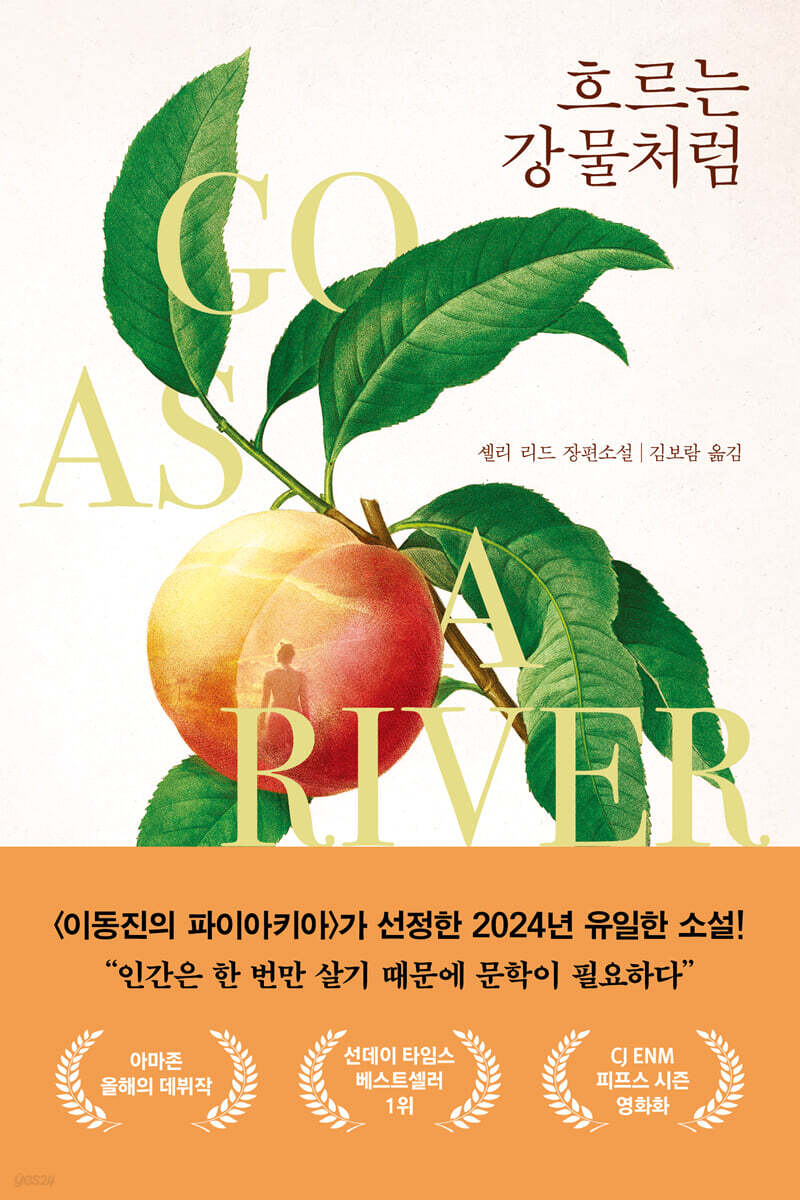
Like a flowing river
 |
Description
Book Introduction
"This story is a breathtaking, thrilling 'journey of love.'" - Kwak A-ram (Reporter, Writer)
In the face of loss that uproots life
On living with resilience that resembles nature
Sunday Times #1 Bestseller
Amazon Debut of the Year
CJ ENM's Fifth Season film adaptation
Published in 34 languages
A remarkable debut about human resilience against the waves of fate.
A next-generation modern classic following "Where the Crayfish Sing" and "Stoner."
A beautiful novel, "Like a Flowing River," which offers an answer to the question of how humans should view their fate and live, has been published by Dasan Books.
This novel was a debut work that local American publishers had predicted from the beginning would become a masterpiece following Where the Crawdads Sing.
In a letter to the author, the publisher said:
“We are hungry for great books.
He expressed his expectations, saying, “Like a River Flowing Through It” will undoubtedly become a masterpiece, will captivate book clubs around the world, and will be loved and talked about on radio and screen.”
As if to put those words into practice, 『Like a Flowing River』 was sold in advance to 17 countries even though only the manuscript was released before publication, and after its official publication, it was exported to a total of 34 countries.
It was a Sunday Times bestseller, Amazon's 2023 Debut Book of the Year, and was recommended by leading media outlets such as The Times, The Guardian, Kirkus, and Real Simple.
Additionally, it is set to be made into a movie by Fifth Season, a local American production company under CJ ENM.
This novel is the story of a seventeen-year-old girl who thought she was nothing, but who goes through the chrysalis stage, enduring the joys of love and the pain of loss with her whole body, and finally becomes a butterfly.
The protagonist, who survives with an irresistible resilience learned from nature that does not look back, ultimately reaps fruits that no one can take away.
There are truths and values that do not change even as time passes and places change.
Wherever humans live, we can reach a common understanding of what the saying, “Live like a flowing river,” means.
This novel depicts a historical event in Colorado in the 1970s, when the area actually submerged and disappeared underwater. However, no matter where or when the location and time change, readers will find fragments of their own lives there.
Like the idiom 'Go as a River', which means the same thing no matter how many languages you speak.
In the face of loss that uproots life
On living with resilience that resembles nature
Sunday Times #1 Bestseller
Amazon Debut of the Year
CJ ENM's Fifth Season film adaptation
Published in 34 languages
A remarkable debut about human resilience against the waves of fate.
A next-generation modern classic following "Where the Crayfish Sing" and "Stoner."
A beautiful novel, "Like a Flowing River," which offers an answer to the question of how humans should view their fate and live, has been published by Dasan Books.
This novel was a debut work that local American publishers had predicted from the beginning would become a masterpiece following Where the Crawdads Sing.
In a letter to the author, the publisher said:
“We are hungry for great books.
He expressed his expectations, saying, “Like a River Flowing Through It” will undoubtedly become a masterpiece, will captivate book clubs around the world, and will be loved and talked about on radio and screen.”
As if to put those words into practice, 『Like a Flowing River』 was sold in advance to 17 countries even though only the manuscript was released before publication, and after its official publication, it was exported to a total of 34 countries.
It was a Sunday Times bestseller, Amazon's 2023 Debut Book of the Year, and was recommended by leading media outlets such as The Times, The Guardian, Kirkus, and Real Simple.
Additionally, it is set to be made into a movie by Fifth Season, a local American production company under CJ ENM.
This novel is the story of a seventeen-year-old girl who thought she was nothing, but who goes through the chrysalis stage, enduring the joys of love and the pain of loss with her whole body, and finally becomes a butterfly.
The protagonist, who survives with an irresistible resilience learned from nature that does not look back, ultimately reaps fruits that no one can take away.
There are truths and values that do not change even as time passes and places change.
Wherever humans live, we can reach a common understanding of what the saying, “Live like a flowing river,” means.
This novel depicts a historical event in Colorado in the 1970s, when the area actually submerged and disappeared underwater. However, no matter where or when the location and time change, readers will find fragments of their own lives there.
Like the idiom 'Go as a River', which means the same thing no matter how many languages you speak.
- You can preview some of the book's contents.
Preview
index
prolog
Part 1 1948–1955
Part 2 1949–1955
Part 3 1955–1970
Part 4 1949–1970
Part 5 1970-1971
Author's Note
Author Interview
A Guide to Reading Groups for Readers
Part 1 1948–1955
Part 2 1949–1955
Part 3 1955–1970
Part 4 1949–1970
Part 5 1970-1971
Author's Note
Author Interview
A Guide to Reading Groups for Readers
Detailed image

Into the book
“There are more people like Seth than stars in the night sky.”
It was a reply that contained the intention of not listening to me and of reassuring me.
But instead of feeling relieved, my anxiety only grew.
That's because Will's words were undeniable.
Wherever Will went after leaving this place, wouldn't he find someone like Seth? Where wouldn't he find someone as wrathful as Seth, someone who would harass him simply because he was dark? Will had no intention of running away.
“I will live like a flowing river.
My grandfather always did that.
“That’s the only way.”
--- p.143
Before coming to the mountain hut, when I lived in a farmhouse, I had to cover my ears to sleep.
One day, Seth and his uncle would argue downstairs, or Seth would be out in the yard, starting the roadster.
Whenever that happens, the drunken Seth gang will invariably start screaming.
Thinking back to that time, something I had been trying to forget came to mind.
There have been several times when I've been woken up in the middle of the night by the sound of my bedroom doorknob rattling.
Whether it was because of a bet, a mad desire, or a blindness of a sly insidiousness, it was probably Seth's friend.
No, maybe it was Seth.
The sound of the doorknob rattling was followed by the sound of footsteps.
Only when the sound of shuffling footsteps, as if disappointed by the locked door, slowly faded away did I finally calm my heart.
When I slept in my forest home, adorned with a vast and mystical tapestry, all I could hear was the beating heart of the forest, the countless lives around me breathing in and out, breathing with me.
It was the first time in my life that I wasn't afraid of the night.
--- p.188
There is a sadness in the world that goes beyond sadness, a sadness that seeps into even the smallest cracks like boiling syrup.
Because that kind of sadness starts in the heart and permeates every cell and every blood vessel, once that kind of sadness hits, everything changes.
You will no longer be able to look at the earth, the sky, or even your own palm with the same eyes as before.
It is a sorrow that truly changes the world.
I thought I had already experienced such sadness, a sadness deeper than anything else.
The experience of losing my beloved Aunt Viv, my brother Cal, and my mother left a huge hole in the intricate tapestry of my happy childhood.
It really was like that.
But the words written in my mother's Bible and the reality of what I had to do told me that I absolutely had to mend that hole.
I was naive and young, so I accepted the realistic answer and lived according to the teachings of reality.
I swallowed the huge lump of sadness as if I were swallowing a solid piece of charcoal.
And that sadness remained in my stomach.
The day he went to Chapman's, he overheard the sad news that Will had died horribly, but he didn't pick up a kitchen knife and attack Seth to seek revenge.
Even then, I obediently cooked and washed the dishes, silently cared for Abel and cleaned the chicken coop while shedding tears without anyone knowing.
I just kept moving my hands diligently.
Then she ran away to the mountains, prepared to give birth, gave birth, and survived.
The overwhelming sadness tried to take me away, but it never succeeded.
--- p.209~210
All this time, I constantly looked back and doubted my past choices.
But our lives must pass through the present before the next unfolds.
Therefore, we must walk into the space that unfolds before our eyes, even without a map or invitation.
That was the truth Will taught me, the Gunnison River taught me, and Big Blue, where I'd faced countless life-or-death crossroads, had taught me time and time again.
--- p.281
I was going to leave the past behind and start anew.
I didn't expect a miracle.
I just hoped the new soil would be strong enough.
If my uprooted trees could survive all kinds of hardships in their new home, I figured I could survive all kinds of damned misfortunes, too.
--- p.284
Resilience is like a forest made of small victories and infinite mistakes, a forest where the storm that knocks everything down passes and the sun shines through.
We fall, we get pushed, and we get up again.
And we grow by putting together unpredictable pieces, hoping for the best.
It was a reply that contained the intention of not listening to me and of reassuring me.
But instead of feeling relieved, my anxiety only grew.
That's because Will's words were undeniable.
Wherever Will went after leaving this place, wouldn't he find someone like Seth? Where wouldn't he find someone as wrathful as Seth, someone who would harass him simply because he was dark? Will had no intention of running away.
“I will live like a flowing river.
My grandfather always did that.
“That’s the only way.”
--- p.143
Before coming to the mountain hut, when I lived in a farmhouse, I had to cover my ears to sleep.
One day, Seth and his uncle would argue downstairs, or Seth would be out in the yard, starting the roadster.
Whenever that happens, the drunken Seth gang will invariably start screaming.
Thinking back to that time, something I had been trying to forget came to mind.
There have been several times when I've been woken up in the middle of the night by the sound of my bedroom doorknob rattling.
Whether it was because of a bet, a mad desire, or a blindness of a sly insidiousness, it was probably Seth's friend.
No, maybe it was Seth.
The sound of the doorknob rattling was followed by the sound of footsteps.
Only when the sound of shuffling footsteps, as if disappointed by the locked door, slowly faded away did I finally calm my heart.
When I slept in my forest home, adorned with a vast and mystical tapestry, all I could hear was the beating heart of the forest, the countless lives around me breathing in and out, breathing with me.
It was the first time in my life that I wasn't afraid of the night.
--- p.188
There is a sadness in the world that goes beyond sadness, a sadness that seeps into even the smallest cracks like boiling syrup.
Because that kind of sadness starts in the heart and permeates every cell and every blood vessel, once that kind of sadness hits, everything changes.
You will no longer be able to look at the earth, the sky, or even your own palm with the same eyes as before.
It is a sorrow that truly changes the world.
I thought I had already experienced such sadness, a sadness deeper than anything else.
The experience of losing my beloved Aunt Viv, my brother Cal, and my mother left a huge hole in the intricate tapestry of my happy childhood.
It really was like that.
But the words written in my mother's Bible and the reality of what I had to do told me that I absolutely had to mend that hole.
I was naive and young, so I accepted the realistic answer and lived according to the teachings of reality.
I swallowed the huge lump of sadness as if I were swallowing a solid piece of charcoal.
And that sadness remained in my stomach.
The day he went to Chapman's, he overheard the sad news that Will had died horribly, but he didn't pick up a kitchen knife and attack Seth to seek revenge.
Even then, I obediently cooked and washed the dishes, silently cared for Abel and cleaned the chicken coop while shedding tears without anyone knowing.
I just kept moving my hands diligently.
Then she ran away to the mountains, prepared to give birth, gave birth, and survived.
The overwhelming sadness tried to take me away, but it never succeeded.
--- p.209~210
All this time, I constantly looked back and doubted my past choices.
But our lives must pass through the present before the next unfolds.
Therefore, we must walk into the space that unfolds before our eyes, even without a map or invitation.
That was the truth Will taught me, the Gunnison River taught me, and Big Blue, where I'd faced countless life-or-death crossroads, had taught me time and time again.
--- p.281
I was going to leave the past behind and start anew.
I didn't expect a miracle.
I just hoped the new soil would be strong enough.
If my uprooted trees could survive all kinds of hardships in their new home, I figured I could survive all kinds of damned misfortunes, too.
--- p.284
Resilience is like a forest made of small victories and infinite mistakes, a forest where the storm that knocks everything down passes and the sun shines through.
We fall, we get pushed, and we get up again.
And we grow by putting together unpredictable pieces, hoping for the best.
--- p.416
Publisher's Review
“I will live like a flowing river.
“Because that’s the only way to live in this world.”
Seventeen-year-old Victoria lives in the famously sweet peach orchard of Nash.
Growing up with nowhere to turn, between her callous father, her abusive younger brother, and her twisted, disabled veteran uncle, Victoria falls in love with a stranger, Will, and learns what it means to be cared for and how courageous love can make a person.
But the happiness is short-lived, as Will is ostracized from the village because of his unfamiliar skin color, and his skin is found peeled off and dumped in a ravine.
Victoria instinctively senses that her younger brother, who usually threatens Will, is behind this, but she is endlessly frustrated by her inability to do anything.
Meanwhile, with a baby growing inside her, Victoria flees to the top of a barren, uninhabited mountain to save the baby.
Victoria, who had given birth alone and was surviving on a limited supply of food and raspberries, witnesses a newlywed couple having a picnic in the forest.
Victoria, who saw a mother who was producing milk unlike herself who was malnourished, puts the baby in the car without even having time to pat the back of the baby's head for the last time.
When he returned home, almost out of his mind, his younger brother and uncle had left the house without a woman to take care of the household chores, leaving his father to fight the illness alone.
Victoria, who was present at her father's deathbed, vows to protect the peaches her father left behind, even though she was unable to protect anyone she loved.
Meanwhile, a rumor was going around that the river would be dammed and the village would be filled with a reservoir… … .
Will Eunuch Peach and Victoria, who have arrived in the new land, be able to enjoy the sweet fruit?
Once a village, now rotting beneath a reservoir,
An autobiographical novel set in a quietly forgotten hometown
Author Shelley Reed is a fifth-generation Colorado immigrant who grew up with the vast lands and mountains depicted in the novel as her backyard.
Victoria's hometown of Iola, which was submerged in water in "A River Runs Through It," was actually submerged in water in the 1970s due to land development by the U.S. government.
The author witnessed the process of a barren landscape from his childhood being transformed into a village by the hands of western pioneers, and then a neighboring village being submerged in water by human hands.
He later became an educator at the University of Western Colorado, where he founded a major in environmental and sustainability and runs support programs for immigrants.
『Like a Flowing River』 is filled with the author's reflections on nature and humanity, drawn from his own experiences, adding depth and credibility.
In the author's view, a good migration is one that harmoniously blends with the nature and relationships of the place and then bears fruit that no one can take away.
Victoria's life was also harsh and helpless in the beginning.
She lost her lover because of her younger brother, who only knew violence as a form of communication, lost her baby in the wilderness where she ran away in fear, and lost her father by the laws of nature.
But in the process of losing those he loved one by one, he does not break down, but instead becomes stronger.
Because I went looking for land where I could put down roots.
Victoria has the pride to ask scientists for help, believing in the quality of the peaches her family has preserved for generations, and has the determination to cut off even her younger brother if he threatens her safety.
Her love for nature and the weak, which expanded from her self-love, expands again into a love for the world, and thus Victoria proves through her life's journey that hardship can only be overcome with love, not hatred.
This is not much different from the process by which mankind has pioneered new lands or new lives.
A person who accepts pain and lets go of anger,
Only those who have a love stronger than hatred will bear fruit.
Despite Victoria's incredibly strange fate, A River Runs Through It is full of beautiful passages that make you nod your head, both persuasively and aesthetically.
These are sentences that say that because time in life does not flow backwards but only forwards, we must endure and let the pain flow without resentment or escape, no matter what pain we face.
“Our lives must pass through the present before the next unfolds.
“Even without a map or invitation, you must walk into the space that unfolds before your eyes,” “You will leave the past behind and start anew.
I didn't expect a miracle.
Sentences like “I just hoped the new soil would be strong enough” are so solid and deep that you wouldn’t think they came from a small, delicate girl.
Like a flowing river, like a towering mountain range, like an endless sky, Victoria is resilient and has learned tenacity and resilience from nature.
At the end of every story, Victoria is a thousand times more deeply rooted in the truth of life than she was in her innocent days, unaware of any hardships.
Readers of "Like a Flowing River" will also gain courage and hope that if they can live like nature, there will be little to truly fear in life.
“Because that’s the only way to live in this world.”
Seventeen-year-old Victoria lives in the famously sweet peach orchard of Nash.
Growing up with nowhere to turn, between her callous father, her abusive younger brother, and her twisted, disabled veteran uncle, Victoria falls in love with a stranger, Will, and learns what it means to be cared for and how courageous love can make a person.
But the happiness is short-lived, as Will is ostracized from the village because of his unfamiliar skin color, and his skin is found peeled off and dumped in a ravine.
Victoria instinctively senses that her younger brother, who usually threatens Will, is behind this, but she is endlessly frustrated by her inability to do anything.
Meanwhile, with a baby growing inside her, Victoria flees to the top of a barren, uninhabited mountain to save the baby.
Victoria, who had given birth alone and was surviving on a limited supply of food and raspberries, witnesses a newlywed couple having a picnic in the forest.
Victoria, who saw a mother who was producing milk unlike herself who was malnourished, puts the baby in the car without even having time to pat the back of the baby's head for the last time.
When he returned home, almost out of his mind, his younger brother and uncle had left the house without a woman to take care of the household chores, leaving his father to fight the illness alone.
Victoria, who was present at her father's deathbed, vows to protect the peaches her father left behind, even though she was unable to protect anyone she loved.
Meanwhile, a rumor was going around that the river would be dammed and the village would be filled with a reservoir… … .
Will Eunuch Peach and Victoria, who have arrived in the new land, be able to enjoy the sweet fruit?
Once a village, now rotting beneath a reservoir,
An autobiographical novel set in a quietly forgotten hometown
Author Shelley Reed is a fifth-generation Colorado immigrant who grew up with the vast lands and mountains depicted in the novel as her backyard.
Victoria's hometown of Iola, which was submerged in water in "A River Runs Through It," was actually submerged in water in the 1970s due to land development by the U.S. government.
The author witnessed the process of a barren landscape from his childhood being transformed into a village by the hands of western pioneers, and then a neighboring village being submerged in water by human hands.
He later became an educator at the University of Western Colorado, where he founded a major in environmental and sustainability and runs support programs for immigrants.
『Like a Flowing River』 is filled with the author's reflections on nature and humanity, drawn from his own experiences, adding depth and credibility.
In the author's view, a good migration is one that harmoniously blends with the nature and relationships of the place and then bears fruit that no one can take away.
Victoria's life was also harsh and helpless in the beginning.
She lost her lover because of her younger brother, who only knew violence as a form of communication, lost her baby in the wilderness where she ran away in fear, and lost her father by the laws of nature.
But in the process of losing those he loved one by one, he does not break down, but instead becomes stronger.
Because I went looking for land where I could put down roots.
Victoria has the pride to ask scientists for help, believing in the quality of the peaches her family has preserved for generations, and has the determination to cut off even her younger brother if he threatens her safety.
Her love for nature and the weak, which expanded from her self-love, expands again into a love for the world, and thus Victoria proves through her life's journey that hardship can only be overcome with love, not hatred.
This is not much different from the process by which mankind has pioneered new lands or new lives.
A person who accepts pain and lets go of anger,
Only those who have a love stronger than hatred will bear fruit.
Despite Victoria's incredibly strange fate, A River Runs Through It is full of beautiful passages that make you nod your head, both persuasively and aesthetically.
These are sentences that say that because time in life does not flow backwards but only forwards, we must endure and let the pain flow without resentment or escape, no matter what pain we face.
“Our lives must pass through the present before the next unfolds.
“Even without a map or invitation, you must walk into the space that unfolds before your eyes,” “You will leave the past behind and start anew.
I didn't expect a miracle.
Sentences like “I just hoped the new soil would be strong enough” are so solid and deep that you wouldn’t think they came from a small, delicate girl.
Like a flowing river, like a towering mountain range, like an endless sky, Victoria is resilient and has learned tenacity and resilience from nature.
At the end of every story, Victoria is a thousand times more deeply rooted in the truth of life than she was in her innocent days, unaware of any hardships.
Readers of "Like a Flowing River" will also gain courage and hope that if they can live like nature, there will be little to truly fear in life.
GOODS SPECIFICS
- Date of issue: January 8, 2024
- Page count, weight, size: 450 pages | 678g | 140*212*30mm
- ISBN13: 9791130649672
- ISBN10: 1130649679
You may also like
카테고리
korean


korean

![ELLE 엘르 스페셜 에디션 A형 : 12월 [2025]](http://librairie.coreenne.fr/cdn/shop/files/b8e27a3de6c9538896439686c6b0e8fb.jpg?v=1766436872&width=3840)


