

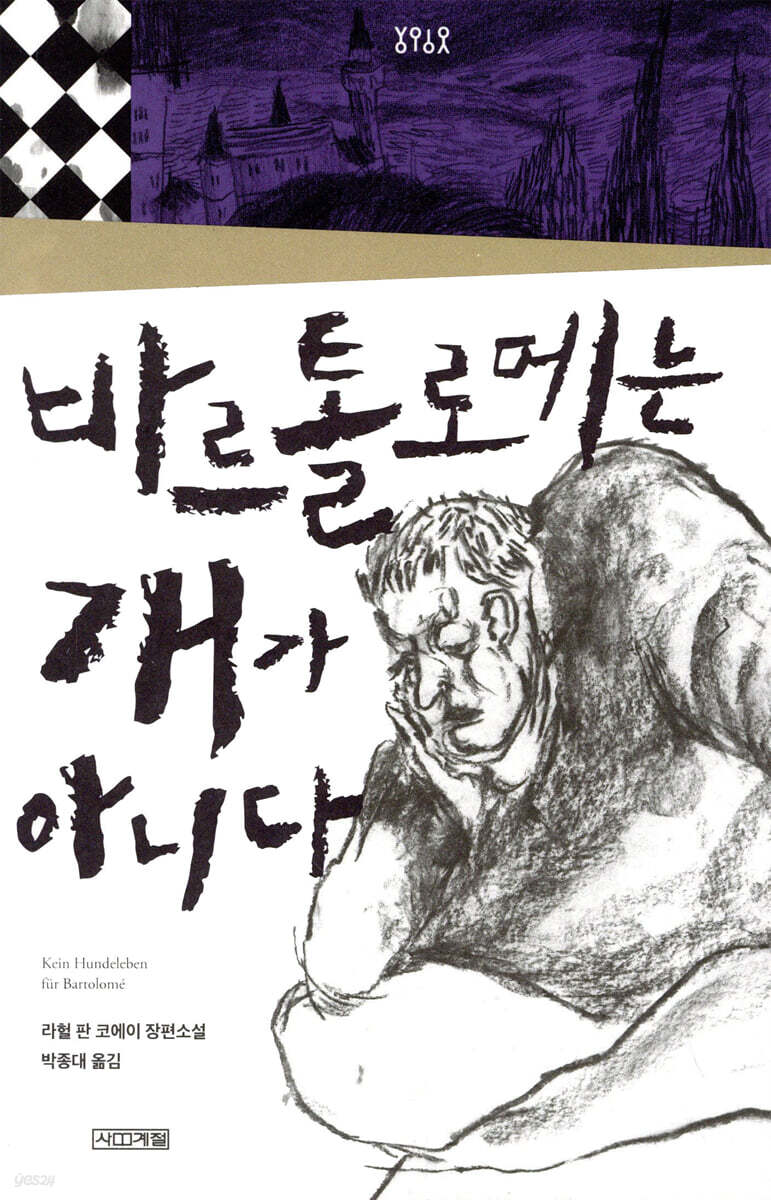
Bartolomeo is not a dog
 |
Description
Book Introduction
The princess's human dog decides to become human.
The story of a small and great man, inspired by Velazquez's masterpiece.
Bartolome is Not a Dog is an Austrian novel written by Rachel van Goethe and set in 17th-century Spain.
『Bartolomeo is not a dog』 is a so-called faction-style work that combines historical facts with fictional imagination.
Velazquez's [Las Meninas], which served as a clue to this book, is a painting centered around Princess Margarita of King Philip IV of Spain, along with her maids and pageants.
The author leads the work by establishing that the dog in this painting is actually the dwarf Bartolomeo, who served as the princess's human dog.
The author's amazing literary imagination takes us back to the streets of Spain at that time, and makes us think again about human dignity.
'Yolo Yolo' is a new literary brand presented by Sageseul Publishing for 'today's readers' to commemorate its 35th anniversary.
YOLOYOLO is a literary brand that will provide encouragement and comfort to all readers who are navigating these difficult times, sometimes joyfully and sometimes tearfully, by shouting, "YOLO, you only live once."
YOLOYOLO was designed and illustrated by artists from PaTI (Paju Typography Institute), a design school founded by designer Sangsoo Ahn, and Jin-kyung Oh, the director of Party Publishing Design Research Institute, was in charge of the overall art direction.
From sensational illustrations to covers that hide the title and even unfold into a poster, the book design, which takes into account the tastes and preferences of the new generation, is enough to arouse readers' desire to own it.
The story of a small and great man, inspired by Velazquez's masterpiece.
Bartolome is Not a Dog is an Austrian novel written by Rachel van Goethe and set in 17th-century Spain.
『Bartolomeo is not a dog』 is a so-called faction-style work that combines historical facts with fictional imagination.
Velazquez's [Las Meninas], which served as a clue to this book, is a painting centered around Princess Margarita of King Philip IV of Spain, along with her maids and pageants.
The author leads the work by establishing that the dog in this painting is actually the dwarf Bartolomeo, who served as the princess's human dog.
The author's amazing literary imagination takes us back to the streets of Spain at that time, and makes us think again about human dignity.
'Yolo Yolo' is a new literary brand presented by Sageseul Publishing for 'today's readers' to commemorate its 35th anniversary.
YOLOYOLO is a literary brand that will provide encouragement and comfort to all readers who are navigating these difficult times, sometimes joyfully and sometimes tearfully, by shouting, "YOLO, you only live once."
YOLOYOLO was designed and illustrated by artists from PaTI (Paju Typography Institute), a design school founded by designer Sangsoo Ahn, and Jin-kyung Oh, the director of Party Publishing Design Research Institute, was in charge of the overall art direction.
From sensational illustrations to covers that hide the title and even unfold into a poster, the book design, which takes into account the tastes and preferences of the new generation, is enough to arouse readers' desire to own it.
- You can preview some of the book's contents.
Preview
index
Part 1
Bartolome / Homecoming / Madrid / Departure / Water Mill / Torre de la Parada Castle / Arrival / New House / El Primo / Friar Cristóbal / Secret Plan / Reading and Writing / Books / Pawnshop / Pen and Ink / Joaquin Departs / Juana's Plan / Accident / Return Home / Separation
Part 2
Alcazar Palace / Human Dog / Training / Princess / Friendship / Heaven and Hell / Bullfight / Painting / Masterpiece / Painting Model / Dream of the Future / Puppy / Andres / Magic
Translator's Note
Bartolome / Homecoming / Madrid / Departure / Water Mill / Torre de la Parada Castle / Arrival / New House / El Primo / Friar Cristóbal / Secret Plan / Reading and Writing / Books / Pawnshop / Pen and Ink / Joaquin Departs / Juana's Plan / Accident / Return Home / Separation
Part 2
Alcazar Palace / Human Dog / Training / Princess / Friendship / Heaven and Hell / Bullfight / Painting / Masterpiece / Painting Model / Dream of the Future / Puppy / Andres / Magic
Translator's Note
Detailed image

Publisher's Review
The meeting of historical fact and fiction
It can be said that "Bartolome is not a dog" was inspired by the masterpiece "Las Meninas" by Velazquez, a representative Spanish painter of the 17th century.
Diego Velázquez is considered a representative Spanish painter of the 17th century and a major pioneer of 19th-century French Impressionism.
He is still highly regarded today as a key figure in the boldness of 20th-century art.
"Las Meninas," considered his masterpiece, is a painting featuring Princess Margarita of Spain, King Philip IV, and her maids and pageants.
The author established that the dog in the painting was actually a dwarf named Bartolome, who served as the princess's human dog.
This book also features Cervantes, a representative writer of 17th-century Spain.
The book that Bartolomeo uses as a textbook when learning to read is 『Don Quixote』.
In this section, readers can naturally and humorously guess the author's thoughts on Cervantes's world of works and satire on the world.
Until Bartolomeo appeared in "The Maids of Honor"
Bartolome is the only hunchbacked dwarf among his father Juan, mother Isabel, and other siblings. From a young age, he was teased by the neighborhood children and was not treated as a human being.
When the father becomes a palace coachman, the family moves near the Royal Palace in Madrid.
At his father's orders, Bartolomeo is forced to move like a piece of luggage, hiding in a wooden chest to avoid being noticed by people.
As Bartolome begins his new life in Madrid, his only hope is the Bible verse that Father Rodriques from his hometown told him: “Jesus said, ‘The first will be last, and the last will be first.’”
After arriving in Madrid, Bartolome, who had been staying at home and pretending not to be there, receives good news one day.
His older brother Joaquin, who was working as a baker, said that the royal secretary El Primo was a dwarf and that Bartolomeo would become a great man if he could read and write.
Bartolomeo, who kept it a secret from his father and learned to read and write from Father Cristobal with the help of other family members, discovered that he had a natural talent for writing and reading.
One day, as Bartolome's desire for learning grew, his older sister was carrying Bartolome in a laundry basket when it collided with a carriage the princess was riding in, breaking the basket and leaving Bartolome stranded in the middle of the road.
The young princess sees Bartholomew covered in blue ink and takes him to the palace, saying she will play with him as a human dog.
Bartolome, who had been acting like a dog in all kinds of humiliation, became interested in painting while going back and forth to Velazquez's studio to get his human-dog makeup done, and with the help of his apprentice Andrés, he opened his eyes to painting.
In the process, Bartolomeo interacts with his apprentices on a personal level and discovers that he has artistic talent.
The human dignity that Velázquez tried to bestow upon Bartolomeo while completing "Las Meninas" is regained by Bartolomeo himself, who sees himself enduring it with dignity in the dog silently enduring the foot of another dwarf trampling on his back.
With the help of his father, who belatedly took pity on his son, and the royal painters who highly recognized Bartholomew's talent, Bartholomew began his path as a painter.
Another way of looking at disability
According to medieval Christian values, a disabled child like Bartholomew was considered a sinner punished by heaven.
Even in such harsh circumstances, Bartolome, who never gave up hope that he could live on his own if he learned to read and write, was forced to become the princess's "human dog" and bark and crawl like a dog.
It was the world of painting that awakened the human form in Bartolome, who was dressed up as a dog and wearing a dog costume.
It is said that Velázquez showed a special interest in the marginalized, not only by painting portraits and figures of royalty, but also by painting portraits of the poor everyday lives of the common people and the dwarfs and clowns who lived in the court.
Rather than ridiculing or satirizing them, the book is said to have communicated the great dignity, sensitivity, and sharp intellect of these unfortunate people.
The author of this book read Velazquez's mind and gave him outstanding potential despite his physical disability, continuing his belief in human dignity.
I think that because the author is personally involved in caring for people with disabilities, he can talk about disability and social inequality in a completely new way.
Celebrating the 35th anniversary of Sajejeol Publishing Company and the 20th anniversary of Sajejeol 1318 Library, Yolo Yolo
'YOLO YOLO' started from the idea that what readers who long to make their one and only life their own need more than anything else is 'literature'.
The comfort that comes from not being alone in the seemingly endless frustration and helplessness, the courage to escape the harsh reality, the love and humor that still exist even in a bitter life…
YOLO YOLO contains a firm belief that the healing and empathy that only literature can provide, whether through laughter or tears, will truly make readers' lives YOLO YOLO.
That is why Sageseul Publishing, founded in 1982 and with the motto of publishing that considers the 'spirit of the times' and the 'meaning of growth' for 35 years, is now launching a literary brand for adults.
That is why YOLO YOLO begins with ten works that have received love from readers and recognition from critics among the 109 books in the Four Seasons 1318 Library.
These works are also a source of comfort and encouragement to the young readers of the time who have now become full-fledged members of society.
Ten ambitious works, including "Bartolome is Not a Dog," which reveal the surprising insight into someone's life and the life of that time in the "masterpieces" that we so naturally look at and admire, will meet more readers in a new form.
Going forward, we will introduce novels with unique perspectives and artistic quality, such as 『About the Man Who Fails in the Third Interview』 (tentative title) by the late author Park Ji-ri, who passed away before she could reveal her outstanding genius through 『The Origin of Evil』.
PaTI, Bold and Beautiful Designs from the Most YOLO-YOLO Artists
PaTI (Paju Typography School), a design school founded by designer Sangsoo Ahn, where Korean designers learn through a unique curriculum.
'YOLOYOLO' is the first industry-academic collaboration project with Sageseoul Publishing, in which 18 young artists who are active as teachers or actors at parties took on the role of illustrations and designs, and book designer Jin-Kyung Oh, the director of the Party Publishing Design Lab, took on the role of general art direction.
A designer trying commercial design for the first time, an illustrator who has never shown his drawings to anyone…
These artists, who have chosen a different path while waiting for the day when they can communicate with the world through their work, are young people who are themselves the main readers of YOLO YOLO, and are the most YOLO YOLO artists who understand the tastes and sensibilities of contemporary readers better than anyone else.
From illustrations that capture the individuality of each volume, unique patterns that connect all ten volumes, covers that subtly conceal the title, covers that unfold into a single poster, and lightweight, comfortable formats that fit in one hand, you will be able to experience a world of high-quality, sensory book design, from visual beauty to meticulous attention to detail that takes readers into consideration.
The six-month challenge of Master Oh Jin-kyung and 18 artists is enough to receive love from readers.
It can be said that "Bartolome is not a dog" was inspired by the masterpiece "Las Meninas" by Velazquez, a representative Spanish painter of the 17th century.
Diego Velázquez is considered a representative Spanish painter of the 17th century and a major pioneer of 19th-century French Impressionism.
He is still highly regarded today as a key figure in the boldness of 20th-century art.
"Las Meninas," considered his masterpiece, is a painting featuring Princess Margarita of Spain, King Philip IV, and her maids and pageants.
The author established that the dog in the painting was actually a dwarf named Bartolome, who served as the princess's human dog.
This book also features Cervantes, a representative writer of 17th-century Spain.
The book that Bartolomeo uses as a textbook when learning to read is 『Don Quixote』.
In this section, readers can naturally and humorously guess the author's thoughts on Cervantes's world of works and satire on the world.
Until Bartolomeo appeared in "The Maids of Honor"
Bartolome is the only hunchbacked dwarf among his father Juan, mother Isabel, and other siblings. From a young age, he was teased by the neighborhood children and was not treated as a human being.
When the father becomes a palace coachman, the family moves near the Royal Palace in Madrid.
At his father's orders, Bartolomeo is forced to move like a piece of luggage, hiding in a wooden chest to avoid being noticed by people.
As Bartolome begins his new life in Madrid, his only hope is the Bible verse that Father Rodriques from his hometown told him: “Jesus said, ‘The first will be last, and the last will be first.’”
After arriving in Madrid, Bartolome, who had been staying at home and pretending not to be there, receives good news one day.
His older brother Joaquin, who was working as a baker, said that the royal secretary El Primo was a dwarf and that Bartolomeo would become a great man if he could read and write.
Bartolomeo, who kept it a secret from his father and learned to read and write from Father Cristobal with the help of other family members, discovered that he had a natural talent for writing and reading.
One day, as Bartolome's desire for learning grew, his older sister was carrying Bartolome in a laundry basket when it collided with a carriage the princess was riding in, breaking the basket and leaving Bartolome stranded in the middle of the road.
The young princess sees Bartholomew covered in blue ink and takes him to the palace, saying she will play with him as a human dog.
Bartolome, who had been acting like a dog in all kinds of humiliation, became interested in painting while going back and forth to Velazquez's studio to get his human-dog makeup done, and with the help of his apprentice Andrés, he opened his eyes to painting.
In the process, Bartolomeo interacts with his apprentices on a personal level and discovers that he has artistic talent.
The human dignity that Velázquez tried to bestow upon Bartolomeo while completing "Las Meninas" is regained by Bartolomeo himself, who sees himself enduring it with dignity in the dog silently enduring the foot of another dwarf trampling on his back.
With the help of his father, who belatedly took pity on his son, and the royal painters who highly recognized Bartholomew's talent, Bartholomew began his path as a painter.
Another way of looking at disability
According to medieval Christian values, a disabled child like Bartholomew was considered a sinner punished by heaven.
Even in such harsh circumstances, Bartolome, who never gave up hope that he could live on his own if he learned to read and write, was forced to become the princess's "human dog" and bark and crawl like a dog.
It was the world of painting that awakened the human form in Bartolome, who was dressed up as a dog and wearing a dog costume.
It is said that Velázquez showed a special interest in the marginalized, not only by painting portraits and figures of royalty, but also by painting portraits of the poor everyday lives of the common people and the dwarfs and clowns who lived in the court.
Rather than ridiculing or satirizing them, the book is said to have communicated the great dignity, sensitivity, and sharp intellect of these unfortunate people.
The author of this book read Velazquez's mind and gave him outstanding potential despite his physical disability, continuing his belief in human dignity.
I think that because the author is personally involved in caring for people with disabilities, he can talk about disability and social inequality in a completely new way.
Celebrating the 35th anniversary of Sajejeol Publishing Company and the 20th anniversary of Sajejeol 1318 Library, Yolo Yolo
'YOLO YOLO' started from the idea that what readers who long to make their one and only life their own need more than anything else is 'literature'.
The comfort that comes from not being alone in the seemingly endless frustration and helplessness, the courage to escape the harsh reality, the love and humor that still exist even in a bitter life…
YOLO YOLO contains a firm belief that the healing and empathy that only literature can provide, whether through laughter or tears, will truly make readers' lives YOLO YOLO.
That is why Sageseul Publishing, founded in 1982 and with the motto of publishing that considers the 'spirit of the times' and the 'meaning of growth' for 35 years, is now launching a literary brand for adults.
That is why YOLO YOLO begins with ten works that have received love from readers and recognition from critics among the 109 books in the Four Seasons 1318 Library.
These works are also a source of comfort and encouragement to the young readers of the time who have now become full-fledged members of society.
Ten ambitious works, including "Bartolome is Not a Dog," which reveal the surprising insight into someone's life and the life of that time in the "masterpieces" that we so naturally look at and admire, will meet more readers in a new form.
Going forward, we will introduce novels with unique perspectives and artistic quality, such as 『About the Man Who Fails in the Third Interview』 (tentative title) by the late author Park Ji-ri, who passed away before she could reveal her outstanding genius through 『The Origin of Evil』.
PaTI, Bold and Beautiful Designs from the Most YOLO-YOLO Artists
PaTI (Paju Typography School), a design school founded by designer Sangsoo Ahn, where Korean designers learn through a unique curriculum.
'YOLOYOLO' is the first industry-academic collaboration project with Sageseoul Publishing, in which 18 young artists who are active as teachers or actors at parties took on the role of illustrations and designs, and book designer Jin-Kyung Oh, the director of the Party Publishing Design Lab, took on the role of general art direction.
A designer trying commercial design for the first time, an illustrator who has never shown his drawings to anyone…
These artists, who have chosen a different path while waiting for the day when they can communicate with the world through their work, are young people who are themselves the main readers of YOLO YOLO, and are the most YOLO YOLO artists who understand the tastes and sensibilities of contemporary readers better than anyone else.
From illustrations that capture the individuality of each volume, unique patterns that connect all ten volumes, covers that subtly conceal the title, covers that unfold into a single poster, and lightweight, comfortable formats that fit in one hand, you will be able to experience a world of high-quality, sensory book design, from visual beauty to meticulous attention to detail that takes readers into consideration.
The six-month challenge of Master Oh Jin-kyung and 18 artists is enough to receive love from readers.
GOODS SPECIFICS
- Date of publication: July 3, 2017
- Page count, weight, size: 336 pages | 310g | 123*188*30mm
- ISBN13: 9791160940558
- ISBN10: 116094055X
You may also like
카테고리
korean


korean

![ELLE 엘르 스페셜 에디션 A형 : 12월 [2025]](http://librairie.coreenne.fr/cdn/shop/files/b8e27a3de6c9538896439686c6b0e8fb.jpg?v=1766436872&width=3840)


