

Hell's Edge
 |
Description
Book Introduction
Akutagawa Ryunosuke, whom Natsume Soseki praised as “a writer who will never be repeated in the literary world,” is the most important writer mentioned when discussing modern Japanese literature.
He ran like a sprinter for 35 years, writing 150 short stories and an almost equal amount of fairy tales, essays, reviews, and travelogues. After burning all his passion like a flame, he ended his life by suicide.
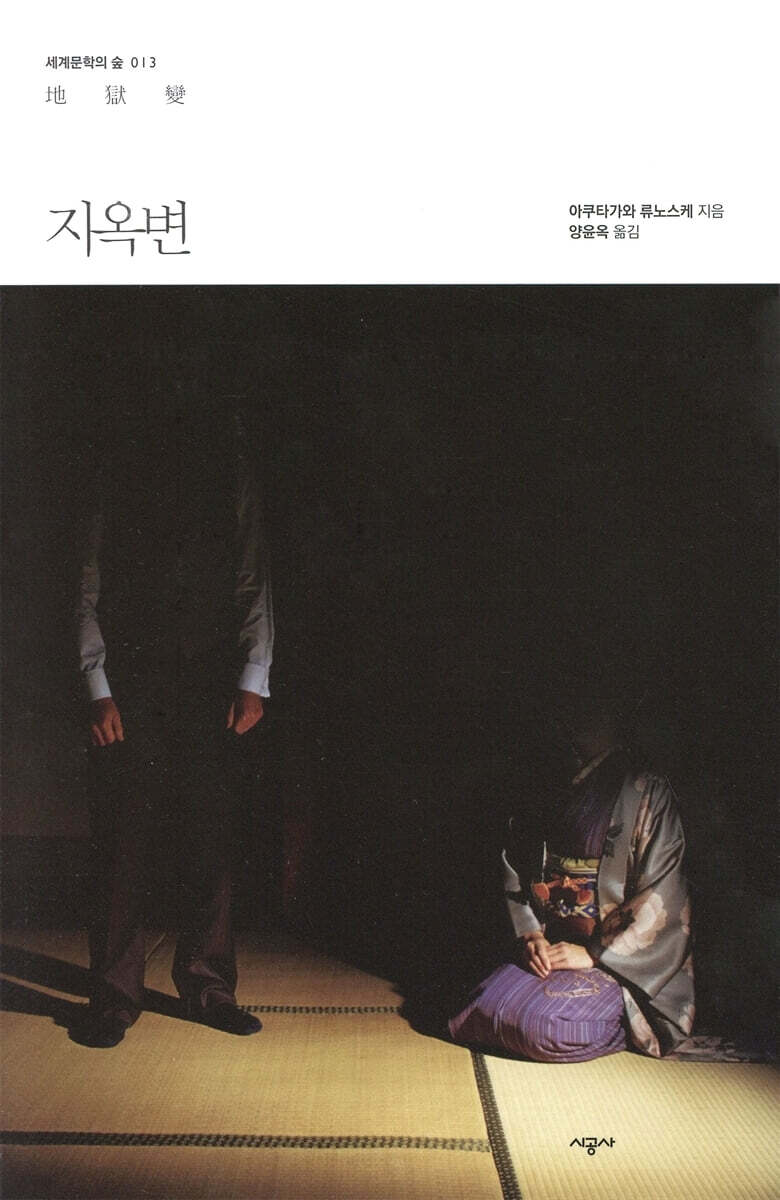
The thirteenth work introduced by 'World Literature Forest' is the short story collection "Hell's Edge," which contains the representative works of Ryunosuke Akutagawa, a genius writer who led modern Japanese literature.
This collection of short stories, carefully selected and translated with depth by Yang Yun-ok, a leading Japanese literature translator, showcases the essence of Taisho literature, the flower of modern Japanese literature.
The title work, “Hell’s Edge,” and the other works in this book, including “Rashomon,” “The Nose,” “Yam Porridge,” “Gesawa Morito,” “In the Bush,” “Mitsuram,” “Ogin,” “Green Onion,” “Beach,” “Kappa,” “Gear,” “The Fortune Teller,” “The Child’s Sickness,” and “Sentence,” are representative works in which Akutagawa Ryunosuke rejected the naturalism that was popular at the time and added new interpretations to classics and modern literature to develop clear themes. They are considered to be works that opened new horizons for Japanese short story literature.
Ryunosuke Akutagawa, who debuted with praise from Natsume Soseki, who is called Japan's national author, and became a literary darling, took the world by storm and burned like a flame, exerting a great influence on later writers such as Osamu Dazai and Yukio Mishima.
Kan Kikuchi, then president of Bungeishunjusha, established the Akutagawa Prize in 1935 to commemorate his literary friend who had passed away.
As the highest honor in Japanese literature, the Akutagawa Prize continues to fulfill its role as a literary cradle that produces new writers with distinct personalities every year.
He ran like a sprinter for 35 years, writing 150 short stories and an almost equal amount of fairy tales, essays, reviews, and travelogues. After burning all his passion like a flame, he ended his life by suicide.
The thirteenth work introduced by 'World Literature Forest' is the short story collection "Hell's Edge," which contains the representative works of Ryunosuke Akutagawa, a genius writer who led modern Japanese literature.
This collection of short stories, carefully selected and translated with depth by Yang Yun-ok, a leading Japanese literature translator, showcases the essence of Taisho literature, the flower of modern Japanese literature.
The title work, “Hell’s Edge,” and the other works in this book, including “Rashomon,” “The Nose,” “Yam Porridge,” “Gesawa Morito,” “In the Bush,” “Mitsuram,” “Ogin,” “Green Onion,” “Beach,” “Kappa,” “Gear,” “The Fortune Teller,” “The Child’s Sickness,” and “Sentence,” are representative works in which Akutagawa Ryunosuke rejected the naturalism that was popular at the time and added new interpretations to classics and modern literature to develop clear themes. They are considered to be works that opened new horizons for Japanese short story literature.
Ryunosuke Akutagawa, who debuted with praise from Natsume Soseki, who is called Japan's national author, and became a literary darling, took the world by storm and burned like a flame, exerting a great influence on later writers such as Osamu Dazai and Yukio Mishima.
Kan Kikuchi, then president of Bungeishunjusha, established the Akutagawa Prize in 1935 to commemorate his literary friend who had passed away.
As the highest honor in Japanese literature, the Akutagawa Prize continues to fulfill its role as a literary cradle that produces new writers with distinct personalities every year.
- You can preview some of the book's contents.
Preview
index
Part 1: A Declining World
Rashomon
nose
Yam porridge
Gesawa Morito
Hell's Edge
In the bushes
Part 2: Modern Mental Landscapes
Persimmon
Ohgin
green onion
beach
mirage
Kappa
gear
Part 3: The House of Author Ryunosuke Akutagawa
fortune teller
Child's illness
sentence
Rashomon
nose
Yam porridge
Gesawa Morito
Hell's Edge
In the bushes
Part 2: Modern Mental Landscapes
Persimmon
Ohgin
green onion
beach
mirage
Kappa
gear
Part 3: The House of Author Ryunosuke Akutagawa
fortune teller
Child's illness
sentence
Publisher's Review
He is considered one of the greatest writers produced in Japan, along with Natsume Soseki and Mori Ogai.
Ryunosuke Akutagawa, who remains a genius in the history of modern Japanese literature.
The essence of short stories, completed with overwhelming wit and vivid writing.
1.
Introduction to the work
Akutagawa Ryunosuke, the pinnacle of modern Japanese literature
Akutagawa Ryunosuke, whom Natsume Soseki praised as “a writer who will never be repeated in the literary world,” is the most important writer mentioned when discussing modern Japanese literature.
He ran like a sprinter for 35 years, writing 150 short stories and an almost equal amount of fairy tales, essays, reviews, and travelogues. After burning all his passion like a flame, he ended his life by suicide.
Born in the Meiji era, a period of sweeping institutional reform and civilizational enlightenment driven by the strong currents of modernization, and flourishing during the Taisho era, a period of flourishing new culture, Akutagawa Ryunosuke grew up experiencing the benefits of both Eastern and Western civilizations.
Akutagawa, a brilliant student who loved to study, grew up peacefully in the middle class and had no experience of worldly hardship, was a typical bookworm who explored life through books and drew material for his works from classics.
From childhood, he had been reading Japanese classics such as Bakin, Sanba, and Chikamatsu, as well as Chinese classics such as Journey to the West and Water Margin. As he passed puberty, his reading ability expanded to include contemporary writers such as Izumi Kyoka, Ozaki Koyo, and Tokutomi Roka, as well as foreign literature such as Ibsen, Anatole France, and Turgenev.
He particularly enjoyed the literature of the late 19th century, including Strindberg, Baudelaire, and Wilde.
He was also a true Tokyoite, a city dweller with traditional Japanese tastes, a refined sensibility, a special and keen sensibility for art, and a meticulous attention to human relationships.
Against this cultural backdrop, Akutagawa displayed a wide range of writing skills, including works that reinterpret classics, autobiographical novels with a modern sensibility, and even surreal, mysterious, and grotesque stories rarely found in other contemporary writers.
A masterpiece created with elegant language and skillful sentences.
When the Grand Prix at the 1951 Venice International Film Festival was announced, people were shocked and applauded.
The director of Japan, a defeated nation that had started the Pacific War, plunging all of Asia into the crossfire, and then been brought to its knees before the world, won the Golden Lion before the devastation of the war had even been resolved.
The winning work at the time was “Rashomon.”
The film was based on Akutagawa's short story, which was based on the classic Japanese folktale collection Konjaku Monogatari (Stories of the Past and Present).
“The vivid writing style that brings the classical, worldly world of folktales into the modern world without any reservations is truly admirable.
"Rashomon" and "The Nose" are short stories that Akutagawa published in a magazine as his first works when he was twenty-three years old, still a college student, and they already have a sufficiently mature, flowing, and lively style.
I can't believe it was written by an unknown college student.
“No matter how you look at it, it reads like a work written by a skilled writer.” _Haruki Murakami
Rashomon is Akutagawa's first short story, published in 1915 while he was a student at the University of Tokyo. It is a work that meticulously reinterprets the psychological turmoil between good and evil of the common people on the verge of starvation in Kyoto, the devastated capital at the end of the Heian Dynasty, using modern psychological techniques.
Akutagawa published a series of historical works that applied a completely new, modern analysis based on his extensive knowledge of the classics, and from this point on, his creative activity became brisk as if a dam had burst.
Having established himself as an author, Akutagawa published a seminal work that embodies his artistic vision.
His view of art was a thoroughgoing art-first philosophy, in which he would not regret exchanging not only the artist's real life but also his life itself, which is swept up in everyday life, for art.
His artistic view, which said that “the writer’s ‘true proof of life’ exists only in the act of writing, and all other daily life is nothing more than the remnants of life,” gave birth to the painter Yoshihide of “Hell’s Edge,” who burned his daughter to complete a folding screen painting.
"Hell's Edge," serialized in the Osaka Mainichi Shimbun from July 1918, is a work of delicate and splendid description and classical flavor, and the third short story collection, "Puppeteer" (1919), which includes this work, is considered the pinnacle of Akutagawa's literature.
The only book for understanding modern Japanese literature
The thirteenth work introduced by 'World Literature Forest' is the short story collection "Hell's Edge," which contains the representative works of Ryunosuke Akutagawa, a genius writer who led modern Japanese literature.
This collection of short stories, carefully selected and translated with depth by Yang Yun-ok, a leading Japanese literature translator, showcases the essence of Taisho literature, the flower of modern Japanese literature.
The title work, “Hell’s Edge,” and the other works in this book, including “Rashomon,” “The Nose,” “Yam Porridge,” “Gesawa Morito,” “In the Bush,” “Mitsuram,” “Ogin,” “Green Onion,” “Beach,” “Kappa,” “Gear,” “The Fortune Teller,” “The Child’s Sickness,” and “Sentence,” are representative works in which Akutagawa Ryunosuke rejected the naturalism that was popular at the time and added new interpretations to classics and modern literature to develop clear themes. They are considered to be works that opened new horizons for Japanese short story literature.
Ryunosuke Akutagawa, who debuted with praise from Natsume Soseki, who is called Japan's national author, and became a literary darling, took the world by storm and burned like a flame, exerting a great influence on later writers such as Osamu Dazai and Yukio Mishima.
Kan Kikuchi, then president of Bungeishunjusha, established the Akutagawa Prize in 1935 to commemorate his literary friend who had passed away.
As the highest honor in Japanese literature, the Akutagawa Prize continues to fulfill its role as a literary cradle that produces new writers with distinct personalities every year.
Ryunosuke Akutagawa, who remains a genius in the history of modern Japanese literature.
The essence of short stories, completed with overwhelming wit and vivid writing.
1.
Introduction to the work
Akutagawa Ryunosuke, the pinnacle of modern Japanese literature
Akutagawa Ryunosuke, whom Natsume Soseki praised as “a writer who will never be repeated in the literary world,” is the most important writer mentioned when discussing modern Japanese literature.
He ran like a sprinter for 35 years, writing 150 short stories and an almost equal amount of fairy tales, essays, reviews, and travelogues. After burning all his passion like a flame, he ended his life by suicide.
Born in the Meiji era, a period of sweeping institutional reform and civilizational enlightenment driven by the strong currents of modernization, and flourishing during the Taisho era, a period of flourishing new culture, Akutagawa Ryunosuke grew up experiencing the benefits of both Eastern and Western civilizations.
Akutagawa, a brilliant student who loved to study, grew up peacefully in the middle class and had no experience of worldly hardship, was a typical bookworm who explored life through books and drew material for his works from classics.
From childhood, he had been reading Japanese classics such as Bakin, Sanba, and Chikamatsu, as well as Chinese classics such as Journey to the West and Water Margin. As he passed puberty, his reading ability expanded to include contemporary writers such as Izumi Kyoka, Ozaki Koyo, and Tokutomi Roka, as well as foreign literature such as Ibsen, Anatole France, and Turgenev.
He particularly enjoyed the literature of the late 19th century, including Strindberg, Baudelaire, and Wilde.
He was also a true Tokyoite, a city dweller with traditional Japanese tastes, a refined sensibility, a special and keen sensibility for art, and a meticulous attention to human relationships.
Against this cultural backdrop, Akutagawa displayed a wide range of writing skills, including works that reinterpret classics, autobiographical novels with a modern sensibility, and even surreal, mysterious, and grotesque stories rarely found in other contemporary writers.
A masterpiece created with elegant language and skillful sentences.
When the Grand Prix at the 1951 Venice International Film Festival was announced, people were shocked and applauded.
The director of Japan, a defeated nation that had started the Pacific War, plunging all of Asia into the crossfire, and then been brought to its knees before the world, won the Golden Lion before the devastation of the war had even been resolved.
The winning work at the time was “Rashomon.”
The film was based on Akutagawa's short story, which was based on the classic Japanese folktale collection Konjaku Monogatari (Stories of the Past and Present).
“The vivid writing style that brings the classical, worldly world of folktales into the modern world without any reservations is truly admirable.
"Rashomon" and "The Nose" are short stories that Akutagawa published in a magazine as his first works when he was twenty-three years old, still a college student, and they already have a sufficiently mature, flowing, and lively style.
I can't believe it was written by an unknown college student.
“No matter how you look at it, it reads like a work written by a skilled writer.” _Haruki Murakami
Rashomon is Akutagawa's first short story, published in 1915 while he was a student at the University of Tokyo. It is a work that meticulously reinterprets the psychological turmoil between good and evil of the common people on the verge of starvation in Kyoto, the devastated capital at the end of the Heian Dynasty, using modern psychological techniques.
Akutagawa published a series of historical works that applied a completely new, modern analysis based on his extensive knowledge of the classics, and from this point on, his creative activity became brisk as if a dam had burst.
Having established himself as an author, Akutagawa published a seminal work that embodies his artistic vision.
His view of art was a thoroughgoing art-first philosophy, in which he would not regret exchanging not only the artist's real life but also his life itself, which is swept up in everyday life, for art.
His artistic view, which said that “the writer’s ‘true proof of life’ exists only in the act of writing, and all other daily life is nothing more than the remnants of life,” gave birth to the painter Yoshihide of “Hell’s Edge,” who burned his daughter to complete a folding screen painting.
"Hell's Edge," serialized in the Osaka Mainichi Shimbun from July 1918, is a work of delicate and splendid description and classical flavor, and the third short story collection, "Puppeteer" (1919), which includes this work, is considered the pinnacle of Akutagawa's literature.
The only book for understanding modern Japanese literature
The thirteenth work introduced by 'World Literature Forest' is the short story collection "Hell's Edge," which contains the representative works of Ryunosuke Akutagawa, a genius writer who led modern Japanese literature.
This collection of short stories, carefully selected and translated with depth by Yang Yun-ok, a leading Japanese literature translator, showcases the essence of Taisho literature, the flower of modern Japanese literature.
The title work, “Hell’s Edge,” and the other works in this book, including “Rashomon,” “The Nose,” “Yam Porridge,” “Gesawa Morito,” “In the Bush,” “Mitsuram,” “Ogin,” “Green Onion,” “Beach,” “Kappa,” “Gear,” “The Fortune Teller,” “The Child’s Sickness,” and “Sentence,” are representative works in which Akutagawa Ryunosuke rejected the naturalism that was popular at the time and added new interpretations to classics and modern literature to develop clear themes. They are considered to be works that opened new horizons for Japanese short story literature.
Ryunosuke Akutagawa, who debuted with praise from Natsume Soseki, who is called Japan's national author, and became a literary darling, took the world by storm and burned like a flame, exerting a great influence on later writers such as Osamu Dazai and Yukio Mishima.
Kan Kikuchi, then president of Bungeishunjusha, established the Akutagawa Prize in 1935 to commemorate his literary friend who had passed away.
As the highest honor in Japanese literature, the Akutagawa Prize continues to fulfill its role as a literary cradle that produces new writers with distinct personalities every year.
GOODS SPECIFICS
- Date of publication: December 20, 2011
- Page count, weight, size: 384 pages | 424g | 137*210*30mm
- ISBN13: 9788952763266
- ISBN10: 8952763262
You may also like
카테고리
korean


korean

![ELLE 엘르 스페셜 에디션 A형 : 12월 [2025]](http://librairie.coreenne.fr/cdn/shop/files/b8e27a3de6c9538896439686c6b0e8fb.jpg?v=1766436872&width=3840)


