

Notes from the Underground
 |
Description
Book Introduction
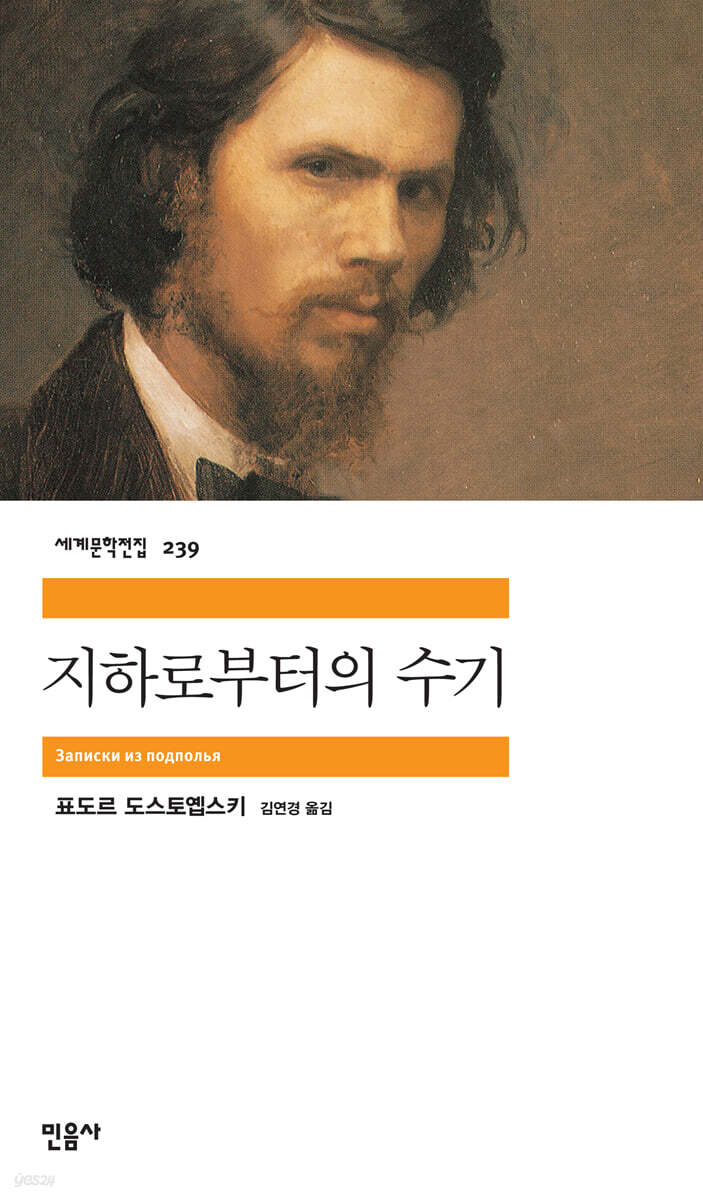
The novel Notes from Underground by the great Russian author Dostoevsky is a turning point in his literary world and is called the first existentialist novel. It is being evaluated as an experiment that betrays not only the existing novel grammar but also the framework of world perception by presenting a new novel format that no one had attempted before. 『Notes from the Underground』 consists of Part 1, "The Underground," and Part 2, "On Sleet." In Part 1, a man who has lived for twenty years in a "stinking, ugly basement" begins his story. Although he worked as a low-ranking official in his youth, he had few close relationships and hated everyone. On the one hand, they feel deeply insulted by the small actions of those who ignore them and try to get revenge in every way possible, but in reality, they do not take any action. In Part 2, he tells of two incidents that occurred in his twenties. The protagonist, 'Underground Man', who prides himself on being smarter than anyone else, but in reality despises all the philosophies and ideologies of the new era, and furthermore, despises himself the most, presents a new character that cannot be imagined in existing novels. The hypocritical values he professes also overturn the existing world view. 'Underground Man' is evaluated to have influenced later works by Tolstoy, Chekhov, and even the 21st-century novelist Ralph Ellison and the film 'Taxi Driver'. |
- You can preview some of the book's contents.
Preview
index
Part 1, Basement
Part 2: About the Sleet
Commentary on the work
Author's chronology
Part 2: About the Sleet
Commentary on the work
Author's chronology
Publisher's Review
The cold poison emanating from the “stinking and ugly underground”,
Contempt and hatred for the world turn into curses directed at oneself.
『Notes from the Underground』 consists of Part 1, "The Underground," and Part 2, "On Sleet."
“Underground” means “I am a sick person…….
It begins with the protagonist's monologue, "I am a grumpy person."
He was a man of about forty years old, and had worked as a low-ranking official about twenty years ago, but had inherited a small fortune and had been living a life of inactivity ever since.
I don't have any friends from my school days and I haven't been able to make any friends in my social life, so I have no interpersonal relationships whatsoever.
He has little to no complaints about this situation, and rather, he just hates everyone.
Not only that, they feel deeply insulted by the small actions of those who ignore them and they plot revenge in all sorts of ways.
But that's all, in reality no action is taken.
So for twenty years, I was locked in the basement without meeting anyone or doing anything.
In "On the Snow," he tells of his experiences in his twenties.
He runs into an officer by chance at a billiard hall. The officer picks him up as if he were an object blocking his path, places him down next to him, and then goes on his way as if nothing had happened.
The protagonist feels great humiliation from this incident and begins to plot revenge on the officer.
He writes a novel slandering him and a letter challenging him to a duel, but both end there.
Another anecdote is about attending a class reunion without being invited.
When classmates who I hadn't interacted with since school were holding a farewell party, I had to borrow money to attend.
But in reality, when we meet, we can't get along and we just act strangely.
The protagonist follows them to a brothel, where he meets a prostitute named Lisa.
He becomes irritated by Lisa's sullen reaction to whatever he says, and starts spewing all sorts of cruel words about her future, making her cry.
Back home, he spends several days anxiously awaiting Liza's return, throwing a tantrum at the servant, just as Liza visits him.
She feels ashamed of having witnessed such a sight and begins to hate her.
The protagonist, who prides himself on being smarter than anyone else, actually despises all the philosophies and ideologies of the new era, and furthermore, despises himself the most.
Always inviting ridicule and contempt, they become so consumed with hatred for them that they end up tormenting and cursing themselves.
In his own stinking and ugly basement, our mouse, crushed by insults and ridicule, is immediately immersed in a cold, poisonous, and above all, eternal malice.
Then, for forty years, he will recall every single insult he has ever suffered, down to the most egregious and shameful detail, and each time he will add even more shameful details of his own, poisoning and irritating himself through his fantasies.
He'll be ashamed of his own fantasies, yet somehow he'll remember everything, ruminate on everything, and make excuses for how things could have happened, inventing a thousand absurd things that are detrimental to him, and he won't take any of it lightly. (From the text)
Dostoevsky's aesthetic and poetic experiments
A new horizon of consciousness and existence that transcends the grammar of 19th-century realist novels.
Dostoevsky spent eight years in exile, starting at the age of twenty-eight, when he began to receive attention as a novelist.
He spent four years in prison, including four years of service in Siberia, and it is said that the only book he was allowed to read during his imprisonment was the Bible.
It is perhaps not surprising that after this hiatus his work took on a completely different character.
In particular, in Notes from Underground, published in 1864, five years after his retirement, he presented a new novel format “that no one had ever attempted before.”
It is because of this result that the book is evaluated as having attempted to experiment with the novel genre, betraying not only the existing novel grammar but also the framework of world perception.
Also, compared to Dostoevsky's own masterpieces such as Crime and Punishment or The Brothers Karamazov, this work is closer to a novella in length, but critics evaluate it as being much more difficult, modern, and problematic than his other works.
'I write, therefore I am.' Moreover, this 'I' is not a protagonist-hero, but rather a 'semi-protagonist', or even an 'anti-protagonist', a mere idle bum, but through the act of writing, he ascends to become a protagonist who contains the world within himself.
This is precisely the new horizon of our consciousness and existence that "Notes from Underground" reveals, even discovers, by escaping the grammar of the 19th-century novel, dominated by Balzacian realism. (From the "Work Commentary")
Rereading "Notes from the Underground" with a Young and Sensual Translation
Kim Yeon-kyung, the translator of this book, is a young scholar who received her doctorate in Dostoevsky studies from Seoul National University and Moscow State Pedagogical University.
He is also a novelist who debuted at the age of 21 and published works such as the short story collections 『A Novel of Cats, by Cats, for Cats』 and 『Everything About My Wife』, and the full-length novel 『The Double Life of a Cat』.
As a young scholar and novelist, Kim Yeon-kyung has translated Notes from Underground with sensitivity.
Also, after much deliberation, I decided to use the title ‘Notes from the Underground’ instead of the commonly used ‘Notes from an Underground Dweller’.
The original title of this work is 'Записки из подполья (Notes from (the) Underground)', and 'Notes from an Underground Dweller' is a direct translation of the Japanese translation ('地下生活者の手記').
The reason I chose the title 'Notes from the Underground' instead of this title, which seems natural and familiar at first glance, is as follows.
First of all, I tried to convey the meaning of the original title of the work as closely as possible.
And the protagonist of this work, the 'underground man', lacks the 'life' that gives a healthy and vibrant feeling.
His diary is simply a confession that flows from his 'existence' and his 'underground'.
Contempt and hatred for the world turn into curses directed at oneself.
『Notes from the Underground』 consists of Part 1, "The Underground," and Part 2, "On Sleet."
“Underground” means “I am a sick person…….
It begins with the protagonist's monologue, "I am a grumpy person."
He was a man of about forty years old, and had worked as a low-ranking official about twenty years ago, but had inherited a small fortune and had been living a life of inactivity ever since.
I don't have any friends from my school days and I haven't been able to make any friends in my social life, so I have no interpersonal relationships whatsoever.
He has little to no complaints about this situation, and rather, he just hates everyone.
Not only that, they feel deeply insulted by the small actions of those who ignore them and they plot revenge in all sorts of ways.
But that's all, in reality no action is taken.
So for twenty years, I was locked in the basement without meeting anyone or doing anything.
In "On the Snow," he tells of his experiences in his twenties.
He runs into an officer by chance at a billiard hall. The officer picks him up as if he were an object blocking his path, places him down next to him, and then goes on his way as if nothing had happened.
The protagonist feels great humiliation from this incident and begins to plot revenge on the officer.
He writes a novel slandering him and a letter challenging him to a duel, but both end there.
Another anecdote is about attending a class reunion without being invited.
When classmates who I hadn't interacted with since school were holding a farewell party, I had to borrow money to attend.
But in reality, when we meet, we can't get along and we just act strangely.
The protagonist follows them to a brothel, where he meets a prostitute named Lisa.
He becomes irritated by Lisa's sullen reaction to whatever he says, and starts spewing all sorts of cruel words about her future, making her cry.
Back home, he spends several days anxiously awaiting Liza's return, throwing a tantrum at the servant, just as Liza visits him.
She feels ashamed of having witnessed such a sight and begins to hate her.
The protagonist, who prides himself on being smarter than anyone else, actually despises all the philosophies and ideologies of the new era, and furthermore, despises himself the most.
Always inviting ridicule and contempt, they become so consumed with hatred for them that they end up tormenting and cursing themselves.
In his own stinking and ugly basement, our mouse, crushed by insults and ridicule, is immediately immersed in a cold, poisonous, and above all, eternal malice.
Then, for forty years, he will recall every single insult he has ever suffered, down to the most egregious and shameful detail, and each time he will add even more shameful details of his own, poisoning and irritating himself through his fantasies.
He'll be ashamed of his own fantasies, yet somehow he'll remember everything, ruminate on everything, and make excuses for how things could have happened, inventing a thousand absurd things that are detrimental to him, and he won't take any of it lightly. (From the text)
Dostoevsky's aesthetic and poetic experiments
A new horizon of consciousness and existence that transcends the grammar of 19th-century realist novels.
Dostoevsky spent eight years in exile, starting at the age of twenty-eight, when he began to receive attention as a novelist.
He spent four years in prison, including four years of service in Siberia, and it is said that the only book he was allowed to read during his imprisonment was the Bible.
It is perhaps not surprising that after this hiatus his work took on a completely different character.
In particular, in Notes from Underground, published in 1864, five years after his retirement, he presented a new novel format “that no one had ever attempted before.”
It is because of this result that the book is evaluated as having attempted to experiment with the novel genre, betraying not only the existing novel grammar but also the framework of world perception.
Also, compared to Dostoevsky's own masterpieces such as Crime and Punishment or The Brothers Karamazov, this work is closer to a novella in length, but critics evaluate it as being much more difficult, modern, and problematic than his other works.
'I write, therefore I am.' Moreover, this 'I' is not a protagonist-hero, but rather a 'semi-protagonist', or even an 'anti-protagonist', a mere idle bum, but through the act of writing, he ascends to become a protagonist who contains the world within himself.
This is precisely the new horizon of our consciousness and existence that "Notes from Underground" reveals, even discovers, by escaping the grammar of the 19th-century novel, dominated by Balzacian realism. (From the "Work Commentary")
Rereading "Notes from the Underground" with a Young and Sensual Translation
Kim Yeon-kyung, the translator of this book, is a young scholar who received her doctorate in Dostoevsky studies from Seoul National University and Moscow State Pedagogical University.
He is also a novelist who debuted at the age of 21 and published works such as the short story collections 『A Novel of Cats, by Cats, for Cats』 and 『Everything About My Wife』, and the full-length novel 『The Double Life of a Cat』.
As a young scholar and novelist, Kim Yeon-kyung has translated Notes from Underground with sensitivity.
Also, after much deliberation, I decided to use the title ‘Notes from the Underground’ instead of the commonly used ‘Notes from an Underground Dweller’.
The original title of this work is 'Записки из подполья (Notes from (the) Underground)', and 'Notes from an Underground Dweller' is a direct translation of the Japanese translation ('地下生活者の手記').
The reason I chose the title 'Notes from the Underground' instead of this title, which seems natural and familiar at first glance, is as follows.
First of all, I tried to convey the meaning of the original title of the work as closely as possible.
And the protagonist of this work, the 'underground man', lacks the 'life' that gives a healthy and vibrant feeling.
His diary is simply a confession that flows from his 'existence' and his 'underground'.
GOODS SPECIFICS
- Date of publication: February 26, 2010
- Page count, weight, size: 221 pages | 326g | 132*225*20mm
- ISBN13: 9788937462399
- ISBN10: 8937462397
You may also like
카테고리
korean


korean

![GQ KOREA Mark (Monthly): December [2025]](http://librairie.coreenne.fr/cdn/shop/files/8ef265dbbfbf186523ed75ba7319009d.jpg?v=1765340328&width=3840)


