

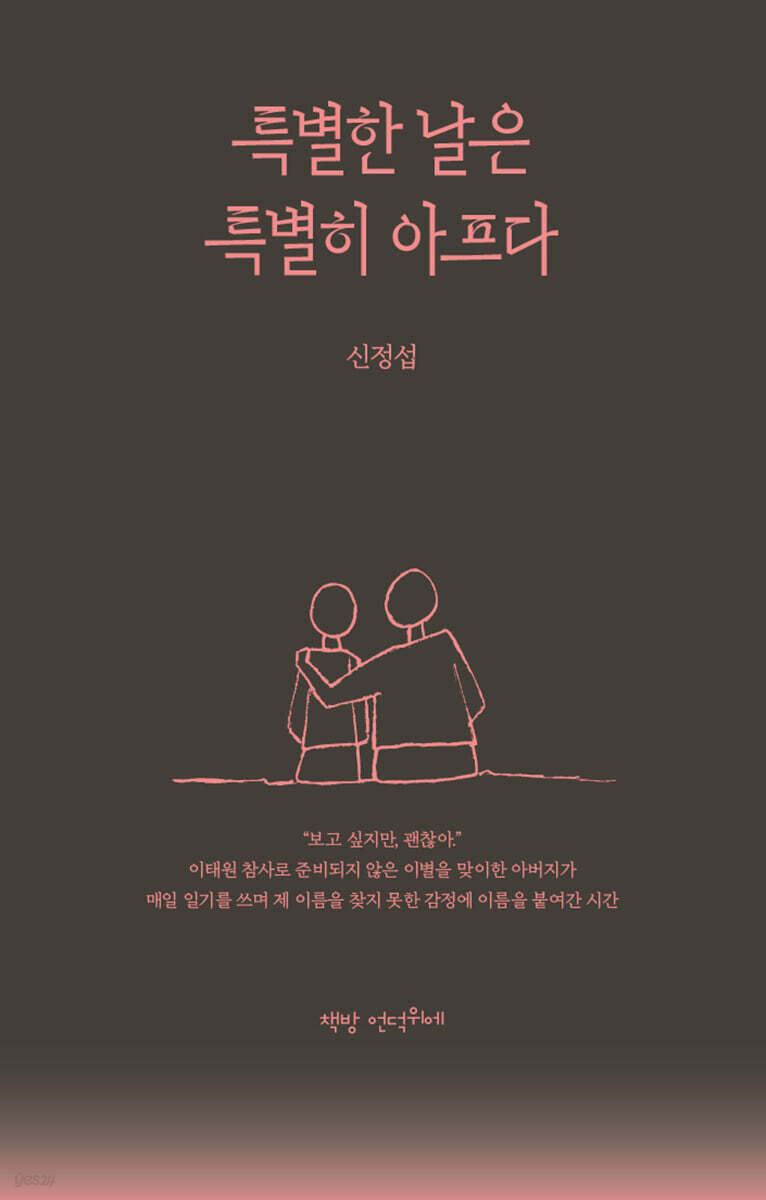
Special days are especially painful
 |
Description
Book Introduction
This book is a collection of entries from a year's worth of diaries written by a father who lost his daughter in the Itaewon tragedy, starting immediately after the tragedy.
Faced with a sudden and unacceptable farewell, the father wrote in his diary every morning, enduring a world where everything was the same except for his daughter.
This record reveals not only the father's unwavering love for his daughter, but also the interconnectedness of his family, colleagues, friends, and others around him.
Thus, it shows why social disasters must never happen again, and why, if they do, the whole society must step in and address them.
Faced with a sudden and unacceptable farewell, the father wrote in his diary every morning, enduring a world where everything was the same except for his daughter.
This record reveals not only the father's unwavering love for his daughter, but also the interconnectedness of his family, colleagues, friends, and others around him.
Thus, it shows why social disasters must never happen again, and why, if they do, the whole society must step in and address them.
- You can preview some of the book's contents.
Preview
index
Prologue | To Jaewon
Ⅰ.
I miss you, but it's okay
Special days are especially painful
Jaewon is Jaewon, Aejin is Aejin
Girl, I knew it
Breaking up with Jihyun
On the Camino de Santiago
Time just for you
Ⅱ.
There is no last day for dad
Next to my wife doing laundry
Memories of that day, October 29th
A trip to meet you
Far away from home
49th day
Aejin's house
100-day diary published in the Hankyoreh
Still, determination
Ⅲ.
Even the painful times don't stay the same
What letters, what comfort
Memorial service for new employee Aejin
Take courage and go to the bereaved families association
Incense Burner Story 1
159th victim
I just want to know the truth
Tears Dried: Watching Lee Sang-min's Impeachment Dismissed
Saturday evening at Marronnier Park
Incense Burner Story 2
Ⅳ.
engrave
Meet my boyfriend T
Are we at the stage of acceptance now?
Aejin I saw in my dream
New Year's greetings
I don't think I'm normal yet
engrave
friend
Aejin's birthday party
Epilogue | I Miss You, But It's Okay (A Letter to Ae-jin on the First Anniversary)
Ⅰ.
I miss you, but it's okay
Special days are especially painful
Jaewon is Jaewon, Aejin is Aejin
Girl, I knew it
Breaking up with Jihyun
On the Camino de Santiago
Time just for you
Ⅱ.
There is no last day for dad
Next to my wife doing laundry
Memories of that day, October 29th
A trip to meet you
Far away from home
49th day
Aejin's house
100-day diary published in the Hankyoreh
Still, determination
Ⅲ.
Even the painful times don't stay the same
What letters, what comfort
Memorial service for new employee Aejin
Take courage and go to the bereaved families association
Incense Burner Story 1
159th victim
I just want to know the truth
Tears Dried: Watching Lee Sang-min's Impeachment Dismissed
Saturday evening at Marronnier Park
Incense Burner Story 2
Ⅳ.
engrave
Meet my boyfriend T
Are we at the stage of acceptance now?
Aejin I saw in my dream
New Year's greetings
I don't think I'm normal yet
engrave
friend
Aejin's birthday party
Epilogue | I Miss You, But It's Okay (A Letter to Ae-jin on the First Anniversary)
Into the book
Dad, I thought love had a total amount.
So when my sister left, I just thought that all my love had left too.
When I lost my sister, I clearly lost everything too, but seeing you made me realize otherwise.
--- p.13
Life remains a story.
Even sadness becomes a bearable pain only when it is told through a story.
Even if the body disappears, the trajectory of life and relationships become the thread of stories.
--- p.33
At that time, that heart had no name.
It was an emotion that I didn't know, had never experienced, and couldn't handle, so I couldn't express it, let alone feel it.
After sending Aejin away, I realized that emotions can only be expressed in a way that I can handle.
--- p.48
Just as cold medicine can help you get over a cold even though there is no cure for it, I learned that day that empathy can help you endure pain even though it cannot cure it.
--- pp.86-87
Aejin's phone alarm now wakes me up.
It seems like Aejin is whispering to me to get up and live one day at a time if life is hard.
So, we must live.
Life doesn't have to be fun and happy.
Even if it hurts, you have to live.
I want to live Aejin's dream.
I want to make Aejin's dream come true.
--- p.92
Everyone has their own sorrow, and their own sorrow is the greatest.
But when I reach out to the sorrow of another, my own sorrow remains the same, but my pain becomes less bearable.
Only then can I finally express my sorrow to someone.
The sadness that is taken out meets other sadness and becomes a bigger sadness.
Oddly enough, as the sadness increases, the pain decreases.
Because it is not only my sorrow, but our sorrow.
--- p.101
Facing a disaster is difficult for anyone.
I want to cover it up and pretend it never happened.
Nevertheless, we must face the disaster.
The truth must be revealed as to why the disaster occurred and what measures were taken.
Because no society can be free of accidents.
--- p.123
Aejin didn't come back today either.
Still, I wait every day.
Aejin isn't home, and I'm at home without Aejin.
Even in broad daylight, no light comes in.
Even if you open the curtains, the light is just sucked into the darkness.
This is how I live.
That's okay though.
I can bear it all.
Endurance is simply a matter of bearing the weight.
I can't let go of Aejin, my love, the reason for my existence.
I draw my child again and again.
--- p.159
My way of grieving is to write a diary while thinking of Aejin.
The time I spend writing my diary is the most peaceful and full of feeling alive.
As I pour out my heart in my diary, a place and space for Aejin is created.
So I'm writing a diary today too.
I write a diary and engrave Aejin into my heart every day.
--- p.174
It hurts so much to remember Aejin with sadness.
My wife and I are always thinking about how memories can become strength, how grief can be transformed into life energy.
As long as the memories don't fade, Aejin is everywhere.
So my wife and I decided to plan a birthday party for Aejin.
So when my sister left, I just thought that all my love had left too.
When I lost my sister, I clearly lost everything too, but seeing you made me realize otherwise.
--- p.13
Life remains a story.
Even sadness becomes a bearable pain only when it is told through a story.
Even if the body disappears, the trajectory of life and relationships become the thread of stories.
--- p.33
At that time, that heart had no name.
It was an emotion that I didn't know, had never experienced, and couldn't handle, so I couldn't express it, let alone feel it.
After sending Aejin away, I realized that emotions can only be expressed in a way that I can handle.
--- p.48
Just as cold medicine can help you get over a cold even though there is no cure for it, I learned that day that empathy can help you endure pain even though it cannot cure it.
--- pp.86-87
Aejin's phone alarm now wakes me up.
It seems like Aejin is whispering to me to get up and live one day at a time if life is hard.
So, we must live.
Life doesn't have to be fun and happy.
Even if it hurts, you have to live.
I want to live Aejin's dream.
I want to make Aejin's dream come true.
--- p.92
Everyone has their own sorrow, and their own sorrow is the greatest.
But when I reach out to the sorrow of another, my own sorrow remains the same, but my pain becomes less bearable.
Only then can I finally express my sorrow to someone.
The sadness that is taken out meets other sadness and becomes a bigger sadness.
Oddly enough, as the sadness increases, the pain decreases.
Because it is not only my sorrow, but our sorrow.
--- p.101
Facing a disaster is difficult for anyone.
I want to cover it up and pretend it never happened.
Nevertheless, we must face the disaster.
The truth must be revealed as to why the disaster occurred and what measures were taken.
Because no society can be free of accidents.
--- p.123
Aejin didn't come back today either.
Still, I wait every day.
Aejin isn't home, and I'm at home without Aejin.
Even in broad daylight, no light comes in.
Even if you open the curtains, the light is just sucked into the darkness.
This is how I live.
That's okay though.
I can bear it all.
Endurance is simply a matter of bearing the weight.
I can't let go of Aejin, my love, the reason for my existence.
I draw my child again and again.
--- p.159
My way of grieving is to write a diary while thinking of Aejin.
The time I spend writing my diary is the most peaceful and full of feeling alive.
As I pour out my heart in my diary, a place and space for Aejin is created.
So I'm writing a diary today too.
I write a diary and engrave Aejin into my heart every day.
--- p.174
It hurts so much to remember Aejin with sadness.
My wife and I are always thinking about how memories can become strength, how grief can be transformed into life energy.
As long as the memories don't fade, Aejin is everywhere.
So my wife and I decided to plan a birthday party for Aejin.
--- p.179
Publisher's Review
★ How do bereaved families of social disasters face the pain of loss, and why is that pain social rather than personal?
★ Heartfelt recommendations from novelist Jo Hae-jin, singer Harim, influencer Choi Hye-seon, National Assembly member Yong Hye-in, and lawyer Lee Tan-hee.
“The path to find you is the path of my life.
“Dad goes to find your meaning.”
This book is a compilation of entries from a year's worth of diaries written daily by a father who lost his daughter in the Itaewon tragedy, starting immediately after the tragedy.
Faced with a sudden separation, the father wrote in his diary every morning and went on to face a world where everything was the same except for his daughter.
In the midst of the unending pain of bereavement, the father faces the past with his daughter and the future he cannot be with her, the present without her.
This book, consisting of four parts, contains the scenes faced by a family experiencing an unprepared separation, the time of approximately 100 days after the disaster, the process of expanding relationships through experiencing various events and people in daily life following the disaster, and the process of beginning the work of engraving the daughter's presence and leaving behind the meaning of absence.
Although written in chronological order, I chose and grouped moments that fit the content of each part.
Why social disasters should not occur,
If it happened, why should it be revealed in detail?
Parting from a loved one is painful.
This is especially true if the breakup is unexpected.
The world's established procedures for parting, such as funerals and 49th-day memorial services, continue with the passage of time, but those who do not wish to part do not have the time to follow them.
Because we stay in the moment when our loved one leaves, confirming the pain of loss that approaches with each passing moment.
The moment of confirmation of absence is not grand.
It comes to me suddenly in clothes that have been washed and dried, in new clothes that I bought to wear later but never got around to wearing, in conversations with others who no longer ask me how I've been doing.
The pain of absence is so vivid and painful, and I worry that we will soon become accustomed to it and accept the pain.
But more important than the degree of pain is thinking of the person you love every moment.
Where is he now, what is this world without him, what does it mean, who am I to stand in the empty space he left behind, what should I do? The father cries and cries as he thinks and thinks.
This process cannot be expressed in words such as accepting or overcoming separation and pain.
Because he is someone I can't forget and can't be okay with not seeing.
The father pours coffee every morning and writes in his diary with the sound of singing bowls in the background. It is painful, but it is also a way to vividly remember his daughter, constantly facing her absence, which cannot be returned no matter what he does.
My father's diary intimately reveals the suffering of the bereaved families of a social disaster, but it also shows that this suffering is not solely personal.
A father who is faced with the absence of his daughter must also find a reason why his daughter is absent in a world where everything else is the same.
The more clearly the reason is revealed, the more the father can properly face his daughter's absence.
This is also something that society needs.
Because it helps society properly understand the victims of the disaster and prevent another disaster from occurring.
However, the Itaewon disaster was caused by a lack of proper identification of the cause.
Because of this, in addition to the pain of the tragedy, the father suffered secondary harm through malicious comments and malicious gatherings filled with hatred and ridicule, and was unable to properly confirm the truth of the tragedy he had been trying to face.
Why Social Disasters Require the Whole Society to Respond
But my father didn't stop there.
At the citizens' incense burner, at the rally site, and at the Constitutional Court, I witnessed the process of uncovering the truth of the disaster together with other bereaved families and demanded that it be properly investigated.
At Marronnier Park, we raised our voices together with the bereaved families of the Sewol Ferry disaster, asking them to remember the disaster.
Although those responsible for the social disaster were negligent in taking responsibility, the spontaneous solidarity of fellow citizens filled the void.
From the looks he receives from the mourners visiting the incense burner, from the names called out at a church mass he happened to attend, from the scraps of articles related to the disaster in the library, from the time he spends with the volunteers who visit the incense burner more often than the bereaved families, from the comfort and encouragement he receives from family, friends, seniors, juniors, and colleagues, the father faces his daughter's absence and raises his voice demanding an investigation into the truth of the disaster.
The records contained in this book not only shed light on the father's unwavering love for his daughter, but also on the connections he makes with his family, colleagues, friends, and others, and the fact that humans are interconnected social beings.
In that connection, the father expands his gaze from the place where his daughter passed away to the alleys of Itaewon, to other sites where social disasters occurred, and to our society.
And through encounters with various places and people, he begins to answer the initial questions - where is his daughter now, what is this world without her, what does it mean, who is he standing in the empty space left by his daughter, and what should he do?
We call accidents that occur when social structures and systems are not properly established and functioning a social disaster.
To prevent social disasters from recurring, it is necessary to thoroughly prevent them in advance and establish institutional measures to respond quickly when disasters occur.
To prepare effectively for this, it must be supported by the formation of a consensus among members of society and specific demands.
This book, which argues that social responsibility for social disasters should be based on empathy rather than obligation, will play a significant role in building that consensus.
★ Heartfelt recommendations from novelist Jo Hae-jin, singer Harim, influencer Choi Hye-seon, National Assembly member Yong Hye-in, and lawyer Lee Tan-hee.
“The path to find you is the path of my life.
“Dad goes to find your meaning.”
This book is a compilation of entries from a year's worth of diaries written daily by a father who lost his daughter in the Itaewon tragedy, starting immediately after the tragedy.
Faced with a sudden separation, the father wrote in his diary every morning and went on to face a world where everything was the same except for his daughter.
In the midst of the unending pain of bereavement, the father faces the past with his daughter and the future he cannot be with her, the present without her.
This book, consisting of four parts, contains the scenes faced by a family experiencing an unprepared separation, the time of approximately 100 days after the disaster, the process of expanding relationships through experiencing various events and people in daily life following the disaster, and the process of beginning the work of engraving the daughter's presence and leaving behind the meaning of absence.
Although written in chronological order, I chose and grouped moments that fit the content of each part.
Why social disasters should not occur,
If it happened, why should it be revealed in detail?
Parting from a loved one is painful.
This is especially true if the breakup is unexpected.
The world's established procedures for parting, such as funerals and 49th-day memorial services, continue with the passage of time, but those who do not wish to part do not have the time to follow them.
Because we stay in the moment when our loved one leaves, confirming the pain of loss that approaches with each passing moment.
The moment of confirmation of absence is not grand.
It comes to me suddenly in clothes that have been washed and dried, in new clothes that I bought to wear later but never got around to wearing, in conversations with others who no longer ask me how I've been doing.
The pain of absence is so vivid and painful, and I worry that we will soon become accustomed to it and accept the pain.
But more important than the degree of pain is thinking of the person you love every moment.
Where is he now, what is this world without him, what does it mean, who am I to stand in the empty space he left behind, what should I do? The father cries and cries as he thinks and thinks.
This process cannot be expressed in words such as accepting or overcoming separation and pain.
Because he is someone I can't forget and can't be okay with not seeing.
The father pours coffee every morning and writes in his diary with the sound of singing bowls in the background. It is painful, but it is also a way to vividly remember his daughter, constantly facing her absence, which cannot be returned no matter what he does.
My father's diary intimately reveals the suffering of the bereaved families of a social disaster, but it also shows that this suffering is not solely personal.
A father who is faced with the absence of his daughter must also find a reason why his daughter is absent in a world where everything else is the same.
The more clearly the reason is revealed, the more the father can properly face his daughter's absence.
This is also something that society needs.
Because it helps society properly understand the victims of the disaster and prevent another disaster from occurring.
However, the Itaewon disaster was caused by a lack of proper identification of the cause.
Because of this, in addition to the pain of the tragedy, the father suffered secondary harm through malicious comments and malicious gatherings filled with hatred and ridicule, and was unable to properly confirm the truth of the tragedy he had been trying to face.
Why Social Disasters Require the Whole Society to Respond
But my father didn't stop there.
At the citizens' incense burner, at the rally site, and at the Constitutional Court, I witnessed the process of uncovering the truth of the disaster together with other bereaved families and demanded that it be properly investigated.
At Marronnier Park, we raised our voices together with the bereaved families of the Sewol Ferry disaster, asking them to remember the disaster.
Although those responsible for the social disaster were negligent in taking responsibility, the spontaneous solidarity of fellow citizens filled the void.
From the looks he receives from the mourners visiting the incense burner, from the names called out at a church mass he happened to attend, from the scraps of articles related to the disaster in the library, from the time he spends with the volunteers who visit the incense burner more often than the bereaved families, from the comfort and encouragement he receives from family, friends, seniors, juniors, and colleagues, the father faces his daughter's absence and raises his voice demanding an investigation into the truth of the disaster.
The records contained in this book not only shed light on the father's unwavering love for his daughter, but also on the connections he makes with his family, colleagues, friends, and others, and the fact that humans are interconnected social beings.
In that connection, the father expands his gaze from the place where his daughter passed away to the alleys of Itaewon, to other sites where social disasters occurred, and to our society.
And through encounters with various places and people, he begins to answer the initial questions - where is his daughter now, what is this world without her, what does it mean, who is he standing in the empty space left by his daughter, and what should he do?
We call accidents that occur when social structures and systems are not properly established and functioning a social disaster.
To prevent social disasters from recurring, it is necessary to thoroughly prevent them in advance and establish institutional measures to respond quickly when disasters occur.
To prepare effectively for this, it must be supported by the formation of a consensus among members of society and specific demands.
This book, which argues that social responsibility for social disasters should be based on empathy rather than obligation, will play a significant role in building that consensus.
GOODS SPECIFICS
- Date of issue: October 19, 2025
- Page count, weight, size: 196 pages | 120*188*20mm
- ISBN13: 9791199235823
- ISBN10: 1199235822
You may also like
카테고리
korean


korean

![GQ KOREA Mark (Monthly): December [2025]](http://librairie.coreenne.fr/cdn/shop/files/8ef265dbbfbf186523ed75ba7319009d.jpg?v=1765340328&width=3840)


