

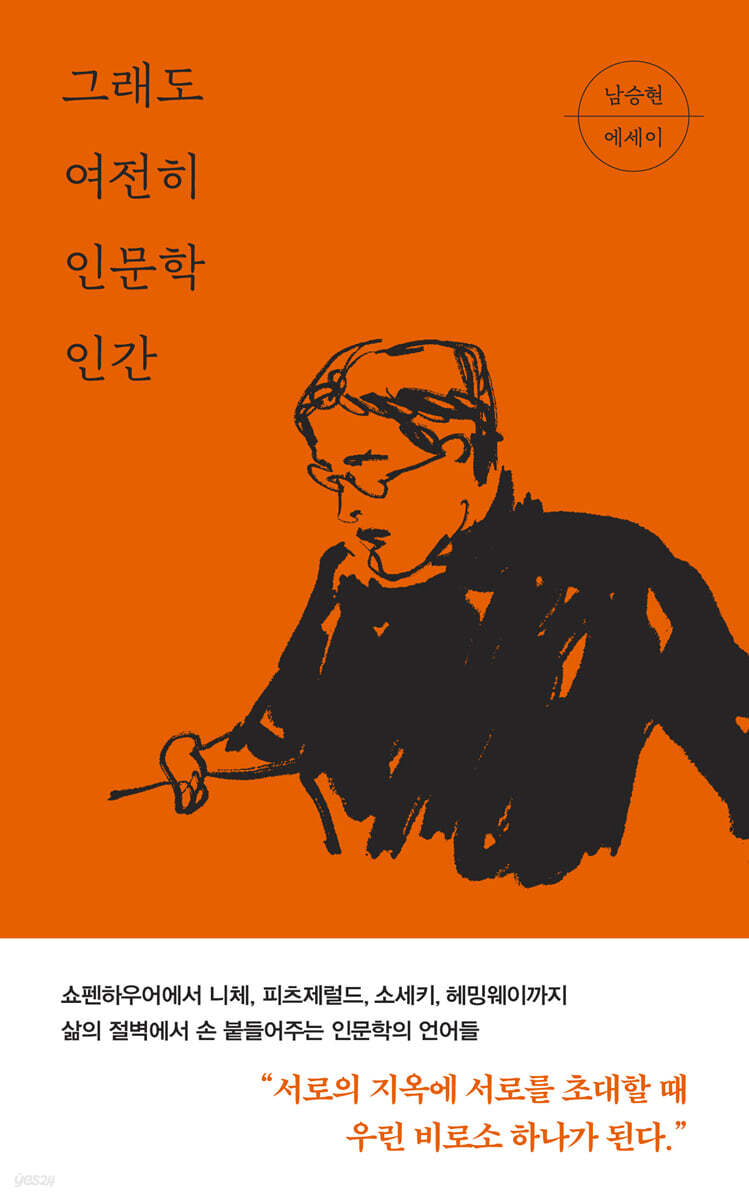
Still a humanities person
 |
Description
Book Introduction
“This sentence has saved me many times in adversity.”
The support that holds up the world and life,
The Power of the Humanities as Conveyed by Nam Seung-hyun, Book Creator and Founder of "Booksikbapsang"
The world needs the humanities
In an age where people don't read books, reading still holds life together.
Nam Seung-hyun, a young man in his 20s who runs the 'Bookstagram' 'Book Table' that introduces books to people and has spread the joy and value of reading and the power of humanities through reading clubs, reading consulting, and writing clubs, presents 'Still a Humanity Human', which contains stories about sentences and books that have supported and sustained him, through the chair next to the tree.
The author seemed to have entered a so-called prestigious university and lived a life worthy of others, but his college years were filled with pain and depression.
What saved the author from such a pit of despair were none other than books and the humanities.
In this age overflowing with content, what can we learn from books? "Still Humanistic Humans" presents a carefully curated selection of stories that will provide a solid perspective and serve as useful tools for life, regardless of field—from philosophers to novelists to businesspeople—to anyone navigating the chaotic and uncertain modern world.
Rather than simply summarizing the arguments of thinkers, the author adds insights and thoughts he finds in everyday life to provide a new interpretation.
Thanks to this, we can vividly encounter the wisdom and knowledge of the classics from an everyday yet contemporary perspective.
Through this book, readers will experience the value of the humanities in their lives and discover the reasons and meaning of reading books in this day and age.
The support that holds up the world and life,
The Power of the Humanities as Conveyed by Nam Seung-hyun, Book Creator and Founder of "Booksikbapsang"
The world needs the humanities
In an age where people don't read books, reading still holds life together.
Nam Seung-hyun, a young man in his 20s who runs the 'Bookstagram' 'Book Table' that introduces books to people and has spread the joy and value of reading and the power of humanities through reading clubs, reading consulting, and writing clubs, presents 'Still a Humanity Human', which contains stories about sentences and books that have supported and sustained him, through the chair next to the tree.
The author seemed to have entered a so-called prestigious university and lived a life worthy of others, but his college years were filled with pain and depression.
What saved the author from such a pit of despair were none other than books and the humanities.
In this age overflowing with content, what can we learn from books? "Still Humanistic Humans" presents a carefully curated selection of stories that will provide a solid perspective and serve as useful tools for life, regardless of field—from philosophers to novelists to businesspeople—to anyone navigating the chaotic and uncertain modern world.
Rather than simply summarizing the arguments of thinkers, the author adds insights and thoughts he finds in everyday life to provide a new interpretation.
Thanks to this, we can vividly encounter the wisdom and knowledge of the classics from an everyday yet contemporary perspective.
Through this book, readers will experience the value of the humanities in their lives and discover the reasons and meaning of reading books in this day and age.
- You can preview some of the book's contents.
Preview
index
Entering
Chapter 1: “No matter how selfish human beings are, there are certainly some things in their nature that are contrary to this.”
- Adam Smith, The Theory of Moral Sentiments
Chapter 2: "How strange is the nature of knowledge! Once the mind is captivated by it, it clings to it like moss to a rock."
- Mary Shelley, Frankenstein
Chapter 3: “Our lives swing like a pendulum between suffering and boredom.”
- Arthur Schopenhauer, Schopenhauer's Philosophical Theory of Life
Chapter 4: “And so, like a boat going against the current, we are constantly being pushed back into the past, yet we continue to move forward, forward.”
- F.
Scott Fitzgerald, The Great Gatsby
Chapter 5 “If it were easy, I wouldn’t have gotten any pleasure out of it.”
- Vincent van Gogh, Letters from the Soul
Chapter 6 “Even those who seem peaceful, if you knock on the depths of their hearts, you will hear a sad sound somewhere.”
- Natsume Soseki, "I Am a Cat"
Chapter 7 “Live cheerfully, for death is already predetermined.”
- Friedrich Nietzsche, The Will to Power
Chapter 8 “Humans may die, but they cannot be defeated.”
- Ernest Hemingway, The Old Man and the Sea
Chapter 9 “If freedom means anything, it is the right to tell people what they don’t want to hear.”
- George Orwell, Unofficial Preface to Nineteen Eighty-Four
Chapter 10 “Schadenfreude, or the feeling of joy at the misfortune of others.”
- Umberto Eco, "Number Zero"
Chapter 11 “What makes the desert beautiful is that somewhere there is a well hidden.”
- Antoine de Saint-Exupéry, The Little Prince
Chapter 12: “Sometimes people devote their entire lives to a desire that they may or may not be able to satisfy.”
- Ryunosuke Akutagawa, "Majuk"
Chapter 13: “Small good resembles great evil, and great good resembles cruelty.”
- Kazuo Inamori, former JAL Chairman
Chapter 14: “As long as we can love one another and remember the feeling of that love, we can die without being forgotten in the hearts of those who remember us.”
- Mitch Albom, Tuesdays with Morrie
Chapter 15 “Excuse me, Director, just a little more.”
- Charles Dickens, Oliver Twist
In conclusion
Chapter 1: “No matter how selfish human beings are, there are certainly some things in their nature that are contrary to this.”
- Adam Smith, The Theory of Moral Sentiments
Chapter 2: "How strange is the nature of knowledge! Once the mind is captivated by it, it clings to it like moss to a rock."
- Mary Shelley, Frankenstein
Chapter 3: “Our lives swing like a pendulum between suffering and boredom.”
- Arthur Schopenhauer, Schopenhauer's Philosophical Theory of Life
Chapter 4: “And so, like a boat going against the current, we are constantly being pushed back into the past, yet we continue to move forward, forward.”
- F.
Scott Fitzgerald, The Great Gatsby
Chapter 5 “If it were easy, I wouldn’t have gotten any pleasure out of it.”
- Vincent van Gogh, Letters from the Soul
Chapter 6 “Even those who seem peaceful, if you knock on the depths of their hearts, you will hear a sad sound somewhere.”
- Natsume Soseki, "I Am a Cat"
Chapter 7 “Live cheerfully, for death is already predetermined.”
- Friedrich Nietzsche, The Will to Power
Chapter 8 “Humans may die, but they cannot be defeated.”
- Ernest Hemingway, The Old Man and the Sea
Chapter 9 “If freedom means anything, it is the right to tell people what they don’t want to hear.”
- George Orwell, Unofficial Preface to Nineteen Eighty-Four
Chapter 10 “Schadenfreude, or the feeling of joy at the misfortune of others.”
- Umberto Eco, "Number Zero"
Chapter 11 “What makes the desert beautiful is that somewhere there is a well hidden.”
- Antoine de Saint-Exupéry, The Little Prince
Chapter 12: “Sometimes people devote their entire lives to a desire that they may or may not be able to satisfy.”
- Ryunosuke Akutagawa, "Majuk"
Chapter 13: “Small good resembles great evil, and great good resembles cruelty.”
- Kazuo Inamori, former JAL Chairman
Chapter 14: “As long as we can love one another and remember the feeling of that love, we can die without being forgotten in the hearts of those who remember us.”
- Mitch Albom, Tuesdays with Morrie
Chapter 15 “Excuse me, Director, just a little more.”
- Charles Dickens, Oliver Twist
In conclusion
Detailed image
Into the book
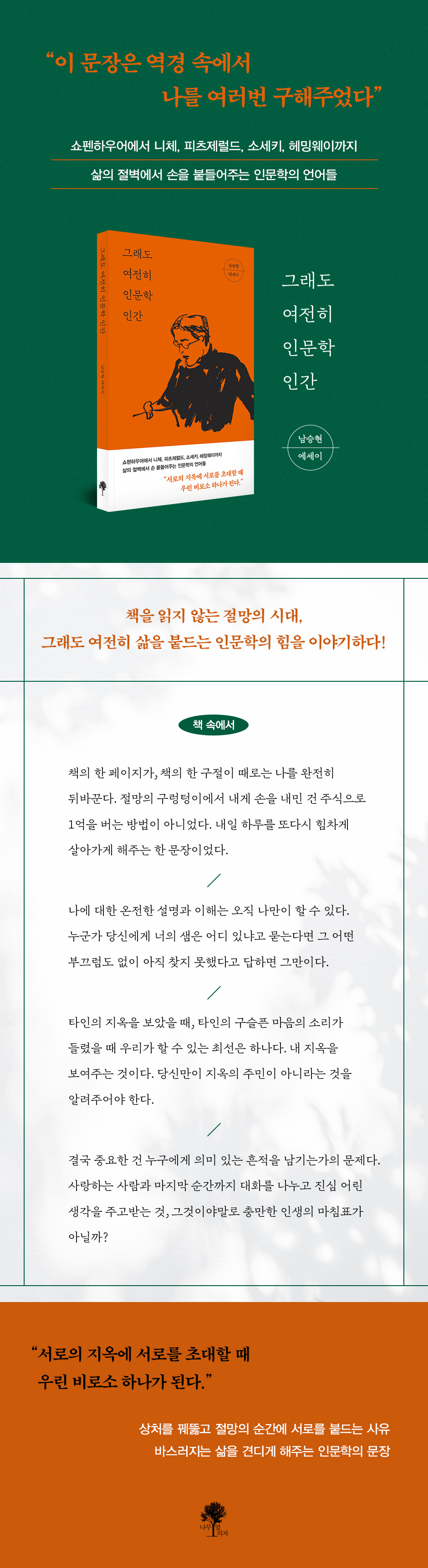
I believe that the thought, 'If I do OO, I'll be happy!' is the scariest thought in the world.
The happiness you feel from accomplishing something doesn't last long.
Even the happiness of winning the lottery has an expiration date.
The happiness you feel when you get into a good university or get into a good company doesn't last long.
In the end, there is only one answer.
We have no choice but to find happiness in our daily lives.
--- pp.42-43
There is a 'room' in the humanities.
Sometimes a single page of a book, a single phrase from a book, can completely change me.
What reached out to me from the depths of despair wasn't a way to make 100 million won in stocks.
It was a sentence that gave me strength to live another day tomorrow.
--- p.52
The power that can sustain a person through all this hardship and suffering is self-love.
Let us love ourselves—the self that is being pushed into the past, the self that is holding on to the present, and the self that is trying to move into the future.
A good ship can be built at any time, and a broken ship can be repaired at any time.
Belief in yourself and love for yourself are the first conditions necessary to go against the current of the world.
Ultimately, I hope that everyone who boards my ship, the captain and crew of my ship, remembers that I am them.
--- pp.57-58
Anxiety isn't a bad thing.
Although he may be a bit blunt, he is a precious friend who is indispensable in our lives.
Anxiety is also a very useful emotion biologically.
Feeling anxious when something is wrong with your body helps you survive.
The same goes for running away when you hear an explosion or see a dangerous weapon.
--- p.62
When we see someone else's hell, when we hear the sorrowful cries of another's heart, the best we can do is one thing.
It shows me my hell.
I need to let you know that you are not the only resident of hell.
Only when we listen to each other's sorrowful cries and shed tears can we finally become independent of evil emotions. Only when we invite each other into each other's hell do we become one.
--- p.78
Life is not a negotiation or a debate.
Life is full of 'what could be' things.
Just because the path I take and the path the other person takes are different, there is no need to block the other person's flow and force them to go their own way.
Looking back now, I realize that the person who received the most care and support during my volunteer work was myself.
--- p.96
In other words, the things I am enjoying now and the things I have achieved may seem insignificant to me, but to someone else, they may be a lifelong dream and earnest goal.
Perhaps the readers who are reading this book now may also be someone's role model.
You may be someone who provides direction, relief, and comfort to others' lives.
And your failure may become someone else's hope and joy.
It may sound a bit creepy, but I think this is the cycle of emotions and the cycle of life.
There is no such thing as absolutely strong or weak.
--- p.117
Even if we don't leave our names in history, we can live on in someone's writings and memories.
Ultimately, what matters is who you leave a meaningful mark on.
Wouldn't it be the perfect ending to a fulfilling life to talk with a loved one until the very end and exchange sincere thoughts?
The happiness you feel from accomplishing something doesn't last long.
Even the happiness of winning the lottery has an expiration date.
The happiness you feel when you get into a good university or get into a good company doesn't last long.
In the end, there is only one answer.
We have no choice but to find happiness in our daily lives.
--- pp.42-43
There is a 'room' in the humanities.
Sometimes a single page of a book, a single phrase from a book, can completely change me.
What reached out to me from the depths of despair wasn't a way to make 100 million won in stocks.
It was a sentence that gave me strength to live another day tomorrow.
--- p.52
The power that can sustain a person through all this hardship and suffering is self-love.
Let us love ourselves—the self that is being pushed into the past, the self that is holding on to the present, and the self that is trying to move into the future.
A good ship can be built at any time, and a broken ship can be repaired at any time.
Belief in yourself and love for yourself are the first conditions necessary to go against the current of the world.
Ultimately, I hope that everyone who boards my ship, the captain and crew of my ship, remembers that I am them.
--- pp.57-58
Anxiety isn't a bad thing.
Although he may be a bit blunt, he is a precious friend who is indispensable in our lives.
Anxiety is also a very useful emotion biologically.
Feeling anxious when something is wrong with your body helps you survive.
The same goes for running away when you hear an explosion or see a dangerous weapon.
--- p.62
When we see someone else's hell, when we hear the sorrowful cries of another's heart, the best we can do is one thing.
It shows me my hell.
I need to let you know that you are not the only resident of hell.
Only when we listen to each other's sorrowful cries and shed tears can we finally become independent of evil emotions. Only when we invite each other into each other's hell do we become one.
--- p.78
Life is not a negotiation or a debate.
Life is full of 'what could be' things.
Just because the path I take and the path the other person takes are different, there is no need to block the other person's flow and force them to go their own way.
Looking back now, I realize that the person who received the most care and support during my volunteer work was myself.
--- p.96
In other words, the things I am enjoying now and the things I have achieved may seem insignificant to me, but to someone else, they may be a lifelong dream and earnest goal.
Perhaps the readers who are reading this book now may also be someone's role model.
You may be someone who provides direction, relief, and comfort to others' lives.
And your failure may become someone else's hope and joy.
It may sound a bit creepy, but I think this is the cycle of emotions and the cycle of life.
There is no such thing as absolutely strong or weak.
--- p.117
Even if we don't leave our names in history, we can live on in someone's writings and memories.
Ultimately, what matters is who you leave a meaningful mark on.
Wouldn't it be the perfect ending to a fulfilling life to talk with a loved one until the very end and exchange sincere thoughts?
--- p.159
Publisher's Review
From Schopenhauer to Hemingway,
How to live a life filled with anxiety and confusion with positivity
Humanities is an academic discipline that began with interest and affection for humanity.
This book also provides insight into how to understand and accept the various emotions that humans experience, particularly emotions such as loneliness and anxiety that many modern people experience.
The author, feeling a deep sense of loneliness while traveling to a place where he felt as if escaping from his daily life, suddenly recalls Schopenhauer's words, "Our lives swing like a pendulum between suffering and weariness."
He says that because every moment that passes by is filled with pain, we must accept pain as part of daily life and happiness as an exceptional moment.
Rather than resignation, this is closer to a suggestion to look at life with a humble and modest attitude.
In addition, it introduces the works of Nietzsche, Hemingway, Ryunosuke Akutagawa, Van Gogh, and others, and offers wisdom on how to accept anxiety as a part of life and use it as a driving force, how to maintain cheerfulness by continuing to take on small challenges in daily life, how to move forward with a calm and resolute mind like the ocean, and how to truly look into one's own desires.
The main message is that when we can fully accept and affirm emotions that are considered negative and bad, we can truly become the masters of our lives.
In an age of increasing uncertainty and disappearing stability, this book will teach readers how to live truly as themselves, without being swayed by the world's established answers.
Deep reflection on humanity and society
How to develop acceptance of others and society
Beyond personal attitudes and postures, this book also conveys humanistic insights and thoughts on humanity and society in a light and comfortable manner.
These are the kinds of writings that an author can write because he has been introducing books to many people for a long time and has found a connection between books and contemporary readers.
The author conveys various thoughts on the universal conditions of human life and 'humanity', and emphasizes connection and solidarity with others.
For example, Chapter 1, which introduces two works by Adam Smith, shows that human selfishness is not necessarily a concept that contrasts with altruism.
Based on the experience of operating 'Bookstagram', which started out of personal greed, and having a positive influence on others and society, he says that simply making "choices with high social utility among selfish choices" can have a positive influence on both oneself and society.
Furthermore, through the works of George Orwell, Natsume Soseki, and Charles Dickens, he emphasizes that the world can become a better place when we share in the suffering of those in need and stand in solidarity with them.
These writings tell us about the necessity and methods of living in coexistence with others as members of society in an age rife with individualism and selfish greed.
Each piece, beginning with a captivating quote, serves as a compass for contemporary readers.
Furthermore, in an age of division, it is no exaggeration to say that it is an essential liberal arts essay that fosters imagination about others and society.
How to live a life filled with anxiety and confusion with positivity
Humanities is an academic discipline that began with interest and affection for humanity.
This book also provides insight into how to understand and accept the various emotions that humans experience, particularly emotions such as loneliness and anxiety that many modern people experience.
The author, feeling a deep sense of loneliness while traveling to a place where he felt as if escaping from his daily life, suddenly recalls Schopenhauer's words, "Our lives swing like a pendulum between suffering and weariness."
He says that because every moment that passes by is filled with pain, we must accept pain as part of daily life and happiness as an exceptional moment.
Rather than resignation, this is closer to a suggestion to look at life with a humble and modest attitude.
In addition, it introduces the works of Nietzsche, Hemingway, Ryunosuke Akutagawa, Van Gogh, and others, and offers wisdom on how to accept anxiety as a part of life and use it as a driving force, how to maintain cheerfulness by continuing to take on small challenges in daily life, how to move forward with a calm and resolute mind like the ocean, and how to truly look into one's own desires.
The main message is that when we can fully accept and affirm emotions that are considered negative and bad, we can truly become the masters of our lives.
In an age of increasing uncertainty and disappearing stability, this book will teach readers how to live truly as themselves, without being swayed by the world's established answers.
Deep reflection on humanity and society
How to develop acceptance of others and society
Beyond personal attitudes and postures, this book also conveys humanistic insights and thoughts on humanity and society in a light and comfortable manner.
These are the kinds of writings that an author can write because he has been introducing books to many people for a long time and has found a connection between books and contemporary readers.
The author conveys various thoughts on the universal conditions of human life and 'humanity', and emphasizes connection and solidarity with others.
For example, Chapter 1, which introduces two works by Adam Smith, shows that human selfishness is not necessarily a concept that contrasts with altruism.
Based on the experience of operating 'Bookstagram', which started out of personal greed, and having a positive influence on others and society, he says that simply making "choices with high social utility among selfish choices" can have a positive influence on both oneself and society.
Furthermore, through the works of George Orwell, Natsume Soseki, and Charles Dickens, he emphasizes that the world can become a better place when we share in the suffering of those in need and stand in solidarity with them.
These writings tell us about the necessity and methods of living in coexistence with others as members of society in an age rife with individualism and selfish greed.
Each piece, beginning with a captivating quote, serves as a compass for contemporary readers.
Furthermore, in an age of division, it is no exaggeration to say that it is an essential liberal arts essay that fosters imagination about others and society.
GOODS SPECIFICS
- Date of issue: September 29, 2025
- Page count, weight, size: 180 pages | 120*192*20mm
- ISBN13: 9791199381988
- ISBN10: 1199381985
You may also like
카테고리
korean


korean

![GQ KOREA Mark (Monthly): December [2025]](http://librairie.coreenne.fr/cdn/shop/files/8ef265dbbfbf186523ed75ba7319009d.jpg?v=1765340328&width=3840)


