

emotional disqualification
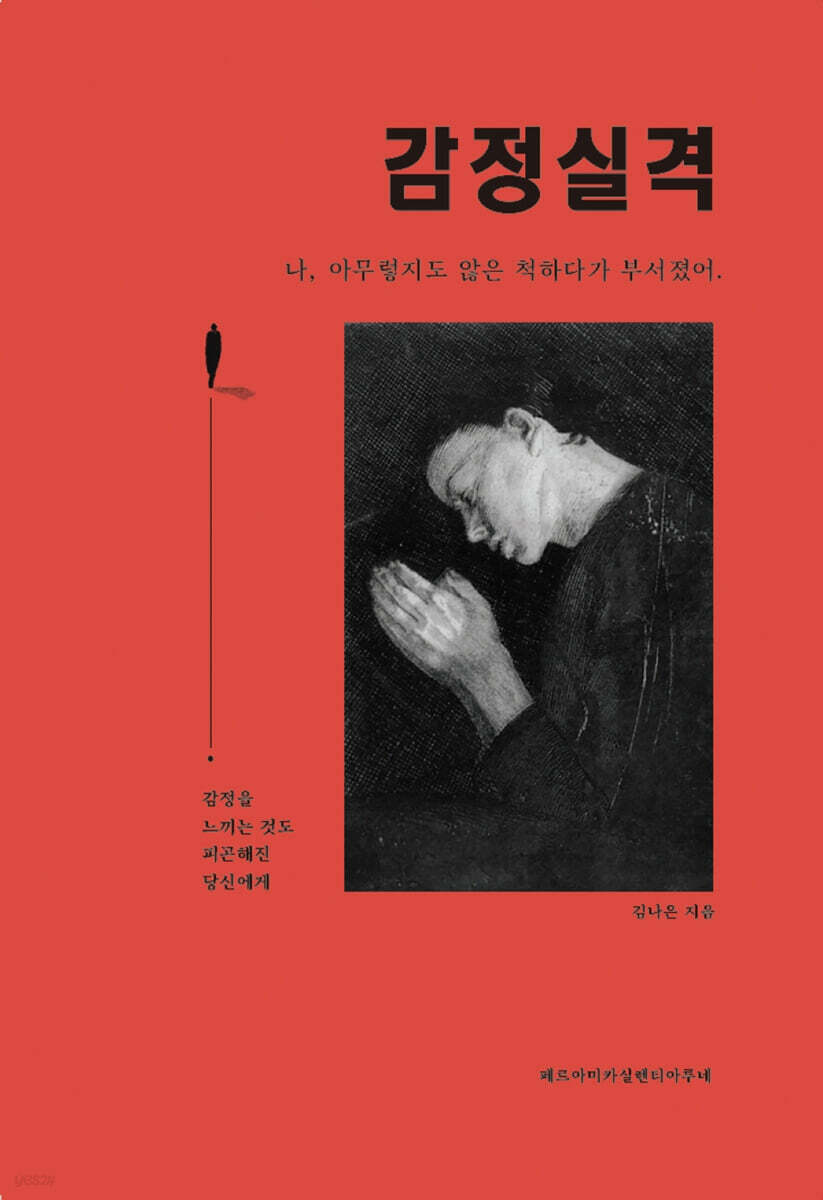 |
Description
Book Introduction
A warm and intuitive emotional essay by author Na-eun Kim, who has dealt with the 'emotions' of countless people through counseling for over 10 years.
《Disqualified Emotions》 tells us why we fail at emotions.
The disqualifying emotions that cower behind the kind, affectionate, and decent person we are, jealousy, anger, anxiety, and shame, trap us in a torrent of emotions.
Who am I, this strange and cowardly me that only I know? No, maybe there's something even worse than that.
Me, when I am consumed by feelings of envy that go beyond jealousy, when I am consumed by the heat of rage that goes beyond anger, when I want to die from shame, those feelings are piled up somewhere, but I pretend not to notice and disqualify myself.
I, who cannot possibly accept myself as myself, betray myself by becoming, as psychologist Carl Jung said, a shadow.
《Disqualified Emotions》 looks back on those moments.
It picks up the pieces of emotions that were broken while pretending nothing happened from the emotional trash can and puts them back in their proper place.
Here, the place refers to 'me'.
Those feelings are 'me'.
The experience of being compared is expressed as jealousy, and the memory of unauthorized expression is expressed as anger.
Find the exact words for the disqualified emotion and comfort its essence.
Shadows are a great comfort to us if we recognize them.
Words like “It’s okay” or “I love you” are not enough.
You need to make them understand, not just read.
Only then do the disqualified emotions slowly return to their proper places.
Author Kim Na-eun will help you.
She has a special resonance.
《Disqualified Emotions》 tells us why we fail at emotions.
The disqualifying emotions that cower behind the kind, affectionate, and decent person we are, jealousy, anger, anxiety, and shame, trap us in a torrent of emotions.
Who am I, this strange and cowardly me that only I know? No, maybe there's something even worse than that.
Me, when I am consumed by feelings of envy that go beyond jealousy, when I am consumed by the heat of rage that goes beyond anger, when I want to die from shame, those feelings are piled up somewhere, but I pretend not to notice and disqualify myself.
I, who cannot possibly accept myself as myself, betray myself by becoming, as psychologist Carl Jung said, a shadow.
《Disqualified Emotions》 looks back on those moments.
It picks up the pieces of emotions that were broken while pretending nothing happened from the emotional trash can and puts them back in their proper place.
Here, the place refers to 'me'.
Those feelings are 'me'.
The experience of being compared is expressed as jealousy, and the memory of unauthorized expression is expressed as anger.
Find the exact words for the disqualified emotion and comfort its essence.
Shadows are a great comfort to us if we recognize them.
Words like “It’s okay” or “I love you” are not enough.
You need to make them understand, not just read.
Only then do the disqualified emotions slowly return to their proper places.
Author Kim Na-eun will help you.
She has a special resonance.
- You can preview some of the book's contents.
Preview
index
prolog
Days when I collapsed while hiding my emotions
“I pretended nothing happened and then I broke down.”
Part 1.
Monsters Called Emotions
The 'shadow' has always been by my side
My feelings are not really my words
The lie that says 'I'm fine'
Every emotion has a face
Part 2.
The emotions that quietly broke me down
Shadow emotions
Jealousy: I hated that person doing well.
Shame: I pretended to be okay in front of people.
Anger: Who hurt me without permission?
Anxiety: Nothing happened, but I broke down.
Apathy: I don't want to do anything, I don't want to see anyone.
Sadness and Loneliness: When You Want to Cry but Don't Know Why
Part 3.
Emotions are not heard when kept still.
When movement speaks first
My body is my first home
[Movement Meditation Guide]
Part 4.
Living while embracing even emotions
Knowing your emotions doesn't suddenly make you happy.
Recovery isn't about saying, "I'm okay," it's about saying, "I'm still hurting."
The day I made peace with my shadow, I saw my true self.
Part 5.
Connecting with the world through body and emotions
When your body opens, your relationships change.
My boundaries and others' boundaries
Matching the rhythm of the world to my rhythm
Completing the connection, returning to myself again
Epilogue
Days when I collapsed while hiding my emotions
“I pretended nothing happened and then I broke down.”
Part 1.
Monsters Called Emotions
The 'shadow' has always been by my side
My feelings are not really my words
The lie that says 'I'm fine'
Every emotion has a face
Part 2.
The emotions that quietly broke me down
Shadow emotions
Jealousy: I hated that person doing well.
Shame: I pretended to be okay in front of people.
Anger: Who hurt me without permission?
Anxiety: Nothing happened, but I broke down.
Apathy: I don't want to do anything, I don't want to see anyone.
Sadness and Loneliness: When You Want to Cry but Don't Know Why
Part 3.
Emotions are not heard when kept still.
When movement speaks first
My body is my first home
[Movement Meditation Guide]
Part 4.
Living while embracing even emotions
Knowing your emotions doesn't suddenly make you happy.
Recovery isn't about saying, "I'm okay," it's about saying, "I'm still hurting."
The day I made peace with my shadow, I saw my true self.
Part 5.
Connecting with the world through body and emotions
When your body opens, your relationships change.
My boundaries and others' boundaries
Matching the rhythm of the world to my rhythm
Completing the connection, returning to myself again
Epilogue
Detailed image

Into the book
I was addicted to pretending I was okay.
I swallowed my anger for fear of looking childish, and I smiled for fear of looking weak when I looked sad.
When jealousy arose, I said, "Congratulations," and when hatred arose, I said, "It's okay."
The days I hid my feelings were also days of self-denial.
After enduring it like that, at some point I became unable to feel emotions.
I became numb, I broke down, and finally I became indifferent.
I didn't take care of myself, I couldn't take care of myself, and I pretended not to care.
Then one day, when no one was looking, I suddenly realized something.
“I pretended nothing happened and then I broke down.”
People say.
“You are so kind.”
“You always look fine.”
Is that a compliment or a silent violence?
How many emotions have I given up to become a 'good person'?
I suppressed my anger, hid my jealousy, and suppressed my desires.
I said, “I’m fine,” but in reality, I was falling apart.
When you get used to hiding your emotions
The feeling doesn't go away, it just comes back with a different face.
Sadness turns to cynicism, anger turns to silence, and anxiety turns to a desire for control.
It's not gone.
It was pressed.
And we call those pressed things 'shadows'.
Jealousy: I hated that person doing well.
It's not that I hated that person, it's that I hated myself.
At first, it was just envy.
He was confident and successful.
Even without saying anything, people put him at the center,
He laughed easily and was easily loved.
I hated that.
no,
To be precise
I was envious of that 'not-me' side of me, and I couldn't stand it.
That's how jealousy begins.
It seems like feelings towards others, but
In fact, it is another face of self-loathing towards me.
Shame is an emotion that rises from the very bottom of our being.
It's not flashy or dramatic.
Very subtle expressions, shaking of the pupils,
It appears in the form of a smaller voice or slurred speech.
But the feeling speaks volumes.
“Please accept me.”
“I’m so scared of being myself.”
“Please tell me I’m not the wrong person.”
Being able to feel these emotions,
The truth is, I still want to belong, I still want to connect, I still want to live.
A person who is completely broken doesn't even feel shame.
I still want to live, feeling that emotion.
Current anger is often exaggerated or repetitive, linked to past experiences.
My 'sensitive button': ____________________
The energy that people expect from me,
That reaction,
That emotional service-
As a result of pouring everything out
The me now is not 'empty'
It's 'all used up'.
The compulsion to like me
Maybe it was another name for the way he hated me.
“I am precious.”
“Trust me.”
“Don’t compare yourself to others.”
We recite these words like a spell.
But at the bottom of it all
There is a sense of urgency that says, 'Only then can I survive.'
I swallowed my anger for fear of looking childish, and I smiled for fear of looking weak when I looked sad.
When jealousy arose, I said, "Congratulations," and when hatred arose, I said, "It's okay."
The days I hid my feelings were also days of self-denial.
After enduring it like that, at some point I became unable to feel emotions.
I became numb, I broke down, and finally I became indifferent.
I didn't take care of myself, I couldn't take care of myself, and I pretended not to care.
Then one day, when no one was looking, I suddenly realized something.
“I pretended nothing happened and then I broke down.”
People say.
“You are so kind.”
“You always look fine.”
Is that a compliment or a silent violence?
How many emotions have I given up to become a 'good person'?
I suppressed my anger, hid my jealousy, and suppressed my desires.
I said, “I’m fine,” but in reality, I was falling apart.
When you get used to hiding your emotions
The feeling doesn't go away, it just comes back with a different face.
Sadness turns to cynicism, anger turns to silence, and anxiety turns to a desire for control.
It's not gone.
It was pressed.
And we call those pressed things 'shadows'.
Jealousy: I hated that person doing well.
It's not that I hated that person, it's that I hated myself.
At first, it was just envy.
He was confident and successful.
Even without saying anything, people put him at the center,
He laughed easily and was easily loved.
I hated that.
no,
To be precise
I was envious of that 'not-me' side of me, and I couldn't stand it.
That's how jealousy begins.
It seems like feelings towards others, but
In fact, it is another face of self-loathing towards me.
Shame is an emotion that rises from the very bottom of our being.
It's not flashy or dramatic.
Very subtle expressions, shaking of the pupils,
It appears in the form of a smaller voice or slurred speech.
But the feeling speaks volumes.
“Please accept me.”
“I’m so scared of being myself.”
“Please tell me I’m not the wrong person.”
Being able to feel these emotions,
The truth is, I still want to belong, I still want to connect, I still want to live.
A person who is completely broken doesn't even feel shame.
I still want to live, feeling that emotion.
Current anger is often exaggerated or repetitive, linked to past experiences.
My 'sensitive button': ____________________
The energy that people expect from me,
That reaction,
That emotional service-
As a result of pouring everything out
The me now is not 'empty'
It's 'all used up'.
The compulsion to like me
Maybe it was another name for the way he hated me.
“I am precious.”
“Trust me.”
“Don’t compare yourself to others.”
We recite these words like a spell.
But at the bottom of it all
There is a sense of urgency that says, 'Only then can I survive.'
--- From the text
Publisher's Review
“To you who pretended to be okay, pretended nothing happened, but ended up broken.”
Being able to say, “I’m still in pain.”
This book says that is the beginning of recovery.
We are often taught that emotions are something to be 'managed' or 'overcome'.
But this book says:
Emotions are not something to be treated, but something to live with.
The author fiercely explores the emotions the body remembers, the layers of emotion that cannot be reached through words, and proposes to the reader a life of "living with emotions."
Shame, anger, jealousy, anxiety.
The faces of emotion we wished to erase were ultimately our own shadows. "Disqualified Emotions" is a powerful and provocative declaration in an era where emotions are disqualified: "It's okay to be sad, it's okay to be in pain, it's okay to remain as you are."
“It wasn’t that I couldn’t feel it.
“It was a life that made it impossible to feel anything.”
“Was it really this difficult to feel emotions?”
It starts with this question.
There has never been a time in my life when I didn't know what emotions were.
But if I hold back for too long, at some point my emotions start to feel like I've been 'disqualified'.
We live every day suppressing, enduring, and enduring our emotions.
"are you okay."
"This is nothing special."
"I'm not the only one."
Those words were weighing on my emotions, and ultimately weighing on me.
《Disqualified Emotions》 is a book that speaks to me like that.
“You were actually very sick, weren’t you?”
“You wanted to cry then, but you held it back, right?”
“Is it harder to pretend to be okay now?”
This book contains a 'real narrative' of emotional recovery.
Uncomfortable and complex emotions that are difficult to express easily, such as anger, shame, anxiety, and jealousy.
I slowly read the patterns of emotions I could not tell anyone about, in my body, dreams, and memories.
In particular, this book does not simply explain emotions as ‘thoughts’.
I follow the traces of emotions that my body remembered first, emotions that burst out before words.
When you listen to your body's signals, the words "I'm not okay" will finally come out of your mouth. "Disqualified Emotions" isn't a book about fixing your emotions.
It is not a textbook on interpreting and analyzing emotions.
It's a book that helps you just say, "I'm still hurting."
It contains the language of recovery that begins with permission to 'feel' emotions.
After reading this book, you will be able to be a little more honest with yourself.
You might end up pretending that things are less okay than before.
And that may be the beginning of true recovery.
“It’s not that I didn’t know how I felt, I just couldn’t say anything because I was afraid that no one would accept my feelings.”
Being able to say, “I’m still in pain.”
This book says that is the beginning of recovery.
We are often taught that emotions are something to be 'managed' or 'overcome'.
But this book says:
Emotions are not something to be treated, but something to live with.
The author fiercely explores the emotions the body remembers, the layers of emotion that cannot be reached through words, and proposes to the reader a life of "living with emotions."
Shame, anger, jealousy, anxiety.
The faces of emotion we wished to erase were ultimately our own shadows. "Disqualified Emotions" is a powerful and provocative declaration in an era where emotions are disqualified: "It's okay to be sad, it's okay to be in pain, it's okay to remain as you are."
“It wasn’t that I couldn’t feel it.
“It was a life that made it impossible to feel anything.”
“Was it really this difficult to feel emotions?”
It starts with this question.
There has never been a time in my life when I didn't know what emotions were.
But if I hold back for too long, at some point my emotions start to feel like I've been 'disqualified'.
We live every day suppressing, enduring, and enduring our emotions.
"are you okay."
"This is nothing special."
"I'm not the only one."
Those words were weighing on my emotions, and ultimately weighing on me.
《Disqualified Emotions》 is a book that speaks to me like that.
“You were actually very sick, weren’t you?”
“You wanted to cry then, but you held it back, right?”
“Is it harder to pretend to be okay now?”
This book contains a 'real narrative' of emotional recovery.
Uncomfortable and complex emotions that are difficult to express easily, such as anger, shame, anxiety, and jealousy.
I slowly read the patterns of emotions I could not tell anyone about, in my body, dreams, and memories.
In particular, this book does not simply explain emotions as ‘thoughts’.
I follow the traces of emotions that my body remembered first, emotions that burst out before words.
When you listen to your body's signals, the words "I'm not okay" will finally come out of your mouth. "Disqualified Emotions" isn't a book about fixing your emotions.
It is not a textbook on interpreting and analyzing emotions.
It's a book that helps you just say, "I'm still hurting."
It contains the language of recovery that begins with permission to 'feel' emotions.
After reading this book, you will be able to be a little more honest with yourself.
You might end up pretending that things are less okay than before.
And that may be the beginning of true recovery.
“It’s not that I didn’t know how I felt, I just couldn’t say anything because I was afraid that no one would accept my feelings.”
GOODS SPECIFICS
- Date of issue: October 1, 2025
- Page count, weight, size: 184 pages | 148*210*20mm
- ISBN13: 9791198219565
- ISBN10: 1198219564
You may also like
카테고리
korean


korean

![GQ KOREA Mark (Monthly): December [2025]](http://librairie.coreenne.fr/cdn/shop/files/8ef265dbbfbf186523ed75ba7319009d.jpg?v=1765340328&width=3840)


