

Little Life 1
 |
Description
Book Introduction
A storm-like narrative that overwhelms a thousand pages
The 2015 Man Booker Prize Best Novel
The best way to introduce this novel is to use the all-too-common idiom: “You can’t put it down.”
There is no better description of a novel that captivates and frightens the reader while simultaneously making them feel uncomfortable.
_Kirkus Literary Award Selection Committee
The much-talked-about work "A Little Life," which was shortlisted for the Man Booker Prize and the National Book Award, two of the most prestigious literary awards in the English-speaking world, and selected as a "Book of the Year" by 25 media outlets including the New York Times, the Washington Post, the Guardian, and the Wall Street Journal, has been published in Korean.
Even before it was nominated for the major British and American literary awards, it had already become a word-of-mouth hit among readers with reviews such as, “I stayed up all night reading this,” “This is the first novel I’ve ever read that I wished it was a thousand pages longer,” “I had to stop reading it several times because it brought tears to my eyes,” “It was shocking and heartbreaking,” and “I dreamed about this novel every night while reading it.” After being nominated for the Man Booker Prize, it received an unusual amount of enthusiastic support from readers, with comments of support posted on its website.
A Little Life, which tells the story of Jude, a secretive character who carries the trauma of horrific childhood abuse and violence, was also the most controversial work among the judges due to the sensationalism and relentlessness of its subject matter.
It is rare for a modern novel to have a summary and commentary, and over 40,000 readers have left reviews of 4 stars or more on the book review site 'Goodreads'. It is also recommended by Rooney Mara, the actress of the movie [Carol], and even now, over a year after its publication, it is still resonating with readers.
The 2015 Man Booker Prize Best Novel
The best way to introduce this novel is to use the all-too-common idiom: “You can’t put it down.”
There is no better description of a novel that captivates and frightens the reader while simultaneously making them feel uncomfortable.
_Kirkus Literary Award Selection Committee
The much-talked-about work "A Little Life," which was shortlisted for the Man Booker Prize and the National Book Award, two of the most prestigious literary awards in the English-speaking world, and selected as a "Book of the Year" by 25 media outlets including the New York Times, the Washington Post, the Guardian, and the Wall Street Journal, has been published in Korean.
Even before it was nominated for the major British and American literary awards, it had already become a word-of-mouth hit among readers with reviews such as, “I stayed up all night reading this,” “This is the first novel I’ve ever read that I wished it was a thousand pages longer,” “I had to stop reading it several times because it brought tears to my eyes,” “It was shocking and heartbreaking,” and “I dreamed about this novel every night while reading it.” After being nominated for the Man Booker Prize, it received an unusual amount of enthusiastic support from readers, with comments of support posted on its website.
A Little Life, which tells the story of Jude, a secretive character who carries the trauma of horrific childhood abuse and violence, was also the most controversial work among the judges due to the sensationalism and relentlessness of its subject matter.
It is rare for a modern novel to have a summary and commentary, and over 40,000 readers have left reviews of 4 stars or more on the book review site 'Goodreads'. It is also recommended by Rooney Mara, the actress of the movie [Carol], and even now, over a year after its publication, it is still resonating with readers.
- You can preview some of the book's contents.
Preview
index
Part 1 9 Rispenard Street
Part 2 Postman 125
Part 3 Vanity 313
Axiom of the Four-Part Equation 415
Part 2 Postman 125
Part 3 Vanity 313
Axiom of the Four-Part Equation 415
Into the book
It was Brother Peter who taught him math, always reminded him how lucky he was, and told him that he had been found in a trash can.
“Inside the trash bag were eggshells, wilted lettuce, spoiled spaghetti, and you.”
--- p.215
He reeked of urine and blood, and he screamed, raged, and cried.
He interrupted class and pushed books off the desk, causing the detectives to abandon class and immediately beat him.
Sometimes I lost consciousness because I was hit so hard.
He began to crave it, that darkness.
There, time passed without him existing, and he was unaware of what was happening.
--- p.223
“Caleb,” he says, panting.
“Please, please.” He’s not the type to beg for mercy, not even when he was young.
But somehow he became that kind of person.
When I was young, life had no meaning.
How nice it would be if that were still the case now.
“Please,” he says.
“Caleb, forgive me.
“I’m sorry, I’m sorry.” But Caleb is no longer human.
He is a wolf, a coyote.
Muscles and anger.
And he is nothing to Caleb, a food source, a throwaway object.
He is being dragged to the edge of the sofa.
I know what happens next.
But I keep begging anyway.
“Please, Caleb.
Please don't do that.
“Caleb, please.”
--- p.482
He tried.
I've been trying my whole life.
I tried to be different, I tried to be better, I tried to be clean.
But it was no use.
After I made the decision, I felt a surprising surge of hope.
It was amazing how simply ending it could save one from all that long sadness.
He could have been his own savior.
No law said he had to live on.
His life was still his own, and he could do with it as he pleased.
How could I not have realized this after all these years?
“Inside the trash bag were eggshells, wilted lettuce, spoiled spaghetti, and you.”
--- p.215
He reeked of urine and blood, and he screamed, raged, and cried.
He interrupted class and pushed books off the desk, causing the detectives to abandon class and immediately beat him.
Sometimes I lost consciousness because I was hit so hard.
He began to crave it, that darkness.
There, time passed without him existing, and he was unaware of what was happening.
--- p.223
“Caleb,” he says, panting.
“Please, please.” He’s not the type to beg for mercy, not even when he was young.
But somehow he became that kind of person.
When I was young, life had no meaning.
How nice it would be if that were still the case now.
“Please,” he says.
“Caleb, forgive me.
“I’m sorry, I’m sorry.” But Caleb is no longer human.
He is a wolf, a coyote.
Muscles and anger.
And he is nothing to Caleb, a food source, a throwaway object.
He is being dragged to the edge of the sofa.
I know what happens next.
But I keep begging anyway.
“Please, Caleb.
Please don't do that.
“Caleb, please.”
--- p.482
He tried.
I've been trying my whole life.
I tried to be different, I tried to be better, I tried to be clean.
But it was no use.
After I made the decision, I felt a surprising surge of hope.
It was amazing how simply ending it could save one from all that long sadness.
He could have been his own savior.
No law said he had to live on.
His life was still his own, and he could do with it as he pleased.
How could I not have realized this after all these years?
--- p.572
Publisher's Review
“A novel that dares to face the darkness of life.”
The life of a man who captivated readers around the world
“Inside the trash bag were eggshells, wilted lettuce, spoiled spaghetti, and you.” _From the text
Four college friends, Willem, Malcolm, JB, and Jude, begin their careers in New York City, each with their own dreams.
Willem is an actor, Malcolm is an architect, JB is a painter, and the main character, Jude, is a lawyer with a secret and painful past.
Despite his good looks and extraordinary brains, Jude has been secretive and has low self-esteem since his college days, but his friends accept and love him for who he is.
His friends don't know much about Jude, such as why he limps, why he has constant scars on his arms and back, how he lived as a child, and whether he has a family, but they don't ask because it makes Jude uncomfortable.
In fact, Jude was abandoned in a sack at birth and suffered horrific abuse while growing up in a monastery.
At the age of nine, he ran away from the monastery with a monk, but the outside world that awaited him was even more terrifying than the monastery.
Then, after entering college with the help of a social worker in his late teens, his life unfolded in a completely different way from his terrible past, as if “life was begging him to forgive me.”
Jude finds unbelievable happiness surrounded by his loving friends.
But as the happiness he never considered his own grows, memories of the past also become clearer, criticizing and mocking him in the present.
The greater the gap between past unhappiness and present happiness, the more difficult it is for him to bear his life.
How far does the hell of life extend and how far does the happiness of life extend?
This work depicts the life of a man who tried to overcome the injustice of the life given to him, a man who had to destroy himself to survive. It rejects even the slightest possibility of hope and forces us to face the pain of life head-on.
A writer who defies prediction and provokes the world
Hanya Yanagihara
“I wanted to capture the pain, fear, and love of life in the story of four men.” _Hanya Yanagihara
Hailed by critics as a “brutal masterpiece,” Little Life defies predictions and repeatedly shocks readers until the very end, but its author, Hanya Yanagihara, is no less unpredictable.
Yanagihara, who is a rare writer among the finalists for the Man Booker Prize, is neither a full-time writer nor one who simply maintains a side job to make a living.
Yanagihara worked at the world-renowned luxury travel magazine Condé Nast Traveler and is currently the deputy editor of T: The New York Times Style Magazine.
It is a brilliant career for an author who has created a buzz with works that delve into the darkness of a human life to the limit.
Her author bio identifies her only as a “New Yorker,” obscuring all the complexities of her identity as an Asian-American female writer.
“Having a day job doesn’t mean I have less time to create, but it gives me the freedom to be a more creative artist,” says Yanagihara. He also wrote his second novel, “Little Life,” without fail, three hours a day during the week and six hours a day on weekends while working at the magazine, and as a result, he completed the masterpiece in 18 months.
Even though it is over a thousand pages long, it is an amazing work of creativity, but it is also a great achievement to be able to make the book so captivating that you cannot put it down, making those thousand pages seem insignificant.
Through this novel, which resonates so deeply that she herself said, “I wrote mostly at night, and the more I immersed myself in this dark world, the more relieved I felt when I went to work the next day,” Yanagihara has created a unique world of her own that has no connection to the materials commonly expected from Asian-American female writers.
“Painful or happy”
A man's face you can't take your eyes off of
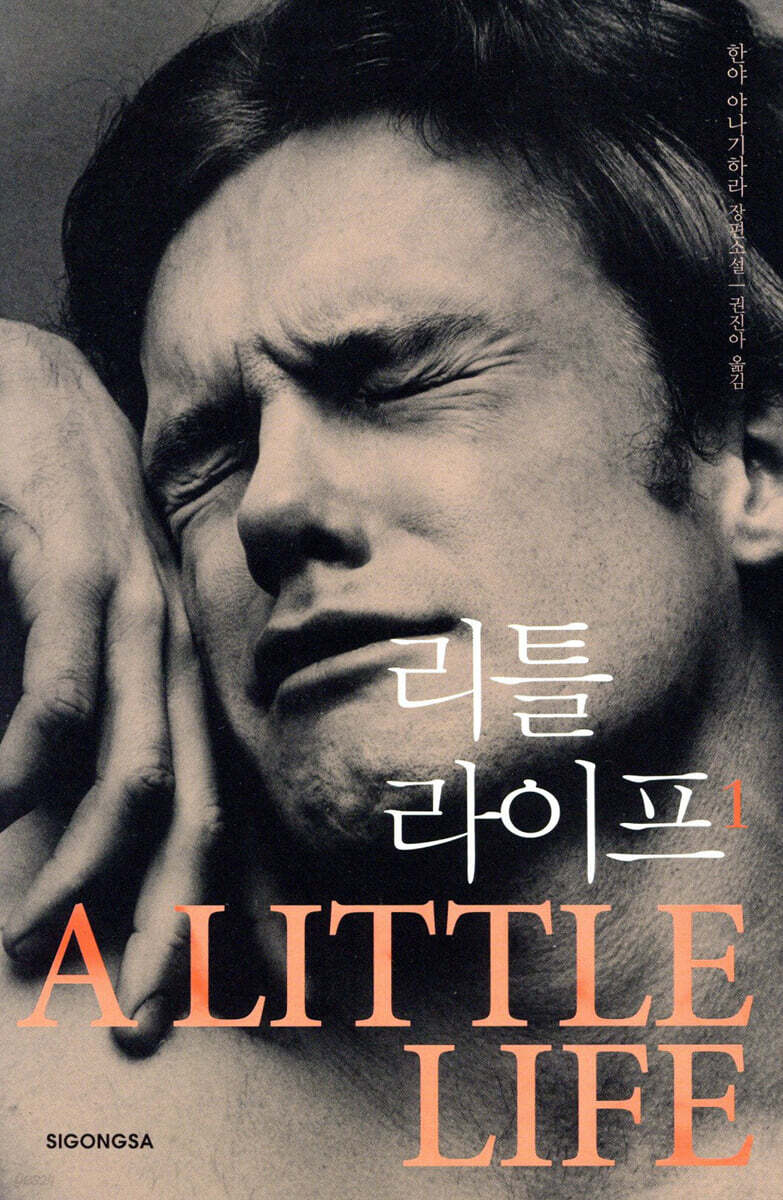
The portrait on the cover of "Little Life" is the work of famous American photographer Peter Hujar, and it is said that Yanagihara had this photo in mind as the cover image from the beginning.
Peter Huza is known for his black-and-white portraits that capture the suffering, loneliness, and fear of death of the marginalized with a uniquely delicate and poignant gaze.
As Yanagihara said, “Something merciless and helpless in this photo reminded me of Jude and Willem, characters in my novel,” the face of the man who seems to be struggling to hold back tears is in line with the life of the protagonist in the novel, so it is not difficult to guess the author’s intention in taking this photo.
The publisher had no choice but to hesitate because of the title of this photo (ironically, the title of the work is [Orgasmic Man]), but eventually agreed with Yanagihara's suggestion to leave it up to the readers to decide whether "this man is in pain or in joy." As a result, the face of the "crying man" can now be seen in many countries around the world, including Korea, Spain, the Netherlands, and Sweden.
The life of a man who captivated readers around the world
“Inside the trash bag were eggshells, wilted lettuce, spoiled spaghetti, and you.” _From the text
Four college friends, Willem, Malcolm, JB, and Jude, begin their careers in New York City, each with their own dreams.
Willem is an actor, Malcolm is an architect, JB is a painter, and the main character, Jude, is a lawyer with a secret and painful past.
Despite his good looks and extraordinary brains, Jude has been secretive and has low self-esteem since his college days, but his friends accept and love him for who he is.
His friends don't know much about Jude, such as why he limps, why he has constant scars on his arms and back, how he lived as a child, and whether he has a family, but they don't ask because it makes Jude uncomfortable.
In fact, Jude was abandoned in a sack at birth and suffered horrific abuse while growing up in a monastery.
At the age of nine, he ran away from the monastery with a monk, but the outside world that awaited him was even more terrifying than the monastery.
Then, after entering college with the help of a social worker in his late teens, his life unfolded in a completely different way from his terrible past, as if “life was begging him to forgive me.”
Jude finds unbelievable happiness surrounded by his loving friends.
But as the happiness he never considered his own grows, memories of the past also become clearer, criticizing and mocking him in the present.
The greater the gap between past unhappiness and present happiness, the more difficult it is for him to bear his life.
How far does the hell of life extend and how far does the happiness of life extend?
This work depicts the life of a man who tried to overcome the injustice of the life given to him, a man who had to destroy himself to survive. It rejects even the slightest possibility of hope and forces us to face the pain of life head-on.
A writer who defies prediction and provokes the world
Hanya Yanagihara
“I wanted to capture the pain, fear, and love of life in the story of four men.” _Hanya Yanagihara
Hailed by critics as a “brutal masterpiece,” Little Life defies predictions and repeatedly shocks readers until the very end, but its author, Hanya Yanagihara, is no less unpredictable.
Yanagihara, who is a rare writer among the finalists for the Man Booker Prize, is neither a full-time writer nor one who simply maintains a side job to make a living.
Yanagihara worked at the world-renowned luxury travel magazine Condé Nast Traveler and is currently the deputy editor of T: The New York Times Style Magazine.
It is a brilliant career for an author who has created a buzz with works that delve into the darkness of a human life to the limit.
Her author bio identifies her only as a “New Yorker,” obscuring all the complexities of her identity as an Asian-American female writer.
“Having a day job doesn’t mean I have less time to create, but it gives me the freedom to be a more creative artist,” says Yanagihara. He also wrote his second novel, “Little Life,” without fail, three hours a day during the week and six hours a day on weekends while working at the magazine, and as a result, he completed the masterpiece in 18 months.
Even though it is over a thousand pages long, it is an amazing work of creativity, but it is also a great achievement to be able to make the book so captivating that you cannot put it down, making those thousand pages seem insignificant.
Through this novel, which resonates so deeply that she herself said, “I wrote mostly at night, and the more I immersed myself in this dark world, the more relieved I felt when I went to work the next day,” Yanagihara has created a unique world of her own that has no connection to the materials commonly expected from Asian-American female writers.
“Painful or happy”
A man's face you can't take your eyes off of
The portrait on the cover of "Little Life" is the work of famous American photographer Peter Hujar, and it is said that Yanagihara had this photo in mind as the cover image from the beginning.
Peter Huza is known for his black-and-white portraits that capture the suffering, loneliness, and fear of death of the marginalized with a uniquely delicate and poignant gaze.
As Yanagihara said, “Something merciless and helpless in this photo reminded me of Jude and Willem, characters in my novel,” the face of the man who seems to be struggling to hold back tears is in line with the life of the protagonist in the novel, so it is not difficult to guess the author’s intention in taking this photo.
The publisher had no choice but to hesitate because of the title of this photo (ironically, the title of the work is [Orgasmic Man]), but eventually agreed with Yanagihara's suggestion to leave it up to the readers to decide whether "this man is in pain or in joy." As a result, the face of the "crying man" can now be seen in many countries around the world, including Korea, Spain, the Netherlands, and Sweden.
GOODS SPECIFICS
- Date of publication: June 16, 2016
- Page count, weight, size: 620 pages | 750g | 137*210*35mm
- ISBN13: 9788952776372
- ISBN10: 8952776372
You may also like
카테고리
korean


korean

![GQ KOREA Mark (Monthly): December [2025]](http://librairie.coreenne.fr/cdn/shop/files/8ef265dbbfbf186523ed75ba7319009d.jpg?v=1765340328&width=3840)


