

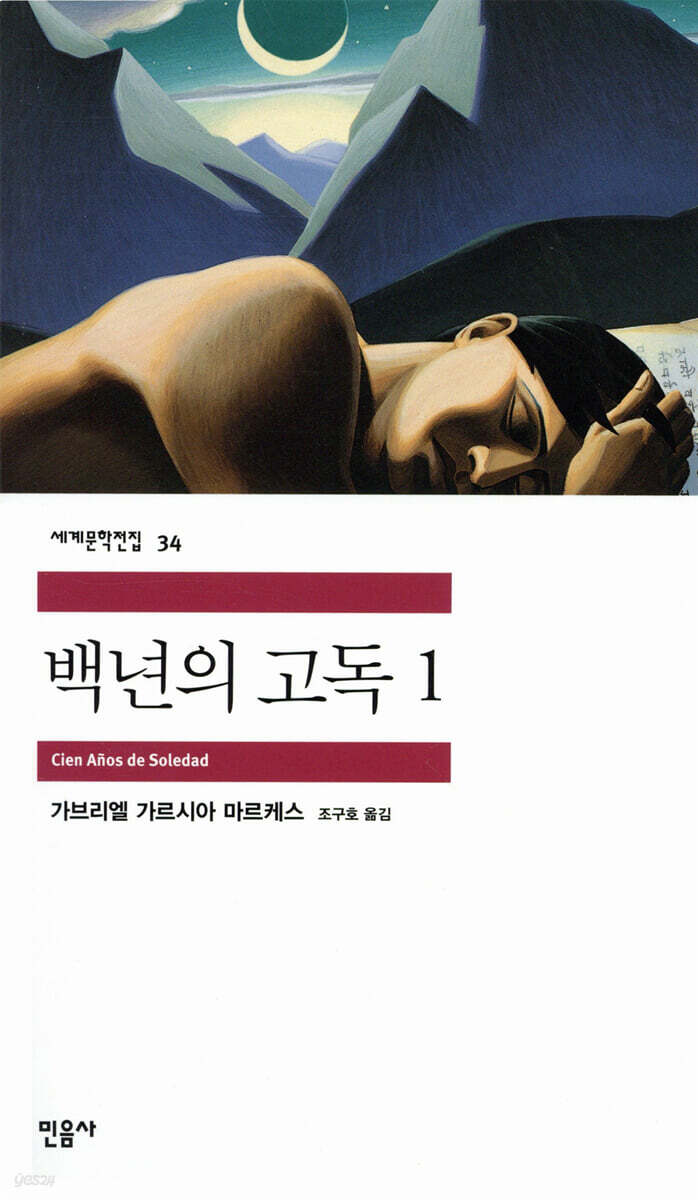
One Hundred Years of Solitude 1
 |
Description
Book Introduction
A masterpiece by Gabriel García Márquez, the 'founder of magical realism',
A masterpiece that rebelled against the 'death of the novel' and predicted its revival.
Humorously incorporating insights into Latin America's tragic history and the human condition.
“What mattered to him was life, not death, and so when he was sentenced to death, what he felt was not fear, but longing for life.”
A masterpiece by García Márquez, the founder of Latin American [magical realism]
The first complete translation from the original Spanish text in Korea!
Gabriel García Márquez, a Nobel Prize-winning author and widely known as the founder of Latin American magical realism, has published his masterpiece, One Hundred Years of Solitude, in its entirety in Korea for the first time.
Minumsa had an exclusive contract with this work and published a complete translation based on the version first published in Argentina in 1967.
This work has been translated and published in over 30 countries around the world, and has captivated 20 million readers.
This work, which was exclusively contracted by Minumsa, was originally contracted to be translated by the late Hwang Byeong-ha, who had translated the complete works of Borges for Minumsa, but passed away in an unexpected accident in 1998, so Jo Gu-ho took over and translated it from scratch.
García Márquez's works have been translated by several publishers and are widely known to domestic readers.
However, there were many cases where the version used as the translation script was an English version, or even if it was not a translation, it was a translation of unknown origin (duplicate publication).
Professor Cho Gu-ho believed that even among the works already published, the translation by Professor Ahn Jeong-hyo (selected as the best translator and translated work by Munhaksasangsa and 『Mimesis』) had serious errors, and wanted to translate it more faithfully to the original text.
A clear example is that the flow of sentences was not arbitrarily interrupted (the punctuation in the original and the translation are the same) and paragraph divisions were not arbitrarily made.
The translator makes it clear that he has tried to translate the original Spanish text “without any addition or subtraction.”
The translator also paid attention to the Korean proofreading and editing that is commonly done during the translation process.
If proofreading and editing are severe, it may be easy to understand in Korean, but there is a risk that the meaning of the original text may be damaged.
For example, in the beginning of the work (Chapter 1), there is a passage that says, “Because the world was so new, many things did not yet have names, so to refer to them, one had to point to them with one’s finger.”
So, the thing called 'ice' appears later, and until then, the metaphor 'cold as ice' cannot be used.
Only later, when the thing was called 'ice', could the metaphor 'cold as ice' be established.
However, other translations have inserted or created metaphors that do not exist in the original text during the Korean proofreading and editing process.
Also noteworthy are the passages that preserve the original text's use of various grammar and wordplay used by García Márquez.
For example, in the translation by Ahn Jung-hyo (Munhaksasangsa, pp. 57-58), “They sat together and talked about endless, boring stories, telling the same jokes for hours on end, and going on and on about the castrated rooster.
When the story was over, the person who was talking would ask if they wanted to hear it again, and then the people sitting around would ask them to tell the story again, and then they would tell the same story again… … Even if someone didn’t want to hear the story, he would repeat it, and when asked if he wanted to tell the story again and there was no answer, he would repeat it again, and as long as the story went on, no one could leave the seat.
So, the same story was repeated endlessly throughout the night.”
Mr. Cho Gu-ho said, “They would sit together and talk endlessly, repeating the same jokes for hours, twisting and complicating the story about the castrated rooster to the point of getting on their nerves, and the person telling the story would ask the listeners if they wanted to hear the story about the castrated rooster again, and if the listeners said yes, the person telling the story would say that they would and had not asked them to, but had only asked them if they wanted to tell the story about the castrated rooster. If the listeners said no, the person telling the story would say no and would say that they had not asked them to, but had only asked them if they wanted to tell the story about the castrated rooster. If the listeners kept silent, the person telling the story would say that they had not asked them to keep silent, but had only asked them if they wanted to tell the story about the castrated rooster. If the listeners wanted to leave, the person telling the story would say that they had not asked them to leave, but had only asked them if they wanted to tell the story about the castrated rooster, and so on, for several nights.” “In these constant, vicious gatherings, they would joke around endlessly.”
In the previous translation, the original text was abridged and we could not feel García Márquez's characteristic wordplay, whereas in Mr. Cho Gu-ho's translation, we can enjoy the 'wordplay' along with fidelity to the original text.
A masterpiece that rebelled against the 'death of the novel' and predicted its revival.
Humorously incorporating insights into Latin America's tragic history and the human condition.
“What mattered to him was life, not death, and so when he was sentenced to death, what he felt was not fear, but longing for life.”
A masterpiece by García Márquez, the founder of Latin American [magical realism]
The first complete translation from the original Spanish text in Korea!
Gabriel García Márquez, a Nobel Prize-winning author and widely known as the founder of Latin American magical realism, has published his masterpiece, One Hundred Years of Solitude, in its entirety in Korea for the first time.
Minumsa had an exclusive contract with this work and published a complete translation based on the version first published in Argentina in 1967.
This work has been translated and published in over 30 countries around the world, and has captivated 20 million readers.
This work, which was exclusively contracted by Minumsa, was originally contracted to be translated by the late Hwang Byeong-ha, who had translated the complete works of Borges for Minumsa, but passed away in an unexpected accident in 1998, so Jo Gu-ho took over and translated it from scratch.
García Márquez's works have been translated by several publishers and are widely known to domestic readers.
However, there were many cases where the version used as the translation script was an English version, or even if it was not a translation, it was a translation of unknown origin (duplicate publication).
Professor Cho Gu-ho believed that even among the works already published, the translation by Professor Ahn Jeong-hyo (selected as the best translator and translated work by Munhaksasangsa and 『Mimesis』) had serious errors, and wanted to translate it more faithfully to the original text.
A clear example is that the flow of sentences was not arbitrarily interrupted (the punctuation in the original and the translation are the same) and paragraph divisions were not arbitrarily made.
The translator makes it clear that he has tried to translate the original Spanish text “without any addition or subtraction.”
The translator also paid attention to the Korean proofreading and editing that is commonly done during the translation process.
If proofreading and editing are severe, it may be easy to understand in Korean, but there is a risk that the meaning of the original text may be damaged.
For example, in the beginning of the work (Chapter 1), there is a passage that says, “Because the world was so new, many things did not yet have names, so to refer to them, one had to point to them with one’s finger.”
So, the thing called 'ice' appears later, and until then, the metaphor 'cold as ice' cannot be used.
Only later, when the thing was called 'ice', could the metaphor 'cold as ice' be established.
However, other translations have inserted or created metaphors that do not exist in the original text during the Korean proofreading and editing process.
Also noteworthy are the passages that preserve the original text's use of various grammar and wordplay used by García Márquez.
For example, in the translation by Ahn Jung-hyo (Munhaksasangsa, pp. 57-58), “They sat together and talked about endless, boring stories, telling the same jokes for hours on end, and going on and on about the castrated rooster.
When the story was over, the person who was talking would ask if they wanted to hear it again, and then the people sitting around would ask them to tell the story again, and then they would tell the same story again… … Even if someone didn’t want to hear the story, he would repeat it, and when asked if he wanted to tell the story again and there was no answer, he would repeat it again, and as long as the story went on, no one could leave the seat.
So, the same story was repeated endlessly throughout the night.”
Mr. Cho Gu-ho said, “They would sit together and talk endlessly, repeating the same jokes for hours, twisting and complicating the story about the castrated rooster to the point of getting on their nerves, and the person telling the story would ask the listeners if they wanted to hear the story about the castrated rooster again, and if the listeners said yes, the person telling the story would say that they would and had not asked them to, but had only asked them if they wanted to tell the story about the castrated rooster. If the listeners said no, the person telling the story would say no and would say that they had not asked them to, but had only asked them if they wanted to tell the story about the castrated rooster. If the listeners kept silent, the person telling the story would say that they had not asked them to keep silent, but had only asked them if they wanted to tell the story about the castrated rooster. If the listeners wanted to leave, the person telling the story would say that they had not asked them to leave, but had only asked them if they wanted to tell the story about the castrated rooster, and so on, for several nights.” “In these constant, vicious gatherings, they would joke around endlessly.”
In the previous translation, the original text was abridged and we could not feel García Márquez's characteristic wordplay, whereas in Mr. Cho Gu-ho's translation, we can enjoy the 'wordplay' along with fidelity to the original text.
- You can preview some of the book's contents.
Preview
Into the book
While the people of Macondo celebrated the restoration of their memories, José Arcadio Buendía and Melquíades were dusting off their old friendship.
The gypsy was planning to stay in the village.
He was truly dead, but he came back because he couldn't stand the loneliness.
Stripped of all his supernatural powers and ostracized from his own kind as punishment for his faithfulness to life, he resolved to hide away in a corner of the world untouched by death and dedicate himself to the development of silver-plate photography.
--- p.80
As his health recovered and his mind became hazy, Colonel Aureliano Buendía recalled the defining moments of his life by reading Remedios's poems, surrounded by dusty dolls.
He started writing poetry again.
He poured out his experiences, which took him from the fear of a hopeless war to the brink of death, into poetry for hours.
Then his thoughts became very clear and he was able to verify his thoughts from various angles.
One night, he asked Colonel Herineldo Marquez:
'Friend, let me tell you one thing: why are you fighting the war?'
'Why, my friend?
'For the great Liberal Party,' answered Colonel Herineldo Marquez.
'You are a lucky person to know that.
'I'm just now realizing that I'm fighting because of my pride,' he said.
'That's too bad,' said Colonel Herineldo Marquez.
Colonel Aureliano Buendia found his friend's surprised expression amusing.
'Yeah, but whatever, it's better than not knowing why you're fighting.'
Colonel Aureliano Buendia said.
He looked at his friend, smiled, and added:
'I mean, it's better than fighting for something that means nothing to anyone, like you.'
--- pp.205-206
The two lonely lovers were sailing against the ominous flow of time, the merciless flow of time, wasting their time in futile efforts to drag them into the desert of disillusionment and oblivion.
Aureliano and Amaranta Ursula, aware of the threat of such a time, spent their final months holding hands, hoping to welcome into the world the child conceived through their intemperate adultery with faithful love.
When they were embracing each other in bed at night, neither the noisy squawking of ants under the moonlight, nor the noisy squeaking of insects, nor the constant, clear rustling of weeds growing in the next room frightened them.
--- pp.297-298
Talking about the end of the novel is nothing more than the anxieties of Western writers.
It would be absurd to say this to Eastern European or Latin American writers.
How can you talk about the death of the novel when you have García Márquez's One Hundred Years of Solitude on your bookshelf?
The gypsy was planning to stay in the village.
He was truly dead, but he came back because he couldn't stand the loneliness.
Stripped of all his supernatural powers and ostracized from his own kind as punishment for his faithfulness to life, he resolved to hide away in a corner of the world untouched by death and dedicate himself to the development of silver-plate photography.
--- p.80
As his health recovered and his mind became hazy, Colonel Aureliano Buendía recalled the defining moments of his life by reading Remedios's poems, surrounded by dusty dolls.
He started writing poetry again.
He poured out his experiences, which took him from the fear of a hopeless war to the brink of death, into poetry for hours.
Then his thoughts became very clear and he was able to verify his thoughts from various angles.
One night, he asked Colonel Herineldo Marquez:
'Friend, let me tell you one thing: why are you fighting the war?'
'Why, my friend?
'For the great Liberal Party,' answered Colonel Herineldo Marquez.
'You are a lucky person to know that.
'I'm just now realizing that I'm fighting because of my pride,' he said.
'That's too bad,' said Colonel Herineldo Marquez.
Colonel Aureliano Buendia found his friend's surprised expression amusing.
'Yeah, but whatever, it's better than not knowing why you're fighting.'
Colonel Aureliano Buendia said.
He looked at his friend, smiled, and added:
'I mean, it's better than fighting for something that means nothing to anyone, like you.'
--- pp.205-206
The two lonely lovers were sailing against the ominous flow of time, the merciless flow of time, wasting their time in futile efforts to drag them into the desert of disillusionment and oblivion.
Aureliano and Amaranta Ursula, aware of the threat of such a time, spent their final months holding hands, hoping to welcome into the world the child conceived through their intemperate adultery with faithful love.
When they were embracing each other in bed at night, neither the noisy squawking of ants under the moonlight, nor the noisy squeaking of insects, nor the constant, clear rustling of weeds growing in the next room frightened them.
--- pp.297-298
Talking about the end of the novel is nothing more than the anxieties of Western writers.
It would be absurd to say this to Eastern European or Latin American writers.
How can you talk about the death of the novel when you have García Márquez's One Hundred Years of Solitude on your bookshelf?
--- From the text
Publisher's Review
García Márquez's works have been translated by several publishers and are widely known to domestic readers.
However, there were many cases where the version used as the translation script was an English version, or even if it was not a translation, it was a translation of unknown origin (duplicate publication).
Professor Cho Gu-ho believed that even among the works already published, the translation by Professor Ahn Jeong-hyo (selected as the best translator and translated work by Munhaksasangsa and 『Mimesis』) had serious errors, and wanted to translate it more faithfully to the original text.
A clear example is that the flow of sentences was not arbitrarily interrupted (the punctuation in the original and the translation are the same) and paragraph divisions were not arbitrarily made.
The translator makes it clear that he has tried to translate the original Spanish text “without any addition or subtraction.”
The translator also paid attention to the Korean proofreading and editing that is commonly done during the translation process.
If proofreading and editing are severe, it may be easy to understand in Korean, but there is a risk that the meaning of the original text may be damaged.
For example, in the beginning of the work (Chapter 1), there is a passage that says, “Because the world was so new, many things did not yet have names, so to refer to them, one had to point to them with one’s finger.”
So, the thing called 'ice' appears later, and until then, the metaphor 'cold as ice' cannot be used.
Only later, when the thing was called 'ice', could the metaphor 'cold as ice' be established.
However, other translations have inserted or created metaphors that do not exist in the original text during the Korean proofreading and editing process.
Also noteworthy are the passages that preserve the original text's use of various grammar and wordplay used by García Márquez.
For example, in the translation by Ahn Jung-hyo (Munhaksasangsa, pp. 57-58), “They sat together and talked about endless, boring stories, telling the same jokes for hours on end, and going on and on about the castrated rooster.
When the story was over, the person who was talking would ask if they wanted to hear it again, and then the people sitting around would ask them to tell the story again, and then they would tell the same story again… … Even if someone didn’t want to hear the story, he would repeat it, and when asked if he wanted to tell the story again and there was no answer, he would repeat it again, and as long as the story went on, no one could leave the seat.
So, the same story was repeated endlessly throughout the night.”
Mr. Cho Gu-ho said, “They would sit together and talk endlessly, repeating the same jokes for hours, twisting and complicating the story about the castrated rooster to the point of getting on their nerves, and the person telling the story would ask the listeners if they wanted to hear the story about the castrated rooster again, and if the listeners said yes, the person telling the story would say that they would and had not asked them to, but had only asked them if they wanted to tell the story about the castrated rooster. If the listeners said no, the person telling the story would say no and would say that they had not asked them to, but had only asked them if they wanted to tell the story about the castrated rooster. If the listeners kept silent, the person telling the story would say that they had not asked them to keep silent, but had only asked them if they wanted to tell the story about the castrated rooster. If the listeners wanted to leave, the person telling the story would say that they had not asked them to leave, but had only asked them if they wanted to tell the story about the castrated rooster, and so on, for several nights.” “In these constant, vicious gatherings, they would joke around endlessly.”
In the previous translation, the original text was abridged and we could not feel García Márquez's characteristic wordplay, whereas in Mr. Cho Gu-ho's translation, we can enjoy the 'wordplay' along with fidelity to the original text.
A writer who ushered in the 21st century and holds a prominent position in world literature.
Latin American literature, which had remained outside the center stage of world literary history, gradually moved to the center with the emergence of the so-called 'Boom Generation' in the mid-20th century.
In particular, a group of writers, including Gabriel García Márquez, Carlos Fuentes, Mario Vargas Llosa, and Borges, demonstrated the potential of Latin American literature to the world through their works.
Thus, when One Hundred Years of Solitude, which García Márquez had been thinking about for 23 years and writing for 18 months, was published by Sudamerica in Buenos Aires in 1967, it sent a fresh shock to the world.
The work provoked an immediate response from critics and readers alike, and within months of its publication it was translated into twenty languages in Eastern and Western Europe, and now into almost every language in the world, making it a favorite among readers worldwide, especially writers facing a "crisis of exhaustion."
With this work, García Márquez challenged the so-called "death of the novel," ultimately leading Milan Kundera to say, "Talking about the end of the novel is nothing more than the groundless fears of Western writers, especially the French.
To say something like this would be absurd to Eastern European or Latin American writers.
He made me talk about the revival of the novel by saying, “How can you talk about the death of the novel when you have Gabriel García Márquez’s One Hundred Years of Solitude on your bookshelf?”
His dazzling writing, which has left its mark on the history of world literature and has the potential to change the course of literary history depending on his continued efforts, will beautifully decorate the modern era and become the cornerstone of the 21st century.
Magical Realism: Another Extreme of Realism
One Hundred Years of Solitude is the culmination of everything García Márquez has done.
This work introduces mythological elements and depicts the founding of the city of Macondo by Ursuline and José Arcadio.
These two are cousins, and following a prophecy that their incest will result in a child with a pig's tail, they leave their hometown to build a new city in a place no one can reach.
The first contact with the outside world was the visit of a gypsy group led by Melquíades, who introduced the villagers to novel foreign artifacts.
This curious external artifact becomes a stimulus for Jose Arcadio to accept scientific knowledge from the outside world.
Macondo's isolation did not last long, as contact with the outside world was brought about by events such as the emergence of a market, a civil war, the construction of a railroad, and the establishment of a foreign banana plantation.
However, as striking factory workers are massacred and storms and droughts destroy the plantations, the foreign banana plantations withdraw, and Macondo is once again plunged into loneliness.
This can be read as a reflection of the situation in Latin America, which is both progressive and neocolonial.
But simply Macondo represents a tragedy on a deeper level, in a social and political context.
That is, the profound meaning of the text is implied in the fact that at the end of the story, the last descendant of the Buendía family interprets the manuscript left behind by Melquíades and discovers that it tells the story of his family, and that the story will continue only as long as he reads the manuscript.
Therefore, the act of reading is in itself a lonely act that cannot be repeated and becomes an act of death.
The ending is tragic, life itself cannot be repeated, and time that has passed cannot be restarted.
The true anxiety of life comes from the very fact that it cannot be repeated, and the only way to endure this fear is to resort to humor.
In this context, it is understood that death is always expressed magically in the work.
Also, one of the most important points of 'One Hundred Years of Solitude' is that it introduces mythology into the story and breaks away from realism through a fantastical development.
However, there were many cases where the version used as the translation script was an English version, or even if it was not a translation, it was a translation of unknown origin (duplicate publication).
Professor Cho Gu-ho believed that even among the works already published, the translation by Professor Ahn Jeong-hyo (selected as the best translator and translated work by Munhaksasangsa and 『Mimesis』) had serious errors, and wanted to translate it more faithfully to the original text.
A clear example is that the flow of sentences was not arbitrarily interrupted (the punctuation in the original and the translation are the same) and paragraph divisions were not arbitrarily made.
The translator makes it clear that he has tried to translate the original Spanish text “without any addition or subtraction.”
The translator also paid attention to the Korean proofreading and editing that is commonly done during the translation process.
If proofreading and editing are severe, it may be easy to understand in Korean, but there is a risk that the meaning of the original text may be damaged.
For example, in the beginning of the work (Chapter 1), there is a passage that says, “Because the world was so new, many things did not yet have names, so to refer to them, one had to point to them with one’s finger.”
So, the thing called 'ice' appears later, and until then, the metaphor 'cold as ice' cannot be used.
Only later, when the thing was called 'ice', could the metaphor 'cold as ice' be established.
However, other translations have inserted or created metaphors that do not exist in the original text during the Korean proofreading and editing process.
Also noteworthy are the passages that preserve the original text's use of various grammar and wordplay used by García Márquez.
For example, in the translation by Ahn Jung-hyo (Munhaksasangsa, pp. 57-58), “They sat together and talked about endless, boring stories, telling the same jokes for hours on end, and going on and on about the castrated rooster.
When the story was over, the person who was talking would ask if they wanted to hear it again, and then the people sitting around would ask them to tell the story again, and then they would tell the same story again… … Even if someone didn’t want to hear the story, he would repeat it, and when asked if he wanted to tell the story again and there was no answer, he would repeat it again, and as long as the story went on, no one could leave the seat.
So, the same story was repeated endlessly throughout the night.”
Mr. Cho Gu-ho said, “They would sit together and talk endlessly, repeating the same jokes for hours, twisting and complicating the story about the castrated rooster to the point of getting on their nerves, and the person telling the story would ask the listeners if they wanted to hear the story about the castrated rooster again, and if the listeners said yes, the person telling the story would say that they would and had not asked them to, but had only asked them if they wanted to tell the story about the castrated rooster. If the listeners said no, the person telling the story would say no and would say that they had not asked them to, but had only asked them if they wanted to tell the story about the castrated rooster. If the listeners kept silent, the person telling the story would say that they had not asked them to keep silent, but had only asked them if they wanted to tell the story about the castrated rooster. If the listeners wanted to leave, the person telling the story would say that they had not asked them to leave, but had only asked them if they wanted to tell the story about the castrated rooster, and so on, for several nights.” “In these constant, vicious gatherings, they would joke around endlessly.”
In the previous translation, the original text was abridged and we could not feel García Márquez's characteristic wordplay, whereas in Mr. Cho Gu-ho's translation, we can enjoy the 'wordplay' along with fidelity to the original text.
A writer who ushered in the 21st century and holds a prominent position in world literature.
Latin American literature, which had remained outside the center stage of world literary history, gradually moved to the center with the emergence of the so-called 'Boom Generation' in the mid-20th century.
In particular, a group of writers, including Gabriel García Márquez, Carlos Fuentes, Mario Vargas Llosa, and Borges, demonstrated the potential of Latin American literature to the world through their works.
Thus, when One Hundred Years of Solitude, which García Márquez had been thinking about for 23 years and writing for 18 months, was published by Sudamerica in Buenos Aires in 1967, it sent a fresh shock to the world.
The work provoked an immediate response from critics and readers alike, and within months of its publication it was translated into twenty languages in Eastern and Western Europe, and now into almost every language in the world, making it a favorite among readers worldwide, especially writers facing a "crisis of exhaustion."
With this work, García Márquez challenged the so-called "death of the novel," ultimately leading Milan Kundera to say, "Talking about the end of the novel is nothing more than the groundless fears of Western writers, especially the French.
To say something like this would be absurd to Eastern European or Latin American writers.
He made me talk about the revival of the novel by saying, “How can you talk about the death of the novel when you have Gabriel García Márquez’s One Hundred Years of Solitude on your bookshelf?”
His dazzling writing, which has left its mark on the history of world literature and has the potential to change the course of literary history depending on his continued efforts, will beautifully decorate the modern era and become the cornerstone of the 21st century.
Magical Realism: Another Extreme of Realism
One Hundred Years of Solitude is the culmination of everything García Márquez has done.
This work introduces mythological elements and depicts the founding of the city of Macondo by Ursuline and José Arcadio.
These two are cousins, and following a prophecy that their incest will result in a child with a pig's tail, they leave their hometown to build a new city in a place no one can reach.
The first contact with the outside world was the visit of a gypsy group led by Melquíades, who introduced the villagers to novel foreign artifacts.
This curious external artifact becomes a stimulus for Jose Arcadio to accept scientific knowledge from the outside world.
Macondo's isolation did not last long, as contact with the outside world was brought about by events such as the emergence of a market, a civil war, the construction of a railroad, and the establishment of a foreign banana plantation.
However, as striking factory workers are massacred and storms and droughts destroy the plantations, the foreign banana plantations withdraw, and Macondo is once again plunged into loneliness.
This can be read as a reflection of the situation in Latin America, which is both progressive and neocolonial.
But simply Macondo represents a tragedy on a deeper level, in a social and political context.
That is, the profound meaning of the text is implied in the fact that at the end of the story, the last descendant of the Buendía family interprets the manuscript left behind by Melquíades and discovers that it tells the story of his family, and that the story will continue only as long as he reads the manuscript.
Therefore, the act of reading is in itself a lonely act that cannot be repeated and becomes an act of death.
The ending is tragic, life itself cannot be repeated, and time that has passed cannot be restarted.
The true anxiety of life comes from the very fact that it cannot be repeated, and the only way to endure this fear is to resort to humor.
In this context, it is understood that death is always expressed magically in the work.
Also, one of the most important points of 'One Hundred Years of Solitude' is that it introduces mythology into the story and breaks away from realism through a fantastical development.
GOODS SPECIFICS
- Date of issue: January 31, 2000
- Page count, weight, size: 297 pages | 415g | 132*225*20mm
- ISBN13: 9788937460340
- ISBN10: 8937460343
You may also like
카테고리
korean


korean

![GQ KOREA Mark (Monthly): December [2025]](http://librairie.coreenne.fr/cdn/shop/files/8ef265dbbfbf186523ed75ba7319009d.jpg?v=1765340328&width=3840)


