

Archaeology in daily life: My solo trip to Gyeongju
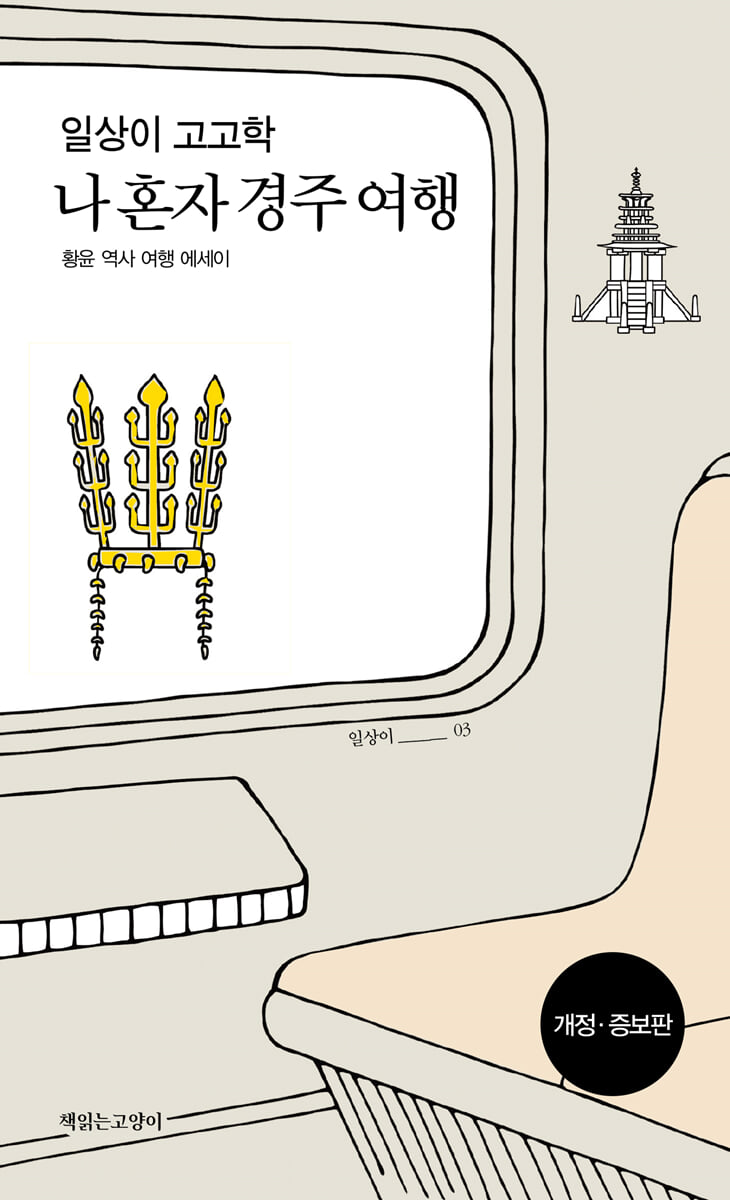 |
Description
Book Introduction
How to see Gyeongju through archaeology, as told by Hwang Yun, author of "How to See a Museum"!
A travelogue of Gyeongju by a Gyeongju fanatic who has been to Gyeongju over 100 times!
The pure perspective and deep-rooted expertise of Korea's first otaku-turned-historian,
Vivid storytelling awakens our curiosity about history.
Author Hwang Yun is a self-proclaimed Silla Gyeongju maniac who has been to Gyeongju more than 100 times since his first visit when he was 20 years old.
He is a historian who has studied almost all materials related to the Three Kingdoms period, including the Samguk Sagi and Samguk Yusa, which have become worn from reading them so much that he has to buy and read them again.
Through the previously published book, “Kim Yu-sin Cuts Off the Horse’s Head,” the author has stimulated the exploration of Silla by history buffs by meticulously depicting the grand ambitions of King Munmu, his bold reign, and the push-and-pull strategies and tactics with neighboring countries that emerged during the process of unifying the three kingdoms, along with the life of Kim Yu-sin.
『Daily Life is Archaeology, My Solo Gyeongju Trip』 is a book about how to see Gyeongju through archaeology, written by Hwang Yun, a Gyeongju enthusiast who has been to Gyeongju over 100 times.
By adding archaeology to the beautiful scenery of Gyeongju, we provide intellectual healing to our journey, and guide everyone to see more and deeper things through their everyday journey.
As a museum enthusiast, by incorporating the eye of an appreciator who sees the invisible into his travels, Gyeongju itself becomes an open museum.
A travelogue of Gyeongju by a Gyeongju fanatic who has been to Gyeongju over 100 times!
The pure perspective and deep-rooted expertise of Korea's first otaku-turned-historian,
Vivid storytelling awakens our curiosity about history.
Author Hwang Yun is a self-proclaimed Silla Gyeongju maniac who has been to Gyeongju more than 100 times since his first visit when he was 20 years old.
He is a historian who has studied almost all materials related to the Three Kingdoms period, including the Samguk Sagi and Samguk Yusa, which have become worn from reading them so much that he has to buy and read them again.
Through the previously published book, “Kim Yu-sin Cuts Off the Horse’s Head,” the author has stimulated the exploration of Silla by history buffs by meticulously depicting the grand ambitions of King Munmu, his bold reign, and the push-and-pull strategies and tactics with neighboring countries that emerged during the process of unifying the three kingdoms, along with the life of Kim Yu-sin.
『Daily Life is Archaeology, My Solo Gyeongju Trip』 is a book about how to see Gyeongju through archaeology, written by Hwang Yun, a Gyeongju enthusiast who has been to Gyeongju over 100 times.
By adding archaeology to the beautiful scenery of Gyeongju, we provide intellectual healing to our journey, and guide everyone to see more and deeper things through their everyday journey.
As a museum enthusiast, by incorporating the eye of an appreciator who sees the invisible into his travels, Gyeongju itself becomes an open museum.
- You can preview some of the book's contents.
Preview
index
prolog
1.
Bonghwangdae
Why did the Silla people build such large tombs?
Why are there no burial mounds in the four tombs around Bonghwangdae?
2.
Gyeongju National Museum
The easiest way to understand the city of Gyeongju
Entering the National Gyeongju Museum
The Story of the Ancient Tombs in the Museum
Meet the Golden Crown
Meet Wonhyo Daesa at the Outdoor Exhibition Hall
3.
King Taejong Muyeol's Tomb
Why Kim Chun-chu is more familiar than King Taejong Muyeol
Who is the main character of the tomb?
Who is the real owner of the tomb?
Chusa Kim Jeong-hui and King Taejong Muyeol's Tomb
Seoak Seowon
4.
Hwangryongsa Temple and Bunhwangsa Temple
Two of the Silla Three Treasures are in Hwangryongsa Temple.
A national temple should be like this
Meet the Jang Yuk-jon-bul
Legends remaining at Bunhwangsa Temple
5.
Night view of Gyeongju
Say hello to the old tower in front of Gyeongju Station
Night racing and Cheomseongdae
Passing through Gyerim to Banwolseong
Thinking of King Munmu and Kim In-mun at Donggung Palace and Wolji Pond
6.
King Munmu's Tomb
How about taking a break at my own special hotel?
Bomun Tourist Complex
Passing by Golgulsa Temple, I think of King Munmu.
King Munmu's Tomb and its Hidden Story
King Munmu's Tomb and Manpasikjeok as seen from Igyeondae
The majestic Gamsansa Temple Pagoda
7.
Bulguksa Temple
The way to Bulguksa Temple
Is Bulguksa a private temple or a national temple?
The mysterious world of stones
Two stone pagodas
Handsome Buddha
When is the best time to go to Seokguram Grotto?
Namsan, a huge pagoda decorated by the Silla people
8.
Hwangridan-gil
A new item in Gyeongju, Hwangridan-gil
Talk to people in Gyeongju
Finally home
Epilogue
Why did Silla ultimately win?
References
1.
Bonghwangdae
Why did the Silla people build such large tombs?
Why are there no burial mounds in the four tombs around Bonghwangdae?
2.
Gyeongju National Museum
The easiest way to understand the city of Gyeongju
Entering the National Gyeongju Museum
The Story of the Ancient Tombs in the Museum
Meet the Golden Crown
Meet Wonhyo Daesa at the Outdoor Exhibition Hall
3.
King Taejong Muyeol's Tomb
Why Kim Chun-chu is more familiar than King Taejong Muyeol
Who is the main character of the tomb?
Who is the real owner of the tomb?
Chusa Kim Jeong-hui and King Taejong Muyeol's Tomb
Seoak Seowon
4.
Hwangryongsa Temple and Bunhwangsa Temple
Two of the Silla Three Treasures are in Hwangryongsa Temple.
A national temple should be like this
Meet the Jang Yuk-jon-bul
Legends remaining at Bunhwangsa Temple
5.
Night view of Gyeongju
Say hello to the old tower in front of Gyeongju Station
Night racing and Cheomseongdae
Passing through Gyerim to Banwolseong
Thinking of King Munmu and Kim In-mun at Donggung Palace and Wolji Pond
6.
King Munmu's Tomb
How about taking a break at my own special hotel?
Bomun Tourist Complex
Passing by Golgulsa Temple, I think of King Munmu.
King Munmu's Tomb and its Hidden Story
King Munmu's Tomb and Manpasikjeok as seen from Igyeondae
The majestic Gamsansa Temple Pagoda
7.
Bulguksa Temple
The way to Bulguksa Temple
Is Bulguksa a private temple or a national temple?
The mysterious world of stones
Two stone pagodas
Handsome Buddha
When is the best time to go to Seokguram Grotto?
Namsan, a huge pagoda decorated by the Silla people
8.
Hwangridan-gil
A new item in Gyeongju, Hwangridan-gil
Talk to people in Gyeongju
Finally home
Epilogue
Why did Silla ultimately win?
References
Detailed image

Publisher's Review
Why did the Silla people build such large tombs?
Ambiguous passages from Samguk Sagi and Samguk Yusa come to life
The trip begins with getting off at Gyeongju Intercity Bus Terminal and saying, “Let’s walk first.” We head to Bonghwangdae and Daereungwon.
We examine the historical background of why the Silla people built such large tombs.
Now that we have seen the exterior of the tomb, it is time to visit the National Gyeongju Museum to see the treasures contained within.
After seeing the Silla people's extraordinary love of gold and gold crowns, we head to the tomb of King Taejong Muyeol, better known to us as Kim Chun-chu.
It subtly proves that the nearby tombs named after King Jinheung, King Jinpyeong, King Heonan, and King Munseong during the Joseon Dynasty are not real.
“To put it more clearly, if you look at the tombs of Silla with eyes that have sufficiently appreciated them so far, you will see that the tombs on the mountains that are currently named after King Beopheung, King Jinheung, King Jinji, King Heonan, and King Munseong do not at all feel like royal tombs.”
In the end, it was just a tomb built according to the Joseon Dynasty's standards.
The next place we went to by taxi was Hwangryongsa Temple.
We take a closer look at two of the three representative treasures of Silla, known as the Three Treasures of Silla: the Jangyukjonbul and the Hwangnyongsa Nine-Story Wooden Pagoda.
We confirm the only clue to the existence of Jangyukjonbul, the giant nabal (Buddha's hair), and confirm the Buddhist protection ritual of the Seonggol Kings contained in the nine-story pagoda.
The representative relics that come to mind when thinking of Silla, such as Seokguram Grotto, Seokgatap Pagoda, Dabotap Pagoda, King Seongdeok Divine Bell, and Golden Crown, do not even qualify as the Silla Three Treasures, so it is difficult to even imagine how great Silla's aesthetic level was.
By returning the express bus ticket and changing it to a ticket for the same time slot the next day, I can enjoy the night racing program at Cheomseongdae, Donggung Palace, and Wolji Pond for the first time in a long while, and recharging my 24-hour trip.
The highlight of the trip: King Munmu's Tomb
Why was Silla, the weakest of the three kingdoms, able to unify them?
On the second day, we take an early morning bus to Daewangam, located on the sea.
This is the hidden story of how King Munmu's tomb was known as Gwaereung until the 1970s, and it also tells the process of confirming that the rock called Daewangam was King Munmu's funeral site by organizing the claims of various scholars based on the records of King Munmu in the Samguk Sagi, the epitaph of Choi Chi-won, and the Samguk Yusa.
However, the Gyeongju Kim clan, despite various verifications, did not recognize the current tomb of King Munmu, and only after five years of discussion did they change the owner of Gwaereung from King Munmu to King Wonseong and identify Daewangam as the tomb of King Munmu.
“It seems that the Joseon Dynasty certainly had the talent to make the grand will of a great hero seem trivial.”
The author seems to have a keen interest in Silla's unification of the three kingdoms, and focuses his travels on King Munmu.
King Munmu was a man of mixed blood between the Silla and Gaya dynasties, so he had some disadvantages in terms of bloodline, but thanks to his father, King Taejong Muyeol, he became the crown prince with world-class insight, having visited the capital of the Tang Dynasty.
Moreover, he was a prepared man with military experience who had personally witnessed the battle in which he participated in the conquest of Baekje with his maternal uncle, Kim Yu-sin, and defeated Gyebaek with his 5,000-strong suicide squad and captured the Baekje capital.
After losing several battles against the Tang Dynasty and facing an urgent situation, he abandoned his royal dignity to buy time and sent a letter of repentance to the Tang Emperor, temporarily halting the Tang Dynasty's attacks and taking advantage of the gap to thoroughly prepare for a counterattack.
The journey reaches its climax when, after learning that King Munmu's proclamation was false, he defeats the invading Tang army once again at Daeso Fortress and achieves a great victory.
Although the Tang Dynasty was a vassal state, it treated Silla, full of pride in having defeated the superpower Tang Dynasty, as the first in the hierarchy of vassal states.
The author, who was curious about why Silla ultimately won over these powerful nations—Goguryeo, which fought against China and achieved several exhilarating victories, and Baekje, which spread its culture not only to Silla but also to Gaya and Japan with its aristocratic aesthetic—finds the answer at the Tomb of King Munmu.
Climb up to the observation deck and look at King Munmu's tomb, empathizing with the filial piety of King Sinmun, the son of King Munmu.
King Munmu, who requested a burial at sea with the intention of becoming a dragon and protecting the country even after death, was not simply a tomb on the sea, but a tomb located on the border.
King Munmu's Tomb is located on a rocky island in the sea, just 200 meters from the land.
Considering the reversal of the idea of storing the king's tomb, and the scale of the Silla royal tombs, it is clear that King Munmu's tomb was quite different from the ideas of the time.
While touring Gamsansa Temple with the story of Manpasikjeok, he laments that King Munmu has been significantly undervalued in Korean history and shows strong enthusiasm for this topic.
The meaning of Seokgatap and Dabotap is the key to understanding Bulguksa Temple.
A glimpse into the pride of Unified Silla, which independently expanded the Buddhist worldview.
The road back to Bulguksa Temple is not easy.
Having saved on transportation costs and time by getting off the bus and taking a taxi, I look into whether Bulguksa Temple is a private temple or a national temple.
Unlike Hwangryongsa and Bunhwangsa, which were built on flat land, Bulguksa Temple shows the beginning of temples being built on mountains. Let's take a look at the meaning of the Seokgatap and Dabotap, which we have been familiar with, at Bulguksa Temple.
Seokgatap is also famous as the pagoda where the world's oldest woodblock print, the Mugujeonggwang Dharanigyeong, was discovered. It was formerly called Mugujeonggwangtap or Seoseoktap.
The principle of Mugujeonggwangbulbeop means that simply repairing or rebuilding a pagoda can accumulate the same merit as building one. This became an ingenious way to ensure both accessibility and sustainability of Buddhist faith by allowing numerous believers to participate in Buddhist ceremonies while reducing the financial burden.
In this respect, the Seokgatap, which houses the Mugujeonggwangdaedharanigyeong, was a pagoda that declared the popularization of Silla Buddhism beyond the faith of the king and the nobility.
On the other hand, Dabotap created an atmosphere of searching for the origin of the pagoda by recreating the wooden pagoda, the first pagoda built on the Korean Peninsula, in stone.
As a result, I wanted to tell the story of the expansion of the Silla Buddhist worldview and its solid genealogy through Dabotap and Seokgatap.
The story goes that Buddhism began when Silla accepted the Buddha's teachings (Dabotap) from India and China, but the Silla people eventually perfected it (Seokgatap) as their own.
Here, if we connect the storytelling of the Indian stone cave temples to Seokguram Grotto, we can interpret the Chinese wooden pagoda as Dabotap and the completion of Silla's Buddhist law as Seokgatap (three-story stone pagoda).
In other words, did Kim Dae-seong express the illegal migration from India to China to Silla as the final version of the expansion of the Buddhist worldview that could be shown on the Korean Peninsula through Bulguksa Temple?
It was presented in one place at Bulguksa Temple from the past to the present.
Kim Dae-seong demonstrated the ultimate expansion of the Buddhist worldview that could be displayed on the Korean Peninsula through the architecture of Bulguksa Temple and Seokguram Grotto.
This means that Silla was at the peak of its cultural heyday, to the point where it could express its worldview in sophisticated architecture. Furthermore, it was also a confident expression of its own worldview, born from the pride it had gained from defeating even the powerful Tang Dynasty.
Ambiguous passages from Samguk Sagi and Samguk Yusa come to life
The trip begins with getting off at Gyeongju Intercity Bus Terminal and saying, “Let’s walk first.” We head to Bonghwangdae and Daereungwon.
We examine the historical background of why the Silla people built such large tombs.
Now that we have seen the exterior of the tomb, it is time to visit the National Gyeongju Museum to see the treasures contained within.
After seeing the Silla people's extraordinary love of gold and gold crowns, we head to the tomb of King Taejong Muyeol, better known to us as Kim Chun-chu.
It subtly proves that the nearby tombs named after King Jinheung, King Jinpyeong, King Heonan, and King Munseong during the Joseon Dynasty are not real.
“To put it more clearly, if you look at the tombs of Silla with eyes that have sufficiently appreciated them so far, you will see that the tombs on the mountains that are currently named after King Beopheung, King Jinheung, King Jinji, King Heonan, and King Munseong do not at all feel like royal tombs.”
In the end, it was just a tomb built according to the Joseon Dynasty's standards.
The next place we went to by taxi was Hwangryongsa Temple.
We take a closer look at two of the three representative treasures of Silla, known as the Three Treasures of Silla: the Jangyukjonbul and the Hwangnyongsa Nine-Story Wooden Pagoda.
We confirm the only clue to the existence of Jangyukjonbul, the giant nabal (Buddha's hair), and confirm the Buddhist protection ritual of the Seonggol Kings contained in the nine-story pagoda.
The representative relics that come to mind when thinking of Silla, such as Seokguram Grotto, Seokgatap Pagoda, Dabotap Pagoda, King Seongdeok Divine Bell, and Golden Crown, do not even qualify as the Silla Three Treasures, so it is difficult to even imagine how great Silla's aesthetic level was.
By returning the express bus ticket and changing it to a ticket for the same time slot the next day, I can enjoy the night racing program at Cheomseongdae, Donggung Palace, and Wolji Pond for the first time in a long while, and recharging my 24-hour trip.
The highlight of the trip: King Munmu's Tomb
Why was Silla, the weakest of the three kingdoms, able to unify them?
On the second day, we take an early morning bus to Daewangam, located on the sea.
This is the hidden story of how King Munmu's tomb was known as Gwaereung until the 1970s, and it also tells the process of confirming that the rock called Daewangam was King Munmu's funeral site by organizing the claims of various scholars based on the records of King Munmu in the Samguk Sagi, the epitaph of Choi Chi-won, and the Samguk Yusa.
However, the Gyeongju Kim clan, despite various verifications, did not recognize the current tomb of King Munmu, and only after five years of discussion did they change the owner of Gwaereung from King Munmu to King Wonseong and identify Daewangam as the tomb of King Munmu.
“It seems that the Joseon Dynasty certainly had the talent to make the grand will of a great hero seem trivial.”
The author seems to have a keen interest in Silla's unification of the three kingdoms, and focuses his travels on King Munmu.
King Munmu was a man of mixed blood between the Silla and Gaya dynasties, so he had some disadvantages in terms of bloodline, but thanks to his father, King Taejong Muyeol, he became the crown prince with world-class insight, having visited the capital of the Tang Dynasty.
Moreover, he was a prepared man with military experience who had personally witnessed the battle in which he participated in the conquest of Baekje with his maternal uncle, Kim Yu-sin, and defeated Gyebaek with his 5,000-strong suicide squad and captured the Baekje capital.
After losing several battles against the Tang Dynasty and facing an urgent situation, he abandoned his royal dignity to buy time and sent a letter of repentance to the Tang Emperor, temporarily halting the Tang Dynasty's attacks and taking advantage of the gap to thoroughly prepare for a counterattack.
The journey reaches its climax when, after learning that King Munmu's proclamation was false, he defeats the invading Tang army once again at Daeso Fortress and achieves a great victory.
Although the Tang Dynasty was a vassal state, it treated Silla, full of pride in having defeated the superpower Tang Dynasty, as the first in the hierarchy of vassal states.
The author, who was curious about why Silla ultimately won over these powerful nations—Goguryeo, which fought against China and achieved several exhilarating victories, and Baekje, which spread its culture not only to Silla but also to Gaya and Japan with its aristocratic aesthetic—finds the answer at the Tomb of King Munmu.
Climb up to the observation deck and look at King Munmu's tomb, empathizing with the filial piety of King Sinmun, the son of King Munmu.
King Munmu, who requested a burial at sea with the intention of becoming a dragon and protecting the country even after death, was not simply a tomb on the sea, but a tomb located on the border.
King Munmu's Tomb is located on a rocky island in the sea, just 200 meters from the land.
Considering the reversal of the idea of storing the king's tomb, and the scale of the Silla royal tombs, it is clear that King Munmu's tomb was quite different from the ideas of the time.
While touring Gamsansa Temple with the story of Manpasikjeok, he laments that King Munmu has been significantly undervalued in Korean history and shows strong enthusiasm for this topic.
The meaning of Seokgatap and Dabotap is the key to understanding Bulguksa Temple.
A glimpse into the pride of Unified Silla, which independently expanded the Buddhist worldview.
The road back to Bulguksa Temple is not easy.
Having saved on transportation costs and time by getting off the bus and taking a taxi, I look into whether Bulguksa Temple is a private temple or a national temple.
Unlike Hwangryongsa and Bunhwangsa, which were built on flat land, Bulguksa Temple shows the beginning of temples being built on mountains. Let's take a look at the meaning of the Seokgatap and Dabotap, which we have been familiar with, at Bulguksa Temple.
Seokgatap is also famous as the pagoda where the world's oldest woodblock print, the Mugujeonggwang Dharanigyeong, was discovered. It was formerly called Mugujeonggwangtap or Seoseoktap.
The principle of Mugujeonggwangbulbeop means that simply repairing or rebuilding a pagoda can accumulate the same merit as building one. This became an ingenious way to ensure both accessibility and sustainability of Buddhist faith by allowing numerous believers to participate in Buddhist ceremonies while reducing the financial burden.
In this respect, the Seokgatap, which houses the Mugujeonggwangdaedharanigyeong, was a pagoda that declared the popularization of Silla Buddhism beyond the faith of the king and the nobility.
On the other hand, Dabotap created an atmosphere of searching for the origin of the pagoda by recreating the wooden pagoda, the first pagoda built on the Korean Peninsula, in stone.
As a result, I wanted to tell the story of the expansion of the Silla Buddhist worldview and its solid genealogy through Dabotap and Seokgatap.
The story goes that Buddhism began when Silla accepted the Buddha's teachings (Dabotap) from India and China, but the Silla people eventually perfected it (Seokgatap) as their own.
Here, if we connect the storytelling of the Indian stone cave temples to Seokguram Grotto, we can interpret the Chinese wooden pagoda as Dabotap and the completion of Silla's Buddhist law as Seokgatap (three-story stone pagoda).
In other words, did Kim Dae-seong express the illegal migration from India to China to Silla as the final version of the expansion of the Buddhist worldview that could be shown on the Korean Peninsula through Bulguksa Temple?
It was presented in one place at Bulguksa Temple from the past to the present.
Kim Dae-seong demonstrated the ultimate expansion of the Buddhist worldview that could be displayed on the Korean Peninsula through the architecture of Bulguksa Temple and Seokguram Grotto.
This means that Silla was at the peak of its cultural heyday, to the point where it could express its worldview in sophisticated architecture. Furthermore, it was also a confident expression of its own worldview, born from the pride it had gained from defeating even the powerful Tang Dynasty.
GOODS SPECIFICS
- Publication date: October 15, 2020
- Page count, weight, size: 256 pages | 214g | 112*184*17mm
- ISBN13: 9791186274637
- ISBN10: 1186274638
You may also like
카테고리
korean


korean

![GQ KOREA Mark (Monthly): December [2025]](http://librairie.coreenne.fr/cdn/shop/files/8ef265dbbfbf186523ed75ba7319009d.jpg?v=1765340328&width=3840)


