

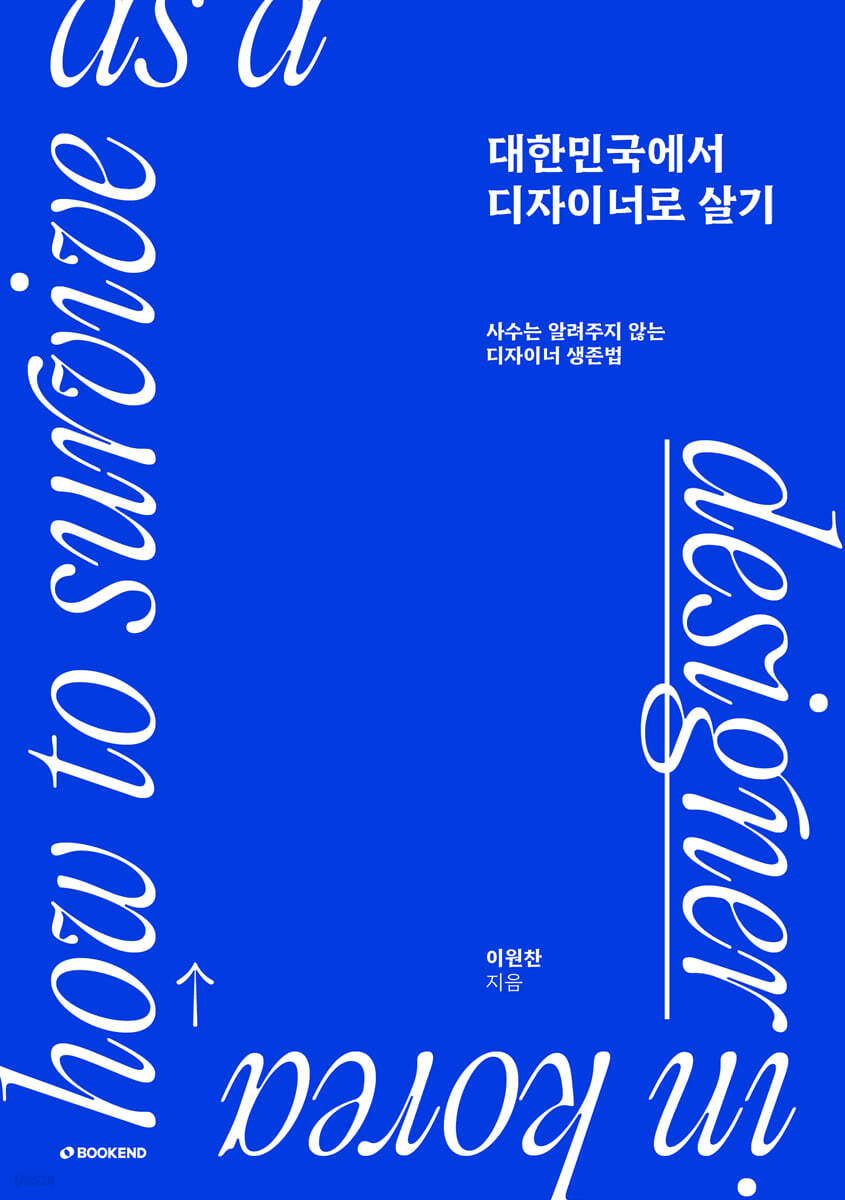
Living as a Designer in South Korea
 |
Description
Book Introduction
Just as each layer is stacked to create a design, a designer's life also requires tightly stacked layers.
'Layer 1.
'Becoming a Designer' is full of useful information that design job seekers who dream of becoming designers should take note of.
It contains helpful information for both design majors and non-design majors aspiring to become designers, including what kind of person is suitable for becoming a designer, how to choose a career path, how to best prepare resumes, portfolios, and interviews, and the current state of the industry.
This is also a useful story for practitioners who are already working as practitioners but dream of a challenge because their field is not suitable for them.
'Layer 2.
'Living as a Designer' is more focused on practitioners.
The author's hope is to help junior designers who, contrary to imagination, feel deeply that the title of designer alone cannot prove their identity as a designer.
We share a mindset that will help you navigate the many emotions and situations you encounter as a designer, such as fearful elimination, dreamy growth, and slumps you want to escape.
Finally, 'Layer 3.
'Working as a Designer' contains 15 years of brilliant practical know-how.
What types of clients you should avoid working with in the first place, what are the practical processes for working smartly, how to calculate estimates, how to handle design disputes, and even the most commonly used practical terminology and communication methods in the field.
His belief is that to survive as a designer in Korea, one must not only have the right mental attitude but also a strong work ethic.
A resting corner is provided at the end of each layer.
From frequently asked questions by aspiring designers to designer MBTI rankings and even letters to clients.
It's a good idea to take a break and reflect before taking the next step toward further growth as a designer.
But resting simply for the sake of it can lead to laziness.
To keep you a bit on the edge, and because there's still so much information to share, I've included helpful, concise information on how to design a business card, types and features of printing, contract-related terms, and font site recommendations.
'Layer 1.
'Becoming a Designer' is full of useful information that design job seekers who dream of becoming designers should take note of.
It contains helpful information for both design majors and non-design majors aspiring to become designers, including what kind of person is suitable for becoming a designer, how to choose a career path, how to best prepare resumes, portfolios, and interviews, and the current state of the industry.
This is also a useful story for practitioners who are already working as practitioners but dream of a challenge because their field is not suitable for them.
'Layer 2.
'Living as a Designer' is more focused on practitioners.
The author's hope is to help junior designers who, contrary to imagination, feel deeply that the title of designer alone cannot prove their identity as a designer.
We share a mindset that will help you navigate the many emotions and situations you encounter as a designer, such as fearful elimination, dreamy growth, and slumps you want to escape.
Finally, 'Layer 3.
'Working as a Designer' contains 15 years of brilliant practical know-how.
What types of clients you should avoid working with in the first place, what are the practical processes for working smartly, how to calculate estimates, how to handle design disputes, and even the most commonly used practical terminology and communication methods in the field.
His belief is that to survive as a designer in Korea, one must not only have the right mental attitude but also a strong work ethic.
A resting corner is provided at the end of each layer.
From frequently asked questions by aspiring designers to designer MBTI rankings and even letters to clients.
It's a good idea to take a break and reflect before taking the next step toward further growth as a designer.
But resting simply for the sake of it can lead to laziness.
To keep you a bit on the edge, and because there's still so much information to share, I've included helpful, concise information on how to design a business card, types and features of printing, contract-related terms, and font site recommendations.
- You can preview some of the book's contents.
Preview
index
Recommendation
prolog
Layer 1.
Becoming a designer
- People like this are difficult to design for.
- The difference between design and art
- To become a competent non-major designer
- A world of such diverse designs
- How to find my way
- Studying abroad is a reality.
- How should I write a resume?
- The basics of a portfolio
- What is the difference between a design award and a competition?
- How to prepare for a job by creating your own opportunities
- Things to know when preparing for an interview
In-house vs. agency
- The secret to having both a portfolio and a high salary
- Things to keep in mind when designing a business card
- Q&A Are designers born that way? / Is academic background important in design? / Is it too late to start designing?
Layer 2.
Living as a designer
- If you don't want to become a designer who gets eliminated
- Growing as a growing designer
15 Principles Korean Designers Should Keep in Mind
- When you think design is ruining your life
- How to not give up on design despite everything
- 3 Ways to Become an Irreplaceable Designer
- In fact, skill alone is not enough.
- Designing a slump
- Misconceptions and truths about designers that designers often hear
- Types and characteristics of printing that designers should know
- Designer MBTI Rankings
Layer 3.
Working as a designer
- A client type that is best avoided in the first place
- The line that designers and clients must keep
- A practical process that keeps your eyes open and your nose cut off
- Estimation Calculation Method for Students and Junior Freelance Designers
- Contracts, the minimum device to protect creators
How to resolve design disputes without hiring a lawyer
- Useful Communication Guide for New Employees
- Glossary of Design Practice Terms
- Where and how do you find inspiration?
- Learn about contract-related terms
- Free font sites recommended by current designers
- To.
client
Epilogue
Acknowledgements
prolog
Layer 1.
Becoming a designer
- People like this are difficult to design for.
- The difference between design and art
- To become a competent non-major designer
- A world of such diverse designs
- How to find my way
- Studying abroad is a reality.
- How should I write a resume?
- The basics of a portfolio
- What is the difference between a design award and a competition?
- How to prepare for a job by creating your own opportunities
- Things to know when preparing for an interview
In-house vs. agency
- The secret to having both a portfolio and a high salary
- Things to keep in mind when designing a business card
- Q&A Are designers born that way? / Is academic background important in design? / Is it too late to start designing?
Layer 2.
Living as a designer
- If you don't want to become a designer who gets eliminated
- Growing as a growing designer
15 Principles Korean Designers Should Keep in Mind
- When you think design is ruining your life
- How to not give up on design despite everything
- 3 Ways to Become an Irreplaceable Designer
- In fact, skill alone is not enough.
- Designing a slump
- Misconceptions and truths about designers that designers often hear
- Types and characteristics of printing that designers should know
- Designer MBTI Rankings
Layer 3.
Working as a designer
- A client type that is best avoided in the first place
- The line that designers and clients must keep
- A practical process that keeps your eyes open and your nose cut off
- Estimation Calculation Method for Students and Junior Freelance Designers
- Contracts, the minimum device to protect creators
How to resolve design disputes without hiring a lawyer
- Useful Communication Guide for New Employees
- Glossary of Design Practice Terms
- Where and how do you find inspiration?
- Learn about contract-related terms
- Free font sites recommended by current designers
- To.
client
Epilogue
Acknowledgements
Detailed image

Into the book
Both design and art are fields that deserve respect.
The important thing is to clearly understand whether what I am doing now is design or art.
Again, problems arise when you do art when you should be designing, or design when you should be doing art.
I need to have a clear purpose in creating something, whether it is design or art.
So, if you want to become a true designer, don't just pursue what's visually beautiful; remember to constantly strive to develop an attitude of problem-solving through hands-on experience.
--- p.31
The first thing most non-designers do to become designers is to go to an academy to learn design programs like Photoshop, Illustrator, or C4D.
As a designer, you need to be able to use tools in your field well, but you can't become a designer just by knowing how to use tools.
So how can a non-major become a good designer?
--- p.32
It's a new experience, but the world is truly an interesting place.
No matter how much you think and think about it, there is no option that satisfies everything.
If compensation, salary, and benefits are your top priorities, going in-house is the right choice. However, if you want to gain diverse experience and build a solid portfolio, an agency may be more advantageous.
--- p.107
It is impossible to prove one's existence and role as a designer with just the name of designer.
Even after becoming a designer, studying and worrying as much as we have studied to become a designer, or perhaps even more, is like the destiny we must have as designers.
Otherwise, you can't do the job.
Weeded out and forgotten.
Naturally, the industry no longer seeks me out, and eventually I lose interest in design itself, reaching a point where I can no longer continue doing this work.
--- p.126
Actually, there is no special secret to growing as a designer.
They just have one thing in common: they love design.
Is there any word as grand and boundless as the word love?
When we love something, we think about it over and over again and are willing to act for it.
(Omitted) It is because the love for design makes designers that way.
--- p.136
I think everyone goes through a slump.
I think that regardless of the field, whether in-house, at an agency, freelance, or in business, all designers are bound to experience slumps.
This principle applies not only to designers, but to all professions in the world.
So, as a designer, it's a good idea to naturally accept the slump and use this opportunity to broaden your life pipeline by doing various things.
--- p.161
Even the smallest contract requires a contract (including contracts worth hundreds of thousands of won).
The project cost is small? We're close friends? But if we don't sign a contract, we have no means of protecting ourselves if things go wrong later.
In most legal disputes, the designer is always on the receiving end, so a contract must be written.
--- p.182
While it's important to provide quality work to your clients, you also need to work hard to create the optimal work environment for producing quality work.
It is difficult to expect good results from a project that is carried out in an irrational, suspicious, and uncertain state.
Let's become a smart designer who clearly understands the progress of a project and confidently demands rights when something goes wrong!
The important thing is to clearly understand whether what I am doing now is design or art.
Again, problems arise when you do art when you should be designing, or design when you should be doing art.
I need to have a clear purpose in creating something, whether it is design or art.
So, if you want to become a true designer, don't just pursue what's visually beautiful; remember to constantly strive to develop an attitude of problem-solving through hands-on experience.
--- p.31
The first thing most non-designers do to become designers is to go to an academy to learn design programs like Photoshop, Illustrator, or C4D.
As a designer, you need to be able to use tools in your field well, but you can't become a designer just by knowing how to use tools.
So how can a non-major become a good designer?
--- p.32
It's a new experience, but the world is truly an interesting place.
No matter how much you think and think about it, there is no option that satisfies everything.
If compensation, salary, and benefits are your top priorities, going in-house is the right choice. However, if you want to gain diverse experience and build a solid portfolio, an agency may be more advantageous.
--- p.107
It is impossible to prove one's existence and role as a designer with just the name of designer.
Even after becoming a designer, studying and worrying as much as we have studied to become a designer, or perhaps even more, is like the destiny we must have as designers.
Otherwise, you can't do the job.
Weeded out and forgotten.
Naturally, the industry no longer seeks me out, and eventually I lose interest in design itself, reaching a point where I can no longer continue doing this work.
--- p.126
Actually, there is no special secret to growing as a designer.
They just have one thing in common: they love design.
Is there any word as grand and boundless as the word love?
When we love something, we think about it over and over again and are willing to act for it.
(Omitted) It is because the love for design makes designers that way.
--- p.136
I think everyone goes through a slump.
I think that regardless of the field, whether in-house, at an agency, freelance, or in business, all designers are bound to experience slumps.
This principle applies not only to designers, but to all professions in the world.
So, as a designer, it's a good idea to naturally accept the slump and use this opportunity to broaden your life pipeline by doing various things.
--- p.161
Even the smallest contract requires a contract (including contracts worth hundreds of thousands of won).
The project cost is small? We're close friends? But if we don't sign a contract, we have no means of protecting ourselves if things go wrong later.
In most legal disputes, the designer is always on the receiving end, so a contract must be written.
--- p.182
While it's important to provide quality work to your clients, you also need to work hard to create the optimal work environment for producing quality work.
It is difficult to expect good results from a project that is carried out in an irrational, suspicious, and uncertain state.
Let's become a smart designer who clearly understands the progress of a project and confidently demands rights when something goes wrong!
--- p.205
Publisher's Review
Wonchan Lee, a senior designer with 15 years of experience,
We talk about the survival tips of designers.
“I believe that the fundamental element needed to become a designer who doesn’t get left behind is ‘an attitude that overcomes inertia.’
As we struggle to overcome our lazy nature, we can make progress little by little.
This process is by no means easy, but without even realizing it, you are definitely growing right now.
And it's actually more comforting to think that this effort has to be done for the rest of your life.
It has been said that there is a 'finished design' but there is no 'finished designer'.
Let's pledge to become designers who constantly evolve and create new stories."
We all know that counting to fifteen is easy, but doing the same thing for fifteen years is no easy feat.
That's why hearing the know-how of experienced people feels like hope.
Author Wonchan Lee is a 15-year veteran and senior designer who has worked as a freelance designer for 3 years and as the head of a design studio for 12 years.
Among the many professions, he is a designer. He shares the survival tips he has learned while living as a designer in this vast world of Korea, even though he is over 40 years old.
As you can see from the table of contents, it contains everything you need to know about becoming a designer, living as a designer, and working as a designer.
I guarantee that the designer survival tips he shares will be extremely useful to junior designers, including job seekers, freelancers, in-house designers, agencies, studios, and entrepreneurs.
The Korean design industry, as experienced firsthand.
It talks about its ecology and characteristics.
“After graduating from university in Australia, I worked as a freelance designer, and as soon as I came to Korea, I opened a design studio.
As a designer, I had no social experience in Korea, but I was confident that I could design better than anyone else.
But the results were disastrous.
“No one knew us, and I was so lost, not knowing where to start or what to do.”
While it's not entirely unusual for a designer to run a design studio, starting one without any understanding or experience of the Korean design industry is certainly challenging.
Designer Wonchan Lee majored in visual design in Australia and immediately founded a design studio in Korea.
Perhaps it's because he's grown proactively, heading straight into the ground? He doesn't simply talk about what makes a design beautiful or how to use the tools to achieve it.
We'll explain what design and designers mean in Korea, how practical processes work, what employment types and treatment are like, and how to address legal issues and industry limitations.
The growth of junior designers and
Talking about the development of the Korean design industry.
“From a student’s perspective, seeing their designs come out into the world is truly thrilling, exciting, and exciting.
Because I was like that too.
Some may find the thrill and experience more important than monetary compensation, and it can be difficult to determine what constitutes an appropriate price.
However, for the sake of improving treatment in the design industry and for the sake of future designers who will walk this path with me as they become working designers after graduation, we must first strive to receive fair compensation for our work.”
“Don’t be stingy in sharing your knowledge and know-how.
“Ultimately, only when the industry does well can I do well.”
Author Wonchan Lee, a designer and design content creator, has so much to say about design.
So-called design "tips," how to deal with clueless clients, how to successfully navigate your career, and even the know-how to work tirelessly.
The reason he shares his knowledge and speaks out like this is because he wants the design industry to advance.
To support the growth and development of designers, I have compiled the numerous messages I have conveyed through YouTube videos, social media, classrooms, and interviews into "Living as a Designer in Korea."
“The Giving Tree” is how his colleagues in the industry call him, and it is also the direction he pursues in life.
Like a tree that gives generously, I sincerely hope that this book will be a source of strength for all the lonely and struggling designers in this land, and further contribute to the growth of the industry.
We talk about the survival tips of designers.
“I believe that the fundamental element needed to become a designer who doesn’t get left behind is ‘an attitude that overcomes inertia.’
As we struggle to overcome our lazy nature, we can make progress little by little.
This process is by no means easy, but without even realizing it, you are definitely growing right now.
And it's actually more comforting to think that this effort has to be done for the rest of your life.
It has been said that there is a 'finished design' but there is no 'finished designer'.
Let's pledge to become designers who constantly evolve and create new stories."
We all know that counting to fifteen is easy, but doing the same thing for fifteen years is no easy feat.
That's why hearing the know-how of experienced people feels like hope.
Author Wonchan Lee is a 15-year veteran and senior designer who has worked as a freelance designer for 3 years and as the head of a design studio for 12 years.
Among the many professions, he is a designer. He shares the survival tips he has learned while living as a designer in this vast world of Korea, even though he is over 40 years old.
As you can see from the table of contents, it contains everything you need to know about becoming a designer, living as a designer, and working as a designer.
I guarantee that the designer survival tips he shares will be extremely useful to junior designers, including job seekers, freelancers, in-house designers, agencies, studios, and entrepreneurs.
The Korean design industry, as experienced firsthand.
It talks about its ecology and characteristics.
“After graduating from university in Australia, I worked as a freelance designer, and as soon as I came to Korea, I opened a design studio.
As a designer, I had no social experience in Korea, but I was confident that I could design better than anyone else.
But the results were disastrous.
“No one knew us, and I was so lost, not knowing where to start or what to do.”
While it's not entirely unusual for a designer to run a design studio, starting one without any understanding or experience of the Korean design industry is certainly challenging.
Designer Wonchan Lee majored in visual design in Australia and immediately founded a design studio in Korea.
Perhaps it's because he's grown proactively, heading straight into the ground? He doesn't simply talk about what makes a design beautiful or how to use the tools to achieve it.
We'll explain what design and designers mean in Korea, how practical processes work, what employment types and treatment are like, and how to address legal issues and industry limitations.
The growth of junior designers and
Talking about the development of the Korean design industry.
“From a student’s perspective, seeing their designs come out into the world is truly thrilling, exciting, and exciting.
Because I was like that too.
Some may find the thrill and experience more important than monetary compensation, and it can be difficult to determine what constitutes an appropriate price.
However, for the sake of improving treatment in the design industry and for the sake of future designers who will walk this path with me as they become working designers after graduation, we must first strive to receive fair compensation for our work.”
“Don’t be stingy in sharing your knowledge and know-how.
“Ultimately, only when the industry does well can I do well.”
Author Wonchan Lee, a designer and design content creator, has so much to say about design.
So-called design "tips," how to deal with clueless clients, how to successfully navigate your career, and even the know-how to work tirelessly.
The reason he shares his knowledge and speaks out like this is because he wants the design industry to advance.
To support the growth and development of designers, I have compiled the numerous messages I have conveyed through YouTube videos, social media, classrooms, and interviews into "Living as a Designer in Korea."
“The Giving Tree” is how his colleagues in the industry call him, and it is also the direction he pursues in life.
Like a tree that gives generously, I sincerely hope that this book will be a source of strength for all the lonely and struggling designers in this land, and further contribute to the growth of the industry.
GOODS SPECIFICS
- Date of issue: July 15, 2024
- Page count, weight, size: 288 pages | 148*210*20mm
- ISBN13: 9791197601330
- ISBN10: 1197601333
You may also like
카테고리
korean


korean

![GQ KOREA Mark (Monthly): December [2025]](http://librairie.coreenne.fr/cdn/shop/files/8ef265dbbfbf186523ed75ba7319009d.jpg?v=1765340328&width=3840)


