

Run, Abi
 |
Description
Book Introduction
Kim Ae-ran, who debuted at the age of 25 and swept various awards at the youngest age, and has been loved by the literary world as well as a large readership, has returned with a new and improved version of her first novel collection, 『Run, Father』.
Kim Ae-ran received great attention by winning the Hankook Ilbo Literary Award even before publishing her first book, and has since won the Yi Sang Literary Award, the Dong-in Literary Award, the Lee Hyo-seok Literary Award, the Today's Young Artist Award, the Shin Dong-yup Literary Award, the Kim Yu-jeong Literary Award, the Young Writer Award, and the Han Moo-sook Literary Award, establishing herself as a true and prestigious novelist.
The long novel 『My Heart-Pounding Life』, which was greatly loved by readers, was also made into a movie.
This sparkling collection of short stories, which contains Kim Ae-ran's 'firsts' and is fresh yet made her who she is today, contains nine short stories, including the title piece, "Run, Father," which depict the process in which the protagonist, wounded by her father's absence and poverty, creates the value of self-affirmation without falling into resentment or self-pity.
Kim Ae-ran presents her own world of works that are both cheerful and warm, with agility that penetrates everyday life, ingenious imagination, and a flexible writing style.
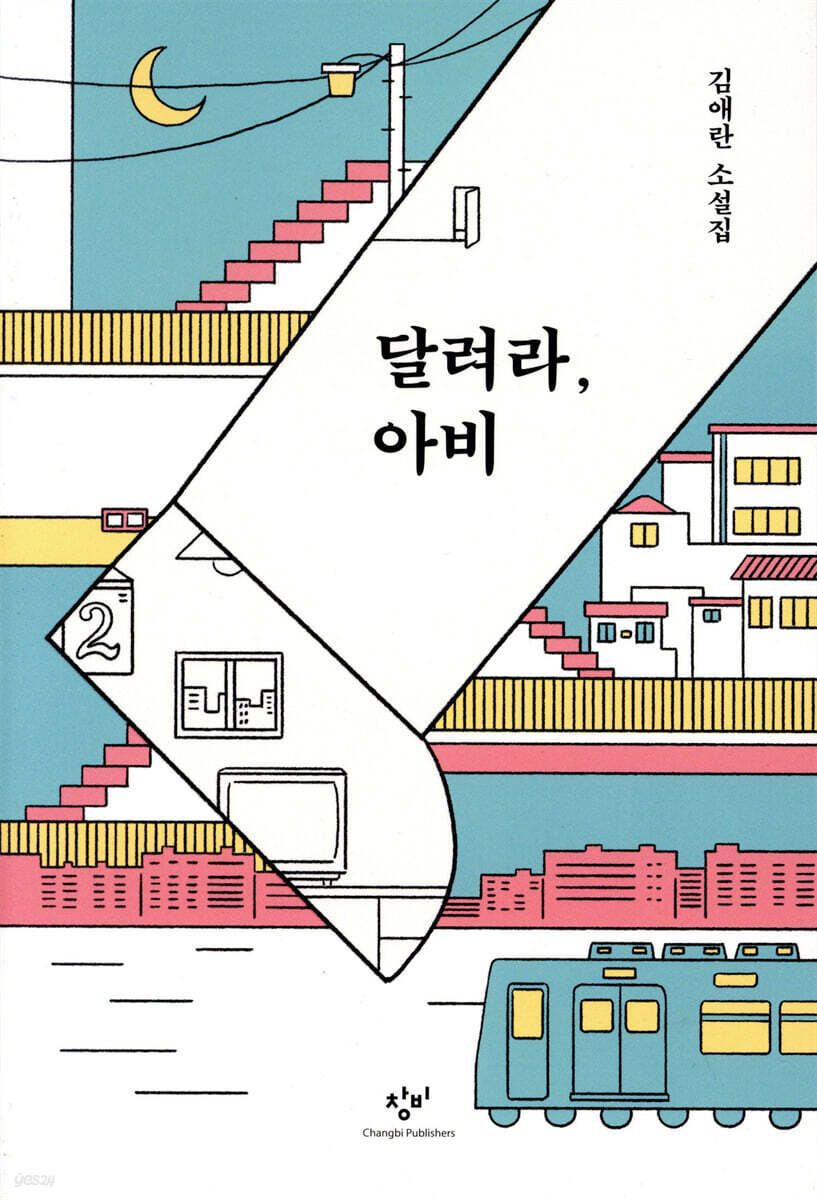
The remastered edition, newly published in 2019, retains the original charm while featuring more refined sentences and order of works, a cover that doubles the warmth and loveliness, and a sharp sensibility.
Kim Ae-ran received great attention by winning the Hankook Ilbo Literary Award even before publishing her first book, and has since won the Yi Sang Literary Award, the Dong-in Literary Award, the Lee Hyo-seok Literary Award, the Today's Young Artist Award, the Shin Dong-yup Literary Award, the Kim Yu-jeong Literary Award, the Young Writer Award, and the Han Moo-sook Literary Award, establishing herself as a true and prestigious novelist.
The long novel 『My Heart-Pounding Life』, which was greatly loved by readers, was also made into a movie.
This sparkling collection of short stories, which contains Kim Ae-ran's 'firsts' and is fresh yet made her who she is today, contains nine short stories, including the title piece, "Run, Father," which depict the process in which the protagonist, wounded by her father's absence and poverty, creates the value of self-affirmation without falling into resentment or self-pity.
Kim Ae-ran presents her own world of works that are both cheerful and warm, with agility that penetrates everyday life, ingenious imagination, and a flexible writing style.
The remastered edition, newly published in 2019, retains the original charm while featuring more refined sentences and order of works, a cover that doubles the warmth and loveliness, and a sharp sensibility.
- You can preview some of the book's contents.
Preview
index
Sky Kongkong
Run, Abi
Who sets off fireworks on the beach?
Greetings of love
Eternal Speaker
There's a reason she can't sleep.
A house that doesn't knock
I go to the convenience store
paper fish
Commentary by Kim Dong-sik
Author's Note
Recommendation
New author's note
Announcement page of included works
Run, Abi
Who sets off fireworks on the beach?
Greetings of love
Eternal Speaker
There's a reason she can't sleep.
A house that doesn't knock
I go to the convenience store
paper fish
Commentary by Kim Dong-sik
Author's Note
Recommendation
New author's note
Announcement page of included works
Into the book
And in that brief moment, something happens on Earth that no one knows about.
Just like our brief kiss long ago.
Just like those days when things you didn't believe happened on the lips closest to you.
--- p.9
The greatest legacy my mother passed on to me was how to not pity myself.
My mother neither felt sorry for me nor pitied me.
So I was grateful to my mother.
I knew it.
People who ask me, "Are you okay?" are really asking about my well-being.
My mother and I had a relationship that was neither salvation nor understanding, but as solid as a standing ticket.
--- p.47
It looks like she won't be coming.
My father quietly recites a passage from the letter inside his jumper.
hello.
I ask for your well-being, which cannot be estimated.
I hope you are doing well.
When you ask, "Hello," I hope that you are all well, including the small worries behind the greeting that you say, and the greetings that you cannot ask after you turn around and say hello again.
--- p.82
I am a person who wants to be understood, but who takes a step back when he sees your bare face.
I am the one who loves you.
But he is the one who knows that love is the love that begins with 'I'.
I am the kind of person who says, "But I am," and then falls down, I am the kind of person who says, "I am," and then falls down, but I am the kind of person who cannot stop, and so I say all over again, "I am the kind of person who often thinks about what kind of person I am."
--- p.150
The reason I feel a sense of relief every time I go to a convenience store might be because I feel like I'm buying everyday life, not just stuff.
When I return home waving a plastic bag, I am neither a poor student living alone nor a lonely person, but an ordinary consumer and citizen of Seoul.
--- p.222
This may have nothing to do with you.
But we often forget that tens of thousands of things that have nothing to do with us have a significant impact on our lives.
You and a broken public phone in a provincial tourist town you'll never visit, you and a StarCraft champion, you and a hellish squid that has lived in a place without light or oxygen since the Paleozoic Era, you and the you between you.
Just like our brief kiss long ago.
Just like those days when things you didn't believe happened on the lips closest to you.
--- p.9
The greatest legacy my mother passed on to me was how to not pity myself.
My mother neither felt sorry for me nor pitied me.
So I was grateful to my mother.
I knew it.
People who ask me, "Are you okay?" are really asking about my well-being.
My mother and I had a relationship that was neither salvation nor understanding, but as solid as a standing ticket.
--- p.47
It looks like she won't be coming.
My father quietly recites a passage from the letter inside his jumper.
hello.
I ask for your well-being, which cannot be estimated.
I hope you are doing well.
When you ask, "Hello," I hope that you are all well, including the small worries behind the greeting that you say, and the greetings that you cannot ask after you turn around and say hello again.
--- p.82
I am a person who wants to be understood, but who takes a step back when he sees your bare face.
I am the one who loves you.
But he is the one who knows that love is the love that begins with 'I'.
I am the kind of person who says, "But I am," and then falls down, I am the kind of person who says, "I am," and then falls down, but I am the kind of person who cannot stop, and so I say all over again, "I am the kind of person who often thinks about what kind of person I am."
--- p.150
The reason I feel a sense of relief every time I go to a convenience store might be because I feel like I'm buying everyday life, not just stuff.
When I return home waving a plastic bag, I am neither a poor student living alone nor a lonely person, but an ordinary consumer and citizen of Seoul.
--- p.222
This may have nothing to do with you.
But we often forget that tens of thousands of things that have nothing to do with us have a significant impact on our lives.
You and a broken public phone in a provincial tourist town you'll never visit, you and a StarCraft champion, you and a hellish squid that has lived in a place without light or oxygen since the Paleozoic Era, you and the you between you.
--- p.262
Publisher's Review
“At that time, I thought that maybe love wasn’t about laughing together,
I thought maybe one side was being funny.”
Still fresh and even more lovely!
Kim Ae-ran's newly returned "Run, Dad" remastered edition
Our dazzling youth, a touch of nostalgia, as we meet again
Why you should read 『Run, Father』 again today,
A unique sense of writing and a sparkling cheerfulness that affirms everyday life.
The remastered version of "Run, Father" has arranged the nine short stories in a new order, different from the original order.
The four short stories distributed throughout the book are works that depict the daily life of a boy narrator with his ‘disappeared father or mother’ as the background.
The absence of a mother is shown in "Sky Kong Kong," which depicts the growth of a boy who lives in a rooftop house with his father who works in the radio business and his older brother who aspires to be a scientist, and in "Who is Shooting Fireworks at the Beach Without a Cause," which tells the story of the first meeting between a mother and her young son who asks "How was I born?"
The young 'me' does not look for his mother, but he is not overly mature either, growing up moderately precocious and moderately childish, and his young father, though clumsy, faithfully and warmly watches over the child's daily life.
The young narrator in "Love's Greetings," which overlaps the search for a lost father with the mystery of the Loch Ness monster, or in "Run, Daddy," which contains a lively imagination about a father who leaves home and abandons his pregnant mother, has no father.
The narrators of each novel honestly resent their fathers, yet they also affirm their fathers' absence with cheerful and affectionate imagination.
In particular, "Run, Daddy" is a work that shows the joyful will to acknowledge wounds and move forward by giving sneakers and sunglasses to the father who is always running in the imagination.
The lack and absence, expressed through positivity and cheerfulness rather than negativity and sadness, meet Kim Ae-ran's characteristically lively prose and present sparkling scenes and lingering emotions.
The five short stories in the latter half contain the daily struggles of young adults entering society.
"There's a Reason She Can't Sleep," about a young office worker suffering from insomnia who ends up living uncomfortably with her father who suddenly visits her one day, and "The Eternal Speaker," which shows an ironic conversation and situation with a classmate she meets by chance on the subway, both depict the inability to communicate and the sense of disconnection with others, both close and distant, experienced by people in their twenties, through dense psychological descriptions.
Meanwhile, "I Go to the Convenience Store" is a work that captures the daily life of capitalism through the eyes of a college student living alone in a university district in Seoul, with a sharp perspective and simple, clear sentences.
The 'I' in Kim Ae-ran's debut work, "The House That Doesn't Knock," is also a narrator who can be read in a similar way. While living alone in a house in a university district, the tenants are conscious of each other, but in the end, they discover 'I's' who look the same.
The story of young adults entering society, who want to form human bonds with others while also hiding from their silent violence, is one that anyone who has gone through or is going through this period can easily relate to.
These works begin with a familiar expression, telling a story of everyday life, then leap forward with sparkling imagination through a delicate inner gaze, ultimately transforming misfortune and wounds into the cheerful energy of self-affirmation.
The bouncy rhythm and melody felt while reading the novel further enhances Kim Ae-ran's unique sensibility.
This is why this collection has been consistently loved for the past 14 years and why it is meeting new readers today.
The remastered version of 『Run, Father』, which we meet again, will still make us feel Kim Ae-ran's unique presence and make us realize what we have been hoping for in Korean literature and novels.
I thought maybe one side was being funny.”
Still fresh and even more lovely!
Kim Ae-ran's newly returned "Run, Dad" remastered edition
Our dazzling youth, a touch of nostalgia, as we meet again
Why you should read 『Run, Father』 again today,
A unique sense of writing and a sparkling cheerfulness that affirms everyday life.
The remastered version of "Run, Father" has arranged the nine short stories in a new order, different from the original order.
The four short stories distributed throughout the book are works that depict the daily life of a boy narrator with his ‘disappeared father or mother’ as the background.
The absence of a mother is shown in "Sky Kong Kong," which depicts the growth of a boy who lives in a rooftop house with his father who works in the radio business and his older brother who aspires to be a scientist, and in "Who is Shooting Fireworks at the Beach Without a Cause," which tells the story of the first meeting between a mother and her young son who asks "How was I born?"
The young 'me' does not look for his mother, but he is not overly mature either, growing up moderately precocious and moderately childish, and his young father, though clumsy, faithfully and warmly watches over the child's daily life.
The young narrator in "Love's Greetings," which overlaps the search for a lost father with the mystery of the Loch Ness monster, or in "Run, Daddy," which contains a lively imagination about a father who leaves home and abandons his pregnant mother, has no father.
The narrators of each novel honestly resent their fathers, yet they also affirm their fathers' absence with cheerful and affectionate imagination.
In particular, "Run, Daddy" is a work that shows the joyful will to acknowledge wounds and move forward by giving sneakers and sunglasses to the father who is always running in the imagination.
The lack and absence, expressed through positivity and cheerfulness rather than negativity and sadness, meet Kim Ae-ran's characteristically lively prose and present sparkling scenes and lingering emotions.
The five short stories in the latter half contain the daily struggles of young adults entering society.
"There's a Reason She Can't Sleep," about a young office worker suffering from insomnia who ends up living uncomfortably with her father who suddenly visits her one day, and "The Eternal Speaker," which shows an ironic conversation and situation with a classmate she meets by chance on the subway, both depict the inability to communicate and the sense of disconnection with others, both close and distant, experienced by people in their twenties, through dense psychological descriptions.
Meanwhile, "I Go to the Convenience Store" is a work that captures the daily life of capitalism through the eyes of a college student living alone in a university district in Seoul, with a sharp perspective and simple, clear sentences.
The 'I' in Kim Ae-ran's debut work, "The House That Doesn't Knock," is also a narrator who can be read in a similar way. While living alone in a house in a university district, the tenants are conscious of each other, but in the end, they discover 'I's' who look the same.
The story of young adults entering society, who want to form human bonds with others while also hiding from their silent violence, is one that anyone who has gone through or is going through this period can easily relate to.
These works begin with a familiar expression, telling a story of everyday life, then leap forward with sparkling imagination through a delicate inner gaze, ultimately transforming misfortune and wounds into the cheerful energy of self-affirmation.
The bouncy rhythm and melody felt while reading the novel further enhances Kim Ae-ran's unique sensibility.
This is why this collection has been consistently loved for the past 14 years and why it is meeting new readers today.
The remastered version of 『Run, Father』, which we meet again, will still make us feel Kim Ae-ran's unique presence and make us realize what we have been hoping for in Korean literature and novels.
GOODS SPECIFICS
- Date of issue: September 25, 2019
- Page count, weight, size: 304 pages | 338g | 128*188*20mm
- ISBN13: 9788936438029
- ISBN10: 8936438026
You may also like
카테고리
korean


korean

![GQ KOREA Mark (Monthly): December [2025]](http://librairie.coreenne.fr/cdn/shop/files/8ef265dbbfbf186523ed75ba7319009d.jpg?v=1765340328&width=3840)


