

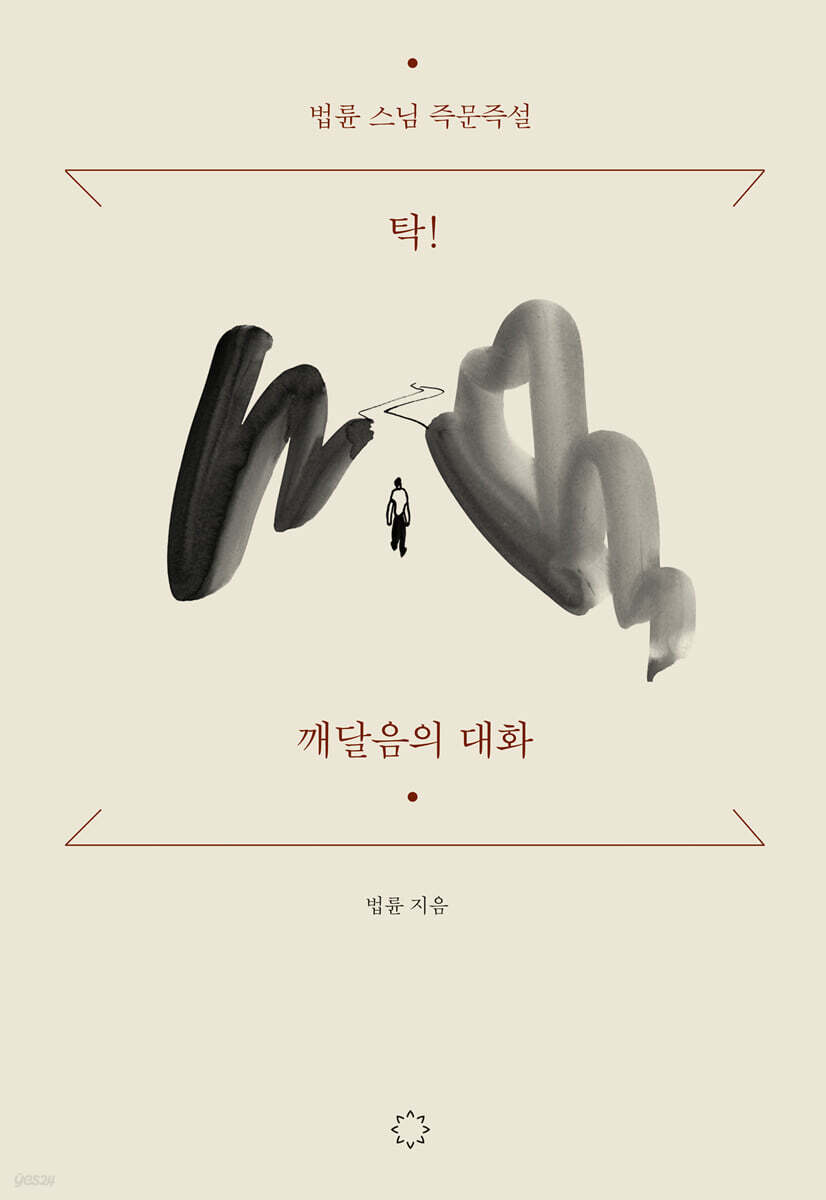
Boom! A conversation of enlightenment
 |
Description
Book Introduction
The quick Q&A of Venerable Pomnyun, who provides the shortest and most accurate answer to any question.
Among those countless conversations, a book has been published that collects sentences that strike the core of the mind and reconstructs them in a more concise and clearer format in the form of Zen questions and answers.
"Tak! A Dialogue of Enlightenment" is a collection of short dialogues that instantly bring a complex mind to a halt.
It contains wisdom that doesn't require lengthy explanations, practical advice that can be applied immediately to the wavering mind, and the power to lead to action as soon as you read it.
Many people tell the monk about their suffering and ask him for a solution, but the monk says firmly: “Immediate questioning and immediate answering is a conversation of enlightenment to immediately free oneself from suffering here and now.
…people ask questions to escape from their miserable lives and live happily.
But the path lies with the questioner himself.
So I ask back to the people who ask questions.
As the conversation progresses, at some point the questioner says, 'It's nothing special.
By saying, 'This is how it will work,' you will find a way to escape from your suffering.
When we realize that the things we experience in life are not a big deal, we realize that there is nothing to be sad about.”
This book is filled with examples of Monk Beopryun's "Immediate Questions and Immediate Answers" that remind us that the path to a happy life free from suffering has already been given to us, but we simply have not yet realized it.
Just like the Buddha's 'Dharma-based sermon', Venerable Pomnyun uses simple and clear analogies according to the questioner's question, and continues the conversation so that the questioner can recognize that the suffering is not a special suffering that can never be solved, but that it can happen in life.
As you read through the short yet profound dialogues in this book, readers will also experience the joy of realizing, with a resounding "Aha, so that's it!", the true nature of suffering.
In the [Practice] of the Pure Land Society, it is said, 'If you look closely, all suffering and entanglements are caused by my own mind.
But foolish people mistakenly believe that this suffering and entanglement comes from outside, and they go here and there to seek happiness and freedom from this person and that person, but they never find it.
…If you look within yourself and realize that the root of all suffering is in your mind, regardless of when or where it occurs, and that the essence of that mind is originally empty, then all suffering and entanglements will disappear immediately.'
This book reminds us that the suffering we experience in life is merely the emptiness of our minds, and helps us discover for ourselves the answer to a happy life free from suffering.
Among those countless conversations, a book has been published that collects sentences that strike the core of the mind and reconstructs them in a more concise and clearer format in the form of Zen questions and answers.
"Tak! A Dialogue of Enlightenment" is a collection of short dialogues that instantly bring a complex mind to a halt.
It contains wisdom that doesn't require lengthy explanations, practical advice that can be applied immediately to the wavering mind, and the power to lead to action as soon as you read it.
Many people tell the monk about their suffering and ask him for a solution, but the monk says firmly: “Immediate questioning and immediate answering is a conversation of enlightenment to immediately free oneself from suffering here and now.
…people ask questions to escape from their miserable lives and live happily.
But the path lies with the questioner himself.
So I ask back to the people who ask questions.
As the conversation progresses, at some point the questioner says, 'It's nothing special.
By saying, 'This is how it will work,' you will find a way to escape from your suffering.
When we realize that the things we experience in life are not a big deal, we realize that there is nothing to be sad about.”
This book is filled with examples of Monk Beopryun's "Immediate Questions and Immediate Answers" that remind us that the path to a happy life free from suffering has already been given to us, but we simply have not yet realized it.
Just like the Buddha's 'Dharma-based sermon', Venerable Pomnyun uses simple and clear analogies according to the questioner's question, and continues the conversation so that the questioner can recognize that the suffering is not a special suffering that can never be solved, but that it can happen in life.
As you read through the short yet profound dialogues in this book, readers will also experience the joy of realizing, with a resounding "Aha, so that's it!", the true nature of suffering.
In the [Practice] of the Pure Land Society, it is said, 'If you look closely, all suffering and entanglements are caused by my own mind.
But foolish people mistakenly believe that this suffering and entanglement comes from outside, and they go here and there to seek happiness and freedom from this person and that person, but they never find it.
…If you look within yourself and realize that the root of all suffering is in your mind, regardless of when or where it occurs, and that the essence of that mind is originally empty, then all suffering and entanglements will disappear immediately.'
This book reminds us that the suffering we experience in life is merely the emptiness of our minds, and helps us discover for ourselves the answer to a happy life free from suffering.
- You can preview some of the book's contents.
Preview
index
Opening Remarks: What is Enlightenment?
Chapter 1_ I'm okay just the way I am
Inferiority / Why live / Now / Pregnancy / I'm not good at anything / Notice / The movie is already over
Dreams / Satisfaction / Life and Death / Daily Life / Like a Cow / Choice / Companion Dog / Beans and Red Beans / Prayer
Speed / Food tantrums / Ginseng / Either / Play / Dream / Confidence / Identity / Artificial Intelligence
Failure / Obstacle / Career / Shoe Organizer / Study / Special Day / Water
Chapter 2: A Look Inside the Awakening Mind
One Eye / Weather / Full Moon / Right Now / Empty Heart / Divorce / Gambling / Sister-in-Law
Dictator / heartbreak / anxiety / game / still / team leader / alcohol / mask / anger / jealousy
Expectation / Flower viewing / Hot beads / Stone / Dead dog / Lion / Food / Manure / Injustice
Shade of a tree / Merit / Hiking /
Chapter 3: Living with You
Shop Owner / Married Couple Quarrel / Heaven and Hell / 100 Percent / Night Song / Restaurant Operation / Seed
Rich husband / offering / dating / communication / hiking gear / arranged marriage / empty-handed / trauma
Stubbornness / Children's fight / Free man / Garbage bag / Wood fire / Good person / Discipline
Flowers in the Botanical Garden / Dog Covered in Poop / Petitioner / Repetition / Dark Heaven / Marriage Partner / Bait
Interpersonal Relationships / Work Life / Boarding House Owner / Pillar Tree
Chapter 4: Moving forward, one step at a time
Delusion / Greed and Resentment / Buddha's Mind / Business / Prayer / Practice / Contradiction / Attachment / Discrimination
Stubbornness and subjectivity / good fate / empty bowl / me first / consideration / bungeoppang / pepper farming
Greed / Zen meditation / Time to enlightenment / Superiority complex / Reincarnation / Nightmare / Repentance
Like eating rice / If you like flowers / Middle way / Right and wrong / Leaving home / Seeking the ox
Closing Remarks_ The Answer Is in the Question
Chapter 1_ I'm okay just the way I am
Inferiority / Why live / Now / Pregnancy / I'm not good at anything / Notice / The movie is already over
Dreams / Satisfaction / Life and Death / Daily Life / Like a Cow / Choice / Companion Dog / Beans and Red Beans / Prayer
Speed / Food tantrums / Ginseng / Either / Play / Dream / Confidence / Identity / Artificial Intelligence
Failure / Obstacle / Career / Shoe Organizer / Study / Special Day / Water
Chapter 2: A Look Inside the Awakening Mind
One Eye / Weather / Full Moon / Right Now / Empty Heart / Divorce / Gambling / Sister-in-Law
Dictator / heartbreak / anxiety / game / still / team leader / alcohol / mask / anger / jealousy
Expectation / Flower viewing / Hot beads / Stone / Dead dog / Lion / Food / Manure / Injustice
Shade of a tree / Merit / Hiking /
Chapter 3: Living with You
Shop Owner / Married Couple Quarrel / Heaven and Hell / 100 Percent / Night Song / Restaurant Operation / Seed
Rich husband / offering / dating / communication / hiking gear / arranged marriage / empty-handed / trauma
Stubbornness / Children's fight / Free man / Garbage bag / Wood fire / Good person / Discipline
Flowers in the Botanical Garden / Dog Covered in Poop / Petitioner / Repetition / Dark Heaven / Marriage Partner / Bait
Interpersonal Relationships / Work Life / Boarding House Owner / Pillar Tree
Chapter 4: Moving forward, one step at a time
Delusion / Greed and Resentment / Buddha's Mind / Business / Prayer / Practice / Contradiction / Attachment / Discrimination
Stubbornness and subjectivity / good fate / empty bowl / me first / consideration / bungeoppang / pepper farming
Greed / Zen meditation / Time to enlightenment / Superiority complex / Reincarnation / Nightmare / Repentance
Like eating rice / If you like flowers / Middle way / Right and wrong / Leaving home / Seeking the ox
Closing Remarks_ The Answer Is in the Question
Detailed image

Into the book
“Pigeons are good at flying, penguins are good at swimming, and ostriches are good at running, right?”
"yes."
“No matter how fast a pigeon or a penguin runs, can they ever run as fast as an ostrich?”
"no."
“So pigeons and penguins are inferior beings?”
"no."
“Can penguins and ostriches fly as well as pigeons?”
"no."
“So, are penguins and ostriches inferior beings?”
"no."
“Can pigeons or ostriches swim as well as penguins?”
“……!”
“A pigeon can fly, a penguin can swim, and an ostrich can run.
“Each being is different, neither superior nor inferior.”
--- p.16
“There is a paper here, a rice bowl, and a soup bowl.
“Is the rice bowl bigger or smaller than the soup bowl?”
“It’s small.”
“Compared to the paper, is the rice bowl bigger or smaller?”
“It’s big.”
“Then, if you put everything else aside and look at just the rice bowl, is it big or small?”
"I don't know."
“Is the rice bowl big or small?”
“It’s neither big nor small.”
“So, is the student handsome or ugly?”
"I don't know."
“Is the student handsome or ugly?”
“I’m neither handsome nor ugly, I’m just me.”
“The student is very smart.”
“I am neither smart nor stupid.”
--- p.58
I recently enlisted in the military, and I want to use it as a turning point in my life and change it.
How should we live to achieve that?
“If you want your shoes to be neatly placed when you leave the room, what should you do when you enter now?”
“You must take off your shoes neatly before entering.”
“But I’m not doing anything right now, I’m just hoping my shoes will be neat when I come out.”
"…… ah!
--- p.70
I am currently working as a team leader at my current job.
However, the team members' work abilities are so poor that they are under a lot of stress.
How should I control my mind?
“Do you like being a team leader or a team member?”
“The team leader is good.”
“Would you rather choose a team leader who is good at his job or a team leader who is bad at his job?”
“He is a good worker.”
“If your team members were better at their jobs than you, would you have been able to become a team leader?”
"ah!"
--- p.103
“Do you have a gold ring?”
“Yes, I have a ring that I received as a gift five years ago.”
“Is it 100 percent gold?”
“Monk, I know for sure that there is no such thing as 100% gold.
And the gift I received was 18K gold.”
“Really? Then should I throw it away since it’s not pure gold?”
“No, why are you throwing it away?”
“No, it’s not even pure gold. Why do you have it? It’s fake, mixed with foreign substances.”
“Monk, 18K is also gold.”
“You’re saying you’re going to throw away a friend you’ve known for 20 years because he’s not pure gold.”
“Oh! I was wrong.
--- p.142
Monk, what exactly is enlightenment? When I first began studying Buddhism, I thought it was easily attainable, but now, after years of studying, enlightenment seems so far away.
“I’m looking for a cow while riding a cow.”
“What do you mean?”
“Can a fish that has lived in water since birth know about the existence of water?”
“Well, I guess I don’t know.”
“There is only one way for this fish to know that water exists.
“It’s just coming out of the water.”
"yes?"
"yes."
“No matter how fast a pigeon or a penguin runs, can they ever run as fast as an ostrich?”
"no."
“So pigeons and penguins are inferior beings?”
"no."
“Can penguins and ostriches fly as well as pigeons?”
"no."
“So, are penguins and ostriches inferior beings?”
"no."
“Can pigeons or ostriches swim as well as penguins?”
“……!”
“A pigeon can fly, a penguin can swim, and an ostrich can run.
“Each being is different, neither superior nor inferior.”
--- p.16
“There is a paper here, a rice bowl, and a soup bowl.
“Is the rice bowl bigger or smaller than the soup bowl?”
“It’s small.”
“Compared to the paper, is the rice bowl bigger or smaller?”
“It’s big.”
“Then, if you put everything else aside and look at just the rice bowl, is it big or small?”
"I don't know."
“Is the rice bowl big or small?”
“It’s neither big nor small.”
“So, is the student handsome or ugly?”
"I don't know."
“Is the student handsome or ugly?”
“I’m neither handsome nor ugly, I’m just me.”
“The student is very smart.”
“I am neither smart nor stupid.”
--- p.58
I recently enlisted in the military, and I want to use it as a turning point in my life and change it.
How should we live to achieve that?
“If you want your shoes to be neatly placed when you leave the room, what should you do when you enter now?”
“You must take off your shoes neatly before entering.”
“But I’m not doing anything right now, I’m just hoping my shoes will be neat when I come out.”
"…… ah!
--- p.70
I am currently working as a team leader at my current job.
However, the team members' work abilities are so poor that they are under a lot of stress.
How should I control my mind?
“Do you like being a team leader or a team member?”
“The team leader is good.”
“Would you rather choose a team leader who is good at his job or a team leader who is bad at his job?”
“He is a good worker.”
“If your team members were better at their jobs than you, would you have been able to become a team leader?”
"ah!"
--- p.103
“Do you have a gold ring?”
“Yes, I have a ring that I received as a gift five years ago.”
“Is it 100 percent gold?”
“Monk, I know for sure that there is no such thing as 100% gold.
And the gift I received was 18K gold.”
“Really? Then should I throw it away since it’s not pure gold?”
“No, why are you throwing it away?”
“No, it’s not even pure gold. Why do you have it? It’s fake, mixed with foreign substances.”
“Monk, 18K is also gold.”
“You’re saying you’re going to throw away a friend you’ve known for 20 years because he’s not pure gold.”
“Oh! I was wrong.
--- p.142
Monk, what exactly is enlightenment? When I first began studying Buddhism, I thought it was easily attainable, but now, after years of studying, enlightenment seems so far away.
“I’m looking for a cow while riding a cow.”
“What do you mean?”
“Can a fish that has lived in water since birth know about the existence of water?”
“Well, I guess I don’t know.”
“There is only one way for this fish to know that water exists.
“It’s just coming out of the water.”
"yes?"
--- p.254
Publisher's Review
Everyone has moments when they feel anxious and frustrated.
What is needed then is not a long explanation, but “that one sentence that I need right now, at this very moment.”
This book is the latest work of Monk Beopryun, who delivers that very sentence.
Even a short read will sink in deeply, and even if you flip through it once, you will find yourself coming back to it again.
This is the new 'Mind User Manual' by Monk Beopryun, which most clearly illuminates the concerns of modern people.
The title of the recently published book, “Tak! A Dialogue of Enlightenment” by Venerable Pomnyun, catches the eye.
While reading this book, which is a compilation of content related to daily enlightenment selected from the 'Immediate Questions and Answers' of Monk Beopryun, I felt a sudden, bright light shining into my heart without me realizing it.
As I read the sharp dialogues in the book, I feel a joy that makes all the troubles in my mind disappear.
The conversation is short and the pace is fast, almost like a Zen dialogue between monks. However, it does not deal with difficult issues like Zen masters do. Rather, it provides easy solutions to the concerns that ordinary people face in their daily lives.
A monk gives this analogy to an office worker who says, "I feel intimidated and miserable all day because of my boss's abusive attitude."
“Someone threw a bag at me and I thought it was a gift so I quickly took it.
But when I opened it, it was full of trash.
“Then what should I do with that bag?”
“I have to throw it away.”
“If you knew it was trash before you received it and didn’t accept it, then whose bag is it?”
“It belongs to the person who threw the bag at me.”
“What are you doing now?”
"yes?
What a delightful, refreshing, and invigorating metaphor! This book contains hundreds of such enlightening metaphors.
If we read one thing a day and grasp it, we will understand the true nature of suffering and enjoy a peaceful life within a year.
When listening to the 'Q&A' of Monk Beopryun, the monk's response to the questioner's deep concerns was surprisingly indifferent and simple compared to the seriousness of the questioner, who was trying hard to express his deep concerns. So, there were many times when I wondered if the audience might be confused.
However, as the 'Q&A' has continued in this form for a long time, it seems that it has become more natural for the audience to laugh along with the monk's lighthearted response, saying, "Why are you struggling with such a trivial matter?" rather than feeling sad about the questioner's worries or suffering.
Why does the monk respond so lightly(?) to the questioner's suffering? Readers who read and understand this book will surely understand the reason.
The monk's intention is to make the questioner realize that suffering is originally an empty thing without substance, but is merely an illusion created by the questioner's mind.
At the recent Jeongtohoe [2025 Youth Festa], Venerable Beopryun said, “Each and every one of you is perfect and worthy of respect, but when you compare yourself to others and perceive them, saying, ‘I’m shorter, I’m fatter, I have these eyes,’ or ‘I’m inferior because of this,’ or ‘I’m great.’
When all existence is said to be empty, it does not mean that it is empty or that there is nothing. Emptiness is... neither big nor small, neither good nor bad, neither new nor old, but simply that.”
Among the monks' words that are often heard in 'Immediate Questions and Answers', there is one that says, "Just do it as you please." This probably means, "Just go with the flow and live according to the situation, following your own heart."
It is not known how long the 'immediate question and answer' of Venerable Pomnyun will continue, but Venerable Pomnyun's time of meeting and talking with the public, like the Buddha's 'Great Sermon' dharma assembly, is clearly the greatest 'yadanbeopseok' of our time, opening the way for today's ordinary people to escape suffering.
What is needed then is not a long explanation, but “that one sentence that I need right now, at this very moment.”
This book is the latest work of Monk Beopryun, who delivers that very sentence.
Even a short read will sink in deeply, and even if you flip through it once, you will find yourself coming back to it again.
This is the new 'Mind User Manual' by Monk Beopryun, which most clearly illuminates the concerns of modern people.
The title of the recently published book, “Tak! A Dialogue of Enlightenment” by Venerable Pomnyun, catches the eye.
While reading this book, which is a compilation of content related to daily enlightenment selected from the 'Immediate Questions and Answers' of Monk Beopryun, I felt a sudden, bright light shining into my heart without me realizing it.
As I read the sharp dialogues in the book, I feel a joy that makes all the troubles in my mind disappear.
The conversation is short and the pace is fast, almost like a Zen dialogue between monks. However, it does not deal with difficult issues like Zen masters do. Rather, it provides easy solutions to the concerns that ordinary people face in their daily lives.
A monk gives this analogy to an office worker who says, "I feel intimidated and miserable all day because of my boss's abusive attitude."
“Someone threw a bag at me and I thought it was a gift so I quickly took it.
But when I opened it, it was full of trash.
“Then what should I do with that bag?”
“I have to throw it away.”
“If you knew it was trash before you received it and didn’t accept it, then whose bag is it?”
“It belongs to the person who threw the bag at me.”
“What are you doing now?”
"yes?
What a delightful, refreshing, and invigorating metaphor! This book contains hundreds of such enlightening metaphors.
If we read one thing a day and grasp it, we will understand the true nature of suffering and enjoy a peaceful life within a year.
When listening to the 'Q&A' of Monk Beopryun, the monk's response to the questioner's deep concerns was surprisingly indifferent and simple compared to the seriousness of the questioner, who was trying hard to express his deep concerns. So, there were many times when I wondered if the audience might be confused.
However, as the 'Q&A' has continued in this form for a long time, it seems that it has become more natural for the audience to laugh along with the monk's lighthearted response, saying, "Why are you struggling with such a trivial matter?" rather than feeling sad about the questioner's worries or suffering.
Why does the monk respond so lightly(?) to the questioner's suffering? Readers who read and understand this book will surely understand the reason.
The monk's intention is to make the questioner realize that suffering is originally an empty thing without substance, but is merely an illusion created by the questioner's mind.
At the recent Jeongtohoe [2025 Youth Festa], Venerable Beopryun said, “Each and every one of you is perfect and worthy of respect, but when you compare yourself to others and perceive them, saying, ‘I’m shorter, I’m fatter, I have these eyes,’ or ‘I’m inferior because of this,’ or ‘I’m great.’
When all existence is said to be empty, it does not mean that it is empty or that there is nothing. Emptiness is... neither big nor small, neither good nor bad, neither new nor old, but simply that.”
Among the monks' words that are often heard in 'Immediate Questions and Answers', there is one that says, "Just do it as you please." This probably means, "Just go with the flow and live according to the situation, following your own heart."
It is not known how long the 'immediate question and answer' of Venerable Pomnyun will continue, but Venerable Pomnyun's time of meeting and talking with the public, like the Buddha's 'Great Sermon' dharma assembly, is clearly the greatest 'yadanbeopseok' of our time, opening the way for today's ordinary people to escape suffering.
GOODS SPECIFICS
- Date of issue: November 20, 2025
- Page count, weight, size: 256 pages | 326g | 138*200*17mm
- ISBN13: 9791187297925
- ISBN10: 1187297925
You may also like
카테고리
korean


korean

![GQ KOREA Mark (Monthly): December [2025]](http://librairie.coreenne.fr/cdn/shop/files/8ef265dbbfbf186523ed75ba7319009d.jpg?v=1765340328&width=3840)


