

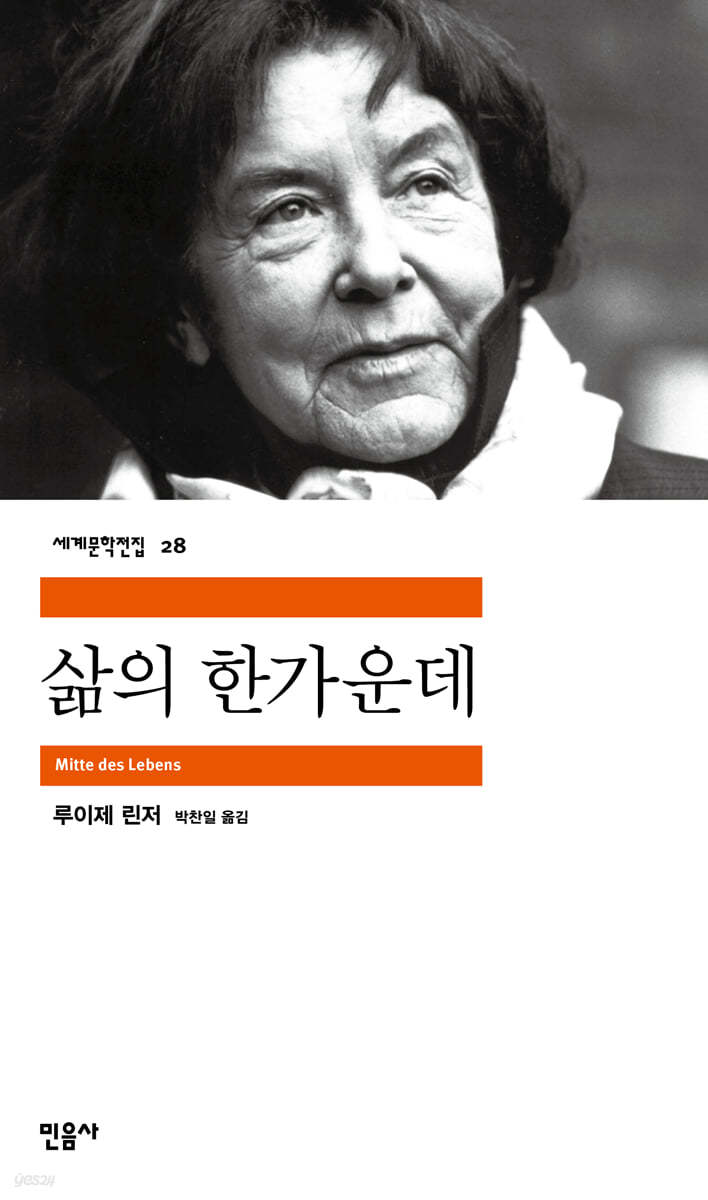
In the middle of life
 |
Description
Book Introduction
|
People should start growing old at the age of thirty. That's a cool thing. People get to know how things really work. It must be undertaken with intellect and philosophical insight. Yes! You must become a plucked tiger. Otherwise, you're just a helpless cat. He who cannot devote himself to pain and passion cannot die. Because dying is the final sacrifice. - Louise Rinser Luise Rinser, considered the greatest prose writer of post-war Germany A novel about adventure and passion that created the "Nina Syndrome" among young people around the world. A masterpiece that has sold over 1 million copies in Germany and has been translated into over 20 countries. “Love is the feeling of belonging to someone. “Only, and thoroughly.” Luise Rinser's In the Middle of Life (1950) and her Moral Adventures (1957) are called the 'Nina novels'. The reason young people around the world are so enthusiastic about the character of Nina Buschmann, created by Luise Rinser, is because through Nina, the author successfully portrayed a typical example of a woman pursuing a true life even in the dark and desperate circumstances of post-war Germany. Moreover, through this work, Luise Rinser breathed new life into the German literary world, which had been stagnant since World War II, and she remains one of the most widely read authors to this day. 『In the Middle of Life』 has had many readers in Korea since it was first translated and introduced in Korea by Jeon Hye-rin in 1967, and has also become a representative example of duplication and pirate publishing by numerous translators and publishers. This book, translated by Professor Chan-il Park, a German literature scholar at Minumsa, signed an official contract to use the 1994 edition published by Fischer Verlag in Germany as the translation source. |
- You can preview some of the book's contents.
Preview
Into the book
We are all a little bit cowardly, calculating and selfish.
Far from great.
This is exactly what I want to draw.
We are good and evil at the same time, heroic and cowardly, stingy and generous.
All of these things are closely intertwined.
And, regardless of whether it is good or bad, it is impossible to know what caused a person to do something.
--- p.151
Sisters either know everything about each other or nothing.
I didn't know anything about my sister Nina until recently.
She was twelve years younger than me.
When I married her, she was a skinny, blunt ten-year-old girl with messy hair and numerous scars on her arms and legs.
When my parents made Nina carry my veil at my wedding like a pageant, she clamped her mouth shut, her face turned white with anger, and she spat on my veil. Although she improved a little later, Nina was never a cute or lovable child.
Nina had repeatedly told me to please leave her alone, and I never paid her any attention after that.
Far from great.
This is exactly what I want to draw.
We are good and evil at the same time, heroic and cowardly, stingy and generous.
All of these things are closely intertwined.
And, regardless of whether it is good or bad, it is impossible to know what caused a person to do something.
--- p.151
Sisters either know everything about each other or nothing.
I didn't know anything about my sister Nina until recently.
She was twelve years younger than me.
When I married her, she was a skinny, blunt ten-year-old girl with messy hair and numerous scars on her arms and legs.
When my parents made Nina carry my veil at my wedding like a pageant, she clamped her mouth shut, her face turned white with anger, and she spat on my veil. Although she improved a little later, Nina was never a cute or lovable child.
Nina had repeatedly told me to please leave her alone, and I never paid her any attention after that.
--- From the text
Publisher's Review
The way humans live their lives, reached after passing through the middle of life.
"In the Middle of Life" consists of Stein's diary and letters, who loves the protagonist Nina, and brief encounters and conversations between Nina and her older sister over a few days.
Stein, one of the main characters in this novel, is the complete opposite of Nina.
Stein, a doctor, was just an ordinary middle-aged man, living a boring life.
Then Nina Bushman appears before him.
His meaningless daily life is thrown to the peak of his life in an instant by his encounter with this young girl, who is filled with madness and despair.
After that, Stein observes Nina's entire life over eighteen years, from when she was a young girl to when she grew into a mature woman.
Throughout this entire process, Stein comes to love Nina as if she were his own life, but he can only watch in agony as she marries another man, becomes pregnant with another man's child, is imprisoned for her fight against Nazism, attempts suicide, and falls into a state of utter depravity.
Thus, Stein experiences all the cruel aspects of life that can only be realized through one woman, Nina, and gradually, even in despair, he comes to realize the true meaning of life.
The novel has been compared to Goethe's 18th-century epistolary novel The Sorrows of Young Werther.
First of all, it is because it is in the form of an epistolary novel, but in addition to that, just as Werther fails to fulfill his love for Lotte and ends his life by committing suicide with a pistol, Stein also fails to fulfill his love for Nina and ends his life by suicide exactly eighteen years after meeting her, which is similar.
However, if Werther was a man of passion, Stein was a man who knew how to control his passion with foresight and reason.
So, he has been caught up in feelings of love for eighteen years, but he never achieves it and just keeps lingering around Nina's heart.
He meets Nina the day before he dies and confirms his love for her, marking the end of his love.
Just as Goethe created a completely new type of character in Werther, Luise Rinser can also be seen as creating a very unique character in Stein.
If there's a new character in this work, it's Nina who draws more attention than Stein.
Nina's straightforward, adventurous, and impulsive personality is also characteristic of the author, Luise Rinser.
A woman who makes others envy her despair as if it were a great fortune, a woman who loves life so much that she knows how to throw it away without mercy when it betrays her, a woman who would rather take a chance than stay still and lose everything, a woman who knows how to throw away everything she has for the one she loves, a woman who knows how to throw away even that love, a woman who knows how to surrender herself to impulse and passion.
Although Nina was like this, she was also a character that reflected the author's ideology, such as the anti-Nazism struggle and attitude toward humanism.
Ultimately, the reason why young people around the world cannot help but be enthusiastic about this novel is because the author portrays a fascinating human being who constantly pursues and searches for the meaning of life.
He who cannot devote himself to pain and passion cannot die.
Because dying is the final sacrifice.
- Louise Rinser
"In the Middle of Life" consists of Stein's diary and letters, who loves the protagonist Nina, and brief encounters and conversations between Nina and her older sister over a few days.
Stein, one of the main characters in this novel, is the complete opposite of Nina.
Stein, a doctor, was just an ordinary middle-aged man, living a boring life.
Then Nina Bushman appears before him.
His meaningless daily life is thrown to the peak of his life in an instant by his encounter with this young girl, who is filled with madness and despair.
After that, Stein observes Nina's entire life over eighteen years, from when she was a young girl to when she grew into a mature woman.
Throughout this entire process, Stein comes to love Nina as if she were his own life, but he can only watch in agony as she marries another man, becomes pregnant with another man's child, is imprisoned for her fight against Nazism, attempts suicide, and falls into a state of utter depravity.
Thus, Stein experiences all the cruel aspects of life that can only be realized through one woman, Nina, and gradually, even in despair, he comes to realize the true meaning of life.
The novel has been compared to Goethe's 18th-century epistolary novel The Sorrows of Young Werther.
First of all, it is because it is in the form of an epistolary novel, but in addition to that, just as Werther fails to fulfill his love for Lotte and ends his life by committing suicide with a pistol, Stein also fails to fulfill his love for Nina and ends his life by suicide exactly eighteen years after meeting her, which is similar.
However, if Werther was a man of passion, Stein was a man who knew how to control his passion with foresight and reason.
So, he has been caught up in feelings of love for eighteen years, but he never achieves it and just keeps lingering around Nina's heart.
He meets Nina the day before he dies and confirms his love for her, marking the end of his love.
Just as Goethe created a completely new type of character in Werther, Luise Rinser can also be seen as creating a very unique character in Stein.
If there's a new character in this work, it's Nina who draws more attention than Stein.
Nina's straightforward, adventurous, and impulsive personality is also characteristic of the author, Luise Rinser.
A woman who makes others envy her despair as if it were a great fortune, a woman who loves life so much that she knows how to throw it away without mercy when it betrays her, a woman who would rather take a chance than stay still and lose everything, a woman who knows how to throw away everything she has for the one she loves, a woman who knows how to throw away even that love, a woman who knows how to surrender herself to impulse and passion.
Although Nina was like this, she was also a character that reflected the author's ideology, such as the anti-Nazism struggle and attitude toward humanism.
Ultimately, the reason why young people around the world cannot help but be enthusiastic about this novel is because the author portrays a fascinating human being who constantly pursues and searches for the meaning of life.
He who cannot devote himself to pain and passion cannot die.
Because dying is the final sacrifice.
- Louise Rinser
GOODS SPECIFICS
- Date of issue: June 30, 1999
- Page count, weight, size: 382 pages | 502g | 132*224*30mm
- ISBN13: 9788937460289
- ISBN10: 8937460289
You may also like
카테고리
korean


korean

![GQ KOREA Mark (Monthly): December [2025]](http://librairie.coreenne.fr/cdn/shop/files/8ef265dbbfbf186523ed75ba7319009d.jpg?v=1765340328&width=3840)


