

Cake and beer
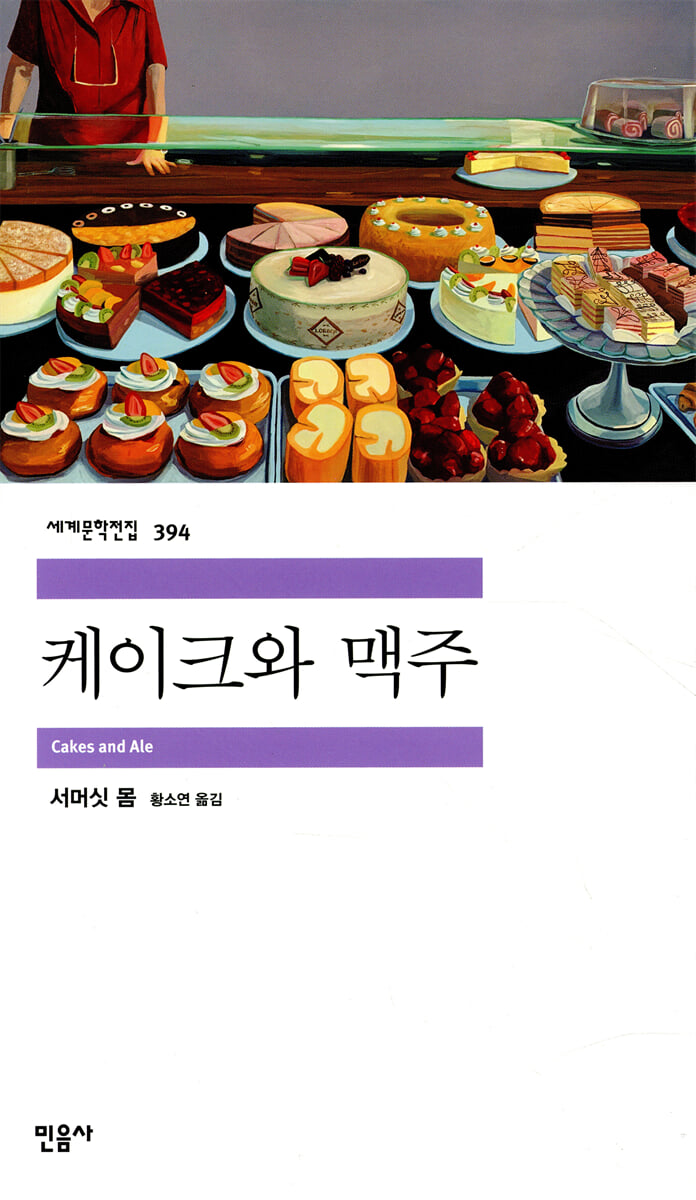 |
Description
Book Introduction
- A word from MD
- [Somerset Maugham, Exploring Pleasure] This novel, written by Somerset Maugham as an extension of 『In the Human Bondage』, caused a stir at the time as it was based on a real person.
A relentless exploration of the life of "cake and beer"—the pursuit of pleasure and play—centered around the successful writer Edward Driffield.
A great satirical novel that simultaneously embodies the writer's concerns and sense of mission.
-Novel MD Kim So-jeong
Somerset Maugham, who explored personal happiness, play, and pleasure with a sense of calligraphy.
Cake and Beer, a satirical novel with both popularity and artistic appeal
Somerset Maugham's "Cake and Beer," a story full of humor and satire, written with a concise, realistic style and compressed structure, is the greatest English-American writer of the 20th century. It has been published as volume 394 of the Minumsa World Literature Collection.
This novel, published in 1930 when the author was in his prime as a writer, is a satirical novel that caused a great stir in the world because it vividly portrays the inner workings of the literary world at the time and the characters resemble the author's acquaintances and famous people.
Thomas Hardy was also pointed out as the real model for the master Edward Driffield in the work.
Alloy, a writer who succeeded through worldly wisdom, was also portrayed as a carbon copy of his friend, novelist Hugh Walpole, and Hugh, who was so apprehensive after reading this work, even tried to block the publication of Cake and Beer.
Ashenden is asked by fellow writer Aloy, who is writing a biography of the famous author Edward Driffield, to provide information about him.
Ashenden, who has known Driffield since his unknown days, recalls the youthful energy and passion of Driffield and his first wife, Rosie.
As the title 'Cake and Beer' suggests, the main theme of this work is the play and pleasure of life.
Somerset Maugham often said, "Just because a pleasure doesn't last forever doesn't mean it's not a pleasure," and warned against the danger of life's pleasures being trivialized by ideas and morality.
As if reflecting the body's thoughts, in this work, Driffield gradually loses his vitality and individuality instead of enjoying the sweetness of being a successful writer, as Rosie, who had preserved the joys of a healthy life, leaves him, and Mrs. Trafford, who claims to be his guardian, restrains him.
As the author himself reveals in the work, "Cake and Beer" is a work that tells the story that was left unfinished in "In the Bondage of Man" (1915), which is considered to be Maugham's greatest work.
If 『In the Human Shackles』 dealt with the inner subjugation of humans due to passion, this work focuses on the external factors that bind humans, the social shackles, through the life of a writer.
Cake and Beer, a satirical novel with both popularity and artistic appeal
Somerset Maugham's "Cake and Beer," a story full of humor and satire, written with a concise, realistic style and compressed structure, is the greatest English-American writer of the 20th century. It has been published as volume 394 of the Minumsa World Literature Collection.
This novel, published in 1930 when the author was in his prime as a writer, is a satirical novel that caused a great stir in the world because it vividly portrays the inner workings of the literary world at the time and the characters resemble the author's acquaintances and famous people.
Thomas Hardy was also pointed out as the real model for the master Edward Driffield in the work.
Alloy, a writer who succeeded through worldly wisdom, was also portrayed as a carbon copy of his friend, novelist Hugh Walpole, and Hugh, who was so apprehensive after reading this work, even tried to block the publication of Cake and Beer.
Ashenden is asked by fellow writer Aloy, who is writing a biography of the famous author Edward Driffield, to provide information about him.
Ashenden, who has known Driffield since his unknown days, recalls the youthful energy and passion of Driffield and his first wife, Rosie.
As the title 'Cake and Beer' suggests, the main theme of this work is the play and pleasure of life.
Somerset Maugham often said, "Just because a pleasure doesn't last forever doesn't mean it's not a pleasure," and warned against the danger of life's pleasures being trivialized by ideas and morality.
As if reflecting the body's thoughts, in this work, Driffield gradually loses his vitality and individuality instead of enjoying the sweetness of being a successful writer, as Rosie, who had preserved the joys of a healthy life, leaves him, and Mrs. Trafford, who claims to be his guardian, restrains him.
As the author himself reveals in the work, "Cake and Beer" is a work that tells the story that was left unfinished in "In the Bondage of Man" (1915), which is considered to be Maugham's greatest work.
If 『In the Human Shackles』 dealt with the inner subjugation of humans due to passion, this work focuses on the external factors that bind humans, the social shackles, through the life of a writer.
- You can preview some of the book's contents.
Preview
index
Cake and Beer 7
Commentary on the work 298
Author's Chronology 309
Commentary on the work 298
Author's Chronology 309
Detailed image

Into the book
“I am not a great novelist,” he always says.
“Compared to the masters, I am insignificant.
I used to think that I could write a truly great novel someday, but I gave up on that hope long ago.
If people recognize that I'm doing my best, that's enough for me.
I really try hard.
I can't pass up anything that's sloppy.
“I think I can tell a good story and create a believable character.”
--- p.21
What would these high-ranking people think of his competent, careful, and neatly dressed wife, and the elegant environment in which she lives?
Do you regret the adventures you took in your youth?
Is he enjoying this moment, or is he just pretending to be happy out of politeness when he's unbearably bored? He must have sensed my gaze, because he looked up.
His gaze lingered on me for a moment, a thoughtful gaze, gentle yet strangely analytical.
Suddenly he winked at me.
--- p.71
She chattered enthusiastically like a lively child, and her sparkling eyes always had an ecstatic smile.
I somehow liked that smile.
A slightly sly smile, perhaps.
If only we could take the unpleasant aspect out of the word 'smart'.
It was a smile too pure to be called clever.
It was a somewhat mischievous smile.
It was the smile of a child who wanted to have fun playing a prank even though he knew it would cause trouble, a child who knew it wouldn't cause much trouble and would let it slip away if he didn't get caught right away.
--- p.82
A critic can focus the world's attention on a bad writer, and the world can be enthusiastic about someone who is completely worthless, but neither situation lasts long.
It is hard to believe that any writer in the world without considerable talent could have captivated the public for as long as Edward Driffield.
The chosen ones laugh at popularity.
They tend to dismiss popularity as evidence of mediocrity, but this overlooks the fact that the choices made by later generations are made among the famous writers of an era, not among the unknowns.
Even if immortal masterpieces continue to be forgotten by the media, future generations will have no way of knowing about their existence.
--- p.138
“I met the gentleman of that house often,” said Mr. Brentford.
“That gentleman really liked to stop by here and have a pint of stout.
I didn't drink perms, I just liked sitting at the bar and talking.
Oh my goodness, once he started talking, he would talk for an hour, and he didn't care who he was talking to.
Mrs. Driffield hated that gentleman coming here.
(.……) You said it felt good when your feet touched the wall molding.
He always said he liked bars.
there
I see a life standing.
And he always loved life.”
--- pp.256-257
“If it’s that woman, I’ve heard a lot of stories from Mrs. Barton Trafford.
“I don’t mean to say anything bad about her, but I don’t think she was a very good woman.”
“That’s a misunderstanding,” I replied.
“She was a really good woman.
I've never seen that woman lose her temper.
She was a woman who would give you anything you wanted.
I've never heard anyone gossip about anyone.
“He was a kind-hearted person.” (.……)
“You don’t understand,” I said.
“She was a very simple woman.
A woman with healthy and innocent instincts.
I loved making people happy.
“I loved love.”
--- pp.273-274
There are many people who shake the writer.
Newspaper reporters wanting to interview, photographers wanting to take pictures, editors asking for manuscripts, tax collectors collecting income tax, dignitaries asking to have lunch, association directors asking to speak, women wanting to marry, women wanting to get divorced, young people asking for autographs, actors asking for roles, complete strangers asking to borrow money, emotional wives wanting to discuss marital problems, earnest young men asking for advice on their work, agents, publishers, managers, boring people, fans, critics, and the author's own conscience.
But the writer gets one reward.
If there's something weighing on your heart—a painful memory, the sadness of sending a friend to the other world, unrequited love, hurt pride, anger at ungrateful people—just write it down.
If you use it as a subject for a novel or as material for an essay, you can forget everything.
The writer is the only free man.
“Compared to the masters, I am insignificant.
I used to think that I could write a truly great novel someday, but I gave up on that hope long ago.
If people recognize that I'm doing my best, that's enough for me.
I really try hard.
I can't pass up anything that's sloppy.
“I think I can tell a good story and create a believable character.”
--- p.21
What would these high-ranking people think of his competent, careful, and neatly dressed wife, and the elegant environment in which she lives?
Do you regret the adventures you took in your youth?
Is he enjoying this moment, or is he just pretending to be happy out of politeness when he's unbearably bored? He must have sensed my gaze, because he looked up.
His gaze lingered on me for a moment, a thoughtful gaze, gentle yet strangely analytical.
Suddenly he winked at me.
--- p.71
She chattered enthusiastically like a lively child, and her sparkling eyes always had an ecstatic smile.
I somehow liked that smile.
A slightly sly smile, perhaps.
If only we could take the unpleasant aspect out of the word 'smart'.
It was a smile too pure to be called clever.
It was a somewhat mischievous smile.
It was the smile of a child who wanted to have fun playing a prank even though he knew it would cause trouble, a child who knew it wouldn't cause much trouble and would let it slip away if he didn't get caught right away.
--- p.82
A critic can focus the world's attention on a bad writer, and the world can be enthusiastic about someone who is completely worthless, but neither situation lasts long.
It is hard to believe that any writer in the world without considerable talent could have captivated the public for as long as Edward Driffield.
The chosen ones laugh at popularity.
They tend to dismiss popularity as evidence of mediocrity, but this overlooks the fact that the choices made by later generations are made among the famous writers of an era, not among the unknowns.
Even if immortal masterpieces continue to be forgotten by the media, future generations will have no way of knowing about their existence.
--- p.138
“I met the gentleman of that house often,” said Mr. Brentford.
“That gentleman really liked to stop by here and have a pint of stout.
I didn't drink perms, I just liked sitting at the bar and talking.
Oh my goodness, once he started talking, he would talk for an hour, and he didn't care who he was talking to.
Mrs. Driffield hated that gentleman coming here.
(.……) You said it felt good when your feet touched the wall molding.
He always said he liked bars.
there
I see a life standing.
And he always loved life.”
--- pp.256-257
“If it’s that woman, I’ve heard a lot of stories from Mrs. Barton Trafford.
“I don’t mean to say anything bad about her, but I don’t think she was a very good woman.”
“That’s a misunderstanding,” I replied.
“She was a really good woman.
I've never seen that woman lose her temper.
She was a woman who would give you anything you wanted.
I've never heard anyone gossip about anyone.
“He was a kind-hearted person.” (.……)
“You don’t understand,” I said.
“She was a very simple woman.
A woman with healthy and innocent instincts.
I loved making people happy.
“I loved love.”
--- pp.273-274
There are many people who shake the writer.
Newspaper reporters wanting to interview, photographers wanting to take pictures, editors asking for manuscripts, tax collectors collecting income tax, dignitaries asking to have lunch, association directors asking to speak, women wanting to marry, women wanting to get divorced, young people asking for autographs, actors asking for roles, complete strangers asking to borrow money, emotional wives wanting to discuss marital problems, earnest young men asking for advice on their work, agents, publishers, managers, boring people, fans, critics, and the author's own conscience.
But the writer gets one reward.
If there's something weighing on your heart—a painful memory, the sadness of sending a friend to the other world, unrequited love, hurt pride, anger at ungrateful people—just write it down.
If you use it as a subject for a novel or as material for an essay, you can forget everything.
The writer is the only free man.
--- pp.294-295
Publisher's Review
A satirical novel that caused a stir by candidly depicting real people and the inner workings of the literary world.
How do we balance the acrobatics of success and creativity?
▶ The feeling of fear grew more and more.
Anyone could see that it was my portrait.
─ Hugh Walpole
▶ The portrait of a career-oriented writer drawn by the body is close to torture.
He is portrayed as a thick-faced, hypocritical populist who rose to fame overnight.
─ Virginia Woolf
▶ If you saw yourself in this work, it is because we are all the same, just like humans.
─ Somerset Maugham
Somerset Maugham's satirical novel, Cake and Beer, which has both popularity and artistry.
Who is the real model for the protagonist Edward Driffield?
Somerset Maugham's "Cake and Beer," a story brimming with wit and satire, written in a concise, realistic style and compressed structure, has been published as volume 394 in the Minumsa World Literature Collection.
This novel, published in 1930 when the author was in his prime as a writer, is a satirical novel that caused a great stir in the world because it vividly portrays the inner workings of the literary world at the time and the characters resemble the author's acquaintances and famous people.
Thomas Hardy was also pointed out as the real model for the master Edward Driffield in the work.
This is because there are many overlaps with Driffield in this work, such as his background as a poor man in southern England, his love of pubs, and his history of being banned due to a scene involving the death of a child.
Alloy, a writer who succeeded through worldly wisdom, was also portrayed as a carbon copy of his friend, novelist Hugh Walpole, and Hugh, who was so apprehensive after reading this work, even tried to block the publication of Cake and Beer.
Somerset Maugham is said to have tried to appease Walpole by sending him the following letter:
“If you see yourself in this work, it is because we are all the same, and in the end, we are the same human being.”
Ashenden is asked by fellow writer Aloy, who is writing a biography of the famous author Edward Driffield, to provide information about him.
Ashenden, who has known Driffield since his unknown days, recalls the youthful energy and passion of Driffield and his first wife, Rosie.
As the title 'Cake and Beer' suggests, the main theme of this work is the play and pleasure of life.
Somerset Maugham often said, "Just because a pleasure doesn't last forever doesn't mean it's not a pleasure," and warned against the danger of life's pleasures being trivialized by ideas and morality.
As if reflecting the body's thoughts, in this work, Driffield gradually loses his vitality and individuality instead of enjoying the sweetness of being a successful writer, as Rosie, who had preserved the joys of a healthy life, leaves him, and Mrs. Trafford, who claims to be his guardian, restrains him.
As the author himself reveals in the work, "Cake and Beer" is a work that tells the story that was left unfinished in "In the Bondage of Man" (1915), which is considered to be Maugham's greatest work.
If 『In the Human Shackles』 dealt with the inner subjugation of humans due to passion, this work focuses on the external factors that bind humans, the social shackles, through the life of a writer.
The title of the piece, 'Cake and Beer', is an idiom meaning material pleasure or the play of life, and appears in Shakespeare's comedy 'Twelfth Night'.
In the scene where Sir Andrew and Sir Toby are making a fuss and singing love songs at Olivia's house, butler Malvolio urges them to stop the commotion, and Sir Toby responds as follows.
“Just because you’re moral, does that mean you can’t have cake and beer anymore?”
The conditions for a life faithful to 'Cake and Beer' are freedom, tolerance, and liberation.
“Just because you’re moral, does that mean you can’t have cake and beer anymore?”
The historical setting of "Cake and Beer" is the latter half of Queen Victoria's reign (1837-1901), a period of political, economic, and social change in British society.
The influence of the church declined, natural science gained strength, solemnism took a backseat, and psychologism emerged.
After the 16th century, changes also occurred in the gentry class that formed the ruling class of society, and wealthy merchants and professionals were added to the ranks of landowners and clergy.
In the novel, the aunt, who does not forget her noble birth as she comes from an aristocratic family and ignores Major Greencoat's wife, who is a former factory worker, and the upper class people of Blackstable who do not welcome the donations of coal merchant George Camp show the conservative and conventional characters of the time who are unable to adapt to the changing times.
On the other hand, the character representing pleasure and play in this work is Rosie, Driffield's first wife.
Rosie lives a life of 'cake and beer', as if mocking the Victorian virtues of chastity and respectability.
Even after marrying Driffield, she had several lovers and even ran away in the middle of the night after evading debts.
If you apply a moral yardstick to her, Rosie is a character who is open to criticism, but she never knows how to hate or slander anyone, and she is always innocent and bright like a child.
Rosie is Driffield's muse, who doesn't harbor negative emotions like sadness or hatred, and is only interested in making those around her happy.
Even Rosie shows a liberated side, thinking that 'humans who are struggling to survive on a small planet are nothing but a joke in the eyes of immortal intelligence.'
A wise writer outlives his contemporaries rather than chasing success.
Edward Driffield was a writer who was praised as a master only in his old age before he passed away.
According to the memoirs of the narrator, Ashenden, he was born into poverty and worked in various jobs in his youth before debuting as a novelist and writing steadily.
He barely made a living as a writer, receiving some acclaim within the literary world but without achieving any real fame, but his career reached a turning point when he caught the eye of his guardian, Lady Trafford.
Mrs. Trafford sees Driffield as a future winner and begins to sponsor him, and Driffield begins to mingle with high society, laying the foundation for his rise to prominence.
But the foundation of success is a double-edged sword for Driffield.
To gain Mrs. Trafford's patronage, you must attend dinners she hosts, read your writing, and meet people she has chosen.
His wife leaves him while his social activities are strictly controlled by her.
It's not just the guardians who are tying up Driffield.
He faced fierce social resistance because of his works based on his own experiences.
Critics and the public condemned his book for its indifferent depiction of a child dying in pain and for its immoral depiction of a mother having sex with another man on the day of her child's death.
But despite the blows from within and without, Driffield ultimately survived as a writer.
In life, I lost cake and beer, though.
Somerset Maugham cites success as the greatest threat to writers.
When a writer becomes successful, he leaves the world he originally belonged to and enters high society, but since he was not a part of that world in the first place, he ends up losing his own individuality in that world.
Ashenden says that even without genius, one can succeed as a writer with a good background, sincerity, and worldly wisdom.
The standard for judging a master is not public opinion at the time, but how long he will survive.
The body emphasizes through this work that a successful writer is not necessarily a great writer, and that to move from success to greatness, one must survive in the contemporary world for a long time.
Success is merely a prerequisite for long-term survival, while the title of great writer is like a medal awarded to those who have climbed the ladder of time.
Because literature also has trends and it is not easy to judge the essential value of a particular style that has gained popularity.
― From the translator's note
How do we balance the acrobatics of success and creativity?
▶ The feeling of fear grew more and more.
Anyone could see that it was my portrait.
─ Hugh Walpole
▶ The portrait of a career-oriented writer drawn by the body is close to torture.
He is portrayed as a thick-faced, hypocritical populist who rose to fame overnight.
─ Virginia Woolf
▶ If you saw yourself in this work, it is because we are all the same, just like humans.
─ Somerset Maugham
Somerset Maugham's satirical novel, Cake and Beer, which has both popularity and artistry.
Who is the real model for the protagonist Edward Driffield?
Somerset Maugham's "Cake and Beer," a story brimming with wit and satire, written in a concise, realistic style and compressed structure, has been published as volume 394 in the Minumsa World Literature Collection.
This novel, published in 1930 when the author was in his prime as a writer, is a satirical novel that caused a great stir in the world because it vividly portrays the inner workings of the literary world at the time and the characters resemble the author's acquaintances and famous people.
Thomas Hardy was also pointed out as the real model for the master Edward Driffield in the work.
This is because there are many overlaps with Driffield in this work, such as his background as a poor man in southern England, his love of pubs, and his history of being banned due to a scene involving the death of a child.
Alloy, a writer who succeeded through worldly wisdom, was also portrayed as a carbon copy of his friend, novelist Hugh Walpole, and Hugh, who was so apprehensive after reading this work, even tried to block the publication of Cake and Beer.
Somerset Maugham is said to have tried to appease Walpole by sending him the following letter:
“If you see yourself in this work, it is because we are all the same, and in the end, we are the same human being.”
Ashenden is asked by fellow writer Aloy, who is writing a biography of the famous author Edward Driffield, to provide information about him.
Ashenden, who has known Driffield since his unknown days, recalls the youthful energy and passion of Driffield and his first wife, Rosie.
As the title 'Cake and Beer' suggests, the main theme of this work is the play and pleasure of life.
Somerset Maugham often said, "Just because a pleasure doesn't last forever doesn't mean it's not a pleasure," and warned against the danger of life's pleasures being trivialized by ideas and morality.
As if reflecting the body's thoughts, in this work, Driffield gradually loses his vitality and individuality instead of enjoying the sweetness of being a successful writer, as Rosie, who had preserved the joys of a healthy life, leaves him, and Mrs. Trafford, who claims to be his guardian, restrains him.
As the author himself reveals in the work, "Cake and Beer" is a work that tells the story that was left unfinished in "In the Bondage of Man" (1915), which is considered to be Maugham's greatest work.
If 『In the Human Shackles』 dealt with the inner subjugation of humans due to passion, this work focuses on the external factors that bind humans, the social shackles, through the life of a writer.
The title of the piece, 'Cake and Beer', is an idiom meaning material pleasure or the play of life, and appears in Shakespeare's comedy 'Twelfth Night'.
In the scene where Sir Andrew and Sir Toby are making a fuss and singing love songs at Olivia's house, butler Malvolio urges them to stop the commotion, and Sir Toby responds as follows.
“Just because you’re moral, does that mean you can’t have cake and beer anymore?”
The conditions for a life faithful to 'Cake and Beer' are freedom, tolerance, and liberation.
“Just because you’re moral, does that mean you can’t have cake and beer anymore?”
The historical setting of "Cake and Beer" is the latter half of Queen Victoria's reign (1837-1901), a period of political, economic, and social change in British society.
The influence of the church declined, natural science gained strength, solemnism took a backseat, and psychologism emerged.
After the 16th century, changes also occurred in the gentry class that formed the ruling class of society, and wealthy merchants and professionals were added to the ranks of landowners and clergy.
In the novel, the aunt, who does not forget her noble birth as she comes from an aristocratic family and ignores Major Greencoat's wife, who is a former factory worker, and the upper class people of Blackstable who do not welcome the donations of coal merchant George Camp show the conservative and conventional characters of the time who are unable to adapt to the changing times.
On the other hand, the character representing pleasure and play in this work is Rosie, Driffield's first wife.
Rosie lives a life of 'cake and beer', as if mocking the Victorian virtues of chastity and respectability.
Even after marrying Driffield, she had several lovers and even ran away in the middle of the night after evading debts.
If you apply a moral yardstick to her, Rosie is a character who is open to criticism, but she never knows how to hate or slander anyone, and she is always innocent and bright like a child.
Rosie is Driffield's muse, who doesn't harbor negative emotions like sadness or hatred, and is only interested in making those around her happy.
Even Rosie shows a liberated side, thinking that 'humans who are struggling to survive on a small planet are nothing but a joke in the eyes of immortal intelligence.'
A wise writer outlives his contemporaries rather than chasing success.
Edward Driffield was a writer who was praised as a master only in his old age before he passed away.
According to the memoirs of the narrator, Ashenden, he was born into poverty and worked in various jobs in his youth before debuting as a novelist and writing steadily.
He barely made a living as a writer, receiving some acclaim within the literary world but without achieving any real fame, but his career reached a turning point when he caught the eye of his guardian, Lady Trafford.
Mrs. Trafford sees Driffield as a future winner and begins to sponsor him, and Driffield begins to mingle with high society, laying the foundation for his rise to prominence.
But the foundation of success is a double-edged sword for Driffield.
To gain Mrs. Trafford's patronage, you must attend dinners she hosts, read your writing, and meet people she has chosen.
His wife leaves him while his social activities are strictly controlled by her.
It's not just the guardians who are tying up Driffield.
He faced fierce social resistance because of his works based on his own experiences.
Critics and the public condemned his book for its indifferent depiction of a child dying in pain and for its immoral depiction of a mother having sex with another man on the day of her child's death.
But despite the blows from within and without, Driffield ultimately survived as a writer.
In life, I lost cake and beer, though.
Somerset Maugham cites success as the greatest threat to writers.
When a writer becomes successful, he leaves the world he originally belonged to and enters high society, but since he was not a part of that world in the first place, he ends up losing his own individuality in that world.
Ashenden says that even without genius, one can succeed as a writer with a good background, sincerity, and worldly wisdom.
The standard for judging a master is not public opinion at the time, but how long he will survive.
The body emphasizes through this work that a successful writer is not necessarily a great writer, and that to move from success to greatness, one must survive in the contemporary world for a long time.
Success is merely a prerequisite for long-term survival, while the title of great writer is like a medal awarded to those who have climbed the ladder of time.
Because literature also has trends and it is not easy to judge the essential value of a particular style that has gained popularity.
― From the translator's note
GOODS SPECIFICS
- Publication date: September 10, 2021
- Page count, weight, size: 328 pages | 372g | 132*225*15mm
- ISBN13: 9788937463945
- ISBN10: 8937463946
You may also like
카테고리
korean


korean

![GQ KOREA Mark (Monthly): December [2025]](http://librairie.coreenne.fr/cdn/shop/files/8ef265dbbfbf186523ed75ba7319009d.jpg?v=1765340328&width=3840)


