

Human Resources Management Strategy Note
 |
Description
Book Introduction
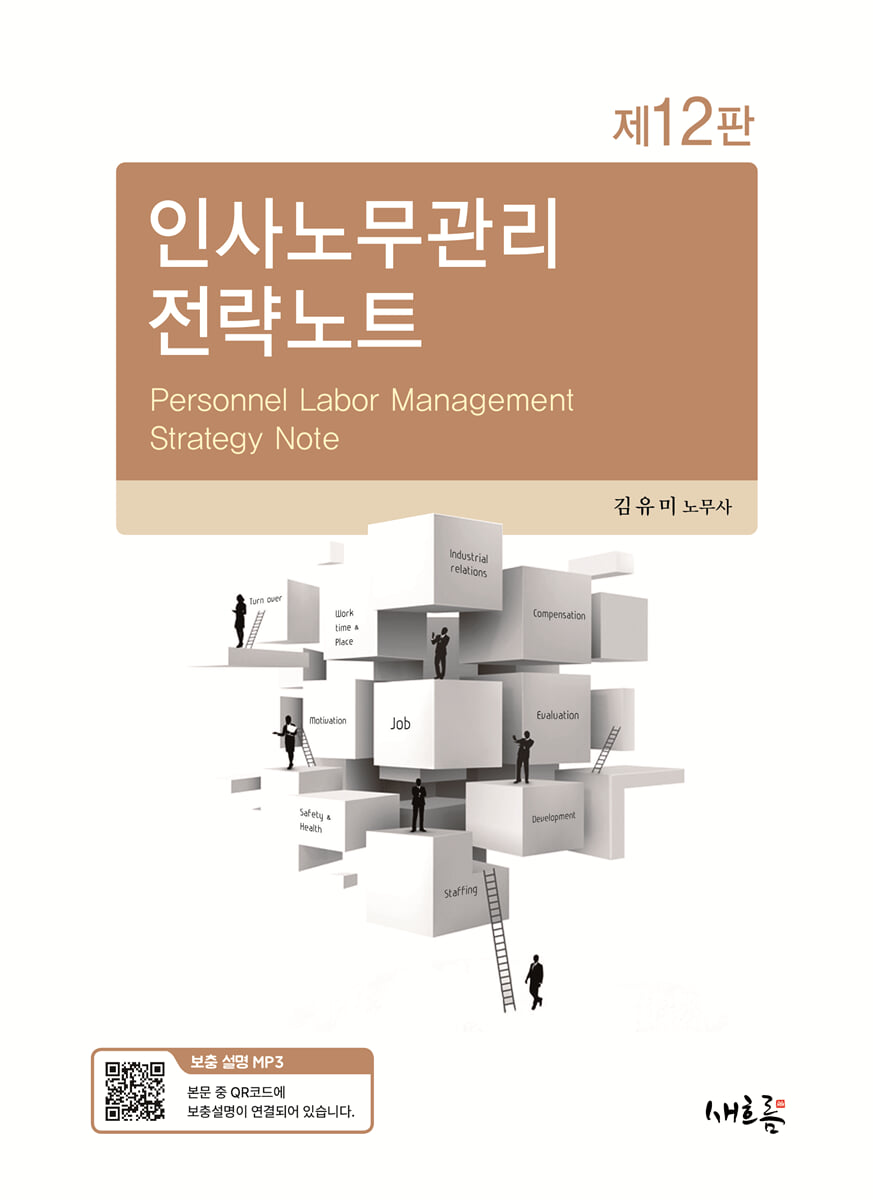
This newly revised "Human Resources and Labor Management Strategy Note" is a textbook for students preparing for the Certified Labor Attorney exam. It supplements issues and concepts in line with recent exam trends and faithfully includes various diagrams and charts to make the system and content easier to understand.
In addition, it presents theoretical basis and practical application that can be referenced when performing human resource management-related work for certified labor attorneys and companies and institutions.
In addition, it presents theoretical basis and practical application that can be referenced when performing human resource management-related work for certified labor attorneys and companies and institutions.
- You can preview some of the book's contents.
Preview
index
Part 1: Concepts and Approaches to Human Resource Management
Chapter 1: Management (Business Administration)
Chapter 2 Human Resource Management (HRM)
Chapter 3: Various Dimensions of Human Resource Management
Chapter 4: Development of Human Resources Management
Chapter 5: Various Approaches to Human Resources Management
Part 2: Environmental Changes in Human Resource Management
Chapter 1 Human Resource Management and the Environment
Chapter 2: External Environment of Human Resource Management
Chapter 3: Internal Environment of Human Resource Management
Chapter 4: A New Human Resource Management Paradigm
Part 3: Strategic Human Resource Management (SHRM) and e-HRM
Chapter 1: The Significance of Strategy and Strategic Management
Chapter 2 Strategic Human Resource Management (SHRM)
Chapter 3 Types of Strategy and Human Resource Management
Chapter 4 Human Resource Information System (HRIS)
Chapter 5 e-HRM
Part 4 Job Management
Chapter 1 Job Analysis
Chapter 2 Job Evaluation
Chapter 3 Job Design
Part 5: Acquisition Management (Recruitment Management, Staffing Management)
Chapter 1: Human Resource Planning
Chapter 2 Recruitment
Chapter 3 Selection
Chapter 4: Placement and Employee Management
Part 6 Development Management
Chapter 1 Education and Training
Chapter 2 Career Development
Chapter 3 Organizational Development
Part 7: Evaluation Management (Performance Management)
Chapter 1: The Meaning, Purpose, and Importance of Personnel Evaluation
Chapter 2: Elements and Errors of Personnel Evaluation
Chapter 3: Methods (Techniques) of Personnel Evaluation
Chapter 4 Personal Evaluation
Chapter 5 Team Evaluation
Chapter 6 Organizational Evaluation
Chapter 7 New Trends in Evaluation Systems
Chapter 8: The Development of Evaluation
Part 8 Compensation Management
Chapter 1: Concepts of Compensation Management and Wage Management
Chapter 2: Pay Equity
Chapter 3 Management of Pay Levels
Chapter 4 Management of the Wage Structure
Chapter 5 Management of Wage Payment Methods
Chapter 6: Group Performance-Based Pay System (=Performance Sharing System), Merit Pay, and Annual Salary System
Chapter 7: Strategic Wage Management and New Wage Systems
Chapter 8 Wage Evaluation
Chapter 9 Fringe Benefit Management
Part 9 Maintenance
Chapter 1 Working Hours Management
Chapter 2 Safety and Health Management
Chapter 3: Motivation
Chapter 4 Stress Management
Chapter 5 Labor-Management Relations
Part 10: Career Management
Chapter 1: Turnover Management and Voluntary Turnover
Chapter 2 Involuntary Transfers (Employment Adjustment, Outplacement, Inplacement)
Part 11 Issue Management
Chapter 1 Performance-Based Personnel Management
Chapter 2 Ethical Management and Ethical Human Resource Management
Chapter 3 Human Resource Management for Sustainable Management
Chapter 4 Human Resource Management in Accordance with Diversity Management
Chapter 5 International Human Resource Management
Chapter 6: Women's Human Resource Management
Chapter 7 Non-regular Human Resource Management
Chapter 8: Human Resource Management of Key Talents
Chapter 9 Succession Planning
Chapter 10: Managing Low-Performance Employees
Chapter 11 Human Resource Management for the Aging Workforce
Chapter 12 Competency-Based Human Resource Management
Chapter 13: Human Resource Management for Knowledge Management
Chapter 14 High-Performance Work Systems (HPWS)
Chapter 15: Family-Friendly Management (FFM)
Chapter 16 Quality of Work Life (QWL)
Chapter 17: Smart Work
Chapter 18 Personnel Audit
Chapter 19 Organizational Culture
Chapter 20: Trust as Social Capital
[Appendix] Past Exam Questions (1st to 33rd)
[Item Index]
Chapter 1: Management (Business Administration)
Chapter 2 Human Resource Management (HRM)
Chapter 3: Various Dimensions of Human Resource Management
Chapter 4: Development of Human Resources Management
Chapter 5: Various Approaches to Human Resources Management
Part 2: Environmental Changes in Human Resource Management
Chapter 1 Human Resource Management and the Environment
Chapter 2: External Environment of Human Resource Management
Chapter 3: Internal Environment of Human Resource Management
Chapter 4: A New Human Resource Management Paradigm
Part 3: Strategic Human Resource Management (SHRM) and e-HRM
Chapter 1: The Significance of Strategy and Strategic Management
Chapter 2 Strategic Human Resource Management (SHRM)
Chapter 3 Types of Strategy and Human Resource Management
Chapter 4 Human Resource Information System (HRIS)
Chapter 5 e-HRM
Part 4 Job Management
Chapter 1 Job Analysis
Chapter 2 Job Evaluation
Chapter 3 Job Design
Part 5: Acquisition Management (Recruitment Management, Staffing Management)
Chapter 1: Human Resource Planning
Chapter 2 Recruitment
Chapter 3 Selection
Chapter 4: Placement and Employee Management
Part 6 Development Management
Chapter 1 Education and Training
Chapter 2 Career Development
Chapter 3 Organizational Development
Part 7: Evaluation Management (Performance Management)
Chapter 1: The Meaning, Purpose, and Importance of Personnel Evaluation
Chapter 2: Elements and Errors of Personnel Evaluation
Chapter 3: Methods (Techniques) of Personnel Evaluation
Chapter 4 Personal Evaluation
Chapter 5 Team Evaluation
Chapter 6 Organizational Evaluation
Chapter 7 New Trends in Evaluation Systems
Chapter 8: The Development of Evaluation
Part 8 Compensation Management
Chapter 1: Concepts of Compensation Management and Wage Management
Chapter 2: Pay Equity
Chapter 3 Management of Pay Levels
Chapter 4 Management of the Wage Structure
Chapter 5 Management of Wage Payment Methods
Chapter 6: Group Performance-Based Pay System (=Performance Sharing System), Merit Pay, and Annual Salary System
Chapter 7: Strategic Wage Management and New Wage Systems
Chapter 8 Wage Evaluation
Chapter 9 Fringe Benefit Management
Part 9 Maintenance
Chapter 1 Working Hours Management
Chapter 2 Safety and Health Management
Chapter 3: Motivation
Chapter 4 Stress Management
Chapter 5 Labor-Management Relations
Part 10: Career Management
Chapter 1: Turnover Management and Voluntary Turnover
Chapter 2 Involuntary Transfers (Employment Adjustment, Outplacement, Inplacement)
Part 11 Issue Management
Chapter 1 Performance-Based Personnel Management
Chapter 2 Ethical Management and Ethical Human Resource Management
Chapter 3 Human Resource Management for Sustainable Management
Chapter 4 Human Resource Management in Accordance with Diversity Management
Chapter 5 International Human Resource Management
Chapter 6: Women's Human Resource Management
Chapter 7 Non-regular Human Resource Management
Chapter 8: Human Resource Management of Key Talents
Chapter 9 Succession Planning
Chapter 10: Managing Low-Performance Employees
Chapter 11 Human Resource Management for the Aging Workforce
Chapter 12 Competency-Based Human Resource Management
Chapter 13: Human Resource Management for Knowledge Management
Chapter 14 High-Performance Work Systems (HPWS)
Chapter 15: Family-Friendly Management (FFM)
Chapter 16 Quality of Work Life (QWL)
Chapter 17: Smart Work
Chapter 18 Personnel Audit
Chapter 19 Organizational Culture
Chapter 20: Trust as Social Capital
[Appendix] Past Exam Questions (1st to 33rd)
[Item Index]
Publisher's Review
preface
Whenever I revise my exam papers, I always go back to the basics and read the professors' textbooks and papers more thoroughly from the beginning.
The more I read the basics and new papers, the more different perspectives and new perspectives I gain, which I think provides an opportunity to examine the subject more deeply.
1.
This 12th edition has been revised and reorganized to reflect the latest trends and suitability for the exam.
In the strategy section, the latest academic discussions, such as RBV, dynamic capabilities, and fit theory, were supplemented, and in the external environment section, new concepts such as VUCA, Agile, and HR Analytics were added.
Functional HR management reflects industry-specific cases, including digital transformation, AI, fintech, and healthcare/IT organizations. The job analysis and evaluation section specifically supplements the strengths and weaknesses of each methodology, as well as its usability.
Additionally, modern HR discourse has been systematically expanded to include topics such as psychological contracts, DEIB, ESG, ethical HRM, and management of older and female employees. In-depth explanations have been added to practical issues such as compensation management, succession planning, and management of underperformers.
Finally, the sample questions and answer key points, including past exam questions, have been significantly enhanced to enhance your ability to prepare for the actual exam. Furthermore, the latest systems, terminology, and phrases have been reorganized to enhance accuracy and readability.
2.
We've kept the terms frequently used in papers and textbooks by leading scholars conducting research on human resource management as close to the original text as possible, while also refining the explanatory text to the greatest extent possible to facilitate understanding of the content and to neatly incorporate it into the answer sheet.
3.
We've added an index to make it easier to find concepts.
Concepts are the beginning and foundation of all studies, and we have made it possible to find and learn basic concepts quickly and easily.
Revision work always seems to involve more hard work than you can imagine.
However, if you read this book multiple times and gain insight into human resources management, I believe it will be a great help not only for your exam preparation but also in your future growth as an HR expert (consultant).
Hearing that this textbook is being used as a university textbook makes me feel a greater sense of responsibility when writing this book.
I would like to express my sincere gratitude to the students who passionately asked questions during the long journey with me during the exam period, to the readers from all over the country who sent me inquiries via email, and to the successful candidates who provided loving advice and assistance in improving the book.
I would like to express my gratitude to Professor Bong-soon Cho of Sogang University, the current president of the Korean Society of Human Resources Management, who always researches diligently and provides strong support; to Jang Rina, Go Ye-ri, Son Yeong-gi, and Sim Yu-bin, trainee labor attorneys, who helped with proofreading with responsibility and interest; and to the editorial team of Saehureum Publishing, who always responds well to the many requests we receive every year.
And I dedicate this book to my family who has always supported me, and to my mother who is now in heaven.
October 2025
Certified Labor Attorney Kim Yu-mi
Whenever I revise my exam papers, I always go back to the basics and read the professors' textbooks and papers more thoroughly from the beginning.
The more I read the basics and new papers, the more different perspectives and new perspectives I gain, which I think provides an opportunity to examine the subject more deeply.
1.
This 12th edition has been revised and reorganized to reflect the latest trends and suitability for the exam.
In the strategy section, the latest academic discussions, such as RBV, dynamic capabilities, and fit theory, were supplemented, and in the external environment section, new concepts such as VUCA, Agile, and HR Analytics were added.
Functional HR management reflects industry-specific cases, including digital transformation, AI, fintech, and healthcare/IT organizations. The job analysis and evaluation section specifically supplements the strengths and weaknesses of each methodology, as well as its usability.
Additionally, modern HR discourse has been systematically expanded to include topics such as psychological contracts, DEIB, ESG, ethical HRM, and management of older and female employees. In-depth explanations have been added to practical issues such as compensation management, succession planning, and management of underperformers.
Finally, the sample questions and answer key points, including past exam questions, have been significantly enhanced to enhance your ability to prepare for the actual exam. Furthermore, the latest systems, terminology, and phrases have been reorganized to enhance accuracy and readability.
2.
We've kept the terms frequently used in papers and textbooks by leading scholars conducting research on human resource management as close to the original text as possible, while also refining the explanatory text to the greatest extent possible to facilitate understanding of the content and to neatly incorporate it into the answer sheet.
3.
We've added an index to make it easier to find concepts.
Concepts are the beginning and foundation of all studies, and we have made it possible to find and learn basic concepts quickly and easily.
Revision work always seems to involve more hard work than you can imagine.
However, if you read this book multiple times and gain insight into human resources management, I believe it will be a great help not only for your exam preparation but also in your future growth as an HR expert (consultant).
Hearing that this textbook is being used as a university textbook makes me feel a greater sense of responsibility when writing this book.
I would like to express my sincere gratitude to the students who passionately asked questions during the long journey with me during the exam period, to the readers from all over the country who sent me inquiries via email, and to the successful candidates who provided loving advice and assistance in improving the book.
I would like to express my gratitude to Professor Bong-soon Cho of Sogang University, the current president of the Korean Society of Human Resources Management, who always researches diligently and provides strong support; to Jang Rina, Go Ye-ri, Son Yeong-gi, and Sim Yu-bin, trainee labor attorneys, who helped with proofreading with responsibility and interest; and to the editorial team of Saehureum Publishing, who always responds well to the many requests we receive every year.
And I dedicate this book to my family who has always supported me, and to my mother who is now in heaven.
October 2025
Certified Labor Attorney Kim Yu-mi
GOODS SPECIFICS
- Date of issue: November 15, 2025
- Format: Hardcover book binding method guide
- Page count, weight, size: 802 pages | 188*257*40mm
- ISBN13: 9791162937471
- ISBN10: 1162937475
You may also like
카테고리
korean


korean

![ELLE 엘르 스페셜 에디션 A형 : 12월 [2025]](http://librairie.coreenne.fr/cdn/shop/files/b8e27a3de6c9538896439686c6b0e8fb.jpg?v=1766436872&width=3840)


