

Lord of the Flies
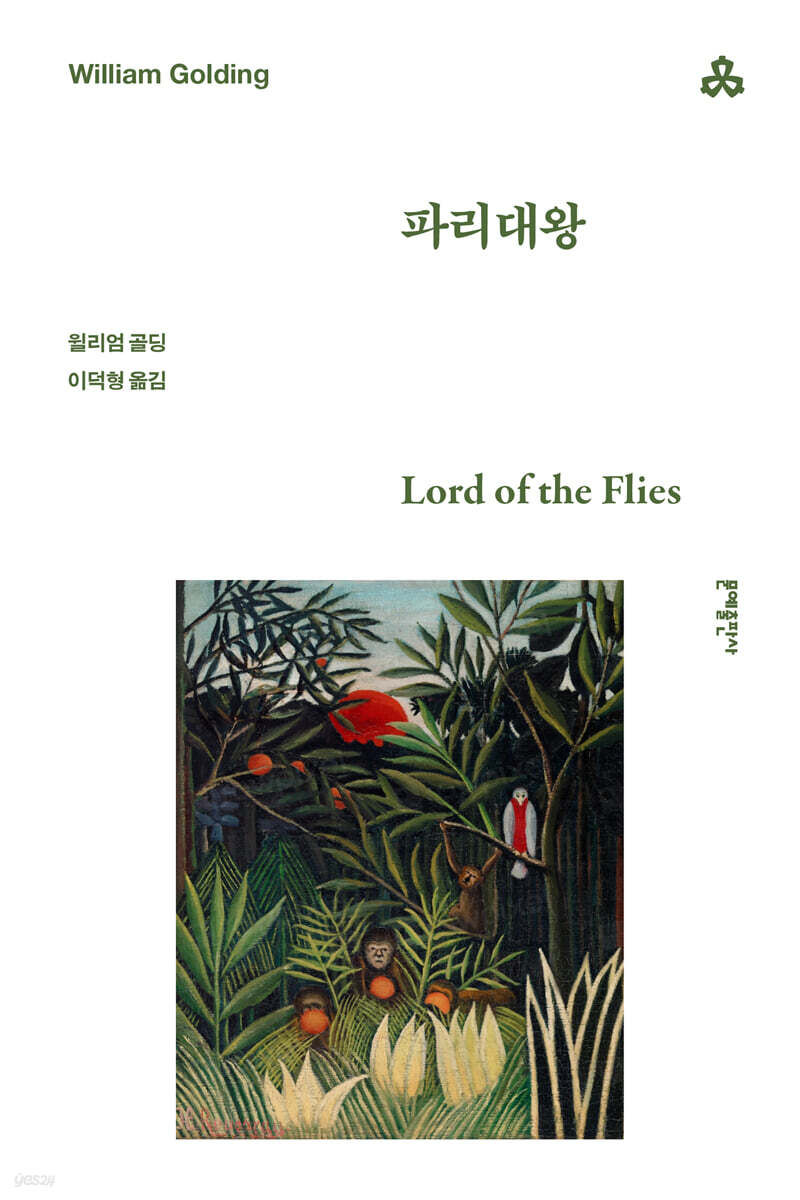 |
Description
Book Introduction
The savage nature that is deeply rooted in human nature
Through the actions of boys in extreme situations
A masterpiece, symbolic and allegorical!
The novel begins with the premise that, in a future where a nuclear war has broken out and Britain is being bombed with atomic bombs, a group of boys are forced to flee.
Unfortunately, the plane carrying the boys is attacked by enemy forces and crashes. Fortunately, the boys manage to escape the plane just before it crashes and end up on an uninhabited island in the Pacific.
Is it truly a paradise of innocence and happiness that these boys, escaping civilization and left in a primitive state, will enjoy? Golding answers this question by depicting the innocent boys, who, upon breaking free from the constraints of civilization, rush headlong into the ruins of civilization through an invisible compulsion or will.
Ultimately, Golding sees that it is not the flaws of society and civilization that destroy humanity, but rather that the root of those flaws lies in the flaws of humanity itself.
Revised and published as part of the Munye World Literature Series, 《009 Lord of the Flies》 is William Golding's first novel, published in 1954 after being rejected by the publisher no fewer than 21 times.
Golding witnessed the horrors of World War II while serving in the military as a junior officer, and this work, which thoroughly explores the concept of evil that flows at the root of human nature and reveals the author's worldview, earned him the honor of winning the Nobel Prize in Literature in 1983 and became his representative work.
Through the actions of boys in extreme situations
A masterpiece, symbolic and allegorical!
The novel begins with the premise that, in a future where a nuclear war has broken out and Britain is being bombed with atomic bombs, a group of boys are forced to flee.
Unfortunately, the plane carrying the boys is attacked by enemy forces and crashes. Fortunately, the boys manage to escape the plane just before it crashes and end up on an uninhabited island in the Pacific.
Is it truly a paradise of innocence and happiness that these boys, escaping civilization and left in a primitive state, will enjoy? Golding answers this question by depicting the innocent boys, who, upon breaking free from the constraints of civilization, rush headlong into the ruins of civilization through an invisible compulsion or will.
Ultimately, Golding sees that it is not the flaws of society and civilization that destroy humanity, but rather that the root of those flaws lies in the flaws of humanity itself.
Revised and published as part of the Munye World Literature Series, 《009 Lord of the Flies》 is William Golding's first novel, published in 1954 after being rejected by the publisher no fewer than 21 times.
Golding witnessed the horrors of World War II while serving in the military as a junior officer, and this work, which thoroughly explores the concept of evil that flows at the root of human nature and reveals the author's worldview, earned him the honor of winning the Nobel Prize in Literature in 1983 and became his representative work.
- You can preview some of the book's contents.
Preview
index
The sound of the sky
Beacon fire on the mountain
beach cottage
Painted face and long hair
Beast from the Sea
Beast from the Sky
Shadows and big trees
A Gift to the Darkness
In the face of death
Sora and Glasses
Citadel Rock
The Hunter's Voice
Commentary on the work
William Golding Chronology
Beacon fire on the mountain
beach cottage
Painted face and long hair
Beast from the Sea
Beast from the Sky
Shadows and big trees
A Gift to the Darkness
In the face of death
Sora and Glasses
Citadel Rock
The Hunter's Voice
Commentary on the work
William Golding Chronology
Detailed image

Into the book
The blond boy descended the last of the remaining rocks and began to walk cautiously, feeling his feet as he walked towards the lagoon.
--- p.7
“All the people are dead.
This is an island.
No one knows we're here.
Your dad doesn't know either.
no one……."
--- p.18
“I agree with Ralph’s opinion.
We are not savages.
We are British citizens.
The British people are good at solving anything.
We have to do the right thing.
--- p.64
“If I blow the conch shell now, everyone will definitely come running.
Then we'll get serious and some kid will say, "We should build a jet plane, or we should build a submarine, or we should build a television."
“After the meeting, everyone will work for about five minutes, but then they’ll either laze around or go hunting.”
--- p.76
On one hand, there was a world of hunting and cunning, of thrilling excitement and strategy; on the other, a world of longing and frustrated common sense.
--- p.108
"What exactly are we? Are we humans? Or animals? Or savages?"
--- p.140
The greatest ideas are the simplest laws.
Now that they had something to do, they worked hard.
When Jack left, the piglets felt a sense of joy and full liberation, and their hearts swelled with pride at having contributed to the good of the whole.
--- p.203
“I am scared.
We are afraid of ourselves.
I want to go home.
“I really want to go home.”
--- p.249
“Which is better, to obey the law and be saved, or to hunt and destroy everything?”
--- p.286
The officer, overcome by the boys' cries, was moved and somewhat embarrassed.
He turned away, giving them time to get back to normal and regain their composure.
He waited, his eyes fixed on the clean-looking cruiser visible in the distance.
--- p.7
“All the people are dead.
This is an island.
No one knows we're here.
Your dad doesn't know either.
no one……."
--- p.18
“I agree with Ralph’s opinion.
We are not savages.
We are British citizens.
The British people are good at solving anything.
We have to do the right thing.
--- p.64
“If I blow the conch shell now, everyone will definitely come running.
Then we'll get serious and some kid will say, "We should build a jet plane, or we should build a submarine, or we should build a television."
“After the meeting, everyone will work for about five minutes, but then they’ll either laze around or go hunting.”
--- p.76
On one hand, there was a world of hunting and cunning, of thrilling excitement and strategy; on the other, a world of longing and frustrated common sense.
--- p.108
"What exactly are we? Are we humans? Or animals? Or savages?"
--- p.140
The greatest ideas are the simplest laws.
Now that they had something to do, they worked hard.
When Jack left, the piglets felt a sense of joy and full liberation, and their hearts swelled with pride at having contributed to the good of the whole.
--- p.203
“I am scared.
We are afraid of ourselves.
I want to go home.
“I really want to go home.”
--- p.249
“Which is better, to obey the law and be saved, or to hunt and destroy everything?”
--- p.286
The officer, overcome by the boys' cries, was moved and somewhat embarrassed.
He turned away, giving them time to get back to normal and regain their composure.
He waited, his eyes fixed on the clean-looking cruiser visible in the distance.
--- p.319
Publisher's Review
★ Nobel Prize-winning author
★ College Board SAT Recommended Books
★ One of Time's 100 Best English Novels
★ Newsweek's 100 Best Books in the World
★ The Observer's 100 Greatest Novels
★ Random House's 100 Best English Novels of the 20th Century
★ BBC's 100 Most Loved Novels in Britain
★ 1001 Books You Must Read Before You Die, selected by Peter Boxall
“What the hell are we? Are we humans? Or are we animals?
Or are you a savage?”
The brutal survival story of boys stranded on a deserted island without adults.
The novel begins with the premise that, in a future where a nuclear war has broken out and Britain is being bombed with atomic bombs, a group of boys are forced to flee.
Unfortunately, the plane carrying the boys is attacked by enemy forces and crashes. Fortunately, just before the plane crashes, the safety device activates and the boys escape the plane safely, arriving on an uninhabited island in the tropical Pacific Ocean.
The only survivors of a crashed plane are a group of boys aged between 6 and 12, who initially appoint twelve-year-old Ralph as their leader and begin to cleverly learn ways to survive.
There are also plans to send a rescue signal by lighting a beacon fire on the mountaintop.
Jack, the oldest member of the choir, volunteers to take charge of the fire.
Meanwhile, Ralph proposes building a cabin by the sea, clashing with Jack, who prioritizes hunting.
Meanwhile, Jack and his hunting party catch a wild boar and make a big splash.
As Ralph's authority and leadership weaken, a boy known as "Piggy" who followed him is slapped by Jack, breaking one of his glasses.
Ralph calls another meeting and emphasizes the need for a more thorough signal fire and a cabin, but the hunting party, led by Jack, objects.
Until now, the person holding the sky had the right to speak, but Jack ignores even that rule.
When the boys who found the dead paratroopers claim to have seen a terrifying beast, the whole group becomes agitated, so Ralph organizes a search party to reassure them.
They are startled and run away in fear when they see the paratrooper's body on the mountain top.
Ralph and Jack decide to part ways at the meeting.
Most of the boys join Jack's hunting party, drawn by the taste of meat.
Jack leads a hunting party to catch a wild boar and put its head on a pole.
And they leave a boar's head in the forest as a sacrifice to the beast they fear.
Meanwhile, Jack throws a feast and invites Ralph and the other boys.
Jack and his hunting party dance and chant to celebrate their victory.
At this time, Simon, who appeared to reveal that the terrifying beast was actually a corpse, was killed by the excited boys as if butchering the beast.
Ralph is now left with only Piggy, the nearsighted boy, and a few other boys.
Jack's hunting party steals a nearsighted boy's glasses.
Ralph and Piglet, who cannot make a fire because they have no glasses, go to the rock fortress where Jack has set up camp and ask for the glasses back, but are refused.
While Ralph and Jack are arguing, Roger rolls a large rock, causing the piglets to fall over the cliff and die.
Ralph runs away and disappears.
But now, a group of hunters, now barbarians, are out searching for him, and he faces a dangerous situation.
The story ends with them overcoming several crises and finally making it to the beach, where they are rescued by a British naval officer who stops by the island after seeing smoke.
The savage nature that is deeply rooted in human nature
Through the actions of boys in extreme situations
A masterpiece, symbolic and allegorical!
Rousseau argued that human sin and miserable fate were due to the institutional flaws of civilized society, and that happiness existed in the state of nature.
This romanticism popularized a trend of yearning for the primitive beyond civilization, and this soon became the basic philosophy of the South Pacific drift novels and adventure novels that were popular in the 19th century.
William Golding's Lord of the Flies is a work that ruthlessly shatters such sentimental 'myth of the noble savage'.
Is it truly a paradise of innocence and happiness that these boys, escaping civilization and left in a primitive state, will enjoy? Golding answers this question by depicting the innocent boys, who, upon breaking free from the constraints of civilization, rush headlong into the ruins of civilization through an invisible compulsion or will.
Ultimately, Golding sees that it is not the flaws of society and civilization that destroy humanity, but rather that the root of those flaws lies in the flaws of humanity itself.
《The Lord of the Flies》 can be compared to traditional allegorical novels in that it deals with the theme of original sin and the fall of humanity. However, while traditional allegorical novels are accompanied by the affirmation of Christian values such as God's grace and emphasize the hope for salvation, this novel is characterized by the absence of such affirmation and hope.
All we find in Lord of the Flies is a reference to the darkness that sits like a swarm of flies within humanity, and no hint as to who the adults will be to save the boys.
In the protagonist Ralph's constant waiting for rescue, we can read into him a religious yearning for human salvation.
Because this novel is a symbolic novel and an allegorical novel.
However, Golding depicts the boys as quite clever and resourceful in finding ways to survive in the beginning of the novel, and then gradually shows the greed and savagery of human nature through the boys' various actions in various crisis situations, with the despair and slim possibility of rescue growing deeper.
Through this work, Golding traces the flaws of today's civilized society back to the flaws of human nature, revealing his worldview that the true nature of humans is not goodness and morality, but rather the opposite.
Through Lord of the Flies, Golding sought to establish that all human sins and cruelty do not arise from external factors, but originate from within humans, from the "dark core" that resides within them.
Witnessing the horrors of World War II,
Exploring the evil that flows beneath human nature
William Golding's masterpiece, depicted with outstanding literary talent!
William Golding was born in Cornwall, England, and studied at Oxford, initially studying natural sciences.
However, Golding felt that it was not a good fit for him and changed his major to English literature.
He published his first collection of poems in 1930 and was set to begin his career as a poet, but he gave up and moved to Wiltshire to begin his teaching career.
And in 1961, he moved to the United States and taught as a writer and visiting professor at Hollins College in Virginia for a year.
Among his unusual career highlights is his service in the Royal Navy during World War II, where he served as a junior officer commanding a rocket ship.
World War II became a turning point for him, causing him to have serious doubts about humanity, as can be seen in the quote above.
However, this meeting was different from the ideas held by post-war writers immediately after World War I.
In other words, it was a meeting of a different dimension from the disillusionment felt by the so-called 'lost generation', including Hemingway.
While the 'Lost Generation' lost their sense of direction in life due to disillusionment, Golding's disillusionment with the war planted in his consciousness a conviction about the original sin of mankind.
He did not seek the cause of war and slaughter in the fictions of society or ideology, but in the clot of evil inherent in human nature.
Thus, in his first novel, Lord of the Flies, written in 1954, he thoroughly dissected the evil inherent in human nature.
His family had produced many educators, and he himself had been teaching for nearly 20 years.
Therefore, his educational interests had a great influence on his attitude toward literature, no less than his artistic ambition.
For him, the question of what a novel can teach was more important than what it can describe.
He was interested in human nature or the human condition, which remains eternal and unchanging regardless of changes in time and place.
He believed that the writer's attitude was to engage in the task of insight into what the true image of humanity was, and he found an appropriate form of expression for that belief in the form of allegorical symbolic novels.
★ College Board SAT Recommended Books
★ One of Time's 100 Best English Novels
★ Newsweek's 100 Best Books in the World
★ The Observer's 100 Greatest Novels
★ Random House's 100 Best English Novels of the 20th Century
★ BBC's 100 Most Loved Novels in Britain
★ 1001 Books You Must Read Before You Die, selected by Peter Boxall
“What the hell are we? Are we humans? Or are we animals?
Or are you a savage?”
The brutal survival story of boys stranded on a deserted island without adults.
The novel begins with the premise that, in a future where a nuclear war has broken out and Britain is being bombed with atomic bombs, a group of boys are forced to flee.
Unfortunately, the plane carrying the boys is attacked by enemy forces and crashes. Fortunately, just before the plane crashes, the safety device activates and the boys escape the plane safely, arriving on an uninhabited island in the tropical Pacific Ocean.
The only survivors of a crashed plane are a group of boys aged between 6 and 12, who initially appoint twelve-year-old Ralph as their leader and begin to cleverly learn ways to survive.
There are also plans to send a rescue signal by lighting a beacon fire on the mountaintop.
Jack, the oldest member of the choir, volunteers to take charge of the fire.
Meanwhile, Ralph proposes building a cabin by the sea, clashing with Jack, who prioritizes hunting.
Meanwhile, Jack and his hunting party catch a wild boar and make a big splash.
As Ralph's authority and leadership weaken, a boy known as "Piggy" who followed him is slapped by Jack, breaking one of his glasses.
Ralph calls another meeting and emphasizes the need for a more thorough signal fire and a cabin, but the hunting party, led by Jack, objects.
Until now, the person holding the sky had the right to speak, but Jack ignores even that rule.
When the boys who found the dead paratroopers claim to have seen a terrifying beast, the whole group becomes agitated, so Ralph organizes a search party to reassure them.
They are startled and run away in fear when they see the paratrooper's body on the mountain top.
Ralph and Jack decide to part ways at the meeting.
Most of the boys join Jack's hunting party, drawn by the taste of meat.
Jack leads a hunting party to catch a wild boar and put its head on a pole.
And they leave a boar's head in the forest as a sacrifice to the beast they fear.
Meanwhile, Jack throws a feast and invites Ralph and the other boys.
Jack and his hunting party dance and chant to celebrate their victory.
At this time, Simon, who appeared to reveal that the terrifying beast was actually a corpse, was killed by the excited boys as if butchering the beast.
Ralph is now left with only Piggy, the nearsighted boy, and a few other boys.
Jack's hunting party steals a nearsighted boy's glasses.
Ralph and Piglet, who cannot make a fire because they have no glasses, go to the rock fortress where Jack has set up camp and ask for the glasses back, but are refused.
While Ralph and Jack are arguing, Roger rolls a large rock, causing the piglets to fall over the cliff and die.
Ralph runs away and disappears.
But now, a group of hunters, now barbarians, are out searching for him, and he faces a dangerous situation.
The story ends with them overcoming several crises and finally making it to the beach, where they are rescued by a British naval officer who stops by the island after seeing smoke.
The savage nature that is deeply rooted in human nature
Through the actions of boys in extreme situations
A masterpiece, symbolic and allegorical!
Rousseau argued that human sin and miserable fate were due to the institutional flaws of civilized society, and that happiness existed in the state of nature.
This romanticism popularized a trend of yearning for the primitive beyond civilization, and this soon became the basic philosophy of the South Pacific drift novels and adventure novels that were popular in the 19th century.
William Golding's Lord of the Flies is a work that ruthlessly shatters such sentimental 'myth of the noble savage'.
Is it truly a paradise of innocence and happiness that these boys, escaping civilization and left in a primitive state, will enjoy? Golding answers this question by depicting the innocent boys, who, upon breaking free from the constraints of civilization, rush headlong into the ruins of civilization through an invisible compulsion or will.
Ultimately, Golding sees that it is not the flaws of society and civilization that destroy humanity, but rather that the root of those flaws lies in the flaws of humanity itself.
《The Lord of the Flies》 can be compared to traditional allegorical novels in that it deals with the theme of original sin and the fall of humanity. However, while traditional allegorical novels are accompanied by the affirmation of Christian values such as God's grace and emphasize the hope for salvation, this novel is characterized by the absence of such affirmation and hope.
All we find in Lord of the Flies is a reference to the darkness that sits like a swarm of flies within humanity, and no hint as to who the adults will be to save the boys.
In the protagonist Ralph's constant waiting for rescue, we can read into him a religious yearning for human salvation.
Because this novel is a symbolic novel and an allegorical novel.
However, Golding depicts the boys as quite clever and resourceful in finding ways to survive in the beginning of the novel, and then gradually shows the greed and savagery of human nature through the boys' various actions in various crisis situations, with the despair and slim possibility of rescue growing deeper.
Through this work, Golding traces the flaws of today's civilized society back to the flaws of human nature, revealing his worldview that the true nature of humans is not goodness and morality, but rather the opposite.
Through Lord of the Flies, Golding sought to establish that all human sins and cruelty do not arise from external factors, but originate from within humans, from the "dark core" that resides within them.
Witnessing the horrors of World War II,
Exploring the evil that flows beneath human nature
William Golding's masterpiece, depicted with outstanding literary talent!
William Golding was born in Cornwall, England, and studied at Oxford, initially studying natural sciences.
However, Golding felt that it was not a good fit for him and changed his major to English literature.
He published his first collection of poems in 1930 and was set to begin his career as a poet, but he gave up and moved to Wiltshire to begin his teaching career.
And in 1961, he moved to the United States and taught as a writer and visiting professor at Hollins College in Virginia for a year.
Among his unusual career highlights is his service in the Royal Navy during World War II, where he served as a junior officer commanding a rocket ship.
World War II became a turning point for him, causing him to have serious doubts about humanity, as can be seen in the quote above.
However, this meeting was different from the ideas held by post-war writers immediately after World War I.
In other words, it was a meeting of a different dimension from the disillusionment felt by the so-called 'lost generation', including Hemingway.
While the 'Lost Generation' lost their sense of direction in life due to disillusionment, Golding's disillusionment with the war planted in his consciousness a conviction about the original sin of mankind.
He did not seek the cause of war and slaughter in the fictions of society or ideology, but in the clot of evil inherent in human nature.
Thus, in his first novel, Lord of the Flies, written in 1954, he thoroughly dissected the evil inherent in human nature.
His family had produced many educators, and he himself had been teaching for nearly 20 years.
Therefore, his educational interests had a great influence on his attitude toward literature, no less than his artistic ambition.
For him, the question of what a novel can teach was more important than what it can describe.
He was interested in human nature or the human condition, which remains eternal and unchanging regardless of changes in time and place.
He believed that the writer's attitude was to engage in the task of insight into what the true image of humanity was, and he found an appropriate form of expression for that belief in the form of allegorical symbolic novels.
GOODS SPECIFICS
- Date of issue: November 15, 2024
- Page count, weight, size: 348 pages | 140*210*30mm
- ISBN13: 9788931024036
- ISBN10: 8931024037
You may also like
카테고리
korean


korean

![GQ KOREA Mark (Monthly): December [2025]](http://librairie.coreenne.fr/cdn/shop/files/8ef265dbbfbf186523ed75ba7319009d.jpg?v=1765340328&width=3840)


