

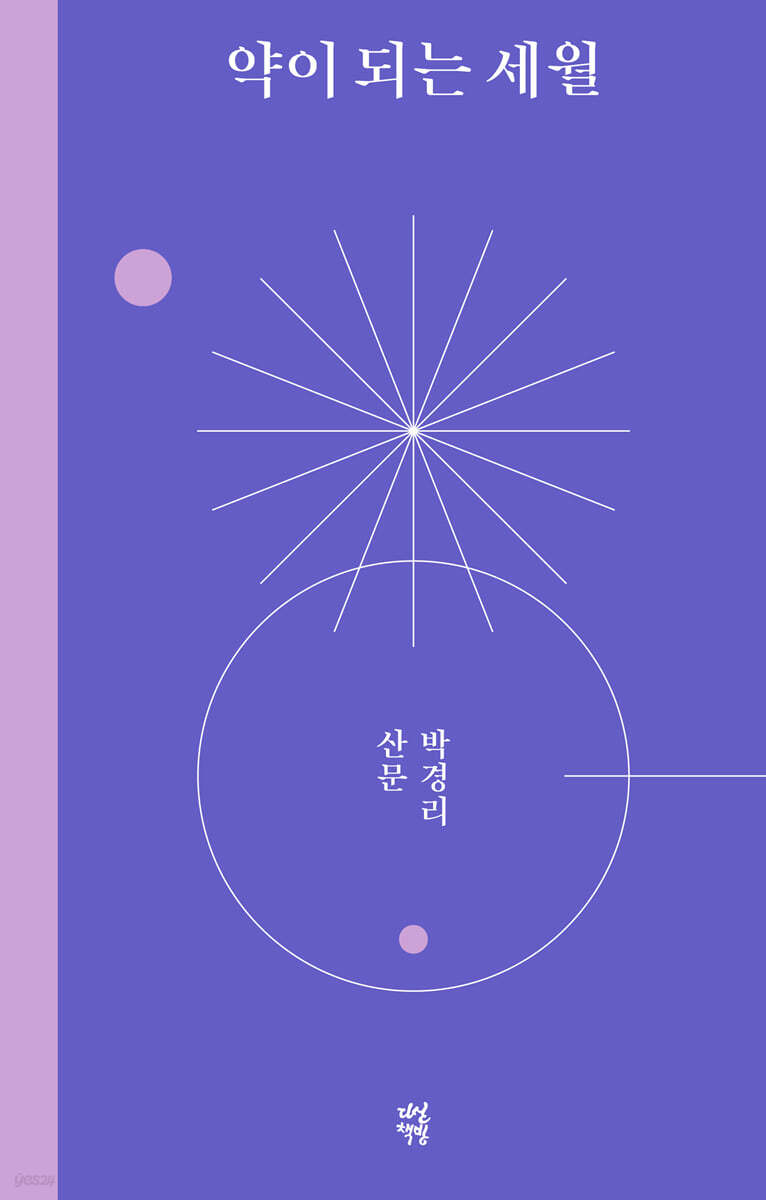
Time becomes medicine
 |
Description
Book Introduction
"Before good art and love, there lies our quiet prayer."
These truthful sentences, built up through years of hardship
"The Years That Become Medicine" is a collection of essays written by Park Kyung-ni from the time she debuted as a writer until the late 1970s, as well as articles she contributed to various newspapers and magazines.
He wrote that he lost his youth, seasons, and hometown during the Pacific War and the Korean War that he experienced as a child.
Having lost his family and suffering from illness himself, he can only experience the “hardships of life” “in the cold of the season that seeps into his skin.”
The loneliness that deepened the misfortunes he had been given led him to turn to literature.
He felt “intimacy and tears in the human condition through empathy for loneliness and misfortune,” and that moment was true, and that truth led him to literature.
Even as he begins serializing his novel and the deadline looms, he still tends to his flowers and applies Mercurochrome to his rotting goldfish.
Even though the Cuban crisis brought the threat of World War III to the forefront, he harbors a desire to buy land and work hard to cultivate it. He is moved to tears by the good deeds of a middle school student who pushes a heavy cart with his school bag on top of his luggage.
How can one read this and not be moved by Park Kyung-ni's humanity?
He says.
“Can we not reject today because of tomorrow’s misfortune?
We must live for today.
“If it’s painful, be painful; if it’s happy, be happy.” In this book, filled with honest sentences that allow readers to get up close and personal with the inner self of author Park Kyung-ni, readers may even be able to feel her breath.
These truthful sentences, built up through years of hardship
"The Years That Become Medicine" is a collection of essays written by Park Kyung-ni from the time she debuted as a writer until the late 1970s, as well as articles she contributed to various newspapers and magazines.
He wrote that he lost his youth, seasons, and hometown during the Pacific War and the Korean War that he experienced as a child.
Having lost his family and suffering from illness himself, he can only experience the “hardships of life” “in the cold of the season that seeps into his skin.”
The loneliness that deepened the misfortunes he had been given led him to turn to literature.
He felt “intimacy and tears in the human condition through empathy for loneliness and misfortune,” and that moment was true, and that truth led him to literature.
Even as he begins serializing his novel and the deadline looms, he still tends to his flowers and applies Mercurochrome to his rotting goldfish.
Even though the Cuban crisis brought the threat of World War III to the forefront, he harbors a desire to buy land and work hard to cultivate it. He is moved to tears by the good deeds of a middle school student who pushes a heavy cart with his school bag on top of his luggage.
How can one read this and not be moved by Park Kyung-ni's humanity?
He says.
“Can we not reject today because of tomorrow’s misfortune?
We must live for today.
“If it’s painful, be painful; if it’s happy, be happy.” In this book, filled with honest sentences that allow readers to get up close and personal with the inner self of author Park Kyung-ni, readers may even be able to feel her breath.
- You can preview some of the book's contents.
Preview
index
Choha, Jeongneung, and Chonbu
Light and study
Traveler's heart
anxiety of waiting
annual ring
Time
nervous breakdown
map
street musicians
harmony
jar
something luxurious
magnolia
Time becomes medicine
From the window with a mountain view
The sound of sea water
Spring in my hometown
Season of Exhaustion
A heart that turns towards the power
Every year when spring comes
Paulownia tree
camellia
A lonely retreat in the mountains
Winter night
Start of work
A kind of epidemic
Family and two outer shells
Just thinking
stuffiness
recording
One summer day
back alley
monologue
Photography and Death
The scent of the sea
○ month ○ day
Mother and daughter statue
Praise of the Girl
A woman's heart
In the car
Thank you to that person
Hometown people
A person of few words
Funny story
oblivion
Eating
fight
Self-treatment
Living in today
Modern people's ills
Thinking about the future
Stop insulting the young pigeons.
Mother's love
School is not a marketplace
Time Sensation Two Questions
A new leap forward
standard
Guardian's instinct
Love and Art
neighbors
modern heroes
The Virtue of Indifference
Solitude and Sentiment
Conversation
Romantic
Let's keep it private
Other people's things
personal will
Great sense of expression!
Arrogance and kindness
About Beauty
honesty
They say it's spring
The inferiority complex of an illegitimate child
Feeling like a rich person
Don't sell beauty
The image of men in movies
My face stolen from a magazine cover
Literature and Me
The utility of literature
Works and models
Action and Thought
closed culture
A product of loneliness
The escalation of tragedy
warm gaze
Humanism that cannot be embarrassed
An uneasy feeling
My story
Self-portrait
Re-criticism of one's own literature
About Solbaram
A person without intention
For the final practice
To the girl who writes literature
Love for humanity
personal opinion
hand
The meaning of love
Light and study
Traveler's heart
anxiety of waiting
annual ring
Time
nervous breakdown
map
street musicians
harmony
jar
something luxurious
magnolia
Time becomes medicine
From the window with a mountain view
The sound of sea water
Spring in my hometown
Season of Exhaustion
A heart that turns towards the power
Every year when spring comes
Paulownia tree
camellia
A lonely retreat in the mountains
Winter night
Start of work
A kind of epidemic
Family and two outer shells
Just thinking
stuffiness
recording
One summer day
back alley
monologue
Photography and Death
The scent of the sea
○ month ○ day
Mother and daughter statue
Praise of the Girl
A woman's heart
In the car
Thank you to that person
Hometown people
A person of few words
Funny story
oblivion
Eating
fight
Self-treatment
Living in today
Modern people's ills
Thinking about the future
Stop insulting the young pigeons.
Mother's love
School is not a marketplace
Time Sensation Two Questions
A new leap forward
standard
Guardian's instinct
Love and Art
neighbors
modern heroes
The Virtue of Indifference
Solitude and Sentiment
Conversation
Romantic
Let's keep it private
Other people's things
personal will
Great sense of expression!
Arrogance and kindness
About Beauty
honesty
They say it's spring
The inferiority complex of an illegitimate child
Feeling like a rich person
Don't sell beauty
The image of men in movies
My face stolen from a magazine cover
Literature and Me
The utility of literature
Works and models
Action and Thought
closed culture
A product of loneliness
The escalation of tragedy
warm gaze
Humanism that cannot be embarrassed
An uneasy feeling
My story
Self-portrait
Re-criticism of one's own literature
About Solbaram
A person without intention
For the final practice
To the girl who writes literature
Love for humanity
personal opinion
hand
The meaning of love
Into the book
Even when there is no work to do, they often sit in the vegetable or flower garden and spend hours without any reason.
And then I think.
To live buried in a nameless mountain village.
However, some people laugh at this, saying that it is a luxury born from leisure and a weak person's excuse to escape reality.
Dealing with city people is definitely tiring.
The journey back from enduring my own vanity rather than the other person's vanity is a time filled with the loneliness of self-loathing.
--- pp.13-14
Even these days, when I see the various human tragedies on the third page of the newspaper, my heart is instantly moved.
A sadness that cannot be vented or blamed on anyone! It's too overwhelming to simply dismiss it as the way the world is.
My comrades said that this resentment of mine came from a nervous breakdown.
He said that because his body was weak, everything seemed to be an eyesore and made him sad.
So the nerves become weaker and weaker.
With that in mind, one day my comrade took me out and bought me some seolleongtang.
--- p.36
It is said that the beautiful water color, the sound of the sea, the camellia flowers, the palm trees, and the peace of my hometown were all destroyed by poverty and the coarsening of human nature.
In this land where life and romance have lost their harmony, emptiness is repeated and the light has come.
In the autumn and nostalgia reflected again in the window of my heart, what truly should I hold onto?
--- p.63
A mother's love is not about carrying out the mother's desires. A mother's love is about nurturing the child's mental strength to find his or her true path and to rise again after falling. This mental strength is not a wall of peace built on a comfortable vanity, but rather the belief that one is truly righteous.
The belief in righteousness arises from a deep affection for humanity.
--- p.186
Loneliness is the most desperate thing.
Because it is a form of obsession that cannot be filled.
That's why I feel lonely when dealing with people.
If you were literally completely alone, it would be a world of enlightenment, a world of quiet silence.
But this loneliness comes from relativity, and is a desperate battle of countless mental conflicts.
People often say that they love solitude.
But it is not a world of enlightenment, and can only be an expression of self-torture.
When you go from despair to resignation, it may seem like loneliness to others, but it cannot be loneliness because you have given up on attachment, but only a loss of meaning.
--- p.223
There is no conclusion in life.
The day a life ends in the unknown, that is, the day of death, is the only day that a conclusion is reached.
And whether unhappy or happy, everyone must live their own lives and cannot live the lives of others.
Yet, there is love, sacrifice, and duty in one's life, and these things also serve as excuses for life at its most unhappy.
--- p.225
The loneliness of today, completely enveloped in minerals, seems far more desperate and miserable than the loneliness of a primeval forest.
I am in all kinds of sounds.
All kinds of human language hang on my ears like wires.
How long has it been since the sounds of birds, water, and insects left us?
They say spring is coming, but the sleet turns to snow and settles white on the block wall.
--- p.260
The foundation of literature is humanism.
It seems difficult to approach humanity and destiny without affection and pain.
No matter how wealthy a society may be, if truth is lacking, humans will become part of that abundance, and art will disappear.
No matter how poor a society is, if there is faith, it is life, and material things will also enjoy life and be oriented toward the future.
And then I think.
To live buried in a nameless mountain village.
However, some people laugh at this, saying that it is a luxury born from leisure and a weak person's excuse to escape reality.
Dealing with city people is definitely tiring.
The journey back from enduring my own vanity rather than the other person's vanity is a time filled with the loneliness of self-loathing.
--- pp.13-14
Even these days, when I see the various human tragedies on the third page of the newspaper, my heart is instantly moved.
A sadness that cannot be vented or blamed on anyone! It's too overwhelming to simply dismiss it as the way the world is.
My comrades said that this resentment of mine came from a nervous breakdown.
He said that because his body was weak, everything seemed to be an eyesore and made him sad.
So the nerves become weaker and weaker.
With that in mind, one day my comrade took me out and bought me some seolleongtang.
--- p.36
It is said that the beautiful water color, the sound of the sea, the camellia flowers, the palm trees, and the peace of my hometown were all destroyed by poverty and the coarsening of human nature.
In this land where life and romance have lost their harmony, emptiness is repeated and the light has come.
In the autumn and nostalgia reflected again in the window of my heart, what truly should I hold onto?
--- p.63
A mother's love is not about carrying out the mother's desires. A mother's love is about nurturing the child's mental strength to find his or her true path and to rise again after falling. This mental strength is not a wall of peace built on a comfortable vanity, but rather the belief that one is truly righteous.
The belief in righteousness arises from a deep affection for humanity.
--- p.186
Loneliness is the most desperate thing.
Because it is a form of obsession that cannot be filled.
That's why I feel lonely when dealing with people.
If you were literally completely alone, it would be a world of enlightenment, a world of quiet silence.
But this loneliness comes from relativity, and is a desperate battle of countless mental conflicts.
People often say that they love solitude.
But it is not a world of enlightenment, and can only be an expression of self-torture.
When you go from despair to resignation, it may seem like loneliness to others, but it cannot be loneliness because you have given up on attachment, but only a loss of meaning.
--- p.223
There is no conclusion in life.
The day a life ends in the unknown, that is, the day of death, is the only day that a conclusion is reached.
And whether unhappy or happy, everyone must live their own lives and cannot live the lives of others.
Yet, there is love, sacrifice, and duty in one's life, and these things also serve as excuses for life at its most unhappy.
--- p.225
The loneliness of today, completely enveloped in minerals, seems far more desperate and miserable than the loneliness of a primeval forest.
I am in all kinds of sounds.
All kinds of human language hang on my ears like wires.
How long has it been since the sounds of birds, water, and insects left us?
They say spring is coming, but the sleet turns to snow and settles white on the block wall.
--- p.260
The foundation of literature is humanism.
It seems difficult to approach humanity and destiny without affection and pain.
No matter how wealthy a society may be, if truth is lacking, humans will become part of that abundance, and art will disappear.
No matter how poor a society is, if there is faith, it is life, and material things will also enjoy life and be oriented toward the future.
--- p.280
Publisher's Review
“Don’t hate me”
It is a mental act of moving forward one step at a time, and a creative will.
In her essay titled “The Anxiety of Waiting,” Park Kyung-ni confesses that she longs for change, yet is afraid and anxious about it.
“I can’t stand the anxiety of waiting for a bus or rideshare at a bus stop.
Once you get on board, you feel relieved and at ease, but while you wait, it is truly painful.
Ultimately, the process of moving from one state to another is terrifying.” Anxiety, fear, curses, and the imperfections that lie deep within the mind often flare up, and he sees them as “phenomena that occur in the guise of an ego that has not yet completely escaped self-torture.”
Where did his anxiety and self-deprecation come from? Park Kyung-ni took quite a few photographs during her school days.
It was the end of the Pacific War, and taking pictures was prohibited at school.
But after the Korean War and the deaths of people around me, photographs became a fearful thing that only preserved the eerie feeling of the dead.
In “Photography and Death,” Park Kyung-ni said, “Losing life is a fearful and disgusting thing.
“Because of that fearful and terrifying thought, I will not be able to send the lost people adrift on the river of oblivion until the day I die,” he wrote.
To him, “reminiscence is nothing but a heartbreaking emptiness.” At the bottom of it all lies a profound sense of loss for his young son, who passed away before he could even live nine years.
Even though several years have passed since the child's death, the pain still envelops his heart more deeply, like the passage of time.
“When I am unfortunate, I think about it, and when my life becomes stable and my body becomes comfortable, I think about it even more, and I can’t sleep late at night.” Just looking at children of a similar age makes me think of my deceased child, and when I see my daughter who is very good at drawing, I feel sad that her drawings are nothing compared to those of my deceased sibling.
It was summer when I lost my husband and my child.
So every summer, old scars torment him.
In “When Spring Comes Every Year,” Park Kyung-ni confesses, “I was unable to control myself amidst this intense self-torture, a self-consciousness that I hated myself, and so the years passed by like that, one after another.”
When spring comes, he vows, “Don’t hate me,” but also says, “My self-torture is a spiritual act of stratification in life, taking one step at a time,” and “an opportunity for denial for a more active life.”
“It will never be oblivion or renunciation, but only the will to live, the escape for life,” and precisely “the will to create.”
Literature cannot exist without concern for and affection for humanity.
Participating in society is the right and duty of writers.
“Stop abusing young pigeons” is an article written by Park Kyung-ni in the Chosun Ilbo on April 24, 1960.
It is not difficult to see that this was written immediately after the April 19 Revolution.
He wrote, “I pray for the souls of the young souls who shed blood and lost their lives in this land, and I shed the tears of these cheap adults before the desperate suffering of the youth who are now wandering between life and death in hospitals throughout the city.” He added, “How can we not discuss the mistake of hesitating to execute just a few police officers in Masan and ending up in this situation?
Needless to say, it was the police officers' gunfire that added fuel to the fire of election fraud.
“The innocent students of this country appealed through demonstrations, but they never committed violence in the first place,” he lamented.
He then criticized adults who were turning a blind eye to the reality of “the precious youth being wasted in the name of protecting democracy and loving the truth.”
Furthermore, he appealed to the writers to participate in reality, saying, “I have never heard of any writer shedding blood or participating in a demonstration, and I have never heard of anyone being imprisoned for writing for democracy or condemning dictatorship.”
In these harsh times of martial law, writing such a piece is tantamount to risking one's life.
Nevertheless, Park Kyung-ni raised her voice, saying, “Since writers are not sages living above the clouds, it is their natural right and duty to participate in society.”
“Literature without interest in humanity and affection for humanity” cannot exist, and “writers must express life truthfully and vividly in the work of literature.”
In “To a Girl Who Reads Literature,” Park Kyung-ni wrote, “Perhaps a writer is a person who longs for the strongest worldly desires, or perhaps a person who hates those desires (themselves)… But ultimately, I think that a warm heart, contempt, and an eye for precision can create a work.”
So, even though he spends his painful days with his son-in-law in prison, his daughter looking after him, and his young grandson sleeping like an angel, he writes in reply to the letter Park Wan-seo sent him, saying that he is not unhappy.
Even in the midst of a “dim consciousness, as if blind,” he believed in his hot blood, his love for humanity, and God’s will, with the conviction to protect what he loved.
#Park Kyung-ni 17th Anniversary Memorial Project
#Dasanchaekbang "Park Kyung-ni's Prose Collection" published!
Meanwhile, Dasan Bookstore is preparing for the 100th anniversary of the birth of author Park Kyung-ni in 2026 by republishing a vast collection of his works, which touch the heart of Korean society and literature.
This project, which follows the historical novel "Land" and a selection of long novels, encompasses Park Kyung-ni's prose and poetry, including long-lost, unpublished works.
The "Park Kyung-ni Prose Collection," which will be published intensively this year, is a prose collection planned by Dasan Books, following "Japanese Mountain Go," which was republished in 2023.
The newly revised 『Years That Become Medicine』 corrects errors in previous editions that occurred during the process of transcribing the author's original manuscript.
Furthermore, while refining it to make it easier for modern readers, we tried to convey the author's voice by retaining unique sentences, expressions, and words that reveal the times.
It is a mental act of moving forward one step at a time, and a creative will.
In her essay titled “The Anxiety of Waiting,” Park Kyung-ni confesses that she longs for change, yet is afraid and anxious about it.
“I can’t stand the anxiety of waiting for a bus or rideshare at a bus stop.
Once you get on board, you feel relieved and at ease, but while you wait, it is truly painful.
Ultimately, the process of moving from one state to another is terrifying.” Anxiety, fear, curses, and the imperfections that lie deep within the mind often flare up, and he sees them as “phenomena that occur in the guise of an ego that has not yet completely escaped self-torture.”
Where did his anxiety and self-deprecation come from? Park Kyung-ni took quite a few photographs during her school days.
It was the end of the Pacific War, and taking pictures was prohibited at school.
But after the Korean War and the deaths of people around me, photographs became a fearful thing that only preserved the eerie feeling of the dead.
In “Photography and Death,” Park Kyung-ni said, “Losing life is a fearful and disgusting thing.
“Because of that fearful and terrifying thought, I will not be able to send the lost people adrift on the river of oblivion until the day I die,” he wrote.
To him, “reminiscence is nothing but a heartbreaking emptiness.” At the bottom of it all lies a profound sense of loss for his young son, who passed away before he could even live nine years.
Even though several years have passed since the child's death, the pain still envelops his heart more deeply, like the passage of time.
“When I am unfortunate, I think about it, and when my life becomes stable and my body becomes comfortable, I think about it even more, and I can’t sleep late at night.” Just looking at children of a similar age makes me think of my deceased child, and when I see my daughter who is very good at drawing, I feel sad that her drawings are nothing compared to those of my deceased sibling.
It was summer when I lost my husband and my child.
So every summer, old scars torment him.
In “When Spring Comes Every Year,” Park Kyung-ni confesses, “I was unable to control myself amidst this intense self-torture, a self-consciousness that I hated myself, and so the years passed by like that, one after another.”
When spring comes, he vows, “Don’t hate me,” but also says, “My self-torture is a spiritual act of stratification in life, taking one step at a time,” and “an opportunity for denial for a more active life.”
“It will never be oblivion or renunciation, but only the will to live, the escape for life,” and precisely “the will to create.”
Literature cannot exist without concern for and affection for humanity.
Participating in society is the right and duty of writers.
“Stop abusing young pigeons” is an article written by Park Kyung-ni in the Chosun Ilbo on April 24, 1960.
It is not difficult to see that this was written immediately after the April 19 Revolution.
He wrote, “I pray for the souls of the young souls who shed blood and lost their lives in this land, and I shed the tears of these cheap adults before the desperate suffering of the youth who are now wandering between life and death in hospitals throughout the city.” He added, “How can we not discuss the mistake of hesitating to execute just a few police officers in Masan and ending up in this situation?
Needless to say, it was the police officers' gunfire that added fuel to the fire of election fraud.
“The innocent students of this country appealed through demonstrations, but they never committed violence in the first place,” he lamented.
He then criticized adults who were turning a blind eye to the reality of “the precious youth being wasted in the name of protecting democracy and loving the truth.”
Furthermore, he appealed to the writers to participate in reality, saying, “I have never heard of any writer shedding blood or participating in a demonstration, and I have never heard of anyone being imprisoned for writing for democracy or condemning dictatorship.”
In these harsh times of martial law, writing such a piece is tantamount to risking one's life.
Nevertheless, Park Kyung-ni raised her voice, saying, “Since writers are not sages living above the clouds, it is their natural right and duty to participate in society.”
“Literature without interest in humanity and affection for humanity” cannot exist, and “writers must express life truthfully and vividly in the work of literature.”
In “To a Girl Who Reads Literature,” Park Kyung-ni wrote, “Perhaps a writer is a person who longs for the strongest worldly desires, or perhaps a person who hates those desires (themselves)… But ultimately, I think that a warm heart, contempt, and an eye for precision can create a work.”
So, even though he spends his painful days with his son-in-law in prison, his daughter looking after him, and his young grandson sleeping like an angel, he writes in reply to the letter Park Wan-seo sent him, saying that he is not unhappy.
Even in the midst of a “dim consciousness, as if blind,” he believed in his hot blood, his love for humanity, and God’s will, with the conviction to protect what he loved.
#Park Kyung-ni 17th Anniversary Memorial Project
#Dasanchaekbang "Park Kyung-ni's Prose Collection" published!
Meanwhile, Dasan Bookstore is preparing for the 100th anniversary of the birth of author Park Kyung-ni in 2026 by republishing a vast collection of his works, which touch the heart of Korean society and literature.
This project, which follows the historical novel "Land" and a selection of long novels, encompasses Park Kyung-ni's prose and poetry, including long-lost, unpublished works.
The "Park Kyung-ni Prose Collection," which will be published intensively this year, is a prose collection planned by Dasan Books, following "Japanese Mountain Go," which was republished in 2023.
The newly revised 『Years That Become Medicine』 corrects errors in previous editions that occurred during the process of transcribing the author's original manuscript.
Furthermore, while refining it to make it easier for modern readers, we tried to convey the author's voice by retaining unique sentences, expressions, and words that reveal the times.
GOODS SPECIFICS
- Date of issue: February 13, 2025
- Format: Hardcover book binding method guide
- Page count, weight, size: 368 pages | 494g | 125*205*22mm
- ISBN13: 9791130663074
- ISBN10: 1130663078
You may also like
카테고리
korean


korean

![GQ KOREA Mark (Monthly): December [2025]](http://librairie.coreenne.fr/cdn/shop/files/8ef265dbbfbf186523ed75ba7319009d.jpg?v=1765340328&width=3840)


