

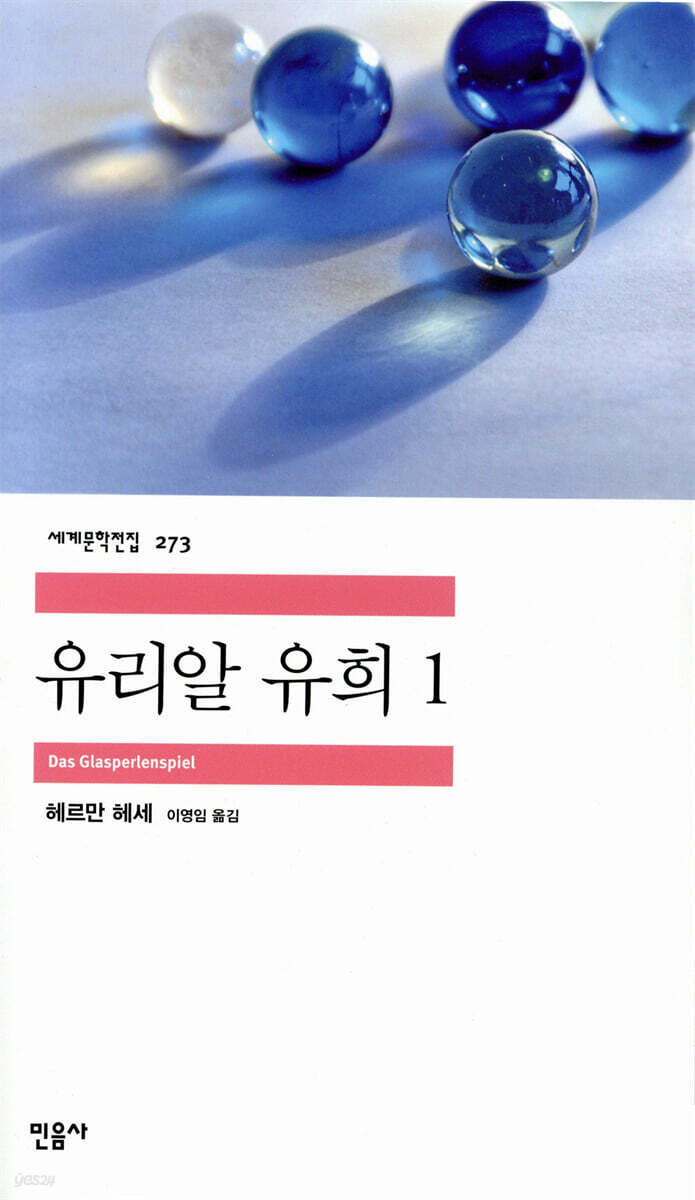
Glass Bead Game 1
 |
Description
Book Introduction
This is Hermann Hesse's last masterpiece, written over a period of ten years.
Having experienced two world wars, he began to ponder the spiritual problems that had brought about the greatest tragedy of mankind, and he poured his lifelong struggles into this novel to resolve polar issues such as desire and asceticism, chaos and order, life and death, East and West, and good and evil.
Therefore, this book can be seen as “a process and methodology for finding the answer.”
Published in 1943, [The Glass Bead Game] is considered a modern classic because it addresses important topics in the 21st century, including the knowledge information society, multimedia, fantasy, virtual reality, mental health, and meditation.
Having experienced two world wars, he began to ponder the spiritual problems that had brought about the greatest tragedy of mankind, and he poured his lifelong struggles into this novel to resolve polar issues such as desire and asceticism, chaos and order, life and death, East and West, and good and evil.
Therefore, this book can be seen as “a process and methodology for finding the answer.”
Published in 1943, [The Glass Bead Game] is considered a modern classic because it addresses important topics in the 21st century, including the knowledge information society, multimedia, fantasy, virtual reality, mental health, and meditation.
- You can preview some of the book's contents.
Preview
index
Introduction - To explain the history of glass bead games to the general public in an easy-to-understand manner.
Biography of the Master of Games, Joseph Knecht
Joseph Knecht's posthumous works
Commentary on the work
Author's chronology
Biography of the Master of Games, Joseph Knecht
Joseph Knecht's posthumous works
Commentary on the work
Author's chronology
Publisher's Review
Hesse's last masterpiece, completed over a period of ten years, and winner of the Nobel Prize in Literature
The ensemble of Hesse's literature, which contains the process of resolving and answering the questions he had been pondering throughout his life, such as desire and asceticism, chaos and order, life and death, East and West, good and evil.
The Glass Bead Game (Das Glasperlenspiel), a masterpiece by German author Hermann Hesse, winner of the Nobel Prize in Literature (1946), was published as volumes 273 and 274 of Minumsa's World Literature Collection.
[The Glass Bead Game] is Hermann Hesse's last masterpiece, written over a period of ten years.
Having experienced two world wars, he began to ponder the spiritual problems that had brought about the greatest tragedy of mankind, and he poured his lifelong struggles into this novel to resolve polar issues such as desire and asceticism, chaos and order, life and death, East and West, and good and evil.
Therefore, this book can be seen as “a process and methodology for finding the answer.”
Published in 1943, [The Glass Bead Game] is considered a modern classic because it addresses important topics in the 21st century, including the knowledge information society, multimedia, fantasy, virtual reality, mental health, and meditation.
Humanity faced the unprecedented misfortune of World War I and II.
A journey to find the answer within one's inner world through rigorous self-discipline.
[Glass Bead Game] is largely composed of three parts.
The [Preface], subtitled "To explain the history of the Glass Bead Game to the general public," is written in the form of a thesis and provides an overview of the background to writing the biography of Joseph Knecht, the Glass Bead Game master, and his life.
The following [Biography of Joseph Knecht, Master of Play] is a biography written based on the testimonies of those around him and remaining records about Joseph's student, apprentice, and master days.
The last [Joseph Knecht's Posthumous Works] consists of [Poems from the Student and Research Days] and [Three Resumes], which are [A History of Rain], [A Confession], and [A Resumes of India].
The novel's present time is set in the future, presumably the 25th century.
A biographer begins to compile a biography of Joseph Knecht, the legendary glass bead game master who lived 200 years ago.
In the mid-20th century, when the world was facing unprecedented global chaos, a spiritual utopia called 'Castalia' was established in the Swiss mountainous region.
It is an organization that helps society run properly by sending out talented people as teachers who have been educated solely through strict self-discipline and self-cultivation, without any political or social influence.
Here, Joseph is educated as a genius and gradually shows great talent in glass bead games, and is eventually promoted to a master.
He was living his life perfectly carrying out his assigned mission, but when he reunited with his worldly friend, Designori, with whom he had argued during his student days, he began to wonder what role he truly desired.
A rise in rank is not always a step toward freedom, but a step toward bondage.
The higher the position, the more severe the bondage.
As authority grows, duties become more and more stringent.
The stronger the individuality, the more strictly free will is prohibited.
(/ From the text)
So what is the glass bead game?
Hesse explains in his work as follows:
"The glass bead game is a game that encompasses the entire content and values of our culture.
It is like a painter in the golden age of art playing with the paints on his palette, playing with everything.
"With all that humanity has achieved in the creative age in its cognition, in its lofty ideas and in its works of art, and with all that the succeeding age of scholastic observation has conceptualized and made into intellectual property—this vast store of spiritual values—the man who plays the Glass Bead Game plays it like an organist plays on a pipe organ." This is what Hermann Hesse himself called the "game of thought," a play he regularly meditated and reflected on, absorbed in his inner world.
Through this kind of play, we can move away from the extremes of art and scholarship and find balance and harmony in life.
In other words, it can be said that play itself is both a process and an answer.
In particular, Hesse was known to have been familiar with Eastern learning, including that of India and China, and to have become more absorbed in their spiritual culture as he grew older. This influence can easily be found in the methodology of the 'Glass Bead Game'.
The protagonist, Joseph Knecht, avoids extremes and pursues balance and harmony.
A masterpiece perfectly balanced in content and form [The Glass Bead Game]
Hesse's works are divided into early, middle, and late periods.
In the early years, until 1915, the year after the outbreak of World War I, works with a neo-romantic tendency such as Beneath the Wheel dominated the production.
The period between World War I and Hitler's rise to power saw a decisive change in Hesse's work. At this time, Hesse published works with anti-war messages, leading to his rejection by the German people of the time, and he received psychoanalytic treatment due to family tragedy.
The masterpieces of this period include [Demian], [Steppenwolf], and [Narcissus and Goldmund].
His later representative works include [Journey to the East] and [The Glass Bead Game], and in particular, [The Glass Bead Game] allows us to rediscover Hesse's imagination and values, as it deals with knowledge information, multimedia, fantasy, virtual reality, and meditation.
[The Glass Bead Game] is Hesse's last novel.
Hesse began writing this work in 1932, when the Nazis were gaining power in Germany, and completed it over the next ten years.
However, Nazi Germany banned the publication of this book, and the first edition was eventually published in Zurich, Switzerland in 1943.
In Germany, it was only published in December 1946, after the end of World War II.
That year, Hesse was awarded the Nobel Prize in Literature.
Hesse's concerns about the current situation and his search for answers are fully depicted in [The Glass Bead Game].
Joseph Knecht's life itself, which seeks balance and harmony, can be said to be the very process and answer.
Joseph, who was absorbed in his studies without any worries about anything, gradually opens his eyes to the world and struggles to resolve the anguish surrounding himself and the universe.
Eventually, he becomes a master of play and integrates all the polar elements, but he does not stop there. He sets out to find a better direction to solve the remaining problems.
The content of the novel, which leaps forward step by step and finally reaches the highest level of integration, perfectly matches the novel's format, which is organized into a three-layer structure.
Many readers give up reading the novel because they are tired of the difficult and stiff preface to The Glass Bead Game. In such cases, reading Knecht's posthumous works at the end first, then reading Knecht's biography in the middle, and then reading the preface to The Glass Bead Game at the end may be one way to enjoy the novel.
Moreover, the three creative essays Knecht wrote during his student days serve as both a contrast to and a complement to the original story of Knecht's life, and are in themselves excellent examples of the glass bead game.
Because in all four stories with Knecht as the main character, the contrast and harmony between the individual and society, freedom and constraint, teacher and student, old age and youth, tradition and innovation are in perfect symmetry.
(/ From 'Work Commentary')
The ensemble of Hesse's literature, which contains the process of resolving and answering the questions he had been pondering throughout his life, such as desire and asceticism, chaos and order, life and death, East and West, good and evil.
The Glass Bead Game (Das Glasperlenspiel), a masterpiece by German author Hermann Hesse, winner of the Nobel Prize in Literature (1946), was published as volumes 273 and 274 of Minumsa's World Literature Collection.
[The Glass Bead Game] is Hermann Hesse's last masterpiece, written over a period of ten years.
Having experienced two world wars, he began to ponder the spiritual problems that had brought about the greatest tragedy of mankind, and he poured his lifelong struggles into this novel to resolve polar issues such as desire and asceticism, chaos and order, life and death, East and West, and good and evil.
Therefore, this book can be seen as “a process and methodology for finding the answer.”
Published in 1943, [The Glass Bead Game] is considered a modern classic because it addresses important topics in the 21st century, including the knowledge information society, multimedia, fantasy, virtual reality, mental health, and meditation.
Humanity faced the unprecedented misfortune of World War I and II.
A journey to find the answer within one's inner world through rigorous self-discipline.
[Glass Bead Game] is largely composed of three parts.
The [Preface], subtitled "To explain the history of the Glass Bead Game to the general public," is written in the form of a thesis and provides an overview of the background to writing the biography of Joseph Knecht, the Glass Bead Game master, and his life.
The following [Biography of Joseph Knecht, Master of Play] is a biography written based on the testimonies of those around him and remaining records about Joseph's student, apprentice, and master days.
The last [Joseph Knecht's Posthumous Works] consists of [Poems from the Student and Research Days] and [Three Resumes], which are [A History of Rain], [A Confession], and [A Resumes of India].
The novel's present time is set in the future, presumably the 25th century.
A biographer begins to compile a biography of Joseph Knecht, the legendary glass bead game master who lived 200 years ago.
In the mid-20th century, when the world was facing unprecedented global chaos, a spiritual utopia called 'Castalia' was established in the Swiss mountainous region.
It is an organization that helps society run properly by sending out talented people as teachers who have been educated solely through strict self-discipline and self-cultivation, without any political or social influence.
Here, Joseph is educated as a genius and gradually shows great talent in glass bead games, and is eventually promoted to a master.
He was living his life perfectly carrying out his assigned mission, but when he reunited with his worldly friend, Designori, with whom he had argued during his student days, he began to wonder what role he truly desired.
A rise in rank is not always a step toward freedom, but a step toward bondage.
The higher the position, the more severe the bondage.
As authority grows, duties become more and more stringent.
The stronger the individuality, the more strictly free will is prohibited.
(/ From the text)
So what is the glass bead game?
Hesse explains in his work as follows:
"The glass bead game is a game that encompasses the entire content and values of our culture.
It is like a painter in the golden age of art playing with the paints on his palette, playing with everything.
"With all that humanity has achieved in the creative age in its cognition, in its lofty ideas and in its works of art, and with all that the succeeding age of scholastic observation has conceptualized and made into intellectual property—this vast store of spiritual values—the man who plays the Glass Bead Game plays it like an organist plays on a pipe organ." This is what Hermann Hesse himself called the "game of thought," a play he regularly meditated and reflected on, absorbed in his inner world.
Through this kind of play, we can move away from the extremes of art and scholarship and find balance and harmony in life.
In other words, it can be said that play itself is both a process and an answer.
In particular, Hesse was known to have been familiar with Eastern learning, including that of India and China, and to have become more absorbed in their spiritual culture as he grew older. This influence can easily be found in the methodology of the 'Glass Bead Game'.
The protagonist, Joseph Knecht, avoids extremes and pursues balance and harmony.
A masterpiece perfectly balanced in content and form [The Glass Bead Game]
Hesse's works are divided into early, middle, and late periods.
In the early years, until 1915, the year after the outbreak of World War I, works with a neo-romantic tendency such as Beneath the Wheel dominated the production.
The period between World War I and Hitler's rise to power saw a decisive change in Hesse's work. At this time, Hesse published works with anti-war messages, leading to his rejection by the German people of the time, and he received psychoanalytic treatment due to family tragedy.
The masterpieces of this period include [Demian], [Steppenwolf], and [Narcissus and Goldmund].
His later representative works include [Journey to the East] and [The Glass Bead Game], and in particular, [The Glass Bead Game] allows us to rediscover Hesse's imagination and values, as it deals with knowledge information, multimedia, fantasy, virtual reality, and meditation.
[The Glass Bead Game] is Hesse's last novel.
Hesse began writing this work in 1932, when the Nazis were gaining power in Germany, and completed it over the next ten years.
However, Nazi Germany banned the publication of this book, and the first edition was eventually published in Zurich, Switzerland in 1943.
In Germany, it was only published in December 1946, after the end of World War II.
That year, Hesse was awarded the Nobel Prize in Literature.
Hesse's concerns about the current situation and his search for answers are fully depicted in [The Glass Bead Game].
Joseph Knecht's life itself, which seeks balance and harmony, can be said to be the very process and answer.
Joseph, who was absorbed in his studies without any worries about anything, gradually opens his eyes to the world and struggles to resolve the anguish surrounding himself and the universe.
Eventually, he becomes a master of play and integrates all the polar elements, but he does not stop there. He sets out to find a better direction to solve the remaining problems.
The content of the novel, which leaps forward step by step and finally reaches the highest level of integration, perfectly matches the novel's format, which is organized into a three-layer structure.
Many readers give up reading the novel because they are tired of the difficult and stiff preface to The Glass Bead Game. In such cases, reading Knecht's posthumous works at the end first, then reading Knecht's biography in the middle, and then reading the preface to The Glass Bead Game at the end may be one way to enjoy the novel.
Moreover, the three creative essays Knecht wrote during his student days serve as both a contrast to and a complement to the original story of Knecht's life, and are in themselves excellent examples of the glass bead game.
Because in all four stories with Knecht as the main character, the contrast and harmony between the individual and society, freedom and constraint, teacher and student, old age and youth, tradition and innovation are in perfect symmetry.
(/ From 'Work Commentary')
GOODS SPECIFICS
- Date of publication: September 25, 2011
- Page count, weight, size: 420 pages | 504g | 153*224*30mm
- ISBN13: 9788937462733
- ISBN10: 8937462737
You may also like
카테고리
korean


korean

![GQ KOREA Mark (Monthly): December [2025]](http://librairie.coreenne.fr/cdn/shop/files/8ef265dbbfbf186523ed75ba7319009d.jpg?v=1765340328&width=3840)


