

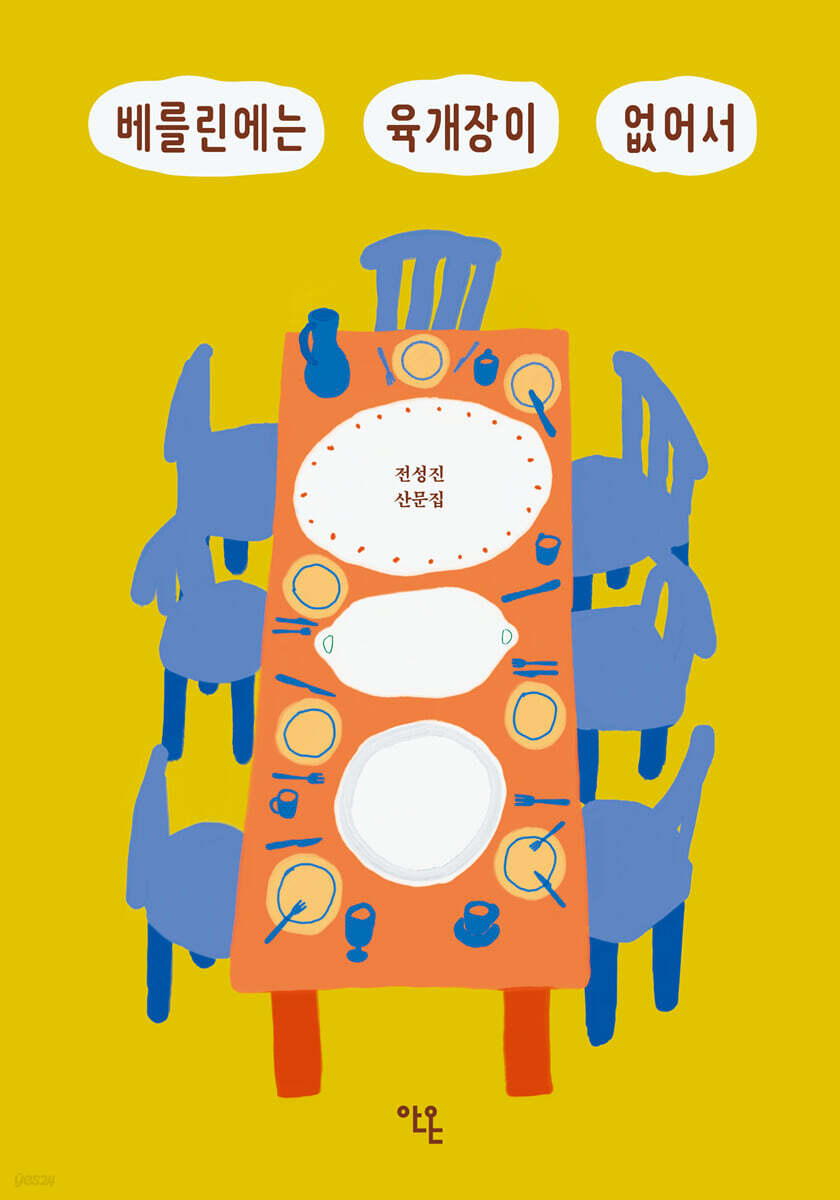
There is no Yukgaejang in Berlin
 |
Description
Book Introduction
A special friendship born at the Berlin dinner table
A hearty meal that comforts life in an unfamiliar city
The first collection of essays by author Jeon Seong-jin, who has shown his unique thoughts and wit on YouTube and podcasts under the stage name 'Gwangyeo', titled 'There's No Yukgaejang in Berlin', has been published by Anon Books.
Life in Berlin (like in Korea) was like a raft floating precariously on the sea.
I was suddenly overcome with anger at the harsh environment and the unwitting racial discrimination, but I had no other choice but to just go with the flow.
Into this Berlin life comes a roommate named Jonas.
Jonas uses the guest room and living room.
Jonas, the German man who resembles a sea lion, Jonas who pronounces 'Seongjin' as 'Sungjin', Jonas who knocks on the door every day while preparing breakfast...
Living in the same house with him, eating together, chatting, cooking together, arguing, making up, and talking again, the author creates a special friendship and affectionate cooking.
The author's delicious writing style and the unexpected events that unfold in everyday life draw you into the essay as if it were a novel.
The German food stories and various recipes that conclude each article satisfy both readers' taste buds and their enjoyment of the text.
In an unfamiliar city like Berlin, friendship and food become a source of comfort and encouragement in life.
The 'good friends' and 'warm meals' you discover in this book will enrich your life, no matter where you live in the world.
A hearty meal that comforts life in an unfamiliar city
The first collection of essays by author Jeon Seong-jin, who has shown his unique thoughts and wit on YouTube and podcasts under the stage name 'Gwangyeo', titled 'There's No Yukgaejang in Berlin', has been published by Anon Books.
Life in Berlin (like in Korea) was like a raft floating precariously on the sea.
I was suddenly overcome with anger at the harsh environment and the unwitting racial discrimination, but I had no other choice but to just go with the flow.
Into this Berlin life comes a roommate named Jonas.
Jonas uses the guest room and living room.
Jonas, the German man who resembles a sea lion, Jonas who pronounces 'Seongjin' as 'Sungjin', Jonas who knocks on the door every day while preparing breakfast...
Living in the same house with him, eating together, chatting, cooking together, arguing, making up, and talking again, the author creates a special friendship and affectionate cooking.
The author's delicious writing style and the unexpected events that unfold in everyday life draw you into the essay as if it were a novel.
The German food stories and various recipes that conclude each article satisfy both readers' taste buds and their enjoyment of the text.
In an unfamiliar city like Berlin, friendship and food become a source of comfort and encouragement in life.
The 'good friends' and 'warm meals' you discover in this book will enrich your life, no matter where you live in the world.
- You can preview some of the book's contents.
Preview
index
Part 1: Halo, Jonas
Finding a home… 11
I found a house… 29
German man wearing only underwear… 40
Sauerkraut is sauerkraut… 51
There are no Berliners in Berlin… 61
Protect your stomach… 75
What is racism (1) … 86
What is racism (2) … 102
Iliad, son of Jonas… 113
Same but different… 124
Unhappy Battle… 139
What's your name? … 150
Club Night… 161
Part 2: Ales Good, Berlin
I don't want to die... 177
Aless Good… 187
I wonder who's home... 194
Diligent Seahorse… 204
Finally camping… 214
Christmas festivities… 225
Fighting and moving… 243
Email (1) … 259
Good friend… 264
Email (2) … 273
An unexpected call… 275
Deciding to live in Berlin… 288
Recommendation … 296
Finding a home… 11
I found a house… 29
German man wearing only underwear… 40
Sauerkraut is sauerkraut… 51
There are no Berliners in Berlin… 61
Protect your stomach… 75
What is racism (1) … 86
What is racism (2) … 102
Iliad, son of Jonas… 113
Same but different… 124
Unhappy Battle… 139
What's your name? … 150
Club Night… 161
Part 2: Ales Good, Berlin
I don't want to die... 177
Aless Good… 187
I wonder who's home... 194
Diligent Seahorse… 204
Finally camping… 214
Christmas festivities… 225
Fighting and moving… 243
Email (1) … 259
Good friend… 264
Email (2) … 273
An unexpected call… 275
Deciding to live in Berlin… 288
Recommendation … 296
Detailed image
.jpg)
Into the book
“This is Jonas.”
At the time I posted the article, my Korean female flatmate kindly introduced me to Jonas.
Jonas blinked and smiled brightly.
It was just like a real-life version of the pot-bellied white man character from a cartoon.
He especially resembles Santa Claus, and it is said that he actually dresses up as Santa Claus in the winter to earn pocket money.
“Hello, Sungjin.”
When I corrected his pronunciation to 'Sungjin, not Sungjin,' he nodded with a serious face and said 'Suwoongjin.'
--- p.35
The well-heated broccoli was moist and crispy.
The refreshing taste of cream cheese and cucumber went well with the salty and oily salami.
Only then did I laugh.
“Wow, it’s delicious.”
“This is a typical German breakfast.”
“What is a German breakfast?”
“I take out all the bread, ham, cheese, yogurt, jam, and butter I have at home and make a table and eat it.
Put the rest in the fridge and take it out to eat again tomorrow.
And drink whatever you want to drink.
Coffee, tea, orange juice, apple pie… … .
“The choice is yours.”
Jonas, who was explaining excitedly, picked up the ham with his bare hands, using all three fingers in a clumsy movement.
When was the last time Jonas washed his hands? He was going to put ham on his plate, but decided to just put a slice of cheese on it.
--- p.45
“If West Berlin has currywurst, East Berlin has ketwurst.”
Ilias ordered three ketwursts.
The clerk took out a long brooch that looked to be about 15 centimeters long.
It looked like a brochen, probably over 30 centimeters long, had been cut in half, and there was a hole in the cut end long enough to fit a sausage through.
The clerk, who had poured ketchup into the hole, put in the warmed sausage and poured ketchup on the end of the sausage again.
It was complete.
“It’s East Berlin street food.”
Ilias said, handing over the ketbust.
Seeing Ketwurst, which is just bread, ketchup, and sausage, made me miss Korean tteokbokki and sundae.
--- p.165
“Don’t worry about anything.
Sungjin.
You think too much.
Just eat the Rote Grutze in front of you.
Then you will be happy.”
Jonas poured a whole lot of lote grütze into a bowl filled with vanilla sauce and pushed it towards me.
A sweet scent also came to me along the bowl.
I was momentarily reminded of Jonas' diabetes.
And then he picked up the spoon.
--- p.182
Jonas greeted each and every child without exception.
The children whispered their wishes to Jonas, and some of them burst into tears, saying that they had not listened to their parents.
I couldn't stand it because the child was so cute.
Next up was Jonas' guitar performance.
Jonas sang three Christmas carols.
He wasn't good at singing, but he played the guitar well.
I sang carols with the kids to Jonas' guitar playing.
The event was over in less than an hour.
The children followed Jonas to the end and greeted him.
Jonas shook hands with everyone and said they would meet again next winter.
--- p.234
I stood up and left Jonas.
Feeling sorry, I paid for the food I had eaten and asked the staff to wrap up a large rye bread and give it to Jonas.
I said hello to Jonas once more as I left the room.
He held up a piece of rye bread and gave it a thumbs up.
The month I was supposed to meet Jonas was also busy.
Jonas just said he was fine and to contact me when he had time.
Every time I postponed my appointment, I kept thinking about Jonas calling me his 'good friend'.
I thought it would be better if you called me 'busy friend'.
At the time I posted the article, my Korean female flatmate kindly introduced me to Jonas.
Jonas blinked and smiled brightly.
It was just like a real-life version of the pot-bellied white man character from a cartoon.
He especially resembles Santa Claus, and it is said that he actually dresses up as Santa Claus in the winter to earn pocket money.
“Hello, Sungjin.”
When I corrected his pronunciation to 'Sungjin, not Sungjin,' he nodded with a serious face and said 'Suwoongjin.'
--- p.35
The well-heated broccoli was moist and crispy.
The refreshing taste of cream cheese and cucumber went well with the salty and oily salami.
Only then did I laugh.
“Wow, it’s delicious.”
“This is a typical German breakfast.”
“What is a German breakfast?”
“I take out all the bread, ham, cheese, yogurt, jam, and butter I have at home and make a table and eat it.
Put the rest in the fridge and take it out to eat again tomorrow.
And drink whatever you want to drink.
Coffee, tea, orange juice, apple pie… … .
“The choice is yours.”
Jonas, who was explaining excitedly, picked up the ham with his bare hands, using all three fingers in a clumsy movement.
When was the last time Jonas washed his hands? He was going to put ham on his plate, but decided to just put a slice of cheese on it.
--- p.45
“If West Berlin has currywurst, East Berlin has ketwurst.”
Ilias ordered three ketwursts.
The clerk took out a long brooch that looked to be about 15 centimeters long.
It looked like a brochen, probably over 30 centimeters long, had been cut in half, and there was a hole in the cut end long enough to fit a sausage through.
The clerk, who had poured ketchup into the hole, put in the warmed sausage and poured ketchup on the end of the sausage again.
It was complete.
“It’s East Berlin street food.”
Ilias said, handing over the ketbust.
Seeing Ketwurst, which is just bread, ketchup, and sausage, made me miss Korean tteokbokki and sundae.
--- p.165
“Don’t worry about anything.
Sungjin.
You think too much.
Just eat the Rote Grutze in front of you.
Then you will be happy.”
Jonas poured a whole lot of lote grütze into a bowl filled with vanilla sauce and pushed it towards me.
A sweet scent also came to me along the bowl.
I was momentarily reminded of Jonas' diabetes.
And then he picked up the spoon.
--- p.182
Jonas greeted each and every child without exception.
The children whispered their wishes to Jonas, and some of them burst into tears, saying that they had not listened to their parents.
I couldn't stand it because the child was so cute.
Next up was Jonas' guitar performance.
Jonas sang three Christmas carols.
He wasn't good at singing, but he played the guitar well.
I sang carols with the kids to Jonas' guitar playing.
The event was over in less than an hour.
The children followed Jonas to the end and greeted him.
Jonas shook hands with everyone and said they would meet again next winter.
--- p.234
I stood up and left Jonas.
Feeling sorry, I paid for the food I had eaten and asked the staff to wrap up a large rye bread and give it to Jonas.
I said hello to Jonas once more as I left the room.
He held up a piece of rye bread and gave it a thumbs up.
The month I was supposed to meet Jonas was also busy.
Jonas just said he was fine and to contact me when he had time.
Every time I postponed my appointment, I kept thinking about Jonas calling me his 'good friend'.
I thought it would be better if you called me 'busy friend'.
--- p.270
Publisher's Review
Special Friendship: The Proposition of Happiness
Berlin is known to us as a symbol of German unification and a city of free art.
It's a city of youth with a thriving new club culture, but it also has a somewhat less appealing food scene.
The author lives in Berlin.
As a lesbian from East Asia and a foreign worker who is just starting to learn German, life is not easy.
Prices are high, the language is difficult to understand, and racism is rampant, whether through blatant attitudes or subtle nuances.
Complete relaxation and recharge in an unfamiliar city will only be possible if you have a comfortable home.
The writer's new home is cheap and close to work, but he has a rather unusual flatmate.
His presence evokes the possibility of rest and recharge.
Jonas is clearly a kind and affectionate person, but he is also overly nosy.
Although she is far from being clean, she has a cooking skill that makes you forget that fact for a moment.
He supports left-wing parties and is a Nazi, but he is the kind of person who calls 'Seongjin' 'Sungjin' to the end.
He is a person who enjoys sweets despite suffering from diabetes, gives Seongjin a special name, and willingly becomes Santa Claus on Christmas.
The author lives in the same space as Jonas, for whom today's happiness is clearly the top priority, and shares friendship and food.
This record of friendship shows how three-dimensional and interesting human beings are.
This sharing of food makes us examine how affectionate and sad friendship can be.
Affectionate Cuisine: Deep and Warm Memories
Jeon Seong-jin's sentences are like a dish of well-balanced ingredients, filled with humor and irony throughout the dialogue and descriptions.
The writer's worries and thoughts continue while eating or drinking something, making or cleaning something.
At the end of each chapter, a short recipe for a local dish or a glimpse into German food culture is included to add to the completeness of the article.
Enjoy a German breakfast with various ingredients added to spagel, brochette with hollandaise sauce, East German-style Jägerschnitzel, etc.
The food introduced in the book shows a different side of German cuisine.
From vending machines to cafes, articles on German coffee culture and patient meals at Berlin's General Hospital reveal a true side of local culture that's hard to find in travel guides or YouTube.
Food can start a conversation.
Food evokes memories.
Food keeps people alive, not dead.
Food allows us to mourn someone.
So, for the writer, the time spent with Jonas became a hearty meal that had to be chewed and digested thoroughly.
The writer is a person who looks at the food on the table and thinks about the hands and heart of the person who made the food.
"There's No Yukgaejang in Berlin" is a book of hands and heart.
Those who are overwhelmed by extreme loneliness, those who have suddenly lost someone, those who have lost what they lived for... I hope this book will reach their hands and hearts.
I hope everyone enjoys this heartfelt meal.
Berlin is known to us as a symbol of German unification and a city of free art.
It's a city of youth with a thriving new club culture, but it also has a somewhat less appealing food scene.
The author lives in Berlin.
As a lesbian from East Asia and a foreign worker who is just starting to learn German, life is not easy.
Prices are high, the language is difficult to understand, and racism is rampant, whether through blatant attitudes or subtle nuances.
Complete relaxation and recharge in an unfamiliar city will only be possible if you have a comfortable home.
The writer's new home is cheap and close to work, but he has a rather unusual flatmate.
His presence evokes the possibility of rest and recharge.
Jonas is clearly a kind and affectionate person, but he is also overly nosy.
Although she is far from being clean, she has a cooking skill that makes you forget that fact for a moment.
He supports left-wing parties and is a Nazi, but he is the kind of person who calls 'Seongjin' 'Sungjin' to the end.
He is a person who enjoys sweets despite suffering from diabetes, gives Seongjin a special name, and willingly becomes Santa Claus on Christmas.
The author lives in the same space as Jonas, for whom today's happiness is clearly the top priority, and shares friendship and food.
This record of friendship shows how three-dimensional and interesting human beings are.
This sharing of food makes us examine how affectionate and sad friendship can be.
Affectionate Cuisine: Deep and Warm Memories
Jeon Seong-jin's sentences are like a dish of well-balanced ingredients, filled with humor and irony throughout the dialogue and descriptions.
The writer's worries and thoughts continue while eating or drinking something, making or cleaning something.
At the end of each chapter, a short recipe for a local dish or a glimpse into German food culture is included to add to the completeness of the article.
Enjoy a German breakfast with various ingredients added to spagel, brochette with hollandaise sauce, East German-style Jägerschnitzel, etc.
The food introduced in the book shows a different side of German cuisine.
From vending machines to cafes, articles on German coffee culture and patient meals at Berlin's General Hospital reveal a true side of local culture that's hard to find in travel guides or YouTube.
Food can start a conversation.
Food evokes memories.
Food keeps people alive, not dead.
Food allows us to mourn someone.
So, for the writer, the time spent with Jonas became a hearty meal that had to be chewed and digested thoroughly.
The writer is a person who looks at the food on the table and thinks about the hands and heart of the person who made the food.
"There's No Yukgaejang in Berlin" is a book of hands and heart.
Those who are overwhelmed by extreme loneliness, those who have suddenly lost someone, those who have lost what they lived for... I hope this book will reach their hands and hearts.
I hope everyone enjoys this heartfelt meal.
GOODS SPECIFICS
- Date of issue: October 22, 2024
- Page count, weight, size: 300 pages | 456g | 140*200*20mm
- ISBN13: 9791192638485
- ISBN10: 1192638484
You may also like
카테고리
korean


korean

![GQ KOREA Mark (Monthly): December [2025]](http://librairie.coreenne.fr/cdn/shop/files/8ef265dbbfbf186523ed75ba7319009d.jpg?v=1765340328&width=3840)


