

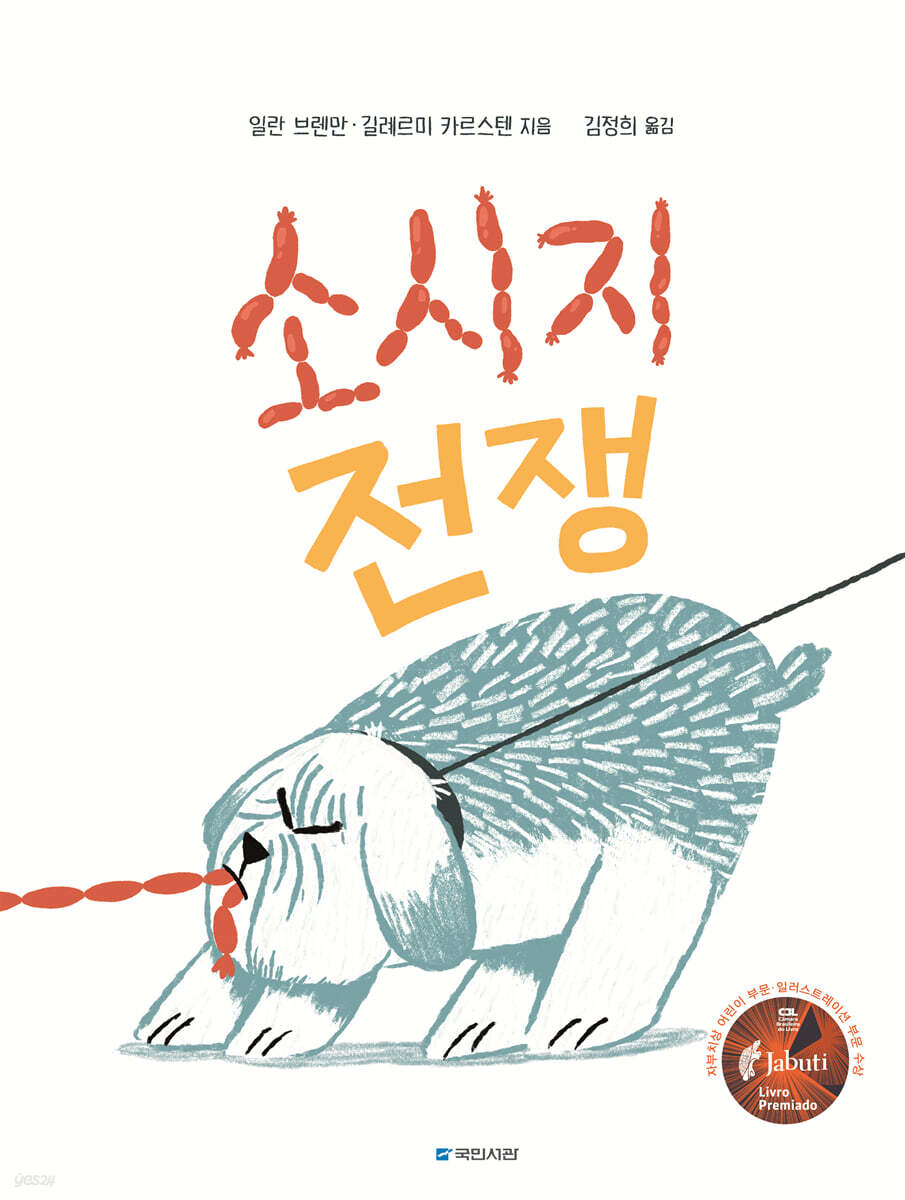
Sausage Wars
 |
Description
Book Introduction
Brazil's highest literary award, the Zabuchi Prize
Won awards in both the children's and illustration categories!
Bologna Illustrator Award winner
The Russia-Ukraine war, the Israel-Palestine Hamas war, the Ethiopian civil war, the Myanmar civil war…
Why on earth do so many wars occur?
A book that explains the causes of war and conflict in a fun and easy-to-understand way!
“Does anyone know why this war started?”
Won awards in both the children's and illustration categories!
Bologna Illustrator Award winner
The Russia-Ukraine war, the Israel-Palestine Hamas war, the Ethiopian civil war, the Myanmar civil war…
Why on earth do so many wars occur?
A book that explains the causes of war and conflict in a fun and easy-to-understand way!
“Does anyone know why this war started?”
- You can preview some of the book's contents.
Preview
Detailed image

Publisher's Review
Prelude to War
There are two puppies on either side.
There is a sausage on the floor.
The puppies are curious about the object on the floor, approach it, and when they see that it is a sausage, they run towards it.
The man and woman holding the dog's leash are also dragged towards the sausage.
A man and a woman pull on the leashes to separate the dogs.
The girl and the basketball player, who saw the sight, approached with curious faces, then stood behind the man and woman respectively and pulled the leashes together.
Did you find it fascinating to see pairs pulling a rope? More and more people are joining in this tug-of-war.
People and animals alike, including clowns and magicians, astronauts and divers, wolves and piglets, mammoths and dinosaurs, pull the rope with all their might.
While glaring at the opponent on the other side.
Even with so many people involved, the dogs never let go of the sausages.
They declare war on their opponents, desperately trying not to lose it at any cost.
I guess the puppies really wanted to eat sausages.
But did those who were pulling the leash behind the dog really feel the same way?
Why on earth did this war start?
It is said that there is usually a cause for every effect.
The cause of this war could be said to be the 'sausage', the fundamental object that made the dogs fight.
So, let's take a closer look at the characters.
When you first see people's faces, you'll notice that their gaze isn't on the sausage lying on the floor, but rather on the person in front of them or across from them.
As you turn the page, you can see that the eyes that were once full of curiosity change into eyes full of hostility towards the person on the other side.
And before you know it, you join forces just because you're nearby, and fight just because you're on the opposite side.
The most important thing here is that no one is looking at the sausage, the direct cause of the war.
You probably didn't even know the sausage was there.
It's an ironic situation where so many people are glaring at each other, clenching their fists, and fighting a war, yet we don't even know the cause.
The sausage war, which was on the verge of breaking out, enters a new phase with the appearance of a cat.
The dogs, who are captivated by the cat, gradually forget that they are at war, and end up putting down their sausages and running towards the cat.
Thanks to this, people who were holding on to the tight rope suddenly lose their balance of power and are thrown far away.
In fact, this incident may have been a minor conflict that the dogs had encountered frequently.
Even if we fought to get what we wanted, if we wanted to play together, we would make up and play together as if nothing had happened.
The dogs that started the war become friendly again, and only those who had no clear reason for participating in the war feel embarrassed.
And I ask:
Why on earth did this war start?
There is no good war or bad peace.
Today, we live in a society where wars and conflicts, both large and small, occur frequently.
Outside, news of battles and casualties is heard one after another every day, and inside, conflicting voices are clashing sharply.
Looking back, many of the wars and conflicts that occur in our society may have started for very trivial reasons, like the sausage war.
You may have been born and raised in the same place, or you may have been drawn into the war by people around you who enjoyed the same culture, without even knowing why.
But whatever the reason for its start, the results of the war are catastrophic.
Even if there were reasonable causes, it is difficult to rationalize war.
War not only takes the precious lives of countless people, but also leaves behind psychological scars that will never be forgotten.
When we talk about war, it feels like something so serious and scary that it feels far removed from our repetitive daily lives.
But the big and small conflicts in everyday life are not much different from wars that start for trivial reasons.
We've all had the experience of losing touch with someone we were close to because a small word or action caused a misunderstanding, or of missing the opportunity to speak our minds honestly and making the situation worse.
Sometimes we fight over nothing and it's hard to undo our mistakes.
What about children? Have you ever seen them declare a breakup, saying, "I won't play with you!" when they're upset by a single word or when you refuse to lend them something? But just like puppies, who reconcile as if nothing happened, they may distance themselves today because they don't like something, but tomorrow, they may like something else and become close again.
In some ways, the simple yet pure and courageous images of puppies and children can be the solution to prevent minor conflicts from escalating into war and find peace.
The more you know, the more fun it is!
Through "The Sausage Wars," the author humorously criticizes the meaninglessness of unnecessary wars whose origins are not even understood.
And it explains in a very understandable way how war and conflict arise.
The characters' behavior can be explained by the concept of 'conformity', a core topic in group psychology.
The 'conformity phenomenon' refers to the phenomenon in which an individual conforms his or her behavior or thoughts to the norms of the group due to pressure from the group.
This book presents both informational conformity, where people who are not fully aware of the situation join the war believing that "they will be on our side," and normative conformity, where people join the war out of a sense of belonging to their group.
It is a symbolic representation of the social phenomenon in which people become entangled in group psychology and the issue escalates even though the nature of the conflict is trivial.
"Sausage Wars" is a picture book that makes full use of the physical properties of a book, with pages turning around the central binding.
The story unfolds around a sausage in the middle, with people appearing one by one at each end.
During a war, people never cross the central binding line (sausage) as if there were a big wall blocking their way.
This composition, in which people are looking at each other and opposing each other, visually emphasizes the state of war, where people are hostile to each other and clash with each other.
As you turn the pages, the number of people on both sides increases, showing the process of small conflicts evolving into a large war in a simple and clear way.
Only at the end do people who were previously on only one side (left or right) begin to mix and mingle with each other without distinction, indicating that the invisible wall between the two groups has finally been broken down and the war is over.
If you want to make reading the book more enjoyable, pay attention to the characters that appear.
Don't the characters appearing on both sides seem familiar? Snow White with her red ribbon, the witch with the apple, the wolf and the three little pigs, Captain Hook, and Peter Pan—characters beloved by young readers from fairy tales—appear in "The Sausage Wars."
In addition, the moment you discover the various beings that are in pairs and in conflict, you may find yourself completely immersed in the book.
There are two puppies on either side.
There is a sausage on the floor.
The puppies are curious about the object on the floor, approach it, and when they see that it is a sausage, they run towards it.
The man and woman holding the dog's leash are also dragged towards the sausage.
A man and a woman pull on the leashes to separate the dogs.
The girl and the basketball player, who saw the sight, approached with curious faces, then stood behind the man and woman respectively and pulled the leashes together.
Did you find it fascinating to see pairs pulling a rope? More and more people are joining in this tug-of-war.
People and animals alike, including clowns and magicians, astronauts and divers, wolves and piglets, mammoths and dinosaurs, pull the rope with all their might.
While glaring at the opponent on the other side.
Even with so many people involved, the dogs never let go of the sausages.
They declare war on their opponents, desperately trying not to lose it at any cost.
I guess the puppies really wanted to eat sausages.
But did those who were pulling the leash behind the dog really feel the same way?
Why on earth did this war start?
It is said that there is usually a cause for every effect.
The cause of this war could be said to be the 'sausage', the fundamental object that made the dogs fight.
So, let's take a closer look at the characters.
When you first see people's faces, you'll notice that their gaze isn't on the sausage lying on the floor, but rather on the person in front of them or across from them.
As you turn the page, you can see that the eyes that were once full of curiosity change into eyes full of hostility towards the person on the other side.
And before you know it, you join forces just because you're nearby, and fight just because you're on the opposite side.
The most important thing here is that no one is looking at the sausage, the direct cause of the war.
You probably didn't even know the sausage was there.
It's an ironic situation where so many people are glaring at each other, clenching their fists, and fighting a war, yet we don't even know the cause.
The sausage war, which was on the verge of breaking out, enters a new phase with the appearance of a cat.
The dogs, who are captivated by the cat, gradually forget that they are at war, and end up putting down their sausages and running towards the cat.
Thanks to this, people who were holding on to the tight rope suddenly lose their balance of power and are thrown far away.
In fact, this incident may have been a minor conflict that the dogs had encountered frequently.
Even if we fought to get what we wanted, if we wanted to play together, we would make up and play together as if nothing had happened.
The dogs that started the war become friendly again, and only those who had no clear reason for participating in the war feel embarrassed.
And I ask:
Why on earth did this war start?
There is no good war or bad peace.
Today, we live in a society where wars and conflicts, both large and small, occur frequently.
Outside, news of battles and casualties is heard one after another every day, and inside, conflicting voices are clashing sharply.
Looking back, many of the wars and conflicts that occur in our society may have started for very trivial reasons, like the sausage war.
You may have been born and raised in the same place, or you may have been drawn into the war by people around you who enjoyed the same culture, without even knowing why.
But whatever the reason for its start, the results of the war are catastrophic.
Even if there were reasonable causes, it is difficult to rationalize war.
War not only takes the precious lives of countless people, but also leaves behind psychological scars that will never be forgotten.
When we talk about war, it feels like something so serious and scary that it feels far removed from our repetitive daily lives.
But the big and small conflicts in everyday life are not much different from wars that start for trivial reasons.
We've all had the experience of losing touch with someone we were close to because a small word or action caused a misunderstanding, or of missing the opportunity to speak our minds honestly and making the situation worse.
Sometimes we fight over nothing and it's hard to undo our mistakes.
What about children? Have you ever seen them declare a breakup, saying, "I won't play with you!" when they're upset by a single word or when you refuse to lend them something? But just like puppies, who reconcile as if nothing happened, they may distance themselves today because they don't like something, but tomorrow, they may like something else and become close again.
In some ways, the simple yet pure and courageous images of puppies and children can be the solution to prevent minor conflicts from escalating into war and find peace.
The more you know, the more fun it is!
Through "The Sausage Wars," the author humorously criticizes the meaninglessness of unnecessary wars whose origins are not even understood.
And it explains in a very understandable way how war and conflict arise.
The characters' behavior can be explained by the concept of 'conformity', a core topic in group psychology.
The 'conformity phenomenon' refers to the phenomenon in which an individual conforms his or her behavior or thoughts to the norms of the group due to pressure from the group.
This book presents both informational conformity, where people who are not fully aware of the situation join the war believing that "they will be on our side," and normative conformity, where people join the war out of a sense of belonging to their group.
It is a symbolic representation of the social phenomenon in which people become entangled in group psychology and the issue escalates even though the nature of the conflict is trivial.
"Sausage Wars" is a picture book that makes full use of the physical properties of a book, with pages turning around the central binding.
The story unfolds around a sausage in the middle, with people appearing one by one at each end.
During a war, people never cross the central binding line (sausage) as if there were a big wall blocking their way.
This composition, in which people are looking at each other and opposing each other, visually emphasizes the state of war, where people are hostile to each other and clash with each other.
As you turn the pages, the number of people on both sides increases, showing the process of small conflicts evolving into a large war in a simple and clear way.
Only at the end do people who were previously on only one side (left or right) begin to mix and mingle with each other without distinction, indicating that the invisible wall between the two groups has finally been broken down and the war is over.
If you want to make reading the book more enjoyable, pay attention to the characters that appear.
Don't the characters appearing on both sides seem familiar? Snow White with her red ribbon, the witch with the apple, the wolf and the three little pigs, Captain Hook, and Peter Pan—characters beloved by young readers from fairy tales—appear in "The Sausage Wars."
In addition, the moment you discover the various beings that are in pairs and in conflict, you may find yourself completely immersed in the book.
GOODS SPECIFICS
- Date of issue: February 3, 2025
- Page count, weight, size: 40 pages | 332g | 205*275*8mm
- ISBN13: 9788911113132
- KC Certification: Certification Type: Conformity Confirmation
You may also like
카테고리
korean


korean

![GQ KOREA Mark (Monthly): December [2025]](http://librairie.coreenne.fr/cdn/shop/files/8ef265dbbfbf186523ed75ba7319009d.jpg?v=1765340328&width=3840)


