![[Yesuricover] Classmate](http://librairie.coreenne.fr/cdn/shop/files/3259880c0dc4c12904cd946a985d38e1.jpg?v=1765303474&width=3840)

[Yesuricover] Classmate
 |
Description
Book Introduction
Fred Ullman's "Small Masterpiece," "The Classmate"
Yes24 exclusive special edition published
One of the most famous and widely read novels set in the era of Nazism and the Holocaust, "Classmates," has been published by Open Books as a special edition by Yes24.
"The Classmate" is a novel by Fred Ullmann set in Stuttgart, Germany in the 1930s, depicting the friendship between a Jewish boy and a German aristocratic boy.
Author Arthur Koestler praised it, calling it a “small masterpiece,” and Jean Dormesson, a member of the Académie Française and editor-in-chief of Le Figaro, confessed that he “cried and cried.”
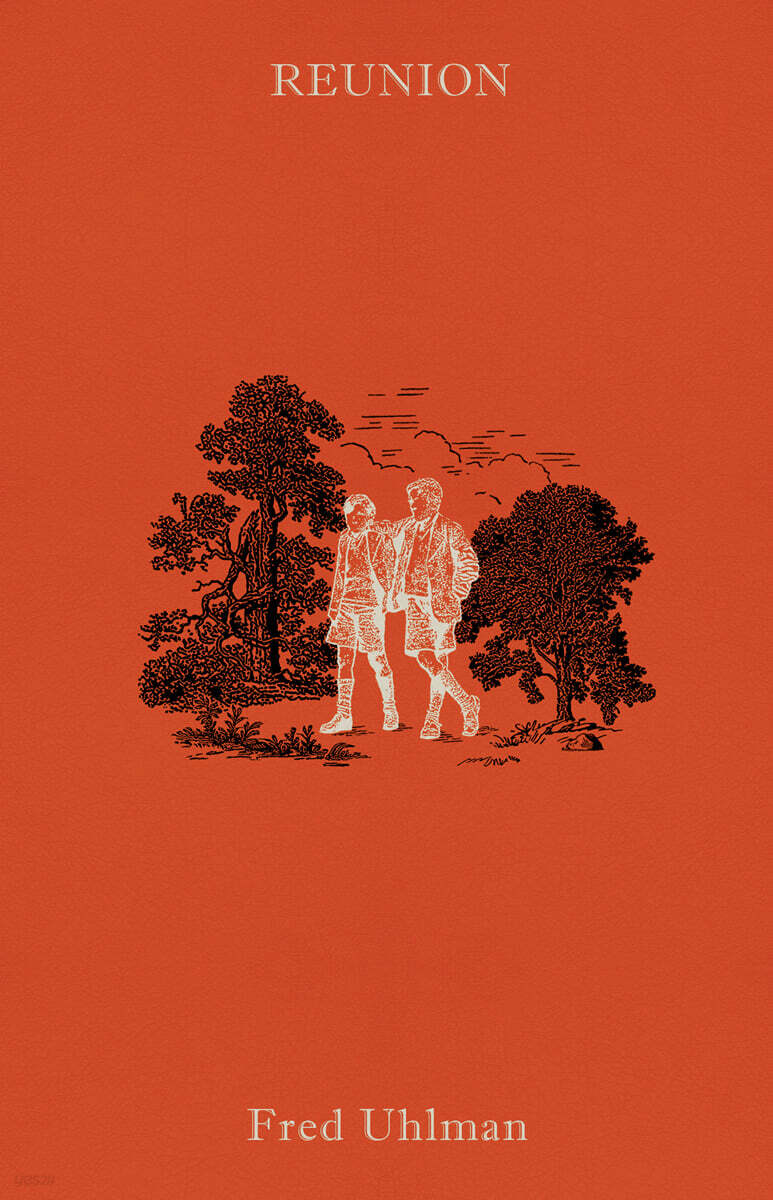
This special edition exclusive to Yes24 has a different feel from the previous editions, with a cover illustration and design that captures the atmosphere of the time and luxurious shoulder straps.
This edition, with its high-quality binding that preserves the feel of a classic and enhances its collection value, is presented with a simple and impressive design befitting a short but substantial work.
"Classmates," a vivid portrayal of the friendship between two adolescent boys, is a story of friendship between two boys set in the beautiful landscape of southwestern Germany.
This work is exquisitely juxtaposed against the historical backdrop of the rise of Hitler and Nazism, vividly revealing the ugliness and nobility of humanity without forcing readers into the atrocities of World War II.
Like the intense friendship between two boys that developed over a year or so, this book is short but powerful.
In particular, the last sentence, which contains a huge twist, is both shocking and moving.
The artist Fred Ullmann was originally born in Germany but settled in England to escape Hitler.
His work, "Classmates," which he published when he was nearly 70, did not receive much attention when it was first published in 1971, but it gained great popularity when it was republished in 1977 with a foreword by Arthur Koestler, and has been translated into over 20 languages around the world, becoming one of the modern classics.
The book has been a must-read for European youth for decades, and is listed as a must-read and recommended book in many countries, selling over 100,000 copies annually in Europe alone.
Although it is short, it is not at all lacking in its length and can stand shoulder to shoulder with other masterpiece novels.
Yes24 exclusive special edition published
One of the most famous and widely read novels set in the era of Nazism and the Holocaust, "Classmates," has been published by Open Books as a special edition by Yes24.
"The Classmate" is a novel by Fred Ullmann set in Stuttgart, Germany in the 1930s, depicting the friendship between a Jewish boy and a German aristocratic boy.
Author Arthur Koestler praised it, calling it a “small masterpiece,” and Jean Dormesson, a member of the Académie Française and editor-in-chief of Le Figaro, confessed that he “cried and cried.”
This special edition exclusive to Yes24 has a different feel from the previous editions, with a cover illustration and design that captures the atmosphere of the time and luxurious shoulder straps.
This edition, with its high-quality binding that preserves the feel of a classic and enhances its collection value, is presented with a simple and impressive design befitting a short but substantial work.
"Classmates," a vivid portrayal of the friendship between two adolescent boys, is a story of friendship between two boys set in the beautiful landscape of southwestern Germany.
This work is exquisitely juxtaposed against the historical backdrop of the rise of Hitler and Nazism, vividly revealing the ugliness and nobility of humanity without forcing readers into the atrocities of World War II.
Like the intense friendship between two boys that developed over a year or so, this book is short but powerful.
In particular, the last sentence, which contains a huge twist, is both shocking and moving.
The artist Fred Ullmann was originally born in Germany but settled in England to escape Hitler.
His work, "Classmates," which he published when he was nearly 70, did not receive much attention when it was first published in 1971, but it gained great popularity when it was republished in 1977 with a foreword by Arthur Koestler, and has been translated into over 20 languages around the world, becoming one of the modern classics.
The book has been a must-read for European youth for decades, and is listed as a must-read and recommended book in many countries, selling over 100,000 copies annually in Europe alone.
Although it is short, it is not at all lacking in its length and can stand shoulder to shoulder with other masterpiece novels.
- You can preview some of the book's contents.
Preview
index
Foreword to the 1977 edition by Arthur Koestler
Preface to the 1997 edition by Jean Dormesson
classmate
Translator's Note
Preface to the 1997 edition by Jean Dormesson
classmate
Translator's Note
Detailed image

Into the book
He came into my life in February 1932 and never left again.
--- p.21
I don't remember exactly when I decided that I wanted to make Conradin my friend, but I had no doubt that one day he would become my friend.
I didn't have any friends until he transferred schools.
Because there wasn't a single kid in my class that I felt could fulfill my romantic ideal of friendship.
There was no child for whom I would willingly die, no child who could be impressed by my complete faith, loyalty, and self-sacrifice.
--- p.37
When I almost caught up with him, he turned around and smiled at me.
Then, awkwardly and clumsily, still hesitantly, he took my trembling hand and shook it.
"Hello, Hans," he said, and suddenly I realized with a mixture of joy, relief, and surprise that he, like me, was shy and in need of company.
--- pp.51~52
Days passed like that, and nothing could disturb our friendship.
Rumors of political unrest were swirling outside our magical realm, but the center of the storm—Berlin, where clashes between Nazis and Communists were reported—was far away.
--- p.61
“My mother hates Jews.
I fear Jews even though I have never met one.
If your mother was dying and your father was the only one who could save her, she wouldn't let him into the house.
I will never even think about meeting you.
Your mother is wary of you.
Because you, a Jew, have made your son your friend.
And I think it's a stain on the Hohenfels family that I'm seen with you.
Your mother is also afraid of you.
You are undermining my religious faith, and you believe that the Jewish community you belong to is nothing more than another name for Bolshevism, and that I will fall victim to your diabolical schemes.
Don't laugh, my mother is serious.
I had an argument with my mother, but this is what she said.
[You poor thing, don't you know you're already in their hands? You're already talking like a Jew.] And if you want to know the whole truth, I had to fight for every single hour I spent with you.
--- p.21
I don't remember exactly when I decided that I wanted to make Conradin my friend, but I had no doubt that one day he would become my friend.
I didn't have any friends until he transferred schools.
Because there wasn't a single kid in my class that I felt could fulfill my romantic ideal of friendship.
There was no child for whom I would willingly die, no child who could be impressed by my complete faith, loyalty, and self-sacrifice.
--- p.37
When I almost caught up with him, he turned around and smiled at me.
Then, awkwardly and clumsily, still hesitantly, he took my trembling hand and shook it.
"Hello, Hans," he said, and suddenly I realized with a mixture of joy, relief, and surprise that he, like me, was shy and in need of company.
--- pp.51~52
Days passed like that, and nothing could disturb our friendship.
Rumors of political unrest were swirling outside our magical realm, but the center of the storm—Berlin, where clashes between Nazis and Communists were reported—was far away.
--- p.61
“My mother hates Jews.
I fear Jews even though I have never met one.
If your mother was dying and your father was the only one who could save her, she wouldn't let him into the house.
I will never even think about meeting you.
Your mother is wary of you.
Because you, a Jew, have made your son your friend.
And I think it's a stain on the Hohenfels family that I'm seen with you.
Your mother is also afraid of you.
You are undermining my religious faith, and you believe that the Jewish community you belong to is nothing more than another name for Bolshevism, and that I will fall victim to your diabolical schemes.
Don't laugh, my mother is serious.
I had an argument with my mother, but this is what she said.
[You poor thing, don't you know you're already in their hands? You're already talking like a Jew.] And if you want to know the whole truth, I had to fight for every single hour I spent with you.
--- pp.118~119
Publisher's Review
The beautiful and sad friendship, parting, and reunion of two classmates
Sixteen-year-old Hans Schwarz, the son of a Jewish doctor, is attracted to the new student at his school, a German nobleman named Conradin von Hohenfels.
The friendship between the two men, which began with an awkward handshake, deepens amidst the beautiful scenery of the Swabian region.
The two discuss art, philosophy, and God, and recite their favorite poems.
Sometimes we talk about girls.
Hans, who has a hobby of collecting old coins and ornaments, invites Conradin to his home to show him his collection.
Hans feels humiliated when he sees his father treating Conradin politely and calling him "Count", but this feeling disappears when Conradin visits Hans' house more often.
However, Conradin is reluctant to invite Hans to his home, and only invites him when his parents are not present.
Hans goes to the opera and sees Conradin and his parents from a distance.
Conradin passes by, pretending not to see Hans.
This incident leads to a huge fight between the two, and Hans learns that Conradin's parents, especially his mother, hate Jews.
Meanwhile, posters denouncing Jews and Nazi swastikas proliferate on the streets.
A strange atmosphere begins to permeate the school, with a new history teacher who believes in Aryan supremacy.
In 1933, Hans' parents decided to send him to the United States.
Two days before leaving Germany, Hans receives a sad letter from Conradin.
And 30 years pass.
Hans gets married in America and, although he fails to become a poet, which was his dream as a teenager, he achieves some success as a lawyer.
Hans, who had been trying to forget about Germany, one day [reunites] with Conradin in an unexpected way… … .
An immortal novel of friendship that I can recommend to anyone without hesitation.
As author Ian McEwan recommends, this book is one that "should be read by more readers, regardless of age or gender."
With its sensible length, vibrant writing style, touching story of friendship, and even a final twist, it's a work I can recommend to people around me without hesitation.
Moreover, the driving force behind this book's steady sales of over 100,000 copies annually in Europe alone is young readers.
In France and Italy, it has been selected as a required reading for young people and is used in school classes, and in Japan, it is also a recommended book selected by the School Library Association.
This masterpiece novel, published in over 20 languages and read by readers around the world, is now available to Korean readers.
The story of the sixteen-year-old protagonist, his school, friends, parents, and the town where he was born and raised, will leave a strong impression on teenagers still in their teens through Fred Ullman's vivid descriptions, and will bring back memories of boyhood and girlhood that any adult reader likely cherishes.
Fred Ullman, the author introduced for the first time in Korea
Fred Ullman is a writer being introduced to Korea for the first time.
He worked as a painter and writer, and his representative work is “Classmate.”
Born in 1901 to a middle-class Jewish family in Stuttgart, Germany, he studied law at university and was forced to leave Germany in 1933 after Hitler came to power.
Although "Classmate" contains autobiographical elements, it is not an autobiography.
The Karl Alexander Gymnasium featured in this novel is based on the Eberhard Ludwig Gymnasium that the author attended, and the school scenery, teachers, and children are also based on the author's memories.
Fred Ullman also claims that it was his hometown that made him an artist and led him to live a [romantic] life.
His love for the place where he was born and raised shines through in many passages of “Classmates.”
Initially, he fled to France and built a career as a painter, earning a living by painting, and held his first solo exhibition in Paris in 1935.
In 1936 he went to Spain, but the Spanish Civil War broke out and he had to leave again.
However, there he meets Diana Croft, who later becomes his wife.
He moved to England in September of the same year and settled there, and passed away in London in 1985.
The home of Fred Ullman and Diana Croft became a meeting place for people in similar circumstances who had fled fascism to Britain.
However, soon after the outbreak of World War II, the British government interned a number of enemy artists, intellectuals, and politicians on the Isle of Man, including Fred Ullmann.
During their detention, people helped each other get through the difficult times by drawing and writing for each other, and Fred Ullman was able to return home after six months.
Although his native language is German, not English, "Classmates" is written in a surprisingly simple yet elegant English.
When "Classmates" was first published in 1971, the response was lukewarm, but it received significant attention when it was republished in 1977 with a preface by Arthur Koestler, who called it a "small masterpiece."
It was also made into a film in 1989 with a screenplay by Harold Pinter, who was also a Nobel Prize winner in Literature.
Sixteen-year-old Hans Schwarz, the son of a Jewish doctor, is attracted to the new student at his school, a German nobleman named Conradin von Hohenfels.
The friendship between the two men, which began with an awkward handshake, deepens amidst the beautiful scenery of the Swabian region.
The two discuss art, philosophy, and God, and recite their favorite poems.
Sometimes we talk about girls.
Hans, who has a hobby of collecting old coins and ornaments, invites Conradin to his home to show him his collection.
Hans feels humiliated when he sees his father treating Conradin politely and calling him "Count", but this feeling disappears when Conradin visits Hans' house more often.
However, Conradin is reluctant to invite Hans to his home, and only invites him when his parents are not present.
Hans goes to the opera and sees Conradin and his parents from a distance.
Conradin passes by, pretending not to see Hans.
This incident leads to a huge fight between the two, and Hans learns that Conradin's parents, especially his mother, hate Jews.
Meanwhile, posters denouncing Jews and Nazi swastikas proliferate on the streets.
A strange atmosphere begins to permeate the school, with a new history teacher who believes in Aryan supremacy.
In 1933, Hans' parents decided to send him to the United States.
Two days before leaving Germany, Hans receives a sad letter from Conradin.
And 30 years pass.
Hans gets married in America and, although he fails to become a poet, which was his dream as a teenager, he achieves some success as a lawyer.
Hans, who had been trying to forget about Germany, one day [reunites] with Conradin in an unexpected way… … .
An immortal novel of friendship that I can recommend to anyone without hesitation.
As author Ian McEwan recommends, this book is one that "should be read by more readers, regardless of age or gender."
With its sensible length, vibrant writing style, touching story of friendship, and even a final twist, it's a work I can recommend to people around me without hesitation.
Moreover, the driving force behind this book's steady sales of over 100,000 copies annually in Europe alone is young readers.
In France and Italy, it has been selected as a required reading for young people and is used in school classes, and in Japan, it is also a recommended book selected by the School Library Association.
This masterpiece novel, published in over 20 languages and read by readers around the world, is now available to Korean readers.
The story of the sixteen-year-old protagonist, his school, friends, parents, and the town where he was born and raised, will leave a strong impression on teenagers still in their teens through Fred Ullman's vivid descriptions, and will bring back memories of boyhood and girlhood that any adult reader likely cherishes.
Fred Ullman, the author introduced for the first time in Korea
Fred Ullman is a writer being introduced to Korea for the first time.
He worked as a painter and writer, and his representative work is “Classmate.”
Born in 1901 to a middle-class Jewish family in Stuttgart, Germany, he studied law at university and was forced to leave Germany in 1933 after Hitler came to power.
Although "Classmate" contains autobiographical elements, it is not an autobiography.
The Karl Alexander Gymnasium featured in this novel is based on the Eberhard Ludwig Gymnasium that the author attended, and the school scenery, teachers, and children are also based on the author's memories.
Fred Ullman also claims that it was his hometown that made him an artist and led him to live a [romantic] life.
His love for the place where he was born and raised shines through in many passages of “Classmates.”
Initially, he fled to France and built a career as a painter, earning a living by painting, and held his first solo exhibition in Paris in 1935.
In 1936 he went to Spain, but the Spanish Civil War broke out and he had to leave again.
However, there he meets Diana Croft, who later becomes his wife.
He moved to England in September of the same year and settled there, and passed away in London in 1985.
The home of Fred Ullman and Diana Croft became a meeting place for people in similar circumstances who had fled fascism to Britain.
However, soon after the outbreak of World War II, the British government interned a number of enemy artists, intellectuals, and politicians on the Isle of Man, including Fred Ullmann.
During their detention, people helped each other get through the difficult times by drawing and writing for each other, and Fred Ullman was able to return home after six months.
Although his native language is German, not English, "Classmates" is written in a surprisingly simple yet elegant English.
When "Classmates" was first published in 1971, the response was lukewarm, but it received significant attention when it was republished in 1977 with a preface by Arthur Koestler, who called it a "small masterpiece."
It was also made into a film in 1989 with a screenplay by Harold Pinter, who was also a Nobel Prize winner in Literature.
GOODS SPECIFICS
- Date of issue: May 15, 2024
- Format: Hardcover book binding method guide
- Page count, weight, size: 160 pages | 128*188*20mm
- ISBN13: 9788932924335
- ISBN10: 8932924333
You may also like
카테고리
korean


korean

![ELLE 엘르 스페셜 에디션 A형 : 12월 [2025]](http://librairie.coreenne.fr/cdn/shop/files/b8e27a3de6c9538896439686c6b0e8fb.jpg?v=1766436872&width=3840)


