

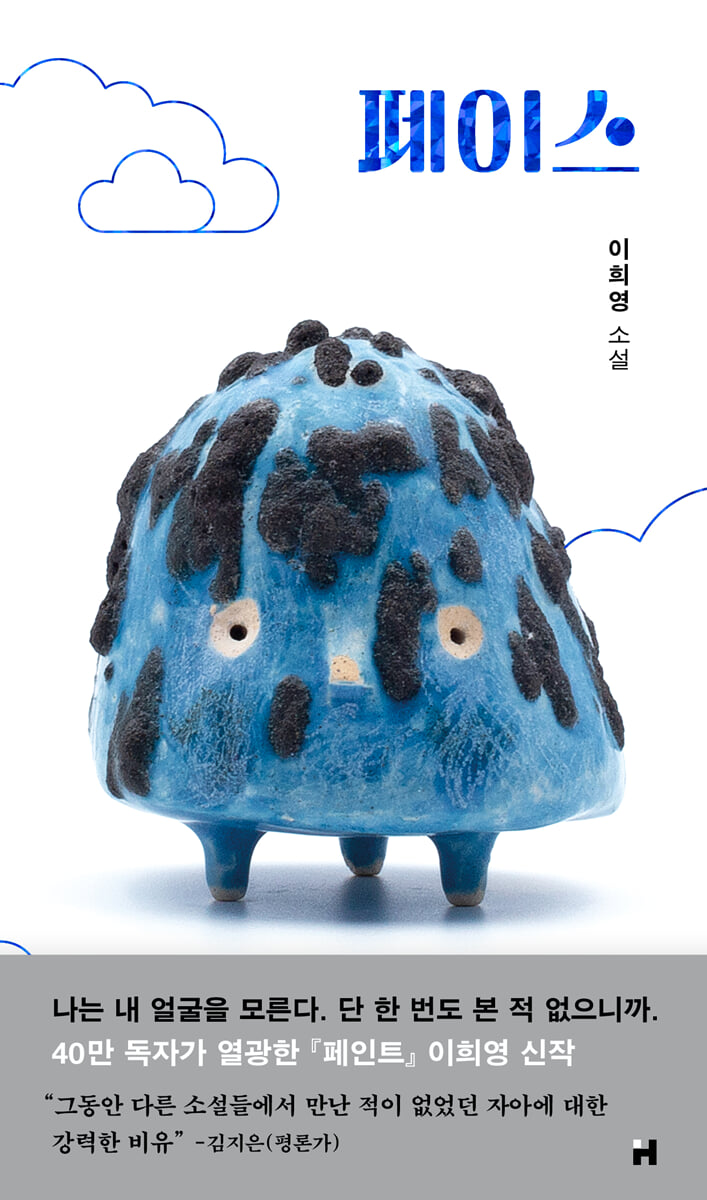
Face
 |
Description
Book Introduction
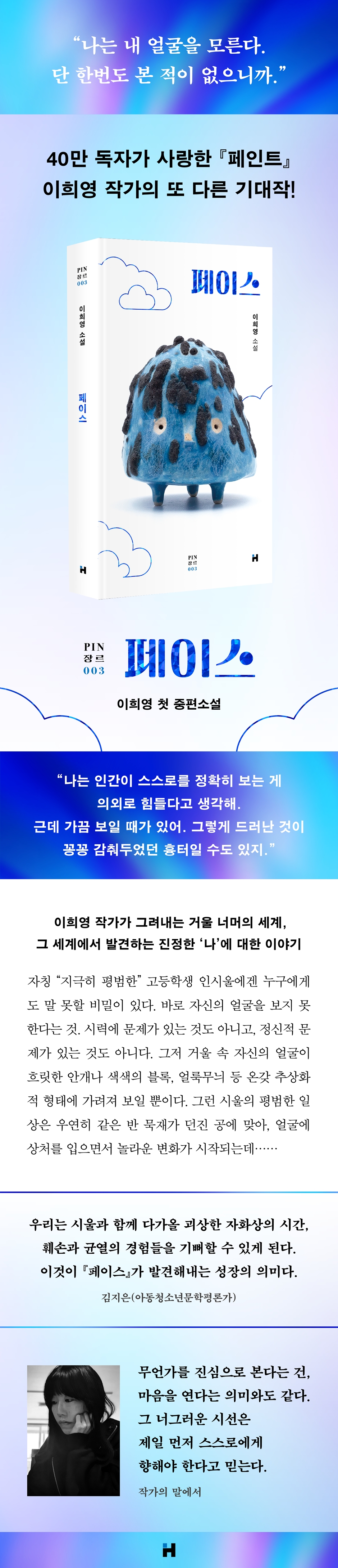
“I don’t know my own face.
“Because I’ve never seen it even once.”
The world beyond the mirror depicted by Lee Hee-young, whose "Paint" captivated 400,000 readers.
"A powerful metaphor for the self, unlike anything I've encountered in other novels." _Kim Ji-eun (Children's and Youth Literature Critic)
The third book in the "Modern Literature Pin Genre" series, featuring the most modern and cutting-edge writers of contemporary Korean literature, "Face" by Lee Hee-young, has been published.
"Face," an adaptation of the short story of the same name that was published in the September 2023 issue of the monthly magazine "Modern Literature," is a work that depicts the invisible world of the self beyond appearances through the eyes of a person who has never seen his own face since birth.
Author Lee Hee-young, who created a sensation by drawing the response of 400,000 readers with her work “Paint,” which won the 12th Changbi Youth Literature Award, has now boldly developed an imagination that erases the path of self-recognition represented by the “face,” thereby “challenging the undecided state of self-consciousness” (Kim Ji-eun).
“Because I’ve never seen it even once.”
The world beyond the mirror depicted by Lee Hee-young, whose "Paint" captivated 400,000 readers.
"A powerful metaphor for the self, unlike anything I've encountered in other novels." _Kim Ji-eun (Children's and Youth Literature Critic)
The third book in the "Modern Literature Pin Genre" series, featuring the most modern and cutting-edge writers of contemporary Korean literature, "Face" by Lee Hee-young, has been published.
"Face," an adaptation of the short story of the same name that was published in the September 2023 issue of the monthly magazine "Modern Literature," is a work that depicts the invisible world of the self beyond appearances through the eyes of a person who has never seen his own face since birth.
Author Lee Hee-young, who created a sensation by drawing the response of 400,000 readers with her work “Paint,” which won the 12th Changbi Youth Literature Award, has now boldly developed an imagination that erases the path of self-recognition represented by the “face,” thereby “challenging the undecided state of self-consciousness” (Kim Ji-eun).
- You can preview some of the book's contents.
Preview
index
Face
Commentary: Wounds are the Core of the Self (Kim Ji-eun)
Author's Note
Commentary: Wounds are the Core of the Self (Kim Ji-eun)
Author's Note
Detailed image
Into the book
Not being able to see one's own face was sad and lonely even for a six-year-old.
--- p.11
I can't see my face.
But the reflection in the mirror is always colorful.
Sometimes it was shrouded in fog, sometimes it was black, sometimes it was covered in strange flowers, sometimes it was filled with circles, sometimes it was made of colorful blocks.
--- p.73
If you think about it, it seems like other people have their faces hidden too.
Like a new employee who can't openly express his dislike in front of his boss, or a teacher who has to respond to students' greetings with a smile regardless of his mood that day.
Everyone lives with both a face that we see and a face that others see.
--- pp.114-115
I have never been able to say this simple word until now.
It just looks like this to my eyes.
--- p.136
This scar is truly my face.
--- p.146
“It’s a cliché, but scars are a symbol of having endured a painful time, so I don’t think there’s any need to hide them.”
--- p.148
No one can know another person perfectly.
Even if you are family, it is impossible to fully know someone's world.
--- p.154
Perhaps we focus on the little speck in the corner rather than the blank page with infinite possibilities.
Even though I can't see my face, the world can see it.
--- p.11
I can't see my face.
But the reflection in the mirror is always colorful.
Sometimes it was shrouded in fog, sometimes it was black, sometimes it was covered in strange flowers, sometimes it was filled with circles, sometimes it was made of colorful blocks.
--- p.73
If you think about it, it seems like other people have their faces hidden too.
Like a new employee who can't openly express his dislike in front of his boss, or a teacher who has to respond to students' greetings with a smile regardless of his mood that day.
Everyone lives with both a face that we see and a face that others see.
--- pp.114-115
I have never been able to say this simple word until now.
It just looks like this to my eyes.
--- p.136
This scar is truly my face.
--- p.146
“It’s a cliché, but scars are a symbol of having endured a painful time, so I don’t think there’s any need to hide them.”
--- p.148
No one can know another person perfectly.
Even if you are family, it is impossible to fully know someone's world.
--- p.154
Perhaps we focus on the little speck in the corner rather than the blank page with infinite possibilities.
Even though I can't see my face, the world can see it.
--- pp.172-173
Publisher's Review
“Look straight into the mirror.
“Because every day is different for us, like cloudy or sunny weather.”
The truth that the existence of 'I' can never be the same for even a single moment.
In today's society, where the obsession with finding oneself is rampant, "Face" asks the question: are we really looking at ourselves clearly?
Are we constantly comparing ourselves to others and strictly viewing ourselves with “pinpoint eyes and standards” (p. 83)? Are we so eager to cover up and erase temporary scars that we have turned a blind eye to the wounds in our hearts that we must face?
The fact that the protagonist of 『Face』, Insiul, encounters a part of his own 'real face' for the first time in his life through none other than a 'scar' suggests that the wounds and pain in his heart are an important part of a being's self.
As children's and young adult literature critic Kim Ji-eun said, "The fact that one can recognize oneself only through scars is a powerful metaphor for the recognition of self-identity that I have not encountered in other novels," Si-ul's appearance of facing and even affirming his scars as "a symbol of having gone through a time of suffering" (p. 148) provides a clue to how we should construct our self-image.
To look at something with sincerity is to open one's heart, and this is in line with the author's words that "that generous gaze must first be directed toward oneself."
Another shining point of "Face" is its depiction of how understanding of the self expands into understanding and solidarity with others.
What Siul faces is not only his own scars, but also the 'true faces' hidden by the people around him, which are captured in Siul's eyes as he expands his vision beyond the existence of 'himself' to the world surrounding him.
As he looks at Rami, who lives with a mirror in his hand every day but is unaware of his own shining side; at Choi Ok-bun, an old woman with an innocent expression beneath her aged face clearly etched with the passage of time; and at Muk-jae, who wears a blunt mask due to a difficult family history but harbors deep-seated wounds, Si-ul comes to face “the invisible” and discover that there is a world that changes endlessly “beyond the mirror.”
Ultimately, 『Face』 is a novel that conveys the truth that the existence of 'me' can never be the same for even a single moment, and it is a novel that warmly encourages us to apply that truth to all 'me's' in this world.
Author's Note
All humans live each day with uncertainty in life.
What may be a fear for some may be an expectation for others.
Life can be quite different depending on the gaze of the heart, not the eyes.
I try not to forget that what I see is not everything.
_From the author's note
“Because every day is different for us, like cloudy or sunny weather.”
The truth that the existence of 'I' can never be the same for even a single moment.
In today's society, where the obsession with finding oneself is rampant, "Face" asks the question: are we really looking at ourselves clearly?
Are we constantly comparing ourselves to others and strictly viewing ourselves with “pinpoint eyes and standards” (p. 83)? Are we so eager to cover up and erase temporary scars that we have turned a blind eye to the wounds in our hearts that we must face?
The fact that the protagonist of 『Face』, Insiul, encounters a part of his own 'real face' for the first time in his life through none other than a 'scar' suggests that the wounds and pain in his heart are an important part of a being's self.
As children's and young adult literature critic Kim Ji-eun said, "The fact that one can recognize oneself only through scars is a powerful metaphor for the recognition of self-identity that I have not encountered in other novels," Si-ul's appearance of facing and even affirming his scars as "a symbol of having gone through a time of suffering" (p. 148) provides a clue to how we should construct our self-image.
To look at something with sincerity is to open one's heart, and this is in line with the author's words that "that generous gaze must first be directed toward oneself."
Another shining point of "Face" is its depiction of how understanding of the self expands into understanding and solidarity with others.
What Siul faces is not only his own scars, but also the 'true faces' hidden by the people around him, which are captured in Siul's eyes as he expands his vision beyond the existence of 'himself' to the world surrounding him.
As he looks at Rami, who lives with a mirror in his hand every day but is unaware of his own shining side; at Choi Ok-bun, an old woman with an innocent expression beneath her aged face clearly etched with the passage of time; and at Muk-jae, who wears a blunt mask due to a difficult family history but harbors deep-seated wounds, Si-ul comes to face “the invisible” and discover that there is a world that changes endlessly “beyond the mirror.”
Ultimately, 『Face』 is a novel that conveys the truth that the existence of 'me' can never be the same for even a single moment, and it is a novel that warmly encourages us to apply that truth to all 'me's' in this world.
Author's Note
All humans live each day with uncertainty in life.
What may be a fear for some may be an expectation for others.
Life can be quite different depending on the gaze of the heart, not the eyes.
I try not to forget that what I see is not everything.
_From the author's note
GOODS SPECIFICS
- Date of issue: March 25, 2024
- Format: Hardcover book binding method guide
- Page count, weight, size: 192 pages | 272g | 104*182*20mm
- ISBN13: 9791167902504
- ISBN10: 1167902505
You may also like
카테고리
korean


korean

![GQ KOREA Mark (Monthly): December [2025]](http://librairie.coreenne.fr/cdn/shop/files/8ef265dbbfbf186523ed75ba7319009d.jpg?v=1765340328&width=3840)


