

Philosophy of Things
 |
Description
Book Introduction
“How ordinary objects can give us philosophy.”
A case of the mind, a uselessness beyond
A story about 'things' that goes beyond imagination!
Nanda is republishing the prose 『Philosophy of Things』 by Ham Don-gyun, a literary critic, writer, and practicing 'running designer.'
This is a completely revised edition of a book first compiled in 2015 based on a column serialized in Maeil Business Newspaper since 2013, with new additions and sharp polishing for a contemporary sensibility in 2023.
This book examines the various aspects of objects in our daily lives and, above all, opens the outer shell to go inside.
Like a dictionary of everyday names, like a diary written in the voices of things, like a short essay that sparks new thoughts, this is a book that opens up on its own no matter how often you read it.
『Philosophy of Things』 is a series planned and written simultaneously with 『Philosophy of the Moment』 (2021), a philosophical essay on ‘time.’
Exactly ten years after they were first serialized in the newspaper, two books that could be considered siblings have been published side by side.
In "The Philosophy of the Moment," we challenged the philosophy of abstraction by examining the meaning of the invisible moment. In this book, we delve deeper into the true "inner nature" of the objects around us that we can touch and hold, the extremely ordinary and often overlooked materials.
A case of the mind, a uselessness beyond
A story about 'things' that goes beyond imagination!
Nanda is republishing the prose 『Philosophy of Things』 by Ham Don-gyun, a literary critic, writer, and practicing 'running designer.'
This is a completely revised edition of a book first compiled in 2015 based on a column serialized in Maeil Business Newspaper since 2013, with new additions and sharp polishing for a contemporary sensibility in 2023.
This book examines the various aspects of objects in our daily lives and, above all, opens the outer shell to go inside.
Like a dictionary of everyday names, like a diary written in the voices of things, like a short essay that sparks new thoughts, this is a book that opens up on its own no matter how often you read it.
『Philosophy of Things』 is a series planned and written simultaneously with 『Philosophy of the Moment』 (2021), a philosophical essay on ‘time.’
Exactly ten years after they were first serialized in the newspaper, two books that could be considered siblings have been published side by side.
In "The Philosophy of the Moment," we challenged the philosophy of abstraction by examining the meaning of the invisible moment. In this book, we delve deeper into the true "inner nature" of the objects around us that we can touch and hold, the extremely ordinary and often overlooked materials.
- You can preview some of the book's contents.
Preview
index
Prologue About Things
Chapter 1 Now is a good time to start thinking new thoughts.
Streetlight / Mirror / Black Ribbon / Hinge / Calculator / Overpass / Goalpost / Oversaw / Shoehorn / Navigation / Refrigerator / Tie / Calendar / Cigarette / Basin / Road Sign / Cutting Board / Lego / Wheelbarrow / Lipstick
Chapter 2: How Ordinary Objects Give Philosophy
Mask / microphone / talking robot / telephoto lens / manhole / razor / business card / door / wet tissue / ring / delivery box / backpack / bus / bell / wall / wrapping cloth / lottery ticket / fan / black box
Chapter 3 Things are as amazing as you imagine
Bottled water / sunglasses / selfie stick / handkerchief / shopping cart / snapback / smartphone case / scarf / skates / stand / sponge / see-through / traffic light / baseball / socks / parasol / lantern / pencil / umbrella / round table / chair / earphones / internet
Chapter 4: Matter + Matter: Matter of the Mind, Usefulness Beyond
Self / Automatic door / Car headlight / Alarm clock / Bicycle / Gloves / Boots / Chopsticks / Dice / Zipper / Soccer ball / Blackboard / Card / Camera / Chronograph watch / Christmas tree / Tire / Takeout coffee cup / Tent / Trench coat / Popcorn / Post-it note / Backhoe / Pepper shaker
Epilogue: Writing about small things - To the revised edition
Chapter 1 Now is a good time to start thinking new thoughts.
Streetlight / Mirror / Black Ribbon / Hinge / Calculator / Overpass / Goalpost / Oversaw / Shoehorn / Navigation / Refrigerator / Tie / Calendar / Cigarette / Basin / Road Sign / Cutting Board / Lego / Wheelbarrow / Lipstick
Chapter 2: How Ordinary Objects Give Philosophy
Mask / microphone / talking robot / telephoto lens / manhole / razor / business card / door / wet tissue / ring / delivery box / backpack / bus / bell / wall / wrapping cloth / lottery ticket / fan / black box
Chapter 3 Things are as amazing as you imagine
Bottled water / sunglasses / selfie stick / handkerchief / shopping cart / snapback / smartphone case / scarf / skates / stand / sponge / see-through / traffic light / baseball / socks / parasol / lantern / pencil / umbrella / round table / chair / earphones / internet
Chapter 4: Matter + Matter: Matter of the Mind, Usefulness Beyond
Self / Automatic door / Car headlight / Alarm clock / Bicycle / Gloves / Boots / Chopsticks / Dice / Zipper / Soccer ball / Blackboard / Card / Camera / Chronograph watch / Christmas tree / Tire / Takeout coffee cup / Tent / Trench coat / Popcorn / Post-it note / Backhoe / Pepper shaker
Epilogue: Writing about small things - To the revised edition
Into the book
Pope Francis said at his inauguration that it is important to be a "disciple of Jesus" rather than a pope.
To become a disciple, he said that he would take the 'lowest position' and become a servant in that position.
This is also a moment that makes us think again about Jesus' foot-washing ceremony.
Why did he wash his disciples' feet?
Could it be because the feet are the lowest part of the body?
If so, it may be said that Pope Francis is the pope who has understood the meaning of the foot-washing ceremony most accurately among all the popes in history.
What would it be like if God were to briefly appear on a dark earth?
We see streetlights in Pope Francis's steps.
At first glance, it seemed like I saw the silhouette of God there.
---From "Streetlight"
It is said that the contractual nature of the ring comes from the binding nature of the ring around the finger, but isn't this a misunderstanding of the meaning of the contract?
Because the force of binding cannot truly bring about the power of a promise.
What is important is that the two beings meet sincerely.
It is not force, constraint, or a clumsy compromise, but a strength that comes from affirming each other's potential.
Perhaps the ring shape of the ring suggests that it presupposes a shared emptiness rather than the stubborn self-assertion of the two beings.
So, the ring is a couple ring no matter whose finger it is on.
Because the ring shape already suggests the meeting of two beings.
It's already hot without even putting your finger in it.
The circular ring, shaped like a mouth, speaks of a mutually affirming encounter through a warm silence through empty space.
Even if you are not a lover, the ring itself conveys the meaning of meeting and promise.
The same applies to situations of social conflict where claims clash sharply and hurt each other.
How can we meet?
How can we reach mutual affirmation?
---From "The Ring"
The peculiarity of this light is that it is not a light that 'eliminates' darkness.
To put it bluntly, it's the other way around.
The light from the stand returns the darkness to its original form.
The moment you turn on the stand, the surroundings become darker.
But this is not darkness.
The darkness that had been spread throughout the room, and thus invisible, gathered around the stand and 'revealed' itself clearly.
The darkness is not erased.
Rather, we are only now realizing that darkness existed here.
Darkness is experienced as soft, secret, and deep.
Darkness is not only perceived, but it envelops us and touches our bodies.
This experience makes us realize that the darkness of the universe is not all bad things that need to be eliminated.
It is neither good nor evil, it just is.
According to the wise men's expression, it is as it is (因是).
The minimal, adequate light from the stand subtly reveals and cuts through human preconceptions and dichotomies about light and dark, and all things.
---From "Stand"
If you look at it as a species, it is a mongrel, and if you look at it as a book, it is the death of the original author.
It is a 'polluted' record in that its original origins were later mixed up by the intervention of something else.
It implies a multi-world rather than an individual one, and a nomadic rather than a settled world.
If so, wouldn't it be possible to say that Post-it notes are objects that reflect the extremes of modernity and the characteristics of the post-modern world?
In this respect, the emergence of Wikipedia, a collective intelligence encyclopedia created in a completely different way from the encyclopedias of the Enlightenment, could be called the web version of Post-it notes.
It is collective and can be accessed and added to anywhere, without relying on the author's unique authority, the writer's individual intellectual ability, or the permanence of recorded knowledge.
The circulation of knowledge is much freer and more widespread.
To become a disciple, he said that he would take the 'lowest position' and become a servant in that position.
This is also a moment that makes us think again about Jesus' foot-washing ceremony.
Why did he wash his disciples' feet?
Could it be because the feet are the lowest part of the body?
If so, it may be said that Pope Francis is the pope who has understood the meaning of the foot-washing ceremony most accurately among all the popes in history.
What would it be like if God were to briefly appear on a dark earth?
We see streetlights in Pope Francis's steps.
At first glance, it seemed like I saw the silhouette of God there.
---From "Streetlight"
It is said that the contractual nature of the ring comes from the binding nature of the ring around the finger, but isn't this a misunderstanding of the meaning of the contract?
Because the force of binding cannot truly bring about the power of a promise.
What is important is that the two beings meet sincerely.
It is not force, constraint, or a clumsy compromise, but a strength that comes from affirming each other's potential.
Perhaps the ring shape of the ring suggests that it presupposes a shared emptiness rather than the stubborn self-assertion of the two beings.
So, the ring is a couple ring no matter whose finger it is on.
Because the ring shape already suggests the meeting of two beings.
It's already hot without even putting your finger in it.
The circular ring, shaped like a mouth, speaks of a mutually affirming encounter through a warm silence through empty space.
Even if you are not a lover, the ring itself conveys the meaning of meeting and promise.
The same applies to situations of social conflict where claims clash sharply and hurt each other.
How can we meet?
How can we reach mutual affirmation?
---From "The Ring"
The peculiarity of this light is that it is not a light that 'eliminates' darkness.
To put it bluntly, it's the other way around.
The light from the stand returns the darkness to its original form.
The moment you turn on the stand, the surroundings become darker.
But this is not darkness.
The darkness that had been spread throughout the room, and thus invisible, gathered around the stand and 'revealed' itself clearly.
The darkness is not erased.
Rather, we are only now realizing that darkness existed here.
Darkness is experienced as soft, secret, and deep.
Darkness is not only perceived, but it envelops us and touches our bodies.
This experience makes us realize that the darkness of the universe is not all bad things that need to be eliminated.
It is neither good nor evil, it just is.
According to the wise men's expression, it is as it is (因是).
The minimal, adequate light from the stand subtly reveals and cuts through human preconceptions and dichotomies about light and dark, and all things.
---From "Stand"
If you look at it as a species, it is a mongrel, and if you look at it as a book, it is the death of the original author.
It is a 'polluted' record in that its original origins were later mixed up by the intervention of something else.
It implies a multi-world rather than an individual one, and a nomadic rather than a settled world.
If so, wouldn't it be possible to say that Post-it notes are objects that reflect the extremes of modernity and the characteristics of the post-modern world?
In this respect, the emergence of Wikipedia, a collective intelligence encyclopedia created in a completely different way from the encyclopedias of the Enlightenment, could be called the web version of Post-it notes.
It is collective and can be accessed and added to anywhere, without relying on the author's unique authority, the writer's individual intellectual ability, or the permanence of recorded knowledge.
The circulation of knowledge is much freer and more widespread.
---From "Post-it"
Publisher's Review
Borges' short story "The Aleph" is about a very small and mysterious bead.
In that bead, all the sights of the world are contained, neither overlapping nor reduced.
The bead, which is one and contains everything, is a kaleidoscope that allows us to glimpse all the world's perspectives from a single angle.
It could be a metaphor for the divine eye, or something like the Buddhist Avatamsaka Sutra, which sees the universe in a single flower.
As someone who always thinks about the 'poetic' as a critical writer, that bead was also an image of a certain poetic moment.
A critical attitude inevitably involves logic, but if it cannot encounter the mystery of things that cannot be reached through the logic of the intellect, criticism becomes limited to dry rationalism.
This is true not only of poetry but also of things.
As Benjamin showed, for the critic the mystery of poetry and the mystery of things are indistinguishable.
_From the text
Although it is called the 'philosophy' of things, it avoids difficult and rigid philosophical terms and focuses on explaining them in familiar, everyday language.
As stated in the preface, “I hope that encounters with these objects can become ‘doors’ that lead to other times in everyday life,” for the author, objects are not one-way doors that ‘inject’ philosophy into readers, but rather ‘open doors’ that are triggered by them and allow them to freely cross them.
In short, it is not a writing that 'explains things through philosophy', but rather a writing that 'makes things philosophical'.
His writing is unstoppable, starting from various objects, passing through Eastern and Western thinkers, and traversing a wide range of knowledge.
For example, the small hinges on the door remind us of the works of poet Yi Sang, and the 'pillar of the Way' that Zhuangzi considered the truth.
It also targets the modern Korean 'white myth' by following the logic of 'pollution' and 'purity' put forward by the German Nazis in wet tissues, or discovers the wish for good fortune in a bojagi (wrapping cloth) and reflects on the true meaning of charisma that a leader must possess.
As critic Shin Hyeong-cheol, who wrote the recommendation, put it, these are writings that “do not elicit a mere agreement, but rather a bewildering stimulation.”
This bold leap creates room for insight and a vibrant playground of questions as wide as the leap.
In this book, the names of objects are arranged alphabetically over a total of four parts.
I believe that you can read it in order or just pick it up and read it as you like.
In those moments when the objects around me suddenly seem unfamiliar, or on a day when I am rolling along with inertia without a shred of specialness, it would be nice to open it up like a dictionary and read the meaning of the object as if discussing it with the author.
Because this idea, sometimes provocative and occasionally problematic, combines the height of freedom and the depth of thought.
As it was for Kafka, this book, The Philosophy of Things, will become an axe that instantly breaks open our frozen perception of everyday life.
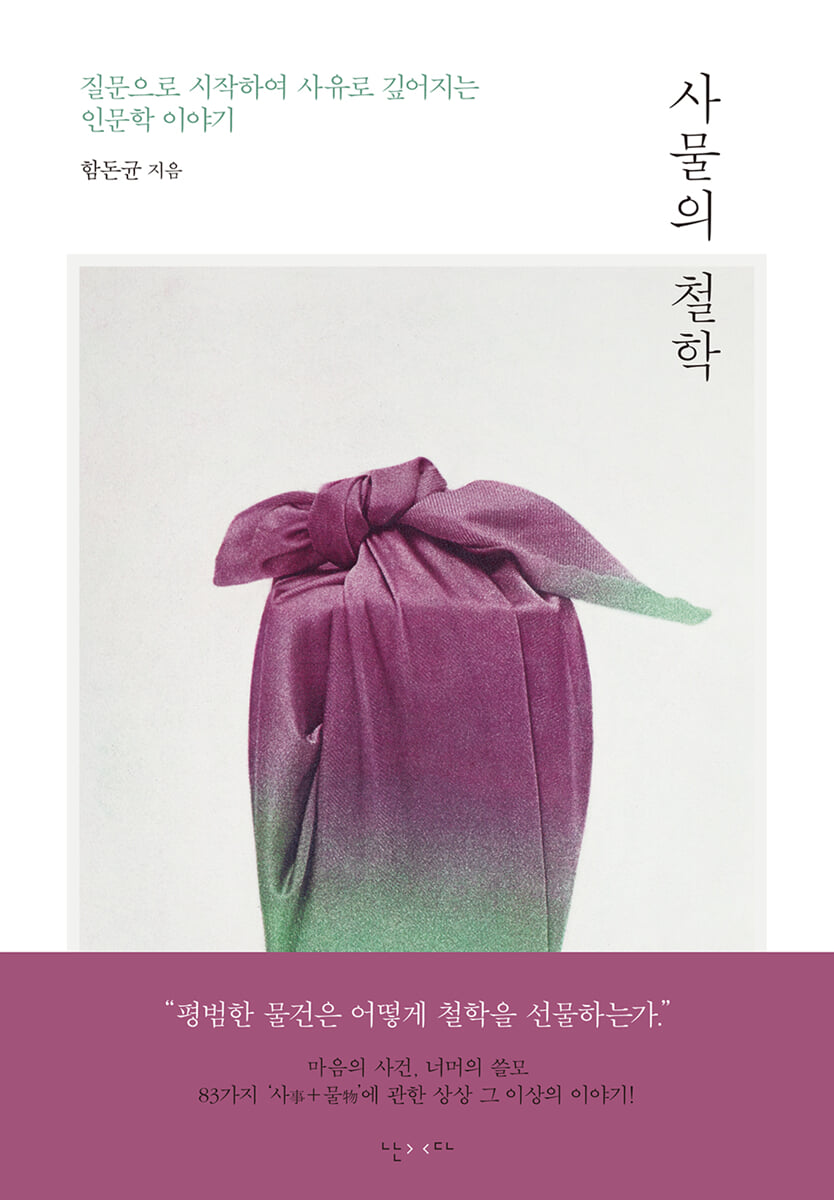
The cover of the revised edition of 『Philosophy of Things』 features Kim Soo-gang's work, "Bojagi 009."
It follows the work “Teabag 1” featured on the cover of “Philosophy of the Moment” and stands shoulder to shoulder with the project.
This photograph was taken using a 19th-century printing technique called 'black bichromate'.
This work is created through the method of the 'body', touching, removing, and stacking the oil with one's hands to add color, making it a perfect encounter through the door of this book that leads into 'objects'.
In that bead, all the sights of the world are contained, neither overlapping nor reduced.
The bead, which is one and contains everything, is a kaleidoscope that allows us to glimpse all the world's perspectives from a single angle.
It could be a metaphor for the divine eye, or something like the Buddhist Avatamsaka Sutra, which sees the universe in a single flower.
As someone who always thinks about the 'poetic' as a critical writer, that bead was also an image of a certain poetic moment.
A critical attitude inevitably involves logic, but if it cannot encounter the mystery of things that cannot be reached through the logic of the intellect, criticism becomes limited to dry rationalism.
This is true not only of poetry but also of things.
As Benjamin showed, for the critic the mystery of poetry and the mystery of things are indistinguishable.
_From the text
Although it is called the 'philosophy' of things, it avoids difficult and rigid philosophical terms and focuses on explaining them in familiar, everyday language.
As stated in the preface, “I hope that encounters with these objects can become ‘doors’ that lead to other times in everyday life,” for the author, objects are not one-way doors that ‘inject’ philosophy into readers, but rather ‘open doors’ that are triggered by them and allow them to freely cross them.
In short, it is not a writing that 'explains things through philosophy', but rather a writing that 'makes things philosophical'.
His writing is unstoppable, starting from various objects, passing through Eastern and Western thinkers, and traversing a wide range of knowledge.
For example, the small hinges on the door remind us of the works of poet Yi Sang, and the 'pillar of the Way' that Zhuangzi considered the truth.
It also targets the modern Korean 'white myth' by following the logic of 'pollution' and 'purity' put forward by the German Nazis in wet tissues, or discovers the wish for good fortune in a bojagi (wrapping cloth) and reflects on the true meaning of charisma that a leader must possess.
As critic Shin Hyeong-cheol, who wrote the recommendation, put it, these are writings that “do not elicit a mere agreement, but rather a bewildering stimulation.”
This bold leap creates room for insight and a vibrant playground of questions as wide as the leap.
In this book, the names of objects are arranged alphabetically over a total of four parts.
I believe that you can read it in order or just pick it up and read it as you like.
In those moments when the objects around me suddenly seem unfamiliar, or on a day when I am rolling along with inertia without a shred of specialness, it would be nice to open it up like a dictionary and read the meaning of the object as if discussing it with the author.
Because this idea, sometimes provocative and occasionally problematic, combines the height of freedom and the depth of thought.
As it was for Kafka, this book, The Philosophy of Things, will become an axe that instantly breaks open our frozen perception of everyday life.
The cover of the revised edition of 『Philosophy of Things』 features Kim Soo-gang's work, "Bojagi 009."
It follows the work “Teabag 1” featured on the cover of “Philosophy of the Moment” and stands shoulder to shoulder with the project.
This photograph was taken using a 19th-century printing technique called 'black bichromate'.
This work is created through the method of the 'body', touching, removing, and stacking the oil with one's hands to add color, making it a perfect encounter through the door of this book that leads into 'objects'.
GOODS SPECIFICS
- Date of issue: April 7, 2023
- Format: Hardcover book binding method guide
- Page count, weight, size: 312 pages | 410g | 128*188*30mm
- ISBN13: 9791191859508
- ISBN10: 1191859509
You may also like
카테고리
korean


korean

![GQ KOREA Mark (Monthly): December [2025]](http://librairie.coreenne.fr/cdn/shop/files/8ef265dbbfbf186523ed75ba7319009d.jpg?v=1765340328&width=3840)


