

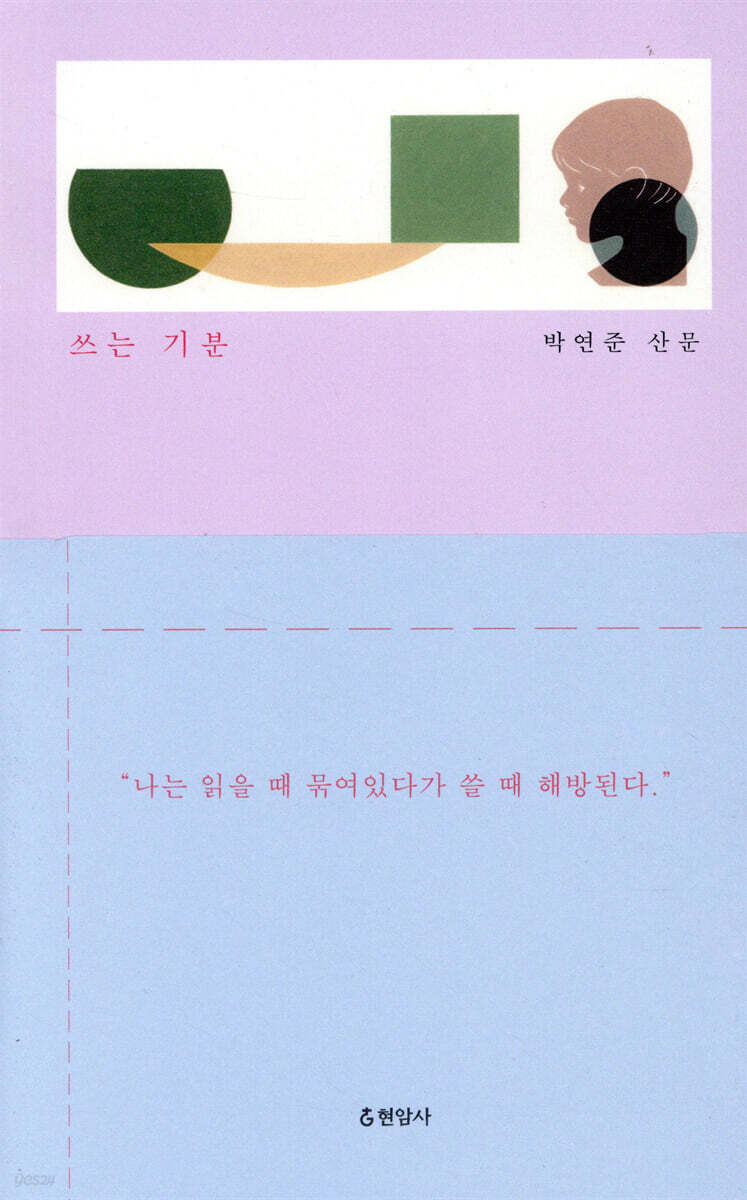
The feeling of writing
 |
Description
Book Introduction
- A word from MD
-
Poet Park Yeon-jun, the heart of reading and writing poetryAuthor Park Yeon-jun tells us what he wanted to say about poetry and the feeling of writing.
It guides us into the world of poetry, having wondered at least once what poetry is, how to read it, what the poet's mind is, and whether we can write poetry.
The joy of reading and writing poetry conveyed in the poet's affectionate and gentle language.
July 20, 2021. Essay PD Kim Tae-hee
“I want to offer you ‘gentle courage, a small spur, and warm encouragement.’”
Author Park Yeon-jun's new collection of essays, "The Feeling of Writing," has been published.
He has been loved by readers in many ways, including through his poetry collections 『The Scream of Eyelashes』, 『Father Called Me Sister-in-Law』, 『Venus Pudica』, 『Night, Rain, Snake』, and his prose collections 『Commotion』, 『Life Flows Strangely』, and 『Every Month, Every Day』. This time, he guides us into the world of reading and writing poetry.
"What on earth is poetry? How do you read it? What is the poet's mind? How do writers write? Could I possibly write poetry?" If you're one of those who hesitates or frets over these questions, I welcome you with open arms.
This book gently tells us that the feeling of writing is not something that only a special "talent" or "chosen" person can have, but that you can enjoy it too.
Author Park Yeon-jun's new collection of essays, "The Feeling of Writing," has been published.
He has been loved by readers in many ways, including through his poetry collections 『The Scream of Eyelashes』, 『Father Called Me Sister-in-Law』, 『Venus Pudica』, 『Night, Rain, Snake』, and his prose collections 『Commotion』, 『Life Flows Strangely』, and 『Every Month, Every Day』. This time, he guides us into the world of reading and writing poetry.
"What on earth is poetry? How do you read it? What is the poet's mind? How do writers write? Could I possibly write poetry?" If you're one of those who hesitates or frets over these questions, I welcome you with open arms.
This book gently tells us that the feeling of writing is not something that only a special "talent" or "chosen" person can have, but that you can enjoy it too.
- You can preview some of the book's contents.
Preview
index
Preface ─ 8
Part 1: If we each wrote poetry in our own rooms every day
You already know the poem ─ 16
The Writer's Mind ─ 20
Poetry and Sorrow ─ 24
What is a metaphor? ─ 28
What's in your cart ─ 38
Night, Candlelight, Poetry, Secrets ─ 43
How should we understand poetry? ─ 47
Why is poetry so difficult? ─ 52
How to Read Poetry: The Musical Instrument Player ─ 56
A Line Shining Like a Sword ─ 61
Miracles Hidden Everywhere ─ 65
Can Anger Become Poetry? ─ 68
The Weight of Longing ─ 73
Can Poetry Be Taught? ─ 77
When you say you like something, what's inside it ─ 82
The Crossroads of Lists ─ 87
Good Things to Think About ─ 90
What the Eyes Do - 94
What to Write: About Materials ─ 100
Part 2 Workshop
Pencil ─ 108
What I Think About When I Write ─ 113
Poetic Dreams ─ 122
Body Formula ─ 134
The Feeling of Living Life as a "Gap": The Joy of Creation ─ 138
Sealing a Moment Makes It Eternal ─ 146
Speaking Gracefully in a Terrible World ─ 151
Moments That Cannot Be Written ─ 155
Bookstore ─ 161
The Word "Yeoryu" - 165
The Anxiety of "Three" ─ 168
Part 3 To those who want to become poets
About the Debut - 174
Birth ─ 179
How to Love Innocently ─ 183
Fruit Basket with Questions Part 4
- The writer, you are the one asking the question
On Moderation - 192
Poetry and Tears ─ 196
The Form of Poetry - 200
Even if you're not a major ─ 203
Subway City ─ 207
Good Poetry, Bad Poetry ─ 209
Writing a lot ─ 211
Life with and without Poetry ─ 214
[supplement]
1.
Apple Tree ─ 219
2.
A Conversation with the Poet (with Im Sol-a) ─ 237
Part 1: If we each wrote poetry in our own rooms every day
You already know the poem ─ 16
The Writer's Mind ─ 20
Poetry and Sorrow ─ 24
What is a metaphor? ─ 28
What's in your cart ─ 38
Night, Candlelight, Poetry, Secrets ─ 43
How should we understand poetry? ─ 47
Why is poetry so difficult? ─ 52
How to Read Poetry: The Musical Instrument Player ─ 56
A Line Shining Like a Sword ─ 61
Miracles Hidden Everywhere ─ 65
Can Anger Become Poetry? ─ 68
The Weight of Longing ─ 73
Can Poetry Be Taught? ─ 77
When you say you like something, what's inside it ─ 82
The Crossroads of Lists ─ 87
Good Things to Think About ─ 90
What the Eyes Do - 94
What to Write: About Materials ─ 100
Part 2 Workshop
Pencil ─ 108
What I Think About When I Write ─ 113
Poetic Dreams ─ 122
Body Formula ─ 134
The Feeling of Living Life as a "Gap": The Joy of Creation ─ 138
Sealing a Moment Makes It Eternal ─ 146
Speaking Gracefully in a Terrible World ─ 151
Moments That Cannot Be Written ─ 155
Bookstore ─ 161
The Word "Yeoryu" - 165
The Anxiety of "Three" ─ 168
Part 3 To those who want to become poets
About the Debut - 174
Birth ─ 179
How to Love Innocently ─ 183
Fruit Basket with Questions Part 4
- The writer, you are the one asking the question
On Moderation - 192
Poetry and Tears ─ 196
The Form of Poetry - 200
Even if you're not a major ─ 203
Subway City ─ 207
Good Poetry, Bad Poetry ─ 209
Writing a lot ─ 211
Life with and without Poetry ─ 214
[supplement]
1.
Apple Tree ─ 219
2.
A Conversation with the Poet (with Im Sol-a) ─ 237
Detailed image
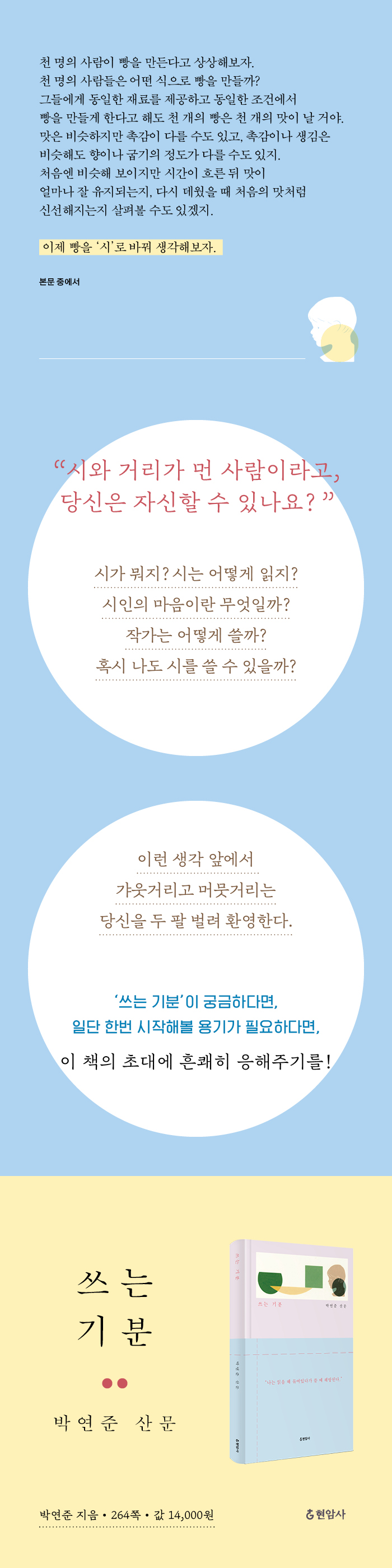
Into the book
There is no right or wrong answer when it comes to attitudes toward poetry.
One thing I can tell you is that poetry is not a genre that 'wants to be understood'.
So if you find yourself struggling to understand or unable to understand a poem, I encourage you to approach it differently from the beginning.
How about looking for the entrance to the house called 'Si' from the other side?
--- p.48
Poetry wants you to imagine between words, between sentences, through more 'transparent words' that are not written on paper.
Poetry leaps and glides, disappears and reappears.
Poetry is a ghost.
There is or there isn't.
A few words can knock you down, and if left undiscovered, you can be frozen solid for the rest of your life.
--- p.55
What's in life? Jam, blueberries, tears, shit, dust, cowardice, clouds, cliffs, wounds, illness, joy, love, books, wrong answers, crickets, blood, urine, 2 a.m., crutches, screams, desires, union, failure, knives, death, feathers, puppies, raccoons, desks, knees…
I might be able to stay up for three nights.
--- p.89
It's wonderful to discover and admire the Magnolia japonica for the first time.
The sight of ginkgo leaves swaying in the wind in April, and the scent of lilacs wafting in when turning a corner are wonderful.
It's nice to see an old person who loves animals.
I just thought of you, and it's nice to get a call from you.
The phrase “sharing love” is good.
The sound of someone saying, "I wrote a poem last night," and the "moisture" in it is nice.
--- p.92
Whenever I decide to write something great or excellent, I always fail.
Is it because great and wonderful things flee from those who approach them with determination? Useful things emerge when we freely poke around without motivation or purpose.
--- p.109
Honesty is part of talent.
--- p.118
What is needed is the 'desire to speak'.
Writing is a substitute for the desire to speak, an active act of speaking.
When you don't want to write, that's when you don't want to say anything.
It's frustrating when a deadline is approaching and you don't feel like talking.
At that time, special measures will be taken.
I imagine someone (usually an editor) is waiting at my door, knocking.
Imagine being pestered, pestered, pestered to tell a story.
Imagine him sitting outside the door, not moving, getting snowed in and rained on.
--- p.120
I am bound when I read, but I am free when I write.
--- p.125
You will come to know it as you create.
A masterpiece achieved without practice? There's no such thing.
Even in a single stroke of a brush, tens of thousands of brush strokes and countless repetitive tasks remembered by the body are embedded.
--- p.134
Even for the best writers, there comes a time when it seems like they can't write a single word.
Because the desire to do well prevents me from starting to write.
Is it just the text?
The pressure to be good at whatever it is, the self-consciousness that you are an expert, and the desire to live up to expectations and receive praise make it difficult to get things done.
If I sometimes find myself wandering around on paper, trying to avoid the blank page, it's because I'm so desperate to write something incredibly good.
What the heck! This is such a great article? It's so stupid.
--- p.143~144
One day, I was struggling to escape the curse of having to create the 'best', even though no one asked me to do so.
I am saved.
I read this sentence from Voltaire.
“The best is the enemy of the good.”
--- p.144
Some scenes are too poetic in themselves to be written as poetry.
Poetry? If you read it, you'll realize how many poems are actually without poetry.
Rather, poetry is spread all over the world.
The world of poetry is like a head full of lice.
We just pass it by without seeing it.
I wish I could catch all of them, but I'm always busy with non-poetry stuff.
--- p.155
Writing that is written with 'intention' is likely to fail.
For example, if a writer writes a poem with the thought, 'I want to become a poet by writing this poem,' the poem begins without any light.
When you take pictures with a film camera, you never take the film out before developing it, right? We need time to let the darkness remain darkness.
--- p.185
It is difficult for a famous person, someone who has already been sufficiently exposed, to continue to shine.
How can you shine any brighter when you already shine? But those like you, who lie hidden, who prostrate themselves and earnestly refine themselves, shine because of their earnest desire.
Because the light radiates from the condensed energy of the one who waits.
Why? Because without that power, he would fail to be revealed.
One thing I can tell you is that poetry is not a genre that 'wants to be understood'.
So if you find yourself struggling to understand or unable to understand a poem, I encourage you to approach it differently from the beginning.
How about looking for the entrance to the house called 'Si' from the other side?
--- p.48
Poetry wants you to imagine between words, between sentences, through more 'transparent words' that are not written on paper.
Poetry leaps and glides, disappears and reappears.
Poetry is a ghost.
There is or there isn't.
A few words can knock you down, and if left undiscovered, you can be frozen solid for the rest of your life.
--- p.55
What's in life? Jam, blueberries, tears, shit, dust, cowardice, clouds, cliffs, wounds, illness, joy, love, books, wrong answers, crickets, blood, urine, 2 a.m., crutches, screams, desires, union, failure, knives, death, feathers, puppies, raccoons, desks, knees…
I might be able to stay up for three nights.
--- p.89
It's wonderful to discover and admire the Magnolia japonica for the first time.
The sight of ginkgo leaves swaying in the wind in April, and the scent of lilacs wafting in when turning a corner are wonderful.
It's nice to see an old person who loves animals.
I just thought of you, and it's nice to get a call from you.
The phrase “sharing love” is good.
The sound of someone saying, "I wrote a poem last night," and the "moisture" in it is nice.
--- p.92
Whenever I decide to write something great or excellent, I always fail.
Is it because great and wonderful things flee from those who approach them with determination? Useful things emerge when we freely poke around without motivation or purpose.
--- p.109
Honesty is part of talent.
--- p.118
What is needed is the 'desire to speak'.
Writing is a substitute for the desire to speak, an active act of speaking.
When you don't want to write, that's when you don't want to say anything.
It's frustrating when a deadline is approaching and you don't feel like talking.
At that time, special measures will be taken.
I imagine someone (usually an editor) is waiting at my door, knocking.
Imagine being pestered, pestered, pestered to tell a story.
Imagine him sitting outside the door, not moving, getting snowed in and rained on.
--- p.120
I am bound when I read, but I am free when I write.
--- p.125
You will come to know it as you create.
A masterpiece achieved without practice? There's no such thing.
Even in a single stroke of a brush, tens of thousands of brush strokes and countless repetitive tasks remembered by the body are embedded.
--- p.134
Even for the best writers, there comes a time when it seems like they can't write a single word.
Because the desire to do well prevents me from starting to write.
Is it just the text?
The pressure to be good at whatever it is, the self-consciousness that you are an expert, and the desire to live up to expectations and receive praise make it difficult to get things done.
If I sometimes find myself wandering around on paper, trying to avoid the blank page, it's because I'm so desperate to write something incredibly good.
What the heck! This is such a great article? It's so stupid.
--- p.143~144
One day, I was struggling to escape the curse of having to create the 'best', even though no one asked me to do so.
I am saved.
I read this sentence from Voltaire.
“The best is the enemy of the good.”
--- p.144
Some scenes are too poetic in themselves to be written as poetry.
Poetry? If you read it, you'll realize how many poems are actually without poetry.
Rather, poetry is spread all over the world.
The world of poetry is like a head full of lice.
We just pass it by without seeing it.
I wish I could catch all of them, but I'm always busy with non-poetry stuff.
--- p.155
Writing that is written with 'intention' is likely to fail.
For example, if a writer writes a poem with the thought, 'I want to become a poet by writing this poem,' the poem begins without any light.
When you take pictures with a film camera, you never take the film out before developing it, right? We need time to let the darkness remain darkness.
--- p.185
It is difficult for a famous person, someone who has already been sufficiently exposed, to continue to shine.
How can you shine any brighter when you already shine? But those like you, who lie hidden, who prostrate themselves and earnestly refine themselves, shine because of their earnest desire.
Because the light radiates from the condensed energy of the one who waits.
Why? Because without that power, he would fail to be revealed.
--- p.188~189
Publisher's Review
To you, 'gentle courage,
A wind that causes a small jolt,
I want to give you some 'warm encouragement'
“I am bound when I read, but I am free when I write.”
Author Park Yeon-jun's new collection of essays, "The Feeling of Writing," has been published.
He has been loved by readers in many ways, including through his poetry collections 『The Scream of Eyelashes』, 『Father Called Me Sister-in-Law』, 『Venus Pudica』, 『Night, Rain, Snake』, and his prose collections 『Commotion』, 『Life Flows Strangely』, and 『Every Month, Every Day』. This time, he guides us into the world of reading and writing poetry.
"What on earth is poetry? How do you read it? What is the poet's mind? How do writers write? Could I possibly write poetry?" If you're someone who's ever wavered or hesitated before these questions, I welcome you with open arms. This book gently tells you that the "feeling of writing" isn't reserved for a special "talent" or a select few; it's something you can experience, too.
“When I write, I feel like I’m not myself.
Being all me without being me, being all me without being me, being a me I've never met before.
When I write, I feel like everything is happening.
… …
When writing poetry,
I feel like I'm flying with my wings spread.
“Even if I lose my wings, I can still be me, I can still fly!”
--- From 『Poetry Always Comes as a New Cat』
An elegant practical book for those who suddenly become curious about poetry!
“To write is to break a life that is running smoothly.
“It’s about breaking something and then putting it back together to make something new.”
--- From 『Poetry Always Comes as a New Cat』
Are you a reader? Are you a writer? Do you long to read, but sometimes find it difficult? Do you strive to stay faithful to your reading position? Do you sometimes feel the urge to write? Have you already experienced the feeling of writing? If you nodded even once, you've come to the right place.
In Part 1, the author speaks gently to those who are curious about poetry but find it difficult to become familiar with it. This book, taking as its seeds the writings originally published in a unique "radio serial" format on KBS Radio's "Your Night and Music," now sprouts and sprouts for readers rather than listeners.
As readers follow the author's affectionate voice, they are not only immersed in 'reading poetry' but also arrive at the doorstep of the world of 'writing poetry'.
“You know intuitively what poetry is.
You may have wandered around a city and been intoxicated by the 'poetic spirit'.
“Can you be sure that you are a person who is far from poetry?”
--- From "You Already Know Poetry"
In Part 2, prose about writing and life is presented under the title ‘Workshop.’
It contains the mind and attitude of the writer of poetry and prose, and further, his attitude toward life.
Just like if you keep pronouncing 'how to write', it will sound like 'how to live'.
To love innocently, to be honest, to start comfortably without being crushed by perfectionism, to be filled with your own thoughts… … .
His bold, passionate, yet refreshing energy and unique perspective will provide a fulfilling experience not only for Park Yeon-jun's existing readers but also for all those curious about the mind and attitude of a "writer."
“When writing an essay, if you worry too much about ‘how it will look,’ you will fail.
It's like a swimmer entering a competition worrying about how his stroke will look.
If you do that, you'll be eliminated from the competition! Once you're in the water, you have to let go of your thoughts and move forward.
Feeling the water and speed.
“As if I don’t know what’s going on outside the water.”
--- From 『Things to Think About When Writing』
Parts 3 and 4 contain stories for those who want to be born as poets (or writers) in the form of letters and Q&As.
Readers who have accompanied us on this warm journey, where lights are turned on one by one as we grope our way along the long road, may be sitting in front of a blank sheet of paper tonight.
How about believing the author's words, "A person who holds a pencil can become the conductor of his own life" (p. 11), and becoming the conductor of the night?
In that way, ‘I’ can become more and more myself.
The appendix in the latter half includes three prose pieces by members of the 'Apple Club', who write and read poetry together with author Park Yeon-jun.
It's heartbreaking to witness someone become a 'writer'.
These three solid and warm words, which pass through the throat and are deeply embedded in the body, seem to beckon both the author and the reader to join together.
Finally, in the interview section between the author and poet Im Sol-a, the reader becomes an audience member closely listening to the conversations between poets, especially female poets of this era.
Particularly impressive was the conversation about the reality of encountering flat views and narrow interpretations surrounding the poetry of female writers, and about living as a female poet in this society.
The author hopes that this book will be an elegant and practical guide for those who want to get closer to poetry, and reveals that he wrote it with great care, thinking of "a person who suddenly develops a desire to write poetry one day."
If you want to experience the joy of reading poetry, if you need the courage to start, and if you want to experience the feeling of writing, I invite you to accept this book's special invitation.
If we each wrote poetry in our rooms every day, the world might be a little different.
“I wrote this book because I wanted to share the ‘feeling of writing’ with you.
I wanted to share the feeling of having your thoughts free at your fingertips.
Watching the impetuous and imperfect soul walk out of me and land on a blank sheet of paper, my fingers following him, stopping and staring, blaming him for his foolishness, entangling ourselves and growing, then finally uniting with him on the paper! I want to share with you the feeling of that moment.
“I want to give you ‘gentle courage, a small spur, and warm encouragement.’”
--- From 『Poetry Always Comes as a New Cat』
A wind that causes a small jolt,
I want to give you some 'warm encouragement'
“I am bound when I read, but I am free when I write.”
Author Park Yeon-jun's new collection of essays, "The Feeling of Writing," has been published.
He has been loved by readers in many ways, including through his poetry collections 『The Scream of Eyelashes』, 『Father Called Me Sister-in-Law』, 『Venus Pudica』, 『Night, Rain, Snake』, and his prose collections 『Commotion』, 『Life Flows Strangely』, and 『Every Month, Every Day』. This time, he guides us into the world of reading and writing poetry.
"What on earth is poetry? How do you read it? What is the poet's mind? How do writers write? Could I possibly write poetry?" If you're someone who's ever wavered or hesitated before these questions, I welcome you with open arms. This book gently tells you that the "feeling of writing" isn't reserved for a special "talent" or a select few; it's something you can experience, too.
“When I write, I feel like I’m not myself.
Being all me without being me, being all me without being me, being a me I've never met before.
When I write, I feel like everything is happening.
… …
When writing poetry,
I feel like I'm flying with my wings spread.
“Even if I lose my wings, I can still be me, I can still fly!”
--- From 『Poetry Always Comes as a New Cat』
An elegant practical book for those who suddenly become curious about poetry!
“To write is to break a life that is running smoothly.
“It’s about breaking something and then putting it back together to make something new.”
--- From 『Poetry Always Comes as a New Cat』
Are you a reader? Are you a writer? Do you long to read, but sometimes find it difficult? Do you strive to stay faithful to your reading position? Do you sometimes feel the urge to write? Have you already experienced the feeling of writing? If you nodded even once, you've come to the right place.
In Part 1, the author speaks gently to those who are curious about poetry but find it difficult to become familiar with it. This book, taking as its seeds the writings originally published in a unique "radio serial" format on KBS Radio's "Your Night and Music," now sprouts and sprouts for readers rather than listeners.
As readers follow the author's affectionate voice, they are not only immersed in 'reading poetry' but also arrive at the doorstep of the world of 'writing poetry'.
“You know intuitively what poetry is.
You may have wandered around a city and been intoxicated by the 'poetic spirit'.
“Can you be sure that you are a person who is far from poetry?”
--- From "You Already Know Poetry"
In Part 2, prose about writing and life is presented under the title ‘Workshop.’
It contains the mind and attitude of the writer of poetry and prose, and further, his attitude toward life.
Just like if you keep pronouncing 'how to write', it will sound like 'how to live'.
To love innocently, to be honest, to start comfortably without being crushed by perfectionism, to be filled with your own thoughts… … .
His bold, passionate, yet refreshing energy and unique perspective will provide a fulfilling experience not only for Park Yeon-jun's existing readers but also for all those curious about the mind and attitude of a "writer."
“When writing an essay, if you worry too much about ‘how it will look,’ you will fail.
It's like a swimmer entering a competition worrying about how his stroke will look.
If you do that, you'll be eliminated from the competition! Once you're in the water, you have to let go of your thoughts and move forward.
Feeling the water and speed.
“As if I don’t know what’s going on outside the water.”
--- From 『Things to Think About When Writing』
Parts 3 and 4 contain stories for those who want to be born as poets (or writers) in the form of letters and Q&As.
Readers who have accompanied us on this warm journey, where lights are turned on one by one as we grope our way along the long road, may be sitting in front of a blank sheet of paper tonight.
How about believing the author's words, "A person who holds a pencil can become the conductor of his own life" (p. 11), and becoming the conductor of the night?
In that way, ‘I’ can become more and more myself.
The appendix in the latter half includes three prose pieces by members of the 'Apple Club', who write and read poetry together with author Park Yeon-jun.
It's heartbreaking to witness someone become a 'writer'.
These three solid and warm words, which pass through the throat and are deeply embedded in the body, seem to beckon both the author and the reader to join together.
Finally, in the interview section between the author and poet Im Sol-a, the reader becomes an audience member closely listening to the conversations between poets, especially female poets of this era.
Particularly impressive was the conversation about the reality of encountering flat views and narrow interpretations surrounding the poetry of female writers, and about living as a female poet in this society.
The author hopes that this book will be an elegant and practical guide for those who want to get closer to poetry, and reveals that he wrote it with great care, thinking of "a person who suddenly develops a desire to write poetry one day."
If you want to experience the joy of reading poetry, if you need the courage to start, and if you want to experience the feeling of writing, I invite you to accept this book's special invitation.
If we each wrote poetry in our rooms every day, the world might be a little different.
“I wrote this book because I wanted to share the ‘feeling of writing’ with you.
I wanted to share the feeling of having your thoughts free at your fingertips.
Watching the impetuous and imperfect soul walk out of me and land on a blank sheet of paper, my fingers following him, stopping and staring, blaming him for his foolishness, entangling ourselves and growing, then finally uniting with him on the paper! I want to share with you the feeling of that moment.
“I want to give you ‘gentle courage, a small spur, and warm encouragement.’”
--- From 『Poetry Always Comes as a New Cat』
GOODS SPECIFICS
- Publication date: July 20, 2021
- Format: Hardcover book binding method guide
- Page count, weight, size: 264 pages | 360g | 130*207*16mm
- ISBN13: 9788932321530
- ISBN10: 8932321531
You may also like
카테고리
korean


korean

![GQ KOREA Mark (Monthly): December [2025]](http://librairie.coreenne.fr/cdn/shop/files/8ef265dbbfbf186523ed75ba7319009d.jpg?v=1765340328&width=3840)


