

If you want the bananas to come earlier
 |
Description
Book Introduction
Did you order for delivery this morning?
If you want bananas to come 'earlier'
What will happen to us?
One evening, Minju orders a banana for breakfast on her phone.
I'll arrive early in the morning.
The bananas will probably be at your doorstep the next morning.
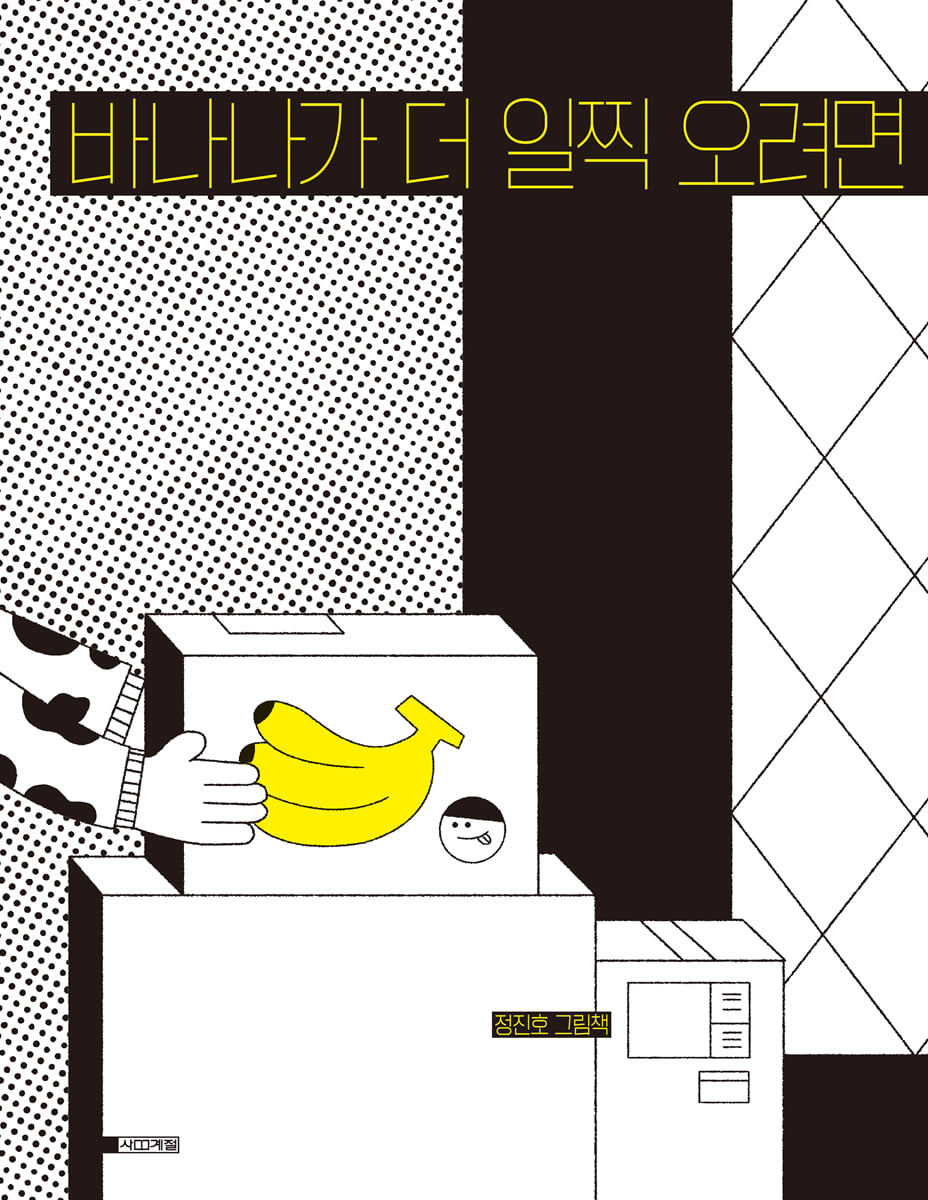
The first scene of the picture book shows the daily life of shopping online using a smartphone these days.
In today's society, ordering things online and having them delivered quickly is no longer unusual.
You can tell just by looking at the phrases that each shopping mall uses to tempt consumers, such as early morning delivery and same-day delivery.
Order, delivery, arrival.
What happens in our simple and convenient consumer lifestyle? Author Jin-ho Jeong takes a closer look at what happens between ordering and delivery.
If you order bananas, the delivery person has to leave at dawn, and if the delivery person wants to leave at dawn, he has to go to the gas station that opens earlier, and if the gas station opens early, the gas station employee has to take the subway earlier… This is a picture of people working one after another, working into the middle of the night.
It shows workers at work, including delivery drivers, gas station attendants, railroad mechanics, restaurant owners, fishmongers, fishermen, and factory workers.
The workers all hurry up so that the bananas arrive 'earlier'.
The world turns like a cogwheel, and the faster workers move, the faster it becomes.
The author asks, showing a cross-section of our society connected by labor.
'Who was it that made us move so early?'
If you want bananas to come 'earlier'
What will happen to us?
One evening, Minju orders a banana for breakfast on her phone.
I'll arrive early in the morning.
The bananas will probably be at your doorstep the next morning.
The first scene of the picture book shows the daily life of shopping online using a smartphone these days.
In today's society, ordering things online and having them delivered quickly is no longer unusual.
You can tell just by looking at the phrases that each shopping mall uses to tempt consumers, such as early morning delivery and same-day delivery.
Order, delivery, arrival.
What happens in our simple and convenient consumer lifestyle? Author Jin-ho Jeong takes a closer look at what happens between ordering and delivery.
If you order bananas, the delivery person has to leave at dawn, and if the delivery person wants to leave at dawn, he has to go to the gas station that opens earlier, and if the gas station opens early, the gas station employee has to take the subway earlier… This is a picture of people working one after another, working into the middle of the night.
It shows workers at work, including delivery drivers, gas station attendants, railroad mechanics, restaurant owners, fishmongers, fishermen, and factory workers.
The workers all hurry up so that the bananas arrive 'earlier'.
The world turns like a cogwheel, and the faster workers move, the faster it becomes.
The author asks, showing a cross-section of our society connected by labor.
'Who was it that made us move so early?'
- You can preview some of the book's contents.
Preview
Detailed image

Publisher's Review
Did you order for delivery this morning?
If you want bananas to come 'earlier'
What will happen to us?
One evening, Minju orders a banana for breakfast on her phone.
I'll arrive early in the morning.
The bananas will probably be at your doorstep the next morning.
The first scene of the picture book shows the daily life of shopping online using a smartphone these days.
In today's society, ordering things online and having them delivered quickly is no longer unusual.
You can tell just by looking at the phrases that each shopping mall uses to tempt consumers, such as early morning delivery and same-day delivery.
Order, delivery, arrival.
What happens in our simple and convenient consumer lifestyle? Author Jin-ho Jeong takes a closer look at what happens between ordering and delivery.
If you order bananas, the delivery person has to leave at dawn, and if the delivery person wants to leave at dawn, he has to go to the gas station that opens earlier, and if the gas station opens early, the gas station employee has to take the subway earlier… This is a picture of people working one after another, working into the middle of the night.
It shows workers at work, including delivery drivers, gas station attendants, railroad mechanics, restaurant owners, fishmongers, fishermen, and factory workers.
The workers all hurry up so that the bananas arrive 'earlier'.
The world turns like a cogwheel, and the faster workers move, the faster it becomes.
The author asks, showing a cross-section of our society connected by labor.
'Who was it that made us move so early?'
Inconvenient questions delivered by convenient consumption
A story that makes invisible labor visible
The author said he created the story after seeing a news report showing janitors taking a dedicated bus to work at dawn.
In "If the Bananas Come Early," it doesn't stop at showing people working in unseen places in the dead of night and early in the morning, but also depicts a social system where small dots come together to form lines and circles and circulate.
He calmly describes the chain-like connections of labor, saying that the world needs the hands of countless people to run smoothly, and that there are invisible laborers and people in our society.
The author paints the world from a certain distance using black, yellow, and restrained colors.
As consumption becomes faster and easier, the space between producers and consumers becomes more distant, and we fill it with descriptions of workers and their workplaces.
By portraying the people who exist between the order and arrival of a banana, we awaken the sense that we are all connected.
This picture book, which captures the ripples caused by the ordinary word "early," with keen insight, encourages us to imagine the hidden side of convenient consumption.
If we fail to remember the labor of those who live together in our society, we cannot move toward a world where human rights are respected.
Four Seasons Publishing House × Memorial Foundation for the Democratization Movement
Democracy and Human Rights Picture Book Series published!
'Democracy and Human Rights Picture Book' is a non-fiction picture book series (8 volumes in total) published in collaboration between Sageseoul Publishing and the Memorial Foundation for the Democratization Movement.
We closely examine the modern society we live in, identify various social issues, and present them in picture books.
The meaning of democracy and human rights, including discrimination, inequality, migrant labor, gender roles, and sensitivity to violence, are captured in picture books so that children and adults can easily understand and relate to them in their daily lives.
The series features many authors who are currently actively creating picture books based on their own unique world of works.
We have gathered together authors who have won the Bologna Ragazzi Award, BIB, and the Korea Picture Book Award, as well as unique picture book authors with a large fan base.
Thirteen domestic and international picture book authors, including Jeong Jin-ho, Kwon Jeong-min, Seo Hyeon, Lee Myeong-ae, Jo Won-hee, So Bok-i, and Osori, agreed with the planning intent of the Democracy and Human Rights Picture Book and actively participated.
This series was born from an exhibition content project at the Memorial Hall for Democracy Movement, which opens in the second half of this year.
The Memorial Foundation for Democracy Movement, which is in charge of planning and authoring support, is transforming the Namyeong-dong anti-communist division, a site of past state violence, into a memorial hall for the democracy movement, a space to commemorate the history of the democracy movement and democracy.
The goal is to preserve the Namyeong-dong Anti-Communist Investigation Office, which oppressed and tortured countless people throughout the history of Korean democracy, and to create exhibition and educational facilities to remember this painful history and create a space that opens up a new future.
Launched in early 2022, the "Democracy and Human Rights Picture Book Project" took its first steps with the goal of establishing picture books as exhibition content for meaningful moments in modern Korean history.
This project, which was launched with the hope of conveying the values of democracy and human rights to future generations through the high artistry and communicative power of picture books, has now come to fruition and been published as a picture book.
Collaborative work with 13 picture book authors from Korea and abroad over two years
Drawing a colorful perspective on democracy and human rights
A nonfiction picture book filled with 'strong and kind hope'
The eight-volume series, which will be published sequentially from May to October of this year, is the result of the 'Democracy and Human Rights Picture Book Project' that was conducted over two years from 2022 to 2024.
Kwon Yun-deok, author of “Flower Grandmother,” which has dealt with major events in modern Korean history, including the issue of Japanese military comfort women, through picture books, served as the general director of the project.
The project team, led by author Kwon Yun-deok and comprised of picture book researchers and experts, brought together creators and created picture books through several seminars and discussions.
In particular, the participating artists had time to deeply understand the intention of this project through a field trip to the Namyeong-dong public security office.
The catchphrase of the picture book project is 'A picture book filled with strong and kind hope.'
Director Kwon Yun-deok explained the reason for the project, saying, “We want to confront historical and realistic issues head-on, communicate them in a friendly way with the public through picture books, and capture hope for the future within the picture books.”
This series, a public project that supports the creation of picture books with national budget, has encouraged creators to experiment and make diverse attempts in all aspects, including theme, material, form, and expression, in the current reality where picture books that address social issues are scarce.
The creators brought the themes of 'democracy' and 'human rights' into everyday life and, after much thought and research, incorporated them into picture books.
This nonfiction picture book explores the issues our society must face today with a variety of voices and in-depth perspectives.
If you want bananas to come 'earlier'
What will happen to us?
One evening, Minju orders a banana for breakfast on her phone.
I'll arrive early in the morning.
The bananas will probably be at your doorstep the next morning.
The first scene of the picture book shows the daily life of shopping online using a smartphone these days.
In today's society, ordering things online and having them delivered quickly is no longer unusual.
You can tell just by looking at the phrases that each shopping mall uses to tempt consumers, such as early morning delivery and same-day delivery.
Order, delivery, arrival.
What happens in our simple and convenient consumer lifestyle? Author Jin-ho Jeong takes a closer look at what happens between ordering and delivery.
If you order bananas, the delivery person has to leave at dawn, and if the delivery person wants to leave at dawn, he has to go to the gas station that opens earlier, and if the gas station opens early, the gas station employee has to take the subway earlier… This is a picture of people working one after another, working into the middle of the night.
It shows workers at work, including delivery drivers, gas station attendants, railroad mechanics, restaurant owners, fishmongers, fishermen, and factory workers.
The workers all hurry up so that the bananas arrive 'earlier'.
The world turns like a cogwheel, and the faster workers move, the faster it becomes.
The author asks, showing a cross-section of our society connected by labor.
'Who was it that made us move so early?'
Inconvenient questions delivered by convenient consumption
A story that makes invisible labor visible
The author said he created the story after seeing a news report showing janitors taking a dedicated bus to work at dawn.
In "If the Bananas Come Early," it doesn't stop at showing people working in unseen places in the dead of night and early in the morning, but also depicts a social system where small dots come together to form lines and circles and circulate.
He calmly describes the chain-like connections of labor, saying that the world needs the hands of countless people to run smoothly, and that there are invisible laborers and people in our society.
The author paints the world from a certain distance using black, yellow, and restrained colors.
As consumption becomes faster and easier, the space between producers and consumers becomes more distant, and we fill it with descriptions of workers and their workplaces.
By portraying the people who exist between the order and arrival of a banana, we awaken the sense that we are all connected.
This picture book, which captures the ripples caused by the ordinary word "early," with keen insight, encourages us to imagine the hidden side of convenient consumption.
If we fail to remember the labor of those who live together in our society, we cannot move toward a world where human rights are respected.
Four Seasons Publishing House × Memorial Foundation for the Democratization Movement
Democracy and Human Rights Picture Book Series published!
'Democracy and Human Rights Picture Book' is a non-fiction picture book series (8 volumes in total) published in collaboration between Sageseoul Publishing and the Memorial Foundation for the Democratization Movement.
We closely examine the modern society we live in, identify various social issues, and present them in picture books.
The meaning of democracy and human rights, including discrimination, inequality, migrant labor, gender roles, and sensitivity to violence, are captured in picture books so that children and adults can easily understand and relate to them in their daily lives.
The series features many authors who are currently actively creating picture books based on their own unique world of works.
We have gathered together authors who have won the Bologna Ragazzi Award, BIB, and the Korea Picture Book Award, as well as unique picture book authors with a large fan base.
Thirteen domestic and international picture book authors, including Jeong Jin-ho, Kwon Jeong-min, Seo Hyeon, Lee Myeong-ae, Jo Won-hee, So Bok-i, and Osori, agreed with the planning intent of the Democracy and Human Rights Picture Book and actively participated.
This series was born from an exhibition content project at the Memorial Hall for Democracy Movement, which opens in the second half of this year.
The Memorial Foundation for Democracy Movement, which is in charge of planning and authoring support, is transforming the Namyeong-dong anti-communist division, a site of past state violence, into a memorial hall for the democracy movement, a space to commemorate the history of the democracy movement and democracy.
The goal is to preserve the Namyeong-dong Anti-Communist Investigation Office, which oppressed and tortured countless people throughout the history of Korean democracy, and to create exhibition and educational facilities to remember this painful history and create a space that opens up a new future.
Launched in early 2022, the "Democracy and Human Rights Picture Book Project" took its first steps with the goal of establishing picture books as exhibition content for meaningful moments in modern Korean history.
This project, which was launched with the hope of conveying the values of democracy and human rights to future generations through the high artistry and communicative power of picture books, has now come to fruition and been published as a picture book.
Collaborative work with 13 picture book authors from Korea and abroad over two years
Drawing a colorful perspective on democracy and human rights
A nonfiction picture book filled with 'strong and kind hope'
The eight-volume series, which will be published sequentially from May to October of this year, is the result of the 'Democracy and Human Rights Picture Book Project' that was conducted over two years from 2022 to 2024.
Kwon Yun-deok, author of “Flower Grandmother,” which has dealt with major events in modern Korean history, including the issue of Japanese military comfort women, through picture books, served as the general director of the project.
The project team, led by author Kwon Yun-deok and comprised of picture book researchers and experts, brought together creators and created picture books through several seminars and discussions.
In particular, the participating artists had time to deeply understand the intention of this project through a field trip to the Namyeong-dong public security office.
The catchphrase of the picture book project is 'A picture book filled with strong and kind hope.'
Director Kwon Yun-deok explained the reason for the project, saying, “We want to confront historical and realistic issues head-on, communicate them in a friendly way with the public through picture books, and capture hope for the future within the picture books.”
This series, a public project that supports the creation of picture books with national budget, has encouraged creators to experiment and make diverse attempts in all aspects, including theme, material, form, and expression, in the current reality where picture books that address social issues are scarce.
The creators brought the themes of 'democracy' and 'human rights' into everyday life and, after much thought and research, incorporated them into picture books.
This nonfiction picture book explores the issues our society must face today with a variety of voices and in-depth perspectives.
GOODS SPECIFICS
- Date of issue: May 30, 2024
- Format: Hardcover book binding method guide
- Pages, weight, size: 44 pages | 364g | 198*257*10mm
- ISBN13: 9791169812016
- ISBN10: 1169812015
- KC Certification: Certification Type: Conformity Confirmation
You may also like
카테고리
korean


korean

![GQ KOREA Mark (Monthly): December [2025]](http://librairie.coreenne.fr/cdn/shop/files/8ef265dbbfbf186523ed75ba7319009d.jpg?v=1765340328&width=3840)


