

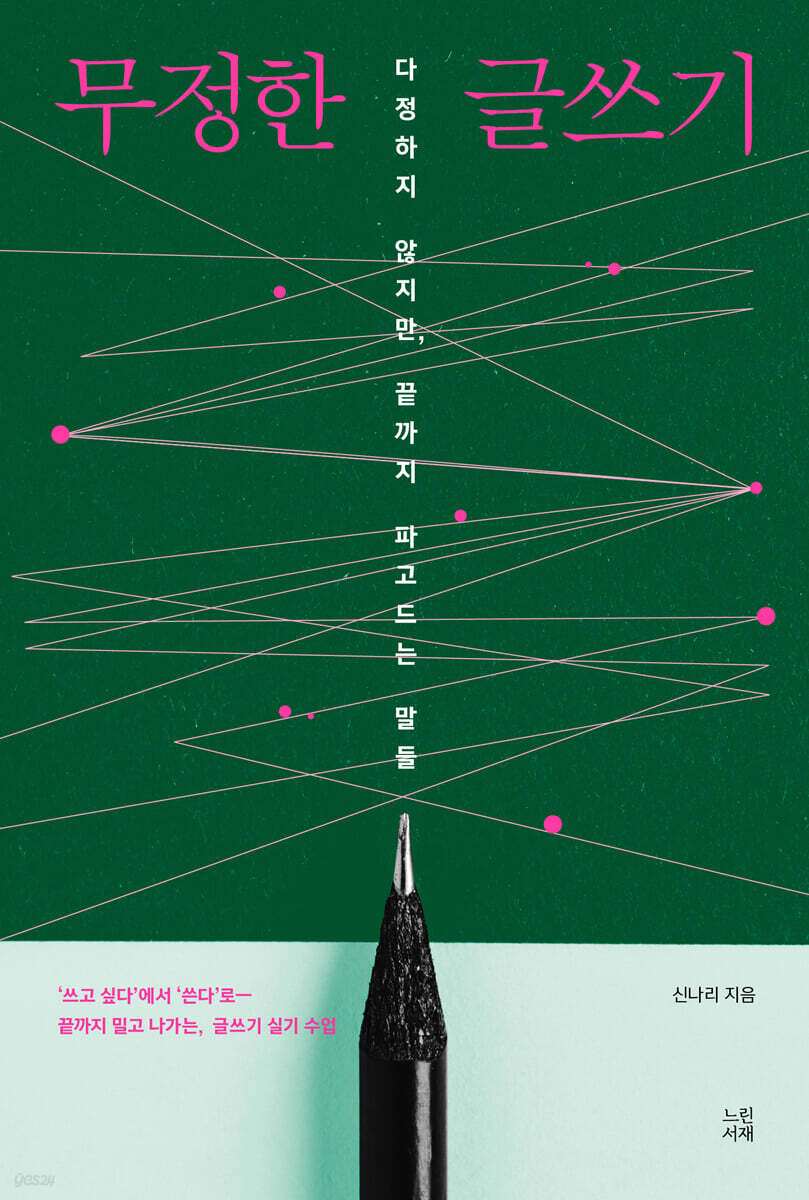
Heartless writing
 |
Description
Book Introduction
If you want to write but can't write a single line,
There is a writing craze.
Everyone is writing and wants to write.
Writing-related classes fill up as soon as they open, and many people are serializing their writings on blogs or Brunch.
Writing is a core skill everywhere, but we hear complaints here and there that it is difficult to write well.
Most people write passionately in the dark of night, but when they look back in the morning, they find only writings they want to throw in the trash.
Have you ever sat down in front of your monitor for three or four hours, warming up to write, only to end up doing something else?
Have you ever just stared blankly at the cursor on your monitor?
Don't you want to write something that is polished, objective, and more original than anything else, while also telling your story, rather than something full of whining and complaining?
Wouldn't you like to write humorously while also revealing your own unique story in detail?
There is a writing craze.
Everyone is writing and wants to write.
Writing-related classes fill up as soon as they open, and many people are serializing their writings on blogs or Brunch.
Writing is a core skill everywhere, but we hear complaints here and there that it is difficult to write well.
Most people write passionately in the dark of night, but when they look back in the morning, they find only writings they want to throw in the trash.
Have you ever sat down in front of your monitor for three or four hours, warming up to write, only to end up doing something else?
Have you ever just stared blankly at the cursor on your monitor?
Don't you want to write something that is polished, objective, and more original than anything else, while also telling your story, rather than something full of whining and complaining?
Wouldn't you like to write humorously while also revealing your own unique story in detail?
- You can preview some of the book's contents.
Preview
index
Guide to Books
Part 1 In this sentence now
1 From ‘I want to write’ to ‘I write’
To get out of the mood to write
Maximizes deprivation and hunger
Break it apart and put it back together
Writing from distraction and tension
2 Discovering the Inspiration: Asking "Why"
I write to get to know myself
Ask 'why'
Reading books that ask questions
3 Autobiographical Writing
Book Writing and Form Experiments
How to tell a story
Morality required of mothers
A narrator who will write for me
4 Read to write
The illusion of having read
People who find answers in books
From an unknown sentence
Reading that penetrates into another world
5 There's a reason for vivid writing.
Research awakens the senses
I am so-and-so
How to say goodbye to a grievance without romance
6 Show it as an episode, not a narrative
My passion has no trigger
Show without telling
A spider web story
7 I don't know you
Not out of empathy, but out of ignorance
I understand you
I speak only through others
When writing about those close to you
From understanding myself
8. Write like a craftsman
Writing like design
When thoughts and hands move simultaneously
From writing to making
A question that starts at your fingertips
The writer's identity is not just writing.
Part 2 Right here, right now
9 Instead of the word happiness
The standard for evaluating life, happiness
The Three-Step Magic to Happiness
The privilege of being a happy housewife
Freedom to be unhappy
Loneliness is more important than the 10th anniversary.
A night hungry for feedback
The anesthetic of empathy
A heart waiting for recognition
Writing in Solitude
11 A mess in a mess
What even feminism couldn't say
A woman who doesn't exist anywhere in the world
Getting to know myself
My darkness is mine
Reinvention of the 12 Numbers
Things that make me up
Abandon the center
A woman who failed to become a woman
Start from the surroundings
13 Writing about Mom, Writing about Me
A story that you have to write even if you avoid it
A pitiful being called a mother
A mother-daughter story without compassion
Neither reconciliation nor understanding
14 The Tears of Being a Mom
The voices of 'good mothers'
Acknowledging ambivalence
Is my child a monster?
The power of motherhood
15 Marriage, a place where there is neither happiness nor abandonment
Marriage, why do we do it?
Empty institutions, filled illusions
Between collusion and deception
Writing in the middle ground
*Epilogue
*List of reference books
Part 1 In this sentence now
1 From ‘I want to write’ to ‘I write’
To get out of the mood to write
Maximizes deprivation and hunger
Break it apart and put it back together
Writing from distraction and tension
2 Discovering the Inspiration: Asking "Why"
I write to get to know myself
Ask 'why'
Reading books that ask questions
3 Autobiographical Writing
Book Writing and Form Experiments
How to tell a story
Morality required of mothers
A narrator who will write for me
4 Read to write
The illusion of having read
People who find answers in books
From an unknown sentence
Reading that penetrates into another world
5 There's a reason for vivid writing.
Research awakens the senses
I am so-and-so
How to say goodbye to a grievance without romance
6 Show it as an episode, not a narrative
My passion has no trigger
Show without telling
A spider web story
7 I don't know you
Not out of empathy, but out of ignorance
I understand you
I speak only through others
When writing about those close to you
From understanding myself
8. Write like a craftsman
Writing like design
When thoughts and hands move simultaneously
From writing to making
A question that starts at your fingertips
The writer's identity is not just writing.
Part 2 Right here, right now
9 Instead of the word happiness
The standard for evaluating life, happiness
The Three-Step Magic to Happiness
The privilege of being a happy housewife
Freedom to be unhappy
Loneliness is more important than the 10th anniversary.
A night hungry for feedback
The anesthetic of empathy
A heart waiting for recognition
Writing in Solitude
11 A mess in a mess
What even feminism couldn't say
A woman who doesn't exist anywhere in the world
Getting to know myself
My darkness is mine
Reinvention of the 12 Numbers
Things that make me up
Abandon the center
A woman who failed to become a woman
Start from the surroundings
13 Writing about Mom, Writing about Me
A story that you have to write even if you avoid it
A pitiful being called a mother
A mother-daughter story without compassion
Neither reconciliation nor understanding
14 The Tears of Being a Mom
The voices of 'good mothers'
Acknowledging ambivalence
Is my child a monster?
The power of motherhood
15 Marriage, a place where there is neither happiness nor abandonment
Marriage, why do we do it?
Empty institutions, filled illusions
Between collusion and deception
Writing in the middle ground
*Epilogue
*List of reference books
Into the book
Feeling like writing and the act of writing are two different things.
As anyone who has experienced it knows, when you feel like writing, your emotions are heightened.
I feel hazy and my body floats with the desire to write a book, to become a writer, to write a novel.
Even though the deadline is right around the corner, no inspiration comes to mind, and when I try to squeeze out each word and line, the feeling that had been inflated like a balloon quickly shrinks.
--- p.16
A hungry person doesn't say 'I want to eat'.
I end up eating all the food I see in a hurry.
Writing is similar.
When I feel hungry to write, I can't help but write something.
I have no choice but to write because I feel like I'm stuck if I don't spit out even a few lines.
--- p.17
Unlike physical labor, creative work has no clear beginning or end.
I think about it even before I eat or go to bed.
In other words, it is immersion.
The spark will burn only if the state of immersion continues.
You have to tie a thin string to what you want to write for a few days, and chew on it and recall it frequently.
--- p.26
The attitude of ‘I can’t do it properly anyway and it’s all a mess, so I might as well just throw it away.’
A time that is properly secured, a time when life and writing are in perfect balance, a time when a dull feeling naturally leads to calm writing, is something that will never come, no matter how long you wait.
--- p.33p
Questions arise not in flashy moments, but in the small cracks of everyday life.
"Why are we buying our kids so many toys? Why are we having these frequent, long meetings?" Don't miss the moment when the routine we've been mindlessly repeating suddenly feels unfamiliar.
--- p.43
What is writing as testimony?
I write about how powerless I am against the powers that be in this society.
When I wrote about becoming a mother, I desperately wanted to prove how difficult it was for me.
To be a testimony, it had to include not only the part where they were helplessly dragged along by the ideology of maternal love, but also the part where they colluded and used it as a shield.
As anyone who has experienced it knows, when you feel like writing, your emotions are heightened.
I feel hazy and my body floats with the desire to write a book, to become a writer, to write a novel.
Even though the deadline is right around the corner, no inspiration comes to mind, and when I try to squeeze out each word and line, the feeling that had been inflated like a balloon quickly shrinks.
--- p.16
A hungry person doesn't say 'I want to eat'.
I end up eating all the food I see in a hurry.
Writing is similar.
When I feel hungry to write, I can't help but write something.
I have no choice but to write because I feel like I'm stuck if I don't spit out even a few lines.
--- p.17
Unlike physical labor, creative work has no clear beginning or end.
I think about it even before I eat or go to bed.
In other words, it is immersion.
The spark will burn only if the state of immersion continues.
You have to tie a thin string to what you want to write for a few days, and chew on it and recall it frequently.
--- p.26
The attitude of ‘I can’t do it properly anyway and it’s all a mess, so I might as well just throw it away.’
A time that is properly secured, a time when life and writing are in perfect balance, a time when a dull feeling naturally leads to calm writing, is something that will never come, no matter how long you wait.
--- p.33p
Questions arise not in flashy moments, but in the small cracks of everyday life.
"Why are we buying our kids so many toys? Why are we having these frequent, long meetings?" Don't miss the moment when the routine we've been mindlessly repeating suddenly feels unfamiliar.
--- p.43
What is writing as testimony?
I write about how powerless I am against the powers that be in this society.
When I wrote about becoming a mother, I desperately wanted to prove how difficult it was for me.
To be a testimony, it had to include not only the part where they were helplessly dragged along by the ideology of maternal love, but also the part where they colluded and used it as a shield.
--- From the text
Publisher's Review
Writing is accomplished thoroughly with the fingertips, not the head.
This book begins by redefining writing.
It begins with where people's desire to write comes from and expands on the topic of how and with what attitude good writing is accomplished.
Connecting writing and life, he defines the reason for writing as living without excuses.
Writing without emotion isn't something you can achieve simply by acquiring a few skills.
Just because you write a lot doesn't mean your writing skills will improve sequentially.
So what is needed?
Only an objective attitude and philosophy toward writing can change our writing 'even a little'.
So how can we acquire that attitude?
Write my story, but take a step back from 'me'; accurately portray the contradictions and hypocrisies of my life without complaining; don't be afraid to shift from writing for myself to writing for the general public; don't gloss over unfinished writing; write precisely to the end, even if it's painful.
This book also explains in detail how much thought goes into writing a sophisticated piece that doesn't drain your emotions.
Additionally, I would like to show you how to digest the book with your own thematic awareness after reading it, through the author's own experiences and quotes from other books.
In each chapter of Part 2, I cite literary works by various authors and experiment with applying the life attitudes of various thinkers to my own life.
We find commonalities in the writings of Park Wan-seo, Annie Ernaux, Elena Ferrante, and Vivienne Gonick.
It also introduces the tenacity of writers who crudely write about even aspects they want to ignore, and the method of faithfully depicting only the facts, removing emotions, whenever they want to package an incident in a positive light or portray themselves as a good person.
By studying the passages cited and cited in this book, we will examine, sentence by sentence, what we should be wary of when writing.
She draws inspiration from books on philosophy, sociology, and feminist theory, drawing inspiration from the writings of Hannah Arendt, Michel Foucault, Mitsu Tanaka, Chizuko Ueno, Sarah Ahmed, and Carol Gilligan.
It is an attitude that scolds the weak hearts that seek reassurance through loose solidarity, does not write articles seeking sympathy in the hope of someone's 'likes', and continues to keep a distance in relationships without being intoxicated by friendship and intimacy.
For those of you who want to write exploratory articles that look into 'what kind of person I am'
"Heartless Writing" is not suitable for those who want to increase their Instagram followers or write articles that seek sympathy or support.
However, this book will be suitable for those who cannot help but write stories that are so full of emotion that they want to look at predictable topics like marriage or happiness in a new way and write by thoroughly stripping away their inner selves.
As I write my story, will it be a piece that stops at sympathy and comfort, or will I write a piece that sharply dissects 'myself' based on the premise that even I do not know 'myself', giving the reader a painful pleasure?
Depending on what kind of writing you want to accomplish, this book will either delight or frustrate you.
This book begins by redefining writing.
It begins with where people's desire to write comes from and expands on the topic of how and with what attitude good writing is accomplished.
Connecting writing and life, he defines the reason for writing as living without excuses.
Writing without emotion isn't something you can achieve simply by acquiring a few skills.
Just because you write a lot doesn't mean your writing skills will improve sequentially.
So what is needed?
Only an objective attitude and philosophy toward writing can change our writing 'even a little'.
So how can we acquire that attitude?
Write my story, but take a step back from 'me'; accurately portray the contradictions and hypocrisies of my life without complaining; don't be afraid to shift from writing for myself to writing for the general public; don't gloss over unfinished writing; write precisely to the end, even if it's painful.
This book also explains in detail how much thought goes into writing a sophisticated piece that doesn't drain your emotions.
Additionally, I would like to show you how to digest the book with your own thematic awareness after reading it, through the author's own experiences and quotes from other books.
In each chapter of Part 2, I cite literary works by various authors and experiment with applying the life attitudes of various thinkers to my own life.
We find commonalities in the writings of Park Wan-seo, Annie Ernaux, Elena Ferrante, and Vivienne Gonick.
It also introduces the tenacity of writers who crudely write about even aspects they want to ignore, and the method of faithfully depicting only the facts, removing emotions, whenever they want to package an incident in a positive light or portray themselves as a good person.
By studying the passages cited and cited in this book, we will examine, sentence by sentence, what we should be wary of when writing.
She draws inspiration from books on philosophy, sociology, and feminist theory, drawing inspiration from the writings of Hannah Arendt, Michel Foucault, Mitsu Tanaka, Chizuko Ueno, Sarah Ahmed, and Carol Gilligan.
It is an attitude that scolds the weak hearts that seek reassurance through loose solidarity, does not write articles seeking sympathy in the hope of someone's 'likes', and continues to keep a distance in relationships without being intoxicated by friendship and intimacy.
For those of you who want to write exploratory articles that look into 'what kind of person I am'
"Heartless Writing" is not suitable for those who want to increase their Instagram followers or write articles that seek sympathy or support.
However, this book will be suitable for those who cannot help but write stories that are so full of emotion that they want to look at predictable topics like marriage or happiness in a new way and write by thoroughly stripping away their inner selves.
As I write my story, will it be a piece that stops at sympathy and comfort, or will I write a piece that sharply dissects 'myself' based on the premise that even I do not know 'myself', giving the reader a painful pleasure?
Depending on what kind of writing you want to accomplish, this book will either delight or frustrate you.
GOODS SPECIFICS
- Date of issue: July 15, 2025
- Page count, weight, size: 324 pages | 135*200*30mm
- ISBN13: 9791193749227
- ISBN10: 1193749220
You may also like
카테고리
korean


korean

![GQ KOREA Mark (Monthly): December [2025]](http://librairie.coreenne.fr/cdn/shop/files/8ef265dbbfbf186523ed75ba7319009d.jpg?v=1765340328&width=3840)


