

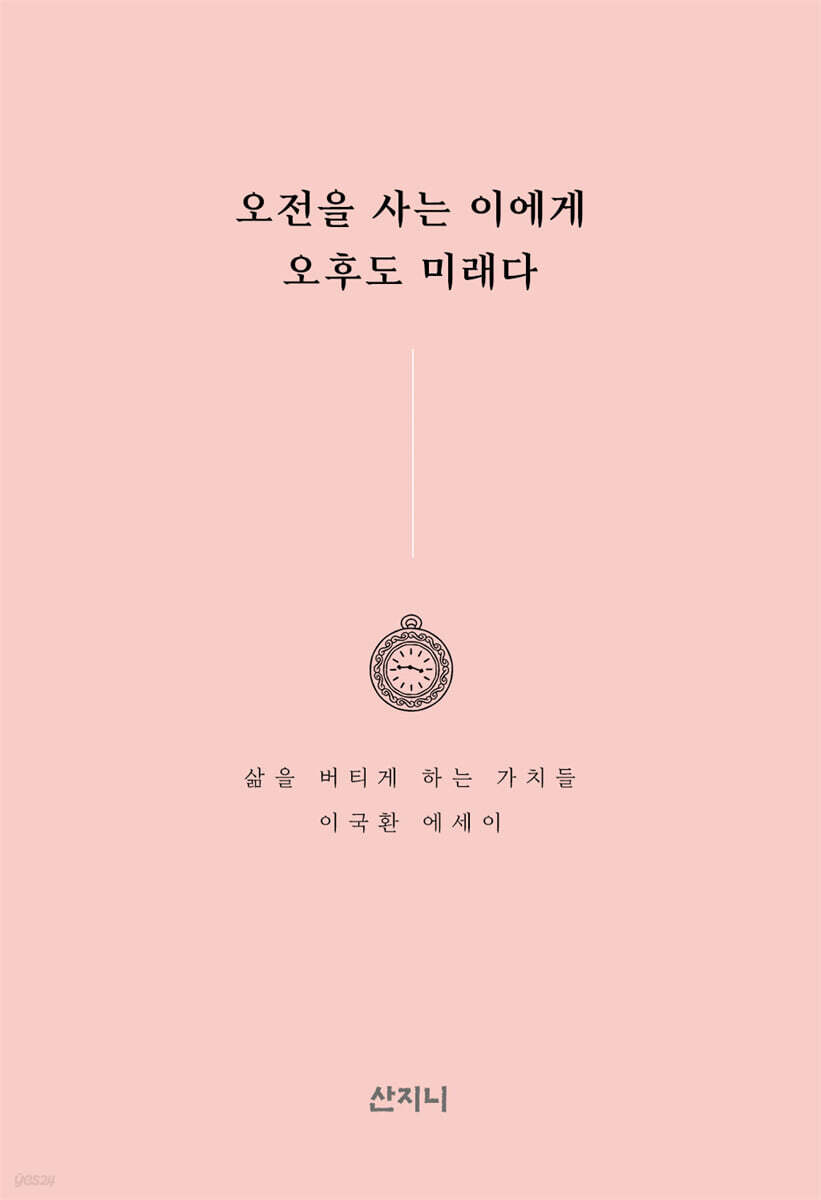
For those who live in the morning, the afternoon is also the future.
 |
Description
Book Introduction
★ 2020 Wonbuk Wonbusan General Category Selected Books ★
★ 2019 National Library of Korea Librarian Recommended Books ★
★ Published in translations in Turkey, Vietnam, and Malaysia ★
Dong-A University's Best Lecturer, Selected as an Outstanding K-MOOC Lecture
Professor Lee Gook-hwan shares his thoughts on reading in an age of anxiety.
What changed my fate was,
It was a reading and writing of my own choosing.
The revised edition of Professor Lee Gook-hwan's reading essay, "To Those Who Live in the Morning, the Afternoon Is Also the Future," has been published, and he is a beloved professor among students and has been repeatedly selected as the best lecturer at Dong-A University.
After its publication in 2019, it was selected as a book recommended by librarians at the National Library of Korea, and in 2020, it was selected as one of the 'One Book One Busan', where Busan citizens read and reflected on the book together for a year.
This book contains 52 essays by Professor Lee Gook-hwan, containing his thoughts on reading, writing, and art.
Five of these are new articles included in the revised edition.
Through the author's solid reasoning and fresh perspective, you can encounter the weight of life found in art and philosophy, a love of reading and writing, the value of persevering through pain and anxiety, and the meaning of living in harmony with others.
The meaning of life can exist in places where we walk, wavering and worrying, rather than on a set path.
The book encourages those who live honestly, while wavering, worrying, and anxious, that even the afternoon that will soon come can become the future.
“The world is full of meaning.
The meaning of life is not in the destination I reach by striving to reach, but exists everywhere along the path I walk.
You just don't discover it yourself.
For those who live in the morning, the afternoon is also the future.
Every day lived honestly adds up to a life.
A life without anxiety is already a dead life.
We must embrace anxiety and move forward step by step.
In that anxiety, the meaning of life will appear clearly like a light at the end of a dark tunnel.” _pp. 165-166
★ 2019 National Library of Korea Librarian Recommended Books ★
★ Published in translations in Turkey, Vietnam, and Malaysia ★
Dong-A University's Best Lecturer, Selected as an Outstanding K-MOOC Lecture
Professor Lee Gook-hwan shares his thoughts on reading in an age of anxiety.
What changed my fate was,
It was a reading and writing of my own choosing.
The revised edition of Professor Lee Gook-hwan's reading essay, "To Those Who Live in the Morning, the Afternoon Is Also the Future," has been published, and he is a beloved professor among students and has been repeatedly selected as the best lecturer at Dong-A University.
After its publication in 2019, it was selected as a book recommended by librarians at the National Library of Korea, and in 2020, it was selected as one of the 'One Book One Busan', where Busan citizens read and reflected on the book together for a year.
This book contains 52 essays by Professor Lee Gook-hwan, containing his thoughts on reading, writing, and art.
Five of these are new articles included in the revised edition.
Through the author's solid reasoning and fresh perspective, you can encounter the weight of life found in art and philosophy, a love of reading and writing, the value of persevering through pain and anxiety, and the meaning of living in harmony with others.
The meaning of life can exist in places where we walk, wavering and worrying, rather than on a set path.
The book encourages those who live honestly, while wavering, worrying, and anxious, that even the afternoon that will soon come can become the future.
“The world is full of meaning.
The meaning of life is not in the destination I reach by striving to reach, but exists everywhere along the path I walk.
You just don't discover it yourself.
For those who live in the morning, the afternoon is also the future.
Every day lived honestly adds up to a life.
A life without anxiety is already a dead life.
We must embrace anxiety and move forward step by step.
In that anxiety, the meaning of life will appear clearly like a light at the end of a dark tunnel.” _pp. 165-166
- You can preview some of the book's contents.
Preview
index
In the revised edition
Opening remarks
Part 1: Still Living
The moment life becomes art / Camel, lion, and child / Returning the story / Aura, the king's omelet and army ramen / The origin and value of romance / Why read poetry / Punctum, a beautiful life that flows fleetingly / Love is sharing memories / In search of lost solitude / Contemplating mature aging / Sweet words are not beautiful / Why read novels / Why do we read fantasy literature?
Part 2: Still Knowing
The crisis of reading is a crisis of democracy / Supporting, supporting, supporting / Reading together, breaking down the boundaries of the mind / Reading, the most important thing for humans / The saying that autumn is the season for reading / The reason Lucas reads books / A true reader / The lives of others and the living library / Ethos, writing that changes destiny / Wisdom learned from the past / The value of Bosudong Book Alley / Reading, a journey of compassion and self-understanding
Part 3: Enduring Yet
Can the ethics of forgiveness be completed? / Stress is gravity. / Does anxiety eat away at the soul? / The wandering of youth is beautiful. / Why self-esteem is more important than pride. / Dasan Jeong Yak-yong and Che Guevara. / We think, therefore we are. / The surprising discovery of time. / Why we ride bicycles. / The three conditions of happiness. / Is violence the fate of humans? / Mourning, the sadness that records sorrow. / Why novels heal the wounds of the heart.
Part 4: Living That Way
Drama and Mother's Empathy Journal / Society of Good People / Why We Need Rites of Passage in Our Times / Curiosity is Young / Book Connection / Three Ways to Get to Know People / Homework Called Family / Living as a Parent / The Value of Family Concerts / Women's Brains Are Different from Men's / The Path Local Newspapers Should Take / Newspapers and Hyperlocal Journalism / Certainty is the Enemy of All Communication / Pandemic and the Daily Life of Modern People
Opening remarks
Part 1: Still Living
The moment life becomes art / Camel, lion, and child / Returning the story / Aura, the king's omelet and army ramen / The origin and value of romance / Why read poetry / Punctum, a beautiful life that flows fleetingly / Love is sharing memories / In search of lost solitude / Contemplating mature aging / Sweet words are not beautiful / Why read novels / Why do we read fantasy literature?
Part 2: Still Knowing
The crisis of reading is a crisis of democracy / Supporting, supporting, supporting / Reading together, breaking down the boundaries of the mind / Reading, the most important thing for humans / The saying that autumn is the season for reading / The reason Lucas reads books / A true reader / The lives of others and the living library / Ethos, writing that changes destiny / Wisdom learned from the past / The value of Bosudong Book Alley / Reading, a journey of compassion and self-understanding
Part 3: Enduring Yet
Can the ethics of forgiveness be completed? / Stress is gravity. / Does anxiety eat away at the soul? / The wandering of youth is beautiful. / Why self-esteem is more important than pride. / Dasan Jeong Yak-yong and Che Guevara. / We think, therefore we are. / The surprising discovery of time. / Why we ride bicycles. / The three conditions of happiness. / Is violence the fate of humans? / Mourning, the sadness that records sorrow. / Why novels heal the wounds of the heart.
Part 4: Living That Way
Drama and Mother's Empathy Journal / Society of Good People / Why We Need Rites of Passage in Our Times / Curiosity is Young / Book Connection / Three Ways to Get to Know People / Homework Called Family / Living as a Parent / The Value of Family Concerts / Women's Brains Are Different from Men's / The Path Local Newspapers Should Take / Newspapers and Hyperlocal Journalism / Certainty is the Enemy of All Communication / Pandemic and the Daily Life of Modern People
Detailed image

Into the book
I like the word 'book connection'.
--- From "First Sentence"
It is more important to read one book deeply and have the time to share your thoughts with others than to read ten books.
Immerse yourself in a book, and after you close the book, you can talk and communicate with people who have read the same book.
A good book shakes and ripples my hardened self.
When that ripple meets other ripples and ripples together, our rigid ego crumbles and we gain enlightenment about life.
--- p.102
When I was a child, I was Lucas.
Like Lucas in the novel, one day, thanks to a teacher who recommended books to me when I was young, I was able to stop crying and meet books as if by a miracle.
Since then, I have not been lonely or sad because I am no longer alone.
In the novel, Lucas is deeply hurt by his friends and family and eventually goes into the book, never to return.
The police searched for the missing Lucas, but no one has seen him since.
However, in the place where Lucas had disappeared, there was a book titled “The Most Beautiful Stories in the World.”
The novel ended like that, but I believe.
Lucas is not on the run, but is traveling through a beautiful and unfamiliar world.
Reading is an act of staying in the author's house and then leaving to build one's own house.
Lucas will stay in the book, heal his wounds, and come out into the world again.
So he will build his house firmly.
--- pp.117-118
What makes writing difficult is that it is the most random and accident-free activity in the world.
Now, with the development of social networks, writing is no longer a privilege reserved for a select few experts, but a right chosen by those who wish to enrich their lives.
Writing is a craft for understanding life, and with constant effort, anyone can become a master of their own life through writing.
Among the sixty-nine-year-old schoolgirl's assignments, there is one that I love the most.
This is a story about growing up as the eldest child, taking care of her mother even after getting married, paying for her younger siblings' tuition and getting them married, but not having a single ring on her own hand, written in front of a photo of her late mother.
In her writing, the mother in the photo whispers to her daughter, who is nearing seventy.
“You are my best daughter.” Her words comforted her life and gave meaning to her life until she was sixty-nine.
--- p.131
The bigger problem is that the communities we live in are not just.
Capitalism has dismantled communities and replaced them with markets.
Political, economic, and media powers have colluded in a covert manner, capturing the everyday lawlessness, corruption, and excessive desire for capital.
In schools and workplaces, competition among members has become a discipline rather than a virtue, with people being pressured to perform better than others.
Competition is about accepting others and helping each other grow, not suppressing or leaving others behind.
Yet, even universities, supposedly temples of intellect, rank students based on relative evaluation, differentiate professors' salaries based on performance, and rank departments based on employment rates.
If schools are like this, you can imagine what profit-seeking private companies are like.
When members internalize zero-sum competition, violence becomes the norm in that community, and the more intense the competition, the more violence creeps into us.
As Susan Sontag warned in “The Pain of Others,” we consume the spectacle of others’ suffering through violent movies, dramas, and even news, and become desensitized to the violence we inflict on ourselves.
--- pp.201-202
As the pandemic drags on, many people say they miss their normal daily lives.
But I wondered if those who said that had ever valued their daily lives.
Everyday life is amazing.
Routine is what we find most boring, but at the same time, it is also what we fear losing.
They feel tired and worn out from the difficulties of commuting to and from work, the repetitive tasks every day, and the same faces they see every day, but they also fear that this routine will be shattered by unemployment or retirement.
In order to escape from the daily routine, we fill the highways on weekends and spend time on leisure activities, but when we come back tired, it's back to the daily routine.
Today, too, our daily lives continue like this, wandering between boredom and anxiety.
--- From "First Sentence"
It is more important to read one book deeply and have the time to share your thoughts with others than to read ten books.
Immerse yourself in a book, and after you close the book, you can talk and communicate with people who have read the same book.
A good book shakes and ripples my hardened self.
When that ripple meets other ripples and ripples together, our rigid ego crumbles and we gain enlightenment about life.
--- p.102
When I was a child, I was Lucas.
Like Lucas in the novel, one day, thanks to a teacher who recommended books to me when I was young, I was able to stop crying and meet books as if by a miracle.
Since then, I have not been lonely or sad because I am no longer alone.
In the novel, Lucas is deeply hurt by his friends and family and eventually goes into the book, never to return.
The police searched for the missing Lucas, but no one has seen him since.
However, in the place where Lucas had disappeared, there was a book titled “The Most Beautiful Stories in the World.”
The novel ended like that, but I believe.
Lucas is not on the run, but is traveling through a beautiful and unfamiliar world.
Reading is an act of staying in the author's house and then leaving to build one's own house.
Lucas will stay in the book, heal his wounds, and come out into the world again.
So he will build his house firmly.
--- pp.117-118
What makes writing difficult is that it is the most random and accident-free activity in the world.
Now, with the development of social networks, writing is no longer a privilege reserved for a select few experts, but a right chosen by those who wish to enrich their lives.
Writing is a craft for understanding life, and with constant effort, anyone can become a master of their own life through writing.
Among the sixty-nine-year-old schoolgirl's assignments, there is one that I love the most.
This is a story about growing up as the eldest child, taking care of her mother even after getting married, paying for her younger siblings' tuition and getting them married, but not having a single ring on her own hand, written in front of a photo of her late mother.
In her writing, the mother in the photo whispers to her daughter, who is nearing seventy.
“You are my best daughter.” Her words comforted her life and gave meaning to her life until she was sixty-nine.
--- p.131
The bigger problem is that the communities we live in are not just.
Capitalism has dismantled communities and replaced them with markets.
Political, economic, and media powers have colluded in a covert manner, capturing the everyday lawlessness, corruption, and excessive desire for capital.
In schools and workplaces, competition among members has become a discipline rather than a virtue, with people being pressured to perform better than others.
Competition is about accepting others and helping each other grow, not suppressing or leaving others behind.
Yet, even universities, supposedly temples of intellect, rank students based on relative evaluation, differentiate professors' salaries based on performance, and rank departments based on employment rates.
If schools are like this, you can imagine what profit-seeking private companies are like.
When members internalize zero-sum competition, violence becomes the norm in that community, and the more intense the competition, the more violence creeps into us.
As Susan Sontag warned in “The Pain of Others,” we consume the spectacle of others’ suffering through violent movies, dramas, and even news, and become desensitized to the violence we inflict on ourselves.
--- pp.201-202
As the pandemic drags on, many people say they miss their normal daily lives.
But I wondered if those who said that had ever valued their daily lives.
Everyday life is amazing.
Routine is what we find most boring, but at the same time, it is also what we fear losing.
They feel tired and worn out from the difficulties of commuting to and from work, the repetitive tasks every day, and the same faces they see every day, but they also fear that this routine will be shattered by unemployment or retirement.
In order to escape from the daily routine, we fill the highways on weekends and spend time on leisure activities, but when we come back tired, it's back to the daily routine.
Today, too, our daily lives continue like this, wandering between boredom and anxiety.
--- p.286
Publisher's Review
Hesitation and indecision, confessing to loving useless things
Professor Lee Gook-hwan shares his thoughts on reading in an age of anxiety.
In the book, the author confesses, “I wondered what life was all about, but after reading the book, I realized that no two days were the same, and every day was good.”
He also said that his life is now complete thanks to writing.
That is why the author did not neglect reading and writing, and even after becoming a professor, he taught his students the joy of reading and the necessity of writing.
The reason he was able to be selected as a popular lecturer by students several times is probably because he led changes in people's lives through reading and writing instead of giving boring lectures.
In “Reading Together, Breaking Down the Boundaries of the Mind,” “Reading, the Most Important Thing Humans Do,” “Ethos, Writing That Changes Destiny,” and “Reading, a Journey of Compassion and Self-Understanding,” the author encourages readers to move forward with the act of reading and writing through his own experiences.
The book argues throughout that this is what makes life rich and meaningful.
Is there any medium that connects people as deeply as books?
I'm waiting for a new book connection today too.
For Professor Lee Gook-hwan, books are fate.
I met my current wife through a shared love of a book.
And after the publication of “To Those Who Live in the Morning, the Afternoon is also the Future,” we held book clubs with readers at the request of schools and libraries across the country.
In a time when every day felt like the same old thing, reading books made each day feel a little different, and writing gave me time to connect with my subconscious.
Every time I was lonely, a sentence was created.
To create that sentence, I created a room in my daily life and in my heart, and in that room, I quietly refined my thoughts.
I confess that only the reading and writing I chose for myself changed my destiny.
The author's reflections on everyday life will provide comfort to us living in these uncertain times.
Still, everyday life holds strong, and books still speak to us.
Professor Lee Gook-hwan shares his thoughts on reading in an age of anxiety.
In the book, the author confesses, “I wondered what life was all about, but after reading the book, I realized that no two days were the same, and every day was good.”
He also said that his life is now complete thanks to writing.
That is why the author did not neglect reading and writing, and even after becoming a professor, he taught his students the joy of reading and the necessity of writing.
The reason he was able to be selected as a popular lecturer by students several times is probably because he led changes in people's lives through reading and writing instead of giving boring lectures.
In “Reading Together, Breaking Down the Boundaries of the Mind,” “Reading, the Most Important Thing Humans Do,” “Ethos, Writing That Changes Destiny,” and “Reading, a Journey of Compassion and Self-Understanding,” the author encourages readers to move forward with the act of reading and writing through his own experiences.
The book argues throughout that this is what makes life rich and meaningful.
Is there any medium that connects people as deeply as books?
I'm waiting for a new book connection today too.
For Professor Lee Gook-hwan, books are fate.
I met my current wife through a shared love of a book.
And after the publication of “To Those Who Live in the Morning, the Afternoon is also the Future,” we held book clubs with readers at the request of schools and libraries across the country.
In a time when every day felt like the same old thing, reading books made each day feel a little different, and writing gave me time to connect with my subconscious.
Every time I was lonely, a sentence was created.
To create that sentence, I created a room in my daily life and in my heart, and in that room, I quietly refined my thoughts.
I confess that only the reading and writing I chose for myself changed my destiny.
The author's reflections on everyday life will provide comfort to us living in these uncertain times.
Still, everyday life holds strong, and books still speak to us.
GOODS SPECIFICS
- Date of issue: February 17, 2025
- Page count, weight, size: 288 pages | 127*188*16mm
- ISBN13: 9791168614161
You may also like
카테고리
korean


korean

![GQ KOREA Mark (Monthly): December [2025]](http://librairie.coreenne.fr/cdn/shop/files/8ef265dbbfbf186523ed75ba7319009d.jpg?v=1765340328&width=3840)


