

Namhansanseong Fortress
 |
Description
Book Introduction
It has been ten years since Kim Hoon's novel, "Namhansanseong," was published.
It was printed in 100 editions over ten years.
This book is a revised edition of the novel Namhansanseong.
Since the first edition was published in 2007, author Kim Hoon has written a new version of “Untold Words,” which he has finally revealed after ten years.
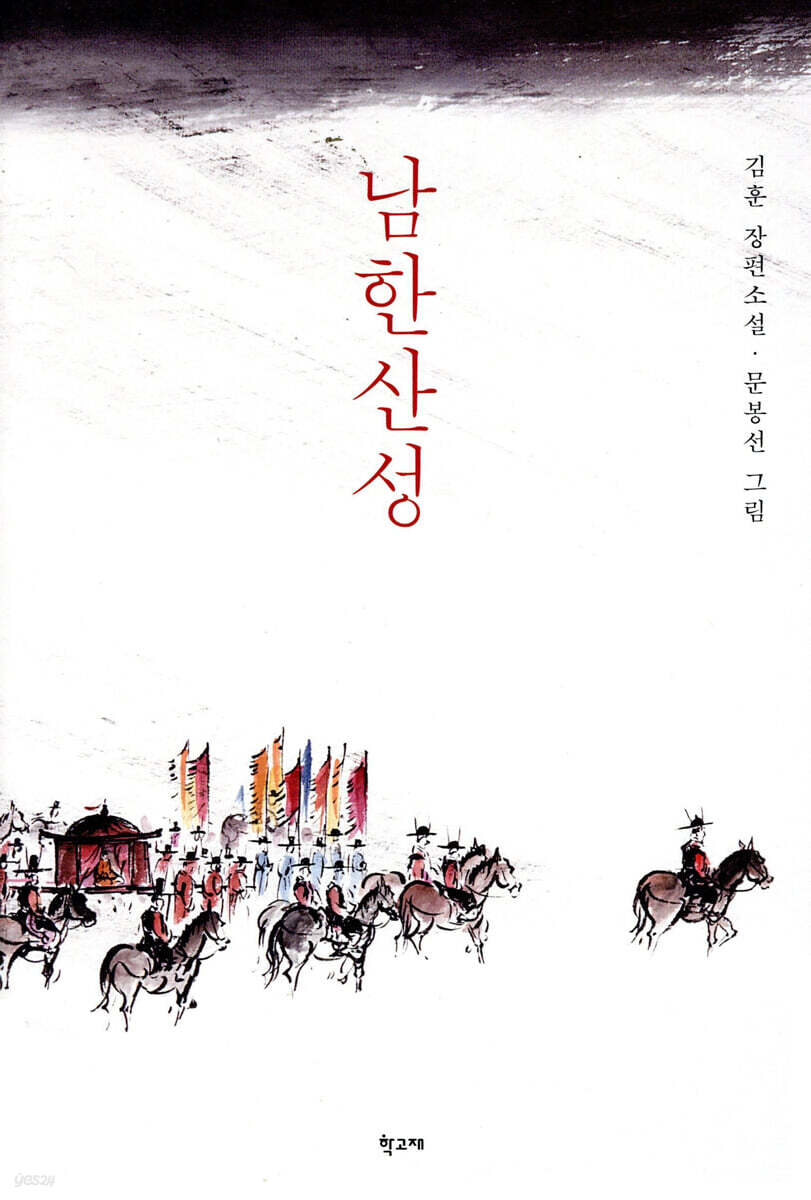
And we redesigned it with a precious painting by artist Moon Bong-seon.
Moon Bong-seon's paintings do not explain the novel, but rather depict scenes from the novel in their true form and express the novel's lingering emotions through form.
Author Kim Hoon portrayed the winter of the year of Byungja, when words ran rampant in the hungry castle, in a strict and meticulous writing.
The novel's warp and woof are the stories of King Injo, who was imprisoned in Namhansanseong during the Manchu invasion of Korea, the conflict between the pro-war and pro-peace factions that unfolded before him, and the suffering of the common people as the fate of their country fades away.
Winter of 1636, the year of Byungja.
A Qing army of over 100,000 men surrounds Namhansanseong Fortress, and Joseon is at a crossroads of life and death.
Will you be beautiful in death or will you be filthy in life?
The pro-imperial faction believes that justice will bloom like flowers in the fields of a fallen dynasty, while the peace faction believes that the eternity of life will comfort and cover up the shame.
They face each other colder than the blade for 47 days.
Characters who have not entered history are even more interesting.
The blacksmith Seonalsoe, a rare realist, the ferryman of Songpa Naru who fell to Kim Sang-heon's sword, and the young woman Naru who penetrated the enemy lines and entered the fortress like fog are all characters who reflect the symbols of the novel Namhansanseong.
Thus, in the winter of the year of Byungja and the spring of the following year, the path that cannot be taken and the path that must be taken are laid out before the Joseon Dynasty.
Author Kim Hoon states, “This book is a novel and should be read solely as a novel.”
Additionally, it is emphasized that “descriptions of characters appearing under their real names cannot serve as a historical evaluation of those characters.”
However, the characters he brings back to life are fleshed out with fictional imagination on the skeleton of historical facts, and come back to life with vivid faces.
It was printed in 100 editions over ten years.
This book is a revised edition of the novel Namhansanseong.
Since the first edition was published in 2007, author Kim Hoon has written a new version of “Untold Words,” which he has finally revealed after ten years.
And we redesigned it with a precious painting by artist Moon Bong-seon.
Moon Bong-seon's paintings do not explain the novel, but rather depict scenes from the novel in their true form and express the novel's lingering emotions through form.
Author Kim Hoon portrayed the winter of the year of Byungja, when words ran rampant in the hungry castle, in a strict and meticulous writing.
The novel's warp and woof are the stories of King Injo, who was imprisoned in Namhansanseong during the Manchu invasion of Korea, the conflict between the pro-war and pro-peace factions that unfolded before him, and the suffering of the common people as the fate of their country fades away.
Winter of 1636, the year of Byungja.
A Qing army of over 100,000 men surrounds Namhansanseong Fortress, and Joseon is at a crossroads of life and death.
Will you be beautiful in death or will you be filthy in life?
The pro-imperial faction believes that justice will bloom like flowers in the fields of a fallen dynasty, while the peace faction believes that the eternity of life will comfort and cover up the shame.
They face each other colder than the blade for 47 days.
Characters who have not entered history are even more interesting.
The blacksmith Seonalsoe, a rare realist, the ferryman of Songpa Naru who fell to Kim Sang-heon's sword, and the young woman Naru who penetrated the enemy lines and entered the fortress like fog are all characters who reflect the symbols of the novel Namhansanseong.
Thus, in the winter of the year of Byungja and the spring of the following year, the path that cannot be taken and the path that must be taken are laid out before the Joseon Dynasty.
Author Kim Hoon states, “This book is a novel and should be read solely as a novel.”
Additionally, it is emphasized that “descriptions of characters appearing under their real names cannot serve as a historical evaluation of those characters.”
However, the characters he brings back to life are fleshed out with fictional imagination on the skeleton of historical facts, and come back to life with vivid faces.
- You can preview some of the book's contents.
Preview
index
What I'm saying
Snowstorm / frozen river / blue smoke / boatman / blacksmith / winter rain / peak / horse feed / thatched roof / girl / dung / needle / one head / crying while laughing / stone / ladder / salted mackerel / rumor / road / horse dust / Mangwolbong / lard / fierce letter / country of warmth / beef / red snow / New Year's Day / shepherd's purse / water scales / catching lice / reply / writer / traitor / light dust / Hongipo / rebellion / departure from the castle / two ministers / the smell of earth / spring in the castle
What I couldn't say
supplement
― Namhansanseong Map / Namhansanseong Map Description / Continent, from Ming to Qing / Namhansanseong, from Winter to Spring / Word Dictionary
References
Snowstorm / frozen river / blue smoke / boatman / blacksmith / winter rain / peak / horse feed / thatched roof / girl / dung / needle / one head / crying while laughing / stone / ladder / salted mackerel / rumor / road / horse dust / Mangwolbong / lard / fierce letter / country of warmth / beef / red snow / New Year's Day / shepherd's purse / water scales / catching lice / reply / writer / traitor / light dust / Hongipo / rebellion / departure from the castle / two ministers / the smell of earth / spring in the castle
What I couldn't say
supplement
― Namhansanseong Map / Namhansanseong Map Description / Continent, from Ming to Qing / Namhansanseong, from Winter to Spring / Word Dictionary
References
Into the book
The old site shakes the winter of the distant year of Byungja,
I was heartbroken by the fate of my weak country, trampled by world evil.
In that imprisoned castle, life and death, despair and hope were all intertwined.
Shame and pride were no different.
You cannot argue for justice with words, you cannot read the world with writing,
If we cannot receive all the irreversible time while we are alive,
I have no choice but to walk the path that stretches out above the ground.
The path of new life stretched into death.
The king came out through the west gate and surrendered at Samjeondo.
The road stretches out over the ground, so I do not pity the footsteps of the king who goes to Samjeondo.
It's more brutal to fight inside than outside.
The readers fought and fought in the locked castle, and horses ran wild and filled the hungry castle.
I am not on any side.
I am only on the side of those who suffer.
The river flowed beneath the castle, and the castle reached out to the world, and every spring was new.
While sorrow grips me, I hastily compose a little story and dedicate it to the castle of my homeland.
--- Kim Hoon, 2007.
The path of words extends into the heart, and the path of life extends upon the earth.
Life cannot carry words all its own, and words cannot bear all of life.
The human path of connecting the path of words and the path of life often stretches through pain and trials.
This road is untrodden and has no detours.
The king was driven into the castle and then dragged out, and in the spring of the ruins, radish sprouted.
My novel ended with the scattered people gathering again in the castle, preparing for spring farming, and the ferry shedding its first light.
I described the spring of 1637 as simply an everyday scene following the cycle of nature.
It was a cliché ending without any ideological coordinates, but it couldn't be forced.
I do not trust indicators of ideas that cannot be realized within the concreteness of everyday life.
Within the isolated and helpless castle, many languages and indicators were entangled, and within the language, within its orientation, there was no path, and in the place where the path of words was dragged down to the ground of this world, a path to walk was barely created.
The road was a descent route from the west gate of Sanseong to Samjeonnaru and Suhangdan.
The road was a wasteland without any trace of civilization, a road that required one to tread on land where no one had ever set foot.
As the poor king walked down this path of ascension, he was finally becoming a father of confession.
The snow was frozen on the downhill slope and the horse slipped.
I love this father.
I don't hate you.
In the isolated castle, many words clashed and blood spurted out, but many more spent the winter in silence, saying nothing.
I could not write anything about their silence.
I couldn't imagine what it was like inside those who were silent.
There must have been more desperate words seething within that silence, but I could not access the language within that silence with my own language.
As far as this silence is concerned, my novel is an unfinished exercise.
---From "Untold Words"
Currently, the upper reaches of the Han River are blocked by a dam, and both banks are blocked by riverside roads.
The Han River in the city center is meandering and unable to wet its basin, but lies docile like a caged animal.
As it passes the Haengju Bridge, the Han River regains its free flow.
The river meanders through a wide wetland, its lower estuary blocked by the Military Demarcation Line.
The great river is so quiet that the chirping of birds can be heard far away, and the sea water flows in and out of the estuary, where not even a single fishing boat can approach, and fish teem with it.
When looking from the Jogang Ferry at the northern end of Gimpo, Jogang-ri to the north across the river appears to be swaying in the haze.
The shores of the alternative that could not be reached were this close.
It is certain that this world will forever be imperfect.
Love and language are the products of this imperfection.
I was heartbroken by the fate of my weak country, trampled by world evil.
In that imprisoned castle, life and death, despair and hope were all intertwined.
Shame and pride were no different.
You cannot argue for justice with words, you cannot read the world with writing,
If we cannot receive all the irreversible time while we are alive,
I have no choice but to walk the path that stretches out above the ground.
The path of new life stretched into death.
The king came out through the west gate and surrendered at Samjeondo.
The road stretches out over the ground, so I do not pity the footsteps of the king who goes to Samjeondo.
It's more brutal to fight inside than outside.
The readers fought and fought in the locked castle, and horses ran wild and filled the hungry castle.
I am not on any side.
I am only on the side of those who suffer.
The river flowed beneath the castle, and the castle reached out to the world, and every spring was new.
While sorrow grips me, I hastily compose a little story and dedicate it to the castle of my homeland.
--- Kim Hoon, 2007.
The path of words extends into the heart, and the path of life extends upon the earth.
Life cannot carry words all its own, and words cannot bear all of life.
The human path of connecting the path of words and the path of life often stretches through pain and trials.
This road is untrodden and has no detours.
The king was driven into the castle and then dragged out, and in the spring of the ruins, radish sprouted.
My novel ended with the scattered people gathering again in the castle, preparing for spring farming, and the ferry shedding its first light.
I described the spring of 1637 as simply an everyday scene following the cycle of nature.
It was a cliché ending without any ideological coordinates, but it couldn't be forced.
I do not trust indicators of ideas that cannot be realized within the concreteness of everyday life.
Within the isolated and helpless castle, many languages and indicators were entangled, and within the language, within its orientation, there was no path, and in the place where the path of words was dragged down to the ground of this world, a path to walk was barely created.
The road was a descent route from the west gate of Sanseong to Samjeonnaru and Suhangdan.
The road was a wasteland without any trace of civilization, a road that required one to tread on land where no one had ever set foot.
As the poor king walked down this path of ascension, he was finally becoming a father of confession.
The snow was frozen on the downhill slope and the horse slipped.
I love this father.
I don't hate you.
In the isolated castle, many words clashed and blood spurted out, but many more spent the winter in silence, saying nothing.
I could not write anything about their silence.
I couldn't imagine what it was like inside those who were silent.
There must have been more desperate words seething within that silence, but I could not access the language within that silence with my own language.
As far as this silence is concerned, my novel is an unfinished exercise.
---From "Untold Words"
Currently, the upper reaches of the Han River are blocked by a dam, and both banks are blocked by riverside roads.
The Han River in the city center is meandering and unable to wet its basin, but lies docile like a caged animal.
As it passes the Haengju Bridge, the Han River regains its free flow.
The river meanders through a wide wetland, its lower estuary blocked by the Military Demarcation Line.
The great river is so quiet that the chirping of birds can be heard far away, and the sea water flows in and out of the estuary, where not even a single fishing boat can approach, and fish teem with it.
When looking from the Jogang Ferry at the northern end of Gimpo, Jogang-ri to the north across the river appears to be swaying in the haze.
The shores of the alternative that could not be reached were this close.
It is certain that this world will forever be imperfect.
Love and language are the products of this imperfection.
---From "Untold Words"
GOODS SPECIFICS
- Date of publication: July 7, 2017
- Page count, weight, size: 448 pages | 630g | 140*205*30mm
- ISBN13: 9788956253534
- ISBN10: 8956253536
You may also like
카테고리
korean


korean

![ELLE 엘르 스페셜 에디션 A형 : 12월 [2025]](http://librairie.coreenne.fr/cdn/shop/files/b8e27a3de6c9538896439686c6b0e8fb.jpg?v=1766436872&width=3840)


