

A quiet embrace
 |
Description
Book Introduction
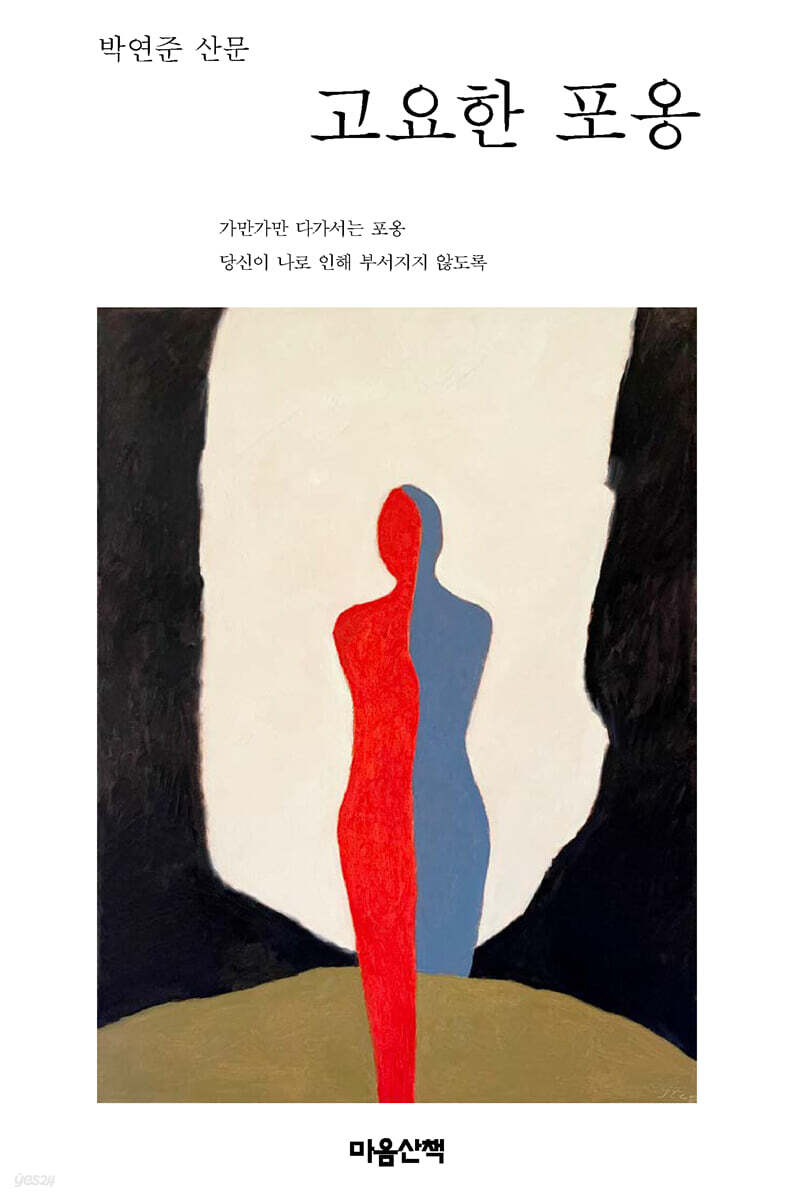
“We can bear the sorrow of others.” A gesture that embraces the cracks in the heart Days of embracing sadness with love Poet Park Yeon-jun's new prose work, "Quiet Embrace," has been published. This is the sixth prose collection by the poet, who has been loved by many readers through works such as 『Commotion』, 『Every Month, Every Day』, and 『The Feeling of Writing』, and it contains stories of living while fully accepting the big and small cracks in everyday life as well as relationships with others. In this book, the poet gently soothes the rupture between my family and me, between writing and me, between life and me, and between me and the many things I love. It reveals the will to “continue to observe and protect the broken in this terrible and beautiful world.” There is a lot of gold in this book. I wrote a story about the time I spent desperately trying to mend my broken soul. It contains a story about a person who is torn between 'the person I want to be' and 'the person I am likely to be' and becomes the person who keeps gold. Pages 10-11 This attitude of the poet is also shown in the way he does not throw away broken ornaments and cups, but rather carefully puts them back together and cherishes and values them more than before. As the saying goes, “I may not know all of the sorrows of others, but I will keep their sorrows in a corner of my sorrow room,” he shows a mature attitude of embracing the pain of those around him beyond himself. Therefore, 『The Quiet Embrace』 is full of the thoughtful insights of someone who seeks to embrace sadness with love. It conveys the poet's affectionate warmth as he tries to bridge the gap and move forward together. |
- You can preview some of the book's contents.
Preview
index
Foreword│Moving Forward with Gold in Your Hands
1 other person
arrive
Arrived at the head of the household
2. Enduring with seeds
Autumn morning with aukguk soup
My First Book Story
Clipping cat claws
Can you have art?
A sanctuary called 'me'
Clouds are beautiful even though they don't know balance.
Yeondu's efforts
I'll only upload what I can show
The tree was green, just a tree.
Adult study methods
pressed stone, small stone, bounced stone
The man who walks on the edge of the night
The joys and sorrows of consumption
3 Open and Closed Hearts
The cost of memories
Let's love beginner drivers
I want to be an old man with thin ears
The key called alcohol
What dwells within us and makes us who we are
Hermit
The Music Diary of an Eccentric DJ
My love is like a small pebble
The universe called home
4 We can bear the sorrow of others.
If you can stay in the purity of waiting
We can bear the sorrow of others
A room I don't want to leave
favor
Sisters' Poem
The sad speed of crazy words
1 other person
arrive
Arrived at the head of the household
2. Enduring with seeds
Autumn morning with aukguk soup
My First Book Story
Clipping cat claws
Can you have art?
A sanctuary called 'me'
Clouds are beautiful even though they don't know balance.
Yeondu's efforts
I'll only upload what I can show
The tree was green, just a tree.
Adult study methods
pressed stone, small stone, bounced stone
The man who walks on the edge of the night
The joys and sorrows of consumption
3 Open and Closed Hearts
The cost of memories
Let's love beginner drivers
I want to be an old man with thin ears
The key called alcohol
What dwells within us and makes us who we are
Hermit
The Music Diary of an Eccentric DJ
My love is like a small pebble
The universe called home
4 We can bear the sorrow of others.
If you can stay in the purity of waiting
We can bear the sorrow of others
A room I don't want to leave
favor
Sisters' Poem
The sad speed of crazy words
Detailed image

Into the book
Some people are overly conscious of the world even before they are born.
Even after being born, we pass by without recognizing ourselves.
The me in front of me, the me in front of that… … Even though there are countless versions of myself standing in a row, I don’t recognize them.
I live as if I am borrowing someone else's body.
There is no way.
You have to know yourself.
This is me, I was born this way, I have to accept it.
--- pp.43~44
There is no bias or twisted effort in the nature of a stream flowing to a river or in the nature of a river flowing to the sea.
It is best to let the desire to do something and how to live arise naturally.
--- pp.69~70
Have you ever seen a cherry tree with buds just before full bloom from ten paces away? At that moment, the tree looks as if it's holding back a faint, pink sneeze.
When the cherry blossoms begin to sneeze in earnest here and there! The white light that pushes out the pink will burst forth in a splendid display.
--- p.90
You shouldn't look to the world for answers.
You just have to ask yourself:
How should I live, what kind of person do I want to be?
I don't want to find an easy answer.
I don't want to be skilled in the world.
You can only train.
I will write it hesitantly and think about it slowly.
--- p.99
Back then, we didn't know our brilliance.
We didn't know the freshness of our daily lives, of reading, writing, loving, and parting, of dealing with alcohol.
We thought of ourselves as 'monsters distorted by shame and pain.'
I often covered my face and cried.
A monster that feels shame? That kind of thing can't be a monster anymore, but I spent my days and nights in self-reproach.
--- p.147
Being awake at night alone is like being left alone in the world.
I love this moment of being completely alone.
Somewhere, there must be many people like this, left alone, keeping watch at night.
A night where you can rest easy knowing that your family is sleeping peacefully next to you.
It is a time to call oneself the gatekeeper of the night, and to sit by one's side with solitude and silence.
Even after being born, we pass by without recognizing ourselves.
The me in front of me, the me in front of that… … Even though there are countless versions of myself standing in a row, I don’t recognize them.
I live as if I am borrowing someone else's body.
There is no way.
You have to know yourself.
This is me, I was born this way, I have to accept it.
--- pp.43~44
There is no bias or twisted effort in the nature of a stream flowing to a river or in the nature of a river flowing to the sea.
It is best to let the desire to do something and how to live arise naturally.
--- pp.69~70
Have you ever seen a cherry tree with buds just before full bloom from ten paces away? At that moment, the tree looks as if it's holding back a faint, pink sneeze.
When the cherry blossoms begin to sneeze in earnest here and there! The white light that pushes out the pink will burst forth in a splendid display.
--- p.90
You shouldn't look to the world for answers.
You just have to ask yourself:
How should I live, what kind of person do I want to be?
I don't want to find an easy answer.
I don't want to be skilled in the world.
You can only train.
I will write it hesitantly and think about it slowly.
--- p.99
Back then, we didn't know our brilliance.
We didn't know the freshness of our daily lives, of reading, writing, loving, and parting, of dealing with alcohol.
We thought of ourselves as 'monsters distorted by shame and pain.'
I often covered my face and cried.
A monster that feels shame? That kind of thing can't be a monster anymore, but I spent my days and nights in self-reproach.
--- p.147
Being awake at night alone is like being left alone in the world.
I love this moment of being completely alone.
Somewhere, there must be many people like this, left alone, keeping watch at night.
A night where you can rest easy knowing that your family is sleeping peacefully next to you.
It is a time to call oneself the gatekeeper of the night, and to sit by one's side with solitude and silence.
--- p.188
Publisher's Review
So that you don't break because of me
A hug that approaches gently
A hug is a gesture of affection and encouragement.
It is an act of welcoming the other person and a way of communicating by sharing and supporting one's feelings.
In the first poem of the book, "Arrival," the poet brings a pet into the house without consulting her husband.
It was because I couldn't ignore the cat that was going back and forth between being abandoned and being temporarily protected.
The husband is angry at the poet for deciding to adopt without consulting him and doesn't even look at the cat.
But one night, he tries to accept his new family member by waving a toy fishing rod.
It shows the cat gradually changing as he kneels down and pets the cat or gives it a treat.
This process of acceptance and understanding can also be found in “The Cost of Memory.”
In this piece, the poet's husband loves books so much that he keeps about 8,000 books in his home.
The other 20,000 or so volumes are stored separately in a rented office in Paju.
Every time he has to pay rent for a book, the husband looks at the poet.
Every time, the poet's heart becomes complicated, but "I will embrace the years that have made you what you are.
“Let’s give it a try,” he agrees.
This is because we know that love is “something that goes beyond the path, something that crosses the line” and that the other person is “something that endures and embraces what you love.”
In this way, "The Silent Embrace" shows that a relationship can only last when people accept and respect each other as they are.
Even in moments when it is difficult to understand the other person, I encourage you to think again about being by their side and becoming 'us'.
To say that you cannot know the suffering of others means that you cannot know the suffering of others 'in that way'.
Right now, I may not be able to understand the mind of an old person 'like an old person', but still... ... I want to try to find the words to come after 'still'.
Pages 143-144
“It’s okay, it’s really okay.”
Living despite failure
In 『Quiet Embrace』, the difficulties the poet experienced and the thoughts he gained while enduring them are evident throughout.
In “Pressed Stone, Small Stone, Bounced Stone,” there is a passage where he confesses that his school days were a time when he felt like a stone.
The poet recalls his days as an adult, enduring the oppressive control of society and school, and long unable to resist “the meanness, humiliation, and injustice of my situation.”
He writes that if children today were in the same situation as him, he would carefully ask about their well-being.
Let go of the guilt that adults have been handcuffing you for so long.
Throw the word 'properly' into the sea.
Stop tormenting the present with worry and anxiety.
They say that when you move forward, there is more to it than just moving forward.
You can either zigzag forward and jump forward, or take a long detour.
There is plenty of time.
If you go back and then go forward again, nothing happens.
I hope you don't become an adult who worries as much as I do.
Page 106
The poet's deep and mature perspective is also revealed in the story of how he only got behind the wheel when he was forty.
In "Let's Love Beginner Drivers," the poet's struggles against prejudice against female drivers are depicted in a rather light-hearted tone.
In a time when parking was purely a matter of luck, the poet had accidents such as crashing his car into a pillar and breaking the window of his favorite cafe.
Yet, far from being discouraged, he does not hesitate to hit the road.
It is true that there are more female drivers, but there is still a tendency to look down on the skills of female drivers.
Is there anything in this world worth achieving without risk? No one is born with the ability to drive.
Only after experiencing countless dangers and accidents, both big and small, acquiring new senses, and experiencing trial and error can one become a skilled driver.
Page 136
In this way, the poet personally practices the truth of life that one can only grow by embracing failure.
With the determination that “If you can’t do something, just keep doing it until you can do it well,” I never stop trying again.
The poet's image of overcoming anxiety and crisis and moving forward provides readers with a warm comfort.
It subtly reminds us that not all bad things happen in life, and that good things can happen too.
Park Yeon-jun (author)'s words
Now I prefer a quiet embrace to a passionate embrace.
I like a gentle hug that comes close to you so that the gold you hold on to doesn't get shattered by me.
When your palms touch each other's backs, a light embrace is good.
I want to start by greeting with the tip of my nose like a cat.
I want to cultivate a heart that continues to observe and protect the precious things in this terrible and beautiful world.
Even if it's difficult.
A hug that approaches gently
A hug is a gesture of affection and encouragement.
It is an act of welcoming the other person and a way of communicating by sharing and supporting one's feelings.
In the first poem of the book, "Arrival," the poet brings a pet into the house without consulting her husband.
It was because I couldn't ignore the cat that was going back and forth between being abandoned and being temporarily protected.
The husband is angry at the poet for deciding to adopt without consulting him and doesn't even look at the cat.
But one night, he tries to accept his new family member by waving a toy fishing rod.
It shows the cat gradually changing as he kneels down and pets the cat or gives it a treat.
This process of acceptance and understanding can also be found in “The Cost of Memory.”
In this piece, the poet's husband loves books so much that he keeps about 8,000 books in his home.
The other 20,000 or so volumes are stored separately in a rented office in Paju.
Every time he has to pay rent for a book, the husband looks at the poet.
Every time, the poet's heart becomes complicated, but "I will embrace the years that have made you what you are.
“Let’s give it a try,” he agrees.
This is because we know that love is “something that goes beyond the path, something that crosses the line” and that the other person is “something that endures and embraces what you love.”
In this way, "The Silent Embrace" shows that a relationship can only last when people accept and respect each other as they are.
Even in moments when it is difficult to understand the other person, I encourage you to think again about being by their side and becoming 'us'.
To say that you cannot know the suffering of others means that you cannot know the suffering of others 'in that way'.
Right now, I may not be able to understand the mind of an old person 'like an old person', but still... ... I want to try to find the words to come after 'still'.
Pages 143-144
“It’s okay, it’s really okay.”
Living despite failure
In 『Quiet Embrace』, the difficulties the poet experienced and the thoughts he gained while enduring them are evident throughout.
In “Pressed Stone, Small Stone, Bounced Stone,” there is a passage where he confesses that his school days were a time when he felt like a stone.
The poet recalls his days as an adult, enduring the oppressive control of society and school, and long unable to resist “the meanness, humiliation, and injustice of my situation.”
He writes that if children today were in the same situation as him, he would carefully ask about their well-being.
Let go of the guilt that adults have been handcuffing you for so long.
Throw the word 'properly' into the sea.
Stop tormenting the present with worry and anxiety.
They say that when you move forward, there is more to it than just moving forward.
You can either zigzag forward and jump forward, or take a long detour.
There is plenty of time.
If you go back and then go forward again, nothing happens.
I hope you don't become an adult who worries as much as I do.
Page 106
The poet's deep and mature perspective is also revealed in the story of how he only got behind the wheel when he was forty.
In "Let's Love Beginner Drivers," the poet's struggles against prejudice against female drivers are depicted in a rather light-hearted tone.
In a time when parking was purely a matter of luck, the poet had accidents such as crashing his car into a pillar and breaking the window of his favorite cafe.
Yet, far from being discouraged, he does not hesitate to hit the road.
It is true that there are more female drivers, but there is still a tendency to look down on the skills of female drivers.
Is there anything in this world worth achieving without risk? No one is born with the ability to drive.
Only after experiencing countless dangers and accidents, both big and small, acquiring new senses, and experiencing trial and error can one become a skilled driver.
Page 136
In this way, the poet personally practices the truth of life that one can only grow by embracing failure.
With the determination that “If you can’t do something, just keep doing it until you can do it well,” I never stop trying again.
The poet's image of overcoming anxiety and crisis and moving forward provides readers with a warm comfort.
It subtly reminds us that not all bad things happen in life, and that good things can happen too.
Park Yeon-jun (author)'s words
Now I prefer a quiet embrace to a passionate embrace.
I like a gentle hug that comes close to you so that the gold you hold on to doesn't get shattered by me.
When your palms touch each other's backs, a light embrace is good.
I want to start by greeting with the tip of my nose like a cat.
I want to cultivate a heart that continues to observe and protect the precious things in this terrible and beautiful world.
Even if it's difficult.
GOODS SPECIFICS
- Date of issue: April 20, 2023
- Page count, weight, size: 244 pages | 356g | 133*201*20mm
- ISBN13: 9788960908086
- ISBN10: 8960908088
You may also like
카테고리
korean


korean

![GQ KOREA Mark (Monthly): December [2025]](http://librairie.coreenne.fr/cdn/shop/files/8ef265dbbfbf186523ed75ba7319009d.jpg?v=1765340328&width=3840)


