

prime
 |
Description
Book Introduction
Becoming an adult means
It means that desires can be traded.
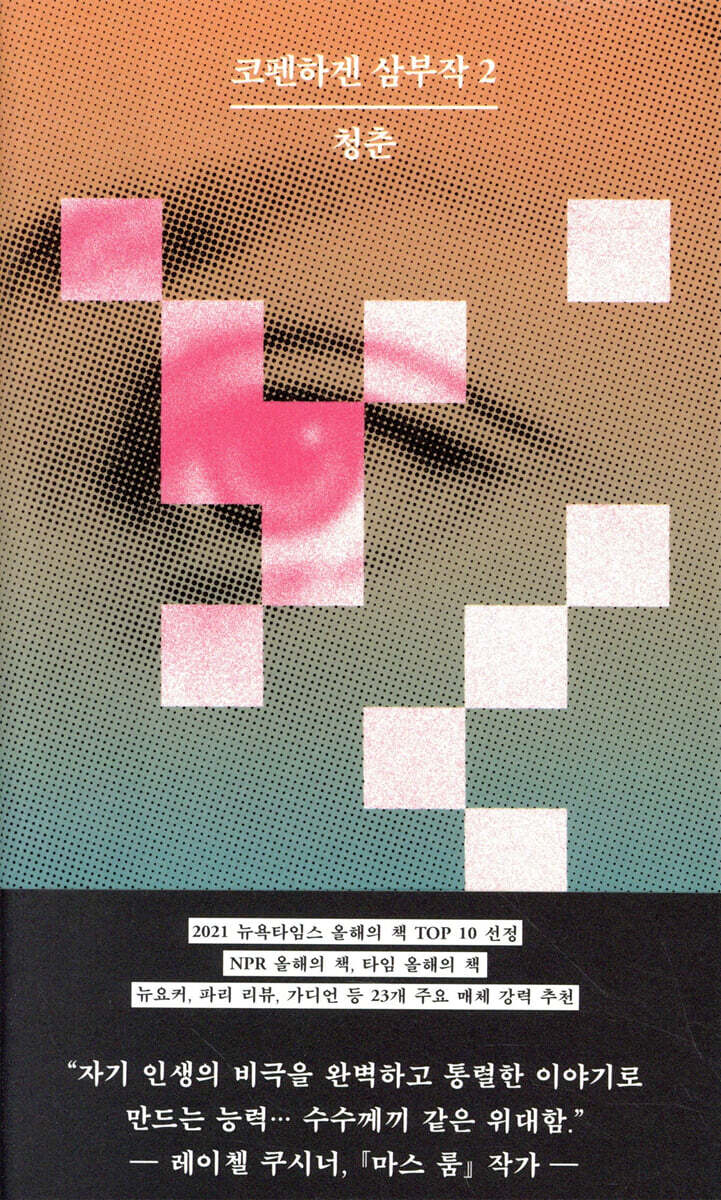
Part 2, "Youth," which follows Part 1, "Childhood," depicts Dietleusen's life after graduating from middle school and entering society.
As a poor female worker, the choice given to her was simple.
It was either a matter of moving from one low-paying job to another or getting married and becoming a full-time housewife.
Dietleusen struggles to find a way to reject both options, and especially to find a way to become the poet he has dreamed of since childhood.
Serving as a link between the first part, full of vague nostalgia, and the eerily cold third part, "Youth" appropriately shares the characteristics of both works.
Having been forced to live the life given to him by the world after entering society before he turned twenty, Dietleusen never gave up on his dream of becoming a writer, even while working simple labor jobs. However, he learned the life guidelines for achieving that dream from the cold world.
The most important guidelines are as follows:
Every human being wants something from another, and if I want to get something from him, I must also give him what he desires.
This aspiring poet, now approaching his twenties, wandering in search of poetry and love, navigating a world seething with both coldness and passionate desire, was becoming more and more accustomed to the transactions and settlements of desire than to metaphysical virtues like fate or justice.
In this way, he became closer and closer to being a poet, but at the same time he rapidly moved away from his 'childhood'.
It means that desires can be traded.
Part 2, "Youth," which follows Part 1, "Childhood," depicts Dietleusen's life after graduating from middle school and entering society.
As a poor female worker, the choice given to her was simple.
It was either a matter of moving from one low-paying job to another or getting married and becoming a full-time housewife.
Dietleusen struggles to find a way to reject both options, and especially to find a way to become the poet he has dreamed of since childhood.
Serving as a link between the first part, full of vague nostalgia, and the eerily cold third part, "Youth" appropriately shares the characteristics of both works.
Having been forced to live the life given to him by the world after entering society before he turned twenty, Dietleusen never gave up on his dream of becoming a writer, even while working simple labor jobs. However, he learned the life guidelines for achieving that dream from the cold world.
The most important guidelines are as follows:
Every human being wants something from another, and if I want to get something from him, I must also give him what he desires.
This aspiring poet, now approaching his twenties, wandering in search of poetry and love, navigating a world seething with both coldness and passionate desire, was becoming more and more accustomed to the transactions and settlements of desire than to metaphysical virtues like fate or justice.
In this way, he became closer and closer to being a poet, but at the same time he rapidly moved away from his 'childhood'.
- You can preview some of the book's contents.
Preview
index
1
2
3
4
5
6
7
8
9
10
11
12
13
14
15
16
17
18
19
20
21
22
2
3
4
5
6
7
8
9
10
11
12
13
14
15
16
17
18
19
20
21
22
Detailed image
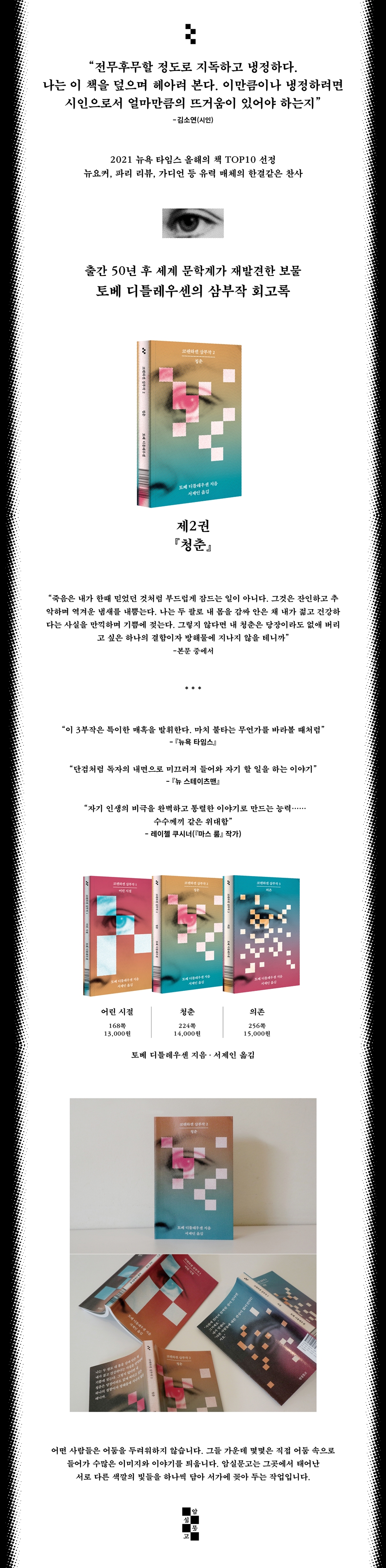
Into the book
He says.
“You want to show me those poems?” I ask, blushing, how he knew, since he had guessed what I wanted from him.
“Ah,” he says.
“If it wasn’t poetry, it could have been something else.
People always want something from each other.
And I knew all along that you wanted to use me for something.”
--- p.37
“What happened to your young boyfriend?” asks the mother, who once dreamed of becoming the mother-in-law of a school teacher.
“I’m dating someone else,” I answer.
Then, my mother, who has a personality that requires her to give very specific reasons for everything, says this.
“You should pay more attention to your appearance.
Instead of that damn bike, I should buy a suit to wear in the spring.
“She’s not a natural beauty, so shouldn’t we take action?” My mother isn’t saying these things to hurt me.
Mother is simply completely ignorant of what goes on inside other people.
--- pp.69~70
“I broke off the engagement,” I say.
“Good job,” the mother replies.
“He wasn’t a very good man.” “No, he was a good man.” I just say that and keep my mouth shut.
I can't explain to my mother what was good about him.
“There’s something good in everyone, Alfrida,” my aunt says affectionately from the bed.
And my mother and I know that my aunt is thinking of Uncle Karl.
--- p.140
Death is not a gentle sleep as I once believed.
It is cruel, ugly, and smells disgusting.
I wrap my arms around myself and rejoice in the fact that I am young and healthy.
Otherwise, my youth would be nothing more than a flaw and an obstacle that I would like to get rid of immediately.
--- p.151
He lifts his wide-brimmed green hat, draws an elegant arc with it, puts it back on his head, and walks quickly down the street.
I stand there and watch him for as long as my eyes can follow.
And then I suddenly think.
I'm always breaking up with guys.
I stare at their backs and listen to their footsteps disappearing into the darkness.
It's rare for them to turn around and wave at me.
“You want to show me those poems?” I ask, blushing, how he knew, since he had guessed what I wanted from him.
“Ah,” he says.
“If it wasn’t poetry, it could have been something else.
People always want something from each other.
And I knew all along that you wanted to use me for something.”
--- p.37
“What happened to your young boyfriend?” asks the mother, who once dreamed of becoming the mother-in-law of a school teacher.
“I’m dating someone else,” I answer.
Then, my mother, who has a personality that requires her to give very specific reasons for everything, says this.
“You should pay more attention to your appearance.
Instead of that damn bike, I should buy a suit to wear in the spring.
“She’s not a natural beauty, so shouldn’t we take action?” My mother isn’t saying these things to hurt me.
Mother is simply completely ignorant of what goes on inside other people.
--- pp.69~70
“I broke off the engagement,” I say.
“Good job,” the mother replies.
“He wasn’t a very good man.” “No, he was a good man.” I just say that and keep my mouth shut.
I can't explain to my mother what was good about him.
“There’s something good in everyone, Alfrida,” my aunt says affectionately from the bed.
And my mother and I know that my aunt is thinking of Uncle Karl.
--- p.140
Death is not a gentle sleep as I once believed.
It is cruel, ugly, and smells disgusting.
I wrap my arms around myself and rejoice in the fact that I am young and healthy.
Otherwise, my youth would be nothing more than a flaw and an obstacle that I would like to get rid of immediately.
--- p.151
He lifts his wide-brimmed green hat, draws an elegant arc with it, puts it back on his head, and walks quickly down the street.
I stand there and watch him for as long as my eyes can follow.
And then I suddenly think.
I'm always breaking up with guys.
I stare at their backs and listen to their footsteps disappearing into the darkness.
It's rare for them to turn around and wave at me.
--- p.189
Publisher's Review
Becoming an adult means
It means that desires can be traded.
Part 2, "Youth," which follows Part 1, "Childhood," depicts Dietleusen's life after graduating from middle school and entering society.
As a poor female worker, the choice given to her was simple.
It was either a matter of moving from one low-paying job to another or getting married and becoming a full-time housewife.
Dietleusen struggles to find a way to reject both options, and especially to find a way to become the poet he has dreamed of since childhood.
Serving as a link between the first part, full of vague nostalgia, and the eerily cold third part, "Youth" appropriately shares the characteristics of both works.
Having been forced to live the life given to him by the world after entering society before he turned twenty, Dietleusen never gave up on his dream of becoming a writer, even while working simple labor jobs. However, he learned the life guidelines for achieving that dream from the cold world.
The most important guidelines are as follows:
Every human being wants something from another, and if I want to get something from him, I must also give him what he desires.
This aspiring poet, now approaching his twenties, wandering in search of poetry and love, navigating a world seething with both coldness and passionate desire, was becoming more and more accustomed to the transactions and settlements of desire than to metaphysical virtues like fate or justice.
In this way, he became closer and closer to being a poet, but at the same time he rapidly moved away from his 'childhood'.
*Introducing the 'Copenhagen Trilogy'
More than 50 years have passed since its publication
A memoir selected as one of the New York Times' 10 best books of the year
The life of a tragic female writer.
Books that address this topic, which has recently received significant attention, face fierce competition.
At this time, the more famous the writer's life is depicted, such as Sylvia Plath or Virginia Woolf, or the more the writer confronts the absurdity of society, the more likely it is to receive attention.
But Tove Dietleusen's memoir, "The Copenhagen Trilogy," which hardly fits that formula, did not disappear quietly, but rather broke the mold like a typhoon.
A memoir written over 50 years ago by an author who was virtually unknown outside Denmark for nearly half a century has received overwhelming acclaim from readers and critics.
By deviating from justice
Escape from definition
This trilogy, which recounts the author's childhood through her early thirties, from the 1930s to the 1950s, begins with a setting and beautiful prose reminiscent of Elena Ferrante.
But the ending is far from nostalgia.
The secret to elevating a memoir, often filled with sadness and regret, into a special work is cool-headedness.
He observed his own faults more dispassionately than any other man, like a doctor examining a wound, and he added no judgment to his observations.
There is no rationalization, no self-reproach, no resentment.
Even Dietleusen never once asks himself what kind of being he is.
There is no emotional conclusion through retrospection.
This characteristic destroys the psychological tradition of the memoir genre, in which the author's confession leads to the reader's empathy or compassion.
It was a truly avant-garde result.
The American feminist literary world, which first encountered Dietleusen through Childhood and Youth in 1985, praised these characteristics of the two works.
This was because Dietleusen threw away even the political frame of ‘a woman who recognizes injustice and (must) pursue justice’ and presented a woman-human who is willing to expose herself to error and anxiety.
Deviating from the justice and ethics bestowed upon oneself in accordance with one's own desires is both an injustice that invites destruction and a higher level of liberation.
Tillie Olson, one of the leading figures in the American feminist movement at the time, recognized the concerns expressed in Dietleusen's memoir and considered him one of the most important writers of his time.
And this problem awareness is still a new challenge for today's readers, even after more than 30 years.
This coolness and detachment also bring a special kind of warmth.
Dietleusen, who lacks self-pity, does not project his misfortunes onto others and therefore does not make enemies.
He doesn't even hate the German soldiers who occupied his homeland.
It was just that time and fate had led them there, and it was one of the destinies given to all mankind.
Dietleusen, who realized from a young age that all humans must live with the burden of unfair duties and desires imposed on them, quietly looks upon the mistakes and errors of others as if they were his own.
It is not easy to divide people into my side and the other side, but to understand that all people are fundamentally the same species with the same shortcomings.
This paradoxical warmth, contained within the most dispassionate observer in memoir history, will leave a lasting impression that will be difficult to forget.
It means that desires can be traded.
Part 2, "Youth," which follows Part 1, "Childhood," depicts Dietleusen's life after graduating from middle school and entering society.
As a poor female worker, the choice given to her was simple.
It was either a matter of moving from one low-paying job to another or getting married and becoming a full-time housewife.
Dietleusen struggles to find a way to reject both options, and especially to find a way to become the poet he has dreamed of since childhood.
Serving as a link between the first part, full of vague nostalgia, and the eerily cold third part, "Youth" appropriately shares the characteristics of both works.
Having been forced to live the life given to him by the world after entering society before he turned twenty, Dietleusen never gave up on his dream of becoming a writer, even while working simple labor jobs. However, he learned the life guidelines for achieving that dream from the cold world.
The most important guidelines are as follows:
Every human being wants something from another, and if I want to get something from him, I must also give him what he desires.
This aspiring poet, now approaching his twenties, wandering in search of poetry and love, navigating a world seething with both coldness and passionate desire, was becoming more and more accustomed to the transactions and settlements of desire than to metaphysical virtues like fate or justice.
In this way, he became closer and closer to being a poet, but at the same time he rapidly moved away from his 'childhood'.
*Introducing the 'Copenhagen Trilogy'
More than 50 years have passed since its publication
A memoir selected as one of the New York Times' 10 best books of the year
The life of a tragic female writer.
Books that address this topic, which has recently received significant attention, face fierce competition.
At this time, the more famous the writer's life is depicted, such as Sylvia Plath or Virginia Woolf, or the more the writer confronts the absurdity of society, the more likely it is to receive attention.
But Tove Dietleusen's memoir, "The Copenhagen Trilogy," which hardly fits that formula, did not disappear quietly, but rather broke the mold like a typhoon.
A memoir written over 50 years ago by an author who was virtually unknown outside Denmark for nearly half a century has received overwhelming acclaim from readers and critics.
By deviating from justice
Escape from definition
This trilogy, which recounts the author's childhood through her early thirties, from the 1930s to the 1950s, begins with a setting and beautiful prose reminiscent of Elena Ferrante.
But the ending is far from nostalgia.
The secret to elevating a memoir, often filled with sadness and regret, into a special work is cool-headedness.
He observed his own faults more dispassionately than any other man, like a doctor examining a wound, and he added no judgment to his observations.
There is no rationalization, no self-reproach, no resentment.
Even Dietleusen never once asks himself what kind of being he is.
There is no emotional conclusion through retrospection.
This characteristic destroys the psychological tradition of the memoir genre, in which the author's confession leads to the reader's empathy or compassion.
It was a truly avant-garde result.
The American feminist literary world, which first encountered Dietleusen through Childhood and Youth in 1985, praised these characteristics of the two works.
This was because Dietleusen threw away even the political frame of ‘a woman who recognizes injustice and (must) pursue justice’ and presented a woman-human who is willing to expose herself to error and anxiety.
Deviating from the justice and ethics bestowed upon oneself in accordance with one's own desires is both an injustice that invites destruction and a higher level of liberation.
Tillie Olson, one of the leading figures in the American feminist movement at the time, recognized the concerns expressed in Dietleusen's memoir and considered him one of the most important writers of his time.
And this problem awareness is still a new challenge for today's readers, even after more than 30 years.
This coolness and detachment also bring a special kind of warmth.
Dietleusen, who lacks self-pity, does not project his misfortunes onto others and therefore does not make enemies.
He doesn't even hate the German soldiers who occupied his homeland.
It was just that time and fate had led them there, and it was one of the destinies given to all mankind.
Dietleusen, who realized from a young age that all humans must live with the burden of unfair duties and desires imposed on them, quietly looks upon the mistakes and errors of others as if they were his own.
It is not easy to divide people into my side and the other side, but to understand that all people are fundamentally the same species with the same shortcomings.
This paradoxical warmth, contained within the most dispassionate observer in memoir history, will leave a lasting impression that will be difficult to forget.
GOODS SPECIFICS
- Publication date: August 20, 2022
- Page count, weight, size: 224 pages | 224g | 115*190*20mm
- ISBN13: 9788932461328
- ISBN10: 8932461325
You may also like
카테고리
korean


korean

![GQ KOREA Mark (Monthly): December [2025]](http://librairie.coreenne.fr/cdn/shop/files/8ef265dbbfbf186523ed75ba7319009d.jpg?v=1765340328&width=3840)


