

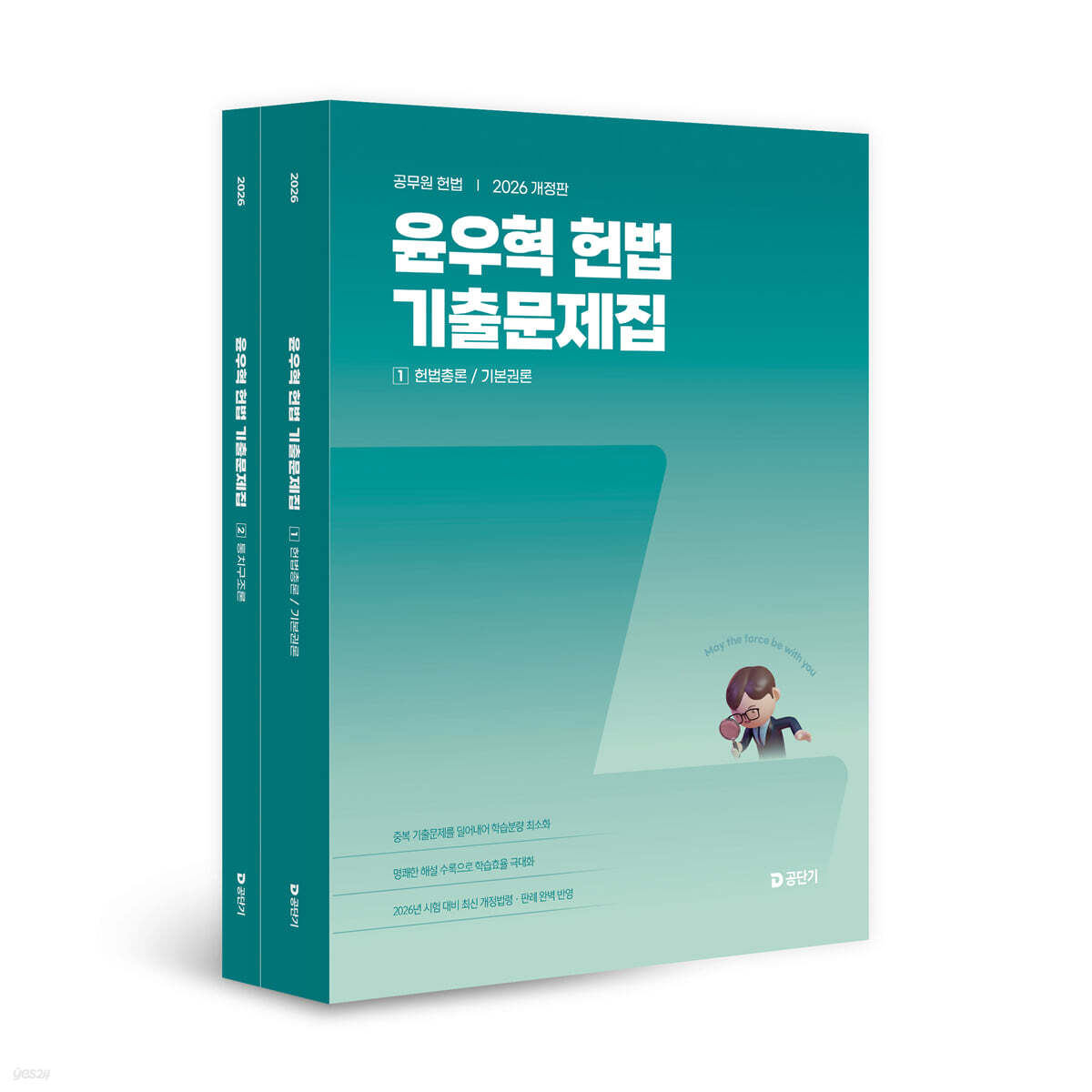
2026 Yoon Woo-hyuk Constitutional Law Exam Questions
 |
Description
Book Introduction
The "2026 Yoon Woo-hyuk Constitutional Law Exam Questions Collection" contains constitutional law questions from various previous exams, including the recently implemented 2025 National Civil Service Level 7 Exam and Seoul/Local Civil Service Level 7 Exam.
At the bottom of the question, related 'previous questions' are included in an OX format, and duplicate questions are removed and the remaining questions are reorganized to further increase the learning efficiency of test takers.
In addition, it perfectly reflects the latest revised laws and regulations, and the commentary is structured to be strong and weak, so that important parts are repeated and parts that need to be skipped over can be checked and passed over.
At the bottom of the question, related 'previous questions' are included in an OX format, and duplicate questions are removed and the remaining questions are reorganized to further increase the learning efficiency of test takers.
In addition, it perfectly reflects the latest revised laws and regulations, and the commentary is structured to be strong and weak, so that important parts are repeated and parts that need to be skipped over can be checked and passed over.
- You can preview some of the book's contents.
Preview
index
[Volume 1]
PART 01 General Provisions of the Constitution
CHAPTER 01 Constitution and Constitutional Law
Section 1. Significance of the Constitution
Section 2: Constitutional Interpretation and Constitutional Views
Section 3: Enactment, Amendment, and Changes of the Constitution
Section 4 Protection of the Constitution
CHAPTER 02 General Provisions of the Constitution of the Republic of Korea
Section 1 Constitutional History of the Republic of Korea
Section 2. State form and components of the Republic of Korea
Section 3 Basic Principles of the Constitution of the Republic of Korea
Section 4 Basic Order of the Constitution of the Republic of Korea
PART 02 Fundamental Rights Theory
CHAPTER 01 Basic Pistol Theory
Section 1. Significance of Fundamental Rights
Section 2 Classification and System of Fundamental Rights
Section 3 Subjects of Fundamental Rights
Section 4 Effect of Fundamental Rights
Section 5 Limitations and Restrictions on Fundamental Rights
Section 6 Confirmation and Guarantee of Fundamental Rights
CHAPTER 02 Human Dignity and Value, the Right to Pursuit of Happiness, and the Right to Equality
Section 1 Dignity and value as a human being
Section 2 Right to the Pursuit of Happiness
Section 3 Right to Equality
CHAPTER 03 Freedom and Fundamental Rights
Section 1. Personal liberty
Section 2 Freedom of privacy
Section 3: Mental Freedom
CHAPTER 04 Basic Economic Rights
Section 1 Property Rights
Section 2 Freedom of occupational choice
CHAPTER 05 Political Basic Rights
Section 1. Right to Suffrage
Section 2 Voting Rights and Electoral System
Section 3 Freedom of Political Parties and the Political Party System
Section 4. Right to hold public office and career civil service system
CHAPTER 06 Fundamental Rights of Claim
Section 1 Right to Petition
Section 2 Right to claim trial
Section 3 Claims for State Compensation
Section 4 Right to claim criminal compensation
Section 5. Crime Victims' Right to Claim Relief
CHAPTER 07 Social Basic Rights
Section 1 Structure and System of Social Basic Rights
Section 2 The right to a human life
Section 3: Right to education and education system
Section 4 Right to Work
Section 5 Three Labor Rights
Section 6 Environmental Rights
Article 7 Rights to Marriage, Family, Maternity Protection, and Health
CHAPTER 08 Basic Duties of Citizens
[Volume 2]
PART 03 Governing Structure Theory
CHAPTER 01 Theoretical Basis of Governance Structure Theory
CHAPTER 02 Principles of the Governing Structure
Section 1. Principle of Representative System
Section 2: Principle of Separation of Powers
CHAPTER 03 Forms of Governing Structure
CHAPTER 04 National Assembly
CHAPTER 05 THE PRESIDENT AND THE EXECUTIVE OFFICE
Section 1 President
Section 2 Government
Section 3 Election Management Committee
Section 4 Local Autonomy System
Section 5 Military System
CHAPTER 06 Judicial Branch (Courts)
CHAPTER 07 The Constitutional Court and Constitutional Litigation
Section 1 General Theory of the Constitutional Court
Section 2 Constitutional Review
Section 3 Constitutional Petition for Unconstitutionality Review
Section 4 Constitutional Petition for Remedy of Rights
Section 5 Judgment on disputes over authority
supplement
2025 National Civil Service 7th Grade Constitution Exam Questions and Answers
2025 Seoul and Local Government 7th Grade Constitution Exam Questions and Answers
PART 01 General Provisions of the Constitution
CHAPTER 01 Constitution and Constitutional Law
Section 1. Significance of the Constitution
Section 2: Constitutional Interpretation and Constitutional Views
Section 3: Enactment, Amendment, and Changes of the Constitution
Section 4 Protection of the Constitution
CHAPTER 02 General Provisions of the Constitution of the Republic of Korea
Section 1 Constitutional History of the Republic of Korea
Section 2. State form and components of the Republic of Korea
Section 3 Basic Principles of the Constitution of the Republic of Korea
Section 4 Basic Order of the Constitution of the Republic of Korea
PART 02 Fundamental Rights Theory
CHAPTER 01 Basic Pistol Theory
Section 1. Significance of Fundamental Rights
Section 2 Classification and System of Fundamental Rights
Section 3 Subjects of Fundamental Rights
Section 4 Effect of Fundamental Rights
Section 5 Limitations and Restrictions on Fundamental Rights
Section 6 Confirmation and Guarantee of Fundamental Rights
CHAPTER 02 Human Dignity and Value, the Right to Pursuit of Happiness, and the Right to Equality
Section 1 Dignity and value as a human being
Section 2 Right to the Pursuit of Happiness
Section 3 Right to Equality
CHAPTER 03 Freedom and Fundamental Rights
Section 1. Personal liberty
Section 2 Freedom of privacy
Section 3: Mental Freedom
CHAPTER 04 Basic Economic Rights
Section 1 Property Rights
Section 2 Freedom of occupational choice
CHAPTER 05 Political Basic Rights
Section 1. Right to Suffrage
Section 2 Voting Rights and Electoral System
Section 3 Freedom of Political Parties and the Political Party System
Section 4. Right to hold public office and career civil service system
CHAPTER 06 Fundamental Rights of Claim
Section 1 Right to Petition
Section 2 Right to claim trial
Section 3 Claims for State Compensation
Section 4 Right to claim criminal compensation
Section 5. Crime Victims' Right to Claim Relief
CHAPTER 07 Social Basic Rights
Section 1 Structure and System of Social Basic Rights
Section 2 The right to a human life
Section 3: Right to education and education system
Section 4 Right to Work
Section 5 Three Labor Rights
Section 6 Environmental Rights
Article 7 Rights to Marriage, Family, Maternity Protection, and Health
CHAPTER 08 Basic Duties of Citizens
[Volume 2]
PART 03 Governing Structure Theory
CHAPTER 01 Theoretical Basis of Governance Structure Theory
CHAPTER 02 Principles of the Governing Structure
Section 1. Principle of Representative System
Section 2: Principle of Separation of Powers
CHAPTER 03 Forms of Governing Structure
CHAPTER 04 National Assembly
CHAPTER 05 THE PRESIDENT AND THE EXECUTIVE OFFICE
Section 1 President
Section 2 Government
Section 3 Election Management Committee
Section 4 Local Autonomy System
Section 5 Military System
CHAPTER 06 Judicial Branch (Courts)
CHAPTER 07 The Constitutional Court and Constitutional Litigation
Section 1 General Theory of the Constitutional Court
Section 2 Constitutional Review
Section 3 Constitutional Petition for Unconstitutionality Review
Section 4 Constitutional Petition for Remedy of Rights
Section 5 Judgment on disputes over authority
supplement
2025 National Civil Service 7th Grade Constitution Exam Questions and Answers
2025 Seoul and Local Government 7th Grade Constitution Exam Questions and Answers
Publisher's Review
Clearly, the trends in testing are changing.
So how should we prepare?
Before that, let's learn about the legend of the Incas.
Once upon a time, the Inca people lived in the forest.
Enjoying the abundance and comfort that the forest provides.
Then one day, a fire broke out in the forest and many people died.
So they moved to the riverbank.
At least it is a place without the risk of fire.
But this time there was a flood and many people died.
The inhabitants again took up new residence in the rocky field.
Although it is somewhat inconvenient, it is completely safe from the dangers of fire and flood.
But this time, an earthquake struck and it was ruined again.
The same principle applies to exams.
Exam preparation
There are things you absolutely must know, regardless of the exam subject.
At the same time, there are some areas where you cannot prepare for the exam.
For example, you may not know all the case laws, but there are some that you absolutely must know.
The Nationality Act may or may not be included in the exam.
What should I do?
You only need to know the necessary parts.
If you try to know all the contents of the Nationality Act here, you will suffer losses in other areas.
Do you remember what I said earlier about law being a hodgepodge of math and Korean?
In math, you can solve problems even if you don't know the answer.
This is studying for the exam.
Scope of past questions
Many students ask:
Shouldn't we solve problems from the bar exam and the court administration exam?
I always answer no.
It's so simple to solve, so why are you telling me not to take risks?
It takes into account the output compared to the input.
Of course, it would be great to know the questions on the bar exam and the court administration exam perfectly, but considering the time, other problems arise.
If you know the previous questions perfectly, I won't stop you.
But if I were a test taker, I would study other subjects more during that time.
Ultimately, studying is a matter of choice and is subject to the limitations of finite time and memory.
No one method can be said to be the best.
Because each person has different conditions and characteristics.
Go Seung-deok's study method is suitable for Go Seung-deok.
But with a 90% probability (there is no exact basis for this).
(Based on my experience so far) I want to emphasize that studying past exam questions is a way to pass the exam sooner.
Do you want to pass?
Do you want to study in style?
The choice is yours.
So how should we prepare?
Before that, let's learn about the legend of the Incas.
Once upon a time, the Inca people lived in the forest.
Enjoying the abundance and comfort that the forest provides.
Then one day, a fire broke out in the forest and many people died.
So they moved to the riverbank.
At least it is a place without the risk of fire.
But this time there was a flood and many people died.
The inhabitants again took up new residence in the rocky field.
Although it is somewhat inconvenient, it is completely safe from the dangers of fire and flood.
But this time, an earthquake struck and it was ruined again.
The same principle applies to exams.
Exam preparation
There are things you absolutely must know, regardless of the exam subject.
At the same time, there are some areas where you cannot prepare for the exam.
For example, you may not know all the case laws, but there are some that you absolutely must know.
The Nationality Act may or may not be included in the exam.
What should I do?
You only need to know the necessary parts.
If you try to know all the contents of the Nationality Act here, you will suffer losses in other areas.
Do you remember what I said earlier about law being a hodgepodge of math and Korean?
In math, you can solve problems even if you don't know the answer.
This is studying for the exam.
Scope of past questions
Many students ask:
Shouldn't we solve problems from the bar exam and the court administration exam?
I always answer no.
It's so simple to solve, so why are you telling me not to take risks?
It takes into account the output compared to the input.
Of course, it would be great to know the questions on the bar exam and the court administration exam perfectly, but considering the time, other problems arise.
If you know the previous questions perfectly, I won't stop you.
But if I were a test taker, I would study other subjects more during that time.
Ultimately, studying is a matter of choice and is subject to the limitations of finite time and memory.
No one method can be said to be the best.
Because each person has different conditions and characteristics.
Go Seung-deok's study method is suitable for Go Seung-deok.
But with a 90% probability (there is no exact basis for this).
(Based on my experience so far) I want to emphasize that studying past exam questions is a way to pass the exam sooner.
Do you want to pass?
Do you want to study in style?
The choice is yours.
GOODS SPECIFICS
- Date of issue: November 20, 2025
- Page count, weight, size: 1,168 pages | 188*257*60mm
- ISBN13: 9791169664837
- ISBN10: 1169664830
You may also like
카테고리
korean


korean

![GQ KOREA Mark (Monthly): December [2025]](http://librairie.coreenne.fr/cdn/shop/files/8ef265dbbfbf186523ed75ba7319009d.jpg?v=1765340328&width=3840)


