

Moon Jae-in's promise
 |
Description
Book Introduction
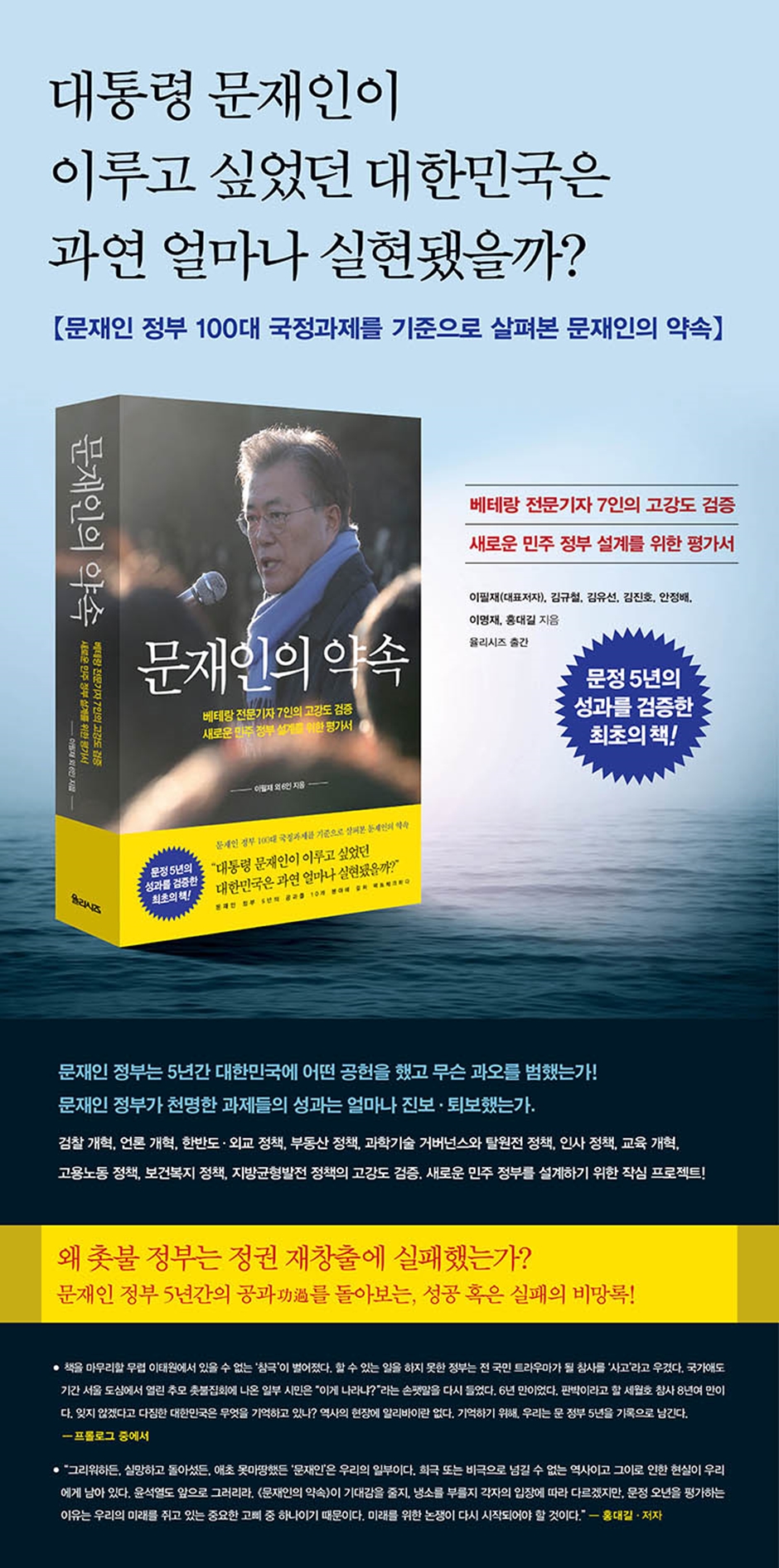
How much of the Republic of Korea that President Moon Jae-in wanted to achieve has actually been realized?
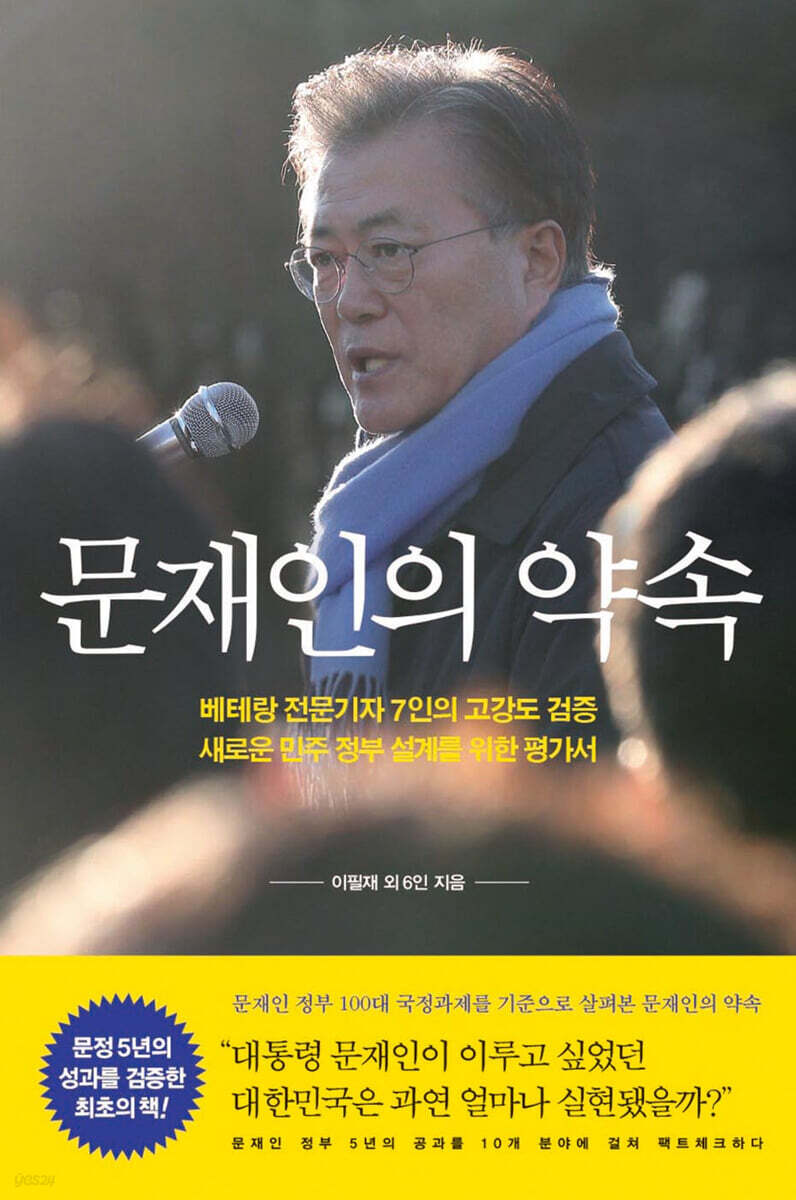
Moon Jae-in's Promises as Seen Through the Eyes of His Administration's 100 Major National Policy Tasks Seven veteran journalists fact-check 10 fields. Six months have passed since the regime changed. In just six months since the Yoon Seok-yeol administration took office, the political landscape has become unstable and public sentiment has become unstable. The third term of the Democratic Party, which called itself the "Candlelight Government," boasted of being in power for 20 years, but lost power after only 5 years. Moon Jae-in appointed him as the Prosecutor General, but handed over the reins of power to Yoon Seok-yeol, a prosecutor who had transformed into the conservative opposition party's presidential candidate. That winter, Moon Jae-in's promise to respond to the candlelight vigil citizens effectively became a "bad check" with the launch of the Yoon Seok-yeol administration. How did this happen? What contributions did Moon Jae-in make to South Korea, and what mistakes did he make? This book examines the merits and demerits of the Moon Jae-in administration over the past five years to uncover the reasons. Based on the 100 major tasks announced when the Moon Jae-in administration was launched, we examine how many of those promises were fulfilled during his five-year term. Former and current media professionals and labor experts joined forces to write the book, divided into 10 categories. Seven authors conducted intensive verification with the goal of evaluating objectively, making it as interesting and readable as possible, focusing on issues whenever possible, attempting to tell stories with impressive examples, and presenting the Yoon administration's tasks, either explicitly or implicitly. Because our constant doubts about the path forward must begin with looking into the fundamental problems and devising solutions. |
- You can preview some of the book's contents.
Preview
index
Prologue: Inheriting the Candlelight Spirit is an Ongoing Task
1.
Prosecutorial Reform: Unfinished Reforms That Solidified the Prosecutorial Republic_Lee Pil-jae
The Moon Jae-in administration's prosecution reform achievements/The limitations and challenges of the Moon Jae-in administration's prosecution reform/Prosecution reform: an unfinished task/The clock on prosecution reform has stopped, and prosecutorial rule has begun.
2.
Media Reform: Unfinished or Unbegun? - Lee Myung-jae
Eradicating "media corruption" / Media policy, a report card for media reform? The conflict over the comprehensive programming channels and the Media Arbitration Act that changed the landscape of the Korean media / The transformation of the Seoul Shinmun and the government's view of public media / The reality of the media raised by distrust of the media and the TBS incident / Media reform, a task that transcends the government and becomes a societal issue
3.
Korean Peninsula Policy: Now is the Time to Write the Jingbirok_Kim Jin-ho
The Dark Clouds of War: A Search for the Inconvenient Truth Behind the "Impossibility of War on the Korean Peninsula" Theory: North Korea Has Approached The Limits of Being a Messenger or a Mediator From Singapore to Hanoi: The Diverging Dreams of the Three Parties: North Korea, South Korea, and the US The "Colossal Failure" of Hanoi in February 2019 The Failed Diplomacy of Neighboring Countries: Failing to Build "Supporters" The End of the Policy of Engaging North Korea
4.
Real Estate Policy: The Five-Year War Against Skyrocketing Apartment Prices_Ahn Jung-bae
Five-year war against skyrocketing apartment prices/Real estate policy becomes a typical failure/Design for housing stability/Changes in real estate policy over the past five years under the Moon Jae-in administration/The dream of owning an apartment has become distant/Why the ‘measures to curb skyrocketing apartment prices’ were a complete failure/The ‘hyperbola of joy and sorrow’ between victims and beneficiaries brought about by skyrocketing apartment prices/The widening gap between the rich and poor in apartment and housing assets as seen in homeownership statistics/Mistakes of the three rental laws in the rental business registration system/Punitive tax increases give preferential treatment to ‘smart one-households’/Tasks for the new government as apartment prices begin to fall in the spring of 2022
5.
Science and Technology Governance and Nuclear Phase-out Policy_Hong Dae-gil
Science and Technology Governance/Nuclear Phase-out Policy/What the Moon Jae-in Administration Left Behind
6.
Personnel Policy: A Staff-Type President Who Ignored Both Dismissal and Resignation_Lee Pil-jae
President Moon Jae-in's personnel style/Is Kim Hyun-mi innocent?/The Moon Jae-in administration's personnel decisions were good/The Moon Jae-in administration's personnel decisions were bad/Why didn't they force her to resign?
7.
Education Reform: State Responsibility for Education_Hong Dae-gil
The Education Welfare Welfare Welfare/Private Education Costs Without Measures/Abolition of Private High Schools, Foreign Language High Schools, and International High Schools/Free Semester System, High School Leave System, High School Credit System/Regular and Rolling Admissions, School Types and the College Scholastic Ability Test/National Education Commission/What the Moon Jae-in Administration Left Behind
8.
Employment and Labor Policy: Improving the Quantity and Quality of Employment_Kim Yu-seon
Minimum wage increase/52-hour workweek cap/Conversion of irregular workers in the public sector to regular workers/Enactment of the Serious Accident Punishment Act/Removal of blind spots in the employment safety net/Ratification of ILO core conventions/Key employment indicators/Non-regular worker indicators/Labor-management relations indicators/Achievements and limitations
9.
Health and Welfare Policy: Moving Forward toward a Happy Society for All_Kim Gyu-cheol
Achievements and Challenges of the National Dementia Responsibility System/Moon Jae-in Care Contributes to Reducing the National Health Care Burden/Establishing a Community Care System/Inclusive Nation's Child Policy: "A Nation Where Children Are Happy"/The "Strengthening Public Healthcare" Policy Has Been Slow and Few Effective Measures/The Light and Dark Side of K-Quarantine in Responding to the COVID-19 Pandemic/The Roadmap for Deinstitutionalization of Persons with Disabilities: The Beginning of a Long Journey
10.
Balanced Regional Development Policy: Are Regions Developing Evenly?_An Jeong-bae
Have regions developed evenly? / Achievements of 'evenly developing regions' as seen in the Moon administration's national administration white paper / Intensifying population concentration in the Seoul metropolitan area and decreasing regional population / 153 public institutions have completed relocation to innovation cities / The importance of easing the concentration of jobs, population, and economy in the Seoul metropolitan area / Comparison of gross regional domestic products in major cities due to large-scale corporate investment in the Seoul metropolitan area / Decision to support the local extinction response fund for 89 local governments designated as 'regions of population decline' / Policy to foster local megacities such as Busan, Ulsan, and Gyeongnam becomes more concrete / Key issue of the March 9 presidential election: balanced regional development policy / What if the Roh Moo-hyun administration had not built Sejong City and innovation cities?
Epilogue: Moon Jae-in's National Indicators: A Globally Recognized Advanced Nation
1.
Prosecutorial Reform: Unfinished Reforms That Solidified the Prosecutorial Republic_Lee Pil-jae
The Moon Jae-in administration's prosecution reform achievements/The limitations and challenges of the Moon Jae-in administration's prosecution reform/Prosecution reform: an unfinished task/The clock on prosecution reform has stopped, and prosecutorial rule has begun.
2.
Media Reform: Unfinished or Unbegun? - Lee Myung-jae
Eradicating "media corruption" / Media policy, a report card for media reform? The conflict over the comprehensive programming channels and the Media Arbitration Act that changed the landscape of the Korean media / The transformation of the Seoul Shinmun and the government's view of public media / The reality of the media raised by distrust of the media and the TBS incident / Media reform, a task that transcends the government and becomes a societal issue
3.
Korean Peninsula Policy: Now is the Time to Write the Jingbirok_Kim Jin-ho
The Dark Clouds of War: A Search for the Inconvenient Truth Behind the "Impossibility of War on the Korean Peninsula" Theory: North Korea Has Approached The Limits of Being a Messenger or a Mediator From Singapore to Hanoi: The Diverging Dreams of the Three Parties: North Korea, South Korea, and the US The "Colossal Failure" of Hanoi in February 2019 The Failed Diplomacy of Neighboring Countries: Failing to Build "Supporters" The End of the Policy of Engaging North Korea
4.
Real Estate Policy: The Five-Year War Against Skyrocketing Apartment Prices_Ahn Jung-bae
Five-year war against skyrocketing apartment prices/Real estate policy becomes a typical failure/Design for housing stability/Changes in real estate policy over the past five years under the Moon Jae-in administration/The dream of owning an apartment has become distant/Why the ‘measures to curb skyrocketing apartment prices’ were a complete failure/The ‘hyperbola of joy and sorrow’ between victims and beneficiaries brought about by skyrocketing apartment prices/The widening gap between the rich and poor in apartment and housing assets as seen in homeownership statistics/Mistakes of the three rental laws in the rental business registration system/Punitive tax increases give preferential treatment to ‘smart one-households’/Tasks for the new government as apartment prices begin to fall in the spring of 2022
5.
Science and Technology Governance and Nuclear Phase-out Policy_Hong Dae-gil
Science and Technology Governance/Nuclear Phase-out Policy/What the Moon Jae-in Administration Left Behind
6.
Personnel Policy: A Staff-Type President Who Ignored Both Dismissal and Resignation_Lee Pil-jae
President Moon Jae-in's personnel style/Is Kim Hyun-mi innocent?/The Moon Jae-in administration's personnel decisions were good/The Moon Jae-in administration's personnel decisions were bad/Why didn't they force her to resign?
7.
Education Reform: State Responsibility for Education_Hong Dae-gil
The Education Welfare Welfare Welfare/Private Education Costs Without Measures/Abolition of Private High Schools, Foreign Language High Schools, and International High Schools/Free Semester System, High School Leave System, High School Credit System/Regular and Rolling Admissions, School Types and the College Scholastic Ability Test/National Education Commission/What the Moon Jae-in Administration Left Behind
8.
Employment and Labor Policy: Improving the Quantity and Quality of Employment_Kim Yu-seon
Minimum wage increase/52-hour workweek cap/Conversion of irregular workers in the public sector to regular workers/Enactment of the Serious Accident Punishment Act/Removal of blind spots in the employment safety net/Ratification of ILO core conventions/Key employment indicators/Non-regular worker indicators/Labor-management relations indicators/Achievements and limitations
9.
Health and Welfare Policy: Moving Forward toward a Happy Society for All_Kim Gyu-cheol
Achievements and Challenges of the National Dementia Responsibility System/Moon Jae-in Care Contributes to Reducing the National Health Care Burden/Establishing a Community Care System/Inclusive Nation's Child Policy: "A Nation Where Children Are Happy"/The "Strengthening Public Healthcare" Policy Has Been Slow and Few Effective Measures/The Light and Dark Side of K-Quarantine in Responding to the COVID-19 Pandemic/The Roadmap for Deinstitutionalization of Persons with Disabilities: The Beginning of a Long Journey
10.
Balanced Regional Development Policy: Are Regions Developing Evenly?_An Jeong-bae
Have regions developed evenly? / Achievements of 'evenly developing regions' as seen in the Moon administration's national administration white paper / Intensifying population concentration in the Seoul metropolitan area and decreasing regional population / 153 public institutions have completed relocation to innovation cities / The importance of easing the concentration of jobs, population, and economy in the Seoul metropolitan area / Comparison of gross regional domestic products in major cities due to large-scale corporate investment in the Seoul metropolitan area / Decision to support the local extinction response fund for 89 local governments designated as 'regions of population decline' / Policy to foster local megacities such as Busan, Ulsan, and Gyeongnam becomes more concrete / Key issue of the March 9 presidential election: balanced regional development policy / What if the Roh Moo-hyun administration had not built Sejong City and innovation cities?
Epilogue: Moon Jae-in's National Indicators: A Globally Recognized Advanced Nation
Detailed image
Into the book
With the launch of the Yoon Seok-yeol government, the clock for prosecution reform has finally stopped.
The Moon administration was optimized for prosecutorial reform, but due to its reliance on the prosecution for investigating corruption, its lack of a philosophy for prosecutorial reform, its failure to appoint Cho Kuk and Yoon Seok-yeol, and its incompetence, it only reformed some systems.
It will be difficult to expect any prosecution reform for a considerable period of time.
(Omitted) However, this does not mean that the legitimacy of prosecution reform has faded.
Governments have a term of office, but reform has no time limit.
It is the nature of government agencies to infringe upon the freedom and rights of the people under the pretext of protecting them.
This is because all reforms are essentially ‘continuous reforms.’
The ‘Republic of Prosecutors’ also has a statute of limitations.
The ‘prosecution’s time’ is also passing.
---From "Prosecution Reform"
The five years of the Moon Jae-in administration were a period in which comprehensive programming channels not only grew rapidly but also solidified their influence, threatening terrestrial broadcasting.
As the general programming channel passed its 10th anniversary, it was a period of prosperity and growth, becoming a constant rather than a variable that significantly influenced public opinion in Korean society.
And it was a net and a shackle, especially for the Moon Jae-in administration's media policy.
---From "Media Reform"
Pursuing reconciliation and cooperation with North Korea while maintaining strong security has been the core of the North Korea engagement policy since the Kim Dae-jung administration.
The Moon Jae-in administration, the third in line after the Kim Dae-jung and Roh Moo-hyun administrations, was launched on the brink of war and has created numerous monumental scenes.
However, the experience of all inter-Korean agreements being nullified with the end of the term indicates that the policy of engagement with North Korea has run out of steam.
The same people have been in the 'ring' twice or three times with the same policies, but they have failed to bring about change.
---From "Korean Peninsula Policy"
One of the achievements of the Moon administration's science and technology policy is a significant increase in research and development investment by both the government and the private sector.
The government's investment in research and development relative to GDP ranked first in the world.
The government and private sector have spared no expense in investing in science and technology for the future. Korea's significant jump from eighth to second place in the IMD rankings is a significant achievement.
---From "Science and Technology Governance and Nuclear Phase-out Policy"
The nuclear phase-out policy ended in failure, but the bigger problem is that it failed to solve the fundamental problems facing nuclear power plants.
The issue of spent nuclear fuel mass-produced at nuclear power plants must be resolved quickly through a public discussion process, and decommissioning technology for permanently shut down nuclear power plants must also be secured.
(Omitted) Another challenge is developing technologies that will lead the ever-growing renewable energy market.
Renewable energy is not a replacement for nuclear energy, but another energy source that will lead the future.
---From "Science and Technology Governance and Nuclear Phase-out Policy"
Why didn't President Moon Jae-in force Prosecutor General Yoon's resignation? First, he rarely replaced the people he appointed.
There was a strong will not to make personnel changes to change the situation under pressure from public opinion, as was the case with previous governments.
(Omitted) President Moon seems to have had a strong sense of pride in not having and not doing personal rule because he had been a ‘personnel manager by system.’
The fact that several long-serving ministers have emerged from the Moon administration appears to have been influenced by the self-consciousness of the president, who holds the power to appoint personnel.
---From "Personnel Policy"
The Moon Jae-in administration has taken full responsibility for education and has clearly taken care of educational welfare.
Representative achievements include the national budget for the Nuri Curriculum, the expansion of all-day care classes and village care classes in elementary schools, and free high school education.
However, the half-price tuition for college students was not realized, leaving only the debate over universal welfare and selective welfare.
They were unable to come up with a plan to reduce private education costs.
(Omitted) When examining the Moon administration's educational pledges and policies, there are many things that have been overlooked as important.
A representative example is the effort to prevent learning interruption during the COVID-19 pandemic.
This is an unexpected development, and is not included in the education pledge.
While countries around the world were focused solely on quarantine measures, such as restricting attendance at schools, elementary, middle, and high schools quickly implemented online classes to prevent disruption to learning, and universities permitted full-time remote classes.
The fact that the CSAT, with over 400,000 test takers, was held without a hitch in 2020 and 2021 amid the COVID-19 pandemic is an achievement of the Moon administration.
---From "Education Reform"
The Moon Jae-in administration announced a plan to implement a national dementia responsibility system on September 18, 2017.
Since then, the government has spared no expense in providing budgetary and policy support to realize the plan.
It would be safe to say that this is perhaps the most obvious achievement in the field of health and welfare.
Dementia care centers were established in 256 cities and counties across the country.
As of September of last year, early detection and support for dementia patients were achieved, with 3.85 million people receiving early dementia screening and 110,000 people receiving case management over the four years.
310,000 people benefited from the relief of long-term care costs, and the burden of medical expenses for dementia patients was also reduced, with health insurance covering 90% of medical expenses for patients with severe dementia.
Positive evaluations from the public also continue to emerge.
The Moon administration was optimized for prosecutorial reform, but due to its reliance on the prosecution for investigating corruption, its lack of a philosophy for prosecutorial reform, its failure to appoint Cho Kuk and Yoon Seok-yeol, and its incompetence, it only reformed some systems.
It will be difficult to expect any prosecution reform for a considerable period of time.
(Omitted) However, this does not mean that the legitimacy of prosecution reform has faded.
Governments have a term of office, but reform has no time limit.
It is the nature of government agencies to infringe upon the freedom and rights of the people under the pretext of protecting them.
This is because all reforms are essentially ‘continuous reforms.’
The ‘Republic of Prosecutors’ also has a statute of limitations.
The ‘prosecution’s time’ is also passing.
---From "Prosecution Reform"
The five years of the Moon Jae-in administration were a period in which comprehensive programming channels not only grew rapidly but also solidified their influence, threatening terrestrial broadcasting.
As the general programming channel passed its 10th anniversary, it was a period of prosperity and growth, becoming a constant rather than a variable that significantly influenced public opinion in Korean society.
And it was a net and a shackle, especially for the Moon Jae-in administration's media policy.
---From "Media Reform"
Pursuing reconciliation and cooperation with North Korea while maintaining strong security has been the core of the North Korea engagement policy since the Kim Dae-jung administration.
The Moon Jae-in administration, the third in line after the Kim Dae-jung and Roh Moo-hyun administrations, was launched on the brink of war and has created numerous monumental scenes.
However, the experience of all inter-Korean agreements being nullified with the end of the term indicates that the policy of engagement with North Korea has run out of steam.
The same people have been in the 'ring' twice or three times with the same policies, but they have failed to bring about change.
---From "Korean Peninsula Policy"
One of the achievements of the Moon administration's science and technology policy is a significant increase in research and development investment by both the government and the private sector.
The government's investment in research and development relative to GDP ranked first in the world.
The government and private sector have spared no expense in investing in science and technology for the future. Korea's significant jump from eighth to second place in the IMD rankings is a significant achievement.
---From "Science and Technology Governance and Nuclear Phase-out Policy"
The nuclear phase-out policy ended in failure, but the bigger problem is that it failed to solve the fundamental problems facing nuclear power plants.
The issue of spent nuclear fuel mass-produced at nuclear power plants must be resolved quickly through a public discussion process, and decommissioning technology for permanently shut down nuclear power plants must also be secured.
(Omitted) Another challenge is developing technologies that will lead the ever-growing renewable energy market.
Renewable energy is not a replacement for nuclear energy, but another energy source that will lead the future.
---From "Science and Technology Governance and Nuclear Phase-out Policy"
Why didn't President Moon Jae-in force Prosecutor General Yoon's resignation? First, he rarely replaced the people he appointed.
There was a strong will not to make personnel changes to change the situation under pressure from public opinion, as was the case with previous governments.
(Omitted) President Moon seems to have had a strong sense of pride in not having and not doing personal rule because he had been a ‘personnel manager by system.’
The fact that several long-serving ministers have emerged from the Moon administration appears to have been influenced by the self-consciousness of the president, who holds the power to appoint personnel.
---From "Personnel Policy"
The Moon Jae-in administration has taken full responsibility for education and has clearly taken care of educational welfare.
Representative achievements include the national budget for the Nuri Curriculum, the expansion of all-day care classes and village care classes in elementary schools, and free high school education.
However, the half-price tuition for college students was not realized, leaving only the debate over universal welfare and selective welfare.
They were unable to come up with a plan to reduce private education costs.
(Omitted) When examining the Moon administration's educational pledges and policies, there are many things that have been overlooked as important.
A representative example is the effort to prevent learning interruption during the COVID-19 pandemic.
This is an unexpected development, and is not included in the education pledge.
While countries around the world were focused solely on quarantine measures, such as restricting attendance at schools, elementary, middle, and high schools quickly implemented online classes to prevent disruption to learning, and universities permitted full-time remote classes.
The fact that the CSAT, with over 400,000 test takers, was held without a hitch in 2020 and 2021 amid the COVID-19 pandemic is an achievement of the Moon administration.
---From "Education Reform"
The Moon Jae-in administration announced a plan to implement a national dementia responsibility system on September 18, 2017.
Since then, the government has spared no expense in providing budgetary and policy support to realize the plan.
It would be safe to say that this is perhaps the most obvious achievement in the field of health and welfare.
Dementia care centers were established in 256 cities and counties across the country.
As of September of last year, early detection and support for dementia patients were achieved, with 3.85 million people receiving early dementia screening and 110,000 people receiving case management over the four years.
310,000 people benefited from the relief of long-term care costs, and the burden of medical expenses for dementia patients was also reduced, with health insurance covering 90% of medical expenses for patients with severe dementia.
Positive evaluations from the public also continue to emerge.
---From "Health and Welfare Policy"
Publisher's Review
■ Five years of turmoil: Why we need to revisit that time
After President Moon Jae-in left office, related documents poured out.
The majority of the white papers issued by the Blue House praised the Moon administration's achievements and highlighted its accomplishments, comforting the sense of defeat felt by supporters who still cannot accept the change of government.
However, now that six months have passed under the Yoon Seok-yeol administration, and the feelings of resentment and reflection are growing rather than longing for Moon Jae-in, the need to properly review the five years of the Moon administration has become even more urgent.
“Whether we miss him, turn away in disappointment, or dislike him from the beginning, ‘Moon Jae-in’ is a part of us.
It is a history that cannot be dismissed as a comedy or a tragedy, and the reality it leaves behind remains with us.
Yoon Seok-yeol will do the same in the future.
Whether "Moon Jae-in's Promise" inspires hope or evokes cynicism will depend on one's perspective, but the reason for evaluating the five years of Moon's administration is because it is one of the important reins that hold our future in check.
The debate for the future must begin again. ―Hong Dae-gil, author
For this reason, reporters who say, "Even if you do nine good things, you have to be hung up on one mistake," gathered together to look back on that time.
While the verification and evaluation of right and wrong are rigorous and objective, the deep-rooted evils and contradictions in Korean society that we inevitably encounter in the process point out the areas that we must reform in the future.
It also makes us realize that it is important to have a sound civic consciousness before supporting a particular political party, and to establish standards for monitoring and evaluating the actions of the party we support.
That is why, even though it is an inconvenient truth, we must face it properly and reflect deeply.
As I was finishing the book, an unthinkable tragedy occurred in Itaewon.
The government, unable to do what it could, insisted that the disaster, which would have traumatized the entire nation, was an 'accident.'
Some citizens who attended the candlelight vigil held in downtown Seoul during the national mourning period again held signs that read, “Is this a country?”
It's been six years.
It has been eight years since the Sewol ferry disaster, which was a carbon copy.
What does the Republic of Korea, which vowed never to forget, remember? There is no alibi at the scene of history.
To remember, we record the five years of the Moon administration.
―From the prologue
Whether it is a record of success or a record of failure, ‘records’ are valuable in any case.
This is the purpose of publishing this book and is also an absolutely necessary task for designing a new democratic government that will be created in the future.
■ Why did the candlelight government fail to reestablish power?
Fact-checking media outlet News Top assessed the Moon Jae-in administration's five-year pledge fulfillment rate at 55%.
Should we consider this figure as good or bad?
As a result, it cannot be said that they did a good job since they failed to re-establish the regime.
So now it's time to look into what specifically went wrong and how wrong it was.
This book examines the Moon administration's implementation of its pledges across ten areas: prosecution reform, media reform, Korean Peninsula and foreign policy, real estate policy, science and technology governance and nuclear phase-out policy, personnel policy, education reform, employment and labor policy, health and welfare policy, and balanced local development policy.
We examined how the tasks announced by the Moon administration in each field have achieved results, what changes have been brought about, or whether there have been regressions, and identified fundamental problems.
'Prosecutorial reform', which was ranked as the top reform task in an opinion poll immediately after the 19th presidential election, can be summarized as the establishment of the Corruption Investigation Office for High-ranking Officials and the adjustment of investigative powers between the prosecution and police, but the evaluations are largely mixed.
Although it started after many twists and turns, it was only half successful because it gave the prosecution the initiative in prosecutorial reform.
However, the clock for reform stopped when the Yoon Seok-yeol administration began to rule the prosecution.
In the media section, we examine the root cause of the problem from a macro perspective: a failure of government will, a fundamental failure of the Korean media itself, and a failure of Korean society.
Why did the candlelight government receive such a low rating when it was launched, despite the excellent conditions for implementing media reform policies alongside prosecution reform?
The rapid growth of general programming channels, which changed the landscape of Korean media, especially during the Moon Jae-in administration, and the background of distrust in the media are issues that are still ongoing.
The Korean Peninsula Policy provides a comprehensive overview of the tense situation on the Korean Peninsula over the past five years.
Reading the inside story, previously unseen in articles, about the extent of the mediator's role in the North-South American negotiations, what we misread, and even the diplomacy of neighboring countries that failed to create a supporter, makes me unable to help but worry about the future direction of Korean Peninsula policy.
In the real estate policy, which is widely considered a representative example of the Moon Jae-in administration's failures, we examine the five-year war against skyrocketing apartment prices.
By organizing statistical figures and actual real estate market conditions in detail by year, it is possible to grasp at a glance the changes in the Moon administration's real estate policy, which failed to stabilize housing prices.
In Science and Technology Governance and Nuclear Phase-out Policy, we closely examine the changes that science and technology policies and nuclear phase-out policies have undergone, extending the legacy of past administrations, to reach their current state.
Considering global trends, there is sufficient basis for predicting the impact of the Yoon Seok-yeol administration's announced nuclear phase-out policy on future energy policy.
Among the Moon administration's achievements, the areas that received generally good marks were employment and labor policies and health and welfare policies.
In the employment and labor sector, the minimum wage was raised, the 52-hour workweek was capped, the Serious Accident Punishment Act was enacted, and ILO core conventions were ratified, and various indicators also improved.
These are all long-awaited projects for the labor sector and core tasks of the income-led growth policy.
In the health and welfare sector, we can cite the contribution to reducing the national medical burden through Moon Jae-in Care, the achievements of the National Dementia Responsibility System, and the establishment of a community-integrated care system.
We also did not miss examining the pros and cons of Korea's COVID-19 quarantine, which has received mixed reviews both domestically and internationally.
President Moon Jae-in's personnel policy, which best reveals his true colors, examines him as an evasive leader who frequently avoids moments of decision and who has been trapped in fandom politics throughout his term.
The personnel policy is defined as a failure to the extent that it is difficult to find a successful example, except for Jeong Eun-kyeong, director of the Korea Disease Control and Prevention Agency, and Pi Woo-jin, director of the Ministry of Patriots and Veterans Affairs.
The failure of the appointment of Yoon Seok-yeol, Cho Kuk, and Kim Soo-hyun, as well as the appointment of Kim Hyun-mi and Hong Nam-ki, are also interesting.
The balanced regional development policy focuses on the fourth of the five major national goals, 'regions developing evenly.'
Since the Moon Jae-in administration took office, concerns have been raised about economic growth centered on the metropolitan area and the extinction crisis of small and medium-sized cities outside the metropolitan area.
The Moon administration's policy efforts to achieve balanced national development have intensified as its term progresses. 153 public institutions have completed the relocation to innovation cities, and the government has declared the development of ultra-wide-area megacities a key policy. Despite these efforts, objective statistics do not clearly show actual results.
In the 21st general election held in the spring of 2020, the Democratic Party achieved an absolute landslide victory, winning 180 seats (including proportional representation satellite party seats).
However, at this critical juncture for reform, the ruling party, which had an "imperial president" and a "perfect ring," somehow managed to carry out almost no social reforms necessary to complete the candlelight revolution.
The drive to reform the prosecution was exhausted, and the country failed to enact constitutional and electoral reforms, legislate labor reforms, reform conglomerates, reform real estate, or eliminate structural discrimination.
To put it simply, we haven't been able to create a single anti-discrimination law.
Enacting the anti-discrimination law was a promise made by Moon Jae-in during his presidential campaign.
The opposition party was unable to stop it even with the National Assembly Advancement Act, but the Moon administration and the 180-seat Democratic Party ultimately turned a blind eye to enacting the law.
―From the prologue
It may be meaningless to give Moon Jae-in five years of high marks.
Rather, it is important to be vigilant and avoid repeating the same mistakes in the future by thoroughly examining the origins, process, and consequences of the problem.
This book is a foundational work for him.
After President Moon Jae-in left office, related documents poured out.
The majority of the white papers issued by the Blue House praised the Moon administration's achievements and highlighted its accomplishments, comforting the sense of defeat felt by supporters who still cannot accept the change of government.
However, now that six months have passed under the Yoon Seok-yeol administration, and the feelings of resentment and reflection are growing rather than longing for Moon Jae-in, the need to properly review the five years of the Moon administration has become even more urgent.
“Whether we miss him, turn away in disappointment, or dislike him from the beginning, ‘Moon Jae-in’ is a part of us.
It is a history that cannot be dismissed as a comedy or a tragedy, and the reality it leaves behind remains with us.
Yoon Seok-yeol will do the same in the future.
Whether "Moon Jae-in's Promise" inspires hope or evokes cynicism will depend on one's perspective, but the reason for evaluating the five years of Moon's administration is because it is one of the important reins that hold our future in check.
The debate for the future must begin again. ―Hong Dae-gil, author
For this reason, reporters who say, "Even if you do nine good things, you have to be hung up on one mistake," gathered together to look back on that time.
While the verification and evaluation of right and wrong are rigorous and objective, the deep-rooted evils and contradictions in Korean society that we inevitably encounter in the process point out the areas that we must reform in the future.
It also makes us realize that it is important to have a sound civic consciousness before supporting a particular political party, and to establish standards for monitoring and evaluating the actions of the party we support.
That is why, even though it is an inconvenient truth, we must face it properly and reflect deeply.
As I was finishing the book, an unthinkable tragedy occurred in Itaewon.
The government, unable to do what it could, insisted that the disaster, which would have traumatized the entire nation, was an 'accident.'
Some citizens who attended the candlelight vigil held in downtown Seoul during the national mourning period again held signs that read, “Is this a country?”
It's been six years.
It has been eight years since the Sewol ferry disaster, which was a carbon copy.
What does the Republic of Korea, which vowed never to forget, remember? There is no alibi at the scene of history.
To remember, we record the five years of the Moon administration.
―From the prologue
Whether it is a record of success or a record of failure, ‘records’ are valuable in any case.
This is the purpose of publishing this book and is also an absolutely necessary task for designing a new democratic government that will be created in the future.
■ Why did the candlelight government fail to reestablish power?
Fact-checking media outlet News Top assessed the Moon Jae-in administration's five-year pledge fulfillment rate at 55%.
Should we consider this figure as good or bad?
As a result, it cannot be said that they did a good job since they failed to re-establish the regime.
So now it's time to look into what specifically went wrong and how wrong it was.
This book examines the Moon administration's implementation of its pledges across ten areas: prosecution reform, media reform, Korean Peninsula and foreign policy, real estate policy, science and technology governance and nuclear phase-out policy, personnel policy, education reform, employment and labor policy, health and welfare policy, and balanced local development policy.
We examined how the tasks announced by the Moon administration in each field have achieved results, what changes have been brought about, or whether there have been regressions, and identified fundamental problems.
'Prosecutorial reform', which was ranked as the top reform task in an opinion poll immediately after the 19th presidential election, can be summarized as the establishment of the Corruption Investigation Office for High-ranking Officials and the adjustment of investigative powers between the prosecution and police, but the evaluations are largely mixed.
Although it started after many twists and turns, it was only half successful because it gave the prosecution the initiative in prosecutorial reform.
However, the clock for reform stopped when the Yoon Seok-yeol administration began to rule the prosecution.
In the media section, we examine the root cause of the problem from a macro perspective: a failure of government will, a fundamental failure of the Korean media itself, and a failure of Korean society.
Why did the candlelight government receive such a low rating when it was launched, despite the excellent conditions for implementing media reform policies alongside prosecution reform?
The rapid growth of general programming channels, which changed the landscape of Korean media, especially during the Moon Jae-in administration, and the background of distrust in the media are issues that are still ongoing.
The Korean Peninsula Policy provides a comprehensive overview of the tense situation on the Korean Peninsula over the past five years.
Reading the inside story, previously unseen in articles, about the extent of the mediator's role in the North-South American negotiations, what we misread, and even the diplomacy of neighboring countries that failed to create a supporter, makes me unable to help but worry about the future direction of Korean Peninsula policy.
In the real estate policy, which is widely considered a representative example of the Moon Jae-in administration's failures, we examine the five-year war against skyrocketing apartment prices.
By organizing statistical figures and actual real estate market conditions in detail by year, it is possible to grasp at a glance the changes in the Moon administration's real estate policy, which failed to stabilize housing prices.
In Science and Technology Governance and Nuclear Phase-out Policy, we closely examine the changes that science and technology policies and nuclear phase-out policies have undergone, extending the legacy of past administrations, to reach their current state.
Considering global trends, there is sufficient basis for predicting the impact of the Yoon Seok-yeol administration's announced nuclear phase-out policy on future energy policy.
Among the Moon administration's achievements, the areas that received generally good marks were employment and labor policies and health and welfare policies.
In the employment and labor sector, the minimum wage was raised, the 52-hour workweek was capped, the Serious Accident Punishment Act was enacted, and ILO core conventions were ratified, and various indicators also improved.
These are all long-awaited projects for the labor sector and core tasks of the income-led growth policy.
In the health and welfare sector, we can cite the contribution to reducing the national medical burden through Moon Jae-in Care, the achievements of the National Dementia Responsibility System, and the establishment of a community-integrated care system.
We also did not miss examining the pros and cons of Korea's COVID-19 quarantine, which has received mixed reviews both domestically and internationally.
President Moon Jae-in's personnel policy, which best reveals his true colors, examines him as an evasive leader who frequently avoids moments of decision and who has been trapped in fandom politics throughout his term.
The personnel policy is defined as a failure to the extent that it is difficult to find a successful example, except for Jeong Eun-kyeong, director of the Korea Disease Control and Prevention Agency, and Pi Woo-jin, director of the Ministry of Patriots and Veterans Affairs.
The failure of the appointment of Yoon Seok-yeol, Cho Kuk, and Kim Soo-hyun, as well as the appointment of Kim Hyun-mi and Hong Nam-ki, are also interesting.
The balanced regional development policy focuses on the fourth of the five major national goals, 'regions developing evenly.'
Since the Moon Jae-in administration took office, concerns have been raised about economic growth centered on the metropolitan area and the extinction crisis of small and medium-sized cities outside the metropolitan area.
The Moon administration's policy efforts to achieve balanced national development have intensified as its term progresses. 153 public institutions have completed the relocation to innovation cities, and the government has declared the development of ultra-wide-area megacities a key policy. Despite these efforts, objective statistics do not clearly show actual results.
In the 21st general election held in the spring of 2020, the Democratic Party achieved an absolute landslide victory, winning 180 seats (including proportional representation satellite party seats).
However, at this critical juncture for reform, the ruling party, which had an "imperial president" and a "perfect ring," somehow managed to carry out almost no social reforms necessary to complete the candlelight revolution.
The drive to reform the prosecution was exhausted, and the country failed to enact constitutional and electoral reforms, legislate labor reforms, reform conglomerates, reform real estate, or eliminate structural discrimination.
To put it simply, we haven't been able to create a single anti-discrimination law.
Enacting the anti-discrimination law was a promise made by Moon Jae-in during his presidential campaign.
The opposition party was unable to stop it even with the National Assembly Advancement Act, but the Moon administration and the 180-seat Democratic Party ultimately turned a blind eye to enacting the law.
―From the prologue
It may be meaningless to give Moon Jae-in five years of high marks.
Rather, it is important to be vigilant and avoid repeating the same mistakes in the future by thoroughly examining the origins, process, and consequences of the problem.
This book is a foundational work for him.
GOODS SPECIFICS
- Publication date: December 26, 2022
- Page count, weight, size: 432 pages | 622g | 146*220*26mm
- ISBN13: 9791197894947
- ISBN10: 1197894942
You may also like
카테고리
korean


korean

![GQ KOREA Mark (Monthly): December [2025]](http://librairie.coreenne.fr/cdn/shop/files/8ef265dbbfbf186523ed75ba7319009d.jpg?v=1765340328&width=3840)


